
TCM Lab · Health reading
Secondary Dysmenorrhea: Understanding Changing Period Pain
Published Updated
Period pain that starts later, becomes harder to manage, or changes its usual rhythm deserves more than the reassurance that cramps are common. Secondary dysmenorrhea is the term used when painful periods may be related to a condition affecting the reproductive organs. This does not mean that every new ache has one particular cause. It does mean that the timing of pain, bleeding changes, pain with sex or bowel and bladder symptoms can help a clinician decide what to assess. A clear cycle record is useful whether you are arranging a gynaecological review, using prescribed treatment, or considering Chinese medicine as complementary support in Hong Kong.
Appointments are confirmed through WhatsApp. If you have language requirements, please mention them in your enquiry.
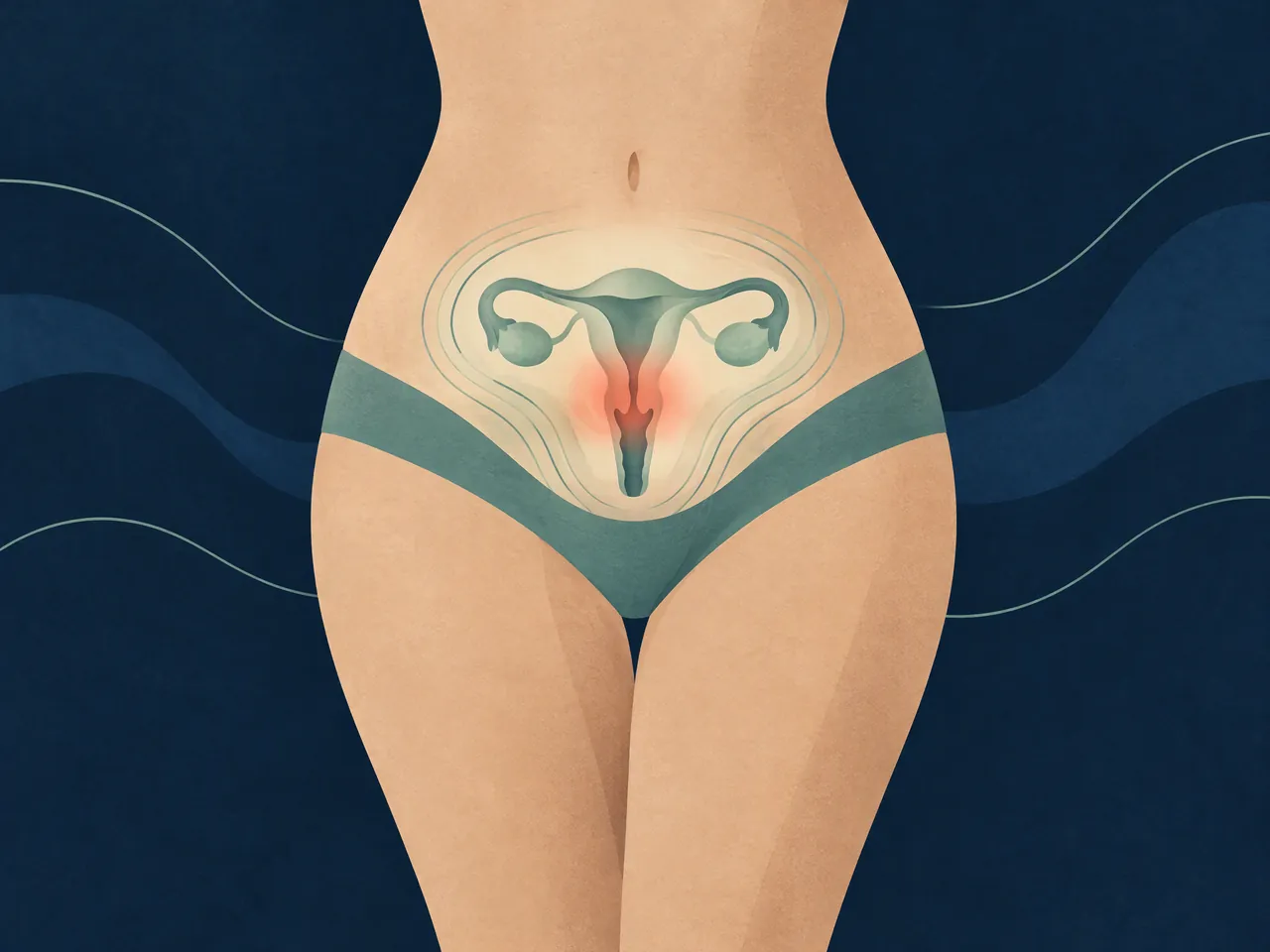
The short answer
Secondary dysmenorrhea is period pain that develops later, worsens, lasts longer than a familiar cramp pattern, or occurs with other changes because an underlying gynaecological condition may be involved. Medical assessment is important when pain is new, progressive, severe, disruptive, or accompanied by heavier or irregular bleeding, bleeding between periods, or pain during sex, urination or bowel movements. Chinese medicine may be discussed as complementary care after, not instead of, appropriate evaluation.
Transparent pricing
See the fees.
Choose your care.
Explore our complete official price list, including first-trial prices, regular prices, packages and branch-specific options.
Opening WhatsApp prepares an enquiry; it does not send a message, take payment or confirm an appointment. Suitability and individual arrangements are confirmed during consultation.
Chinese medicine
All prices in HKDAcupuncture and Chinese herbal medicine package
Includes a Chinese medicine consultation with pulse assessment, body acupuncture and 3 days of Chinese herbal granules that do not require decoction.
HK$580 (single session)
Chinese medicine consultation with pulse assessment
Hair and scalp
All prices in HKDScalp health and hair-loss management
Includes AI scalp analysis, deep scalp and follicle cleansing, and scalp oil-control care.
HK$380 (first trial)
Regular price: HK$680
- 6 sessions: HK$3,480 (HK$580 per session)
- 12 sessions: HK$5,760 (HK$480 per session)
- 20 sessions: HK$8,600 (HK$430 per session)
- 30 sessions: HK$11,400 (HK$380 per session)
Hair acupuncture and Chinese herbal medicine package
Includes scalp acupuncture and 3 days of Chinese herbal medicine that does not require decoction.
HK$580 (single session)
Registered Chinese Medicine Practitioner consultation
- 6 sessions: HK$3,180 (HK$530 per session)
- 12 sessions: HK$5,760 (HK$480 per session)
- 20 sessions: HK$8,600 (HK$430 per session)
- 30 sessions: HK$11,400 (HK$380 per session)
Combined hair and scalp treatment
Combines acupuncture and Chinese herbal medicine with salon-level scalp and follicle care. Packages include complimentary hair-care shampoo and serum.
HK$1,260 (single session)
Combined treatment
- 8 sessions: HK$8,640 (HK$1,080 per session)
- 16 sessions: HK$15,680 (HK$980 per session)
- 20 sessions: HK$18,600 (HK$930 per session)
- 30 sessions: HK$26,400 (HK$880 per session)
Weight management
All prices in HKDFull-body acupoint embedding for weight management
Includes full-body acupoint embedding. Packages include complimentary Chinese herbal medicine for weight management, with the number of included days scaled to the package. Embedding material and the individual treatment arrangement are confirmed during consultation; this is not a cosmetic thread lift.
HK$980 (single session)
No trial session
- 10 sessions: HK$7,800 (HK$780 per session)
- 20 sessions: HK$14,600 (HK$730 per session)
- 30 sessions: HK$20,400 (HK$680 per session)
Facial acupuncture
All prices in HKDFacial acupuncture (basic)
Includes facial acupuncture and meridian-based facial care, including care for facial puffiness.
HK$480 (first trial)
Regular price: HK$680
- 10 sessions: HK$5,200 (HK$520 per session)
- 20 sessions: HK$9,600 (HK$480 per session)
- 30 sessions: HK$13,500 (HK$450 per session)
Facial acupuncture (advanced)
Includes enhanced facial acupuncture with a specially formulated moisturising mask and serum.
HK$780 (first trial)
Regular price: HK$1,180
- 10 sessions: HK$9,000 (HK$900 per session)
- 20 sessions: HK$16,600 (HK$830 per session)
- 30 sessions: HK$23,400 (HK$780 per session)
Pain care
All prices in HKDExtracorporeal shockwave treatment
Shockwave treatment for deep-tissue and fascial care. The Kwun Tong clinic offers the multi-area options shown below.
Priced by branch
Branch-specific pricing
Prince Edward: HK$250 per area
Kwun Tong: HK$250 for 1 area / HK$450 for 2 areas / HK$600 for 3 areas
Pain care (manual therapy)
Includes Chinese medicine musculoskeletal assessment, manual joint techniques and tui na.
HK$580 (single session)
Chinese medicine musculoskeletal assessment
Pain care (acupuncture and manual therapy)
Combines acupuncture and manual therapy.
HK$680 (single session)
Combined care
Secondary Dysmenorrhea and the Difference from Primary Pain
Dysmenorrhea simply means pain associated with menstruation. Primary dysmenorrhea usually describes cramping that begins soon after menstrual periods start and follows a fairly familiar pattern. It is linked to the normal uterine activity of a period rather than an identified disorder. Secondary dysmenorrhea refers to pain caused by, or suspected to be related to, a disorder in the reproductive organs. The distinction is not a judgement on how severe someone’s pain feels. It is a reason to look closely at a changing story. ACOG notes that secondary pain often worsens over time, can last longer than usual cramps, and may start before bleeding or remain after the period ends [1].
Possible contributors include endometriosis, adenomyosis and fibroids, among other gynaecological or pelvic conditions [1] [2]. Those names should not be used to self-diagnose from one symptom. Two people may both have heavy cramps yet need different assessment, and a person can have a changing pain pattern without knowing its cause. The helpful question is: what is different from your own usual cycle? For broader context about common cramps and daily support, our guide to painful periods explains the more familiar experience without treating all period pain as the same.

A pattern can shift gradually. Someone who previously managed one day of lower-abdominal cramping may begin to notice pain several days before bleeding, deeper pelvic pressure, or discomfort continuing when the period has finished. Another person may find that a once-predictable cycle now comes with heavier flow, new fatigue from disrupted sleep, or time away from work and study. These changes are worth describing in concrete terms. Saying when the pattern changed and what normal activities are now difficult gives a clinician more to work with than a pain score alone.
How Secondary Dysmenorrhea May Develop Later
Later onset does not mean a person should wait until pain is unbearable. Start by comparing several cycles where possible: when discomfort first appeared, whether it comes before, during or after bleeding, and whether it is becoming longer or more intense. Note whether there was a change in contraception, an IUD placement, a pregnancy-related event, a new medication, or a previous pelvic diagnosis, then share that context without assuming it explains everything. NHS lists an IUD, particularly in the months after placement, alongside several health conditions among possible reasons period pain may occur [2]. The role of a consultation is to sort out relevance, not to draw conclusions from a diary alone.

Why Secondary Dysmenorrhea Needs a Broader History
Period pain sits within a wider health history. A clinician may ask about bleeding between periods, the length and regularity of cycles, pain during sex, bowel movements or urination, prior procedures, pregnancy possibility, infections, family history and medicines. They may decide that a pelvic examination, ultrasound, referral or another step is appropriate; ACOG describes pelvic examination and, when needed, ultrasound or laparoscopy as possible parts of investigating dysmenorrhea [1]. Bring any scan report or discharge note you already have, but do not delay an assessment while trying to collect a perfect record. The aim is a safe explanation and a plan that reflects your circumstances.
Compare your options
| Pattern or detail | What to note in your own words | Why it is useful at a consultation |
|---|---|---|
| Timing of pain | Whether pain begins before bleeding, during the period, after it ends, or on pain-free days | Shows whether the rhythm differs from your previous menstrual pattern |
| Bleeding changes | Heavier, lighter, irregular flow, clots, or bleeding between periods compared with your normal | Helps the clinician consider the pain together with menstrual change |
| Related pelvic symptoms | Pain during sex, when passing urine or stool, nausea, fever, swelling, or symptoms outside menstruation | Identifies symptoms that may change the urgency or direction of assessment |
| Daily impact | Sleep loss, time off work or study, cancelled plans, reduced movement, and care responsibilities affected | Makes the burden of pain clear beyond a numerical score |
| Treatments already used | Medicines, contraception, supplements, heat, exercise, acupuncture or herbs, plus what changed | Supports safer, coordinated discussion and avoids overlooking current treatments |
On smaller screens, scroll the table sideways to compare all columns.
Secondary Dysmenorrhea Symptoms to Record Before a Consultation
A brief diary can turn “my periods have got worse” into useful clinical information. Use one line each day rather than trying to make a detailed report. Record the first day of bleeding, the first and last day of pain, whether the sensation is cramping, sharp, dull or pressure-like, where it is felt, and whether it spreads to the back or thighs. Include a simple intensity score if it helps you compare your own days, but add plain-language effects such as waking at night, missing a meeting, avoiding exercise, or needing to lie down. The effect on everyday life often matters as much as the number itself.
Track bleeding separately from pain. Note whether flow seems heavier or lighter than your usual cycle, whether you are changing products more often than normal, whether clots are new for you, and whether spotting or bleeding happens outside the period. Also include nausea, diarrhoea, dizziness, fever, abdominal swelling, pain with penetration, pain when passing urine or stool, and symptoms that happen at other points in the cycle. A single symptom does not confirm a condition, but the combination and timing can guide the next discussion. If you have previously sought care, record what was suggested and whether the pattern changed afterwards.

List every pain-relief method and treatment already tried. This includes prescribed medicines, over-the-counter products, hormonal contraception, supplements, heat, rest, exercise and any complementary therapy. Write the product name, dose or method if known, when you used it, and what happened, without increasing or stopping medicine on the basis of a diary. ACOG explains that treatment choices depend on the cause and that medication is commonly an initial approach to painful periods [1]. A complete list also helps a pharmacist, doctor or practitioner notice potential duplication or interactions.

Tracking Secondary Dysmenorrhea Across Your Cycle
Make the record fit your life. A phone calendar, paper notebook or notes app all work if the entries are consistent. Mark pain-free days too, since they help show whether symptoms are truly limited to menstruation. Before an appointment, prepare a short summary: when the change began; what happens before, during and after bleeding; the strongest impact on work, study, sleep or caring responsibilities; and your biggest question. If pregnancy is possible, say so when seeking advice rather than treating a late or unusual period as routine dysmenorrhea. This is practical information, not something you need to solve privately first.

Secondary Dysmenorrhea, Bleeding and Pain Patterns
Some combinations call for more timely medical advice. NHS advises seeing a doctor if periods become more painful, heavier or irregular; pain stops usual activities; there is bleeding between periods; or there is pain during sex, urination or bowel movements [2]. Severe pelvic or period pain that is worse than usual and has not responded to painkillers is listed as a reason for urgent advice [2]. Fever, a swollen abdomen, unexplained weight loss or a new marked change should also be described when arranging care. These signs do not label the cause; they are a reason not to rely only on heat, self-management or an online explanation.
Secondary Dysmenorrhea and the Role of Chinese Medicine
Chinese medicine can be a topic for discussion once the need for medical evaluation has been addressed. A Registered Chinese Medicine Practitioner may ask about the menstrual timeline alongside sleep, appetite, bowel habits, energy, temperature preferences, stress and current medicines. Traditional descriptions such as blood stasis or cold in the uterus are part of a TCM pattern assessment; they do not establish whether pain is due to endometriosis, adenomyosis, fibroids or another condition. That boundary matters most when symptoms are changing. A gynaecological diagnosis and TCM assessment can inform different parts of a coordinated conversation, but one cannot replace the other.
If acupuncture or Chinese herbal medicine is being considered, share the entire picture: confirmed diagnoses, scans or test results, all prescription and non-prescription medicines, contraception, allergies, liver or kidney concerns, and any possibility of pregnancy. Do not use a fixed online herbal formula because another person’s symptoms sound similar. Acupuncture is included by ACOG among approaches that may be useful for painful periods [1], but this is not a guarantee of benefit for secondary dysmenorrhea or a substitute for treatment directed at an underlying cause. Decisions should remain individual and should not involve silently stopping medication prescribed elsewhere.
A complementary appointment is most useful when it supports clear communication rather than competing advice. You may wish to read about acupuncture for period pain before asking focused questions about suitability, current treatment and what to monitor. If your pain has changed, put medical investigation first and bring that information to every practitioner. The period pain Chinese medicine topic centre also explains why a symptom record is a sensible starting point. The immediate goal is not to promise one remedy, but to make sure meaningful changes are recognised and care is coordinated.

When Secondary Dysmenorrhea Calls for Medical Assessment
Arrange medical assessment promptly for new or steadily worsening pain, severe pain, pain that is not responding to the plan already advised, unusual bleeding, bleeding between periods, or pain with sex, urination or bowel movements. Seek urgent care according to local services if severe pain is worse than usual and pain relief has not helped, or if you feel acutely unwell. The precise assessment may differ depending on your history, examination and pregnancy possibility. Ultrasound is one investigation that may be considered, but it is not a test to request or interpret in isolation [1] [2]. For a simple care-seeking checklist, see When should I see a doctor for period pain?
Discussing Secondary Dysmenorrhea with a TCM Practitioner
At a TCM Lab enquiry, describe that you are concerned about secondary dysmenorrhea, not just “bad cramps.” Bring your cycle notes and any medical findings, then state what you hope to discuss: comfort between appointments, questions about acupuncture, or whether a Chinese medicine consultation is appropriate alongside your current plan. Ask how the practitioner would take account of medicines and what changes would mean you should return to your doctor. You can enquire about a Kwun Tong Chinese medicine clinic or a Chinese medicine clinic Prince Edward. Availability is arranged by appointment, and suitability is assessed individually rather than assumed from a webpage.
Care and health guide
Pain-care information
This directory brings together services, reading, and visit information related to pain care, to help you prepare questions for a consultation.
When pain care affects your day, noting when it occurs, its relation to activity, and what you have already tried can help prepare a consultation; Chinese medicine pain management Hong Kong is a relevant service or reading entry point.
Individual circumstances differ, and acupuncture Hong Kong offers related information to help you understand options and prepare questions.


Your questions, answered
Frequently asked questions
How is secondary dysmenorrhea different from primary dysmenorrhea?
Primary dysmenorrhea is the usual cramping pain that commonly starts soon after periods begin and has no identified reproductive-organ disorder behind it. Secondary dysmenorrhea is pain related to, or suspected to be related to, a condition affecting the reproductive organs. It often begins later or changes over time, can last longer than familiar cramps, and may occur with altered bleeding or other pelvic symptoms. A history and appropriate medical assessment are needed to work out the cause.
Could endometriosis, adenomyosis or fibroids be the reason for my changing pain?
They are among conditions that can be associated with secondary dysmenorrhea, but symptoms cannot confirm any one of them. The timing of pain, bleeding, examination findings and any investigations need to be considered together. Arrange a medical review when pain is new, progressive, disruptive, or accompanied by unusual bleeding or other pelvic symptoms rather than trying to label the cause from an online checklist.
When should I seek medical advice rather than wait for another cycle?
Seek advice when periods become more painful, heavier or irregular; pain affects usual activities; there is bleeding between periods; or pain occurs during sex, urination or bowel movements. Seek urgent medical help according to local services if pain is severe or worse than usual and pain relief has not helped, or if you feel acutely unwell. A possible pregnancy should be mentioned when seeking care.
Can I consider acupuncture or Chinese herbs if I have secondary dysmenorrhea?
You can ask a Registered Chinese Medicine Practitioner about complementary care, but first make sure changing or concerning symptoms receive appropriate medical assessment. Share all diagnoses, test results, medicines, contraception, supplements and any possibility of pregnancy. Do not stop prescribed treatment or use a fixed herbal formula without discussing it with the relevant clinician or practitioner. Complementary care should fit around, not replace, evaluation and treatment of an underlying cause.
Sources and further information
- [1] [1] American College of Obstetricians and Gynecologists — Dysmenorrhea: Painful Periods
Referenced for: Professional patient guidance on the primary and secondary dysmenorrhea distinction, possible causes, assessment options, medical treatment context and the limited complementary-treatment statement.
- [2] [2] NHS — Period pain
Referenced for: Public health guidance on possible causes, symptom patterns, when to seek routine or urgent assessment, and investigation context for changing period pain.