
TCM Lab · Health reading
Carpal Tunnel Syndrome Symptoms and When should I see a doctor for wrist pain?
Published Updated
Tingling that wakes you at night, numb fingers when you hold a phone, or a grip that feels less reliable can make you wonder if you have carpal tunnel syndrome. Those features fit a recognised pattern, but wrist pain can also follow an injury, tendon irritation, a joint problem or another nerve issue. The useful question is not only what the symptom is, but when it began, where it travels, what brings it on and whether hand function is changing. This guide helps you record that pattern, recognise when wrist pain needs urgent assessment, and consider sensible next steps in Hong Kong without treating a symptom list as a diagnosis.
Appointments are confirmed through WhatsApp. If you have language requirements, please mention them in your enquiry.
The short answer
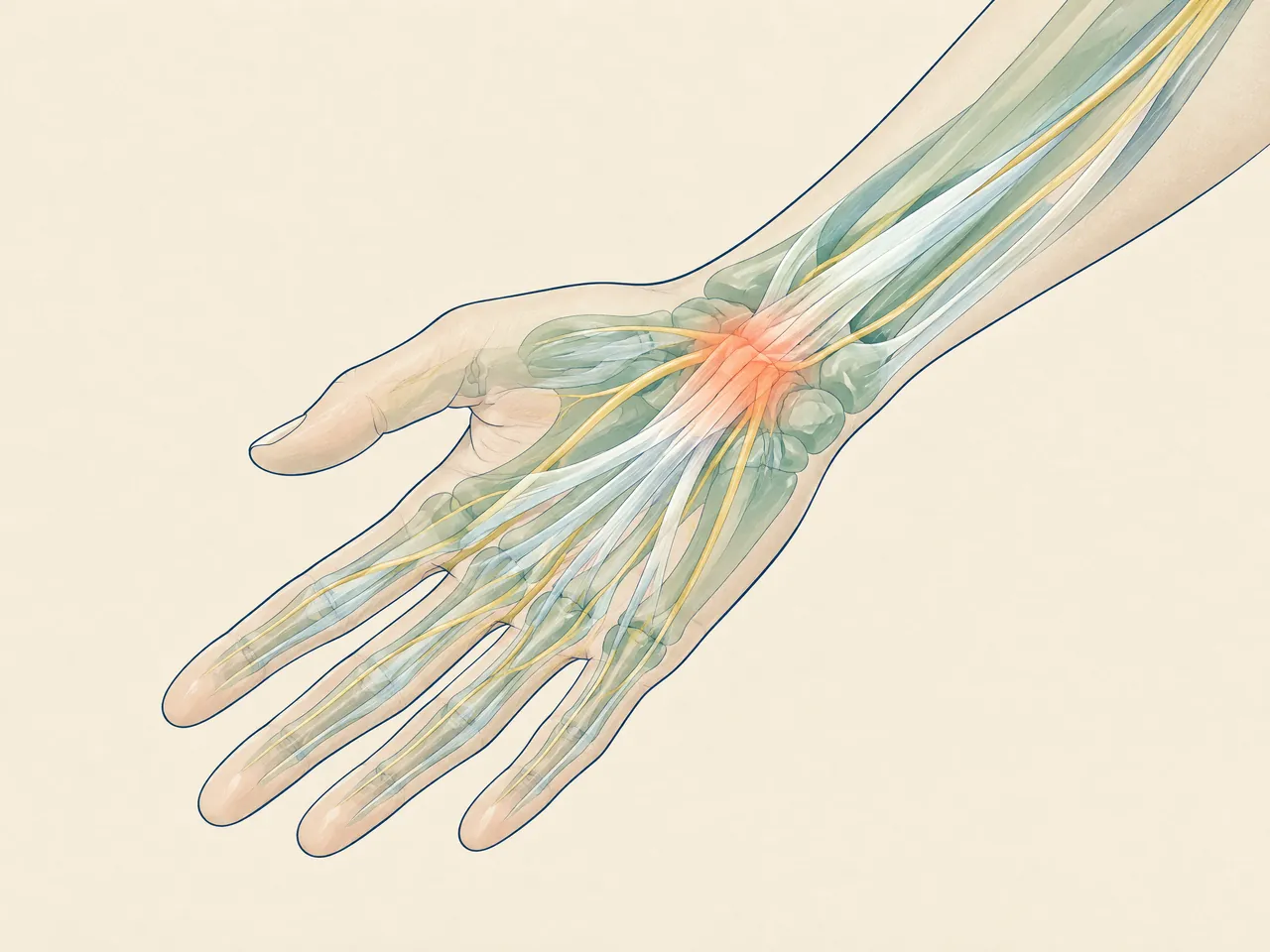
Carpal tunnel syndrome symptoms often include tingling, numbness or pins and needles in the hand, night-time pain, a weak thumb or trouble gripping. Arrange a clinical assessment if symptoms persist, worsen, recur or affect normal activities. Seek urgent care after a serious injury, or for severe pain, a wrist that changes shape or colour, inability to hold things, complete loss of feeling, or a hot swollen wrist with feeling unwell. Acupuncture may be discussed only as a supportive option after appropriate assessment.
Transparent pricing
See the fees.
Choose your care.
Explore our complete official price list, including first-trial prices, regular prices, packages and branch-specific options.
Opening WhatsApp prepares an enquiry; it does not send a message, take payment or confirm an appointment. Suitability and individual arrangements are confirmed during consultation.
Pain care
All prices in HKDExtracorporeal shockwave treatment
Shockwave treatment for deep-tissue and fascial care. The Kwun Tong clinic offers the multi-area options shown below.
Priced by branch
Branch-specific pricing
Prince Edward: HK$250 per area
Kwun Tong: HK$250 for 1 area / HK$450 for 2 areas / HK$600 for 3 areas
Pain care (manual therapy)
Includes Chinese medicine musculoskeletal assessment, manual joint techniques and tui na.
HK$580 (single session)
Chinese medicine musculoskeletal assessment
Pain care (acupuncture and manual therapy)
Combines acupuncture and manual therapy.
HK$680 (single session)
Combined care
Hair and scalp
All prices in HKDScalp health and hair-loss management
Includes AI scalp analysis, deep scalp and follicle cleansing, and scalp oil-control care.
HK$380 (first trial)
Regular price: HK$680
- 6 sessions: HK$3,480 (HK$580 per session)
- 12 sessions: HK$5,760 (HK$480 per session)
- 20 sessions: HK$8,600 (HK$430 per session)
- 30 sessions: HK$11,400 (HK$380 per session)
Hair acupuncture and Chinese herbal medicine package
Includes scalp acupuncture and 3 days of Chinese herbal medicine that does not require decoction.
HK$580 (single session)
Registered Chinese Medicine Practitioner consultation
- 6 sessions: HK$3,180 (HK$530 per session)
- 12 sessions: HK$5,760 (HK$480 per session)
- 20 sessions: HK$8,600 (HK$430 per session)
- 30 sessions: HK$11,400 (HK$380 per session)
Combined hair and scalp treatment
Combines acupuncture and Chinese herbal medicine with salon-level scalp and follicle care. Packages include complimentary hair-care shampoo and serum.
HK$1,260 (single session)
Combined treatment
- 8 sessions: HK$8,640 (HK$1,080 per session)
- 16 sessions: HK$15,680 (HK$980 per session)
- 20 sessions: HK$18,600 (HK$930 per session)
- 30 sessions: HK$26,400 (HK$880 per session)
Weight management
All prices in HKDFull-body acupoint embedding for weight management
Includes full-body acupoint embedding. Packages include complimentary Chinese herbal medicine for weight management, with the number of included days scaled to the package. Embedding material and the individual treatment arrangement are confirmed during consultation; this is not a cosmetic thread lift.
HK$980 (single session)
No trial session
- 10 sessions: HK$7,800 (HK$780 per session)
- 20 sessions: HK$14,600 (HK$730 per session)
- 30 sessions: HK$20,400 (HK$680 per session)
Facial acupuncture
All prices in HKDFacial acupuncture (basic)
Includes facial acupuncture and meridian-based facial care, including care for facial puffiness.
HK$480 (first trial)
Regular price: HK$680
- 10 sessions: HK$5,200 (HK$520 per session)
- 20 sessions: HK$9,600 (HK$480 per session)
- 30 sessions: HK$13,500 (HK$450 per session)
Facial acupuncture (advanced)
Includes enhanced facial acupuncture with a specially formulated moisturising mask and serum.
HK$780 (first trial)
Regular price: HK$1,180
- 10 sessions: HK$9,000 (HK$900 per session)
- 20 sessions: HK$16,600 (HK$830 per session)
- 30 sessions: HK$23,400 (HK$780 per session)
Chinese medicine
All prices in HKDAcupuncture and Chinese herbal medicine package
Includes a Chinese medicine consultation with pulse assessment, body acupuncture and 3 days of Chinese herbal granules that do not require decoction.
HK$580 (single session)
Chinese medicine consultation with pulse assessment
Carpal Tunnel Syndrome Symptoms: When should I see a doctor for wrist pain? — Start with the pattern
Carpal tunnel syndrome happens when pressure affects the median nerve at the wrist. The pattern can include an ache or pain in the fingers, hand or arm, numbness, tingling or pins and needles, a weak thumb and difficulty gripping; symptoms often start gradually and are worse at night [1]. That description is a starting point, not a home diagnosis. A person who wakes with a buzzing hand, drops a mug, or pauses halfway through keyboard work may have a useful clue, but the same broad complaint can have other explanations. Begin by describing the experience accurately before deciding what it means.
Make the record practical enough to use in a consultation. Note the date of first symptoms, whether they came after a fall or accumulated with repeated work, and whether they are constant, intermittent or only present in a certain position. Include the part of the wrist or hand that hurts, the fingers that tingle, and whether a sensation moves into the forearm. Add real examples of function: turning a key, opening jars, carrying shopping, typing, cooking, sleep or caring for someone. This turns “my wrist hurts” into information that can guide an examination. The broader guide to wrist pain causes can help you organise possibilities, but it cannot replace an individual assessment.

Carpal Tunnel Syndrome Symptoms and When should I see a doctor for wrist pain? — Map pain, tingling and numbness
Separate pain from altered sensation when you make notes. Pain may be aching, sharp, burning or sore to pressure. Tingling may feel like pins and needles, buzzing or an electric sensation. Numbness is different again: it may mean reduced feeling, an awkward grip, or difficulty judging small objects in a pocket or bag. Write down which description is closest, where it begins and where it ends. A hand that is sore at the thumb-side wrist during movement tells a different story from fingers that tingle at night, even though both may be called wrist pain in everyday conversation.
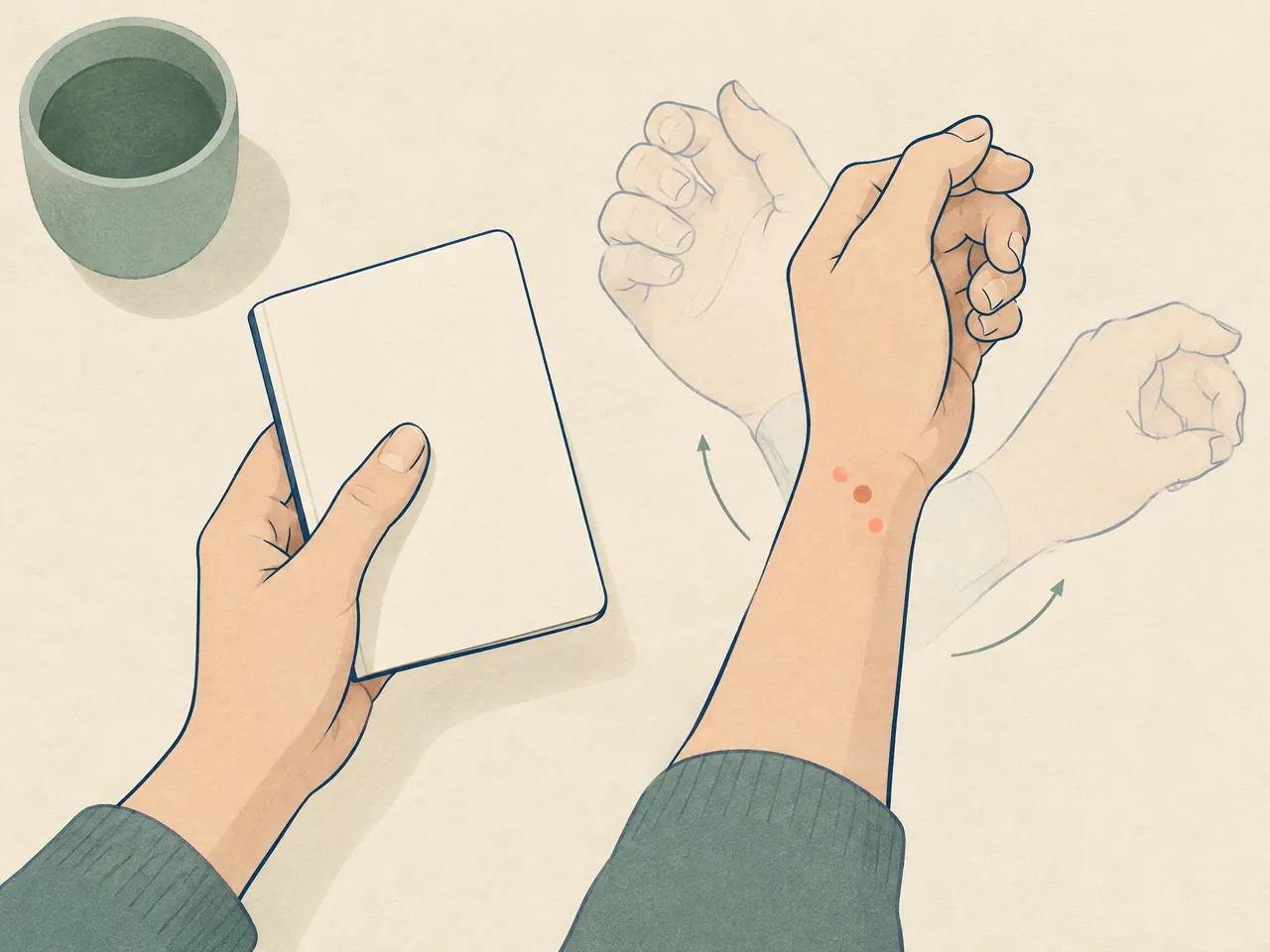
Look for timing and positions rather than testing the hand repeatedly. Does holding a steering wheel, using a mobile phone, gripping a tool, cycling, chopping food or sleeping with the wrist bent bring it on? Does shaking or repositioning the hand change the sensation? Is one hand affected or both? A photo or brief log can be useful if swelling or a skin change comes and goes. The related question, Why does my wrist hurt and feel numb?, gives further context for discussing combined pain and numbness, but new or progressive loss of sensation should not be ignored while gathering notes.
Carpal Tunnel Syndrome Symptoms and When should I see a doctor for wrist pain? — Record triggers and daily impact
A symptom diary need not be complicated. For each episode, capture the task immediately before it, the wrist position if you can tell, the duration, and whether you needed to stop. Note any recent change in workload, gym training, gaming, instrument practice, lifting, tool use or desk setup. Also record what you have already tried, including a splint, rest, activity changes, cold or heat, pain medicines, physiotherapy or another treatment. Bring a list of regular medicines and relevant conditions as well. These details help a clinician see both possible load and important safety considerations.
Daily impact is a reason to arrange care even when pain is not dramatic. The NHS advises non-urgent review when wrist pain stops normal activity, gets worse or keeps returning, has not improved after home care, or comes with tingling or loss of sensation [2]. For suspected carpal tunnel syndrome, assessment is also appropriate if symptoms are worsening, do not go away or home measures are not helping [1]. Mention sleep disruption and work limitations plainly; they are useful clinical details, not complaints to minimise.
Compare your options
| Pattern or situation | Details worth recording | Practical next step |
|---|---|---|
| Night tingling, numbness or weak grip | Which fingers are affected, sleep disruption, triggers such as holding a phone, and change in thumb strength | Arrange assessment if symptoms persist, worsen, recur or affect daily activities. |
| Pain after a fall, twist or blow | Time of injury, swelling, bruising, a snap or pop, ability to move the wrist and hold objects | Seek urgent assessment for severe pain, deformity, colour change, loss of feeling or inability to use the hand. |
| Thumb-side pain, stiffness or a lump | Exact location, movement that provokes it, duration, swelling and whether the lump is hot or red | Book an assessment; seek urgent care if the area is very painful, hot or red, or you feel unwell. |
| Gradual discomfort with repeated activity | Task, wrist position, frequency, changes in workload, effect of rest and impact on work or sleep | Modify provoking load and arrange review if the problem does not improve or keeps returning. |
| Warm, swollen, stiff wrist with illness | Fever or feeling unwell, rapid change, redness, pain severity and recent injury or wound | Seek prompt medical assessment rather than treating it as routine overuse. |
On smaller screens, scroll the table sideways to compare all columns.
Carpal Tunnel Syndrome Symptoms: When should I see a doctor for wrist pain? — Compare possible causes
Wrist pain is a location, not a diagnosis. A fall on an outstretched hand, a twist while lifting, repeated gripping, irritation around a tendon, a joint condition, a ganglion or nerve pressure can each need a different conversation. The NHS comparison of common patterns includes sudden sharp pain with swelling after injury, pain and bruising with a sprain, pain and stiffness at the base of the thumb, and night-time aching with tingling or weak grip in carpal tunnel syndrome [2]. Patterns overlap, so use comparisons to decide what information matters, not to rule a condition in or out on your own.
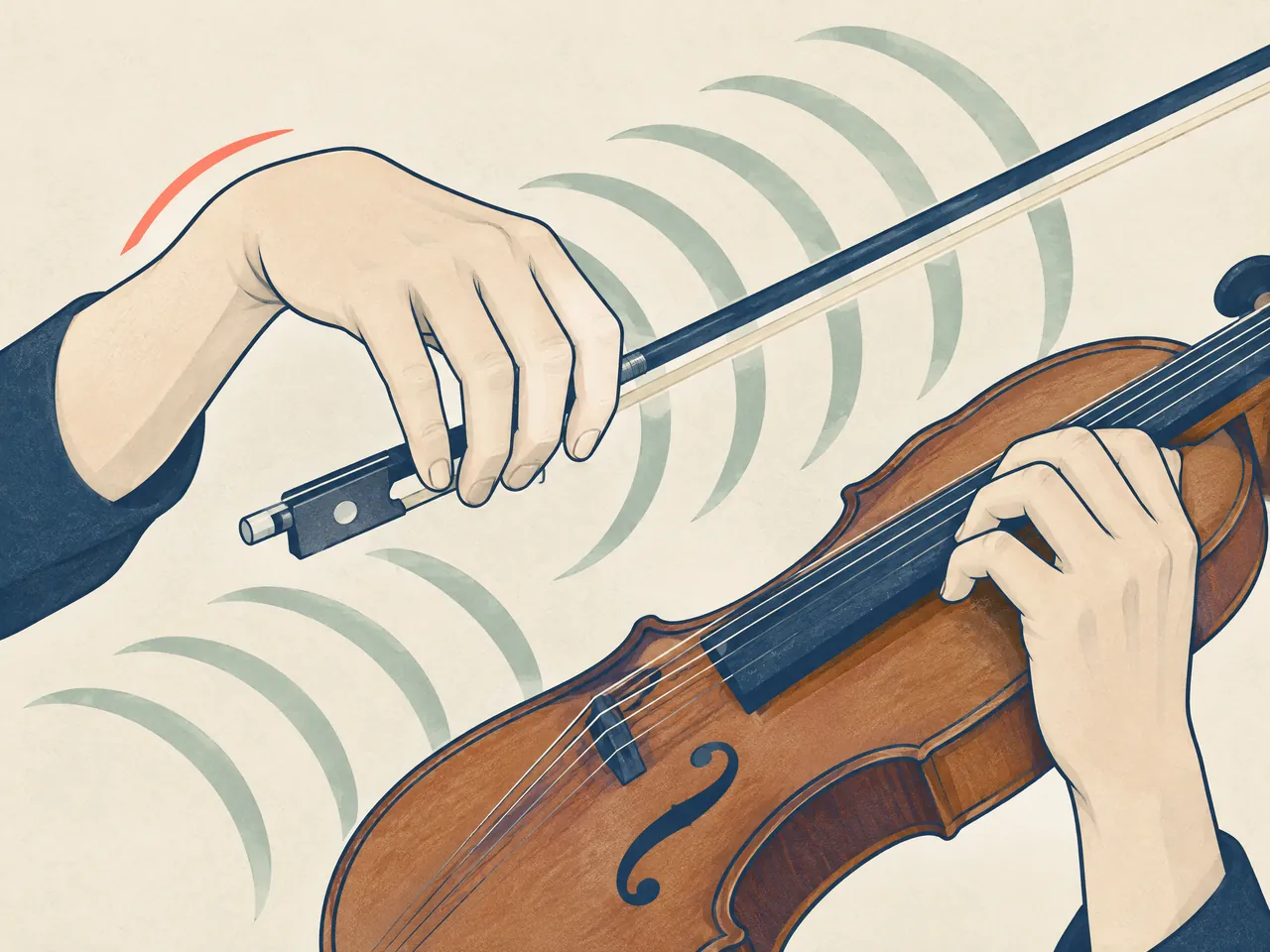
Start with the event that preceded the symptom. A clearly injured wrist may require prompt structural assessment; see wrist pain after injury for questions to document about timing, swelling and movement. If no single event stands out, gradual symptoms still deserve attention when they change your work, sleep or grip. A clinician may consider the wrist, hand, forearm, neck, medical history and current medicines rather than looking only at the site that feels sore. This is why a careful history is more valuable than an online self-test.

Carpal Tunnel Syndrome Symptoms and When should I see a doctor for wrist pain? — Distinguish injury, tendon and joint patterns
Injury features can be immediate: a fall, direct blow or twist followed by swelling, bruising, marked pain or loss of movement. A popping, snapping or grinding noise at the time of injury is another detail to report. A sprain can make gripping and wrist movement painful, but an apparent sprain should not be assumed to be harmless after significant trauma. The page on wrist sprain symptoms may help you prepare a description of the injury, while urgent signs still take priority over reading more at home.
Tendon or joint-related discomfort may be more localised and movement-specific. For example, pain, stiffness or swelling near the base of the thumb can point the assessment in a different direction from tingling in the fingers at night. A lump may also need examination instead of repeated pressing or stretching. There is no reliable benefit in forcing a painful range of movement to prove what the problem is. Protect the hand from tasks that clearly provoke it, but ask a clinician how much movement is appropriate for your situation rather than choosing prolonged immobilisation without guidance.
Carpal Tunnel Syndrome Symptoms and When should I see a doctor for wrist pain? — Recognise urgent warning signs
Do not wait for a routine appointment if wrist pain is severe, the wrist changes shape or colour, you cannot move it or hold things, or feeling is lost in part or all of the hand. Urgent assessment is also appropriate after an injury with a snap, grinding or popping sound, or when a lump is very painful, hot or red. Feeling faint, dizzy or sick from the pain, or being unwell, hot, cold or shivery, adds to the urgency [2]. These features can be consistent with a fracture, infection or another problem that should not be managed as ordinary overuse.
In Hong Kong, seek urgent local medical help or emergency care when such warning signs are present. Otherwise, make a timely appointment if there is persistent or returning numbness, worsening weakness, progressive loss of grip, a painful warm swollen stiff wrist, or pain that prevents usual activity. Use the wrist pain red flags guide as a reminder of what to report, not as permission to delay care until every sign appears. If you are unsure whether a symptom is urgent, the safer choice is to contact an appropriate medical service for advice.
Carpal Tunnel Syndrome Symptoms: When should I see a doctor for wrist pain? — Consider next steps
The next step should match the pattern and urgency. For a non-urgent problem, bring your symptom timeline and list of treatments to a doctor or suitable clinician. They may diagnose carpal tunnel syndrome from the history and examination of the hand; if the picture is uncertain, the NHS notes that nerve-conduction testing or scans such as ultrasound or MRI may be considered [1]. The purpose is not to demand every test. It is to establish what needs treatment, what can be monitored and whether another cause needs attention.
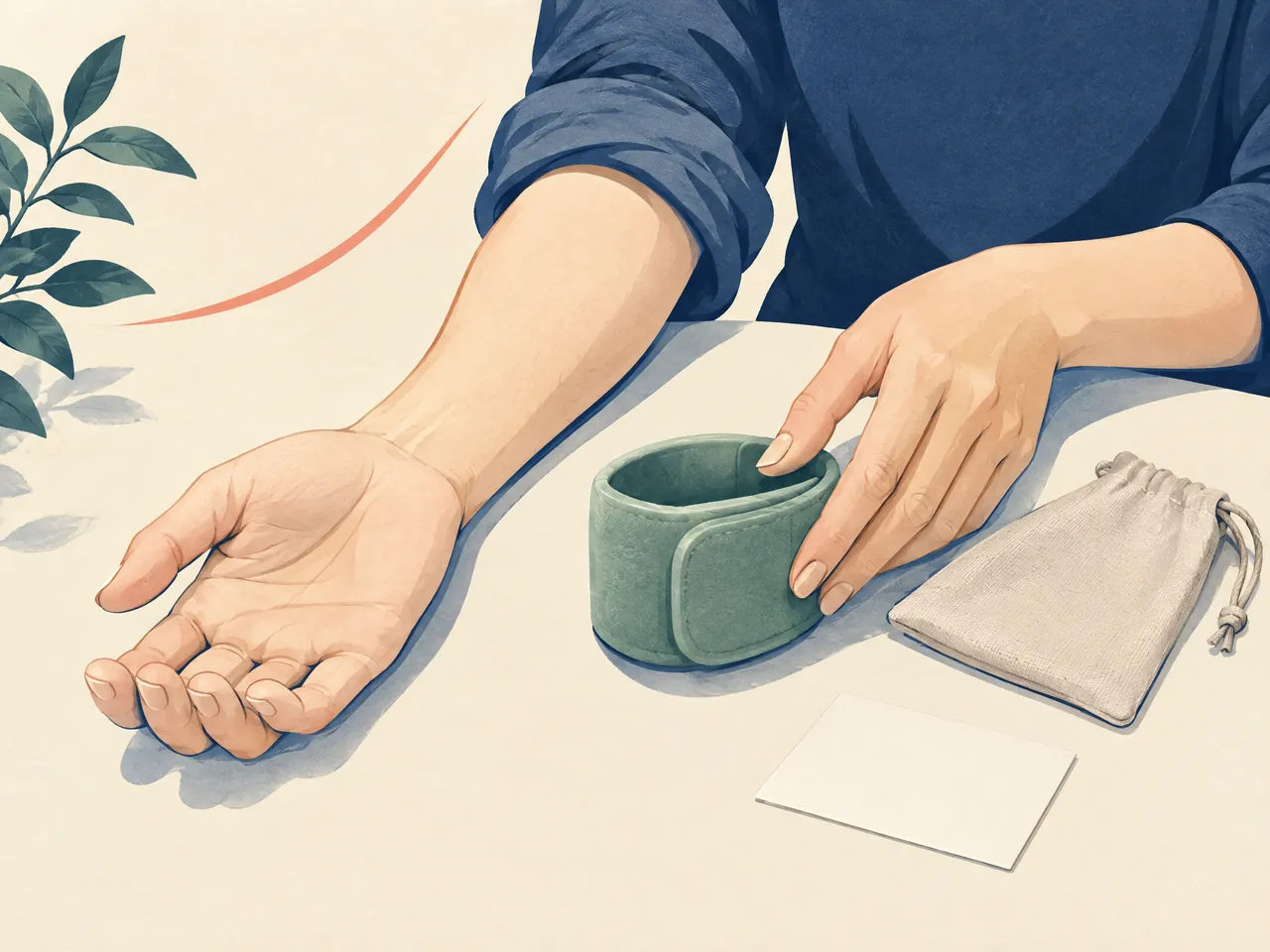
While waiting for non-urgent assessment, reduce or break up activities that repeatedly bend the wrist or require hard gripping if they reliably provoke symptoms. Gentle movement within comfort can be preferable to total inactivity for mild pain and stiffness, while a splint may be discussed for support, especially at night. For a recent injury, avoid heat in the first two to three days; the NHS advises wrapped cold packs and avoiding heavy lifting or tight gripping during this early period [2]. Stop any self-care measure that makes symptoms worse, and do not place very hot or cold items directly on skin.
Carpal Tunnel Syndrome Symptoms and When should I see a doctor for wrist pain? — Understand assessment and supportive care
At an assessment, be ready to explain your work and home demands, any previous wrist injury, health conditions, pregnancy where relevant, and the treatments or supplements you use. A clinician may ask about symptoms elsewhere in the arm or neck, examine sensation, strength and movement, and decide whether conservative care, referral, tests or another option is appropriate. Do not stop prescribed treatment because a different approach is being considered. If you have diabetes or other conditions that may affect the hands, say so; this context can change how a persistent symptom is approached.
Heat and cold are comfort measures, not tests or cures. The American Society for Surgery of the Hand notes that warmth may help some stiff or sore hands move, whereas cold can be useful for pain, swelling and irritation after activity; both should be moderated and wrapped to protect skin [4]. A neutral log is helpful: record which option you used, for how long, and whether it made pain, swelling, tingling or skin sensation worse. Stop if cold causes extreme pain or numbness, or if heat is uncomfortably hot.

Carpal Tunnel Syndrome Symptoms and When should I see a doctor for wrist pain? — Weigh acupuncture evidence carefully
A Traditional Chinese Medicine consultation may discuss acupuncture as one supportive option after the symptom pattern and safety issues have been considered. In a face-to-face consultation, a Registered Chinese Medicine Practitioner may ask about the site and quality of pain, sleep, general health, medicines and prior medical assessment within a traditional diagnostic approach. That approach does not convert a traditional pattern label into a modern diagnosis, and it should not replace assessment for injury, infection, progressive neurological symptoms or other warning signs. Be open about ongoing care so decisions can be coordinated rather than duplicated.
It is important to keep expectations proportionate. A Cochrane review found low- or very-low-certainty evidence for acupuncture and related treatments for carpal tunnel syndrome, with uncertainty about how they compare with sham treatment or other options [3]. This does not support a promise to cure wrist pain or a fixed number of sessions. If you want to ask TCM Lab about a consultation in East Kowloon, see the Kwun Tong Chinese medicine clinic page; for Prince Edward planning, see Chinese medicine clinic Prince Edward. State your symptoms and whether you have already had medical assessment when you enquire.
Care and health guide
Pain-care information
This directory brings together services, reading, and visit information related to pain care, to help you prepare questions for a consultation.
When pain care affects your day, noting when it occurs, its relation to activity, and what you have already tried can help prepare a consultation; Chinese medicine pain management Hong Kong is a relevant service or reading entry point.
Individual circumstances differ, and acupuncture Hong Kong offers related information to help you understand options and prepare questions.


Your questions, answered
Frequently asked questions
What are common carpal tunnel syndrome symptoms?
Common symptoms include pain or aching in the fingers, hand or arm, tingling, numbness or pins and needles, a weak thumb and difficulty gripping. They often begin gradually and can be worse at night. The pattern is not diagnostic by itself, because other wrist, tendon, joint and nerve problems can overlap.
When should I see a doctor for wrist pain?
Arrange assessment when pain affects normal activity, gets worse, keeps returning, does not improve with home care, or comes with tingling, numbness or weakness. Seek urgent care for severe pain; changed shape or colour; inability to move the wrist or hold things; complete loss of feeling; a snap or pop during injury; or a painful hot red area with systemic illness.
Can a wrist splint help carpal tunnel symptoms?
A wrist splint that keeps the wrist straight is commonly used at night to reduce pressure on the nerve in carpal tunnel syndrome. Whether it is suitable, how it fits and how long to use it should be discussed with an appropriate clinician, particularly if symptoms are worsening or hand function is changing.
Can acupuncture treat carpal tunnel syndrome?
Acupuncture can be discussed as a supportive option after appropriate assessment, but it is not a guaranteed treatment. A Cochrane review found low- or very-low-certainty evidence and could not determine how acupuncture and related treatments compare with sham treatment or other options. It should not delay urgent care or replace diagnosis of concerning wrist symptoms.
Sources and further information
- [1] NHS — Carpal tunnel syndrome
Referenced for: Official health guidance for carpal tunnel syndrome symptoms, assessment, splints and when to seek non-urgent review.
- [2] NHS — Wrist pain
Referenced for: Official guidance for wrist-pain patterns, self-care and urgent warning signs.
- [3] Cochrane — Acupuncture and related treatments for symptoms of carpal tunnel syndrome
Referenced for: Systematic-review evidence describing the uncertainty and low or very low certainty of evidence for acupuncture-related interventions in carpal tunnel syndrome.
- [4] American Society for Surgery of the Hand — Heat Treatment and Cold Treatment for Hands
Referenced for: Specialty-society patient guidance on cautious heat and cold use for hand and wrist stiffness, pain and swelling.