
TCM Lab · Health reading
Upper Back Pain Stretches, Upper Back Pain Ergonomic Advice and Upper Back Pain Heat or Ice: A Safe Self-Care Guide
Published Updated
Upper-back pain after desk work, carrying a child, a gym session or a long commute can tempt you to stretch hard or stay completely still. Neither response is automatically right. In a non-emergency situation, begin with tolerable movement, lower the activity that clearly provokes the pain, and make the next hour of sitting or lifting easier on your body. A warm or cold pack can be a short-term comfort measure, but it cannot identify the cause. This guide sets out practical upper back pain stretches, ergonomic changes and heat-or-ice choices, plus the symptoms that should end self-care and prompt medical assessment.
Appointments are confirmed through WhatsApp. If you have language requirements, please mention them in your enquiry.
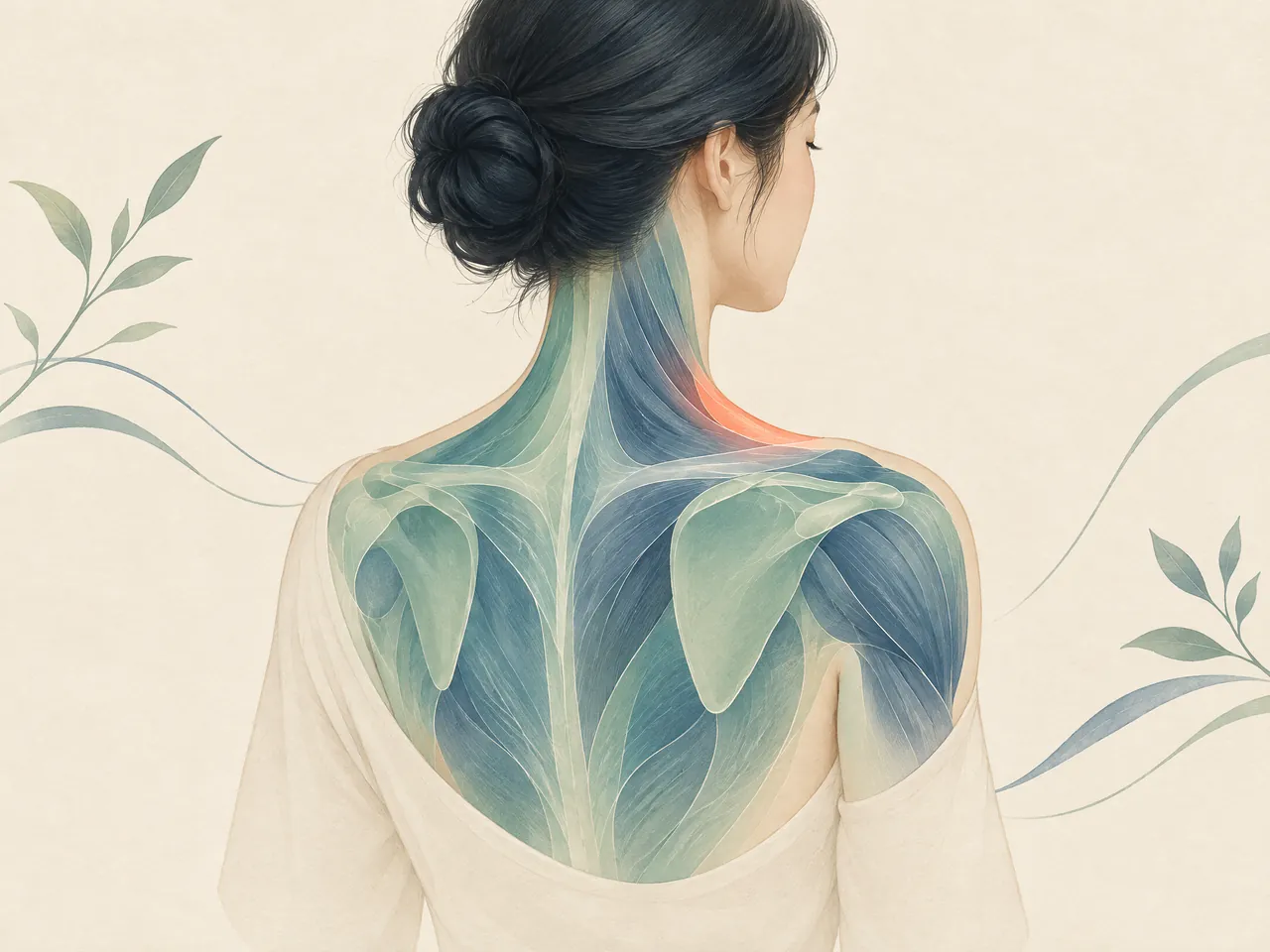
The short answer
For non-emergency upper-back discomfort, keep moving within a comfortable range, temporarily reduce activities that sharply worsen symptoms, and make your workstation easier to use. Gentle thoracic rotation or extension may be reasonable if it does not cause sharp, spreading or lasting pain. A wrapped cold or warm pack may provide temporary comfort; choose the one that feels better and protect your skin. Seek urgent care for chest pain, breathing difficulty, major weakness, new numbness, trauma, or bladder or bowel changes.
Transparent pricing
See the fees.
Choose your care.
Explore our complete official price list, including first-trial prices, regular prices, packages and branch-specific options.
Opening WhatsApp prepares an enquiry; it does not send a message, take payment or confirm an appointment. Suitability and individual arrangements are confirmed during consultation.
Pain care
All prices in HKDExtracorporeal shockwave treatment
Shockwave treatment for deep-tissue and fascial care. The Kwun Tong clinic offers the multi-area options shown below.
Priced by branch
Branch-specific pricing
Prince Edward: HK$250 per area
Kwun Tong: HK$250 for 1 area / HK$450 for 2 areas / HK$600 for 3 areas
Pain care (manual therapy)
Includes Chinese medicine musculoskeletal assessment, manual joint techniques and tui na.
HK$580 (single session)
Chinese medicine musculoskeletal assessment
Pain care (acupuncture and manual therapy)
Combines acupuncture and manual therapy.
HK$680 (single session)
Combined care
Hair and scalp
All prices in HKDScalp health and hair-loss management
Includes AI scalp analysis, deep scalp and follicle cleansing, and scalp oil-control care.
HK$380 (first trial)
Regular price: HK$680
- 6 sessions: HK$3,480 (HK$580 per session)
- 12 sessions: HK$5,760 (HK$480 per session)
- 20 sessions: HK$8,600 (HK$430 per session)
- 30 sessions: HK$11,400 (HK$380 per session)
Hair acupuncture and Chinese herbal medicine package
Includes scalp acupuncture and 3 days of Chinese herbal medicine that does not require decoction.
HK$580 (single session)
Registered Chinese Medicine Practitioner consultation
- 6 sessions: HK$3,180 (HK$530 per session)
- 12 sessions: HK$5,760 (HK$480 per session)
- 20 sessions: HK$8,600 (HK$430 per session)
- 30 sessions: HK$11,400 (HK$380 per session)
Combined hair and scalp treatment
Combines acupuncture and Chinese herbal medicine with salon-level scalp and follicle care. Packages include complimentary hair-care shampoo and serum.
HK$1,260 (single session)
Combined treatment
- 8 sessions: HK$8,640 (HK$1,080 per session)
- 16 sessions: HK$15,680 (HK$980 per session)
- 20 sessions: HK$18,600 (HK$930 per session)
- 30 sessions: HK$26,400 (HK$880 per session)
Weight management
All prices in HKDFull-body acupoint embedding for weight management
Includes full-body acupoint embedding. Packages include complimentary Chinese herbal medicine for weight management, with the number of included days scaled to the package. Embedding material and the individual treatment arrangement are confirmed during consultation; this is not a cosmetic thread lift.
HK$980 (single session)
No trial session
- 10 sessions: HK$7,800 (HK$780 per session)
- 20 sessions: HK$14,600 (HK$730 per session)
- 30 sessions: HK$20,400 (HK$680 per session)
Facial acupuncture
All prices in HKDFacial acupuncture (basic)
Includes facial acupuncture and meridian-based facial care, including care for facial puffiness.
HK$480 (first trial)
Regular price: HK$680
- 10 sessions: HK$5,200 (HK$520 per session)
- 20 sessions: HK$9,600 (HK$480 per session)
- 30 sessions: HK$13,500 (HK$450 per session)
Facial acupuncture (advanced)
Includes enhanced facial acupuncture with a specially formulated moisturising mask and serum.
HK$780 (first trial)
Regular price: HK$1,180
- 10 sessions: HK$9,000 (HK$900 per session)
- 20 sessions: HK$16,600 (HK$830 per session)
- 30 sessions: HK$23,400 (HK$780 per session)
Chinese medicine
All prices in HKDAcupuncture and Chinese herbal medicine package
Includes a Chinese medicine consultation with pulse assessment, body acupuncture and 3 days of Chinese herbal granules that do not require decoction.
HK$580 (single session)
Chinese medicine consultation with pulse assessment
Upper Back Pain Stretches, Upper Back Pain Ergonomic Advice and Upper Back Pain Heat or Ice: Start with Safe Load Management
Start by looking for a pattern rather than blaming one posture. Upper-back pain can be felt from the base of the neck to the lower edge of the rib cage, including the area around the shoulder blades. It may follow repeated reaching, lifting, driving, computer work, an unfamiliar exercise session or an awkward twist. It can also have other causes. Cleveland Clinic notes that pain in this region may arise from the spine, muscles and shoulder-blade area, or may be referred from elsewhere in the body [1]. That is why a helpful self-care plan begins with a symptom check and a manageable change, not an attempt to “correct” yourself into one fixed position.
For a straightforward ache that is linked to a familiar activity and has no warning signs, change the load before you judge the result. Pause the repeated overhead task, divide a heavy shopping bag into lighter loads, alternate the arm used to carry a bag, or break a long cleaning job into shorter pieces. Keep ordinary movement in the day where you can. Prolonged bed rest or avoiding every movement can make the upper body feel more guarded and stiff. The aim is not to test pain repeatedly; it is to find an amount of activity that lets you stay engaged without a sharp flare during or afterwards.
Keep a brief note for two or three days: where the discomfort sits, when it appears, whether it is worse during a task or later that day, and whether it spreads, tingles or changes with breathing. This distinguishes a workstation experiment from a health assessment. The broader guide to upper back pain self-care can help you organise those observations, but do not use a diary to wait out a concerning symptom. Sudden pain without an obvious mechanical trigger, or pain that feels very different from your usual muscle soreness, deserves more caution.

Upper Back Pain Stretches, Upper Back Pain Ergonomic Advice and Upper Back Pain Heat or Ice: Keep Movement Tolerable
Use symptoms as a volume control. Gentle movement is usually better than trying to stretch through a sharp catch, a feeling of instability, pins and needles, or pain that travels into an arm or chest. Choose a starting position that feels supported: sit with both feet on the floor, rest your forearms on a desk, or lie on your side with a pillow under the top arm. Then make the movement small. A few comfortable turns of the chest, shoulder-blade rolls or a short walk around the room are reasonable ways to see how the area responds. There is no prize for reaching a deeper stretch.
It is normal for a stiff area to feel mildly uncomfortable when it starts moving, but the response afterwards matters. Reduce the range, speed or number of repetitions if discomfort becomes sharp, causes you to hold your breath, or remains clearly worse later in the day. The NHS thoracic-back-pain leaflet advises people to remain active where possible and not to do an exercise that produces excessive pain lasting a long time [2]. This is a practical pacing rule, not a reason to ignore new neurological symptoms or severe pain.
Upper Back Pain Stretches, Upper Back Pain Ergonomic Advice and Upper Back Pain Heat or Ice: Adjust Daily Demands
Good upper back pain ergonomic advice makes the task less demanding; it does not require a perfect pose all day. Put the screen where you can view it without a sustained downward bend, bring the keyboard and mouse close enough that the elbows can stay near the body, and keep frequently used items within easy reach. Support your forearms if hovering them makes the area between the shoulder blades tense. If you use a laptop for long stretches, changing the set-up with a separate keyboard, mouse or a raised screen can be more useful than simply trying to sit straighter.
Variation matters as much as chair settings. Stand to take a call, refill water, change the document you are reading, or take a brief walk between focused tasks. When working from a sofa, train or shared desk, use a smaller goal: avoid holding the same bent or twisted position for a long uninterrupted spell. The article Can posture cause upper back pain? explores why posture is only one part of the picture. A set-up can reduce repeated strain while sleep, stress, injury, activity changes and health conditions may still influence pain.
Compare your options
| Situation | Reasonable first step | What to avoid | When to change course |
|---|---|---|---|
| Stiffness after a long screen session | Raise or reposition the screen, support the forearms and take a brief movement break. | Trying to hold one “perfect” posture for hours. | Seek advice if symptoms spread, intensify or do not improve with sensible changes. |
| Mild tightness after familiar activity | Use small, comfortable thoracic turns or supported extension, then return to normal light activity. | Bouncing, forcing range or stretching through sharp pain. | Stop and seek assessment if there is weakness, numbness or pain that remains clearly worse. |
| Recent non-emergency flare after exertion | Try a wrapped cool or warm pack for temporary comfort; choose the milder option that feels better. | Direct ice, very hot packs or sleeping on a pack. | Stop if skin sensation or colour changes, or if pain comes with chest or breathing symptoms. |
| Pain with uncertain cause or changing pattern | Record the timing, trigger and associated symptoms, then arrange suitable medical assessment. | Assuming it is posture or a muscle knot without checking warning signs. | Use urgent care for chest pain, breathing difficulty, serious trauma or major neurological changes. |
On smaller screens, scroll the table sideways to compare all columns.
Upper Back Pain Stretches, Upper Back Pain Ergonomic Advice and Upper Back Pain Heat or Ice: Practical Relief at Home
Home care works best when it is simple enough to repeat safely. Pick one or two gentle movements, one workstation adjustment and one comfort measure rather than changing everything at once. For example, a person whose discomfort follows a morning of spreadsheet work could raise the screen, stand up at natural task breaks and use a small seated chest rotation later in the day. Someone whose symptoms followed lifting might first reduce lifting and use a short walk or supported shoulder motion instead. If a change is clearly unhelpful, stop it rather than adding force or duration.
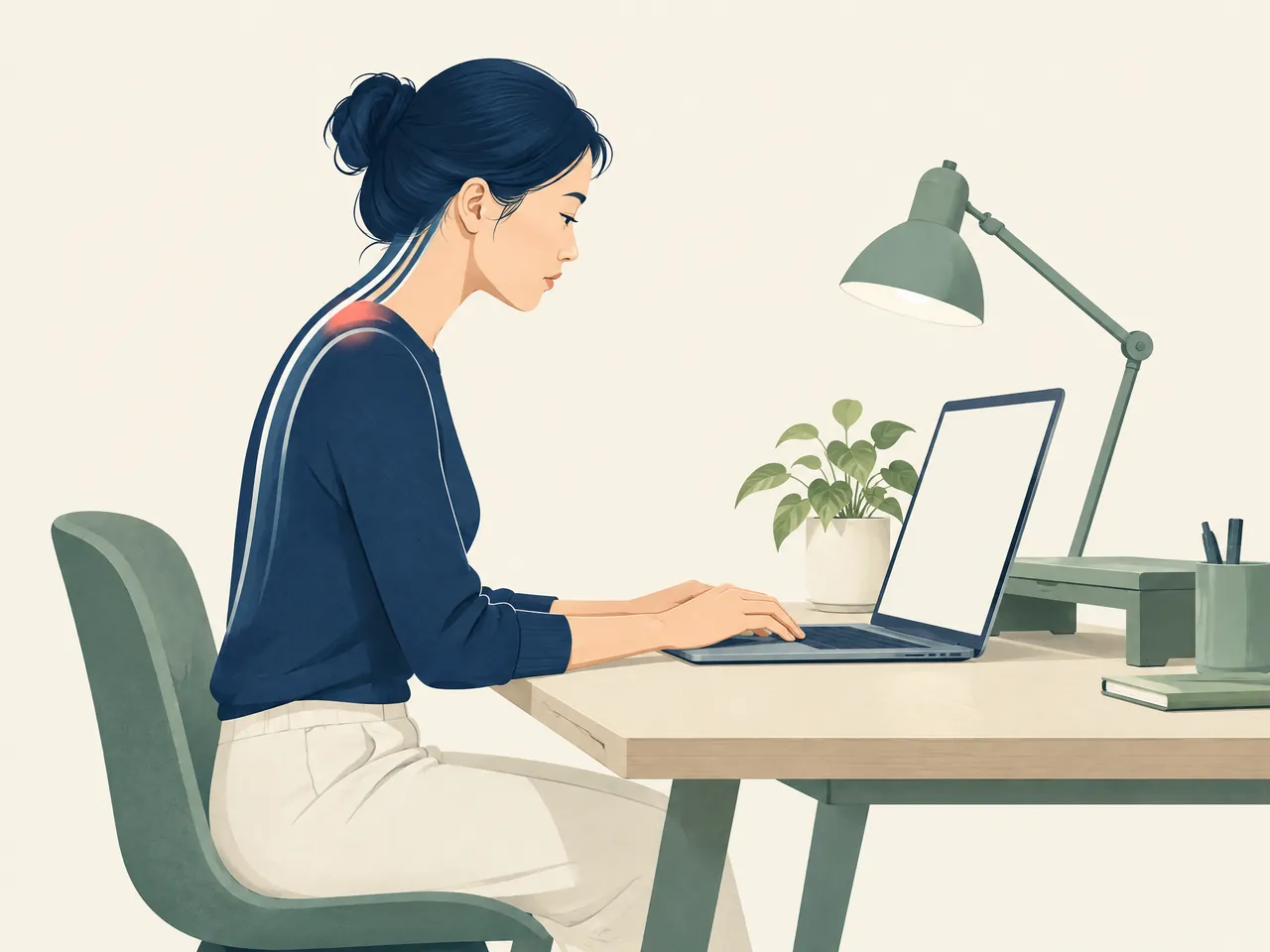
The question “upper back pain heat or ice?” is usually about temporary comfort, not a cure. Cold and warmth can feel different from person to person, and either may be considered in non-emergency self-care. Use a cloth barrier between the pack and skin, check the skin regularly, and do not fall asleep on a pack. Avoid using a pack on an area with reduced sensation or where you cannot reliably notice heat or cold. If you have circulation concerns, diabetes-related loss of feeling or a skin condition, ask a clinician or pharmacist whether a pack is appropriate for you.
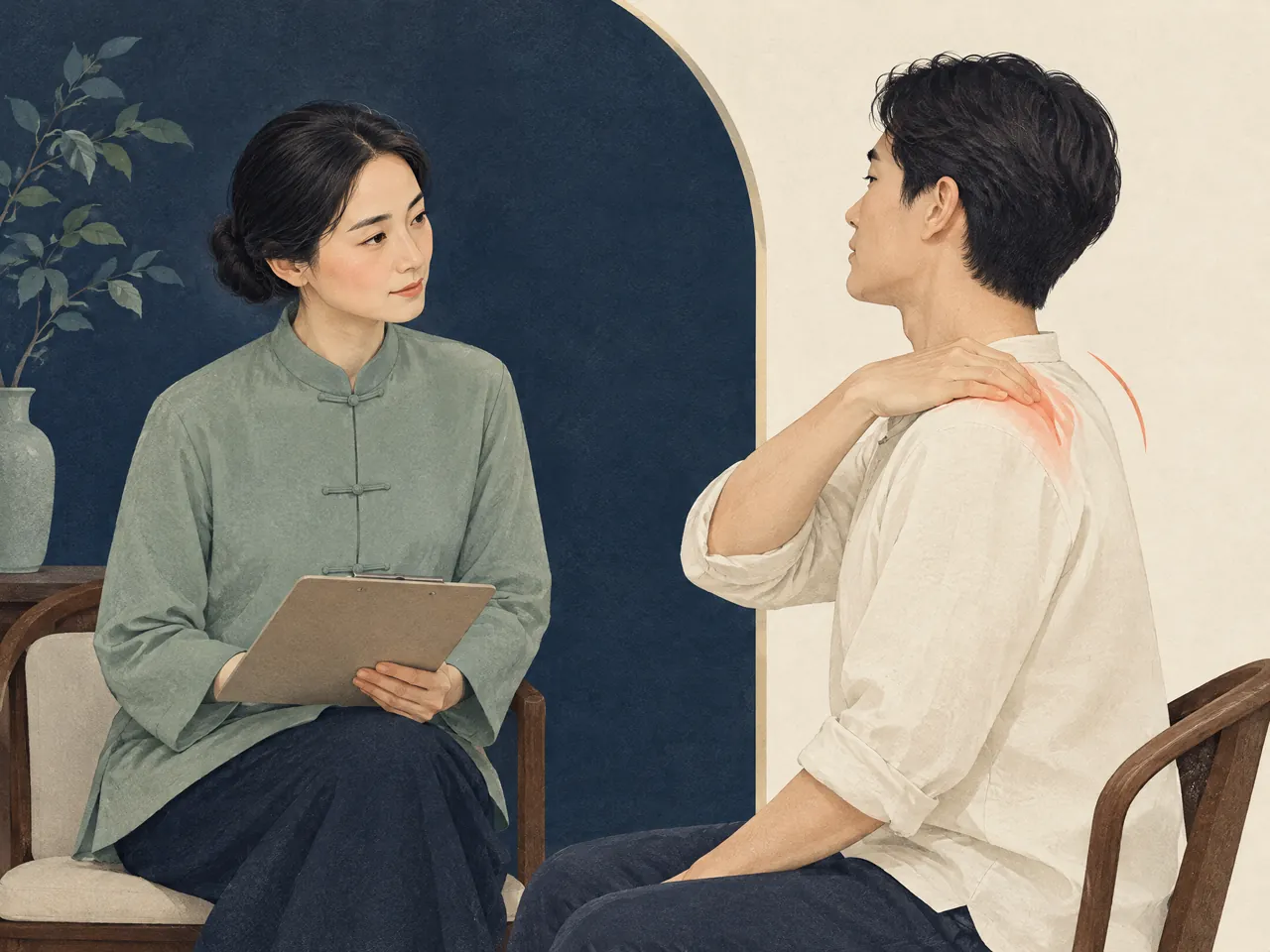
Upper Back Pain Stretches, Upper Back Pain Ergonomic Advice and Upper Back Pain Heat or Ice: Use Gentle Mobility
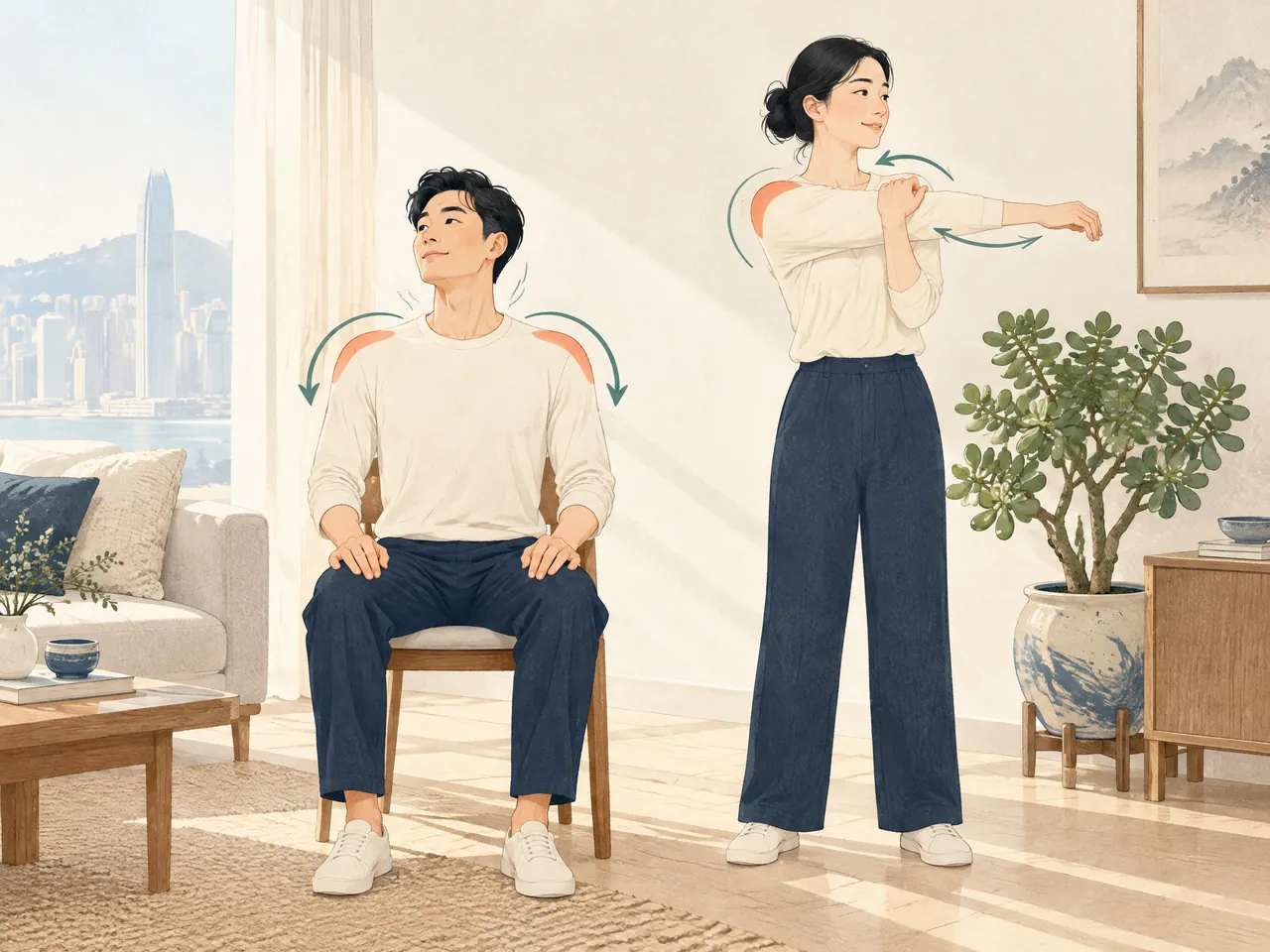
Try one of these upper back pain stretches only when the movement feels safe and comfortable. Sit tall near the back of a stable chair, cross the arms lightly over the chest and slowly turn the rib cage to one side, then return and repeat on the other side. Keep the hips still enough that the turn comes from the mid-back, not from pushing the neck. Another option is a small thoracic extension: sit against a chair with a backrest, support the head lightly with the hands, and lean the upper back over the chair top without jamming the neck. A relaxed breath can help keep the effort gentle.
Do not treat a stretch as a test of flexibility. Skip it if you have a recent significant injury, new severe pain, pain with breathing, marked dizziness, or symptoms travelling down an arm or into the chest. For people without these concerns, short, easy movements spread through the day are often more practical than one intense session after work. Follow with a normal task such as walking, making tea or calmly reaching for light objects. This helps you judge whether the movement supports daily function rather than only producing a momentary sensation of release.
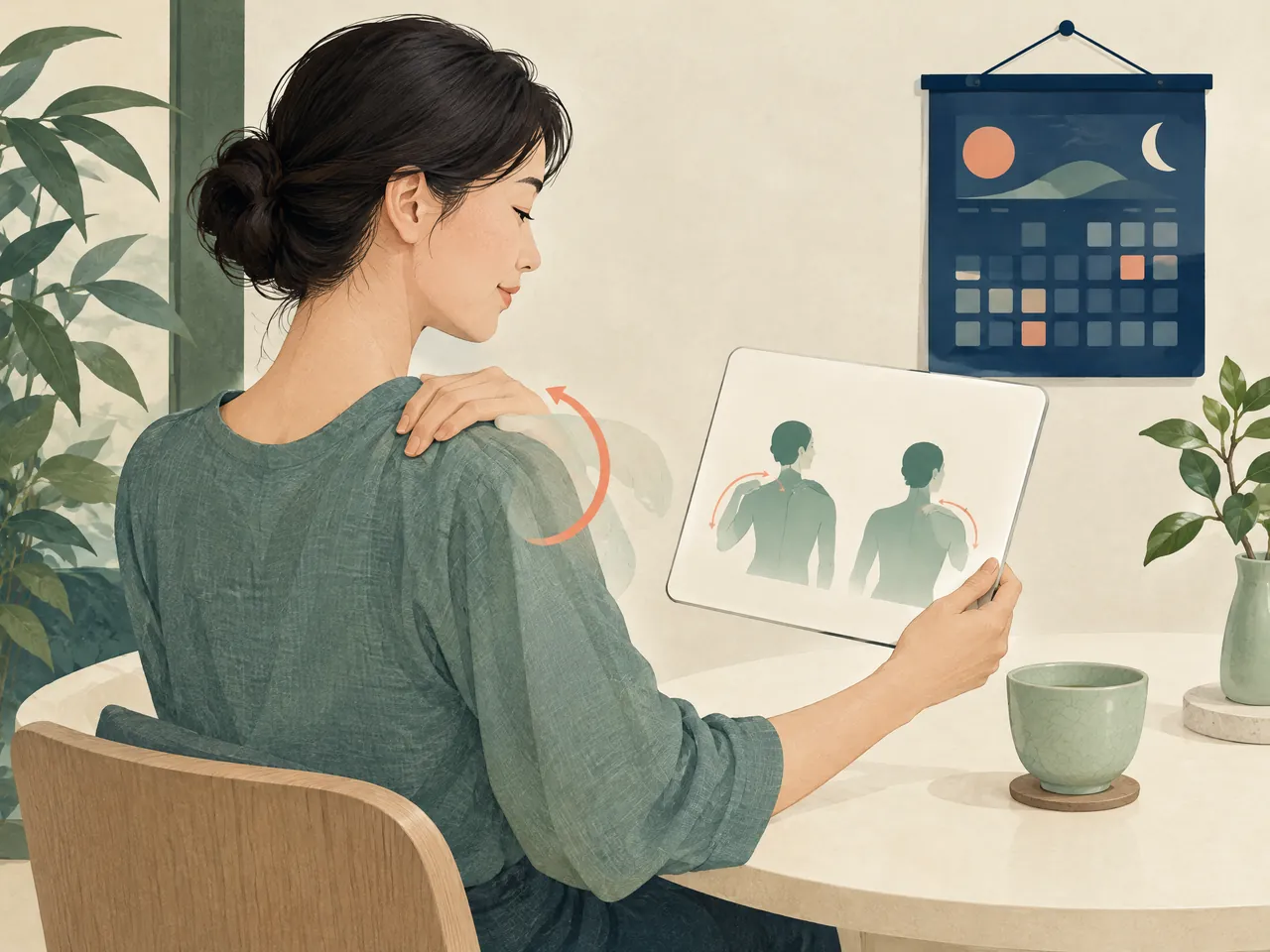
Upper Back Pain Stretches, Upper Back Pain Ergonomic Advice and Upper Back Pain Heat or Ice: Apply Packs Carefully
If you choose cold, use a wrapped cold pack rather than ice directly on the skin. It may feel useful after a recent aggravation or after activity, especially if cold is more comfortable to you. If you choose warmth, use a warm—not hot—pack or warm shower to ease a feeling of muscular tightness. Check the temperature with your hand first, use a cover, and stop if there is burning, blotchy colour change, excessive redness, persistent numbness or increasing discomfort. Do not use either method to push through an activity that is clearly making symptoms worse.
Give the pack a clear role: comfort while you rest, prepare for a few gentle movements, or settle after a tolerated activity. Do not assume a temporary reduction in pain means that heavy lifting, forceful stretching or a long desk session is now risk-free. If you are unsure which option to try, select the milder temperature that feels soothing and reassess after a short application. The guide to upper back pain relief at home offers further practical ideas, but a pack should never delay emergency care for chest symptoms or breathlessness.
Upper Back Pain Stretches, Upper Back Pain Ergonomic Advice and Upper Back Pain Heat or Ice: Know When to Seek Help
Self-care has clear limits because “upper-back pain” describes a location, not one diagnosis. Seek emergency medical help if upper-back pain occurs with chest pain, trouble breathing, fainting, sweating, or other symptoms that could point to a heart or lung emergency. Urgent assessment is also needed after significant trauma and for new major weakness, paralysis, walking difficulty, numbness in a concerning pattern, or new loss of bladder or bowel control. These are not symptoms to settle with a stretch, a posture adjustment or a pack. Stop self-care and use local emergency services or urgent medical care.
Arrange a medical assessment promptly when the pain is getting worse rather than gradually settling, is severe at night, follows an injury, comes with fever or unexplained weight loss, or does not improve with sensible activity changes. The exact next step depends on the pattern and your health history. A clinician may need to examine your back, nerves, breathing or other systems instead of assuming a muscle problem. If you are deciding whether an appointment is needed, read when to see a doctor for upper back pain; do not wait for routine advice if a red flag is present.

Upper Back Pain Stretches, Upper Back Pain Ergonomic Advice and Upper Back Pain Heat or Ice: Recognise Warning Signs
Pay attention to changes that do not fit a usual overuse pattern. Pain between the shoulder blades that starts suddenly with no clear physical trigger, particularly with breathing difficulty or chest discomfort, is different from a familiar ache after a long day at a desk. So is pain associated with a high-impact fall, a new rash with fever, a feeling of being systemically unwell, or progressive neurological changes. Note the time symptoms began and any associated signs, but do not drive yourself if you are seriously unwell. Tell emergency or medical staff about recent injury, medical conditions and medicines.
Persistent pain also deserves attention even when it is not an emergency. If a carefully paced plan does not lead to any improvement, if normal work or sleep is becoming difficult, or if the pain recurs with less and less activity, make an appointment with an appropriate healthcare professional. Assessment can clarify whether further testing, rehabilitation, medication advice or another plan is appropriate. A temporary response to heat, ice or massage does not rule out another cause, and an uncomfortable response to a stretch is useful information to bring to that assessment.
Upper Back Pain Stretches, Upper Back Pain Ergonomic Advice and Upper Back Pain Heat or Ice: Discuss Next Steps
Bring concise observations to a consultation: the exact spot of pain, whether it is dull, sharp, burning or spreading, the date it began, possible triggers, sleep impact, and what movements or packs you tried. Mention all medicines, supplements and treatments, as well as previous injury, osteoporosis, cancer history, immune suppression or anticoagulant use where relevant. This does not require you to diagnose the cause; it gives the clinician a usable account. If you are considering Chinese medicine as a complementary option after appropriate assessment, disclose the same health information so that the discussion is safe and specific to you.
TCM Lab can be contacted on WhatsApp at +852 6940 5663 to enquire about a non-urgent assessment with a Registered Chinese Medicine Practitioner at the Kwun Tong Chinese medicine clinic or the Prince Edward location. Say that the issue is upper-back pain, describe any current medical assessment, and mention medicines or relevant conditions. An enquiry is not a diagnosis, automatic appointment or a substitute for urgent medical care. If chest pain, breathlessness, new major neurological symptoms or trauma are present, seek conventional urgent medical assessment first.
Care and health guide
Low back discomfort: care information
This directory brings together services, reading, and visit information related to low back discomfort, to help you prepare questions for a consultation.
When low back discomfort affects your day, noting when it occurs, its relation to activity, and what you have already tried can help prepare a consultation; acupuncture for low back pain is a relevant service or reading entry point.
Individual circumstances differ, and acupuncture Hong Kong offers related information to help you understand options and prepare questions.


Your questions, answered
Frequently asked questions
How often should I do upper back pain stretches?
There is no universal number. Start with a few small, comfortable movements at a time that fits your day, and judge the response during and later that day. Reduce or stop if pain becomes sharp, travels, or stays noticeably worse. Regular gentle variation is usually more useful than one long, forceful stretching session.
Is a cold pack better than a heat pack for upper-back pain?
Neither is automatically better. A cold pack can feel preferable after a recent flare or activity, while warmth may feel more comfortable when muscles feel tight. Use a cloth barrier, avoid extreme temperatures and do not apply either to numb or damaged skin. The pack is for short-term comfort, not diagnosis or treatment of the cause.
What ergonomic change should I make first for upper-back pain at a desk?
Start with the task you repeat most: bring the screen to a comfortable viewing height, keep the keyboard and mouse close, and support the forearms if they hover. Then add regular position changes. Do not expect a chair adjustment alone to resolve every upper-back symptom, especially if the pain is new, worsening or not clearly related to desk work.
When is upper-back pain an emergency?
Seek emergency care for pain with chest pain, trouble breathing, fainting, sweating, or symptoms of major nerve or spinal cord problems such as significant weakness, paralysis or new bladder or bowel control changes. Also seek urgent assessment after significant trauma. Do not try to manage these symptoms with stretching, heat or ice.
Sources and further information
- [1] Cleveland Clinic — Upper Back Pain
Referenced for: Academic medical-centre overview of upper-back pain, possible musculoskeletal and referred causes, ergonomic changes, heat or cold packs, and symptoms that need medical care.
- [2] Tyneside Integrated Musculoskeletal Service, NHS — Managing Thoracic Back Pain
Referenced for: NHS patient guidance on remaining active, pacing movement, thoracic mobility exercises and warning signs that need urgent or further assessment.