
TCM Lab · Health reading
When should I see a doctor for allergic rhinitis?; Is acupuncture effective for allergic rhinitis in adults?; Can I have acupuncture while using a steroid nasal spray?: Making Informed Choices for Allergic Rhinitis
Published Updated
A blocked or dripping nose can be more than an inconvenience when it repeatedly interrupts sleep, work, school or time with family. Allergic rhinitis often causes sneezing, nasal itch, clear runny discharge and itchy or watery eyes, yet similar complaints can also come from irritants, infection or another nasal condition. This guide helps you decide when a medical review is sensible, how cautiously to interpret acupuncture research in adults and children, and how to discuss acupuncture if you already use a steroid nasal spray. The aim is a practical, coordinated plan rather than a promised cure or a reason to replace prescribed care.
Appointments are confirmed through WhatsApp. If you have language requirements, please mention them in your enquiry.
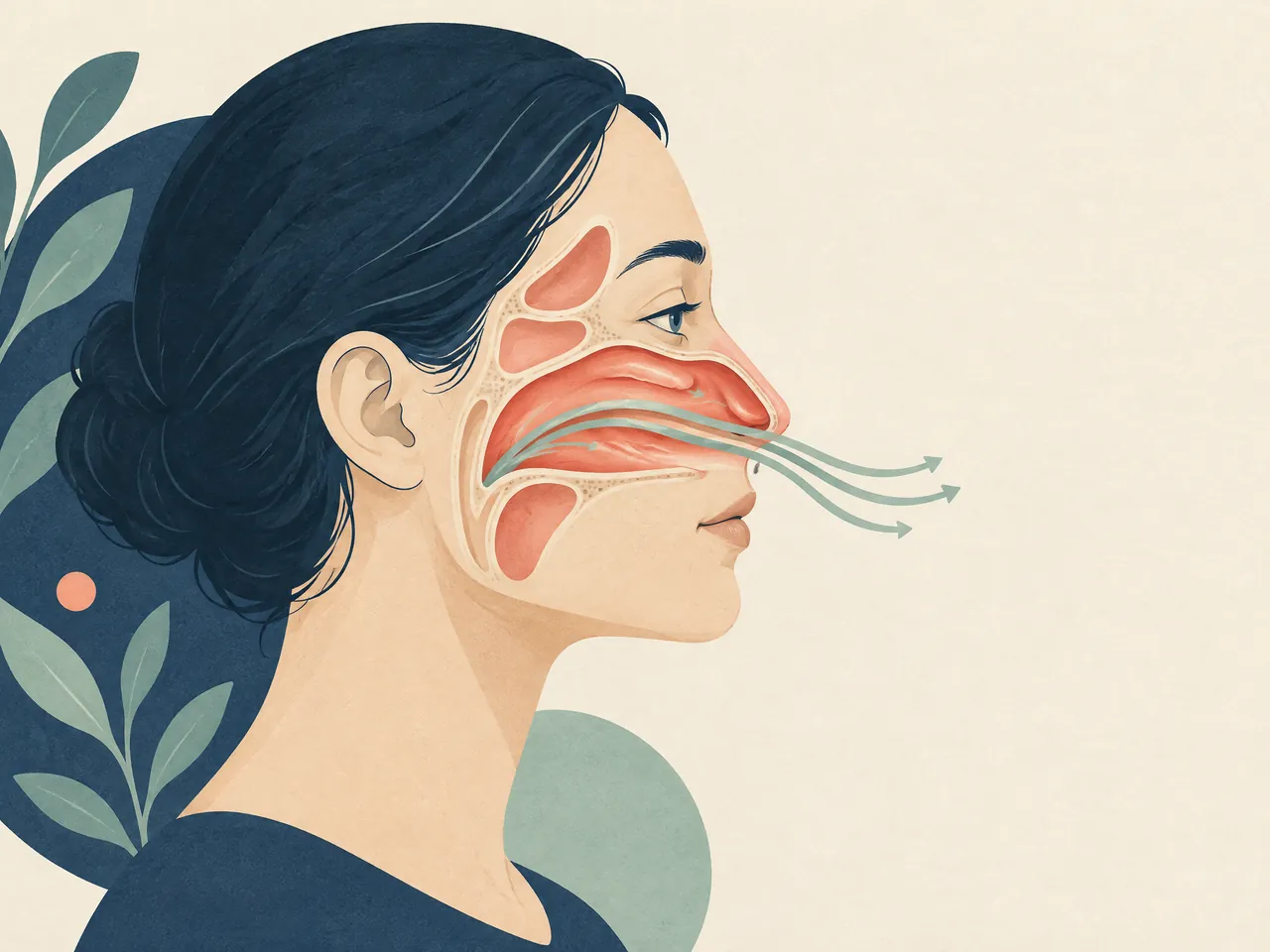
The short answer
See a qualified doctor when symptoms are worsening, disrupting sleep or everyday life, are not responding to pharmacy treatment, or occur with worsening asthma. Acupuncture may be discussed as an adjunct for some adults, but the research has important limitations and does not show that it should replace allergy assessment or prescribed medicine. Children need an especially careful individual assessment. If you use a steroid nasal spray, continue it as prescribed unless the prescribing doctor advises a change.
Transparent pricing
See the fees.
Choose your care.
Explore our complete official price list, including first-trial prices, regular prices, packages and branch-specific options.
Opening WhatsApp prepares an enquiry; it does not send a message, take payment or confirm an appointment. Suitability and individual arrangements are confirmed during consultation.
Chinese medicine
All prices in HKDAcupuncture and Chinese herbal medicine package
Includes a Chinese medicine consultation with pulse assessment, body acupuncture and 3 days of Chinese herbal granules that do not require decoction.
HK$580 (single session)
Chinese medicine consultation with pulse assessment
Hair and scalp
All prices in HKDScalp health and hair-loss management
Includes AI scalp analysis, deep scalp and follicle cleansing, and scalp oil-control care.
HK$380 (first trial)
Regular price: HK$680
- 6 sessions: HK$3,480 (HK$580 per session)
- 12 sessions: HK$5,760 (HK$480 per session)
- 20 sessions: HK$8,600 (HK$430 per session)
- 30 sessions: HK$11,400 (HK$380 per session)
Hair acupuncture and Chinese herbal medicine package
Includes scalp acupuncture and 3 days of Chinese herbal medicine that does not require decoction.
HK$580 (single session)
Registered Chinese Medicine Practitioner consultation
- 6 sessions: HK$3,180 (HK$530 per session)
- 12 sessions: HK$5,760 (HK$480 per session)
- 20 sessions: HK$8,600 (HK$430 per session)
- 30 sessions: HK$11,400 (HK$380 per session)
Combined hair and scalp treatment
Combines acupuncture and Chinese herbal medicine with salon-level scalp and follicle care. Packages include complimentary hair-care shampoo and serum.
HK$1,260 (single session)
Combined treatment
- 8 sessions: HK$8,640 (HK$1,080 per session)
- 16 sessions: HK$15,680 (HK$980 per session)
- 20 sessions: HK$18,600 (HK$930 per session)
- 30 sessions: HK$26,400 (HK$880 per session)
Weight management
All prices in HKDFull-body acupoint embedding for weight management
Includes full-body acupoint embedding. Packages include complimentary Chinese herbal medicine for weight management, with the number of included days scaled to the package. Embedding material and the individual treatment arrangement are confirmed during consultation; this is not a cosmetic thread lift.
HK$980 (single session)
No trial session
- 10 sessions: HK$7,800 (HK$780 per session)
- 20 sessions: HK$14,600 (HK$730 per session)
- 30 sessions: HK$20,400 (HK$680 per session)
Facial acupuncture
All prices in HKDFacial acupuncture (basic)
Includes facial acupuncture and meridian-based facial care, including care for facial puffiness.
HK$480 (first trial)
Regular price: HK$680
- 10 sessions: HK$5,200 (HK$520 per session)
- 20 sessions: HK$9,600 (HK$480 per session)
- 30 sessions: HK$13,500 (HK$450 per session)
Facial acupuncture (advanced)
Includes enhanced facial acupuncture with a specially formulated moisturising mask and serum.
HK$780 (first trial)
Regular price: HK$1,180
- 10 sessions: HK$9,000 (HK$900 per session)
- 20 sessions: HK$16,600 (HK$830 per session)
- 30 sessions: HK$23,400 (HK$780 per session)
Pain care
All prices in HKDExtracorporeal shockwave treatment
Shockwave treatment for deep-tissue and fascial care. The Kwun Tong clinic offers the multi-area options shown below.
Priced by branch
Branch-specific pricing
Prince Edward: HK$250 per area
Kwun Tong: HK$250 for 1 area / HK$450 for 2 areas / HK$600 for 3 areas
Pain care (manual therapy)
Includes Chinese medicine musculoskeletal assessment, manual joint techniques and tui na.
HK$580 (single session)
Chinese medicine musculoskeletal assessment
Pain care (acupuncture and manual therapy)
Combines acupuncture and manual therapy.
HK$680 (single session)
Combined care
When should I see a doctor for allergic rhinitis?; Is acupuncture effective for allergic rhinitis in adults?; Can I have acupuncture while using a steroid nasal spray?: Recognising Symptoms and Deciding When to Seek Care
The first decision is not whether a symptom is annoying enough to tolerate; it is whether the pattern is clear and adequately controlled. Allergic rhinitis is commonly linked with sneezing, an itchy, runny or blocked nose and itchy, red or watery eyes. Hong Kong Department of Health guidance also notes that eczema or asthma can occur alongside nasal allergy symptoms. Dust mites, pollen, mould and animal material are examples of allergens, while air pollution and sudden weather changes may aggravate symptoms for some people. Keeping a short record of timing, place, activity, pets, cleaning, weather and medicines used can turn a vague complaint into useful clinical information. [1]
Arrange a medical review when symptoms are getting worse, affect sleep or ordinary activities, remain troublesome despite pharmacy advice, or when the cause is uncertain. Worsening asthma is another reason not to manage the problem alone. These are the situations highlighted by NHS guidance because a clinician can reassess the diagnosis, treatment technique and need for further investigation. [3] Seek urgent medical attention for severe breathing difficulty or a rapidly worsening respiratory problem. An acupuncture consultation can be part of a broader discussion later, but it should not delay assessment of breathing symptoms or substitute for care directed at asthma.

When should I see a doctor for allergic rhinitis?; Is acupuncture effective for allergic rhinitis in adults?; Can I have acupuncture while using a steroid nasal spray?: Allergic and Non-Allergic Rhinitis Symptoms
Allergic rhinitis usually has an exposure pattern: symptoms may follow contact with a likely allergen and may include eye itch or watering. That pattern is helpful, not definitive. A cold can cause congestion and discharge, and temperature, humidity, strong scents, smoke or pollution can irritate the nose without an allergy mechanism. This is why a reader who mainly reacts to perfume, cooking fumes or a sudden move between air-conditioned and outdoor spaces may need to consider non-allergic rhinitis rather than assume every flare is an allergy. A correct explanation matters because the most useful next step can differ.
Look at the whole day rather than one sneeze. Is there itch, clear discharge and eye symptoms? Does the problem recur in the bedroom, around animals, during cleaning or in a particular season? Is there fever, facial pain, a generally unwell feeling, or thick discoloured discharge that does not fit the usual allergy pattern? Write down whether nasal blockage is worse overnight and whether it leads to mouth breathing or poor rest. This record does not diagnose the cause, but it helps a pharmacist, doctor or registered Chinese medicine practitioner understand what you experience and avoid treating an assumed diagnosis.

When should I see a doctor for allergic rhinitis?; Is acupuncture effective for allergic rhinitis in adults?; Can I have acupuncture while using a steroid nasal spray?: Warning Signs That Deserve Medical Assessment
Poor control is itself a meaningful warning sign. A person who wakes repeatedly because the nose is blocked, struggles to concentrate at work, or sees a child become tired and distracted at school deserves a proper review rather than a cycle of changing products. The Hong Kong Department of Health notes that uncontrolled allergic rhinitis can affect sleep, concentration, learning and daily function. [1] Medical assessment is also sensible if symptoms change substantially, the expected trigger is unclear, or a treatment that once helped no longer seems adequate. The appointment is an opportunity to check whether medication is being used as intended and whether another cause needs consideration.
Breathing symptoms change the priority. Wheeze, chest tightness, shortness of breath or worsening asthma should be discussed promptly with a qualified medical professional, because nasal symptoms and asthma can coexist but are not interchangeable problems. Do not rely on an acupuncture appointment, air purifier or a new supplement to judge a breathing flare. For a child, caregivers should also take sleep disruption, daytime fatigue and reduced participation seriously. Bring the child’s symptom record and current treatments to the appropriate clinician first; a possible complementary treatment can then be considered in the context of that assessment.
Compare your options
| Situation | Clues to note | Most sensible next step | Place of acupuncture |
|---|---|---|---|
| Mild, familiar flare with a likely trigger | Sneezing, itch or clear discharge; symptoms settle with the established plan | Avoid the known trigger where practical and use pharmacy or prescribed treatment as advised | An adult may ask about it as an adjunct; do not change medicines independently |
| Symptoms affect sleep, work, school or everyday life | Night blockage, fatigue, reduced concentration or repeated disruption | Arrange a medical review and bring a symptom-and-treatment record | Consider only alongside the review and the existing care plan |
| Cause is unclear or the usual pattern changes | Possible infection, irritant exposure, different symptoms or poor response to usual measures | Seek clinical assessment rather than assuming it is an allergy flare | Not a substitute for diagnosis or allergy assessment |
| Wheeze, chest tightness, breathlessness or worsening asthma | Respiratory symptoms or a noticeable asthma deterioration | Seek prompt qualified medical advice; urgent symptoms need urgent care | Do not delay respiratory assessment for complementary treatment |
On smaller screens, scroll the table sideways to compare all columns.
When should I see a doctor for allergic rhinitis?; Is acupuncture effective for allergic rhinitis in adults?; Can I have acupuncture while using a steroid nasal spray?: Understanding Acupuncture Evidence for Adults and Children
People often ask whether acupuncture is effective because they want relief beyond avoiding triggers and using medication, or because they dislike the feeling of congestion at night. A 2022 systematic review and meta-analysis of randomised trials reported improvements in adult nasal-symptom and quality-of-life measures in some comparisons. It also found no clear difference when acupuncture was compared with cetirizine or loratadine, and its trial-sequential analysis did not confirm the pooled findings. Serious performance and attrition bias were common in the included studies. [2] In plain language, that makes acupuncture a possible adjunct to discuss, not a treatment with guaranteed, predictable results.
A constructive consultation begins with realistic questions: What symptom is most disruptive? What has already been tried? What medicine is currently prescribed? What would count as worthwhile change for this individual? The fuller evidence overview on acupuncture for allergic rhinitis can help readers frame those questions. Traditional Chinese medicine may describe patterns through its own assessment approach, but this is not the same as confirming an allergy diagnosis or identifying a specific allergen. It should sit alongside, not in place of, medical history, examination and any testing a doctor considers appropriate.

When should I see a doctor for allergic rhinitis?; Is acupuncture effective for allergic rhinitis in adults?; Can I have acupuncture while using a steroid nasal spray?: What Adult Research Can and Cannot Show
The review’s adult findings are relevant because they describe research results, but they do not tell us that every adult in Hong Kong will have the same response. Trials used different acupuncture techniques, points, treatment frequencies and durations, which makes a single expectation unrealistic. The review also says that evidence for effects on immune-response molecules remained uncertain. [2] It is therefore more honest to discuss acupuncture as one optional component of a plan focused on symptom burden and safe coordination, rather than as proof of an underlying cure, a substitute for allergy testing, or a fixed series that will work for everyone.
If an adult chooses to explore acupuncture, it is reasonable to agree on a simple observation plan. Note nasal blockage, sneezing, sleep interruption, medication use and triggers before and during the period of care. Keep the prescribing doctor informed, particularly if symptoms are persistent or asthma is present. Readers whose symptoms are seasonal may also find the separate discussion of acupuncture for hay fever useful, while retaining the same cautious interpretation of evidence.

When should I see a doctor for allergic rhinitis?; Is acupuncture effective for allergic rhinitis in adults?; Can I have acupuncture while using a steroid nasal spray?: Why Children Need a More Cautious Assessment
Children are not simply smaller adults for this decision. The systematic review found that the effect of acupuncture for children and adolescents with allergic rhinitis remained unclear because there were insufficient data. [2] A child may also find needling stressful, and the practical impact of poor nasal control can be seen in sleep, play, learning and behaviour. Before considering acupuncture, caregivers should seek appropriate medical assessment when symptoms are persistent, unclear or affecting daily life, and should make sure any asthma concerns receive the attention they need. No complementary approach should displace a child’s prescribed treatment or clinician-led allergy plan.
When families do ask about acupuncture, the discussion should be individual and unhurried. Share the child’s age, reactions to medical procedures, current medicines, symptom diary, sleep pattern and past health history. Ask what the proposed care involves, what discomfort or minor local reactions might occur, and how progress will be reviewed. The appropriate decision may be to focus first on diagnosis, regular treatment use and home measures. A registered Chinese medicine practitioner can consider suitability, but should not promise a cure, a fixed number of sessions or a replacement for the child’s doctor.
When should I see a doctor for allergic rhinitis?; Is acupuncture effective for allergic rhinitis in adults?; Can I have acupuncture while using a steroid nasal spray?: Coordinating Acupuncture with Steroid Nasal Spray and Daily Care
Yes, an adult can ask about acupuncture while using a steroid nasal spray, but the safe starting point is disclosure and coordination. Tell the practitioner the exact spray, tablets, eye drops and other remedies you use, along with asthma medicines and relevant health history. Steroid nasal sprays are among first-line options listed in Hong Kong Department of Health guidance, alongside allergen avoidance and antihistamines. [1] Whether to start, stop, reduce or change a prescribed product remains a decision for the prescribing doctor. Do not test whether acupuncture is ‘working’ by independently stopping medicine that has been prescribed for symptom control.
Good coordination does not mean every treatment must be started at once. If several changes occur in the same week, it becomes hard to know what is helping or aggravating symptoms. Ask the prescribing clinician or pharmacist about proper use and expected duration of nasal products, and keep a list for every appointment. The NHS cautions that over-the-counter decongestant nasal sprays should not be used for more than five days because they can worsen blockage; this is different from a prescribed steroid nasal spray. [3] Clear names prevent potentially risky confusion between products that are both casually called ‘nasal sprays’.

When should I see a doctor for allergic rhinitis?; Is acupuncture effective for allergic rhinitis in adults?; Can I have acupuncture while using a steroid nasal spray?: Using Prescribed Treatment Safely Alongside Acupuncture
Bring the packaging or a phone photo of each medicine to a Chinese medicine appointment. Include the name, strength if shown, how often you use it and who prescribed it. Say clearly if you are pregnant, have a bleeding disorder, use anticoagulant medicine, faint around needles, or have a skin problem where treatment might be considered. These details allow an informed discussion about suitability and practical precautions. They also help distinguish a medicine side effect, a changing allergy season and a separate illness from an assumed response to acupuncture. Keep medical reviews on schedule if your prescribing clinician has recommended them.
A useful plan has named responsibilities. The prescribing clinician manages diagnoses and medication decisions. A pharmacist can advise on products and technique. A registered Chinese medicine practitioner can discuss acupuncture as an adjunct after taking a full history. You remain responsible for reporting changes and avoiding self-directed medication changes. For practical options close to you, TCM Lab can receive enquiries through its Kwun Tong Chinese medicine clinic or Chinese medicine clinic Prince Edward; mention current nasal treatment when contacting the clinic so the enquiry starts with the relevant information.

When should I see a doctor for allergic rhinitis?; Is acupuncture effective for allergic rhinitis in adults?; Can I have acupuncture while using a steroid nasal spray?: Triggers, Home Measures and Collaborative Care
Daily measures are not a substitute for a diagnosis, but they can reduce avoidable irritation. Hong Kong guidance recommends attention to household dust, damp and mould, ventilation, strong scents, smoke, pollution and sudden temperature changes. It also suggests cleaning appliances and bedding-related measures to reduce exposures that may matter for an individual. [1] Choose actions that match the observed pattern rather than attempting an exhausting overhaul. For example, a bedroom pattern may justify attention to bedding and dust, while symptoms linked to fragrance may call for reducing scented products. The goal is a workable routine, not a perfectly controlled environment.
Review the plan after a defined period with the person managing each part of care. Has sleep improved? Are daytime symptoms less disruptive? Are there new wheeze or chest symptoms? Is medicine being used exactly as advised? The resource on allergic rhinitis symptom management offers more day-to-day context, but worsening symptoms still call for a medical review. If you decide to discuss acupuncture, bring your record, questions and medicine list. That gives conventional and Chinese medicine care the best chance of complementing each other without overstating what either approach can promise.
Care and health guide
Health service information
This directory brings together services, reading, and visit information related to health services, to help you prepare questions for a consultation.
If you are organising health questions, Chinese medicine clinic Hong Kong is a starting point for learning about related services and preparing for a consultation.
People have different needs; acupuncture Hong Kong provides further reading to help you understand options in your own context.


Your questions, answered
Frequently asked questions
When should persistent allergic-rhinitis symptoms be medically assessed?
Arrange assessment when symptoms worsen, affect sleep or daily activities, are not improving with pharmacy treatment, or when you are not sure what is causing them. Worsening asthma also needs medical attention. Severe breathing difficulty or a rapidly worsening respiratory problem should be treated urgently.
Is acupuncture effective for allergic rhinitis in adults?
A systematic review reported possible improvements in adult nasal symptoms and quality-of-life measures in some comparisons, but the included studies had important bias concerns and the review’s trial-sequential analysis did not confirm the pooled findings. It is reasonable to describe acupuncture as an adjunct some adults may discuss, not as a guaranteed treatment or replacement for standard care.
Can I have acupuncture while using a steroid nasal spray?
You can discuss acupuncture while using a prescribed steroid nasal spray, provided you tell the practitioner about every medicine and relevant health condition. Do not stop, reduce or change a prescribed spray or antihistamine because of acupuncture unless the prescribing doctor advises that change.
Why is the decision different for a child with allergic rhinitis?
Research on acupuncture for children and adolescents with allergic rhinitis is insufficient, and children may have different practical and clinical needs. Persistent symptoms, disturbed sleep, reduced school participation or asthma concerns should be assessed by an appropriate clinician before considering a complementary option.
Sources and further information
- [1] [1] Hong Kong Department of Health — Allergic Rhinitis
Referenced for: Official Hong Kong guidance on common symptoms, environmental triggers, first-line management and impact on sleep, concentration and daily function.
- [2] [2] He et al. — Acupuncture for allergic rhinitis: a systematic review and meta-analysis
Referenced for: Peer-reviewed systematic review supporting the cautious adult evidence summary, trial limitations and insufficient paediatric evidence.
- [3] [3] NHS — Allergic rhinitis
Referenced for: Public clinical guidance on seeking GP review, treatment options and short-term limits for over-the-counter decongestant nasal sprays.