
TCM Lab · Health reading
How long does an ankle sprain take to recover? A practical guide
Published Updated
An ankle sprain can follow a roll on a curb, stair or sports court, then disrupt work, travel and training. A mild injury may feel better after about two weeks, but a substantial ligament injury can need several weeks or months. Look for steady improvement in pain, swelling and walking.
Appointments are confirmed through WhatsApp. If you have language requirements, please mention them in your enquiry.
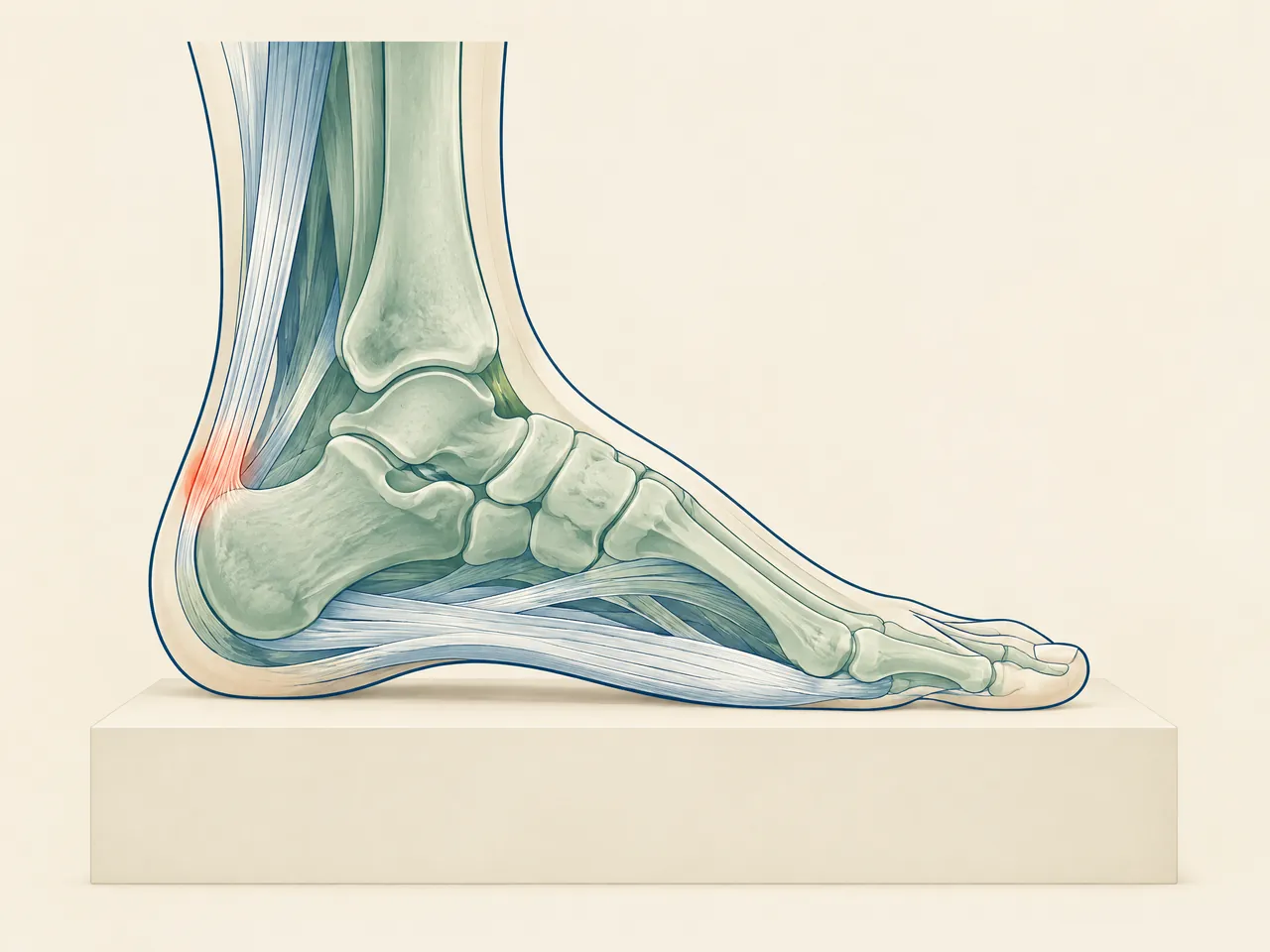
The short answer
How long does an ankle sprain take to recover? Many mild sprains feel better after about two weeks, while more serious sprains can take weeks to months to return to normal. The time depends on the ligament injury, swelling, ability to bear weight, ankle stability and how activity is progressed. Get prompt assessment if you cannot take a few steps, pain or swelling is worsening, the ankle looks misshapen, or the foot is numb, discoloured or cold.
Transparent pricing
See the fees.
Choose your care.
Explore our complete official price list, including first-trial prices, regular prices, packages and branch-specific options.
Opening WhatsApp prepares an enquiry; it does not send a message, take payment or confirm an appointment. Suitability and individual arrangements are confirmed during consultation.
Pain care
All prices in HKDExtracorporeal shockwave treatment
Shockwave treatment for deep-tissue and fascial care. The Kwun Tong clinic offers the multi-area options shown below.
Priced by branch
Branch-specific pricing
Prince Edward: HK$250 per area
Kwun Tong: HK$250 for 1 area / HK$450 for 2 areas / HK$600 for 3 areas
Pain care (manual therapy)
Includes Chinese medicine musculoskeletal assessment, manual joint techniques and tui na.
HK$580 (single session)
Chinese medicine musculoskeletal assessment
Pain care (acupuncture and manual therapy)
Combines acupuncture and manual therapy.
HK$680 (single session)
Combined care
Hair and scalp
All prices in HKDScalp health and hair-loss management
Includes AI scalp analysis, deep scalp and follicle cleansing, and scalp oil-control care.
HK$380 (first trial)
Regular price: HK$680
- 6 sessions: HK$3,480 (HK$580 per session)
- 12 sessions: HK$5,760 (HK$480 per session)
- 20 sessions: HK$8,600 (HK$430 per session)
- 30 sessions: HK$11,400 (HK$380 per session)
Hair acupuncture and Chinese herbal medicine package
Includes scalp acupuncture and 3 days of Chinese herbal medicine that does not require decoction.
HK$580 (single session)
Registered Chinese Medicine Practitioner consultation
- 6 sessions: HK$3,180 (HK$530 per session)
- 12 sessions: HK$5,760 (HK$480 per session)
- 20 sessions: HK$8,600 (HK$430 per session)
- 30 sessions: HK$11,400 (HK$380 per session)
Combined hair and scalp treatment
Combines acupuncture and Chinese herbal medicine with salon-level scalp and follicle care. Packages include complimentary hair-care shampoo and serum.
HK$1,260 (single session)
Combined treatment
- 8 sessions: HK$8,640 (HK$1,080 per session)
- 16 sessions: HK$15,680 (HK$980 per session)
- 20 sessions: HK$18,600 (HK$930 per session)
- 30 sessions: HK$26,400 (HK$880 per session)
Weight management
All prices in HKDFull-body acupoint embedding for weight management
Includes full-body acupoint embedding. Packages include complimentary Chinese herbal medicine for weight management, with the number of included days scaled to the package. Embedding material and the individual treatment arrangement are confirmed during consultation; this is not a cosmetic thread lift.
HK$980 (single session)
No trial session
- 10 sessions: HK$7,800 (HK$780 per session)
- 20 sessions: HK$14,600 (HK$730 per session)
- 30 sessions: HK$20,400 (HK$680 per session)
Facial acupuncture
All prices in HKDFacial acupuncture (basic)
Includes facial acupuncture and meridian-based facial care, including care for facial puffiness.
HK$480 (first trial)
Regular price: HK$680
- 10 sessions: HK$5,200 (HK$520 per session)
- 20 sessions: HK$9,600 (HK$480 per session)
- 30 sessions: HK$13,500 (HK$450 per session)
Facial acupuncture (advanced)
Includes enhanced facial acupuncture with a specially formulated moisturising mask and serum.
HK$780 (first trial)
Regular price: HK$1,180
- 10 sessions: HK$9,000 (HK$900 per session)
- 20 sessions: HK$16,600 (HK$830 per session)
- 30 sessions: HK$23,400 (HK$780 per session)
Chinese medicine
All prices in HKDAcupuncture and Chinese herbal medicine package
Includes a Chinese medicine consultation with pulse assessment, body acupuncture and 3 days of Chinese herbal granules that do not require decoction.
HK$580 (single session)
Chinese medicine consultation with pulse assessment
How long does an ankle sprain take to recover? It depends on severity
An ankle sprain is an injury to one or more ligaments that help steady the joint. It often follows a twist or roll of the foot, although a fall, sudden change of direction or uneven pavement can also be involved. Pain, swelling, bruising and difficulty walking are common, but they do not all appear in the same order or with the same intensity. The Hong Kong College of Orthopaedic Surgeons notes that the amount of ligament tearing can range from partial to total, which is one reason a calendar estimate cannot diagnose an individual injury [1].
For planning purposes, think in terms of changing function rather than a promised finish line. The NHS says that most sprains and strains feel better after two weeks, while severe injuries may take months to return to normal [2]. A local hospital guide similarly describes healing time increasing with sprain severity [3]. These are broad reference points, not permission to ignore ongoing pain or to resume sport because a particular date has arrived.
The first days may be the most inconvenient: stairs, commuting, carrying shopping or standing at work can all expose a difference between walking carefully and walking normally. Note whether each day allows a little more comfortable movement, rather than repeatedly testing the ankle by jogging, hopping or forcing a stretch. For a wider overview of milestones and factors that affect progress, see our guide to ankle sprain recovery time.

How long does an ankle sprain take to recover? Mild, moderate and severe injuries
Clinicians may describe a mild sprain as ligament stretching with little or no joint instability, a moderate sprain as a partial tear that may cause instability, and a severe sprain as a complete rupture with marked instability. Canossa Hospital uses this Grade I, II and III description, while stressing that the degree of injury changes the expected healing time [3]. The categories are useful for understanding why two people who both say they ‘twisted an ankle’ can have very different recoveries; they are not a self-diagnosis from a photograph or a pain score.
A mild injury may allow cautious walking from the start, though it can still swell and ache later in the day. A more disruptive injury may make a few steps difficult, leave pronounced bruising, or give a sense that the ankle will give way. Severe pain, an inability to bear weight or a crack at the time of injury need assessment to exclude a fracture or another significant injury. Details such as where it hurts, whether there was a twist or direct blow, and how quickly swelling appeared help a clinician decide whether examination or imaging is appropriate.
How long does an ankle sprain take to recover? Signs that recovery may take longer
Recovery can be slower when the ankle is repeatedly loaded before it is ready, when movement and strength remain limited, or when the ankle feels unstable on ordinary ground. Previous sprains matter because some people notice instability rather than dramatic new swelling. The Hong Kong College of Orthopaedic Surgeons describes rehabilitation as progressing from swelling control to restoring range of movement, strength, flexibility, stamina and proprioception—the body’s sense of joint position [1]. That sequence explains why being able to walk across a room is not automatically the same as being ready for badminton or a trail run.
Keep a simple, practical record: can you take a normal stride, go down stairs, stand through a commute and wake with less stiffness than the day before? A modest temporary flare after doing more can occur, but a clear worsening pattern deserves review. Pain that remains focused over bone, repeated giving way, loss of movement, or no meaningful improvement over the expected course are reasons not to keep guessing. Our related page on ankle sprain symptoms and treatment explains the common symptoms that can help frame that conversation.
Compare your options
| Recovery picture | What you may notice | A sensible next step |
|---|---|---|
| Early injury | Pain, swelling or bruising may make walking awkward; symptoms can evolve over the first days. | Protect the ankle, use the first-two-to-three-day measures that suit your situation, and watch for red flags. |
| Gradual improvement | Walking and ankle movement are becoming easier, although a longer day may still provoke symptoms. | Build ordinary activity progressively instead of testing running, jumping or uneven ground. |
| Function returning | Level walking may feel normal, while stairs, quick turns or sustained standing reveal remaining weakness or uncertainty. | Work on movement, strength and balance with professional guidance when needed before higher-demand activity. |
| Progress stalls or reverses | Pain, swelling, instability or limited function is not steadily improving, or a new symptom appears. | Arrange clinical review; seek urgent care for inability to bear weight, deformity, a crack, numbness, colour change or coldness. |
On smaller screens, scroll the table sideways to compare all columns.
How long does an ankle sprain take to recover? Early care and gradual movement
The early aim is to protect the ankle while avoiding an all-or-nothing approach. The NHS recommends PRICE measures—protection, rest, ice, compression and elevation—for the first two to three days after a sprain or strain [2]. Relative rest means stepping back from activities that clearly aggravate the injury; it does not necessarily mean remaining completely motionless for an arbitrary period. If a support, shoe or walking aid has been advised, use it as directed rather than treating pain relief as proof that the ankle is fully stable.
As acute pain becomes less limiting, movement is usually reintroduced gradually. NHS inform advises getting the ankle moving through its normal range as soon as possible, stopping if it becomes too painful and contacting a healthcare professional [4]. This is different from aggressively stretching into pain or returning to impact exercise. The pace should reflect the injury, examination findings and the task ahead: an office worker walking on level ground has a different immediate demand from someone who needs to climb ladders, play football or carry loads.

If you are unsure whether ordinary walking is sensible, start with the practical question Can I walk on a sprained ankle?. It discusses walking as a graded activity, not a pass-or-fail challenge. A more complete sprained ankle recovery plan also considers movement, control and a gradual return to routine.
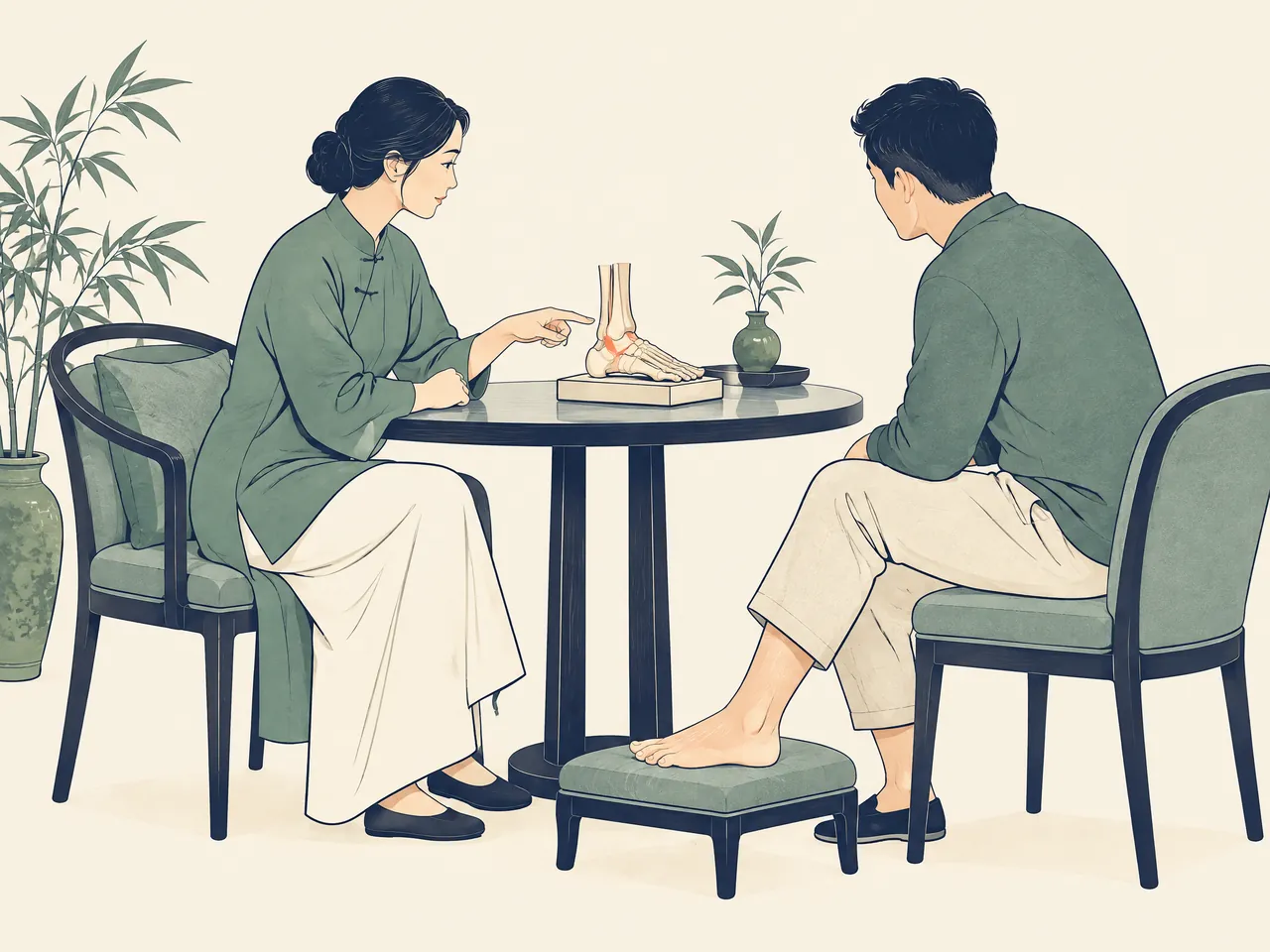
How long does an ankle sprain take to recover? What to do in the first two to three days
Protect the ankle from another twist and reduce activities that make pain sharply worse. A wrapped cold pack can be used for up to 20 minutes every two to three hours according to NHS guidance; never put it directly on the skin [2]. Compression may provide support during the day, but a wrap should not create increasing pain, tingling, colour change or coldness in the toes. Elevating the ankle on a pillow when resting may help manage swelling. These measures aim to make the early period more manageable, not to make a diagnosis from home.
For the same initial couple of days, the NHS advises avoiding heat, alcohol and massage because they may increase swelling [2]. Do not turn the ankle repeatedly to see whether it ‘still hurts’, and do not use an early improvement to test a jump, sprint or deep lunge. Instead, organise the environment: keep essentials within reach, choose supportive footwear, use a handrail on stairs and ask for help with heavy bags. These ordinary adjustments can reduce accidental re-twisting while you see how symptoms develop.

How long does an ankle sprain take to recover? Returning to walking and activity safely
A sensible return is layered. First, walking on level ground should become more comfortable and less limping should be needed. Next come ordinary tasks such as stairs, longer errands and a full workday. Later, sport or physically demanding work asks for quicker direction changes, balance and endurance. NHS inform describes typical rehabilitation goals as improving muscle strength, joint stability, balance and coordination, and outlines broad stages from 0–2, 2–6 and 6–12 weeks [4]. Those stages help set expectations, but should not replace individual assessment.
Increase one demand at a time: distance, speed, stairs, uneven surface or training intensity. If a new activity causes substantial pain, swelling or a limp that lasts, step back to the last tolerable level rather than trying to push through. A physiotherapist or other clinician can tailor functional exercises after assessment, especially when sport, a physical job or repeat sprains make ankle control important. The Hong Kong orthopaedic guidance emphasises gradually increasing training frequency and intensity as function returns [1].
How long does an ankle sprain take to recover? When to seek professional advice
An early assessment is valuable when the story does not fit a straightforward improving sprain. A clinician can examine tenderness, swelling, stability and movement, then decide whether imaging or referral is needed. The Hong Kong College of Orthopaedic Surgeons notes that X-ray, MRI or CT may be used when necessary to determine injury severity [1]. This matters because a fracture, a more extensive ligament injury or another foot and ankle problem can feel similar at first, especially after a forceful fall or twist.
Urgent symptoms should not be managed by waiting for a recovery timetable. The NHS advises urgent help after an injury that is very painful or worsening, has substantial or worsening swelling or bruising, prevents weight-bearing or makes movement very difficult [2]. A crack at injury, visible change in shape, persistent numbness or tingling, or skin that looks blue or grey or feels cold calls for immediate emergency assessment [2]. In Hong Kong, use an appropriate urgent or emergency service for those warning signs.
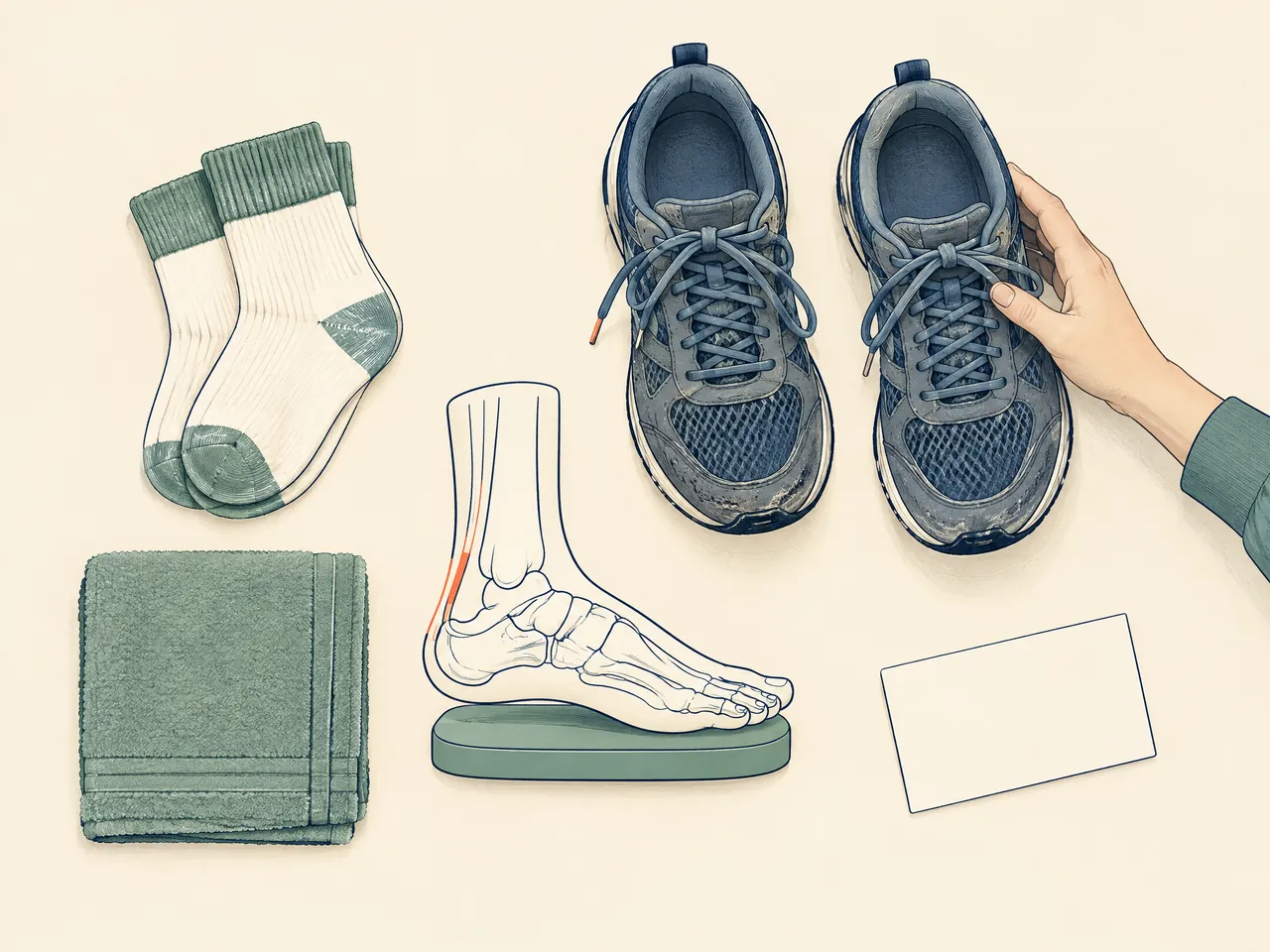
Once serious injury has been assessed, some people also want to discuss comfort and supportive care while following their wider rehabilitation plan. TCM Lab offers in-person Chinese medicine consultations by appointment; this does not replace assessment for a suspected fracture, major instability or nerve or circulation symptoms. You can enquire at our Kwun Tong Chinese medicine clinic or Chinese medicine clinic Prince Edward and explain the injury, existing care and language needs when contacting us.
How long does an ankle sprain take to recover? Red flags that need urgent assessment
Seek urgent assessment if you cannot put weight on the foot or walk more than a few steps, the pain or swelling is getting worse, or the joint looks deformed. A crack heard or felt during the injury is another reason for prompt evaluation. These signs do not tell you exactly what the diagnosis is, but they raise the possibility of an injury that needs more than routine self-care. Avoid driving yourself if an emergency assessment is needed and keep the ankle protected while arranging help.
Changes in the foot itself are especially important: persistent pins and needles, numbness, unusual colour or cold skin can indicate a nerve or circulation concern and should be treated as urgent [2]. Fever or feeling unwell alongside an increasingly painful swollen area also merits prompt medical advice [2]. For a child, an older person, or someone who has reduced sensation or circulation, a lower threshold for assessment is sensible. Do not rely on an online timeline where symptoms are severe, uncertain or changing.

How long does an ankle sprain take to recover? Discussing supportive care after assessment
After appropriate assessment, a registered Chinese medicine practitioner may discuss supportive options in the context of your symptoms, medical history and current treatment. In traditional Chinese medicine, practitioners may use pattern-based language to discuss discomfort after an injury; this is a traditional assessment approach and not the same as a modern orthopaedic diagnosis. Bring or describe any imaging, support device, medicines and advice already given, so that care can be coordinated rather than duplicated or used to delay necessary rehabilitation.
Acupuncture may be raised as a possible supportive option after an in-person assessment, but it should not be presented as a guaranteed way to shorten an ankle-sprain recovery or as a substitute for a structured return to movement. Ask what the proposed care is intended to support, how it fits with prescribed treatment and when you should seek further medical review. For practical planning before an appointment, see the Chinese medicine clinic price list Hong Kong. If walking, swelling or stability is not improving, return to the clinician managing the injury rather than adding intensity on your own.
Care and health guide
Health service information
This directory brings together services, reading, and visit information related to health services, to help you prepare questions for a consultation.
If you are organising health questions, Chinese medicine clinic Hong Kong is a starting point for learning about related services and preparing for a consultation.
People have different needs; acupuncture Hong Kong provides further reading to help you understand options in your own context.


Your questions, answered
Frequently asked questions
How long does an ankle sprain take to recover if it is mild?
A mild sprain often feels better after about two weeks, but improvement is not the same as a guaranteed return to every activity. Walking, swelling, range of movement and confidence on the ankle should trend in the right direction. If symptoms are worsening or weight-bearing remains difficult, arrange assessment rather than relying on a date.
What should I do during the first two to three days of an ankle sprain?
Protect the ankle, rest relatively, use a wrapped cold pack, apply suitable compression and elevate it when resting. NHS guidance advises avoiding heat, alcohol and massage in the first couple of days. Stop any measure that causes increasing pain, skin changes or other concern, and seek care if you cannot bear weight.
When can I walk after an ankle sprain?
That depends on pain, stability and the injury itself. Start with comfortable, supported walking only if it does not sharply worsen symptoms, and add distance or speed gradually. If you cannot walk more than a few steps, have a pronounced limp or feel the ankle give way, get professional advice before testing it further.
When is an ankle sprain an emergency?
Seek urgent assessment when the ankle or foot looks misshapen, a crack was heard, you cannot bear weight, pain or swelling is worsening, or the foot is numb, tingling, unusually coloured or cold. These features can need assessment to rule out fracture or important nerve or circulation injury.
Sources and further information
- [1] Hong Kong College of Orthopaedic Surgeons — Ankle Sprain
Referenced for: Supports the nature of ligament injury, possible imaging, RICE, rehabilitation stages and a recovery range of weeks to months.
- [2] NHS — Sprains and strains
Referenced for: Supports first-two-to-three-day PRICE care, recovery timing, activity caution and urgent injury warning signs.
- [3] Canossa Hospital — Sprained Ankle
Referenced for: Supports the Grade I–III description, severity-related healing time, RICE and rehabilitation goals.
- [4] NHS inform — Ankle sprain
Referenced for: Supports gradual movement, rehabilitation aims and the broad 0–2, 2–6 and 6–12 week recovery stages.