
TCM Lab · Health reading
Does manual facial contouring use Botox or surgery? What happens during a manual facial contouring assessment?
Published Updated
Manual facial contouring does not automatically mean Botox, surgery, needles or a machine-based facial. In the plain-language sense used on this page, it means hands-on work around the face, jaw, scalp or neck, often discussed alongside massage-style care. That is different from a medicine delivered by injection and different again from an operation. The label matters less than a clear explanation of what will touch your face, who will provide it and what is outside the plan. An assessment is where those details can be made explicit: you can describe what you notice, explain past cosmetic care or health issues, and decide whether a hands-on approach is a sensible enquiry for you. It is also the right moment to say if you expected a sharper jawline, less morning puffiness, help with facial tension, or simply a relaxing facial experience, because these are not interchangeable aims.
Appointments are confirmed through WhatsApp. If you have language requirements, please mention them in your enquiry.

The short answer
Manual facial contouring, as used here, is a hands-on, massage-like approach. It is not Botox injection or facial surgery, and it should not be confused with radiofrequency or other device treatments that may use similar marketing language. A useful assessment starts with your aim, relevant medical and cosmetic history, current medicines, skin condition and comfort with touch. Ask exactly what technique, areas, pressure, practitioner and aftercare are proposed before deciding whether to proceed.
Transparent pricing
See the fees.
Choose your care.
Explore our complete official price list, including first-trial prices, regular prices, packages and branch-specific options.
Opening WhatsApp prepares an enquiry; it does not send a message, take payment or confirm an appointment. Suitability and individual arrangements are confirmed during consultation.
Facial acupuncture
All prices in HKDFacial acupuncture (basic)
Includes facial acupuncture and meridian-based facial care, including care for facial puffiness.
HK$480 (first trial)
Regular price: HK$680
- 10 sessions: HK$5,200 (HK$520 per session)
- 20 sessions: HK$9,600 (HK$480 per session)
- 30 sessions: HK$13,500 (HK$450 per session)
Facial acupuncture (advanced)
Includes enhanced facial acupuncture with a specially formulated moisturising mask and serum.
HK$780 (first trial)
Regular price: HK$1,180
- 10 sessions: HK$9,000 (HK$900 per session)
- 20 sessions: HK$16,600 (HK$830 per session)
- 30 sessions: HK$23,400 (HK$780 per session)
Hair and scalp
All prices in HKDScalp health and hair-loss management
Includes AI scalp analysis, deep scalp and follicle cleansing, and scalp oil-control care.
HK$380 (first trial)
Regular price: HK$680
- 6 sessions: HK$3,480 (HK$580 per session)
- 12 sessions: HK$5,760 (HK$480 per session)
- 20 sessions: HK$8,600 (HK$430 per session)
- 30 sessions: HK$11,400 (HK$380 per session)
Hair acupuncture and Chinese herbal medicine package
Includes scalp acupuncture and 3 days of Chinese herbal medicine that does not require decoction.
HK$580 (single session)
Registered Chinese Medicine Practitioner consultation
- 6 sessions: HK$3,180 (HK$530 per session)
- 12 sessions: HK$5,760 (HK$480 per session)
- 20 sessions: HK$8,600 (HK$430 per session)
- 30 sessions: HK$11,400 (HK$380 per session)
Combined hair and scalp treatment
Combines acupuncture and Chinese herbal medicine with salon-level scalp and follicle care. Packages include complimentary hair-care shampoo and serum.
HK$1,260 (single session)
Combined treatment
- 8 sessions: HK$8,640 (HK$1,080 per session)
- 16 sessions: HK$15,680 (HK$980 per session)
- 20 sessions: HK$18,600 (HK$930 per session)
- 30 sessions: HK$26,400 (HK$880 per session)
Weight management
All prices in HKDFull-body acupoint embedding for weight management
Includes full-body acupoint embedding. Packages include complimentary Chinese herbal medicine for weight management, with the number of included days scaled to the package. Embedding material and the individual treatment arrangement are confirmed during consultation; this is not a cosmetic thread lift.
HK$980 (single session)
No trial session
- 10 sessions: HK$7,800 (HK$780 per session)
- 20 sessions: HK$14,600 (HK$730 per session)
- 30 sessions: HK$20,400 (HK$680 per session)
Pain care
All prices in HKDExtracorporeal shockwave treatment
Shockwave treatment for deep-tissue and fascial care. The Kwun Tong clinic offers the multi-area options shown below.
Priced by branch
Branch-specific pricing
Prince Edward: HK$250 per area
Kwun Tong: HK$250 for 1 area / HK$450 for 2 areas / HK$600 for 3 areas
Pain care (manual therapy)
Includes Chinese medicine musculoskeletal assessment, manual joint techniques and tui na.
HK$580 (single session)
Chinese medicine musculoskeletal assessment
Pain care (acupuncture and manual therapy)
Combines acupuncture and manual therapy.
HK$680 (single session)
Combined care
Chinese medicine
All prices in HKDAcupuncture and Chinese herbal medicine package
Includes a Chinese medicine consultation with pulse assessment, body acupuncture and 3 days of Chinese herbal granules that do not require decoction.
HK$580 (single session)
Chinese medicine consultation with pulse assessment
Does manual facial contouring use Botox or surgery? What happens during a manual facial contouring assessment? — Understand the approach
The shortest answer is no: manual facial contouring is not Botox or surgery when it is described as hands-on care. Botox Cosmetic is a prescription product administered by intramuscular injection; its approved cosmetic uses concern the temporary appearance of particular facial lines and platysma bands, rather than a general massage service [1]. Facial surgery is another category again. It involves a surgical procedure rather than pressure applied by the practitioner’s hands. A manual session may focus on how the face, scalp, jaw and neck feel on a given day, but it should not be presented as an injection substitute, a surgical result or a way to change underlying facial anatomy. If a description uses words such as sculpt, lift, contour or V-shape, treat them as prompts for questions, not as a complete description of the method.
The distinction is useful because people often arrive with several concerns bundled together. You may have seen a photograph after jawline Botox, read about a surgical facelift, or searched for a calming treatment after a long week of laptop work. Those routes differ in what is done, who should provide it, the information needed before it, and what follow-up questions matter. Even the phrase “facial contouring” is not one service name: a Hong Kong aesthetic provider uses it for radiofrequency technology, which is neither manual care nor an injection [4]. Starting with the method prevents an awkward surprise at the appointment. It also makes it easier to compare an enquiry about small face therapy with other services without assuming they are identical.

Does manual facial contouring use Botox or surgery? What happens during a manual facial contouring assessment? — A non-injection explanation
A non-injection explanation should be concrete. Ask whether the session uses only the practitioner’s hands, whether it includes facial products, whether the scalp, neck or shoulders may be included, and whether any tool, heat, suction, electricity or needle is involved. “Manual” should mean that the principal technique is applied by hand; it does not by itself tell you the pressure, sequence, duration, training background or intended experience. Some clients want light, relaxation-oriented touch. Others ask about firmer work around the jaw or temples. Neither preference establishes that a particular outward change will occur. A careful provider can explain the proposed hands-on approach in ordinary language and adapt the discussion if pressure or touch is not what you want. For another plain-language overview of technique labels, see facial sculpting massage.
It is equally important not to erase the differences just because several options are called non-surgical. “No surgery” might describe hands-on care, but it can also describe an injectable or an energy-based treatment. Each has its own decision points. If a product is injected, the conversation should identify the product, prescriber and injector. If equipment is used, ask what device and energy are involved. If the proposal is manual, ask what contact and pressure are expected. This is not overcautious wording; it is informed consent in practical form. Clear labels let you decide whether you are looking for a comfort-focused appointment, a medical aesthetic consultation or a surgical opinion.

Does manual facial contouring use Botox or surgery? What happens during a manual facial contouring assessment? — Start with your aims
Begin an assessment with what you want to understand rather than with a promised treatment. You might say that your lower face feels tense when you wake, that you notice one side of the jaw more in photographs, that your face looks puffy after poor sleep, or that you are deciding between a hands-on facial and an aesthetic procedure. The practitioner can then ask when you first noticed it, whether there is pain, clicking, injury, tooth or sinus trouble, and what has already been tried. That conversation separates a cosmetic preference from a symptom that may need a different kind of assessment. It also gives you permission to pause if the proposed approach does not match your aim.
Compare your options
| Description used | What identifies the method | Useful assessment question |
|---|---|---|
| Manual facial contouring | Hands-on contact such as massage-style work; no injection, operation or device should be assumed. | Will the session use hands only, and which areas and pressure are planned? |
| Botox or another botulinum toxin treatment | A prescription medicine delivered by injection for a specified plan. | Who prescribes it, who injects it, and what product-specific information will I receive? |
| Device-based facial contouring | A machine or energy-based method, such as radiofrequency, rather than hand pressure alone. | What device or energy is being proposed, and why is it relevant to my concern? |
| Cosmetic surgery | A surgical procedure with its own planning, recovery and provider requirements. | What procedure, risks, recovery and aftercare should I consider with the surgeon? |
On smaller screens, scroll the table sideways to compare all columns.
Does manual facial contouring use Botox or surgery? What happens during a manual facial contouring assessment? — What may be discussed
A thoughtful assessment is usually more conversation than verdict. The provider may ask what you would like to feel or look different, whether you have a special event in mind, and how strongly you want the session to focus on comfort versus appearance. They may observe general features relevant to the enquiry, such as visible skin irritation, a guarded jaw movement, or whether one area is especially sensitive to touch. Observation is not a diagnosis, and it should not be turned into claims about “misaligned bones”, toxins or a permanent facial imbalance. If you have new facial weakness, marked swelling, severe pain, trouble breathing or swallowing, or symptoms after an injection, seek appropriate urgent medical care rather than booking a beauty-focused session. A manual assessment should be able to stop and redirect the conversation where that is the safer choice.
Bring the parts of your history that could change the plan. This includes recent Botox or dermal filler, cosmetic surgery or energy-based treatment, bruising, a rash, open skin, cold sores, a dental issue, jaw pain, allergies, pregnancy, and medicines or supplements that you think may matter. You do not need to self-diagnose the relevance of each item; the point is to avoid leaving important information out. A recent procedure does not automatically rule out every form of touch, but it is not a detail to guess about. Discuss timing with the clinician who provided the procedure and disclose it to every provider involved. The related guides on facial acupuncture after cosmetic injections and facial acupuncture after Botox can help frame questions, but they do not replace advice tailored to your own procedure.

Does manual facial contouring use Botox or surgery? What happens during a manual facial contouring assessment? — Separate manual care from procedures
Use the comparison below as a checklist, not as a menu of results. A person looking for a quiet hands-on session may decide that manual care is the relevant question. A person specifically considering a prescription injection or an operation should book a consultation with the qualified clinician who would perform or prescribe it. NHS guidance advises people considering cosmetic procedures to meet the person doing the procedure, ask about qualifications, common complications, aftercare, costs and what happens if something goes wrong [2]. Those are sound questions because they make a vague label testable. They also help you avoid choosing on an impressive phrase, a social-media image or a discounted package alone.

Does manual facial contouring use Botox or surgery? What happens during a manual facial contouring assessment? — Observation and conversation
The conversation should include comfort and boundaries. Say if you do not want work near the eyes, jaw, scalp or neck; if you dislike firm pressure; or if you want an explanation before each step. Ask what you can wear, whether make-up needs to be removed, and what you should do if an area feels unpleasant during the session. It is reasonable to ask who will be present and whether you can stop at any time. For a Chinese medicine enquiry, you may also ask whether the discussion concerns manual care only or whether acupuncture, herbs or another modality is being proposed separately. A registered Chinese medicine practitioner can be checked through the Chinese Medicine Council of Hong Kong’s public list of registered practitioners [3]. Registration does not turn every service label into a guarantee, but it is one useful verification step.
Does manual facial contouring use Botox or surgery? What happens during a manual facial contouring assessment? — Choosing an informed next step
An informed next step may be a hands-on enquiry, a medical-aesthetic consultation, a dental or medical assessment, or simply time to think. Choose the route that fits the actual question. If your goal is to relax and you are comfortable with a manual plan, ask for the proposed areas and pressure. If you are weighing Botox, filler, a device treatment or surgery, ask the provider of that procedure to explain its specific product or technique, limits, risks, recovery and aftercare. Do not ask a manual-care provider to predict an injection or surgical outcome, and do not assume that a procedure provider’s marketing term describes touch-based care. The two approaches can coexist in a person’s beauty routine, but their timing and suitability should be discussed with the relevant professionals rather than decided by an online comparison.
It can help to write three notes before contacting a clinic: the change or feeling you have noticed; the result or experience you hope for; and anything you want to avoid. For example, “jaw feels tight after screen work, would like a gentle session, no needles or devices” is much more useful than “I want a smaller face.” It gives the clinic something clear to respond to without asking you to accept an unsuitable plan. If you want to explore the broader context, TCM beauty Hong Kong is a starting point for related topics. Keep the enquiry factual, especially if you have recently had a cosmetic procedure or are managing an ongoing health issue.

Does manual facial contouring use Botox or surgery? What happens during a manual facial contouring assessment? — Questions to ask before booking
Before booking, ask: Is this session entirely hands-on? Which areas are normally touched? What pressure is expected? Will you use needles, injected products, devices, heat or suction? What information do you need from me about recent procedures or medicines? Who will conduct the assessment and session? What should I expect immediately afterward, and who should I contact if I have a concern? These questions are neither confrontational nor excessive. They make the service name meaningful. If an answer is vague, changes when you ask about tools, or promises a precise contour without explaining the method, take more time. NHS guidance likewise recommends time after a cosmetic-procedure consultation to decide rather than paying before you have the information you need [2].

Does manual facial contouring use Botox or surgery? What happens during a manual facial contouring assessment? — Discuss suitability and expectations
Suitability is not a label you can establish from a photograph or a short online quiz. It depends on what will be done, your recent history, your skin and symptoms, and your own boundaries. A good discussion can end with “not today”, “ask your procedural clinician first”, or “this sounds better suited to another service.” That is more useful than being pushed toward a catch-all facial-contouring claim. To enquire with TCM Lab, explain whether you would prefer the Kwun Tong Chinese medicine clinic or the Chinese medicine clinic Prince Edward, outline your question, and mention any language or access needs for confirmation. The team can discuss appointment arrangements; an enquiry is not an automatic booking or a promise that a particular method will be appropriate.
Care and health guide
Facial acupuncture information
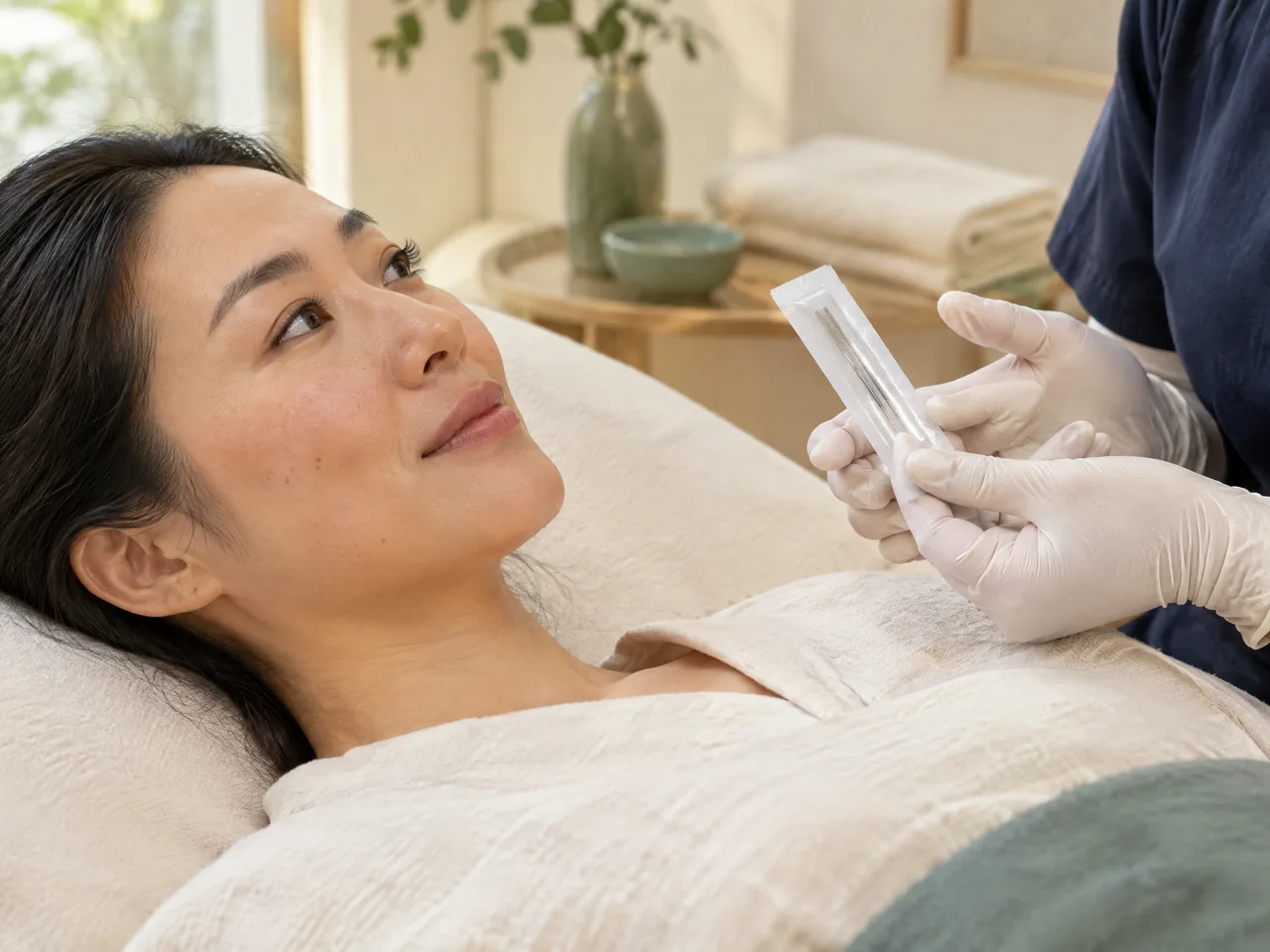
This directory brings together services, reading, and visit information related to facial acupuncture, to help you prepare questions for a consultation.
When exploring facial acupuncture, noting the service-arrangement questions you want to discuss can help prepare a consultation; facial acupuncture Hong Kong is a relevant service or reading entry point.
People may have different priorities, and acupuncture Hong Kong offers related information to help you understand options and prepare questions.

Your questions, answered
Frequently asked questions
Does manual facial contouring use Botox or surgery?
No, not when the term is being used accurately for hands-on care. Botox Cosmetic is an injected prescription medicine, while surgery is an operation. Ask the provider to confirm whether the proposed session is hands only and whether any needle, product, device or surgical referral is part of the plan.
What happens during a manual facial contouring assessment?
You can explain your aims, symptoms or comfort preferences, plus relevant health and cosmetic-treatment history. The provider should describe the proposed method, the areas involved, expected pressure, boundaries, and reasons to defer or seek another type of assessment.
Can manual facial contouring change my bone structure or permanently reshape my face?
Do not assume that a hands-on session changes bone structure or permanently reshapes a face. A responsible discussion should distinguish a temporary experience or appearance concern from claims about anatomy, and should not promise a precise facial shape.
Should I mention recent Botox, filler or facial surgery?
Yes. Tell every provider about recent injections, surgery, devices, skin problems, medicines and anything that makes touch uncomfortable. Ask the clinician who provided the cosmetic procedure about timing and any specific precautions before arranging other facial care.
Sources and further information
- [1] BOTOX Cosmetic Prescribing Information
Referenced for: Supports the distinction that BOTOX Cosmetic is a prescription product for intramuscular injection, its listed cosmetic indications, and that it has product-specific warnings and contraindications.
- [2] NHS: Choosing who will do your cosmetic procedure
Referenced for: Supports consultation and provider-verification questions for cosmetic procedures, including botulinum toxin injections.
- [3] Chinese Medicine Council of Hong Kong: List of Registered Chinese Medicine Practitioners
Referenced for: Supports the existence of the public list of people registered as registered Chinese medicine practitioners under section 69 of the Chinese Medicine Ordinance.
- [4] EstheClinic Hong Kong: V-Shape Facial Contouring
Referenced for: Supports that the phrase facial contouring is also used locally for a radiofrequency service, illustrating why a service label alone does not identify a manual method. It does not support outcomes or claims for TCM Lab.