
TCM Lab · Health reading
Telogen Effluvium: Hair Loss Diagnosis and Hair Loss Dermatologist Guidance
Published Updated
A suddenly fuller brush, a shower drain that looks different, or a thinner ponytail can make anyone look for answers quickly. Telogen effluvium is one possible reason for increased shedding, especially after a physical or emotional strain on the body, but it is not a label to apply from loose hairs alone. The pattern of loss, the condition of the scalp and the timing of recent changes all matter. This guide helps you recognise a diffuse shedding pattern, separate it from signs that need prompt medical attention, and prepare for a useful hair loss diagnosis with a doctor or hair loss dermatologist.
Appointments are confirmed through WhatsApp. If you have language requirements, please mention them in your enquiry.
The short answer
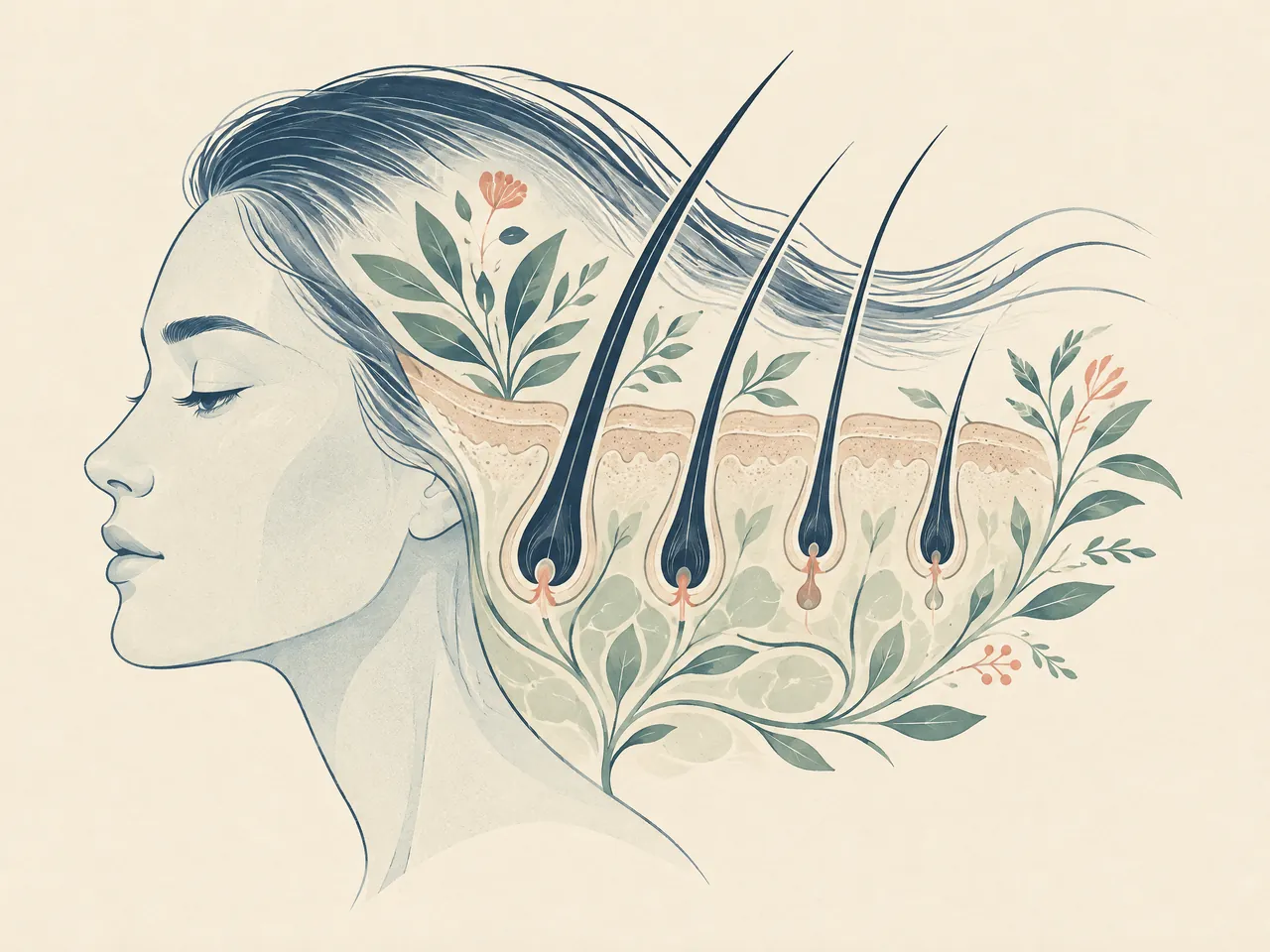
Telogen effluvium usually describes diffuse increased shedding rather than a single bald spot, often after illness, surgery, childbirth, major stress, weight change or a restrictive diet. It is only one possible explanation for hair loss. Arrange a medical assessment if shedding is sudden or persistent, a patch appears, the hairline or part is changing, or the scalp is painful, red, scaly or oozing. A hair loss diagnosis considers the pattern, history and scalp examination before tests are chosen. [1] [2]
Transparent pricing
See the fees.
Choose your care.
Explore our complete official price list, including first-trial prices, regular prices, packages and branch-specific options.
Opening WhatsApp prepares an enquiry; it does not send a message, take payment or confirm an appointment. Suitability and individual arrangements are confirmed during consultation.
Hair and scalp
All prices in HKDScalp health and hair-loss management
Includes AI scalp analysis, deep scalp and follicle cleansing, and scalp oil-control care.
HK$380 (first trial)
Regular price: HK$680
- 6 sessions: HK$3,480 (HK$580 per session)
- 12 sessions: HK$5,760 (HK$480 per session)
- 20 sessions: HK$8,600 (HK$430 per session)
- 30 sessions: HK$11,400 (HK$380 per session)
Hair acupuncture and Chinese herbal medicine package
Includes scalp acupuncture and 3 days of Chinese herbal medicine that does not require decoction.
HK$580 (single session)
Registered Chinese Medicine Practitioner consultation
- 6 sessions: HK$3,180 (HK$530 per session)
- 12 sessions: HK$5,760 (HK$480 per session)
- 20 sessions: HK$8,600 (HK$430 per session)
- 30 sessions: HK$11,400 (HK$380 per session)
Combined hair and scalp treatment
Combines acupuncture and Chinese herbal medicine with salon-level scalp and follicle care. Packages include complimentary hair-care shampoo and serum.
HK$1,260 (single session)
Combined treatment
- 8 sessions: HK$8,640 (HK$1,080 per session)
- 16 sessions: HK$15,680 (HK$980 per session)
- 20 sessions: HK$18,600 (HK$930 per session)
- 30 sessions: HK$26,400 (HK$880 per session)
Weight management
All prices in HKDFull-body acupoint embedding for weight management
Includes full-body acupoint embedding. Packages include complimentary Chinese herbal medicine for weight management, with the number of included days scaled to the package. Embedding material and the individual treatment arrangement are confirmed during consultation; this is not a cosmetic thread lift.
HK$980 (single session)
No trial session
- 10 sessions: HK$7,800 (HK$780 per session)
- 20 sessions: HK$14,600 (HK$730 per session)
- 30 sessions: HK$20,400 (HK$680 per session)
Facial acupuncture
All prices in HKDFacial acupuncture (basic)
Includes facial acupuncture and meridian-based facial care, including care for facial puffiness.
HK$480 (first trial)
Regular price: HK$680
- 10 sessions: HK$5,200 (HK$520 per session)
- 20 sessions: HK$9,600 (HK$480 per session)
- 30 sessions: HK$13,500 (HK$450 per session)
Facial acupuncture (advanced)
Includes enhanced facial acupuncture with a specially formulated moisturising mask and serum.
HK$780 (first trial)
Regular price: HK$1,180
- 10 sessions: HK$9,000 (HK$900 per session)
- 20 sessions: HK$16,600 (HK$830 per session)
- 30 sessions: HK$23,400 (HK$780 per session)
Pain care
All prices in HKDExtracorporeal shockwave treatment
Shockwave treatment for deep-tissue and fascial care. The Kwun Tong clinic offers the multi-area options shown below.
Priced by branch
Branch-specific pricing
Prince Edward: HK$250 per area
Kwun Tong: HK$250 for 1 area / HK$450 for 2 areas / HK$600 for 3 areas
Pain care (manual therapy)
Includes Chinese medicine musculoskeletal assessment, manual joint techniques and tui na.
HK$580 (single session)
Chinese medicine musculoskeletal assessment
Pain care (acupuncture and manual therapy)
Combines acupuncture and manual therapy.
HK$680 (single session)
Combined care
Chinese medicine
All prices in HKDAcupuncture and Chinese herbal medicine package
Includes a Chinese medicine consultation with pulse assessment, body acupuncture and 3 days of Chinese herbal granules that do not require decoction.
HK$580 (single session)
Chinese medicine consultation with pulse assessment
Telogen Effluvium, Hair Loss Diagnosis and Hair Loss Dermatologist: Normal or Concerning Shedding?
Hair naturally cycles through growth, transition and resting stages, so finding individual strands on a pillow or comb is expected. The NHS notes that people can lose roughly 50 to 100 hairs a day, often without noticing. What matters more than trying to count every strand is whether the amount, distribution or appearance has changed from your usual baseline. If you are unsure how to frame that observation, our guide to how much hair loss is normal offers a practical starting point. [1]
Telogen effluvium refers to excessive shedding of resting hairs after a disruption to the body’s usual rhythm. It is commonly described as diffuse: hair seems to come away from many areas rather than leaving one clean, coin-shaped gap. DermNet lists illness with fever, surgery, childbirth, psychological stress, weight loss, unusual diet, nutritional deficiency, some medicines and endocrine disorders among possible triggers. Those associations are clues for a conversation, not proof that any one event caused a person’s shedding. [4]

Telogen Effluvium, Hair Loss Diagnosis and Hair Loss Dermatologist: Understanding Daily Hair Shedding
It is understandable to inspect every shed hair during a stressful week, but a daily total is a blunt tool. Hair length, wash frequency, detangling habits and whether strands collect before wash day can change what you see. A more useful question is: has the shedding become noticeably heavier for me, and is it accompanied by a reduction in overall density? The distinction helps describe the concern without pretending that a home count can make a diagnosis.
In a diffuse shedding episode, someone may notice extra full-length hairs on the brush, in the shower or on clothing, along with a less dense overall look. That is different from breakage, where shorter snapped hairs may be more obvious, and different again from a smooth isolated patch. Because more than one process can occur at once, it is worth noting whether the strands are coming from all over, whether the scalp feels normal, and whether the timing follows a recent health or lifestyle change. [3] [4]
Telogen Effluvium, Hair Loss Diagnosis and Hair Loss Dermatologist: When Thinning Becomes Noticeable
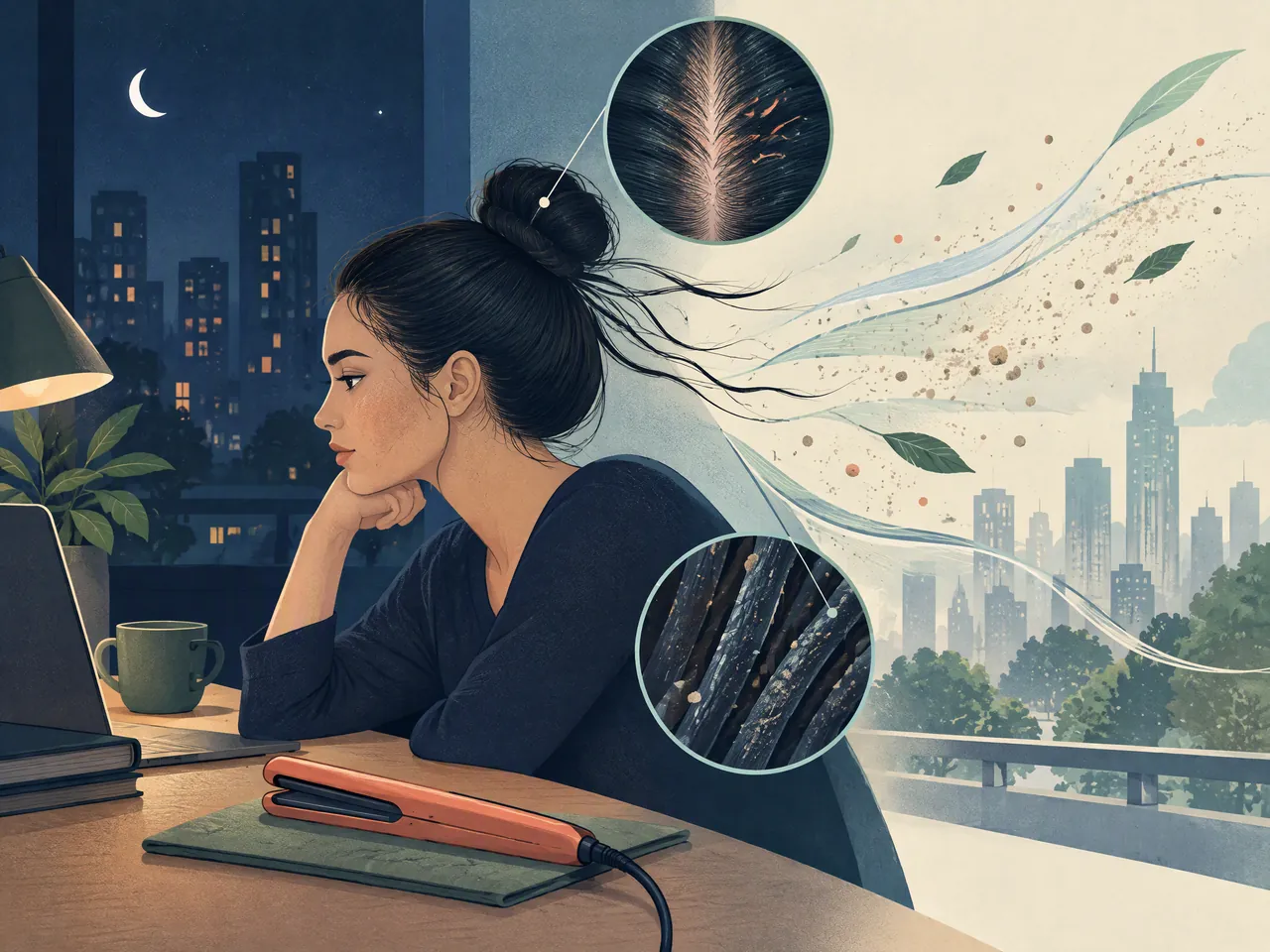
Thinning becomes noticeable in ordinary situations: a centre part looks wider under overhead lighting, a ponytail feels smaller, the scalp shows through after washing, or styling no longer creates the same coverage. These observations are meaningful because they describe a change over time. Take them seriously if they persist, but avoid assuming that every visible scalp area is telogen effluvium. Gradual crown thinning and a receding hairline can follow a pattern that needs its own assessment. [2]
A simple record can make changes easier to explain. Use photographs taken in similar lighting and from the same angle, then write down the date and what you noticed. Do not repeatedly tug at the hair to test it. Instead, record wash days, scalp symptoms, recent illnesses, major dietary changes and any new medicines or supplements. This creates a clearer history for a hair loss diagnosis while reducing the temptation to chase a different product every few days.
Compare your options
| What you notice | Why the detail helps | What to record or do |
|---|---|---|
| Extra shedding across the scalp | Diffuse shedding can be consistent with telogen effluvium, but timing and scalp findings still matter. | Record when it started, whether it followed illness, surgery, childbirth, stress, weight change or a new medicine; arrange assessment if it persists or concerns you. |
| A smooth round or expanding bald area | A patch is a different pattern from general shedding and may need different consideration. | Photograph it in consistent lighting and arrange a medical assessment rather than treating it as routine shedding. |
| Recession at the temples, a wider part or crown thinning | A gradual distribution pattern can suggest a different type of hair loss than a sudden diffuse shed. | Note family history and the pace of change; discuss it with a clinician. |
| Redness, pain, thick scale, crusting or discharge | Inflammation or infection needs clinical attention and should not be assumed to be telogen effluvium. | Seek timely medical advice; avoid picking, vigorous massage or repeatedly applying new products to the area. |
| Recent illness, diet change, medication or body symptoms | These events can help guide the history and whether further assessment is relevant. | Write a dated timeline and take the medicine and supplement list to the consultation. |
On smaller screens, scroll the table sideways to compare all columns.
Telogen Effluvium, Hair Loss Diagnosis and Hair Loss Dermatologist: Warning Signs to Check
Telogen effluvium is not a catch-all explanation for every change in hair. Sudden overall shedding can fit the picture, yet patchy loss, a rapidly moving hairline or scalp inflammation may point the assessment in another direction. Mayo Clinic advises medical discussion for sudden or patchy hair loss, or more loss than usual during washing or combing. Its overview also describes scaling patches with broken hair, redness, swelling or oozing as a possible scalp infection sign. [2]
A calm check of the scalp and the rest of the body can prevent both delay and unnecessary panic. Seek timely medical advice if there is pain, marked itch, tenderness, burning, redness, thick scale, crusting, discharge or areas that look smooth and hairless. Mention symptoms such as persistent fatigue, a marked weight change, menstrual changes, a recent fever or operation, and changes in medication. These details do not name the cause by themselves; they help a clinician decide what needs to be considered. [1] [2]
Telogen Effluvium, Hair Loss Diagnosis and Hair Loss Dermatologist: Sudden or Patchy Hair Loss
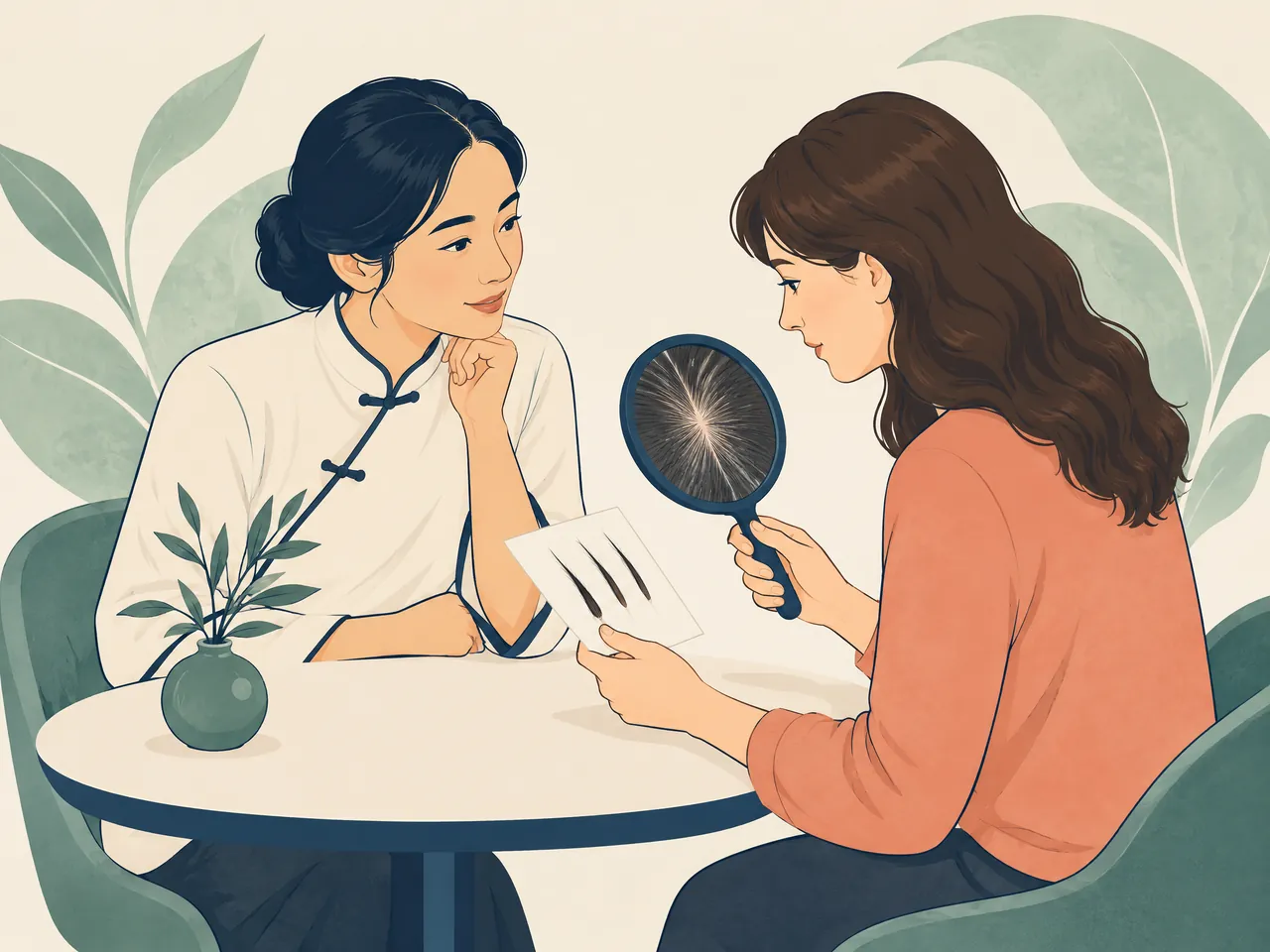
Diffuse shedding and a patch are not interchangeable descriptions. Telogen effluvium is usually diffuse rather than a focal area of complete loss. In contrast, round or patchy bald areas can occur in alopecia areata, while a pattern that begins at the temples or crown is often described in male-pattern baldness. You cannot confirm either from a mirror, but describing the exact location helps the appointment start in the right place. The Hong Kong Centre for Health Protection similarly advises medical input to identify underlying causes before treatment. [4] [5]
Do not wait for a patch to become large before arranging an assessment, especially if it is expanding or affects brows, beard or eyelashes. More context on patchy hair loss may help you document what you see, but it cannot replace examination. If the concern is a gradual recession or crown change rather than sudden shedding, consider the patterns discussed in male pattern hair loss causes as a separate question for a clinician.
Telogen Effluvium, Hair Loss Diagnosis and Hair Loss Dermatologist: Scalp and Whole-Body Symptoms
Scalp symptoms change the priority. Flaking alone can have many explanations, but loss together with inflammation, soreness, pustules, oozing or spreading scale should not be managed as a cosmetic problem. It may be tempting to scrub harder, add oils or repeatedly switch shampoos. That can make the scalp harder to interpret and, if there is an inflammatory or infectious problem, delay appropriate care. Keep the area gently clean, avoid picking or vigorous massage, and tell the clinician what has been applied.
Whole-body context matters too. A doctor may ask about a high fever, surgery, childbirth, restrictive eating, weight loss, stress, chronic illness, family pattern of thinning and prescription or over-the-counter products. NHS and Mayo Clinic both list medical conditions, weight change, stress, nutritional issues or medicines among possible contexts for hair loss, but none of those facts should be used to self-diagnose. A symptom timeline is more useful than a guess about a single culprit. [1] [2]
Telogen Effluvium, Hair Loss Diagnosis and Hair Loss Dermatologist: What Assessment May Involve
A hair loss diagnosis is a process of narrowing possibilities, not a photograph-based verdict. A clinician first looks at the pattern: overall shedding, a widening part, recession, breakage, a patch, or signs of scalp disease. The American Academy of Dermatology explains that dermatologists ask when the loss began and whether it came on quickly, examine the scalp, nails and other hair-bearing areas, and may assess the hair itself. This is why a careful history can be as valuable as the visible change. [3]
Tests are selected rather than automatic. When the history or examination suggests disease, deficiency, hormone imbalance or infection, a clinician may consider blood tests or a scalp biopsy; the AAD notes that these may be needed in some cases. The Centre for Health Protection likewise describes hair examination, blood tests or tissue sampling as possible investigations. A test list found online should therefore be a prompt for questions, not a demand for every test. [3] [5]

Telogen Effluvium, Hair Loss Diagnosis and Hair Loss Dermatologist: History and Scalp Examination
Expect questions that establish sequence and pattern: When did you first see a change? Was it abrupt or gradual? Is the loss scattered or localised? Are strands shedding from the root or breaking along the shaft? The clinician may also ask about relatives with similar thinning, hair practices that pull or damage hair, recent illness and stress, medications, supplements, diet and menstrual or pregnancy history where relevant. Honest details help distinguish clues from coincidences.
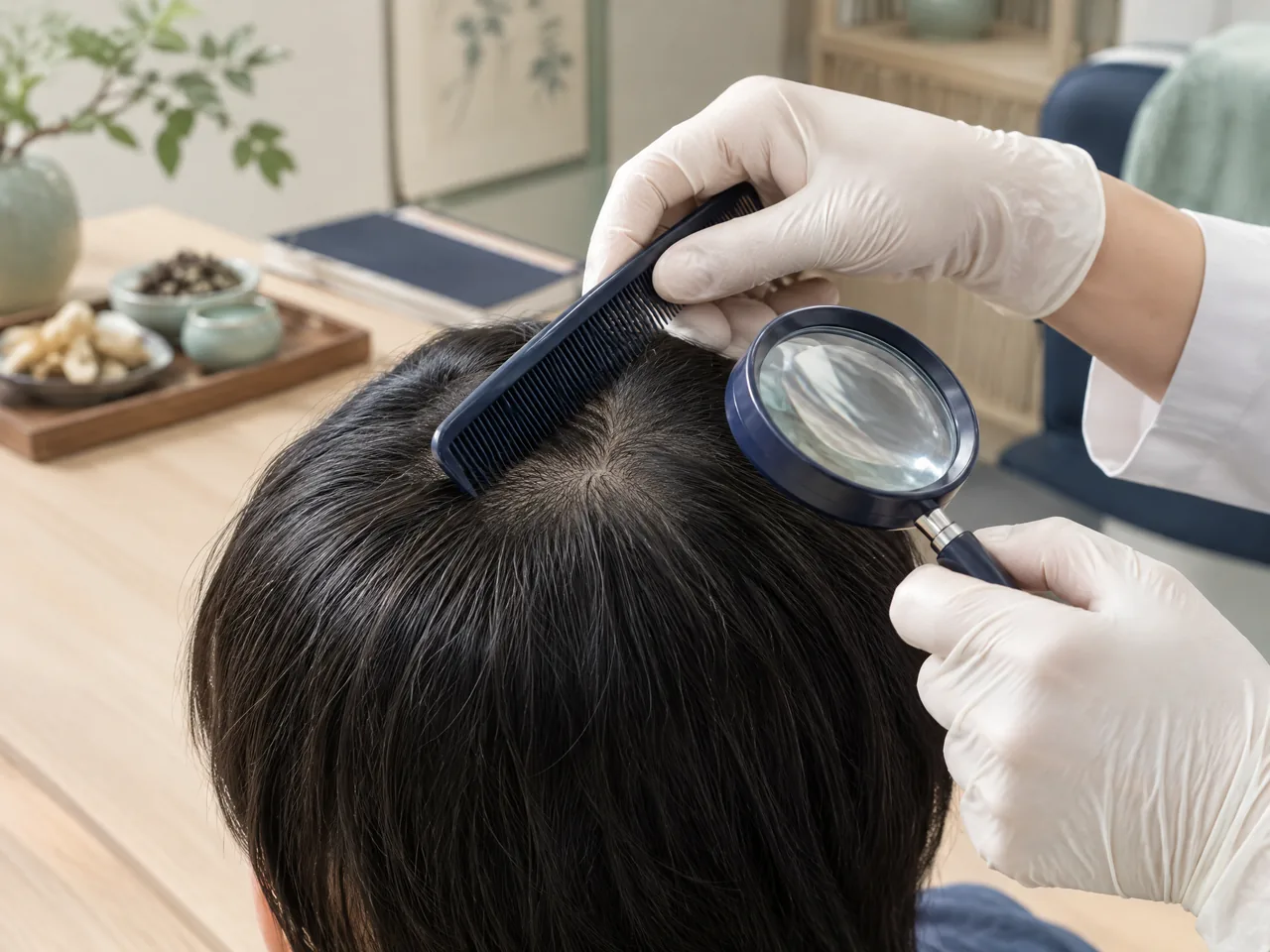
During a scalp examination, the clinician may look for density changes, hair diameter variation, scale, redness, signs of breakage and whether follicles appear present. They may look at nails or other body hair because those features can add context. A gentle hair assessment may be part of the visit. The AAD stresses that more than one cause can coexist, so it is possible for a temporary shedding episode to make an underlying pattern of thinning more noticeable. [3]

Telogen Effluvium, Hair Loss Diagnosis and Hair Loss Dermatologist: Preparing for a Consultation
Bring a short timeline instead of relying on memory. Include the first date you noticed shedding, whether it began before or after a health event, where the loss is most visible, and any scalp discomfort. List prescription medicines, non-prescription remedies and supplements, with approximate start dates. Bring previous relevant blood results if you already have them, but do not start high-dose iron, zinc or biotin simply because hair is shedding; treatment choices should follow the clinical picture and relevant testing. [3]
If you would like a non-urgent conversation about hair and scalp concerns at TCM Lab, send a WhatsApp enquiry and describe your language needs and the pattern you have observed; appointment availability is confirmed separately. For location details, see the Chinese medicine clinic Prince Edward or Kwun Tong Chinese medicine clinic. Sudden patches, inflammation, discharge or symptoms suggesting an underlying medical condition warrant a doctor or hair loss dermatologist rather than waiting on an enquiry.
Care and health guide
Hair and scalp care information
This directory brings together services, reading, and visit information related to hair and scalp care, to help you prepare questions for a consultation.
For questions about hair or scalp care, noting the everyday concerns and service questions you want to discuss can help prepare a consultation; Chinese medicine for hair loss is a relevant service or reading entry point.
People may have different priorities, and acupuncture Hong Kong offers related information to help you understand options and prepare questions.

Your questions, answered
Frequently asked questions
Can I diagnose telogen effluvium from the amount of hair in my shower?
No. Extra shower shedding may be a useful observation, but it cannot identify the cause on its own. Telogen effluvium is usually a diffuse shedding pattern, while patches, recession, breakage and scalp inflammation call for a different assessment. Record the change and seek medical advice if it is sudden, persistent or worrying. [1] [2] [4]
How does a hair loss dermatologist assess possible telogen effluvium?
The assessment commonly starts with when the loss began, whether it was sudden, recent health and lifestyle changes, medicines and family history. A dermatologist may examine the scalp, nails and hair itself. Blood tests or a scalp biopsy may be considered when the history or examination suggests a disease, deficiency, hormone issue or infection; they are not automatic for everyone. [3]
Are round bald patches a typical sign of telogen effluvium?
Telogen effluvium is usually diffuse rather than a single sharply defined hairless patch. Round or patchy areas can occur with other conditions, including alopecia areata, so they should not be self-labelled. If a patch is new, enlarging, or involves the eyebrows, beard or eyelashes, arrange a medical assessment. [2] [4] [5]
When should scalp symptoms make me seek care sooner?
Seek timely medical advice when hair loss comes with pain, marked itch, redness, swelling, spreading scale, crusting or discharge. These signs can accompany scalp inflammation or infection and are not adequately addressed by simply changing shampoo. Mention every product recently used on the scalp when you are assessed. [2]
Sources and further information
- [1] [1] NHS — Hair loss
Referenced for: Normal shedding context, possible causes and advice to seek medical guidance when worried.
- [2] [2] Mayo Clinic — Hair loss: Symptoms and causes
Referenced for: Hair-loss patterns, warning signs and potential causes.
- [3] [3] American Academy of Dermatology — Hair loss: Diagnosis and treatment
Referenced for: Dermatology history, examination and selective diagnostic testing.
- [4] [4] DermNet — Telogen effluvium
Referenced for: Telogen effluvium as diffuse shedding, potential triggers and clinical diagnostic context.
- [5] [5] Hong Kong Centre for Health Protection — Men’s Health Line: Alopecia
Referenced for: Hong Kong official health information on alopecia patterns and medical assessment.