
TCM Lab · Health reading
Knee Pain Location and Knee Pain When Walking or Climbing Stairs: What to Notice
Published Updated
Where your knee hurts and when it hurts are useful details to bring to an assessment, not a diagnosis by themselves. Knee pain at the front, inner edge, outer edge or back can arise from different nearby structures. Pain that appears while walking, going downstairs, climbing stairs, squatting or standing from a chair also shows how the knee is coping with load. Notice the pattern, any swelling, stiffness, locking or giving way, and what happened before symptoms began. A hot red knee, fever, visible deformity, rapid swelling or an inability to bear weight needs prompt medical attention.
Appointments are confirmed through WhatsApp. If you have language requirements, please mention them in your enquiry.
The short answer
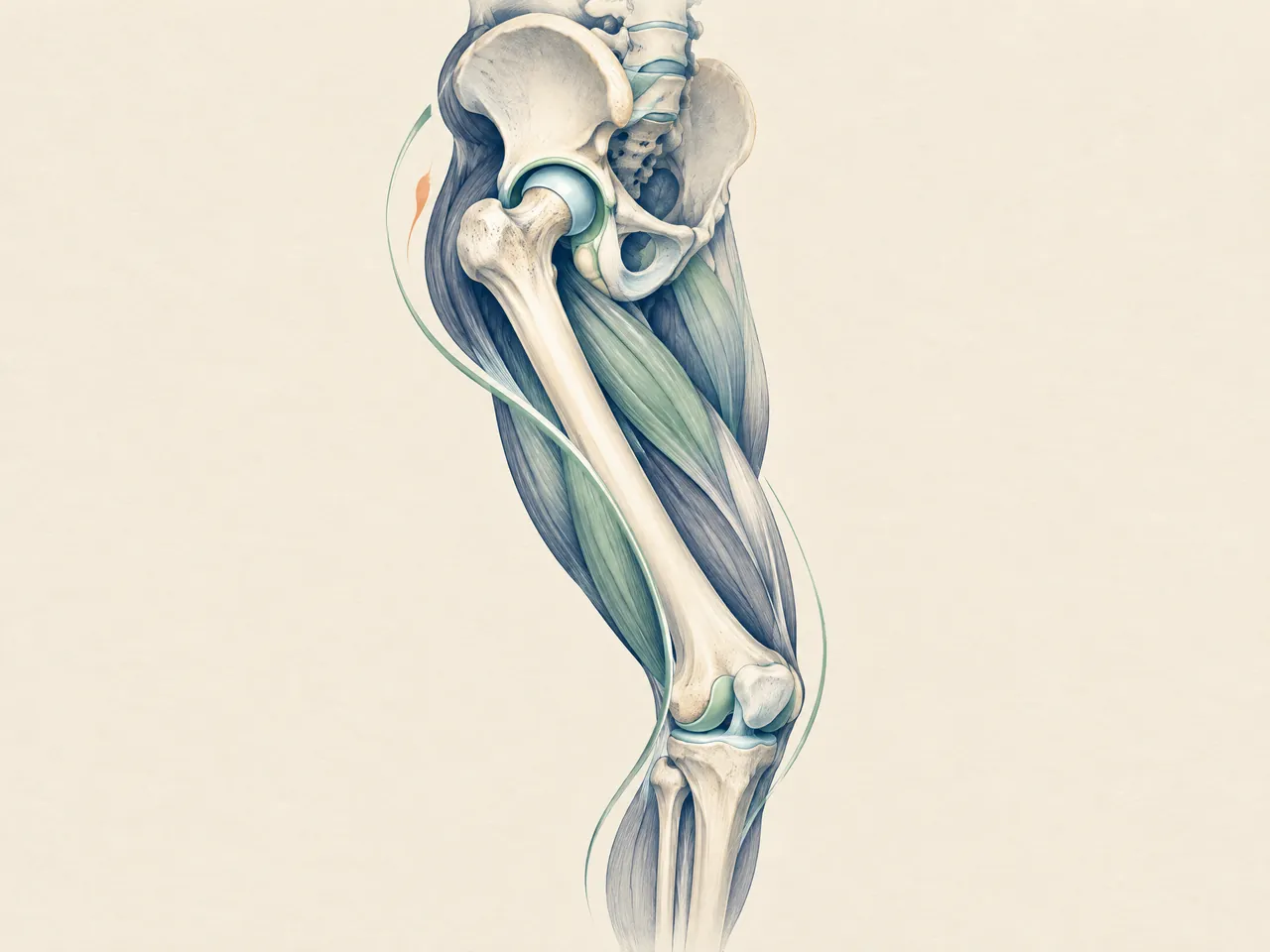
Knee pain location can narrow the conversation, but it cannot identify the cause on its own. Front, inner, outer and back-of-knee pain may each have several explanations, while pain when walking or climbing stairs may point to a load-sensitive problem. Record the movement that brings it on, the onset, swelling, stiffness and any instability. Seek prompt care for severe pain, inability to bear weight, a changed joint shape, marked swelling, or a hot red knee with fever.
Transparent pricing
See the fees.
Choose your care.
Explore our complete official price list, including first-trial prices, regular prices, packages and branch-specific options.
Opening WhatsApp prepares an enquiry; it does not send a message, take payment or confirm an appointment. Suitability and individual arrangements are confirmed during consultation.
Pain care
All prices in HKDExtracorporeal shockwave treatment
Shockwave treatment for deep-tissue and fascial care. The Kwun Tong clinic offers the multi-area options shown below.
Priced by branch
Branch-specific pricing
Prince Edward: HK$250 per area
Kwun Tong: HK$250 for 1 area / HK$450 for 2 areas / HK$600 for 3 areas
Pain care (manual therapy)
Includes Chinese medicine musculoskeletal assessment, manual joint techniques and tui na.
HK$580 (single session)
Chinese medicine musculoskeletal assessment
Pain care (acupuncture and manual therapy)
Combines acupuncture and manual therapy.
HK$680 (single session)
Combined care
Hair and scalp
All prices in HKDScalp health and hair-loss management
Includes AI scalp analysis, deep scalp and follicle cleansing, and scalp oil-control care.
HK$380 (first trial)
Regular price: HK$680
- 6 sessions: HK$3,480 (HK$580 per session)
- 12 sessions: HK$5,760 (HK$480 per session)
- 20 sessions: HK$8,600 (HK$430 per session)
- 30 sessions: HK$11,400 (HK$380 per session)
Hair acupuncture and Chinese herbal medicine package
Includes scalp acupuncture and 3 days of Chinese herbal medicine that does not require decoction.
HK$580 (single session)
Registered Chinese Medicine Practitioner consultation
- 6 sessions: HK$3,180 (HK$530 per session)
- 12 sessions: HK$5,760 (HK$480 per session)
- 20 sessions: HK$8,600 (HK$430 per session)
- 30 sessions: HK$11,400 (HK$380 per session)
Combined hair and scalp treatment
Combines acupuncture and Chinese herbal medicine with salon-level scalp and follicle care. Packages include complimentary hair-care shampoo and serum.
HK$1,260 (single session)
Combined treatment
- 8 sessions: HK$8,640 (HK$1,080 per session)
- 16 sessions: HK$15,680 (HK$980 per session)
- 20 sessions: HK$18,600 (HK$930 per session)
- 30 sessions: HK$26,400 (HK$880 per session)
Weight management
All prices in HKDFull-body acupoint embedding for weight management
Includes full-body acupoint embedding. Packages include complimentary Chinese herbal medicine for weight management, with the number of included days scaled to the package. Embedding material and the individual treatment arrangement are confirmed during consultation; this is not a cosmetic thread lift.
HK$980 (single session)
No trial session
- 10 sessions: HK$7,800 (HK$780 per session)
- 20 sessions: HK$14,600 (HK$730 per session)
- 30 sessions: HK$20,400 (HK$680 per session)
Facial acupuncture
All prices in HKDFacial acupuncture (basic)
Includes facial acupuncture and meridian-based facial care, including care for facial puffiness.
HK$480 (first trial)
Regular price: HK$680
- 10 sessions: HK$5,200 (HK$520 per session)
- 20 sessions: HK$9,600 (HK$480 per session)
- 30 sessions: HK$13,500 (HK$450 per session)
Facial acupuncture (advanced)
Includes enhanced facial acupuncture with a specially formulated moisturising mask and serum.
HK$780 (first trial)
Regular price: HK$1,180
- 10 sessions: HK$9,000 (HK$900 per session)
- 20 sessions: HK$16,600 (HK$830 per session)
- 30 sessions: HK$23,400 (HK$780 per session)
Chinese medicine
All prices in HKDAcupuncture and Chinese herbal medicine package
Includes a Chinese medicine consultation with pulse assessment, body acupuncture and 3 days of Chinese herbal granules that do not require decoction.
HK$580 (single session)
Chinese medicine consultation with pulse assessment
Knee Pain Location and Knee Pain When Walking or Climbing Stairs: Start with Symptoms
A useful symptom description is more specific than saying that the whole knee hurts. Point with one finger to the most painful area, then describe whether it is an ache, a sharp jab, pressure, burning or a feeling of tightness. Say whether pain began after a twist, fall, run or change in training, or crept in over time. Also note if it occurs only on stairs, during the first few steps after sitting, after a long walk, or later that evening. These details help distinguish a pattern worth assessing from an isolated sore day. For a broader overview, see knee pain symptoms.
Knee Pain Location and Knee Pain When Walking or Climbing Stairs: Front, Inner, Outer or Back
Pain at the front of the knee is often noticed with kneeling, squatting, getting out of a low chair or using stairs. It can involve the area around the kneecap, but bursitis, arthritis and other problems may also be felt there. Anterior pain should not automatically be labelled as a kneecap condition. The practical question is what makes it worse: bending deeply, pressing on the area, running, sitting with the knee bent, or simply putting weight through the leg. Our guide to pain in front of the knee explores that area in more detail.
Inner- or outer-edge pain may feel close to the joint line, or it may be slightly above or below it. A twist can be relevant, but gradual symptoms after repeated running, jumping, prolonged kneeling or a new exercise routine matter too. Pain behind the knee can feel like a pull or fullness and may be associated with muscles, tendons, ligaments, joint conditions or a Baker’s cyst. Location is a clue because it narrows the history a clinician will take; it is not a map for self-diagnosing a ligament, meniscus or cyst. Cleveland Clinic likewise describes multiple possible causes for each location. [2]
Knee Pain Location and Knee Pain When Walking or Climbing Stairs: Note Load and Movement
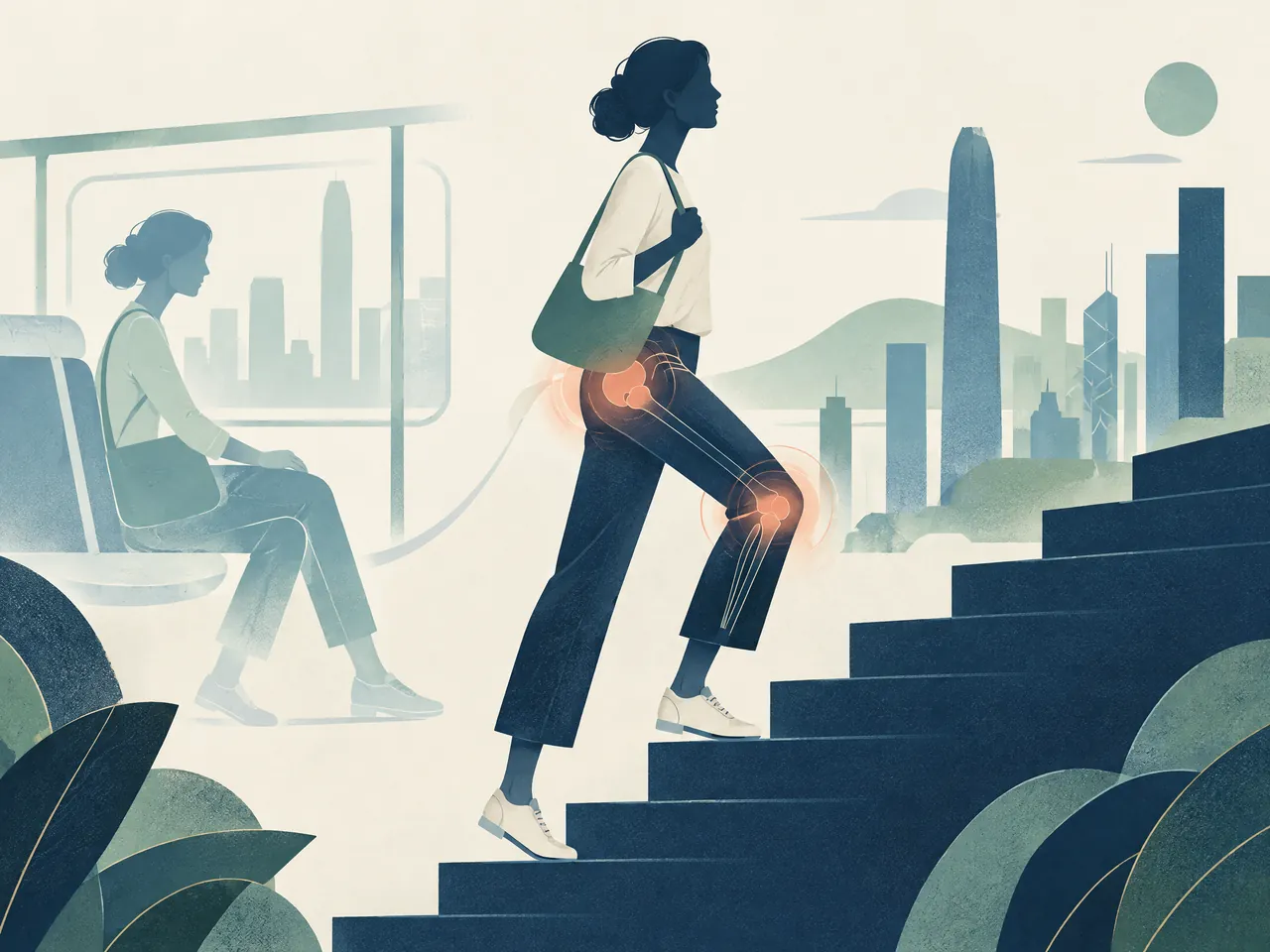
Walking on level ground and climbing stairs are different tests of the same knee. Make a short activity record: which leg leads, whether ascent or descent is worse, whether a handrail changes symptoms, and whether you compensate by turning the foot out or taking one step at a time. Include ordinary Hong Kong routines such as walking between MTR platforms, carrying shopping, getting on a bus or using stairs at home. These observations describe function without asking you to push through significant pain.
Notice the time course as well. Pain immediately after an awkward landing tells a different story from discomfort that begins after twenty minutes of walking or stiffness after inactivity. Swelling later in the day, a loss of full bend or straightening, clicking that is painful, a catching sensation, or a feeling that the knee will buckle are all useful details. A painless click can be common, whereas painful locking or giving way deserves attention. The NHS lists inability to move or bear weight, major swelling or a changed shape, and locking or giving way among reasons to seek urgent advice. [1]
Compare your options
| What you notice | Details to record | Why it helps guide the next step |
|---|---|---|
| Exact pain location | Front, inner edge, outer edge, back, or a broader area; point with one finger if possible. | It helps the clinician focus the history and examination, without assuming one diagnosis. |
| Walking or stair pattern | Level walking, ascent, descent, squatting, standing from a chair, distance and whether a handrail changes it. | It describes how the knee responds to different types of load. |
| Onset and change | Sudden or gradual onset; fall, twist, collision, new training or work demand; better, worse or unchanged. | It can distinguish a possible injury pattern from a gradual load-related pattern. |
| Associated symptoms | Swelling, warmth, redness, fever, bruising, stiffness, locking, clicking, giving way or inability to bear weight. | Some combinations signal a need for urgent medical assessment. |
| What you have tried | Activity changes, cold or heat, supports, medicines or previous treatment, and whether each helped or aggravated symptoms. | It gives a clinician a clearer starting point and avoids repeating an unhelpful approach. |
On smaller screens, scroll the table sideways to compare all columns.
Knee Pain Location and Knee Pain When Walking or Climbing Stairs: Common Causes
Knee pain has many possible causes, from a temporary strain to joint disease or an injury that needs targeted care. A location-and-load pattern helps a clinician decide what to ask next, but age alone does not settle the question and a web page cannot do so either. Recent trauma, the speed of swelling, fever, other unwell symptoms, medicine use and previous knee problems all change the assessment. The comparison below is designed to help you communicate the pattern clearly rather than choose a diagnosis from a list.
Knee Pain Location and Knee Pain When Walking or Climbing Stairs: Injury, Overuse or Joint Changes
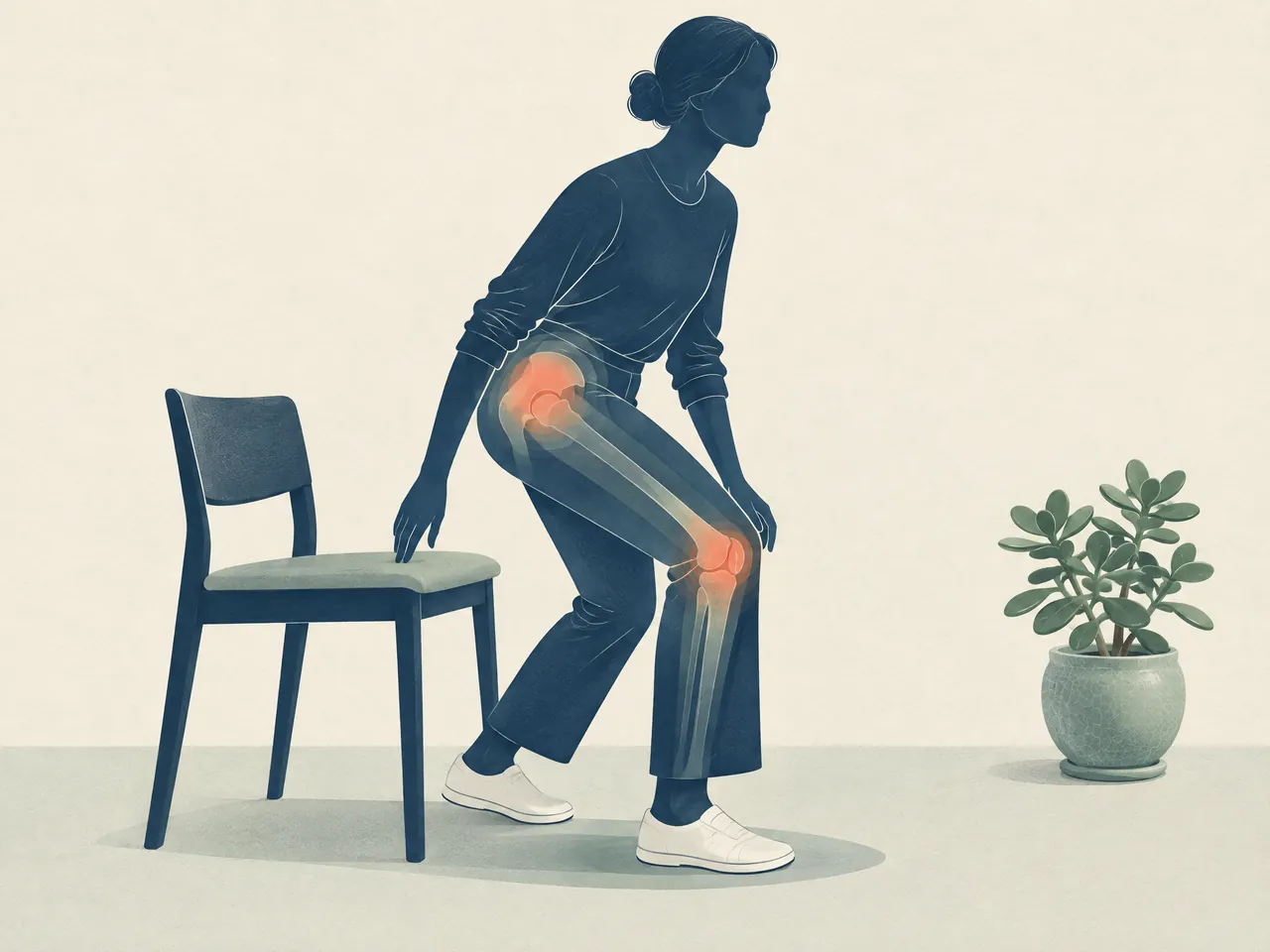
An injury may follow a fall, collision, pivot, sudden stop or a moment when the knee moved farther than expected. People may recall a pop, immediate difficulty continuing, bruising, rapid swelling, instability or loss of motion. Sprains, tendon injuries and meniscus or ligament injuries can produce overlapping symptoms. When the knee has changed shape, cannot take weight, or symptoms are severe after significant trauma, do not test it repeatedly at home—seek prompt medical assessment. [1]
Overuse is different: there may be no single incident, but symptoms build after a rise in running, court sport, climbing, kneeling, repetitive jumping or work that keeps the knee bent. Arthritis can also produce activity-related pain and stiffness, and it should not be assumed to be the explanation for every middle-aged or older person with a sore knee. For people with osteoarthritis, NICE describes therapeutic exercise, information and support, and weight management where appropriate as core management; an individual plan should follow an assessment rather than a generic online exercise prescription. [3]
Knee Pain Location and Knee Pain When Walking or Climbing Stairs: Swelling or Stiffness
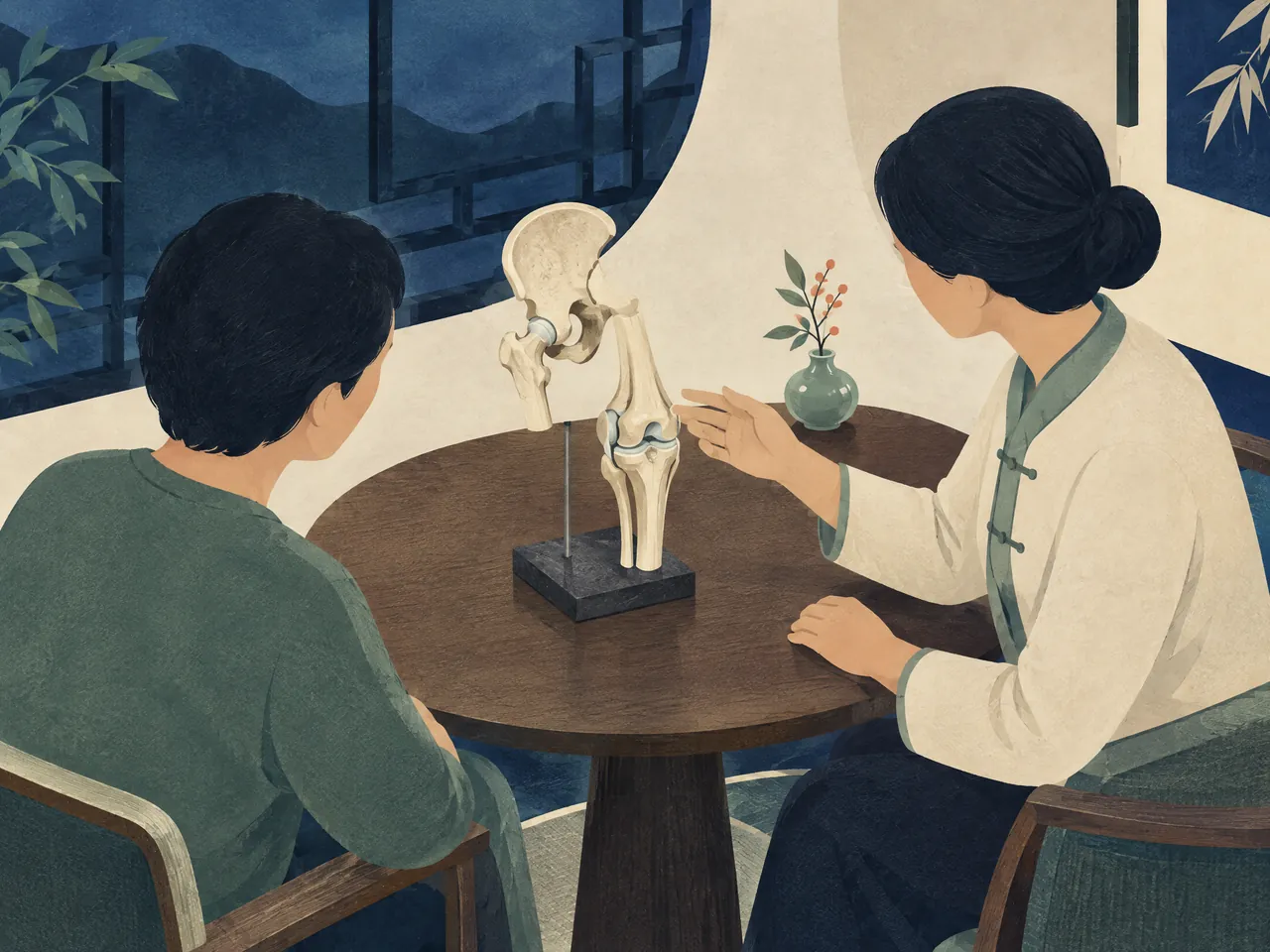
Look at swelling in context. A knee that becomes puffy after activity is different from one that swells quickly after a twist or appears visibly larger than the other knee. Describe whether it feels warm, whether skin colour has changed, and whether swelling limits bending. Morning stiffness, stiffness after sitting, pain at night and the ability to fully straighten the knee are all details worth reporting. A symptom diary can be more helpful than trying to remember a whole week during an appointment.
Heat and redness need extra care. A sudden very painful, hot, red knee can occur with gout or infection among other causes, and fever or chills makes prompt medical advice especially important. [1] Do not rely on massage, an exercise video, heat or cold to sort out a potentially infected joint. Equally, do not assume every swollen knee is an emergency; the combination of onset, injury, fever, movement and weight-bearing ability is what guides the urgency.
Knee Pain Location and Knee Pain When Walking or Climbing Stairs: Safe Next Steps
The best next step depends on the pattern and severity, not on the label you have guessed from a diagram. First rule out urgent features. If those are absent, reduce the activity that clearly aggravates the knee for the moment and arrange assessment when pain persists, interferes with daily life, or leaves you unsure how to stay active safely. A clinician may use your history and examination to decide whether rehabilitation, imaging, medication advice, referral or another approach is appropriate. See knee pain causes for a broader guide to the possibilities that may be considered.
Knee Pain Location and Knee Pain When Walking or Climbing Stairs: Red Flags and Prompt Care
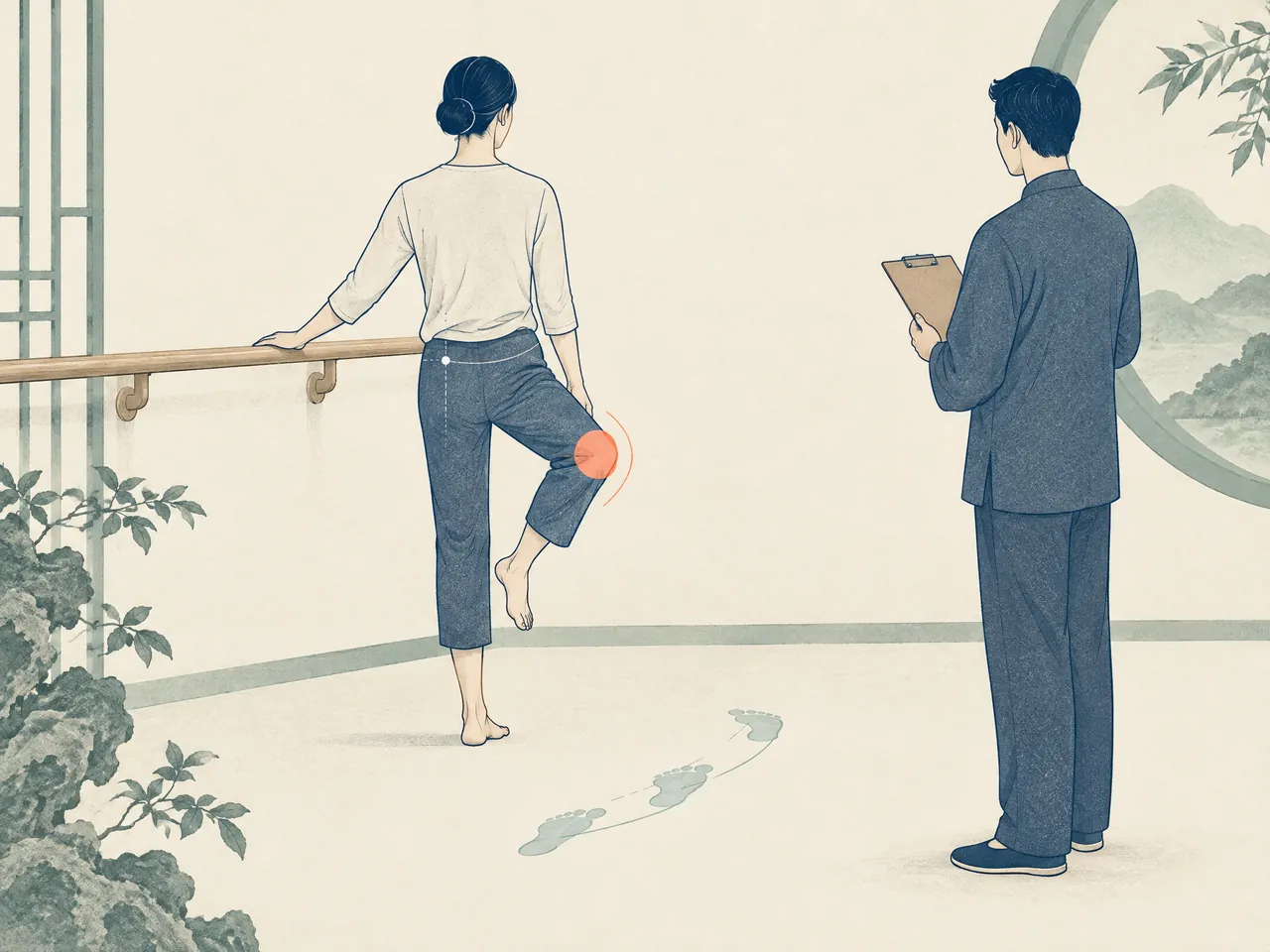
Seek urgent medical advice after major trauma, or if the knee is badly swollen, looks deformed, cannot be moved, or cannot support weight. Get prompt help if it locks, repeatedly gives way, or painful clicking is stopping normal movement. A high temperature or feeling feverish, cold or shivery together with redness or heat around the knee can indicate infection and should not wait for routine care. These warning signs matter more than the exact spot where pain is felt. [1]
Less dramatic symptoms still merit a timely appointment when they persist beyond a few weeks, recur with normal walking, disturb sleep, or make you change work, exercise or household routines. Bring a concise record: the date of onset, an injury or training change, the movements that provoke symptoms, photographs of visible swelling if useful, and a list of medicines and prior conditions. This prepares you for a more useful conversation and reduces pressure to recall every detail on the day.
Knee Pain Location and Knee Pain When Walking or Climbing Stairs: Assessment and Self-Care
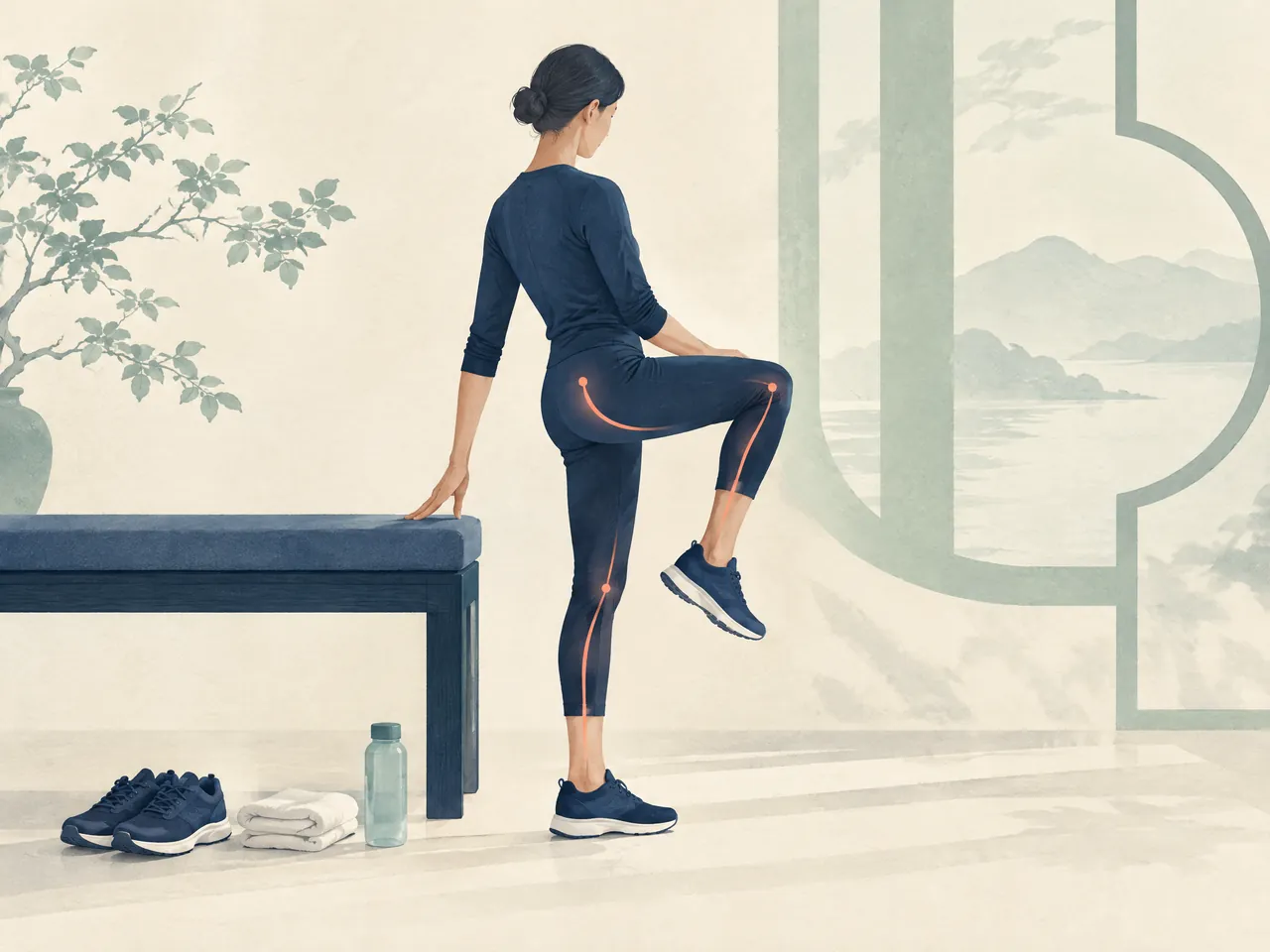
If there are no warning signs, pacing is often more sensible than either complete inactivity or forcing through pain. Choose a temporary modification that lowers the aggravating load: shorten a walk, use a handrail, avoid repeated deep squats, break up prolonged standing, or choose a route with fewer stairs. An ice pack wrapped in a cloth may be used for up to 20 minutes every two to three hours for pain and swelling, according to NHS advice. [1] Stop any heat or cold approach that makes symptoms worse and protect the skin. Read more about knee pain ice or heat before deciding what feels appropriate.
For an ongoing, non-urgent problem, assessment should come before selecting a treatment. A registered Chinese medicine practitioner may discuss symptoms through a traditional Chinese medicine assessment and coordinate with usual medical care, but that does not replace evaluation for trauma, infection or structural problems. Acupuncture should not be presented as a proven solution for every painful knee: NICE specifically advises against offering acupuncture or dry needling to manage osteoarthritis. [3] You can explore practical knee pain self-care measures, while keeping follow-up focused on function, safety and the underlying cause.

Care and health guide
Knee discomfort: care information
This directory brings together services, reading, and visit information related to knee discomfort, to help you prepare questions for a consultation.
When knee discomfort affects your day, noting when it occurs, its relation to activity, and what you have already tried can help prepare a consultation; Chinese medicine pain management Hong Kong is a relevant service or reading entry point.
Individual circumstances differ, and acupuncture Hong Kong offers related information to help you understand options and prepare questions.


Your questions, answered
Frequently asked questions
Why is knee pain worse when I walk downstairs?
Going downstairs bends the knee while it carries body weight, so it can reveal a load-sensitive symptom. Front-of-knee pain is one possibility, but location and stair pain cannot diagnose the cause. Note whether ascent is also painful, whether the knee swells or gives way, and whether level walking is easier. Seek assessment if symptoms persist or restrict normal movement.
Can I tell if I have a meniscus or ligament injury from knee pain location?
No. Inner or outer pain, a twist, swelling, catching and instability can be useful clues, but several conditions can overlap. A clinician uses the injury history, examination and, where appropriate, further tests to identify the cause. Urgent assessment is appropriate if you cannot bear weight, the knee changes shape, locks, or swells markedly after trauma.
Should I use ice or heat for a sore knee?
For pain and swelling, NHS advice includes an ice pack wrapped in a cloth for up to 20 minutes every two to three hours. Stop if it worsens symptoms and avoid direct contact with the skin. Heat or cold should not delay care for a hot red knee, fever, severe trauma, inability to bear weight or rapid swelling.
When should I see someone about knee pain when climbing stairs?
Arrange an assessment when stair pain is ongoing, worsens, changes daily activity or has not improved over a few weeks. Seek prompt medical advice sooner for severe pain, inability to move or bear weight, a badly swollen or deformed knee, locking or giving way, or redness and heat with fever or chills.
Sources and further information
- [1] [1] NHS: Knee pain
Referenced for: Supports urgent warning signs, common causes, cold-pack wording, activity modification and seeking medical advice when symptoms do not improve.
- [2] [2] Cleveland Clinic: Knee Pain
Referenced for: Supports the point that front, back, inner and outer knee pain can each have multiple possible causes and should be assessed in context.
- [3] [3] NICE NG226: Osteoarthritis in over 16s: diagnosis and management
Referenced for: Supports recommendations on therapeutic exercise, weight management where appropriate, and the guidance not to offer acupuncture or dry needling for osteoarthritis.