
TCM Lab · Health reading
Bloating After Eating: Why do I feel bloated after eating? Understanding abdominal bloating and constipation
Published Updated
Feeling bloated after a meal is frustrating, especially when it happens after ordinary lunches or dinners rather than obvious overeating. The sensation may be a tight, gassy abdomen, uncomfortable pressure high in the stomach, early fullness, burping, or a lower-abdominal swelling that improves after opening the bowels. These patterns do not all mean the same thing. Looking at when symptoms begin, what was eaten, eating pace and bowel changes gives a clinician far more useful information than simply saying “I have gas.”
Appointments are confirmed through WhatsApp. If you have language requirements, please mention them in your enquiry.
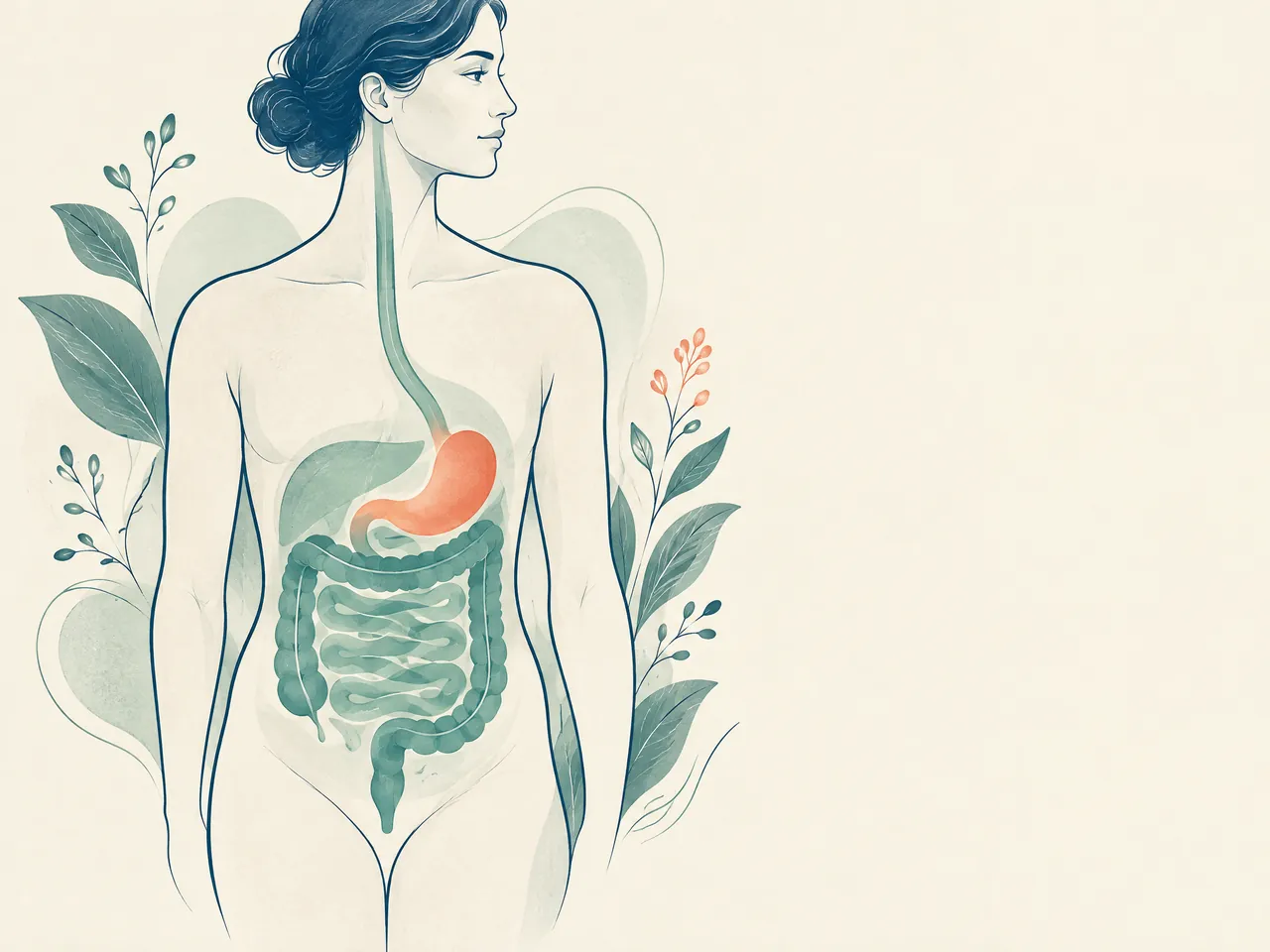
The short answer
Bloating after eating can follow a large or hurried meal, swallowed air, particular foods, indigestion-type symptoms, or constipation. Notice whether the pressure starts during the meal or later, whether it is high or low in the abdomen, and whether a bowel movement changes it. Keep a short food and symptom record rather than eliminating many foods at once. Seek prompt medical assessment for severe pain, persistent vomiting, bleeding, black stools, unintentional weight loss or difficulty swallowing.
Transparent pricing
See the fees.
Choose your care.
Explore our complete official price list, including first-trial prices, regular prices, packages and branch-specific options.
Opening WhatsApp prepares an enquiry; it does not send a message, take payment or confirm an appointment. Suitability and individual arrangements are confirmed during consultation.
Chinese medicine
All prices in HKDAcupuncture and Chinese herbal medicine package
Includes a Chinese medicine consultation with pulse assessment, body acupuncture and 3 days of Chinese herbal granules that do not require decoction.
HK$580 (single session)
Chinese medicine consultation with pulse assessment
Hair and scalp
All prices in HKDScalp health and hair-loss management
Includes AI scalp analysis, deep scalp and follicle cleansing, and scalp oil-control care.
HK$380 (first trial)
Regular price: HK$680
- 6 sessions: HK$3,480 (HK$580 per session)
- 12 sessions: HK$5,760 (HK$480 per session)
- 20 sessions: HK$8,600 (HK$430 per session)
- 30 sessions: HK$11,400 (HK$380 per session)
Hair acupuncture and Chinese herbal medicine package
Includes scalp acupuncture and 3 days of Chinese herbal medicine that does not require decoction.
HK$580 (single session)
Registered Chinese Medicine Practitioner consultation
- 6 sessions: HK$3,180 (HK$530 per session)
- 12 sessions: HK$5,760 (HK$480 per session)
- 20 sessions: HK$8,600 (HK$430 per session)
- 30 sessions: HK$11,400 (HK$380 per session)
Combined hair and scalp treatment
Combines acupuncture and Chinese herbal medicine with salon-level scalp and follicle care. Packages include complimentary hair-care shampoo and serum.
HK$1,260 (single session)
Combined treatment
- 8 sessions: HK$8,640 (HK$1,080 per session)
- 16 sessions: HK$15,680 (HK$980 per session)
- 20 sessions: HK$18,600 (HK$930 per session)
- 30 sessions: HK$26,400 (HK$880 per session)
Weight management
All prices in HKDFull-body acupoint embedding for weight management
Includes full-body acupoint embedding. Packages include complimentary Chinese herbal medicine for weight management, with the number of included days scaled to the package. Embedding material and the individual treatment arrangement are confirmed during consultation; this is not a cosmetic thread lift.
HK$980 (single session)
No trial session
- 10 sessions: HK$7,800 (HK$780 per session)
- 20 sessions: HK$14,600 (HK$730 per session)
- 30 sessions: HK$20,400 (HK$680 per session)
Facial acupuncture
All prices in HKDFacial acupuncture (basic)
Includes facial acupuncture and meridian-based facial care, including care for facial puffiness.
HK$480 (first trial)
Regular price: HK$680
- 10 sessions: HK$5,200 (HK$520 per session)
- 20 sessions: HK$9,600 (HK$480 per session)
- 30 sessions: HK$13,500 (HK$450 per session)
Facial acupuncture (advanced)
Includes enhanced facial acupuncture with a specially formulated moisturising mask and serum.
HK$780 (first trial)
Regular price: HK$1,180
- 10 sessions: HK$9,000 (HK$900 per session)
- 20 sessions: HK$16,600 (HK$830 per session)
- 30 sessions: HK$23,400 (HK$780 per session)
Pain care
All prices in HKDExtracorporeal shockwave treatment
Shockwave treatment for deep-tissue and fascial care. The Kwun Tong clinic offers the multi-area options shown below.
Priced by branch
Branch-specific pricing
Prince Edward: HK$250 per area
Kwun Tong: HK$250 for 1 area / HK$450 for 2 areas / HK$600 for 3 areas
Pain care (manual therapy)
Includes Chinese medicine musculoskeletal assessment, manual joint techniques and tui na.
HK$580 (single session)
Chinese medicine musculoskeletal assessment
Pain care (acupuncture and manual therapy)
Combines acupuncture and manual therapy.
HK$680 (single session)
Combined care
Bloating After Eating, Why do I feel bloated after eating?, and Abdominal bloating and constipation: recognising different patterns
“Bloating” can mean different sensations. Some people notice pressure or expansion soon after they start eating; others are comfortable until later in the day, when the abdomen feels stretched or clothes feel tighter. Indigestion, also called dyspepsia, is a broad symptom group that can include upper-abdominal discomfort, becoming full too soon, uncomfortable fullness after eating, bloating, nausea and belching [1]. That description is useful because it prevents one label from being treated as a diagnosis. A meal-related symptom deserves attention to its pattern, not an automatic assumption that every episode is caused by gas.
Location and change over time offer practical clues. A high, post-meal pressure with belching or early fullness is a different story from lower-abdominal pressure that improves after passing stool. The latter can sit alongside constipation or an irritable-bowel-type pattern, while persistent symptoms may have several possible explanations. For a broader description of upper digestive pressure, see stomach bloating. The aim is not to self-diagnose from a checklist; it is to describe what is actually happening so that the right questions can be asked.
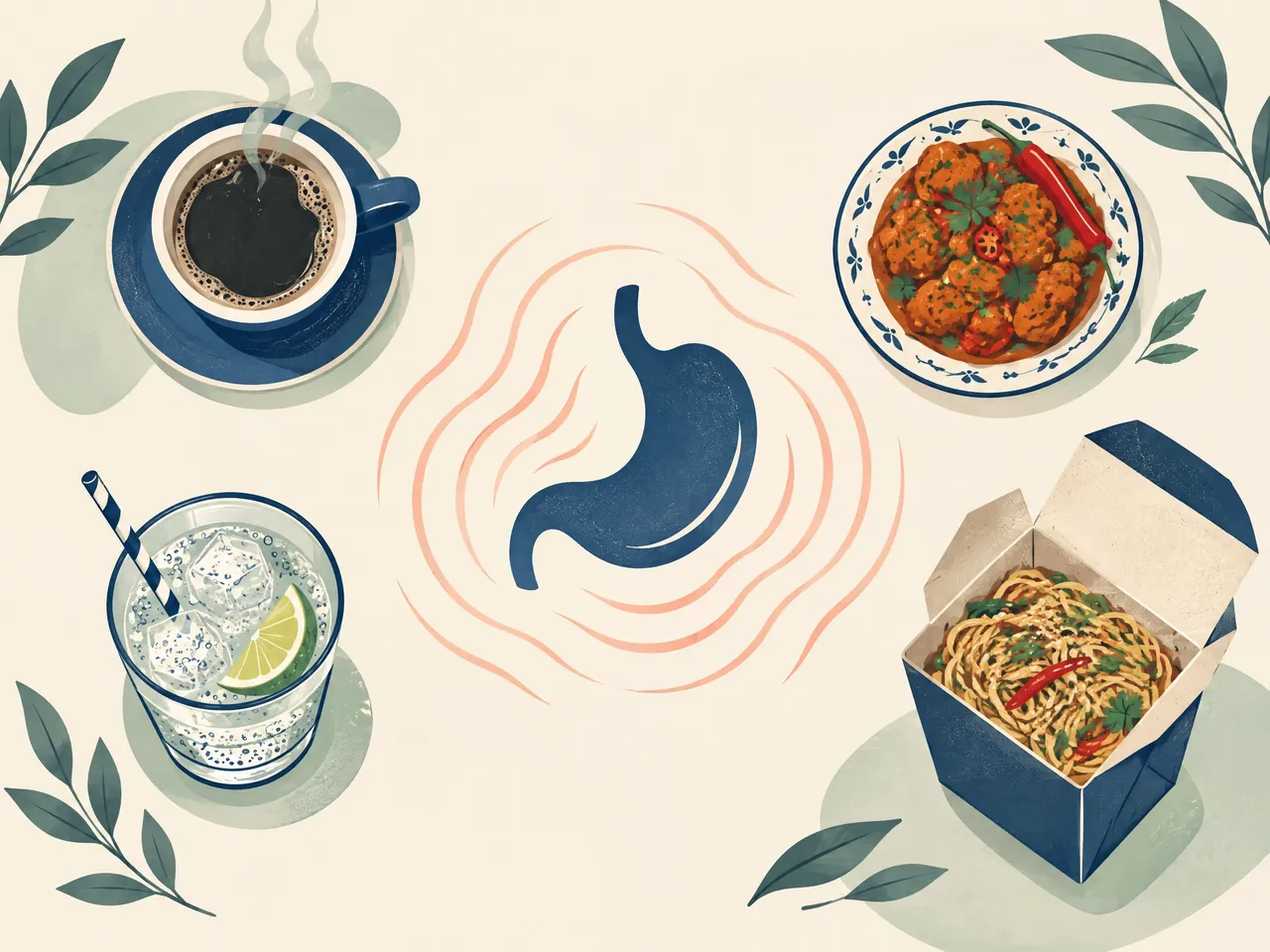
Bloating After Eating, Why do I feel bloated after eating?, and Abdominal bloating and constipation: what the timing may show
If the abdomen feels uncomfortable while you are still eating, pause and consider the mechanics of the meal. Eating at a desk, talking through a rushed lunch, chewing gum, drinking through a straw or washing food down with fizzy drinks can all make it easier to swallow air. A very large, rich or fatty meal may leave a heavy sensation afterwards. The NHS lists feeling full and bloated, nausea, burping and passing wind among common indigestion symptoms after eating or drinking [2]. These observations are starting points for a conversation, not proof that a particular food is the cause.
Symptoms that begin later deserve a different note in the diary. Record whether dinner was late, whether you lay down soon afterwards, and whether the sensation is upper abdominal burning, reflux-like fluid coming up, cramping, or a general full lower abdomen. If you regularly become uncomfortable full after meals or full unusually early, the related page on postprandial fullness can help you put the feeling into words. If it is new, recurring or interfering with eating, medical assessment can consider the symptom history, examination and, when appropriate, tests; possible approaches vary with the suspected cause [1].
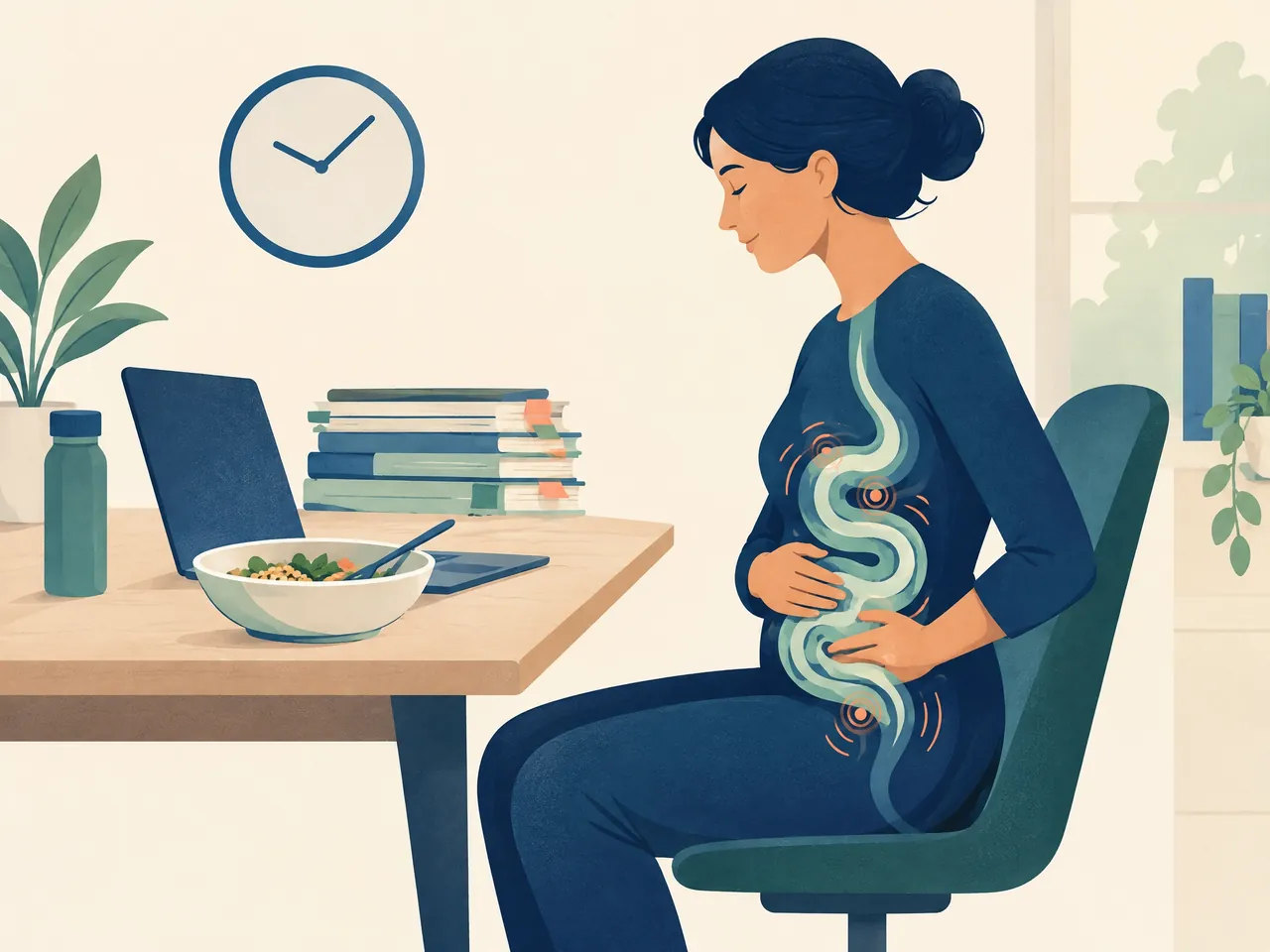
Bloating After Eating, Why do I feel bloated after eating?, and Abdominal bloating and constipation: keeping a useful symptom record
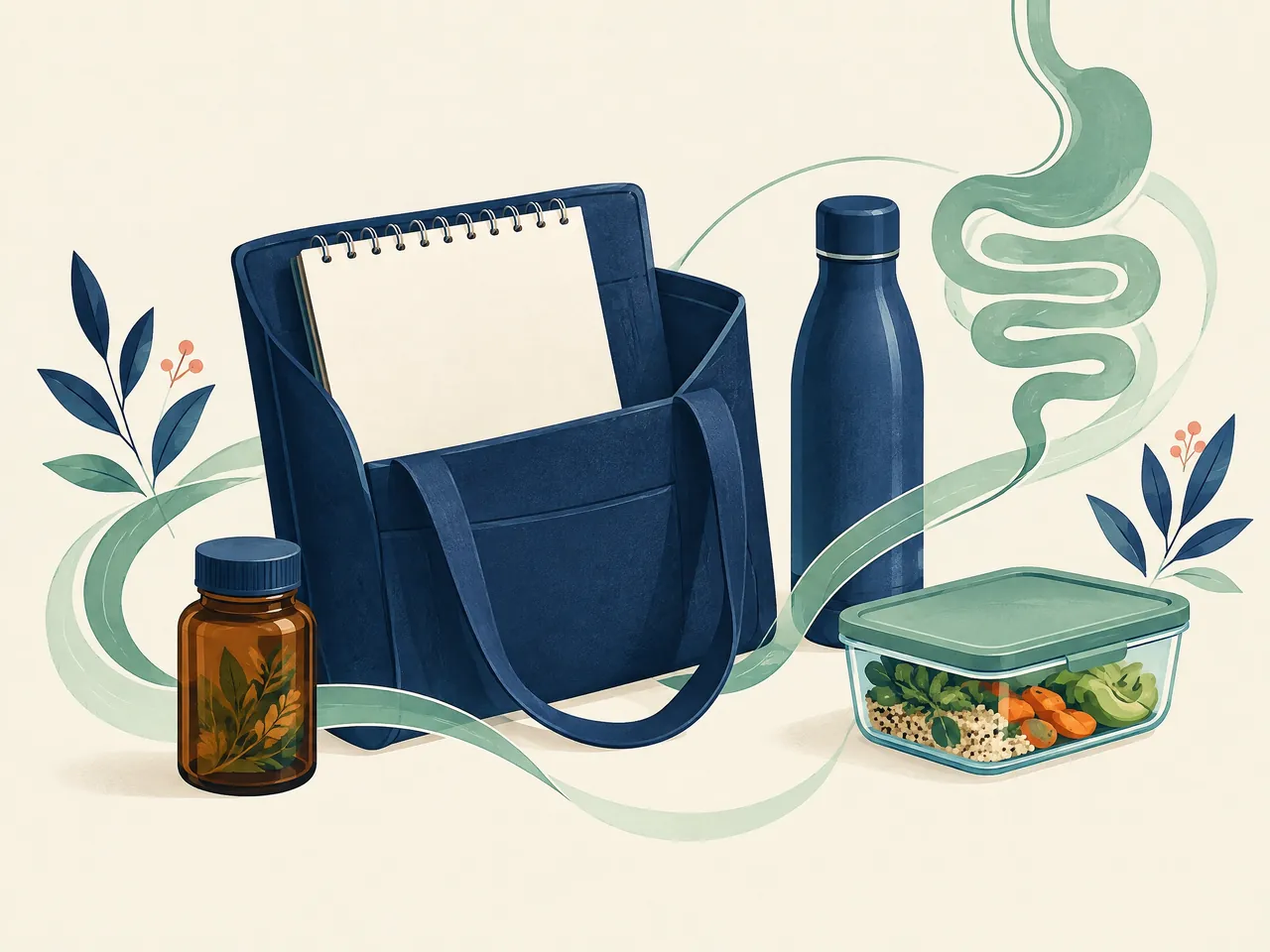
A useful record is short enough to keep. For each episode, write the meal and drinks, approximate portion, time you began and finished, and the time bloating started. Add a plain description such as “upper pressure and repeated burping” or “lower tightness relieved after stool,” rather than judging whether the meal was “good” or “bad.” Note appetite, nausea, heartburn, pain, menstrual timing if relevant, sleep disruption and anything you took for relief. Include regular medicines and supplements because they belong in a clinician’s overall review.
Bowel information is especially helpful when abdominal bloating and constipation occur together. Write down frequency, whether stool was hard or lumpy, straining, pain on passing stool and the feeling of incomplete emptying. These are among the features used to recognise constipation, and bloating or nausea may also occur with it [3]. Avoid changing five habits at once, because that makes the record hard to interpret. A simple one-change approach—such as slowing one meal or reducing a drink you already suspect—makes it clearer whether a practical adjustment fits your own pattern.
Compare your options
| What you notice | Details worth recording | A practical first response | When to raise it with a clinician |
|---|---|---|---|
| Pressure during or immediately after a rushed meal | Meal pace, talking while eating, gum or fizzy drinks, portion size and belching | Try one calmer meal of similar content and compare the timing | If it repeatedly limits eating or comes with early fullness, nausea or pain |
| Upper fullness after rich, spicy or fatty food | Specific foods, preparation, drinks, reflux-like symptoms and whether you lay down after eating | Look for a repeatable pattern instead of removing many foods at once | If symptoms keep returning, disturb sleep or need frequent self-treatment |
| Lower-abdominal bloating with hard or difficult stools | Bowel frequency, stool consistency, straining, incomplete emptying, fluids and activity | Create time for a regular toilet routine and discuss gradual, suitable lifestyle changes | If constipation or bloating persists, bowel habits change suddenly, or there is blood or weight loss |
| Bloating with severe pain, persistent vomiting, bleeding or swallowing difficulty | When it began, severity, what you can keep down, stool or vomit appearance and medicines | Do not rely on food experiments or complementary care to sort this out | Seek prompt medical care |
On smaller screens, scroll the table sideways to compare all columns.
Bloating After Eating, Why do I feel bloated after eating?, and Abdominal bloating and constipation: food and lifestyle factors
Food triggers are personal. Beans, some vegetables, carbonated drinks, rich meals and certain sweeteners are common subjects for a symptom diary, but a food that troubles one person may be entirely comfortable for another. The same is true of coffee, alcohol, spicy food and fatty food, which can aggravate indigestion in some people [2]. A broad restrictive diet based on one uncomfortable evening can make everyday eating needlessly difficult. First look for a repeatable relationship: the same item or combination, a similar portion, and similar timing on more than one occasion.
Constipation changes the context. Low fluid intake, a sudden routine change, sitting for long periods, delaying the urge to open the bowels, reduced activity and some medicines may be relevant factors [3]. A person who feels distended after dinner may be noticing the accumulated effect of several days of difficult bowel movements, not solely that dinner. On the other hand, severe pain, continuing vomiting or a marked change in symptoms should not be managed by ever-stricter food rules. The table below is a prompt for what to observe and what to bring to an assessment.

Bloating After Eating, Why do I feel bloated after eating?, and Abdominal bloating and constipation: eating pace and common triggers
Try separating meal pace from food content. Choose one ordinary meal when you are not rushing, sit down, chew comfortably and take a brief pause before deciding on a second portion. Notice whether the result differs from a hurried workday lunch of similar ingredients. This is more informative than blaming a whole cuisine or cutting out staples without evidence. Also observe habits around the meal: gum, hard sweets, smoking, fizzy drinks and talking continuously while eating may matter because they can increase swallowed air for some people.
When a particular food looks suspicious, test the pattern with care rather than repeatedly challenging yourself when unwell. Write the amount, preparation and what else was eaten; a creamy sauce, a fried side or a large carbonated drink may matter as much as the main ingredient. If upper discomfort, early fullness and nausea are the chief concerns, read about functional dyspepsia symptoms before your appointment. It explains a symptom label, not a conclusion about your individual cause. A clinician can decide whether other assessment is appropriate.
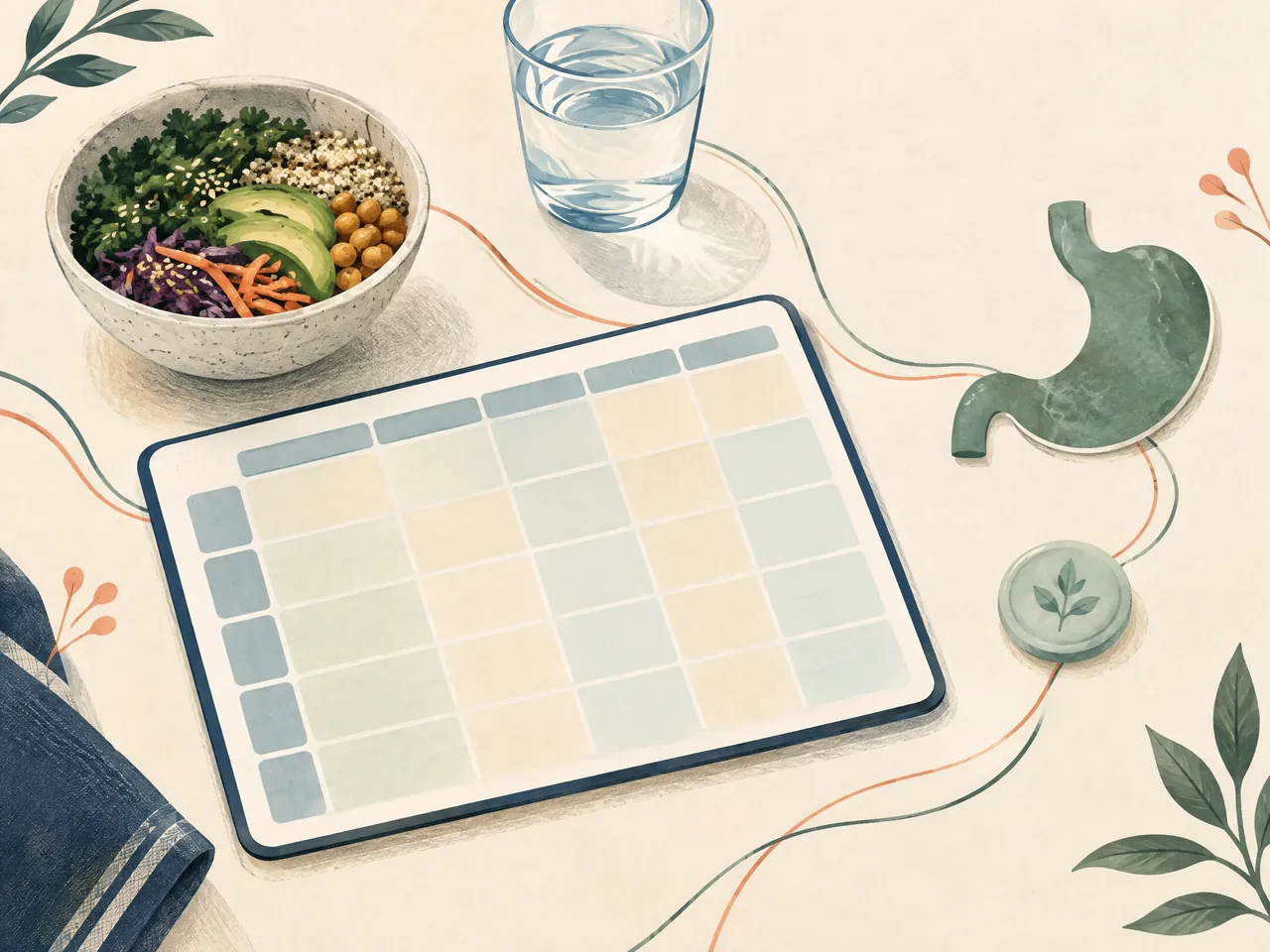
Bloating After Eating, Why do I feel bloated after eating?, and Abdominal bloating and constipation: practical daily adjustments
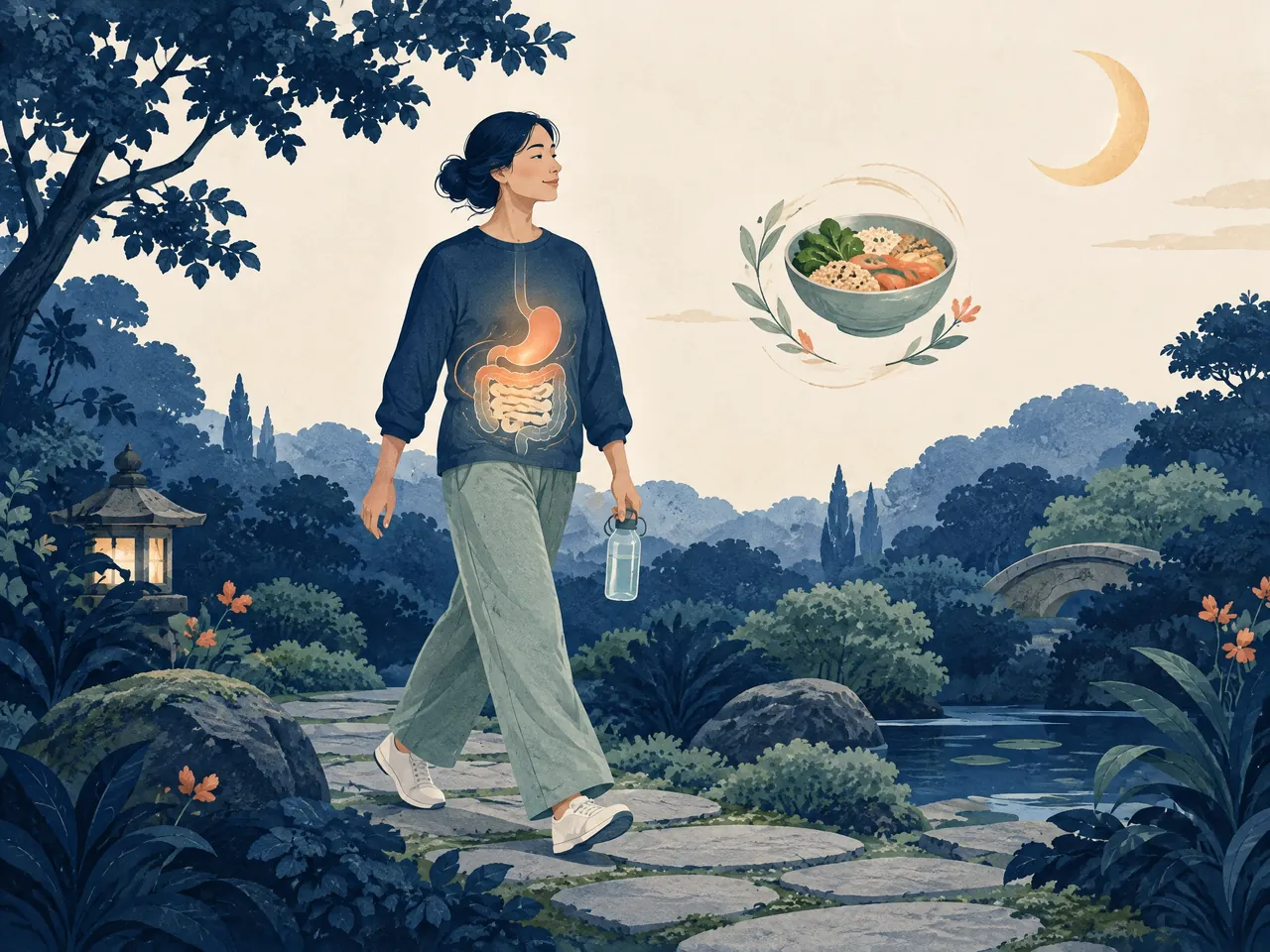
Gentle, sustainable changes are usually more useful than a dramatic reset. Build a regular opportunity to use the toilet without rushing; respond when you feel the urge rather than postponing it. Drink fluids through the day and make dietary fibre changes gradually, since suddenly adding a large amount can itself feel uncomfortable. The NHS also suggests regular movement as one practical measure for constipation, and a daily walk can be a realistic place to begin [3]. Choose an amount of activity that is safe for your own health and routine.
Plan around the pressure points of your day. Someone who eats a late dinner after commuting may experiment with a slightly earlier, smaller evening meal; someone who skips meals then eats very quickly may focus on pace and regularity. Make a note of whether stress, poor sleep or travel changes the pattern, without treating the symptom as “all in the mind.” If you use over-the-counter products, tell a pharmacist or clinician what you use and how often. Do not stop a prescribed medicine on your own; discuss concerns with the prescriber, especially if you think a medicine has changed your bowel habits.
Bloating After Eating, Why do I feel bloated after eating?, and Abdominal bloating and constipation: discussing a TCM assessment
A Chinese medicine consultation can be a place to organise a persistent digestive-symptom story alongside appropriate medical care. Bring the brief record rather than trying to remember every meal. Explain whether the main problem is pressure after food, excessive burping, early fullness, constipation, loose stools, pain, reflux-like symptoms or appetite change. In the traditional Chinese medicine approach, the practitioner may use observation, listening and questioning, and may feel the pulse as part of an overall traditional assessment. Traditional pattern terms are not the same as a modern medical diagnosis, so they should not replace medical investigation when it is needed.
Be specific about safety information: previous diagnoses or tests, pregnancy, allergies, surgery, all prescription and non-prescription medicines, herbal products and supplements. This helps the practitioner understand the full situation and decide what discussion is appropriate. You may also want to read TCM for indigestion for questions to take along. A consultation should not ask you to abandon an existing medical plan; coordinated information is more useful than separate assumptions.
Bloating After Eating, Why do I feel bloated after eating?, and Abdominal bloating and constipation: what a consultation may cover
Expect questions that make the pattern more precise. A practitioner may ask what time symptoms occur, whether fullness begins before finishing a meal, how appetite has changed, what the stool is like, whether passing stool or wind changes the pressure, and which foods or situations appear linked. Questions may also cover sleep, energy, feeling unusually hot or cold, and emotional strain because these can form part of a traditional assessment. Give direct answers even when they seem unrelated; the purpose is to build a coherent picture, not to find a one-word label.
After assessment, a registered Chinese medicine practitioner may discuss options such as dietary and routine support, acupuncture or Chinese herbal medicine according to the individual consultation. What is suitable, if anything, depends on the person and their history; this page cannot prescribe a formula, dose or number of sessions. If you are considering acupuncture, Can Chinese medicine help with bloating? offers a focused next read. Ask what the option is intended to address, how progress would be reviewed, and what information should be shared with your doctor.
Bloating After Eating, Why do I feel bloated after eating?, and Abdominal bloating and constipation: supportive options and medical safety
Acupuncture involves insertion of fine needles through the skin. It should be discussed as a possible supportive option, not as a guaranteed answer for every form of bloating. The U.S. National Center for Complementary and Integrative Health notes that complications have been reported when acupuncture is delivered improperly, including from nonsterile needles, and advises people not to postpone seeing a health-care provider about a health problem [4]. Tell the practitioner if you have concerns about needling, fainting, bleeding risk, pregnancy, implanted devices or other conditions that may affect an individual plan.
Arrange prompt medical assessment if bloating is accompanied by severe pain, repeated vomiting, vomiting blood, black or bloody stool, trouble swallowing, a lump you can feel, marked tiredness with possible anaemia, or unintentional weight loss. Recurring bloating or constipation that is not improving also warrants a medical discussion [2] [3]. These symptoms are not a reason to wait for a complementary approach to work. Keep taking prescribed medicines unless the prescribing clinician tells you otherwise, and bring the symptom record to both medical and Chinese medicine appointments so each conversation starts with the same clear facts.
Care and health guide
Fees and booking information
This directory brings together services, reading, and visit information related to fees and booking, to help you prepare questions for a consultation.
Before arranging a consultation, you can review acupoint embedding Hong Kong and note the service or booking questions that matter to you.
For questions about a particular service, acupuncture Hong Kong offers related reading so you can prepare your questions.


Your questions, answered
Frequently asked questions
Why do I feel bloated after eating bread, vegetables or beans?
Those foods can be worth noting, but one episode does not prove an intolerance or allergy. Record the amount, how the food was prepared, what you ate with it and how soon symptoms started. A repeatable pattern is more useful to a clinician than a long list of foods removed in advance.
Can abdominal bloating and constipation happen at the same time?
Yes. Constipation may involve less frequent stool, hard or lumpy stool, straining or incomplete emptying, and people may also feel bloated or sick [3]. If the problem is regular, not improving, or comes with pain, blood in stool or weight loss, arrange medical advice rather than assuming it is routine.
Should I book a Chinese medicine consultation or see a doctor first?
For new, persistent or concerning digestive symptoms, a doctor can assess for medical causes and decide whether tests are needed. A Chinese medicine consultation may be discussed as supportive care alongside that assessment. Do not delay medical care for red-flag symptoms or change prescribed treatment without the prescriber’s advice.
What should I bring when I want to discuss bloating after eating?
Bring a concise food and symptom record, a list of all medicines, supplements and herbal products, previous test results or diagnoses if you have them, and your questions. Note whether bowel movements, passing wind or changing meal pace affects the pressure. This makes the discussion more specific and safer.
Sources and further information
- [1] [1] National Institute of Diabetes and Digestive and Kidney Diseases — Indigestion (Dyspepsia)
Referenced for: Supports the description of dyspepsia symptoms, possible causes, diagnostic assessment and cause-dependent management; it does not diagnose an individual reader.
- [2] [2] NHS — Indigestion
Referenced for: Supports common indigestion symptoms, relevant food and lifestyle considerations, and the listed reasons to seek medical advice.
- [3] [3] NHS — Constipation
Referenced for: Supports constipation features, possible contributing factors, practical self-care context and reasons to seek medical advice.
- [4] [4] National Center for Complementary and Integrative Health — Acupuncture: Effectiveness and Safety
Referenced for: Supports the general description and safety framing of acupuncture, including the advice not to postpone health-care assessment; it is not evidence of benefit for an individual digestive symptom.