
TCM Lab · Health reading
lateral elbow pain heat or ice; alternating heat and ice for tennis elbow; Can I alternate heat and ice for tennis elbow? — How to Choose Between Cold and Warmth for Outer Elbow Pain
Published Updated
Outer-elbow pain can make a coffee mug, keyboard shortcut, supermarket bag, or tennis backhand unexpectedly awkward. For lateral elbow pain, heat or ice is not a contest with one winner: cold may feel better after a task or during a warm, puffy flare, while gentle warmth may feel better before movement when the forearm is stiff. You can alternate heat and ice for tennis elbow if each step is comfortable and your skin is protected. Neither option replaces reducing the gripping or wrist work that provokes pain. This guide helps you choose a comfort measure, use it carefully, and recognise when assessment is more useful than another pack.
Appointments are confirmed through WhatsApp. If you have language requirements, please mention them in your enquiry.
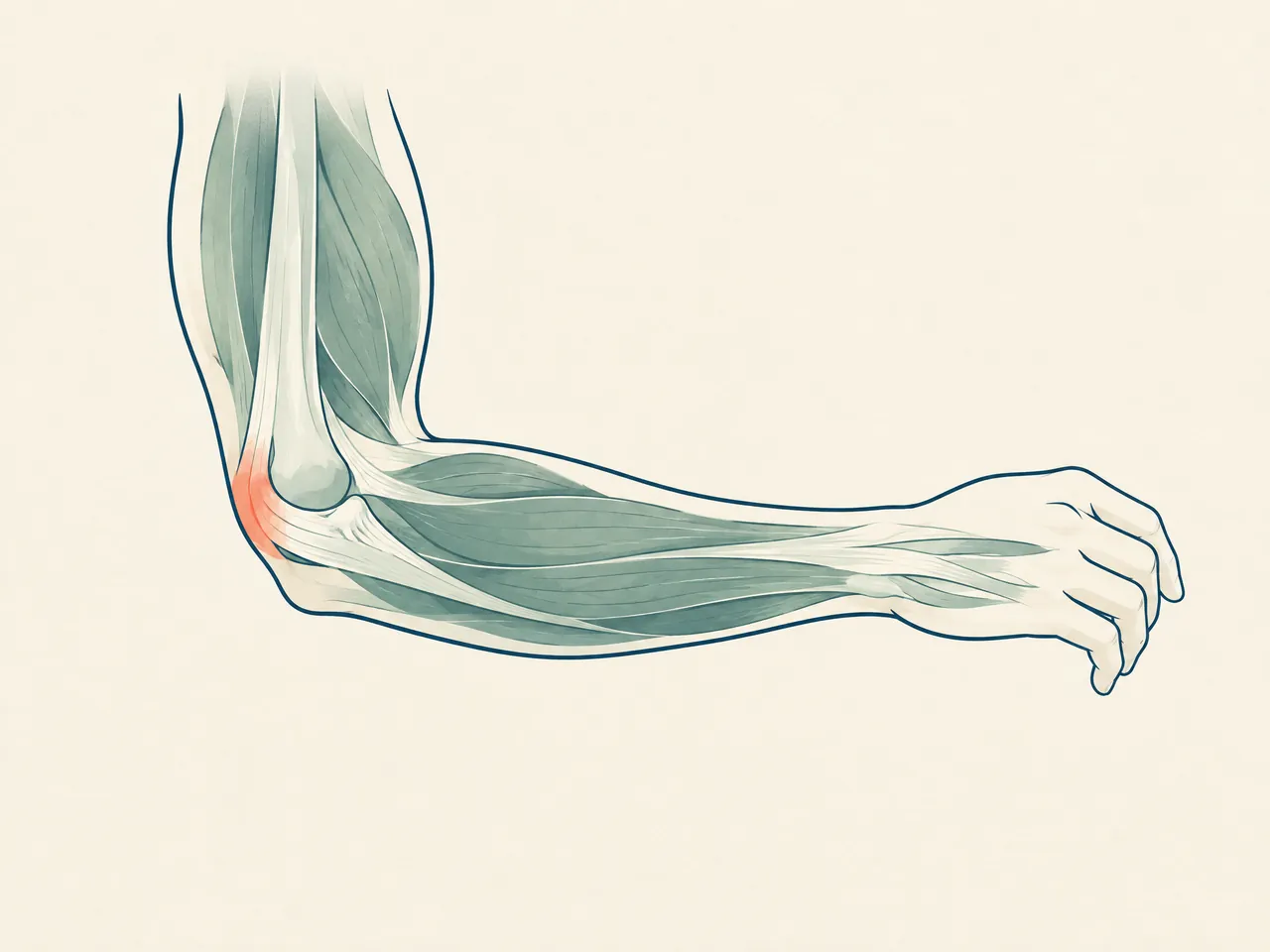
The short answer
For lateral elbow pain, choose the temperature that matches the moment rather than assuming heat or ice is always best. A cold pack may feel more comfortable after aggravating activity or when the outside of the elbow feels warm or slightly swollen. Gentle warmth may feel more comfortable before movement when the forearm is stiff. Alternating heat and ice is reasonable only if it feels helpful. Put a cloth between pack and skin, keep applications brief, and seek assessment for worsening, persistent, or function-limiting symptoms.
Transparent pricing
See the fees.
Choose your care.
Explore our complete official price list, including first-trial prices, regular prices, packages and branch-specific options.
Opening WhatsApp prepares an enquiry; it does not send a message, take payment or confirm an appointment. Suitability and individual arrangements are confirmed during consultation.
Pain care
All prices in HKDExtracorporeal shockwave treatment
Shockwave treatment for deep-tissue and fascial care. The Kwun Tong clinic offers the multi-area options shown below.
Priced by branch
Branch-specific pricing
Prince Edward: HK$250 per area
Kwun Tong: HK$250 for 1 area / HK$450 for 2 areas / HK$600 for 3 areas
Pain care (manual therapy)
Includes Chinese medicine musculoskeletal assessment, manual joint techniques and tui na.
HK$580 (single session)
Chinese medicine musculoskeletal assessment
Pain care (acupuncture and manual therapy)
Combines acupuncture and manual therapy.
HK$680 (single session)
Combined care
Hair and scalp
All prices in HKDScalp health and hair-loss management
Includes AI scalp analysis, deep scalp and follicle cleansing, and scalp oil-control care.
HK$380 (first trial)
Regular price: HK$680
- 6 sessions: HK$3,480 (HK$580 per session)
- 12 sessions: HK$5,760 (HK$480 per session)
- 20 sessions: HK$8,600 (HK$430 per session)
- 30 sessions: HK$11,400 (HK$380 per session)
Hair acupuncture and Chinese herbal medicine package
Includes scalp acupuncture and 3 days of Chinese herbal medicine that does not require decoction.
HK$580 (single session)
Registered Chinese Medicine Practitioner consultation
- 6 sessions: HK$3,180 (HK$530 per session)
- 12 sessions: HK$5,760 (HK$480 per session)
- 20 sessions: HK$8,600 (HK$430 per session)
- 30 sessions: HK$11,400 (HK$380 per session)
Combined hair and scalp treatment
Combines acupuncture and Chinese herbal medicine with salon-level scalp and follicle care. Packages include complimentary hair-care shampoo and serum.
HK$1,260 (single session)
Combined treatment
- 8 sessions: HK$8,640 (HK$1,080 per session)
- 16 sessions: HK$15,680 (HK$980 per session)
- 20 sessions: HK$18,600 (HK$930 per session)
- 30 sessions: HK$26,400 (HK$880 per session)
Weight management
All prices in HKDFull-body acupoint embedding for weight management
Includes full-body acupoint embedding. Packages include complimentary Chinese herbal medicine for weight management, with the number of included days scaled to the package. Embedding material and the individual treatment arrangement are confirmed during consultation; this is not a cosmetic thread lift.
HK$980 (single session)
No trial session
- 10 sessions: HK$7,800 (HK$780 per session)
- 20 sessions: HK$14,600 (HK$730 per session)
- 30 sessions: HK$20,400 (HK$680 per session)
Facial acupuncture
All prices in HKDFacial acupuncture (basic)
Includes facial acupuncture and meridian-based facial care, including care for facial puffiness.
HK$480 (first trial)
Regular price: HK$680
- 10 sessions: HK$5,200 (HK$520 per session)
- 20 sessions: HK$9,600 (HK$480 per session)
- 30 sessions: HK$13,500 (HK$450 per session)
Facial acupuncture (advanced)
Includes enhanced facial acupuncture with a specially formulated moisturising mask and serum.
HK$780 (first trial)
Regular price: HK$1,180
- 10 sessions: HK$9,000 (HK$900 per session)
- 20 sessions: HK$16,600 (HK$830 per session)
- 30 sessions: HK$23,400 (HK$780 per session)
Chinese medicine
All prices in HKDAcupuncture and Chinese herbal medicine package
Includes a Chinese medicine consultation with pulse assessment, body acupuncture and 3 days of Chinese herbal granules that do not require decoction.
HK$580 (single session)
Chinese medicine consultation with pulse assessment
lateral elbow pain heat or ice; alternating heat and ice for tennis elbow; Can I alternate heat and ice for tennis elbow? — Choosing cold or warmth by the way your elbow feels
Tennis elbow is a commonly used name for pain around the outside of the elbow; clinicians may also use lateral epicondylitis. It does not require playing tennis. Repeated wrist, hand, and forearm activity can be relevant: turning a tool, carrying a pan palm-down, wringing a cloth, lifting with the arm straight, or holding a racquet. The Hong Kong College of Orthopaedic Surgeons describes pain with gripping, lifting, and towel-wringing, while the American Academy of Orthopaedic Surgeons notes that symptoms may build gradually and can include weaker grip [2] [3]. Notice exactly which part of a task causes pain. For a wider overview, see tennis elbow heat or ice.
Ask not only “heat or ice?” but “what does my arm feel like now, and what must it do next?” A cold pack, warmth, rest, and a changed task can each manage comfort; they are not diagnostic tests. A recent knock, new loss of movement, or pain with tingling needs different attention from a familiar ache after prolonged mouse use. A brief note of the task, its effect, what you tried, and how the next activity felt can reveal more than judging one pack in isolation.
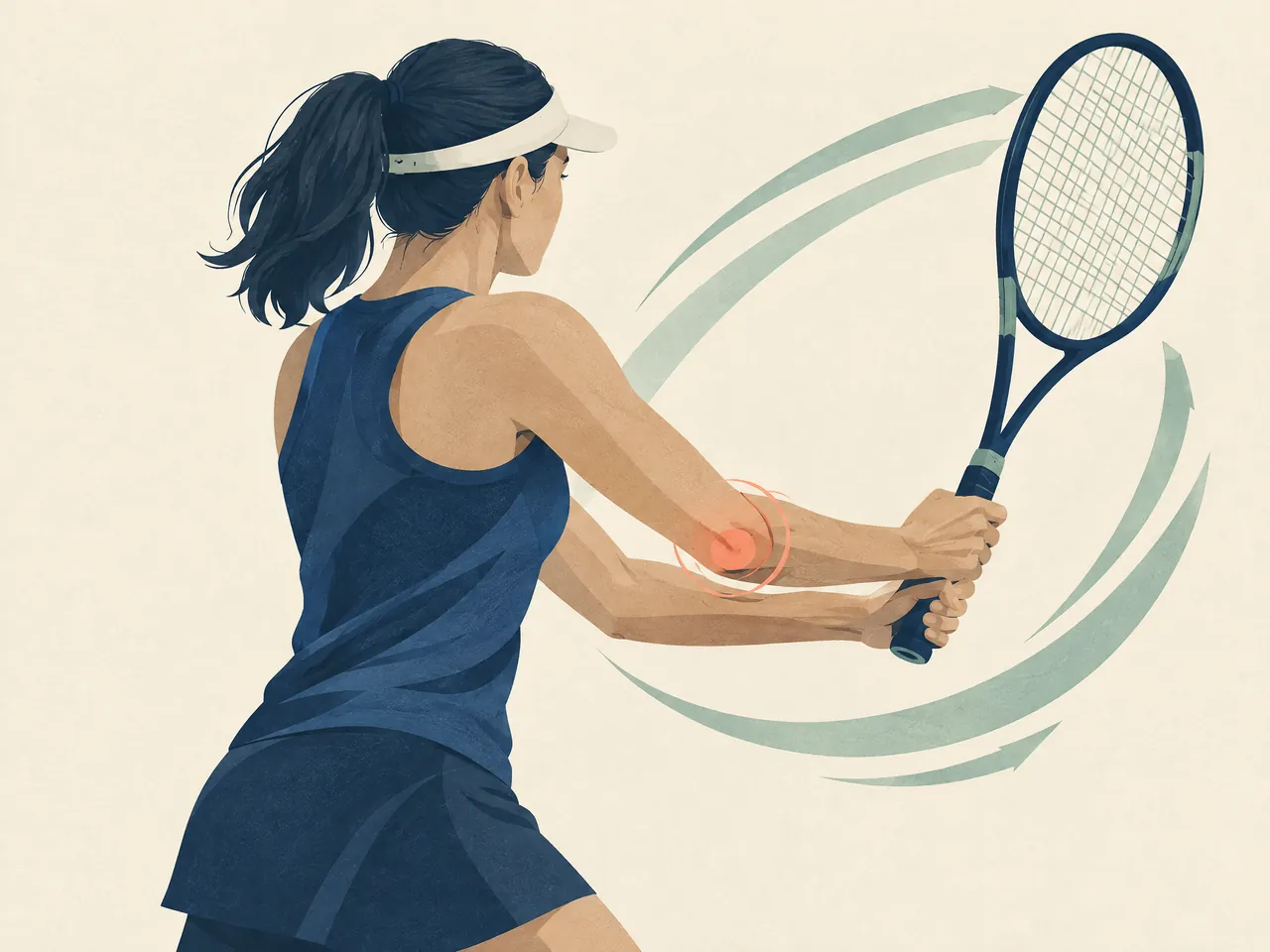
lateral elbow pain heat or ice; alternating heat and ice for tennis elbow; Can I alternate heat and ice for tennis elbow? — When a cold pack may be more comfortable after activity
Cold is often chosen after activity when the sore area feels hot, irritated, or mildly swollen, or after gripping has left it reactive. It can be tried after gardening, gym work, food preparation, or repeated computer use. Alberta Health Services advises an ice or cold pack for 10 to 20 minutes at a time with a thin cloth between the pack and skin; its instructions also place reducing painful activity alongside pack use [1]. The goal is comfort, not intensely cold skin or pushing through the movement that causes pain.
After lifting boxes, put them down, rest the hand and forearm, and keep the elbow neutral. Then try a brief cold pack through cloth and check skin and comfort. Remove it if pain sharpens, the area becomes uncomfortably numb, or the skin reacts badly. A tennis elbow ice pack guide may help with setup, but no pack compensates for returning immediately to the same forceful motion. The next repetition is often the important decision.
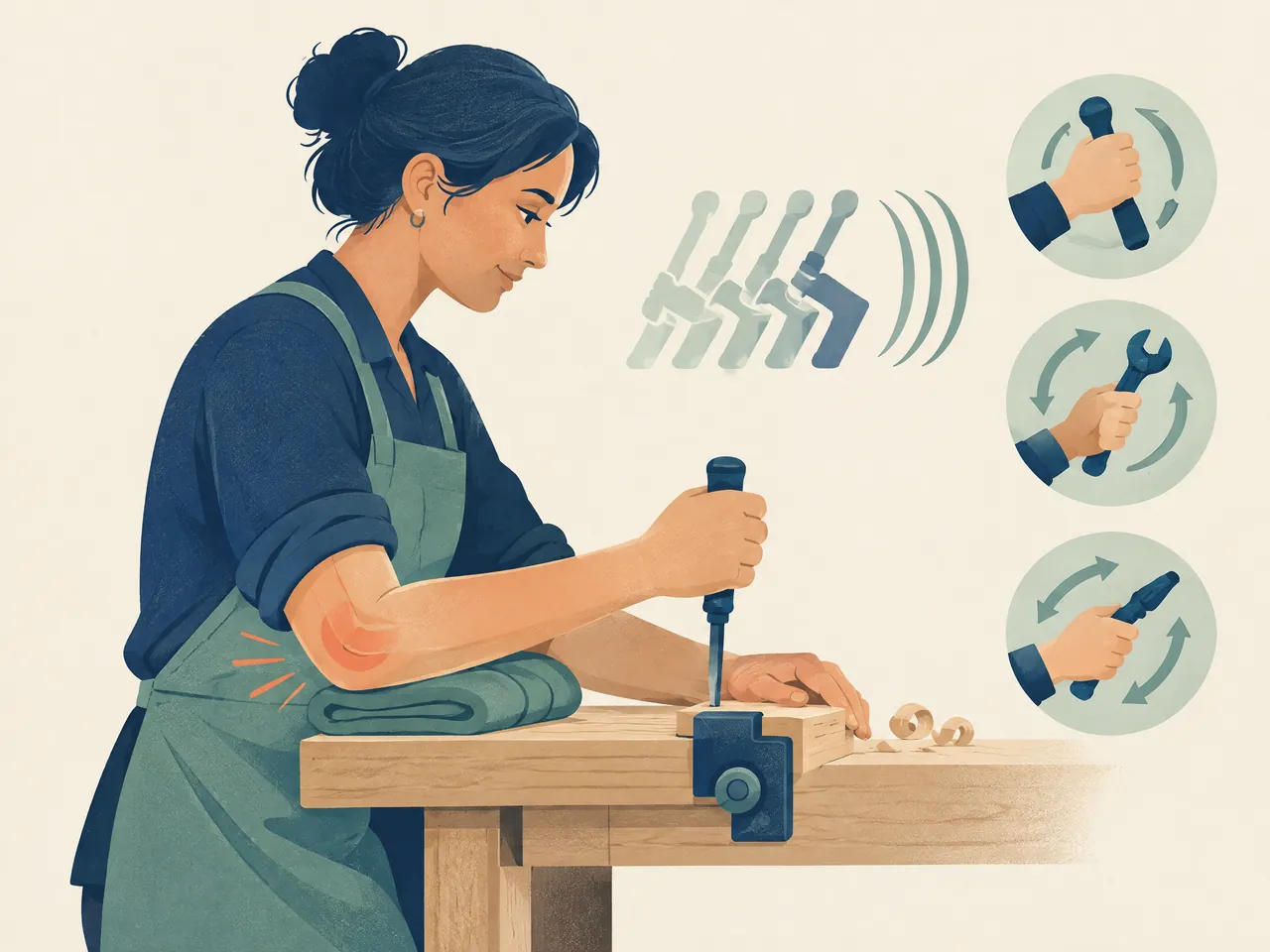
lateral elbow pain heat or ice; alternating heat and ice for tennis elbow; Can I alternate heat and ice for tennis elbow? — When gentle warmth may help before movement
Warmth may be a better comfort choice before movement when the forearm feels stiff rather than hot or puffy. A warm shower, compress, or other gentle warmth may make it easier to begin moving after rest. Use gentle rather than very hot heat, then reassess with a few easy movements. If the elbow becomes more painful, throbbing, or irritated, remove the heat rather than extending the session.
Warmth is not permission to test the elbow with a heavy lift. Reduce demand first: hold objects closer, use two hands, take a smaller load, or split a job into shorter periods. If jars, a laptop, or a suitcase consistently hurt, tennis elbow from gripping can help identify hand and wrist positions to review. Gentle warmth may make an arm feel readier, but a lighter first attempt provides better feedback.
Compare your options
| What the elbow feels like | A cautious option to try | What to watch or change next |
|---|---|---|
| More sore after repetitive gripping; area feels warm or mildly puffy | Try a cold pack through a thin cloth for 10–20 minutes. | Stop for skin discomfort or numbness; reduce the activity that triggered it. |
| Forearm feels stiff before a planned gentle task | Try gentle warmth with a cloth barrier, then test a few easy movements. | Stop if throbbing or irritation increases; begin with a lighter version of the task. |
| You want to alternate temperatures | Use one brief application, let skin return to normal temperature, then decide whether the other feels helpful. | Do not force a rapid cycle or treat it as a cure; reassess the load on the arm. |
| Pain is worsening, movement is limited, or there is tingling, weakness, numbness, or colour change | Do not keep experimenting with packs. | Seek medical advice promptly; describe the symptom and when it began. |
| Pain keeps returning during ordinary work or sport | Arrange an assessment and note the precise trigger. | Ask about activity modification and a suitable rehabilitation plan. |
On smaller screens, scroll the table sideways to compare all columns.
lateral elbow pain heat or ice; alternating heat and ice for tennis elbow; Can I alternate heat and ice for tennis elbow? — Safe application and activity changes for tennis elbow discomfort
If you are considering alternating heat and ice for tennis elbow, keep the routine simple. Start with the option that fits the current feeling: cold after an aggravating bout or warmth before stiff movement. Let the skin return to its usual temperature before deciding whether the opposite temperature adds anything. Do not force rapid hot-cold cycles because someone else found them useful. Alberta’s instructions say heat, or alternating heat and ice, can be tried after the first three days; this supports a comfort trial, not a promised result [1].
The table is a decision aid for familiar outer-elbow discomfort, not a diagnosis. A useful option should leave the arm at least as comfortable and should not create skin irritation or a new symptom. If you are unsure whether pain arises from outer-elbow tendons, a nerve, the neck, a joint injury, or something else, do not keep testing temperatures. Clinical history and examination help distinguish possible causes [2] [3].
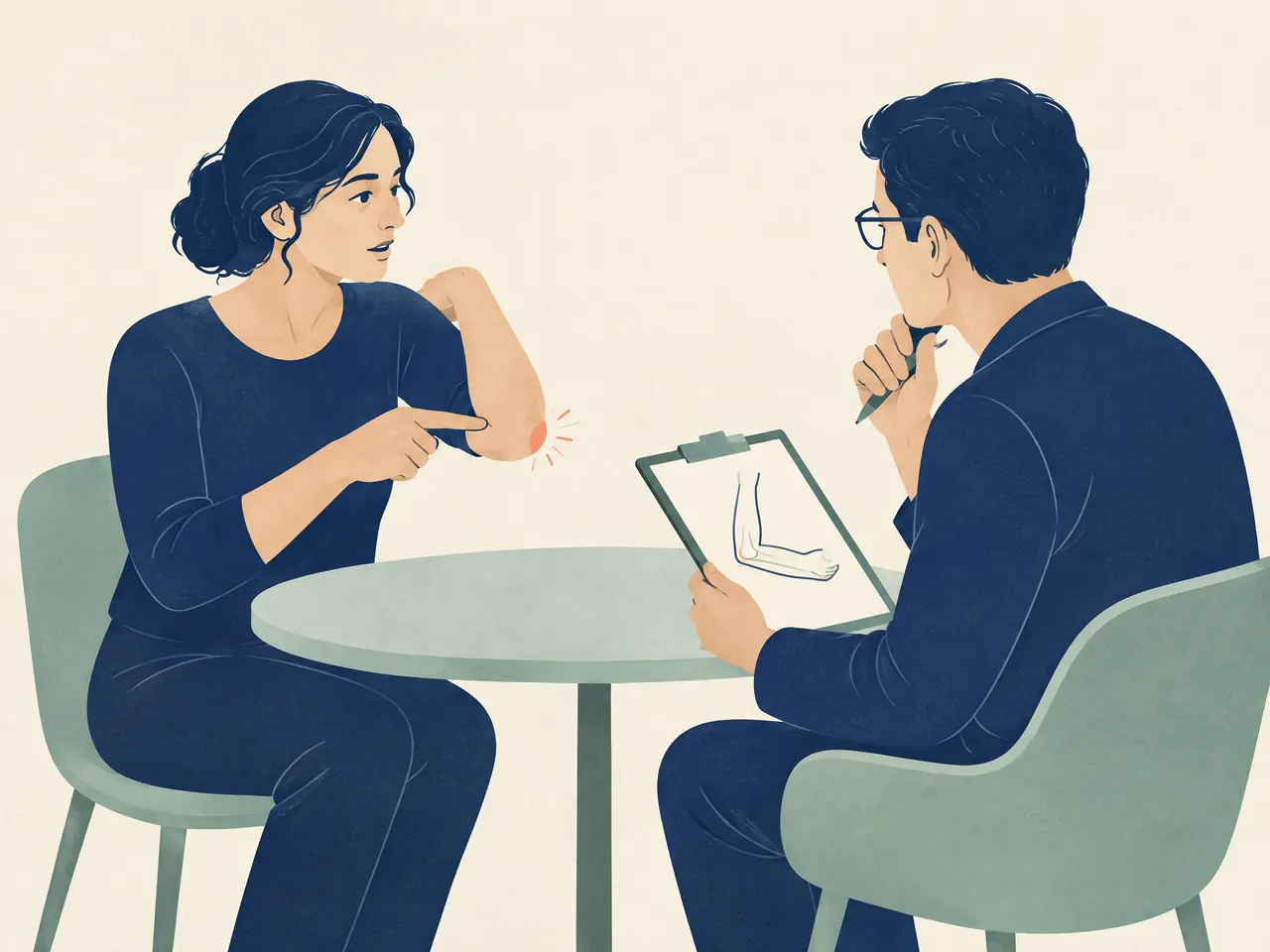
lateral elbow pain heat or ice; alternating heat and ice for tennis elbow; Can I alternate heat and ice for tennis elbow? — Use a cloth barrier and keep each application brief
Keep a barrier between the pack and bare skin. Wrap a cold or warm pack in a thin towel, and do not fall asleep with it on. A comfortable pack can become too intense while you work or watch television. Alberta Health Services specifies a thin cloth barrier for cold packs and a 10-to-20-minute application range [1]. Start shorter if you are new to the method or the temperature feels strong, and check your skin partway through.
Stop for burning, sharp pain, unusual redness, blotchy colour, tingling, or numbness. People with reduced sensation or circulation concerns should seek appropriate advice before using heat or cold because skin response can be harder to judge. Do not place ice or a very hot pack directly on the elbow or strap it tightly down. If alternating, let the skin return to normal temperature. More symptoms after either temperature mean stop that method.
lateral elbow pain heat or ice; alternating heat and ice for tennis elbow; Can I alternate heat and ice for tennis elbow? — Reduce gripping and adjust repetitive loads
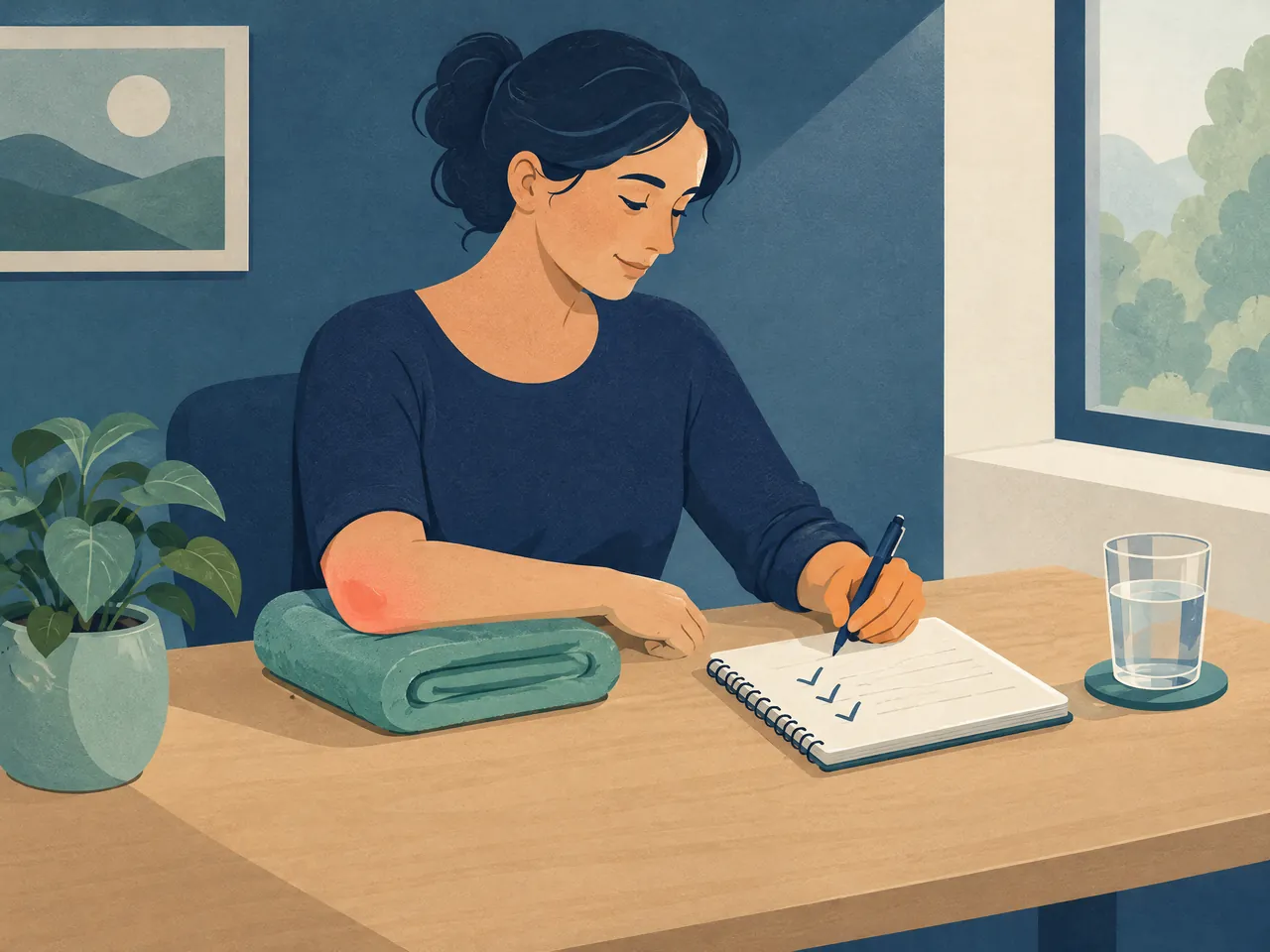
Temperature matters less if the same load keeps re-irritating the area. Identify the specific trigger: tight gripping, wrist extension against resistance, a heavy object away from the body, a vibrating tool, or too many repetitions. The Hong Kong College of Orthopaedic Surgeons advises refraining from aggravating repetitive or overuse activity and notes stretching exercises and physiotherapy in non-surgical care [2]. This is not freezing the whole arm; it is changing the feature of a task most clearly linked to pain.
For desk work, try a lighter mouse grip, keyboard shortcuts, forearm support, and brief movement breaks. In the kitchen, use two hands for a heavy pot and avoid carrying it with the wrist bent back. At the gym, reduce resistance or pause an exercise that repeatedly causes outer-elbow pain until you have advice on technique and progression. For more than packs, read What can I do for tennis elbow besides heat and ice?. Keep daily life moving while giving the irritated pattern less provocation.
lateral elbow pain heat or ice; alternating heat and ice for tennis elbow; Can I alternate heat and ice for tennis elbow? — When home comfort measures are not enough
Home measures need a time limit. If an outer-elbow ache settles as you modify the trigger, observe the trend and return gradually. If it blocks work, sleep, self-care, sport, or lifting, assessment can identify what needs attention. A clinician will ask how symptoms began, which activities set them off, and where pain is felt, then examine the elbow, wrist, and forearm. The AAOS explains that extra tests may sometimes rule out other causes, including joint or nerve problems [3]. Do not label new or changing symptoms tennis elbow automatically.
Seek prompt medical advice if pain is worsening, you cannot bend the elbow normally, the arm or hand becomes cool, pale, or changes colour, or you develop tingling, weakness, or numbness. Alberta’s guidance names these escalation signs [1]. Arrange a rehabilitation or clinical review if pain is not improving, returns whenever activity resumes, or interferes with work. Bring details of painful movements, response to heat or cold, injury history, and relevant health conditions.
lateral elbow pain heat or ice; alternating heat and ice for tennis elbow; Can I alternate heat and ice for tennis elbow? — Signs that call for medical or rehabilitation advice
Rehabilitation advice helps when you are caught between resting too much and doing too much. A physiotherapist or other qualified clinician can examine the movement that reproduces pain and guide suitable activity, stretching, or strengthening. Do not copy someone else’s resistance exercise because their pain was on the same side of the elbow. The AAOS describes specific exercises within non-surgical care and notes that painful work, sport, and other activities may need to decrease for a time [3]. Starting point depends on symptoms, task demands, and examination.
A normal-looking elbow is not the only safety test. Pain during a handshake, a new weak grip, discomfort turning a key, or pain at night can matter in the clinical history. Note task setup or the size and weight of triggering objects if useful. Readers planning Chinese medicine support can consult the Chinese medicine clinic price list Hong Kong page for planning, but it should not delay assessment for warning signs.

lateral elbow pain heat or ice; alternating heat and ice for tennis elbow; Can I alternate heat and ice for tennis elbow? — How a Chinese medicine consultation may fit alongside care
A Chinese medicine consultation can be discussed as an adjunctive option for ongoing elbow discomfort after individual assessment. A Registered Chinese Medicine Practitioner may ask about pain location and character, aggravating activities, health history, and current care. Traditional Chinese medicine may describe pain with pattern-based terms. These are not a modern medical diagnosis, so share red flags, injuries, medicines, and rehabilitation plans. A consultation can discuss whether complementary care is appropriate; it does not replace urgent or conventional assessment when needed.
TCM Lab has a Chinese medicine clinic Prince Edward location and a Kwun Tong Chinese medicine clinic location. WhatsApp +852 6940 5663 to enquire about an assessment and mention language needs. Bring details of the elbow pain, gripping or wrist tasks involved, and your response to heat or cold. That gives the practitioner and other clinicians a clearer basis for next steps. No pack, consultation, or treatment promises a fixed recovery time, but load adjustment and timely assessment can inform the next decision.
Care and health guide
Pain-care information
This directory brings together services, reading, and visit information related to pain care, to help you prepare questions for a consultation.
When pain care affects your day, noting when it occurs, its relation to activity, and what you have already tried can help prepare a consultation; Chinese medicine pain management Hong Kong is a relevant service or reading entry point.
Individual circumstances differ, and acupuncture Hong Kong offers related information to help you understand options and prepare questions.


Your questions, answered
Frequently asked questions
Which is better for lateral elbow pain: heat or ice?
Neither is always better. Cold may feel more comfortable after aggravating activity or with mild warmth and swelling. Gentle warmth may feel more comfortable before movement when the forearm is stiff. Use the option that improves comfort without making symptoms or skin reactions worse, and address the activity that keeps provoking pain.
Can I alternate heat and ice for tennis elbow?
You can try alternating if it feels comfortable, but it is a symptom-comfort strategy rather than a cure. Use a cloth barrier, keep each application brief, allow the skin to return to normal temperature between applications, and stop if pain, burning, unusual redness, tingling, or numbness occurs.
How long should I use a cold pack on my outer elbow?
Alberta Health Services advises 10 to 20 minutes at a time for a cold pack, with a thin cloth between the pack and skin. Check your skin while using it. Do not apply ice directly or fall asleep with a pack in place.
When should I seek help instead of using heat or ice at home?
Seek prompt medical advice for worsening pain, inability to bend the elbow normally, a cool, pale, or colour-changing arm or hand, or tingling, weakness, or numbness. Arrange an assessment if symptoms persist, repeatedly limit work or daily tasks, or keep returning as you resume activity.
Sources and further information
- [1] [1] MyHealth.Alberta.ca Network — Tennis Elbow: Care Instructions
Referenced for: Cold-pack duration and cloth barrier; heat or alternating heat and ice; reducing painful activity; escalation signs.
- [2] [2] The Hong Kong College of Orthopaedic Surgeons — Tennis Elbow
Referenced for: Local professional information on symptoms, overuse, assessment, activity adjustment, stretching, and physiotherapy.
- [3] [3] American Academy of Orthopaedic Surgeons — Tennis Elbow (Lateral Epicondylitis)
Referenced for: Symptoms, examination, possible tests to exclude other causes, activity modification, and non-surgical rehabilitation context.