
TCM Lab · Health reading
low back pain and sciatica: low back pain physiotherapy and acupuncture and integrated Chinese-Western medicine for low back pain
Published Updated
Low back pain can be a local ache after sitting, lifting or a long commute, while sciatica usually involves pain or altered sensation travelling from the back or buttock into a leg. The practical first question is not whether to choose one therapy immediately, but whether the pattern needs urgent medical assessment. When urgent causes are not suspected, a plan can combine medical review, movement-focused physiotherapy and a discussion of Chinese medicine as an adjunct—without assuming that any single option will diagnose or cure the problem.
Appointments are confirmed through WhatsApp. If you have language requirements, please mention them in your enquiry.
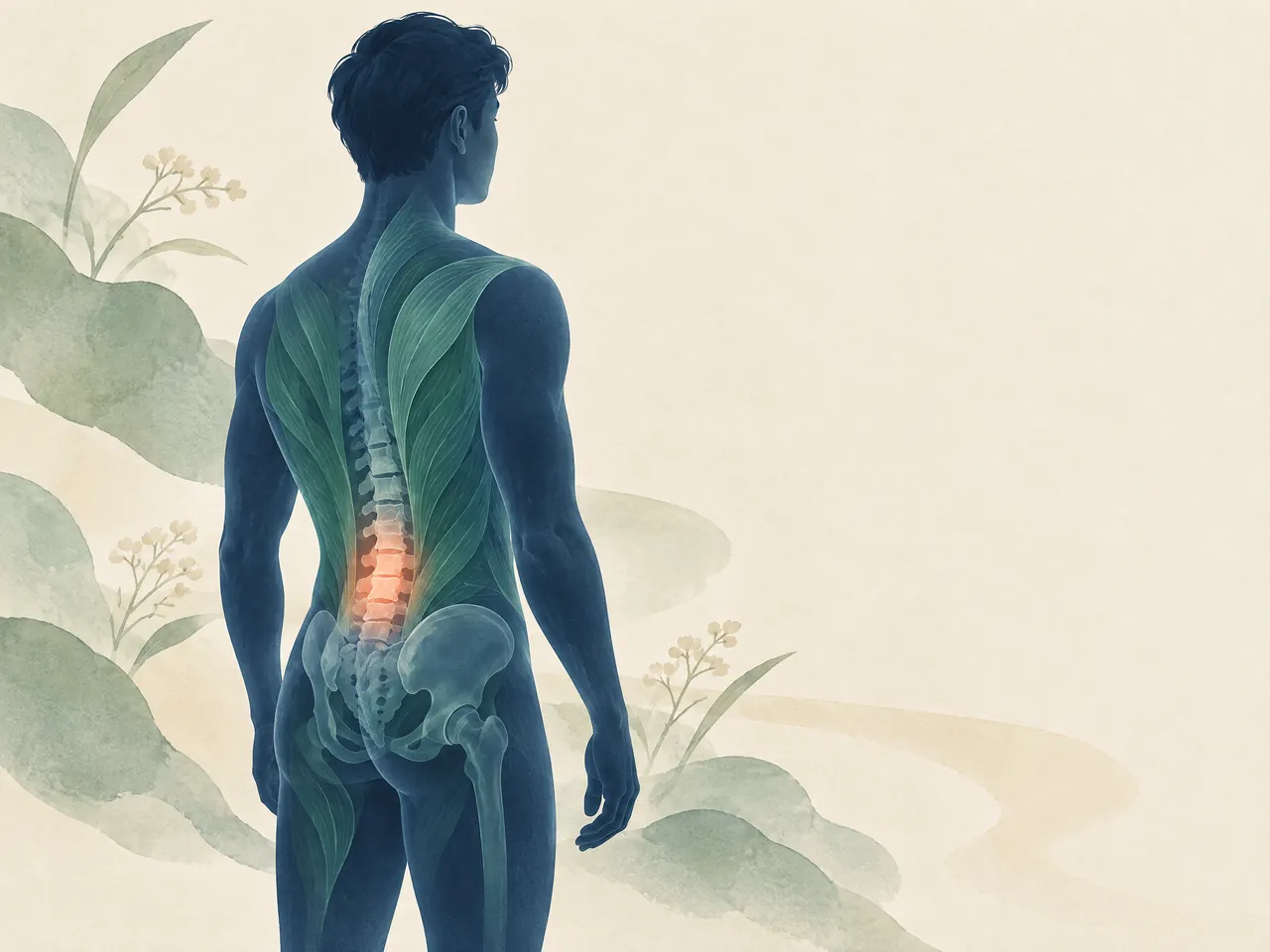
The short answer
For low back pain and sciatica, seek urgent medical care first if there is new weakness or numbness in both legs, numbness around the genitals or anus, bladder or bowel changes, chest pain, major trauma, fever with feeling unwell, or rapidly worsening severe pain. Without these signs, assessment can guide an activity and physiotherapy plan. Acupuncture or Chinese medicine may be discussed as an adjunct after consultation, not as a replacement for diagnosis or urgent care.
Transparent pricing
See the fees.
Choose your care.
Explore our complete official price list, including first-trial prices, regular prices, packages and branch-specific options.
Opening WhatsApp prepares an enquiry; it does not send a message, take payment or confirm an appointment. Suitability and individual arrangements are confirmed during consultation.
Pain care
All prices in HKDExtracorporeal shockwave treatment
Shockwave treatment for deep-tissue and fascial care. The Kwun Tong clinic offers the multi-area options shown below.
Priced by branch
Branch-specific pricing
Prince Edward: HK$250 per area
Kwun Tong: HK$250 for 1 area / HK$450 for 2 areas / HK$600 for 3 areas
Pain care (manual therapy)
Includes Chinese medicine musculoskeletal assessment, manual joint techniques and tui na.
HK$580 (single session)
Chinese medicine musculoskeletal assessment
Pain care (acupuncture and manual therapy)
Combines acupuncture and manual therapy.
HK$680 (single session)
Combined care
Hair and scalp
All prices in HKDScalp health and hair-loss management
Includes AI scalp analysis, deep scalp and follicle cleansing, and scalp oil-control care.
HK$380 (first trial)
Regular price: HK$680
- 6 sessions: HK$3,480 (HK$580 per session)
- 12 sessions: HK$5,760 (HK$480 per session)
- 20 sessions: HK$8,600 (HK$430 per session)
- 30 sessions: HK$11,400 (HK$380 per session)
Hair acupuncture and Chinese herbal medicine package
Includes scalp acupuncture and 3 days of Chinese herbal medicine that does not require decoction.
HK$580 (single session)
Registered Chinese Medicine Practitioner consultation
- 6 sessions: HK$3,180 (HK$530 per session)
- 12 sessions: HK$5,760 (HK$480 per session)
- 20 sessions: HK$8,600 (HK$430 per session)
- 30 sessions: HK$11,400 (HK$380 per session)
Combined hair and scalp treatment
Combines acupuncture and Chinese herbal medicine with salon-level scalp and follicle care. Packages include complimentary hair-care shampoo and serum.
HK$1,260 (single session)
Combined treatment
- 8 sessions: HK$8,640 (HK$1,080 per session)
- 16 sessions: HK$15,680 (HK$980 per session)
- 20 sessions: HK$18,600 (HK$930 per session)
- 30 sessions: HK$26,400 (HK$880 per session)
Weight management
All prices in HKDFull-body acupoint embedding for weight management
Includes full-body acupoint embedding. Packages include complimentary Chinese herbal medicine for weight management, with the number of included days scaled to the package. Embedding material and the individual treatment arrangement are confirmed during consultation; this is not a cosmetic thread lift.
HK$980 (single session)
No trial session
- 10 sessions: HK$7,800 (HK$780 per session)
- 20 sessions: HK$14,600 (HK$730 per session)
- 30 sessions: HK$20,400 (HK$680 per session)
Facial acupuncture
All prices in HKDFacial acupuncture (basic)
Includes facial acupuncture and meridian-based facial care, including care for facial puffiness.
HK$480 (first trial)
Regular price: HK$680
- 10 sessions: HK$5,200 (HK$520 per session)
- 20 sessions: HK$9,600 (HK$480 per session)
- 30 sessions: HK$13,500 (HK$450 per session)
Facial acupuncture (advanced)
Includes enhanced facial acupuncture with a specially formulated moisturising mask and serum.
HK$780 (first trial)
Regular price: HK$1,180
- 10 sessions: HK$9,000 (HK$900 per session)
- 20 sessions: HK$16,600 (HK$830 per session)
- 30 sessions: HK$23,400 (HK$780 per session)
Chinese medicine
All prices in HKDAcupuncture and Chinese herbal medicine package
Includes a Chinese medicine consultation with pulse assessment, body acupuncture and 3 days of Chinese herbal granules that do not require decoction.
HK$580 (single session)
Chinese medicine consultation with pulse assessment
low back pain and sciatica: recognising symptoms before low back pain physiotherapy and acupuncture or integrated Chinese-Western medicine for low back pain
Lower-back pain is a description of where pain is felt, not a diagnosis. It may be a local ache, stiffness, spasm or sharp pain, and many episodes do not have one obvious cause. Sciatica is a different pattern: symptoms may start around the lower back or buttock and run into a leg, sometimes with tingling, numbness or weakness. The Hong Kong Hospital Authority notes that low back pain may radiate to the buttocks and backs of the thighs, while sciatic pain can extend further down the leg [1]. The distinction is useful for describing what is happening, but it is not a reason to self-diagnose a disc or nerve problem from an online checklist.
Before deciding on low back pain physiotherapy and acupuncture, map the pattern in ordinary life. A back that tightens after an hour at a workstation presents differently from pain that begins after lifting a suitcase, or leg symptoms that appear after standing in a queue. Say whether coughs or sneezes change the pain, whether the foot feels different, and whether walking, sitting, bending or lying down changes it. These practical details help a health professional consider the next step and make it less likely that treatment choices are based only on a label such as “sciatica.”
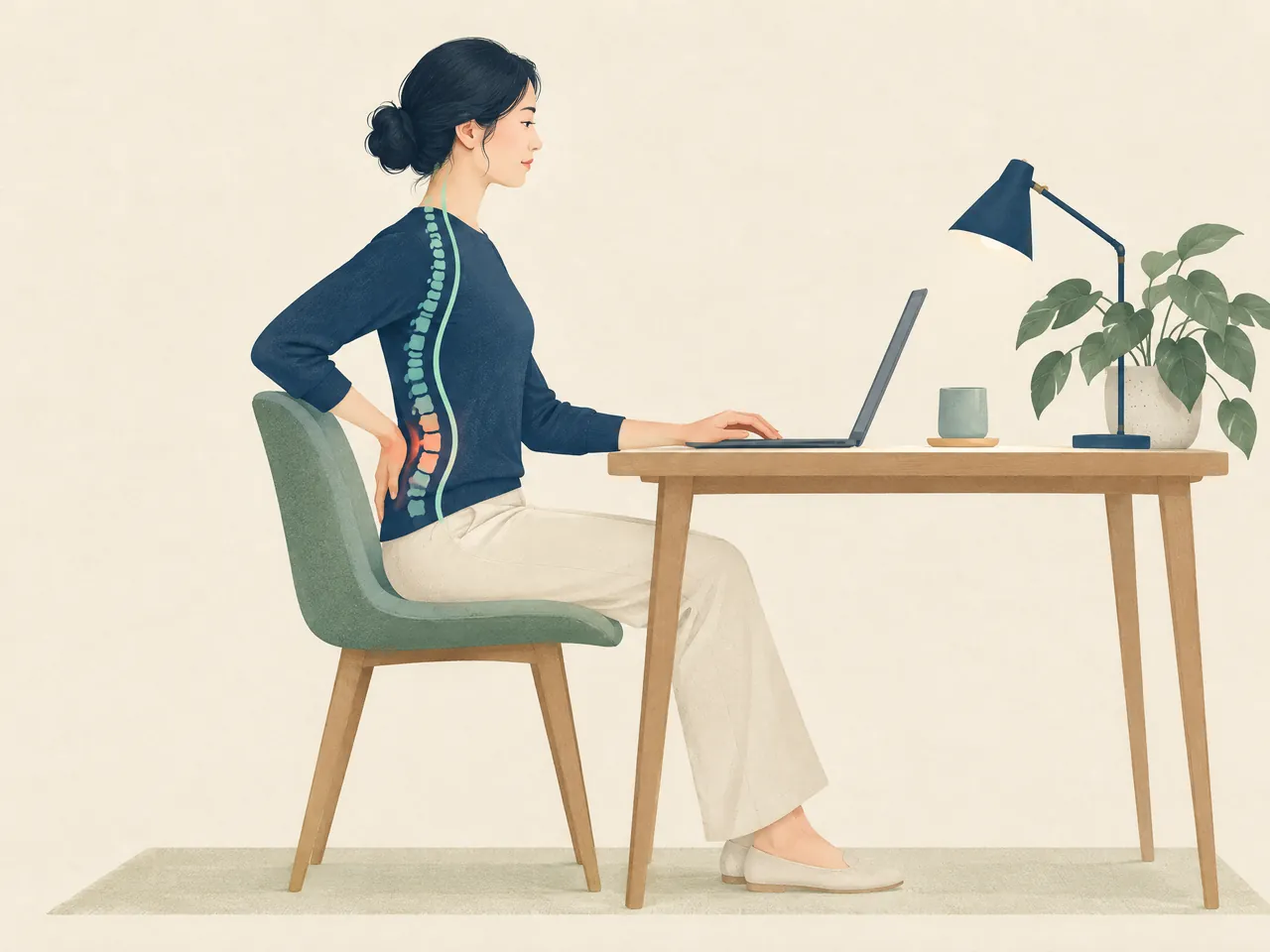
How low back pain and sciatica symptoms guide low back pain physiotherapy and acupuncture within integrated Chinese-Western medicine for low back pain
A useful assessment separates the location of pain from its behaviour. Describe whether the discomfort is central, one-sided or in both legs; whether it stays above the knee or travels toward the calf or foot; and whether it is mainly pain, pins and needles, reduced sensation or a sense of giving way. Also mention recent falls, a new training programme, prolonged driving, caring duties, physically repetitive work and previous episodes. For a clearer explanation of why leg symptoms can have more than one pattern, read sciatica vs sciatica-like pain. A page can help you frame questions, but examination and history are what place symptoms in context.
Physiotherapy discussions commonly centre on what you need to do safely: getting in and out of a chair, walking to transport, sleeping, lifting at work or returning to exercise. This shifts the focus from finding a perfect posture to building a manageable activity plan. In an integrated Chinese-Western medicine for low back pain conversation, conventional assessment remains important when symptoms are new or changed. Chinese medicine may contribute its own traditional assessment and may discuss adjunctive options, but traditional pattern language is not the same as a modern medical diagnosis. Share scan reports, diagnoses, medicines and other treatments with every practitioner so that care is coordinated rather than duplicated.
Recording pain, leg symptoms and triggers for low back pain and sciatica, low back pain physiotherapy and acupuncture, and integrated Chinese-Western medicine for low back pain
Keep a brief symptom record for several days if you can do so without delaying urgent care. Record when pain begins, its route through the buttock or leg, the activity just before it started, the effect on sleep, and any change in sensation or strength. Instead of trying to score every hour, write useful comparisons: “five minutes of standing brought on calf tingling,” “turning in bed caused a sharp local pain,” or “a short walk loosened stiffness but symptoms returned later.” Note what you tried—rest, heat, ice, a prescribed medicine, stretching or a previous treatment—and whether it made symptoms better, worse or unchanged.
This record also prevents misleading shortcuts. For example, pain travelling into the thigh does not automatically prove a compressed nerve, and buttock pain after sitting does not automatically mean sciatica. The related guide sciatic nerve pain or muscle pain can help you prepare a more precise description. Bring the record to a medical, physiotherapy or Chinese medicine consultation and include any loss of balance, falls, fever, unexplained weight change, night pain or history of cancer or infection. New information can change the urgency of assessment, so update the clinician rather than assuming an earlier explanation still applies.
Compare your options
| Situation or question | Useful next step | What to tell the clinician or practitioner |
|---|---|---|
| New back pain without emergency signs | Arrange assessment and discuss a gradual activity plan; physiotherapy may be appropriate for function and movement. | Onset, route of pain, triggers, daily limitations, recent load changes and current medicines. |
| Pain runs into a leg, with tingling or numbness | Seek clinical assessment to clarify the pattern and monitor for change; do not assume every leg symptom is identical. | Whether symptoms reach the foot, affect one or both legs, and any weakness, balance change or altered sensation. |
| Considering acupuncture or Chinese medicine | Discuss it as an adjunct after safety assessment and keep other clinicians informed. | Diagnoses, reports, medicines, pregnancy, bleeding-related issues, skin problems and treatment goals. |
| Both-leg symptoms, saddle numbness, bladder or bowel change, chest pain or major trauma | Seek emergency medical care rather than a routine physiotherapy or acupuncture appointment. | When the change began and any rapid progression; bring medicines if attending emergency care. |
| A flare disrupts work, commuting or sleep but no red flags are present | Review activity, breaks and comfort measures; seek reassessment if the pattern worsens or does not improve. | The specific task affected, what eases or aggravates symptoms, and what you have already tried. |
On smaller screens, scroll the table sideways to compare all columns.
low back pain and sciatica: urgent warning signs before low back pain physiotherapy and acupuncture or integrated Chinese-Western medicine for low back pain
Although low back pain is common, some patterns need faster assessment than a routine appointment. Go to an emergency department for back pain with pain, tingling, weakness or numbness in both legs; loss of sensation around the genitals or anus; new bladder or bowel changes; chest pain; or pain after a serious accident. The NHS lists these as emergency warning signs [2]. Sudden severe or rapidly worsening pain, or pain with fever, chills or feeling unwell, also warrants urgent medical advice.
Urgency is not limited to a dramatic accident. A clinician also needs to hear about persistent night pain, unexplained weight loss, a new lump or spinal shape change, pain that prevents daily activities, or symptoms that are changing rather than settling. NICE advises clinicians to consider alternative diagnoses when symptoms are new or altered, including cancer, infection, trauma and inflammatory disease [3]. This does not mean these causes are likely; it means that a safe plan begins by looking for the features that would change what happens next.

When low back pain and sciatica need urgent medical assessment rather than low back pain physiotherapy and acupuncture or integrated Chinese-Western medicine for low back pain
Think in terms of changes in body function, not pain intensity alone. New difficulty starting urination, loss of bladder or bowel control, altered feeling in the saddle area, or worsening weakness can indicate an urgent neurological problem. Symptoms in both legs deserve particular attention. Call local emergency services or attend an emergency department if these occur, and ask someone else to drive if needed. The focused explainer When should I go to A&E for back pain? covers the practical decision in more detail. It should never be used to postpone care when you already recognise an emergency warning sign.
For less immediate but concerning symptoms, arrange timely medical assessment rather than booking an adjunctive therapy as the first response. This includes pain after substantial trauma, fever or malaise with back pain, rapidly escalating symptoms, progressive weakness, or a pattern that remains disabling despite sensible adjustments. Take a list of medicines, relevant medical history and details of recent injuries. If you are already seeing a physiotherapist or Chinese medicine practitioner, tell them promptly about the new feature. A change in symptoms can alter the priority even if a previous episode was uncomplicated.
How low back pain physiotherapy and acupuncture and integrated Chinese-Western medicine for low back pain can follow safety-first assessment of low back pain and sciatica
Once serious causes are not suspected, the next step is usually tailored rather than automatic imaging or a fixed treatment package. NICE does not recommend routine imaging in a non-specialist setting for low back pain with or without sciatica, and says imaging in specialist care should be considered when the result is likely to change management [3]. A clinician may instead focus on function, symptom progression and the safest way to resume ordinary activities. Ask what would trigger review, referral or a different plan, especially if leg symptoms are present.
Safety-first assessment leaves room for preferences. Physiotherapy may help structure an approach to mobility, strength, confidence with movement and work tasks. A Chinese medicine consultation may explore traditional assessment and whether acupuncture is appropriate as an adjunct. The phrase integrated Chinese-Western medicine for low back pain should mean communication and sensible sequencing, not mixing treatments without a reason. The Chinese Medicine Hospital of Hong Kong uses the phrase for a coordinated service model [4]; that does not establish that every provider offers the same programme. Ask each provider what their role is and who should be contacted if symptoms worsen.
low back pain and sciatica: comparing low back pain physiotherapy and acupuncture with integrated Chinese-Western medicine for low back pain
The best comparison is not “Western versus Chinese,” but what each option can realistically contribute to your current problem. Medical assessment is especially important for warning signs, diagnostic uncertainty, medication questions and symptoms that affect neurological function. Physiotherapy is often a practical place to work on movement tolerance and return to valued activities. A Chinese medicine consultation can be an adjunctive discussion after assessment, with traditional observation, questioning and palpation informing its own approach. For a decision guide that begins with the choice of assessment rather than a promised treatment, see low back pain Chinese medicine or doctor.
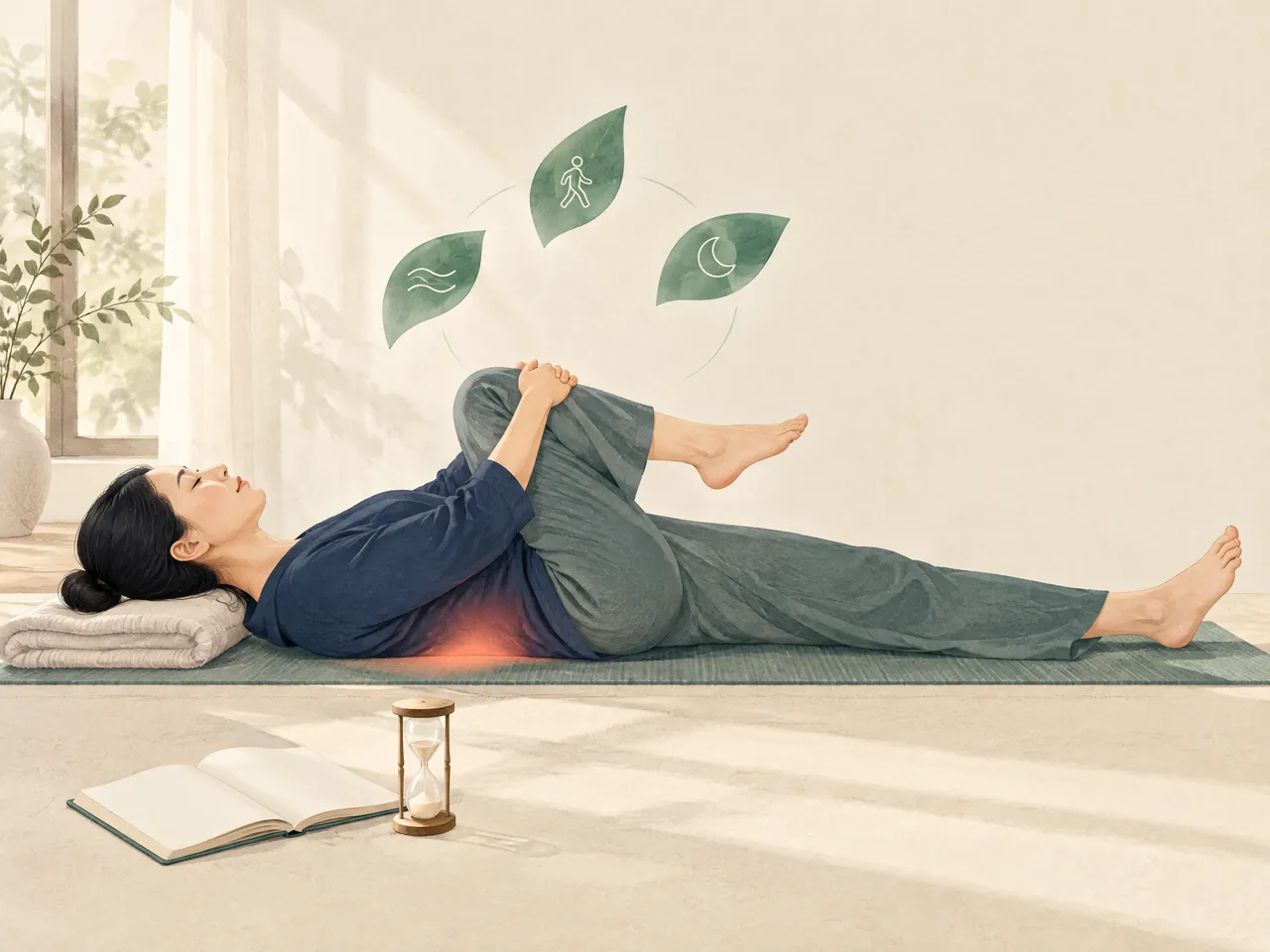
Set functional goals: walk to the MTR, sit through a meeting with planned breaks, lift a child more safely, sleep more comfortably, or return gradually to a sport. A useful plan identifies tasks to practise, when to pause and seek review, and how progress will be measured. If you use more than one form of care, make sure each provider knows what the other has advised.

What low back pain physiotherapy and acupuncture may involve when discussing low back pain and sciatica and integrated Chinese-Western medicine for low back pain
A physiotherapy assessment may examine how you sit, stand, walk, bend or perform a task that matters to you. The plan may include pacing, movement practice, exercise or advice for modifying a work or training load. The point is not to force a painful movement or to remain inactive until the back feels perfect. General patient guidance recommends staying active and avoiding long periods of bed rest, while stopping exercises that make pain worse and seeking advice [2]. For a closer look at that balance, read Should I rest in bed with low back pain?.
In a Chinese medicine consultation, the practitioner may ask about the pain’s quality and timing as well as sleep, appetite, temperature sensitivity, daily routine and medicines. Acupuncture, if considered, should be discussed in person with relevant health information rather than assumed from a web search. Say if you are pregnant, take medicines that affect bleeding, have a bleeding disorder, have a skin infection near a possible treatment area, feel faint around needles or are receiving other care. These details can affect the safety conversation. Do not attempt self-needling, alter prescribed medicine, or treat new neurological symptoms as something to work through at home.

Evidence, activity and expectations for low back pain and sciatica, low back pain physiotherapy and acupuncture, and integrated Chinese-Western medicine for low back pain
Evidence for acupuncture should be described accurately. NICE recommends not offering acupuncture for managing low back pain with or without sciatica [3]. A Cochrane review of chronic non-specific low back pain found that acupuncture may not be more clinically meaningful than sham acupuncture for immediate pain relief, although comparisons with no treatment and usual care had different findings; certainty ranged from very low to moderate [5]. That review does not prove benefit for every person and does not settle treatment choices for sciatica. It is a reason for an honest discussion of goals, alternatives and preferences, not a promise of relief.
During a flare, use low-risk measures as comfort choices rather than tests of the cause. A wrapped ice pack may be used for pain and swelling, while a wrapped heat pack may ease stiffness or muscle spasm; protect the skin and stop if symptoms worsen [2]. Short, tolerable bouts of daily activity and changes of position are often more useful than prolonged bed rest. If pain radiates further, numbness increases, strength changes, or your ability to manage bladder or bowel function changes, stop treating it as a routine flare and seek medical help. Expectations should remain adaptable: the right plan is the one that keeps safety, function and reassessment visible.
Care and health guide
Sciatica: care information
This directory brings together services, reading, and visit information related to sciatica, to help you prepare questions for a consultation.
When sciatica affects your day, noting when it occurs, its relation to activity, and what you have already tried can help prepare a consultation; acupuncture for sciatica is a relevant service or reading entry point.
Individual circumstances differ, and acupuncture Hong Kong offers related information to help you understand options and prepare questions.


Your questions, answered
Frequently asked questions
Should I choose a doctor, physiotherapy or Chinese medicine for low back pain and sciatica?
Start with urgent medical care for red flags such as both-leg weakness or numbness, saddle numbness, bladder or bowel changes, chest pain or major trauma. Without those signs, a medical assessment can clarify next steps and physiotherapy may focus on function and activity. Chinese medicine can be discussed as an adjunct after consultation, rather than a replacement for assessment.
What does low back pain physiotherapy and acupuncture mean in practice?
Physiotherapy commonly addresses movement, pacing and return to daily tasks. Acupuncture may be raised as an additional option after individual assessment, taking account of current diagnoses, medicines and safety factors. It should not be assumed to be suitable for everyone or used to delay assessment of worsening leg symptoms or other warning signs.
Is acupuncture proven to cure sciatica?
No. NICE does not recommend acupuncture for managing low back pain with or without sciatica. Evidence reviews of chronic non-specific low back pain report mixed comparisons and limitations in certainty; those findings do not prove a cure for sciatica. If considering acupuncture, discuss realistic goals, risks and alternatives with a qualified practitioner after appropriate assessment.
What should I record before my low back pain appointment?
Record when symptoms began, where pain travels, sensations such as tingling or numbness, possible triggers, effect on sleep and normal tasks, and any recent injury or load change. Bring information about medicines, prior diagnoses, scans and treatments. Report new weakness, bilateral symptoms, saddle numbness or bladder or bowel changes urgently rather than waiting for a routine appointment.
Sources and further information
- [1] Hong Kong Hospital Authority Smart Patient — Low Back Pain
Referenced for: Hong Kong patient information on low-back-pain terminology, pain patterns, contributing factors and assessment context.
- [2] NHS — Back pain
Referenced for: National health guidance on emergency and urgent symptoms, activity, avoiding prolonged bed rest, heat or ice, exercises and physiotherapy.
- [3] NICE NG59 — Low back pain and sciatica in over 16s: assessment and management
Referenced for: Clinical guidance on considering alternative diagnoses, imaging, self-management, normal activities, exercise and the recommendation not to offer acupuncture.
- [4] Chinese Medicine Hospital of Hong Kong — Low Back Pain Care Programme
Referenced for: Supports local Hong Kong terminology for an integrated Chinese-Western medicine care model only; it does not establish TCM Lab services or outcomes.
- [5] Cochrane — Acupuncture for chronic non-specific low-back pain
Referenced for: Systematic-review evidence on acupuncture comparisons for chronic non-specific low back pain, including certainty limitations; not a proof of benefit for sciatica.