
TCM Lab · Health reading
Hot Swollen Hip and Fever: Hip Pain and Unable to Walk; Hip Pain Unable to Bear Weight
Published Updated
A hot swollen hip and fever, hip pain that leaves you unable to walk, or hip pain that makes you unable to bear weight should not be treated as an ordinary ache. The priority is to get the right level of medical assessment: emergency help after a significant injury or when sensation is altered, and same-day assessment for a suddenly severe, hot, swollen, discoloured or feverish hip. Once urgent causes have been assessed, persistent or recurring pain can be discussed in a planned consultation, including a Chinese medicine consultation where appropriate.
Appointments are confirmed through WhatsApp. If you have language requirements, please mention them in your enquiry.
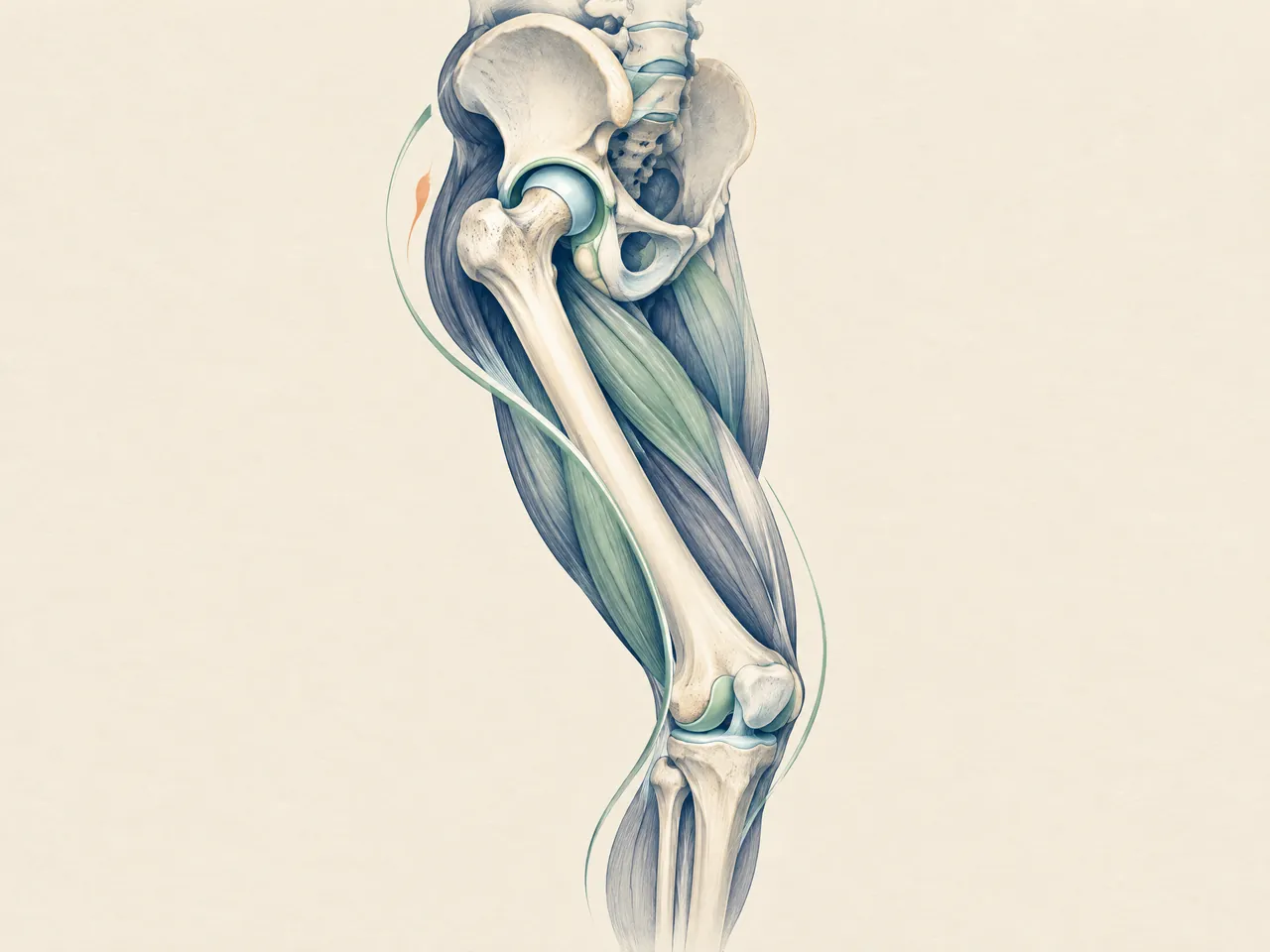
The short answer
Seek emergency care after a fall or injury if hip pain makes you unable to walk or bear weight, especially if there is tingling or loss of feeling. A hot swollen hip and fever, sudden severe pain without a fall, skin-colour change, or feeling generally unwell needs same-day medical assessment. Do not force walking, stretching or self-treatment to test the hip. A planned consultation is more appropriate only when warning signs are absent and pain is persistent, recurrent or limiting daily life.
Transparent pricing
See the fees.
Choose your care.
Explore our complete official price list, including first-trial prices, regular prices, packages and branch-specific options.
Opening WhatsApp prepares an enquiry; it does not send a message, take payment or confirm an appointment. Suitability and individual arrangements are confirmed during consultation.
Pain care
All prices in HKDExtracorporeal shockwave treatment
Shockwave treatment for deep-tissue and fascial care. The Kwun Tong clinic offers the multi-area options shown below.
Priced by branch
Branch-specific pricing
Prince Edward: HK$250 per area
Kwun Tong: HK$250 for 1 area / HK$450 for 2 areas / HK$600 for 3 areas
Pain care (manual therapy)
Includes Chinese medicine musculoskeletal assessment, manual joint techniques and tui na.
HK$580 (single session)
Chinese medicine musculoskeletal assessment
Pain care (acupuncture and manual therapy)
Combines acupuncture and manual therapy.
HK$680 (single session)
Combined care
Hair and scalp
All prices in HKDScalp health and hair-loss management
Includes AI scalp analysis, deep scalp and follicle cleansing, and scalp oil-control care.
HK$380 (first trial)
Regular price: HK$680
- 6 sessions: HK$3,480 (HK$580 per session)
- 12 sessions: HK$5,760 (HK$480 per session)
- 20 sessions: HK$8,600 (HK$430 per session)
- 30 sessions: HK$11,400 (HK$380 per session)
Hair acupuncture and Chinese herbal medicine package
Includes scalp acupuncture and 3 days of Chinese herbal medicine that does not require decoction.
HK$580 (single session)
Registered Chinese Medicine Practitioner consultation
- 6 sessions: HK$3,180 (HK$530 per session)
- 12 sessions: HK$5,760 (HK$480 per session)
- 20 sessions: HK$8,600 (HK$430 per session)
- 30 sessions: HK$11,400 (HK$380 per session)
Combined hair and scalp treatment
Combines acupuncture and Chinese herbal medicine with salon-level scalp and follicle care. Packages include complimentary hair-care shampoo and serum.
HK$1,260 (single session)
Combined treatment
- 8 sessions: HK$8,640 (HK$1,080 per session)
- 16 sessions: HK$15,680 (HK$980 per session)
- 20 sessions: HK$18,600 (HK$930 per session)
- 30 sessions: HK$26,400 (HK$880 per session)
Weight management
All prices in HKDFull-body acupoint embedding for weight management
Includes full-body acupoint embedding. Packages include complimentary Chinese herbal medicine for weight management, with the number of included days scaled to the package. Embedding material and the individual treatment arrangement are confirmed during consultation; this is not a cosmetic thread lift.
HK$980 (single session)
No trial session
- 10 sessions: HK$7,800 (HK$780 per session)
- 20 sessions: HK$14,600 (HK$730 per session)
- 30 sessions: HK$20,400 (HK$680 per session)
Facial acupuncture
All prices in HKDFacial acupuncture (basic)
Includes facial acupuncture and meridian-based facial care, including care for facial puffiness.
HK$480 (first trial)
Regular price: HK$680
- 10 sessions: HK$5,200 (HK$520 per session)
- 20 sessions: HK$9,600 (HK$480 per session)
- 30 sessions: HK$13,500 (HK$450 per session)
Facial acupuncture (advanced)
Includes enhanced facial acupuncture with a specially formulated moisturising mask and serum.
HK$780 (first trial)
Regular price: HK$1,180
- 10 sessions: HK$9,000 (HK$900 per session)
- 20 sessions: HK$16,600 (HK$830 per session)
- 30 sessions: HK$23,400 (HK$780 per session)
Chinese medicine
All prices in HKDAcupuncture and Chinese herbal medicine package
Includes a Chinese medicine consultation with pulse assessment, body acupuncture and 3 days of Chinese herbal granules that do not require decoction.
HK$580 (single session)
Chinese medicine consultation with pulse assessment
Hot Swollen Hip and Fever: Hip Pain and Unable to Walk; Hip Pain Unable to Bear Weight After Injury
After a fall, twist, collision or other injury, severe hip pain is not a situation to ‘walk off’. The important question is not whether you can take a few guarded steps; it is whether you can safely walk and put weight through the leg normally. The NHS lists severe hip pain after an injury, inability to walk or put weight on the leg, and tingling or loss of feeling after injury as reasons for emergency care [1]. A painful hip can involve bone, joint, muscle, tendon or surrounding tissue, and the correct cause cannot be determined from pain intensity alone.
Make the immediate environment safer while arranging help. Sit or lie in a supported position if that is more comfortable, avoid putting the affected leg through a test movement, and ask for assistance rather than using stairs or travelling alone. Do not attempt deep squats, forceful hip stretches, massage over a newly injured area, or a ‘trial walk’ across the room to decide whether care is needed. If there is a deformity, rapidly increasing swelling, marked weakness, numbness, or an inability to move the leg, explain that clearly when you request urgent help. For a broader overview of red flags, see hip pain warning signs.

Pain may be felt in the groin, outer hip, buttock, thigh or even around the knee, so location can be useful information but it does not rule out a serious injury. Tell the clinician exactly how the injury happened, whether you landed directly on the side, heard or felt a pop, and whether the pain began immediately or increased later. Mention any previous hip surgery, osteoporosis diagnosis, blood-thinning medicines, use of walking aids, or new change in leg sensation. Bring medicines if possible, but do not delay emergency assessment to collect paperwork.
Hot Swollen Hip and Fever with Hip Pain and Unable to Walk and Hip Pain Unable to Bear Weight: Seek Emergency Care
Emergency assessment is appropriate when an injury is followed by severe hip pain and you cannot walk or bear weight. This does not mean every injured hip is fractured, and it is not a diagnosis of fracture; it means the combination needs prompt examination. The NHS also advises emergency care for altered sensation such as tingling or loss of feeling in the hip or leg after an injury [1]. A clinician may decide whether examination, imaging or other testing is needed. Waiting for a routine appointment or an alternative therapy assessment can postpone that decision.
If you are helping someone else, avoid lifting or repositioning them simply to make them walk unless emergency personnel advise it or there is an immediate danger. Note the time of injury, the direction of the fall, whether the person struck the head, and any worsening pain, colour change, weakness or numbness. These observations can make handover clearer. For injury-specific reading after medical help has been arranged, use severe hip pain after a fall; it is not a substitute for emergency assessment.
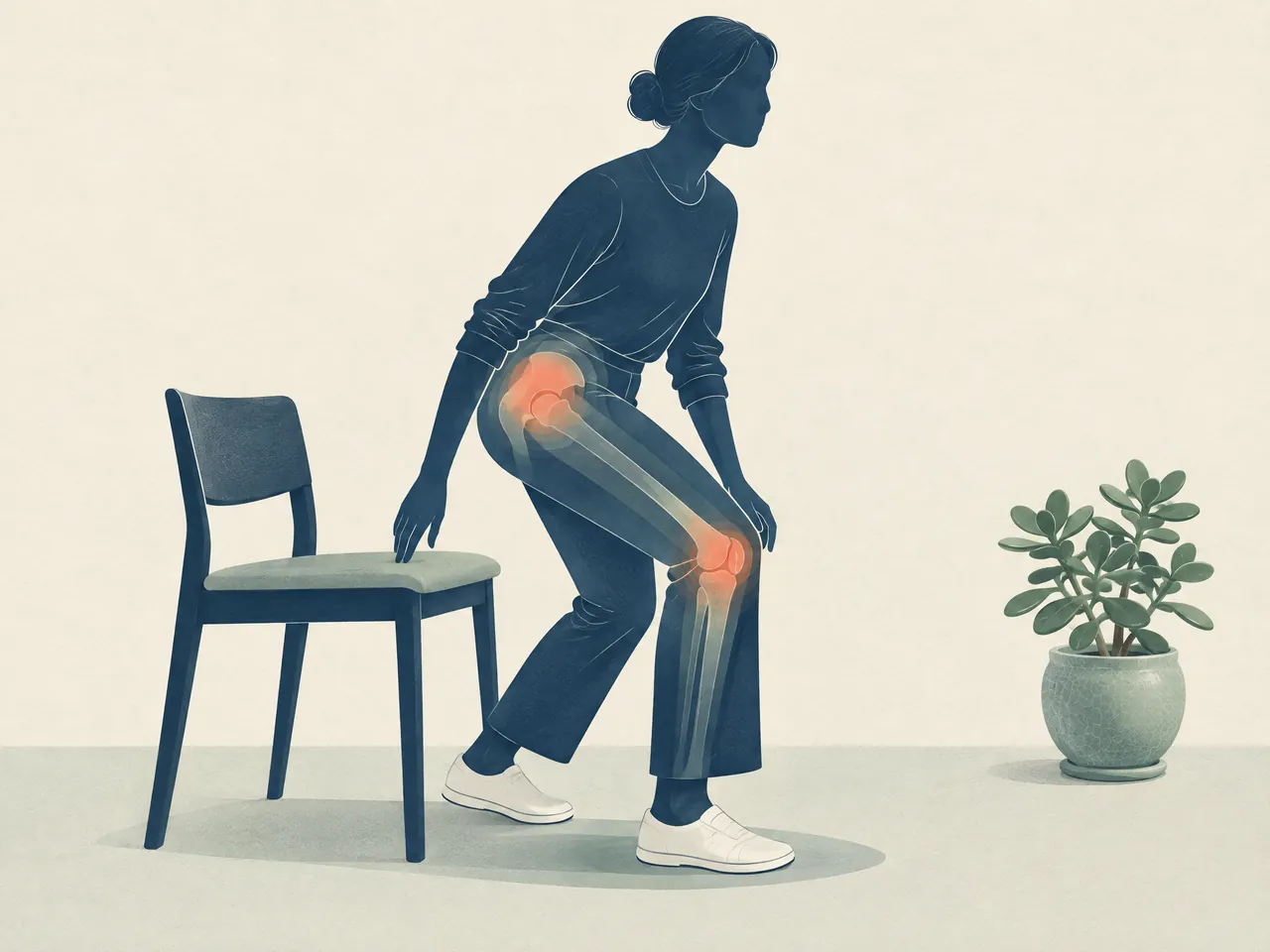
Hot Swollen Hip and Fever, Hip Pain and Unable to Walk, and Hip Pain Unable to Bear Weight with Numbness: Do Not Force Walking
Numbness, tingling, a ‘pins and needles’ feeling, or loss of feeling after an injury should not be brushed aside because there is no visible bruise. Describe where the sensation is felt, whether it is constant, whether it travels down the leg, and whether you notice new weakness or difficulty moving the foot or ankle. Do not keep testing the hip by standing up repeatedly. Repeated attempts can add pain, make a safe transfer harder, and distract from arranging the assessment the symptoms call for.
Avoid making the decision based on whether pain eases briefly when you stay still. Pain relief after resting does not establish that weight-bearing is safe, and a person may still need emergency evaluation when the initial warning pattern is present. If you are unsure whether you can bear weight safely, do not use exercise videos or self-directed hip pain exercises as a test. Exercises belong later, when the cause and an appropriate activity plan have been considered.
Compare your options
| What is happening | Best next step | What to report when seeking help |
|---|---|---|
| Severe pain after a fall or injury; unable to walk or bear weight; tingling or loss of feeling | Emergency assessment. Do not force walking or test the hip with stretches. | How the injury happened, time of injury, ability to move or feel the leg, medicines and prior hip problems. |
| Sudden severe pain without a fall | Same-day urgent medical assessment. | Exact onset, whether pain began at rest or during movement, pain location, function and any new limp. |
| Hot or swollen hip, skin-colour change, feverish or shivery feelings, or feeling generally unwell | Same-day urgent assessment; emergency help if severely unwell or prompt assessment is not available. | Temperature or feverish symptoms, visible changes, recent illness, surgery, injections, skin breaks and medicines. |
| Mild to moderate pain without red flags that is worsening, recurring, affecting sleep or daily activity | Arrange a medical consultation; discuss suitable supportive care after assessment. | Timeline, activities affected, stiffness, sleep disruption, previous tests, treatments tried and current medication. |
| Mild pain that is improving and you can move safely | Short-term self-care and monitoring may be reasonable; seek review if it does not improve or a warning sign develops. | What makes it better or worse, response to activity modification and any change in walking or sensation. |
On smaller screens, scroll the table sideways to compare all columns.
Hot Swollen Hip and Fever: Hip Pain and Unable to Walk; Hip Pain Unable to Bear Weight Without a Fall
No fall does not automatically make severe hip pain safe to watch at home. The NHS advises urgent assessment for severe hip pain that starts suddenly without injury, a hip that is swollen and hot, skin colour change around the hip, or hip pain with a high temperature or feeling hot, cold or shivery [1]. These are prompts for assessment, not labels that allow someone to diagnose infection, arthritis or another cause at home. Explain the full pattern and let the examining clinician decide what must be ruled out.
Look at the whole situation rather than one symptom in isolation. A warm patch after a workout is different from a hip that is markedly swollen, hot, increasingly painful and accompanied by a temperature or feeling unwell, but online descriptions cannot reliably make that distinction for an individual. HSS likewise lists fever or chills, sudden pain, inability to move or bear weight, skin discolouration and a deformed-looking joint among signs needing prompt professional attention [2]. Do not use a hot pack, intense stretching or a vigorous massage as a way to ‘settle’ this pattern while waiting.
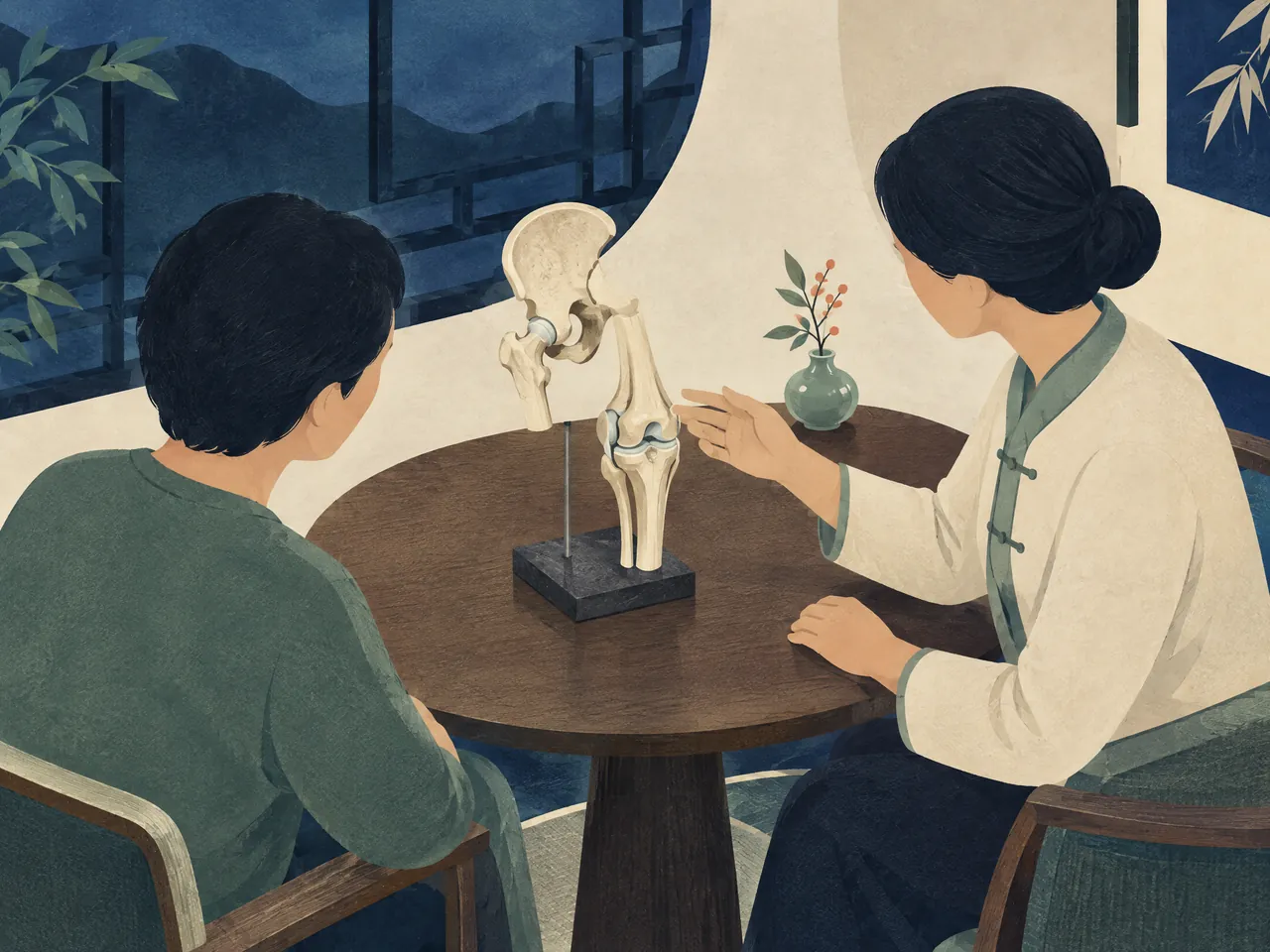
Same-day assessment matters because it allows a clinician to take a history, examine the hip and decide whether tests are needed. The history should include the start time, speed of change, recent infection or illness, any injection or surgery near the area, skin breaks, long-term conditions, and every medicine or supplement you use. These details are not there to help you guess the diagnosis. They allow the medical team to assess the symptom cluster in context and choose the next step safely.
Hot Swollen Hip and Fever, Hip Pain and Unable to Walk, and Hip Pain Unable to Bear Weight with Sudden Severe Pain Need Same-Day Assessment
Sudden severe pain without a fall can make a person hold the hip rigid, limp, or avoid all movement. That loss of function is information worth reporting, but do not wait to see if a particular stretch changes it. Say whether the pain began at rest, woke you from sleep, began during a normal movement, or became severe over hours. Also say if pain travels to the groin, buttock, thigh or knee. These descriptions help an assessor understand the onset without assuming that the place you feel pain identifies the source.
If symptoms are severe enough that you cannot get safe same-day advice or transport, seek emergency help. Otherwise, request urgent medical assessment rather than booking a routine pain consultation first. The page Can hip pain with fever be serious? explains why fever changes the triage question, but it cannot assess your temperature, mobility or overall condition. A record is useful, but it should never become a reason to delay care while you collect more details.
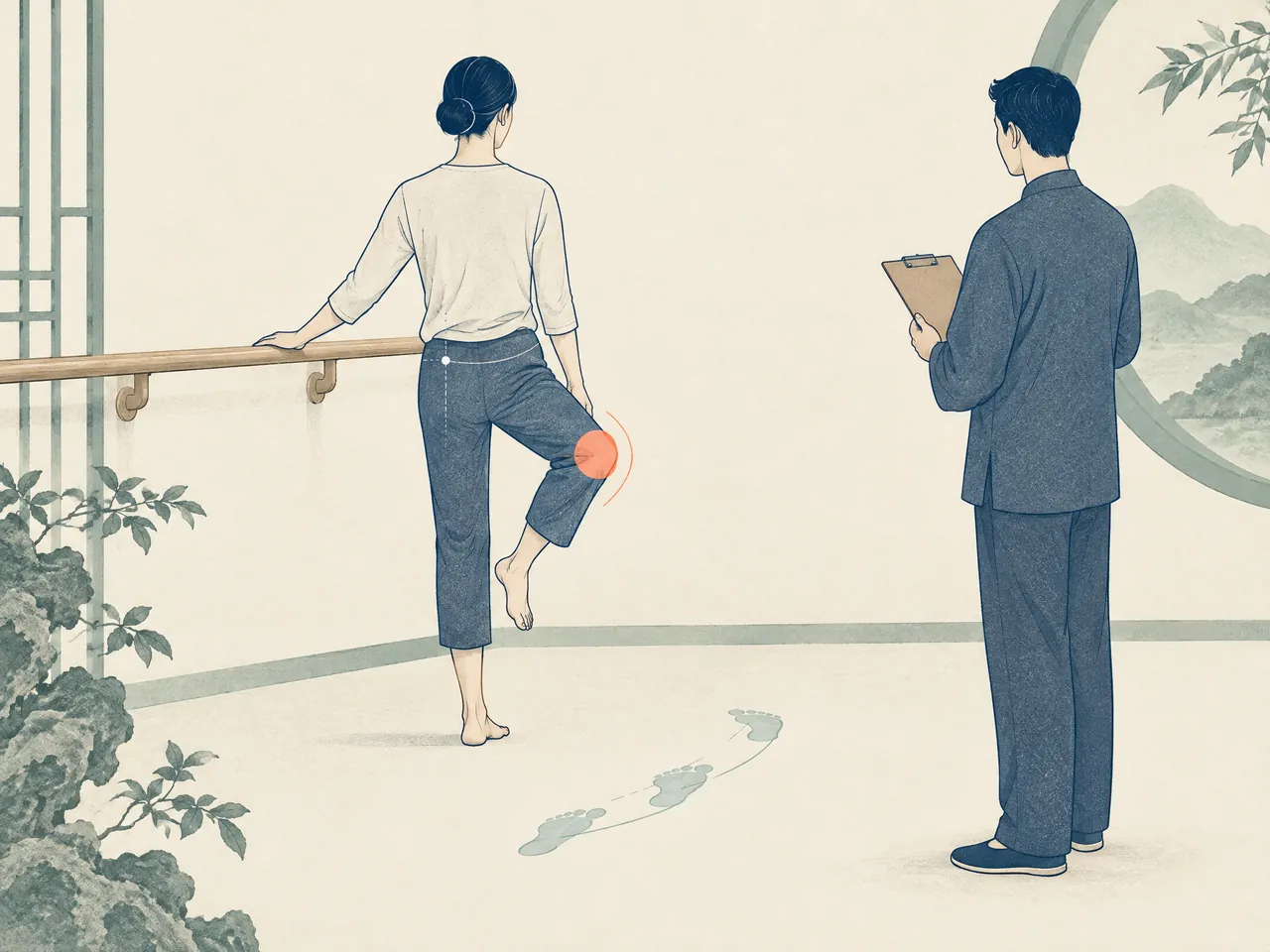
Hot Swollen Hip and Fever, Hip Pain and Unable to Walk, and Hip Pain Unable to Bear Weight with Whole-Body Symptoms Need Urgent Review
Whole-body symptoms can include feeling feverish, cold, shivery, unusually weak or generally unwell. With a painful, hot or swollen hip, report them together rather than treating the fever as a separate cold or the hip as a separate strain. The NHS specifically identifies a hot swollen hip with high temperature or hot, cold or shivery feelings as a pattern for urgent help [1]. This is why taking painkillers and waiting for the next working day may be the wrong plan when symptoms are substantial or worsening.
Skin colour change, increasing swelling, or a joint that appears unusual should also be described, not photographed and monitored in place of care. HSS includes discolouration and a joint that looks deformed in its list of symptoms that merit a doctor’s attention [2]. If another person notices confusion, fainting, breathing difficulty, severe drowsiness or collapse, seek emergency assistance immediately. A Chinese medicine appointment, physiotherapy session or routine exercise plan is not the first response to these warning patterns.
Hot Swollen Hip and Fever: Hip Pain and Unable to Walk; Hip Pain Unable to Bear Weight—When to Arrange a Consultation
A planned consultation becomes more reasonable when there is no urgent warning sign and the main issue is ongoing, recurrent or function-limiting pain. The NHS advises routine medical review when hip pain stops normal activities or affects sleep, worsens or keeps returning, has not improved after two weeks of home treatment, or stiffness lasts more than 30 minutes after waking [1]. Those are reasons to seek review, not a rule that everyone must wait two weeks. If pain becomes suddenly severe, the hip becomes hot or swollen, fever develops, or weight-bearing is lost, move to urgent care instead.
For mild pain without red flags, reduce activities that clearly aggravate it while staying gently active within a safe range. The NHS suggests avoiding excess strain, using an ice pack wrapped in a towel for up to 20 minutes at a time, wearing comfortable supportive shoes and avoiding low chairs that can load the hips [1]. These measures are not a cure and should not be used to push through sharp pain. Track the response over days: a small, steady improvement is different from pain that is escalating, spreading or changing how you walk.

A clinician may explore a range of possibilities through history, examination and, where appropriate, tests. Mount Elizabeth Hospital notes that hip pain may be felt in the groin, thigh or lower back and that assessment may combine history, examination and imaging or laboratory tests depending on the presentation [3]. That is a useful reminder not to decide that all hip pain is a muscle strain based on location or activity. For an overview of non-emergency decisions, read when to see a doctor for hip pain.
Hot Swollen Hip and Fever, Hip Pain and Unable to Walk, and Hip Pain Unable to Bear Weight: What to Record Before Seeking Care
Write down the first day symptoms began, whether onset was sudden or gradual, and any event immediately beforehand. State where pain is strongest—groin, outer hip, buttock, thigh or knee—and what it prevents: getting out of a chair, putting on shoes, sleeping, climbing steps, working, driving or walking. Record whether you can bear weight, whether a limp is new, and what happens after rest. Add feverish feelings, chills, warmth, swelling, skin change, numbness, weakness and night pain. A short timeline is more useful than trying to make a self-diagnosis.
Bring or list previous x-rays, scans, operation information, diagnoses, allergies, medicines and supplements. Include recent falls even if you thought they were minor, and explain what home measures you have tried. If you visit a TCM practitioner after medical assessment, share that history too. It supports a safer conversation about whether a traditional consultation is appropriate alongside your existing care. The practitioner’s traditional pattern assessment is not the same as a biomedical diagnosis, and it should not replace evaluation of a new red-flag symptom.

Hot Swollen Hip and Fever, Hip Pain and Unable to Walk, and Hip Pain Unable to Bear Weight: How TCM Consultation Fits
TCM consultation can be considered for stable, non-emergency hip pain after urgent causes have been assessed or excluded, particularly when pain is recurrent, affects daily comfort, or you want to discuss supportive options with a Registered Chinese Medicine Practitioner. The consultation should start with the symptom timeline, medical findings already available, current medicines and activity limits. It is not a place to try to distinguish a fracture, joint infection or neurological problem from symptoms alone. If warning signs appear before or after a visit, seek conventional urgent or emergency assessment promptly.
At TCM Lab, you can enquire about a consultation at the Chinese medicine clinic Prince Edward or the Kwun Tong Chinese medicine clinic. Tell the team whether medical assessment has already occurred, what ongoing hip difficulty you have, and any medicines or follow-up instructions you have been given. WhatsApp +852 6940 5663 is for asking about appointment arrangements; it does not replace urgent triage or automatically confirm a treatment. A clear enquiry helps the clinic direct a non-urgent discussion while keeping the safety boundary clear.
Care and health guide
Weight-management information
This directory brings together services, reading, and visit information related to weight management, to help you prepare questions for a consultation.
When considering weight management, noting the goals, daily habits, and approaches you have already tried can help prepare a consultation; acupoint embedding Hong Kong is a relevant service or reading entry point.
People may have different priorities, and acupuncture Hong Kong offers related information to help you understand options and prepare questions.

Your questions, answered
Frequently asked questions
Should I go to emergency care if hip pain leaves me unable to walk after a fall?
Yes. Severe hip pain after a fall or injury, inability to walk or put weight on the leg, and tingling or loss of feeling after injury are emergency warning signs. Do not try to prove you can walk by repeatedly standing, stretching or squatting. Arrange emergency assessment and state the injury mechanism and any sensation change.
Can a hot swollen hip and fever wait for a routine appointment?
No. A hot or swollen hip with a high temperature, feeling hot, cold or shivery, skin-colour change, or feeling generally unwell needs same-day medical assessment. It is not possible to determine the cause reliably from the appearance of the hip. Seek emergency help if you are severely unwell or cannot obtain timely assessment.
What if my hip pain is sudden but I did not fall?
Sudden severe hip pain without a fall needs urgent same-day assessment. Do not assume it is an exercise strain because there was no obvious injury. Note when it began, the pain location, whether you can bear weight, and any swelling, warmth, feverish feeling, skin change or numbness to report to the clinician.
When should I book a planned consultation for hip pain?
Arrange a planned medical review when there are no red flags but pain limits ordinary activity or sleep, is getting worse or recurring, has not improved after about two weeks of suitable home care, or morning stiffness lasts more than 30 minutes. Do not wait for that interval if severe pain, fever, heat, swelling or loss of safe weight-bearing develops.
Can Chinese medicine help me decide whether a hot hip is urgent?
No. A hot swollen hip with fever, sudden severe pain, inability to bear weight or numbness needs medical triage first. A Chinese medicine consultation may be discussed later for stable, non-emergency symptoms after appropriate assessment. Bring medical findings, current medicines and the symptom timeline so care can be coordinated appropriately.
Sources and further information
- [1] NHS — Hip pain in adults
Referenced for: UK public-health guidance supporting the emergency, urgent and routine hip-pain warning patterns, self-care boundaries and two-week review guidance cited as [1].
- [2] Hospital for Special Surgery — Should You See a Doctor for That Hip Pain?
Referenced for: Specialist hospital guidance supporting warning signs including fever or chills, sudden pain, inability to bear weight, skin discolouration and apparent deformity cited as [2].
- [3] Mount Elizabeth Hospital — When should I See a Doctor for Hip Pain?
Referenced for: Hospital guidance supporting the history, examination and possible testing context for hip pain cited as [3].