
TCM Lab · Health reading
hip pain causes and treatment: What causes hip pain in adults?
Published Updated
Hip pain is not always felt directly over the hip joint. A deep ache in the groin, soreness on the outer side of the hip, pain in the buttock, or discomfort running into the thigh can each raise different possibilities. The useful question is not simply where it hurts, but how the pain began, what loads it, whether it limits walking or sleep, and whether there was an injury. This guide helps adults organise those clues, recognise when prompt medical assessment matters, and understand how a TCM consultation may discuss supportive care without replacing a medical diagnosis.
Appointments are confirmed through WhatsApp. If you have language requirements, please mention them in your enquiry.
The short answer
Hip pain in adults may involve the joint, surrounding muscles, tendons or bursae, or pain referred from the lower back. Groin, outer-hip and buttock locations, together with walking, stairs, side-lying, stiffness and injury history, give clinicians useful clues but do not confirm a cause. Seek urgent medical care after a serious injury, if you cannot walk or bear weight, or if pain is severe with heat, swelling, fever, numbness or feeling unwell.
Transparent pricing
See the fees.
Choose your care.
Explore our complete official price list, including first-trial prices, regular prices, packages and branch-specific options.
Opening WhatsApp prepares an enquiry; it does not send a message, take payment or confirm an appointment. Suitability and individual arrangements are confirmed during consultation.
Pain care
All prices in HKDExtracorporeal shockwave treatment
Shockwave treatment for deep-tissue and fascial care. The Kwun Tong clinic offers the multi-area options shown below.
Priced by branch
Branch-specific pricing
Prince Edward: HK$250 per area
Kwun Tong: HK$250 for 1 area / HK$450 for 2 areas / HK$600 for 3 areas
Pain care (manual therapy)
Includes Chinese medicine musculoskeletal assessment, manual joint techniques and tui na.
HK$580 (single session)
Chinese medicine musculoskeletal assessment
Pain care (acupuncture and manual therapy)
Combines acupuncture and manual therapy.
HK$680 (single session)
Combined care
Hair and scalp
All prices in HKDScalp health and hair-loss management
Includes AI scalp analysis, deep scalp and follicle cleansing, and scalp oil-control care.
HK$380 (first trial)
Regular price: HK$680
- 6 sessions: HK$3,480 (HK$580 per session)
- 12 sessions: HK$5,760 (HK$480 per session)
- 20 sessions: HK$8,600 (HK$430 per session)
- 30 sessions: HK$11,400 (HK$380 per session)
Hair acupuncture and Chinese herbal medicine package
Includes scalp acupuncture and 3 days of Chinese herbal medicine that does not require decoction.
HK$580 (single session)
Registered Chinese Medicine Practitioner consultation
- 6 sessions: HK$3,180 (HK$530 per session)
- 12 sessions: HK$5,760 (HK$480 per session)
- 20 sessions: HK$8,600 (HK$430 per session)
- 30 sessions: HK$11,400 (HK$380 per session)
Combined hair and scalp treatment
Combines acupuncture and Chinese herbal medicine with salon-level scalp and follicle care. Packages include complimentary hair-care shampoo and serum.
HK$1,260 (single session)
Combined treatment
- 8 sessions: HK$8,640 (HK$1,080 per session)
- 16 sessions: HK$15,680 (HK$980 per session)
- 20 sessions: HK$18,600 (HK$930 per session)
- 30 sessions: HK$26,400 (HK$880 per session)
Weight management
All prices in HKDFull-body acupoint embedding for weight management
Includes full-body acupoint embedding. Packages include complimentary Chinese herbal medicine for weight management, with the number of included days scaled to the package. Embedding material and the individual treatment arrangement are confirmed during consultation; this is not a cosmetic thread lift.
HK$980 (single session)
No trial session
- 10 sessions: HK$7,800 (HK$780 per session)
- 20 sessions: HK$14,600 (HK$730 per session)
- 30 sessions: HK$20,400 (HK$680 per session)
Facial acupuncture
All prices in HKDFacial acupuncture (basic)
Includes facial acupuncture and meridian-based facial care, including care for facial puffiness.
HK$480 (first trial)
Regular price: HK$680
- 10 sessions: HK$5,200 (HK$520 per session)
- 20 sessions: HK$9,600 (HK$480 per session)
- 30 sessions: HK$13,500 (HK$450 per session)
Facial acupuncture (advanced)
Includes enhanced facial acupuncture with a specially formulated moisturising mask and serum.
HK$780 (first trial)
Regular price: HK$1,180
- 10 sessions: HK$9,000 (HK$900 per session)
- 20 sessions: HK$16,600 (HK$830 per session)
- 30 sessions: HK$23,400 (HK$780 per session)
Chinese medicine
All prices in HKDAcupuncture and Chinese herbal medicine package
Includes a Chinese medicine consultation with pulse assessment, body acupuncture and 3 days of Chinese herbal granules that do not require decoction.
HK$580 (single session)
Chinese medicine consultation with pulse assessment
hip pain causes by location: hip pain causes and treatment for What causes hip pain in adults?
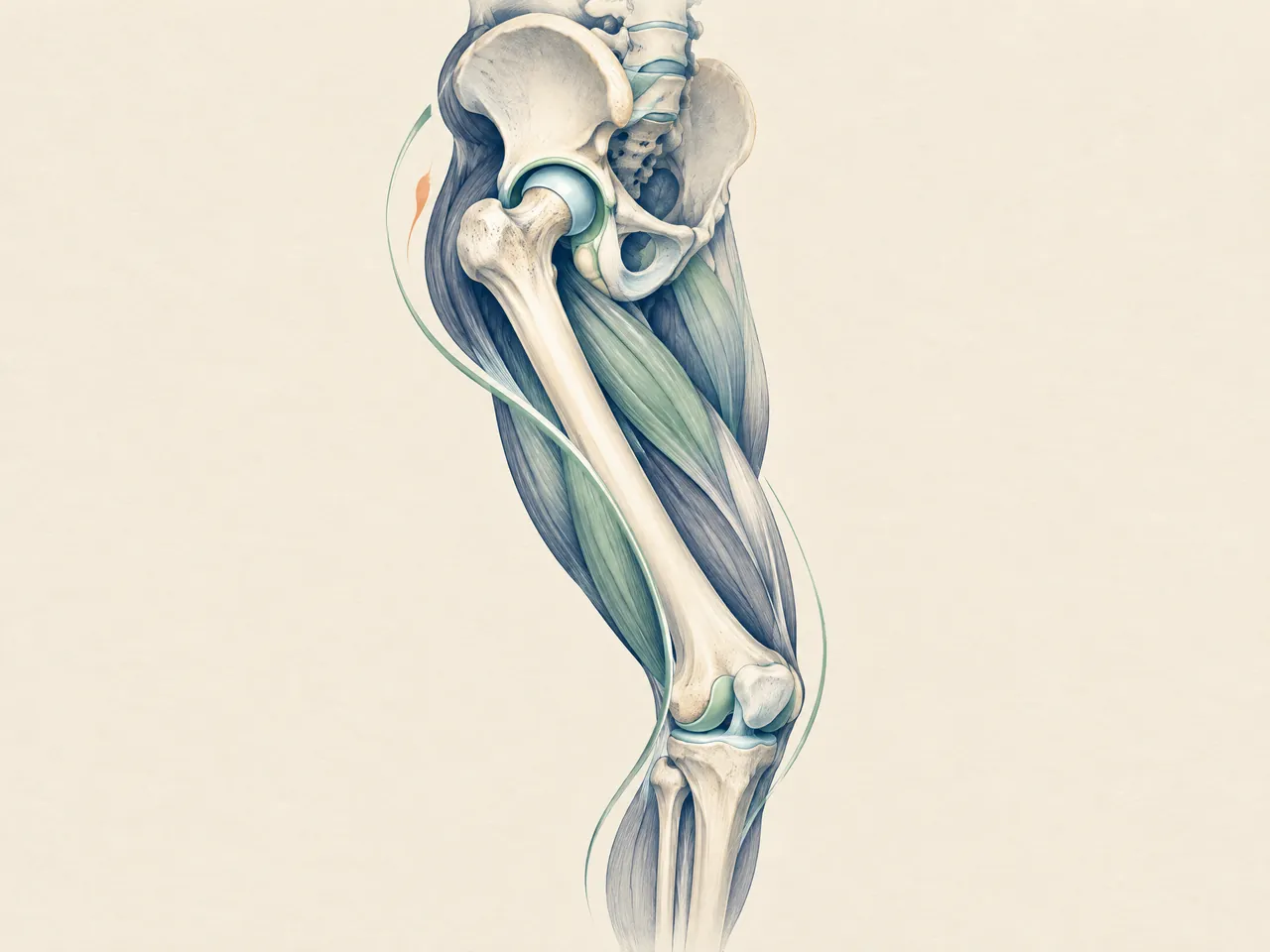
The hip is a weight-bearing ball-and-socket joint, but the area people call the hip includes the groin, upper thigh, outer pelvis and buttock. Pain in any one of these areas does not automatically name the injured or irritated structure. Hip pain causes can include a sudden strain, tendon or bursa problems around the joint, arthritis, cartilage or labral concerns, stress injury, and pain referred from the spine. A clinician puts the location alongside age, health history, how symptoms started and what normal movements are now difficult. The Hong Kong College of Orthopaedic Surgeons notes that walking, bending and getting in or out of a chair can be affected when hip pain and mobility loss are present [3].
Think of the location as a starting point for a better description rather than a self-diagnosis. Say whether a finger can identify one tender spot or whether the pain feels deep and hard to locate. Explain whether it began during a turn, after a fall, after a new running route, or gradually without one clear event. Note if it appears only at a certain distance of walking, when rising from a chair, after sitting, or during the first few steps in the morning. This detail is more actionable than calling every ache ‘wear and tear’. For a related activity-focused guide, see hip pain when walking.
hip pain causes in the groin, outer hip or buttock: hip pain causes and treatment for What causes hip pain in adults?
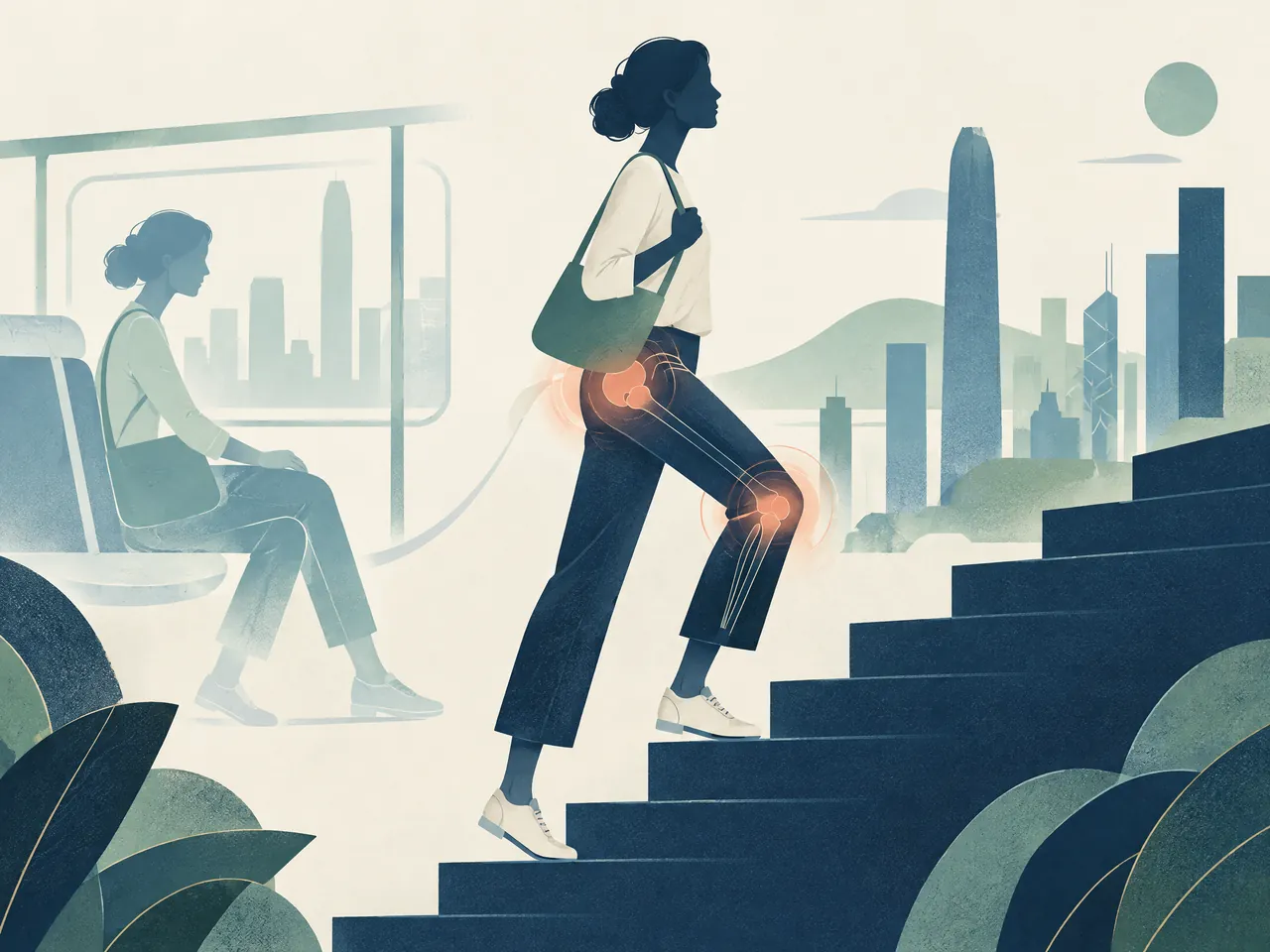
Pain felt at the front of the hip or in the groin may lead an assessor to consider the hip joint and nearby structures. It can be paired with stiffness or trouble putting on shoes, stepping into a car, or twisting the leg, but it should not be labelled osteoarthritis from location alone. The Hospital for Special Surgery describes front-hip, thigh and groin pain as a pattern that can offer clues in older adults, while also listing several other possible hip conditions [2]. Tell a clinician about a new groin lump, abdominal symptoms or pain that is outside the pattern of ordinary movement-related discomfort.
Outer-hip pain may be more noticeable when lying on that side, climbing stairs, walking on uneven ground or moving the leg sideways. Soft tissue around the hip, including tendons, muscles and bursae, may be considered, but a web description cannot distinguish among them. Avoid repeatedly forcing a deep stretch, squat or hip rotation simply to ‘test’ it; that can aggravate an already sensitive area. Instead, note which position causes pain, how long it lasts after activity, and whether the area looks swollen or is sore to touch. These observations make the later assessment more specific without turning a symptom pattern into a diagnosis.
hip pain causes that travel down the leg: hip pain causes and treatment and What causes hip pain in adults?
Buttock pain that runs down the thigh or lower leg, particularly with burning, tingling, altered sensation or weakness, deserves a description of the back as well as the hip. Lower-spine conditions can produce pain felt around the hip and can radiate down the leg, even when back pain is not the first complaint [2]. That does not mean every radiating ache is a nerve problem. It means the source may not be limited to the hip joint, so a full history and examination are important.
Make a simple comparison between each side: where symptoms start, the farthest point they travel, whether coughing or sitting changes them, and whether your foot feels different. Report any change in balance, leg strength or the way you walk. The broader overview of hip pain symptoms can help you put these observations into words for an appointment. New loss of feeling after an injury is not a symptom to monitor at home; the NHS advises emergency assessment when tingling or loss of feeling follows an injury [1].
Compare your options
| Pattern you notice | Details worth recording | Why it matters for the conversation |
|---|---|---|
| Groin or front-of-hip discomfort | Deep or surface pain, stiffness, turning the leg, shoes and socks, getting into a car | May help distinguish joint-area concerns from other sources; location alone cannot diagnose the cause. |
| Outer-hip pain | Side-lying, stairs, uneven ground, leg movement, pressure on the area and tenderness | Helps describe whether surrounding soft tissues or other structures should be considered. |
| Buttock pain travelling down the leg | Burning, tingling, numbness, weakness, back symptoms, sitting and the farthest point the pain reaches | Alerts the assessor that the lower back or nerve-related referral may need consideration. |
| Pain with walking or transfers | First few steps, distance walked, limp, chair rise, stairs, weight-bearing and night pain | Shows the functional load and whether daily mobility is changing over time. |
| Sudden or severe symptoms | Fall or injury, inability to walk, heat, swelling, fever, colour change or altered feeling | These features can change the urgency of medical assessment. |
On smaller screens, scroll the table sideways to compare all columns.
hip pain causes and movement clues: hip pain causes and treatment, What causes hip pain in adults? and hip pain causes
Movement is useful information because it shows how pain interacts with load, direction and daily function. A person whose discomfort arrives after a long walk may need a different assessment from someone whose pain starts with the first steps after rest. Stairs add more bend and force than level walking. Turning in a tight space asks the hip to rotate. Side-lying places direct pressure on the outer hip. These are clues for discussion, not home tests that can prove one named condition. A gradual change in capacity, a sudden drop after an injury, and pain that is now interrupting sleep are all worth recording separately.
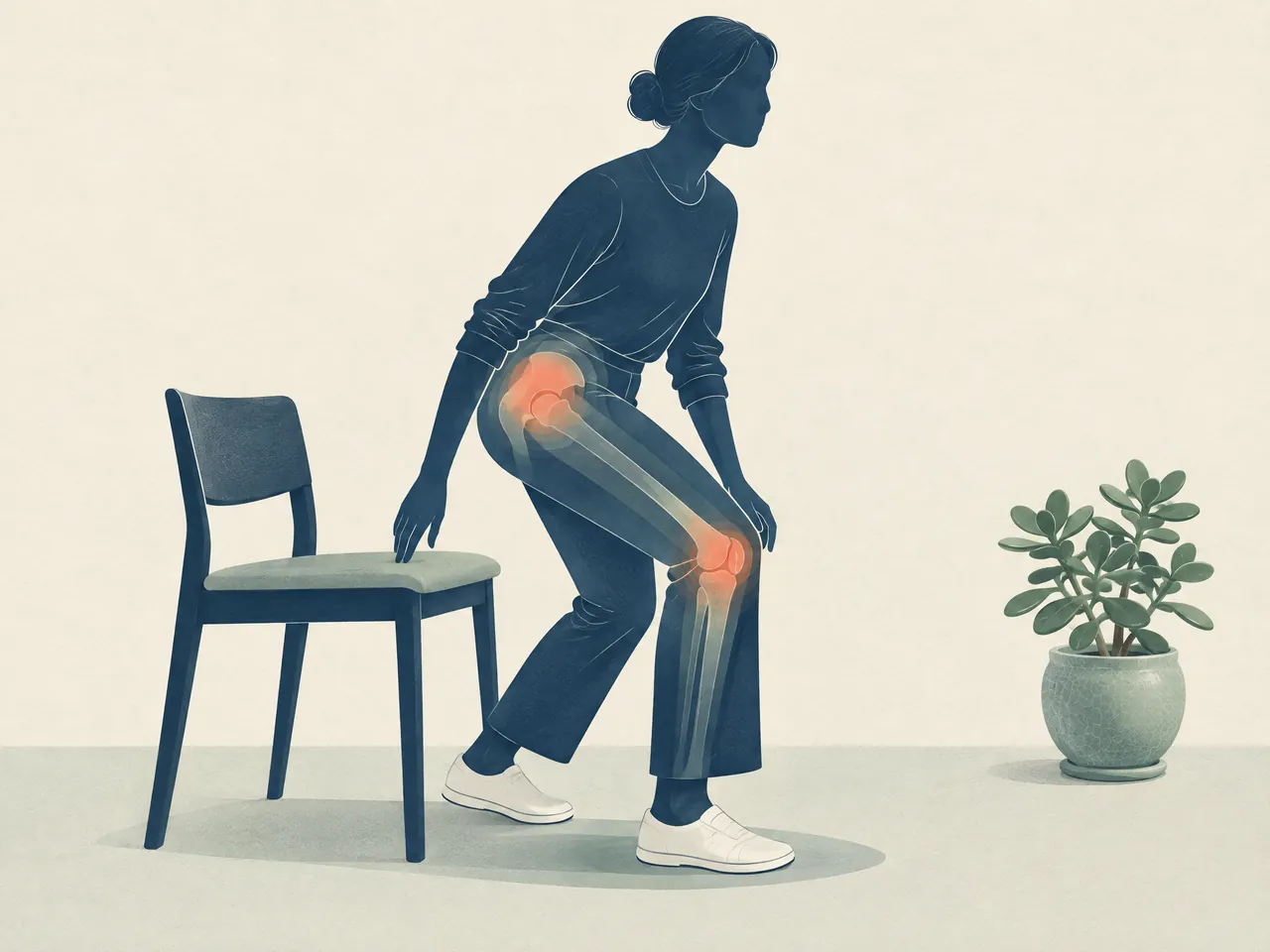
For mild symptoms without red flags, it is reasonable to reduce the specific activity that clearly aggravates pain while staying as comfortably active as you can. NHS guidance encourages avoiding excessive strain while keeping moving if possible; it also lists ice wrapped in a towel as a short-term measure for some people [1]. This general information does not replace advice that accounts for your diagnosis, skin condition, medicines or injury. Do not use a temporary improvement after rest or ice as proof that a fracture, infection or another serious cause has been ruled out.
Walking, stairs and side-lying clues to hip pain causes and hip pain causes and treatment: What causes hip pain in adults?
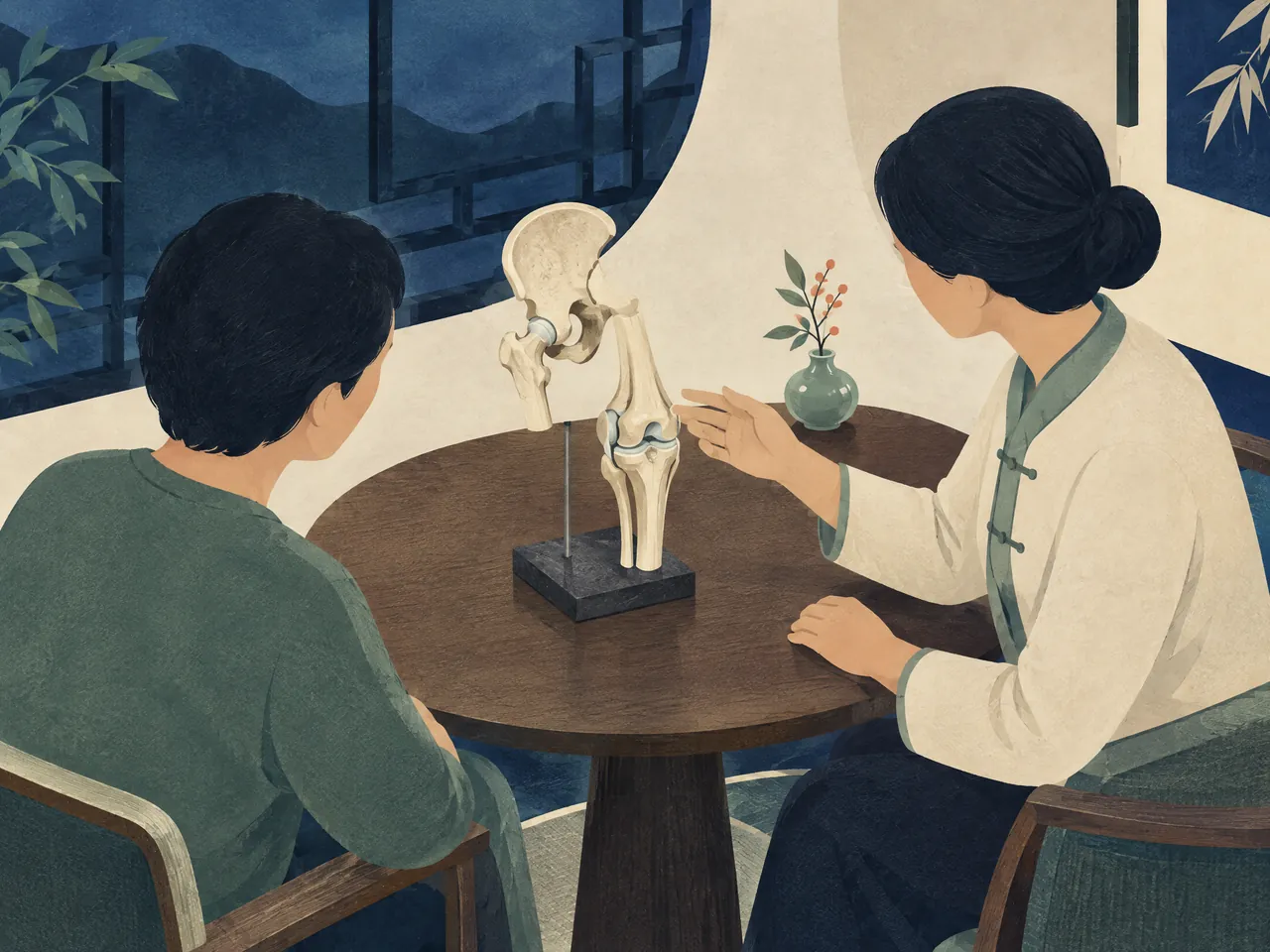
When walking triggers pain, notice the timing. Does it begin when weight first goes onto the leg, build after a certain distance, or continue after you stop? Do you shorten the stride, limp, use a handrail, or avoid putting the foot down? These are useful functional details. The NHS lists pain worse with walking and stiffness after moving among a pattern that may be seen with osteoarthritis in people over 45, but the same page cautions against trying to diagnose the cause yourself [1]. A pattern is a reason for assessment, not a verdict.
Stairs and chair transfers add practical information. Going upstairs, stepping down, getting up from a low sofa and entering a vehicle place the leg in different positions and may reveal what makes symptoms flare. Side-lying pain is also useful to record: which side is down, how soon it starts, whether a pillow changes it, and whether pain remains after you turn over. If you are looking for a plain-language starting point before you seek care, Why does my hip hurt? explores why the felt location and the source of pain may differ.
Recording symptoms before discussing hip pain causes and treatment: What causes hip pain in adults? and hip pain causes
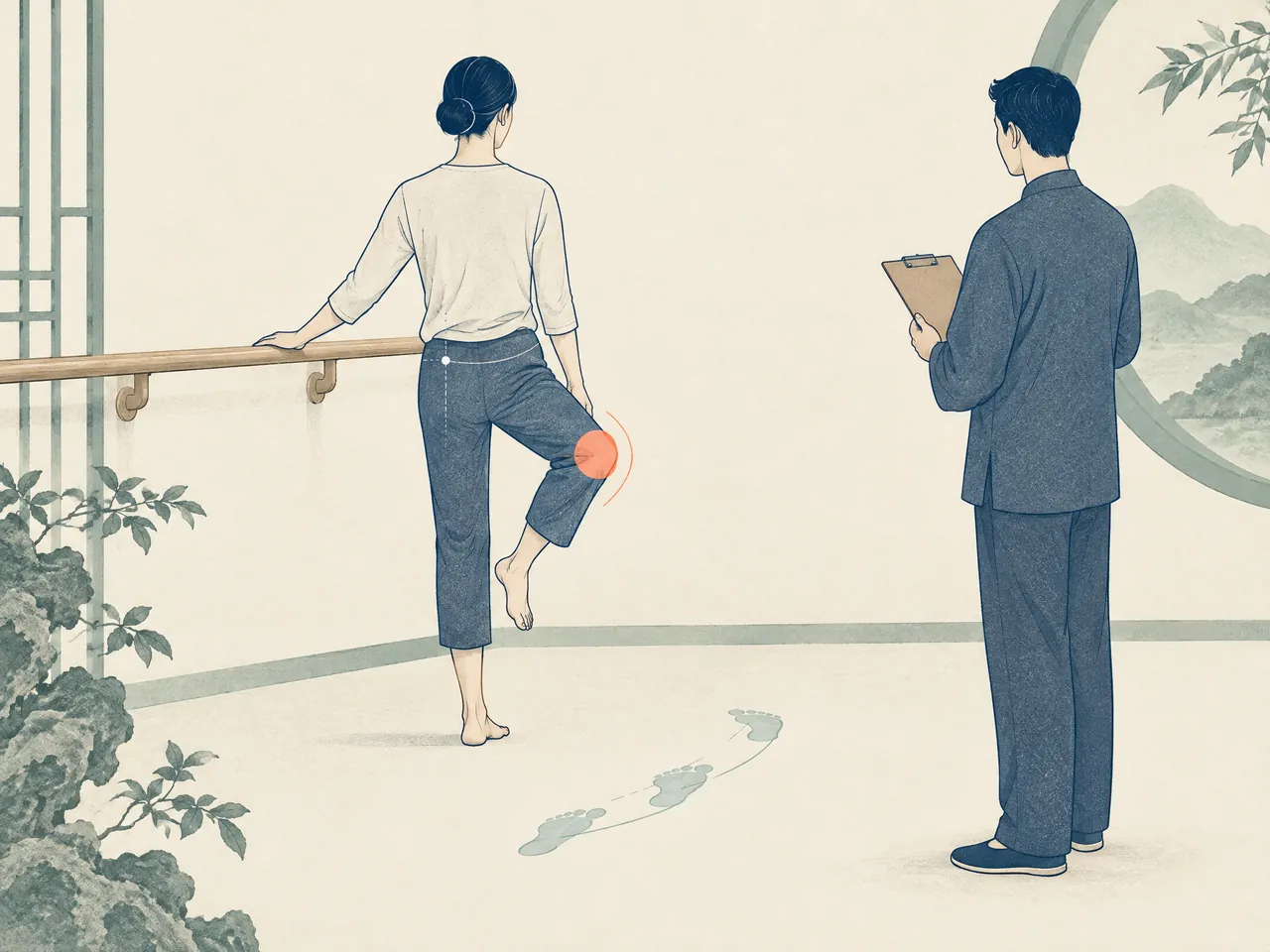
A short symptom log is more useful than a long list of pain scores. For several days, record the date, first moment of pain, the activity or position just before it, the precise area, how long it lasted and what you changed because of it. Add whether you could bear weight normally, whether the hip felt stiff after rest, and whether symptoms disturbed sleep. Include recent falls, a sharp increase in exercise, a new job task, long periods of sitting, or a change in footwear. Bring relevant scan reports, previous diagnoses and a current medicine list rather than relying on memory.
The log should also capture changes that affect safety: fever, chills, redness, warmth, rapid swelling, new weakness, numbness or a visibly different ability to move the leg. Be honest about the effect on work, caregiving, commuting and sleep. This is not a way to assign yourself a TCM pattern or a biomedical label. It lets a practitioner ask more focused follow-up questions and decide whether conventional medical assessment should take priority. The page on hip pain in adults offers a further way to frame persistent symptoms and daily limitations.
hip pain causes, clinical assessment and safety: hip pain causes and treatment for What causes hip pain in adults?
A clinical assessment commonly starts with the story of the problem: timing, injury, medical history, medicines and effect on daily tasks. It may then include observing walking and posture, checking the range and strength of movement, and examining relevant areas. Depending on the findings, a clinician may decide whether imaging, blood tests or another referral is useful. The Hong Kong College of Orthopaedic Surgeons describes history, physical examination and X-rays as typical elements of hip evaluation, with other tests used when needed [3]. An online article cannot substitute for that process.
Hip pain causes and treatment are therefore linked, but neither should be assumed too early. Management may range from adjusting activities and rehabilitation to medicines, walking aids, injections, specialist care or treatment for an underlying condition. What is appropriate depends on the cause and the person’s function, not on a single location word. If pain keeps returning, gets worse, disrupts normal activities or sleep, or has not improved with initial self-care, arrange medical advice rather than repeatedly changing exercises on your own [1].
When hip pain causes need urgent care: hip pain causes and treatment and What causes hip pain in adults?
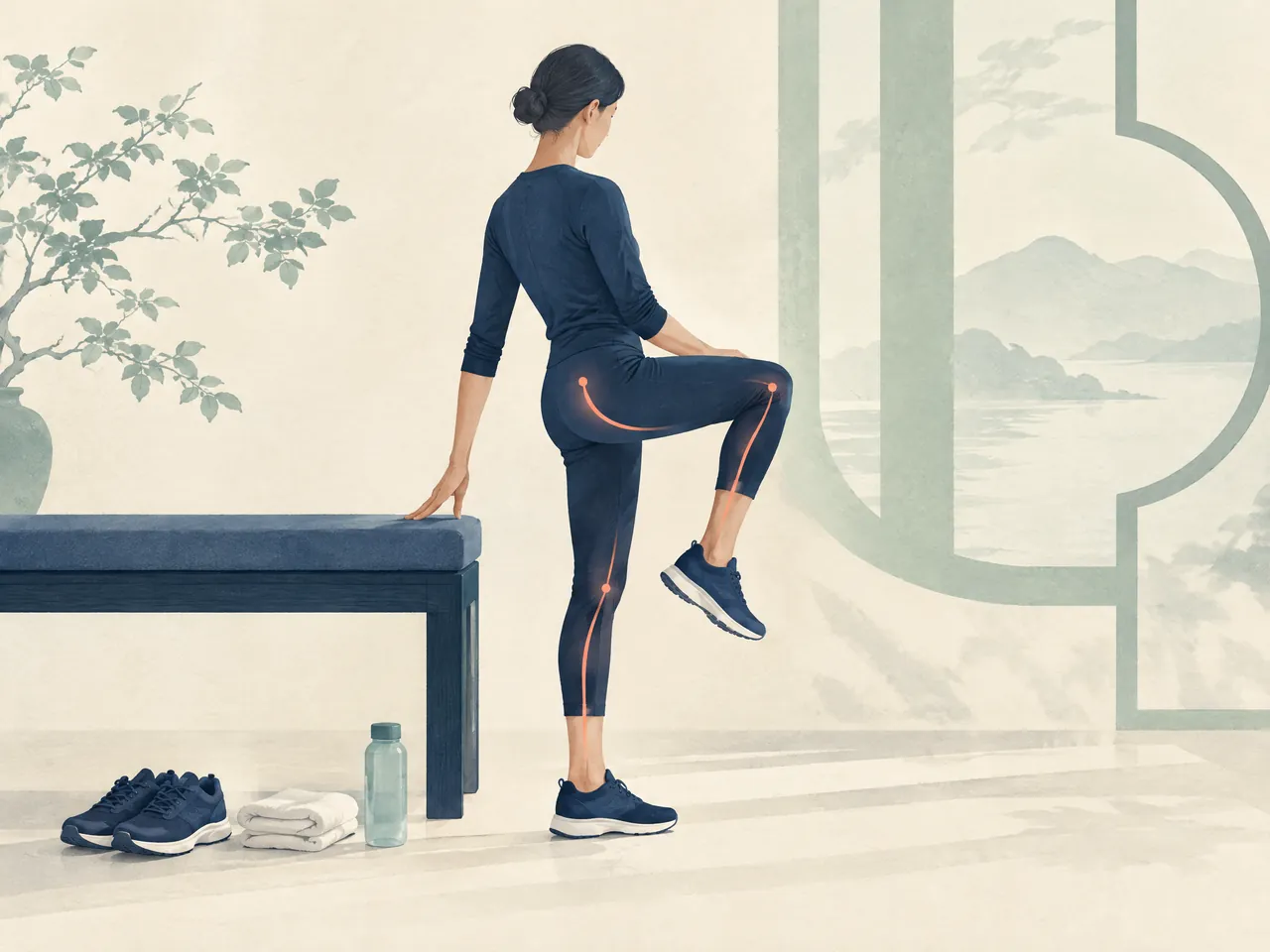
Treat a fall or major injury differently from a familiar mild ache. Severe pain after a fall or injury, being unable to walk or put weight on the leg, or tingling or loss of feeling after injury needs emergency assessment. The NHS also advises urgent help for sudden severe hip pain without an injury, a hip that is hot and swollen, skin colour change, or hip pain with fever or a general feeling of being unwell [1]. Do not wait to see whether acupuncture, massage, stretching or a topical product settles those warning signs.
Less dramatic symptoms can still merit timely review. Seek assessment if pain wakes you repeatedly, you are steadily losing movement, weight-bearing becomes increasingly difficult, or you notice new swelling, redness or instability. People who have altered their gait for weeks may also develop trouble elsewhere because they are compensating, which is another reason not to normalise a persistent limp. The right next step may be a primary-care, orthopaedic, physiotherapy or emergency assessment depending on the presentation. If uncertain, describe the symptoms and safety concerns to an appropriate healthcare service rather than treating this guide as triage for an individual case.

How a TCM consultation discusses hip pain causes and treatment: What causes hip pain in adults? and hip pain causes
After urgent or serious causes have been assessed appropriately, a Registered Chinese Medicine Practitioner can discuss hip discomfort as part of a wider consultation. The conversation may cover the site and character of pain, injury and activity history, sleep, other health conditions, medicines and findings already provided by other clinicians. In the traditional TCM approach, the practitioner may consider patterns such as cold, dampness or blood stasis. Those traditional descriptions are not the same as a modern medical diagnosis, and they should not be used to dismiss a fracture, infection, inflammatory disease or back-related symptoms.
Acupuncture may be discussed as a complementary option after individual assessment, but it is not a guaranteed cure or a substitute for medical investigation. The U.S. National Center for Complementary and Integrative Health says acupuncture evidence varies by pain condition and warns that it should not postpone seeing a healthcare provider for a health problem [4]. Tell the practitioner about current medicines, bleeding concerns, pregnancy, skin infection near the proposed area and all ongoing treatment. To ask about a consultation at TCM Lab, contact +852 6940 5663 and say whether Kwun Tong Chinese medicine clinic or Chinese medicine clinic Prince Edward is more practical for you.
Care and health guide
Pain-care information
This directory brings together services, reading, and visit information related to pain care, to help you prepare questions for a consultation.
When pain care affects your day, noting when it occurs, its relation to activity, and what you have already tried can help prepare a consultation; Chinese medicine pain management Hong Kong is a relevant service or reading entry point.
Individual circumstances differ, and acupuncture Hong Kong offers related information to help you understand options and prepare questions.


Your questions, answered
Frequently asked questions
Is groin pain always caused by hip osteoarthritis?
No. Hip problems can be felt in the groin, but pain location cannot by itself identify osteoarthritis or another cause. Note stiffness, weight-bearing, injury history, movement limits and other symptoms, then discuss them with a qualified clinician.
Why does the outside of my hip hurt when I lie on my side?
Outer-hip pain that is worse with side-lying or movement can involve soft tissues around the hip, including the bursa or tendons, but this pattern cannot confirm a diagnosis. Record the side, position, duration and activity effect for an assessment.
Can hip pain that goes down the leg come from the back?
Yes, pain felt at the hip or leg can sometimes be referred from the lower back. Burning, tingling, numbness, weakness and the route of the pain are important to report. Loss of feeling after an injury requires urgent medical assessment.
When should I seek urgent help for hip pain?
Seek urgent or emergency assessment for severe pain after a fall or injury, inability to walk or bear weight, or tingling or loss of feeling after injury. Sudden severe pain without injury, or a hot or swollen hip with fever or feeling unwell, also needs prompt medical attention.
Sources and further information
- [1] NHS — Hip pain in adults
Referenced for: Official guidance on adult hip-pain patterns, urgent warning signs, self-care and treatment pathways.
- [2] Hospital for Special Surgery — Hip Pain Causes, Conditions and Treatments
Referenced for: Specialist overview of hip-pain locations, soft-tissue and joint causes, spinal referral and reasons for evaluation.
- [3] Hong Kong College of Orthopaedic Surgeons — Hip Pain and Loss of Hip Mobility
Referenced for: Hong Kong orthopaedic information about hip function, daily limitations and components of clinical assessment.
- [4] NCCIH — Acupuncture: Effectiveness and Safety
Referenced for: US government information on acupuncture evidence, safety and the need not to delay healthcare evaluation.