
TCM Lab · Health reading
Does acupuncture help rotator cuff pain? How many acupuncture sessions for a rotator cuff injury? Can I exercise after acupuncture for shoulder pain?
Published Updated
Rotator cuff pain is frustrating because the same sore spot can come from a short-lived overload, tendon irritation, a partial tear, or a more substantial injury. Acupuncture may be worth discussing as supportive care for pain and surrounding muscle tension, but it does not reconnect a tendon that has torn away from bone. The useful questions are therefore not simply whether a needle treatment ‘works’, but what your symptoms suggest, whether a structural problem needs assessment, and what activity is sensible while the shoulder settles. Sudden weakness after a fall or lift needs prompt medical attention rather than a wait-and-see approach [1].
Appointments are confirmed through WhatsApp. If you have language requirements, please mention them in your enquiry.

The short answer
Acupuncture may be considered as part of symptom support for rotator cuff-related shoulder pain and tightness, but it cannot repair a complete tendon tear. There is no dependable fixed number of sessions: the plan should follow the suspected injury, examination findings, daily load and response over time. After treatment, avoid testing the shoulder with heavy or overhead exercise straight away; choose movement only at a level that does not increase pain or weakness.
Transparent pricing
See the fees.
Choose your care.
Explore our complete official price list, including first-trial prices, regular prices, packages and branch-specific options.
Opening WhatsApp prepares an enquiry; it does not send a message, take payment or confirm an appointment. Suitability and individual arrangements are confirmed during consultation.
Pain care
All prices in HKDExtracorporeal shockwave treatment
Shockwave treatment for deep-tissue and fascial care. The Kwun Tong clinic offers the multi-area options shown below.
Priced by branch
Branch-specific pricing
Prince Edward: HK$250 per area
Kwun Tong: HK$250 for 1 area / HK$450 for 2 areas / HK$600 for 3 areas
Pain care (manual therapy)
Includes Chinese medicine musculoskeletal assessment, manual joint techniques and tui na.
HK$580 (single session)
Chinese medicine musculoskeletal assessment
Pain care (acupuncture and manual therapy)
Combines acupuncture and manual therapy.
HK$680 (single session)
Combined care
Hair and scalp
All prices in HKDScalp health and hair-loss management
Includes AI scalp analysis, deep scalp and follicle cleansing, and scalp oil-control care.
HK$380 (first trial)
Regular price: HK$680
- 6 sessions: HK$3,480 (HK$580 per session)
- 12 sessions: HK$5,760 (HK$480 per session)
- 20 sessions: HK$8,600 (HK$430 per session)
- 30 sessions: HK$11,400 (HK$380 per session)
Hair acupuncture and Chinese herbal medicine package
Includes scalp acupuncture and 3 days of Chinese herbal medicine that does not require decoction.
HK$580 (single session)
Registered Chinese Medicine Practitioner consultation
- 6 sessions: HK$3,180 (HK$530 per session)
- 12 sessions: HK$5,760 (HK$480 per session)
- 20 sessions: HK$8,600 (HK$430 per session)
- 30 sessions: HK$11,400 (HK$380 per session)
Combined hair and scalp treatment
Combines acupuncture and Chinese herbal medicine with salon-level scalp and follicle care. Packages include complimentary hair-care shampoo and serum.
HK$1,260 (single session)
Combined treatment
- 8 sessions: HK$8,640 (HK$1,080 per session)
- 16 sessions: HK$15,680 (HK$980 per session)
- 20 sessions: HK$18,600 (HK$930 per session)
- 30 sessions: HK$26,400 (HK$880 per session)
Weight management
All prices in HKDFull-body acupoint embedding for weight management
Includes full-body acupoint embedding. Packages include complimentary Chinese herbal medicine for weight management, with the number of included days scaled to the package. Embedding material and the individual treatment arrangement are confirmed during consultation; this is not a cosmetic thread lift.
HK$980 (single session)
No trial session
- 10 sessions: HK$7,800 (HK$780 per session)
- 20 sessions: HK$14,600 (HK$730 per session)
- 30 sessions: HK$20,400 (HK$680 per session)
Facial acupuncture
All prices in HKDFacial acupuncture (basic)
Includes facial acupuncture and meridian-based facial care, including care for facial puffiness.
HK$480 (first trial)
Regular price: HK$680
- 10 sessions: HK$5,200 (HK$520 per session)
- 20 sessions: HK$9,600 (HK$480 per session)
- 30 sessions: HK$13,500 (HK$450 per session)
Facial acupuncture (advanced)
Includes enhanced facial acupuncture with a specially formulated moisturising mask and serum.
HK$780 (first trial)
Regular price: HK$1,180
- 10 sessions: HK$9,000 (HK$900 per session)
- 20 sessions: HK$16,600 (HK$830 per session)
- 30 sessions: HK$23,400 (HK$780 per session)
Chinese medicine
All prices in HKDAcupuncture and Chinese herbal medicine package
Includes a Chinese medicine consultation with pulse assessment, body acupuncture and 3 days of Chinese herbal granules that do not require decoction.
HK$580 (single session)
Chinese medicine consultation with pulse assessment
Does acupuncture help rotator cuff pain? How many acupuncture sessions for a rotator cuff injury? Can I exercise after acupuncture for shoulder pain? — Understanding symptoms, causes and assessment
The rotator cuff is a group of muscles and tendons that helps keep the upper arm positioned in the shoulder joint while you lift and rotate the arm. A rotator cuff problem can range from irritation or tendinopathy to a partial or full-thickness tear. Pain felt when reaching for a high shelf is not enough on its own to identify which one is present. Night pain, a deep ache, weakness, pain when lifting or lowering the arm, and difficulty reaching behind the back are all features reported with rotator cuff injury, but shoulders can also hurt for other reasons [1].
Context matters. A new pain after catching yourself in a fall, pulling a suitcase, or lifting with a sudden jerk deserves a different level of caution from a gradually developing ache after repeated overhead work. So does an arm that has become noticeably weaker. The related guide to rotator cuff injury symptoms can help you describe the pattern, but it is not a diagnosis. A clinician needs to consider the history, what movements are limited, where strength changes, and whether the pain might instead be coming from the neck, joint or another shoulder condition.

An assessment conversation is more useful when it starts with ordinary tasks rather than a label. Note whether side-lying wakes you, whether you can put on a T-shirt without compensating, and whether loss of lift was immediate after an incident. These details help distinguish a shoulder that can be managed cautiously from one that should be assessed promptly.
Does acupuncture help rotator cuff pain? How many acupuncture sessions for a rotator cuff injury? Can I exercise after acupuncture for shoulder pain? — Recognising pain, weakness and reduced movement
Pain and weakness are related but not interchangeable. A painful shoulder may still move strongly, while a tendon tear can sometimes be present with little pain yet reduced power. Notice which direction is difficult: lifting out to the side, rotating the forearm outward, lowering the arm, or reaching behind the body. Compare function with your usual baseline, not with a single good hour. If brushing hair, dressing, washing or carrying a light object has suddenly become much harder, record that change for the assessment. Hong Kong Adventist Hospital likewise notes that shoulder pain and weakness can affect dressing, hair washing and sleep [2].
Warning signs should move the priority away from symptom treatment and toward medical review. Arrange urgent assessment after an injury if there is immediate marked arm weakness, obvious deformity, inability to use the arm, severe and escalating pain, or numbness, colour change or a cold hand. Acute redness, heat, fever or an unwell feeling also needs medical attention. For a slower problem, persistent pain that is disrupting sleep or function still merits review; do not keep increasing exercise intensity simply because the shoulder is not yet back to normal.

Does acupuncture help rotator cuff pain? How many acupuncture sessions for a rotator cuff injury? Can I exercise after acupuncture for shoulder pain? — Why examination and imaging may matter
An examination normally looks at tenderness, active and passive movement, and strength in more than one position. It can also help assess whether the neck or another part of the shoulder is contributing to the complaint. Imaging is not an automatic requirement for every ache, but it may be clinically useful when the history and examination raise concern for a tear or another structural cause. X-rays mainly assess bones and other possible causes; ultrasound or MRI can show soft tissues such as rotator cuff tendons [3].
The result has practical consequences. A partially torn tendon, a complete tear, inflammation around the shoulder, and stiffness from another condition are not interchangeable problems. A local hospital guide describes history taking, physical examination and MRI or ultrasound as ways to assess the tendon and rule out other conditions [2]. That is why a responsible acupuncture discussion does not promise that a course of sessions can replace assessment or repair. It asks whether complementary symptom care can sit safely alongside the medical and rehabilitation plan already indicated.
Compare your options
| Current situation | What to discuss or monitor | Practical next step |
|---|---|---|
| Gradual ache with overhead activity but no sudden loss of strength | Triggers, sleep, range of movement and whether activity modification helps | Arrange assessment and follow the advised conservative plan; discuss acupuncture only as possible symptom support. |
| Pain after a fall, sudden pull or heavy lift | Immediate weakness, ability to raise the arm, deformity, numbness or circulation changes | Seek prompt medical assessment before relying on symptom treatment. |
| Known or suspected partial or complete tendon tear | Imaging and examination findings, daily function, rehabilitation goals and follow-up plan | Use medical and rehabilitation advice to decide loading; do not expect acupuncture to reconnect the tendon. |
| Shoulder feels easier after a treatment session | Function later that day and the next day, new weakness, and response to prescribed movement | Return gradually to comfortable activity; avoid using temporary relief to test heavy or overhead exercise. |
On smaller screens, scroll the table sideways to compare all columns.
Does acupuncture help rotator cuff pain? How many acupuncture sessions for a rotator cuff injury? Can I exercise after acupuncture for shoulder pain? — Setting a realistic care discussion
Acupuncture involves inserting fine needles into the skin; needles may be manipulated by hand or stimulated with small electrical currents [4]. For a person with rotator cuff-related discomfort, the realistic role to discuss is support with symptoms such as pain or guarding in nearby muscles, not a claim that the tendon has been biologically repaired. Some people value a session because it gives them a structured point to review symptoms and activity. Others may not notice a meaningful change. Neither outcome identifies the underlying tissue condition by itself.
This distinction matters when comparing options. Conservative management may include activity modification and a supervised exercise or physiotherapy programme, depending on the diagnosis. AAOS describes rest or limiting overhead activity, activity modification, and strengthening or physical therapy among nonsurgical options for rotator cuff tears [3]. Acupuncture, if selected, should be discussed as one possible addition to—not a substitute for—this assessment-led plan. Read more about acupuncture for rotator cuff injury when you want the treatment question separated from the question of tendon healing.
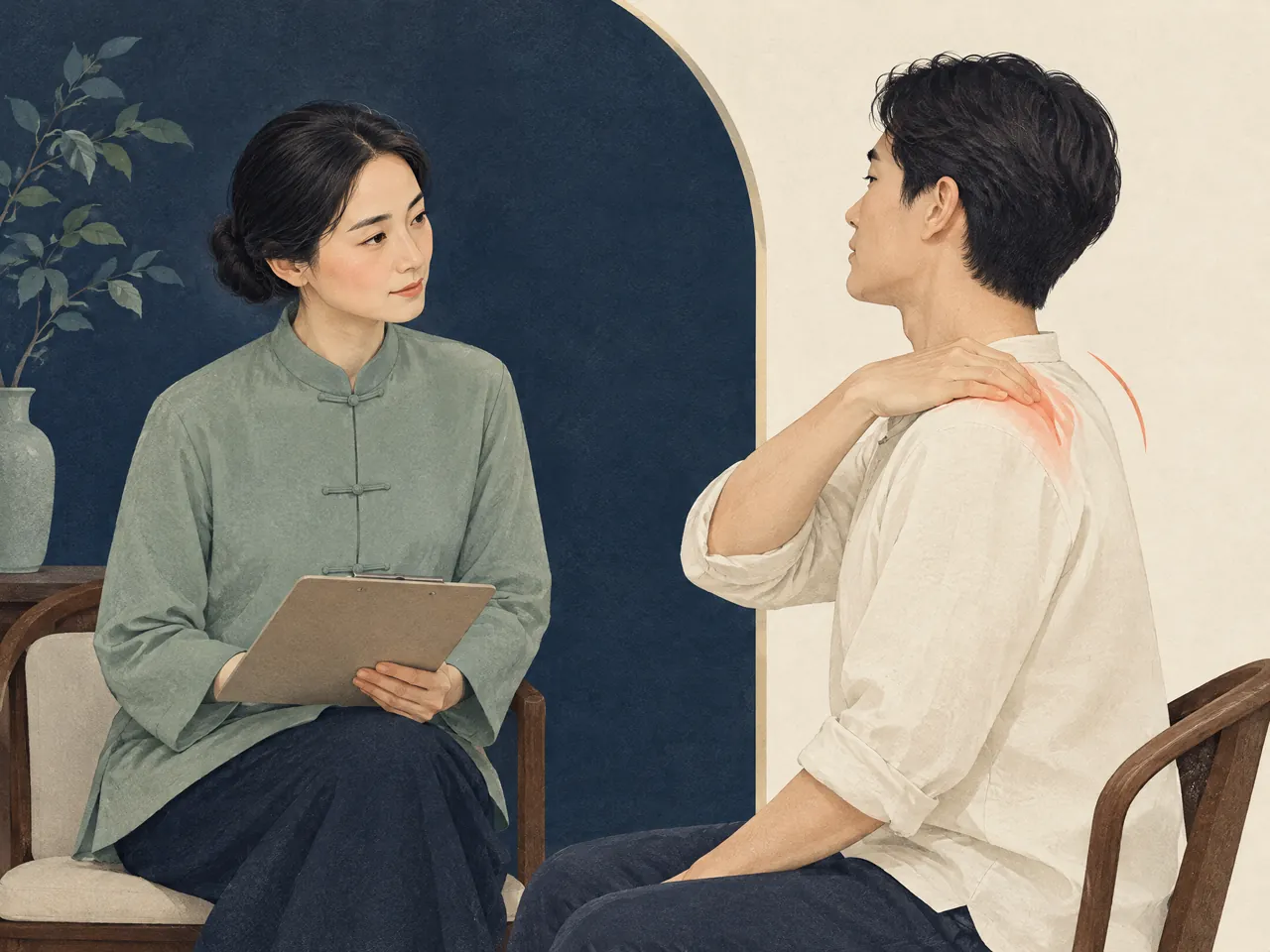
Good decisions also account for safety. Tell the practitioner about a skin infection or rash near the intended area, bleeding or clotting concerns, pregnancy, major medical changes, and medicines or treatments that affect bleeding before any procedure. Acupuncture is generally performed with fine needles, but unsafe practice can cause serious adverse effects; NCCIH notes risks from nonsterile needles or improper delivery [4]. Clear information helps determine whether treatment should be deferred or whether another assessment is the better next step.
Does acupuncture help rotator cuff pain? How many acupuncture sessions for a rotator cuff injury? Can I exercise after acupuncture for shoulder pain? — What individual response can change
There is no honest fixed answer to ‘How many sessions?’ A recent mild overload with preserved strength raises different questions from a shoulder that is weak, disturbs sleep or shows a tear. Daily demands matter too. The useful measure is a reviewable goal—such as sleeping more comfortably or tolerating a prescribed exercise—not a promised visit count.
Response should be reviewed over time, not judged only by how the shoulder feels immediately after treatment. Keep a brief note of night pain, the task that triggers symptoms, any new weakness, and the following day's response to activity. If a shoulder feels looser for a few hours but functional capacity keeps falling, that is important information to take back to a doctor, physiotherapist or practitioner. Conversely, a modest pain reduction does not grant permission to resume heavy pressing, throwing or repetitive overhead work before the shoulder can tolerate a graded plan.

Does acupuncture help rotator cuff pain? How many acupuncture sessions for a rotator cuff injury? Can I exercise after acupuncture for shoulder pain? — Where acupuncture fits in conservative care
A coordinated conservative plan starts with a working diagnosis and a safe loading plan. Medical assessment can identify whether a sudden injury, marked weakness or suspected tear changes the pathway. Physiotherapy or another qualified rehabilitation professional can prescribe movement and strengthening appropriate to the shoulder's current capacity. Acupuncture may be considered alongside those steps when the aim is symptom support, but it should not be used to postpone care for a problem that needs diagnosis. NCCIH gives the same general caution: do not use acupuncture to delay seeing a health-care provider about a health problem [4].
Ask useful, specific questions before deciding. What problem is currently suspected? What change would mean I should seek medical review sooner? Which daily activities should I reduce for now? What exercise, if any, has been prescribed and what response is acceptable? How will we decide whether a trial of symptom support is helping? The broader page on acupuncture for shoulder pain Hong Kong may help frame a local consultation, while the answers should remain individual to the shoulder in front of the practitioner.
Does acupuncture help rotator cuff pain? How many acupuncture sessions for a rotator cuff injury? Can I exercise after acupuncture for shoulder pain? — Safe activity and practical limits
After acupuncture for shoulder pain, do not use the temporary feeling of ease as a test of how much the tendon can take. A calm walk, gentle use for essential daily tasks, and movement that stays comfortable may be reasonable for some people, while a hard gym session, heavy lifting, repetitive overhead work or a long swim can overload an already irritated shoulder. The appropriate boundary comes from your diagnosis and symptoms. The page on rotator cuff tear shoulder pain explains why structural injury changes that calculation.
Think in terms of load, not simply exercise versus rest. Reaching for a light cup is a different demand from carrying grocery bags with the arm held away from the body. A prescribed mobility exercise is different from testing a painful overhead press. Begin with the activity plan given by the clinician who assessed you. During any movement, avoid forcing through sharp pain, compensating by hiking the shoulder, or adding repetitions because the first few feel acceptable.

Prepare for a consultation with a short timeline: what happened before pain began, the first task that became difficult, any fall or sudden pull, current medicines, and movements that make pain or weakness worse. Bring prior imaging reports if available. This helps decide whether a symptom-support trial is reasonable or whether rehabilitation or medical follow-up should be prioritised.
Does acupuncture help rotator cuff pain? How many acupuncture sessions for a rotator cuff injury? Can I exercise after acupuncture for shoulder pain? — Gentle movement versus heavy loading
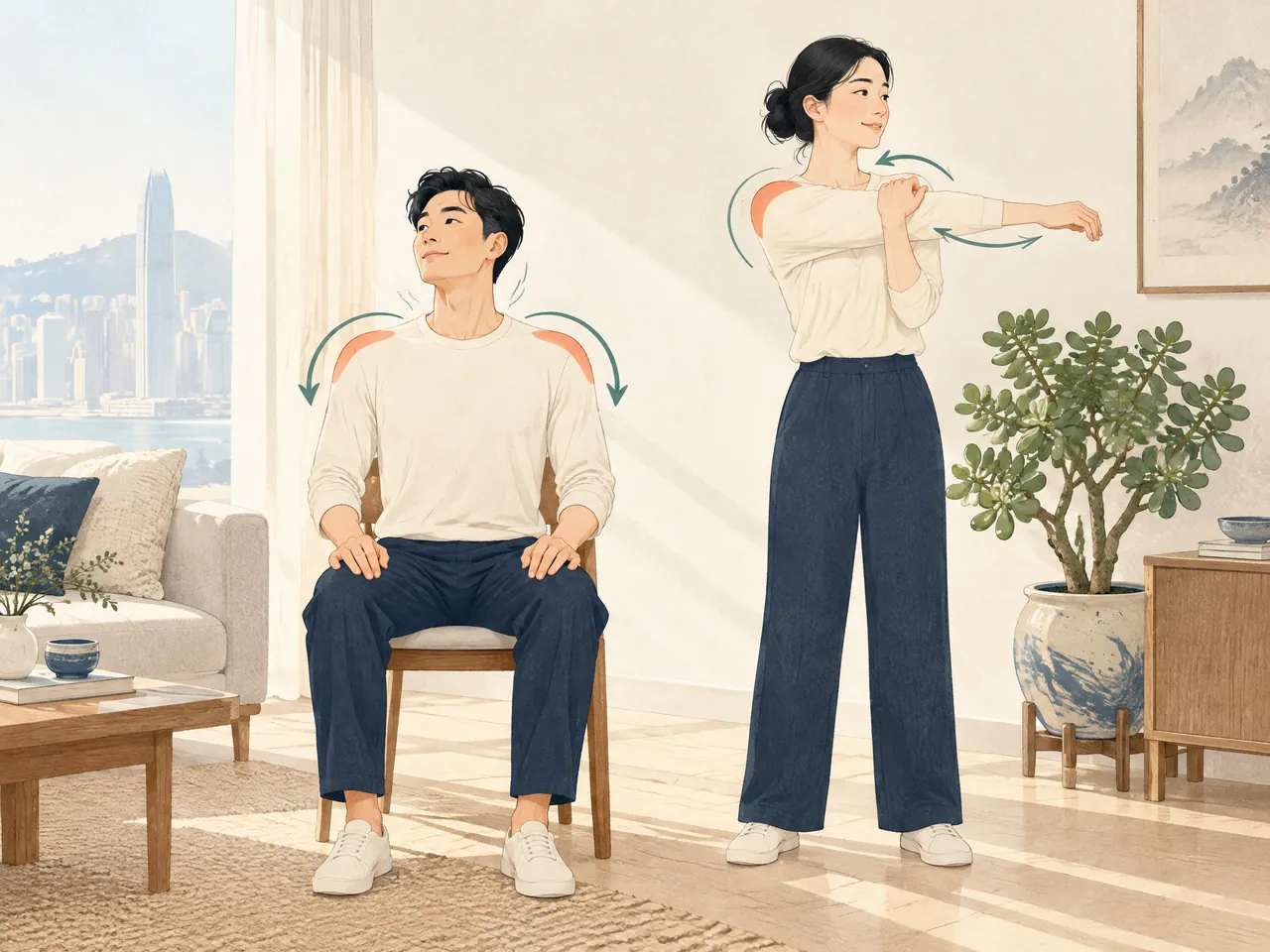
Use the simplest possible traffic-light rule until you receive individual advice. Comfortable, controlled movement within the agreed range is the green zone. A mild, brief awareness of the shoulder that settles and does not reduce function may be a cue to slow down and monitor. Sharp pain, a catch with weakness, a worsening ache after activity, or a loss of movement means stop and reassess. This is not a self-diagnosis tool; it is a way to avoid repeatedly challenging the shoulder while you arrange appropriate care.
Heavy or overhead loading is not limited to sport. It can include lifting luggage into an overhead rack, hanging wet laundry, moving stock, painting a ceiling, carrying a child on one side, or repeatedly reaching into high storage. Plan these tasks differently while symptoms are active: lower the item first, use two hands if safe, ask for help, or postpone the demand. If a rehabilitation professional has prescribed specific exercises, those exercises take precedence over generic online advice because their dose and progression are based on your examination.
Does acupuncture help rotator cuff pain? How many acupuncture sessions for a rotator cuff injury? Can I exercise after acupuncture for shoulder pain? — When to pause and seek medical assessment
Pause self-directed exercise and seek prompt medical assessment after a fall or other injury if you have immediate weakness, cannot raise the arm, see a changed shoulder shape, or develop numbness, a pale or cold hand, or severe pain. Seek medical advice for a shoulder that is progressively weaker, repeatedly wakes you, or remains difficult to use despite reducing aggravating activity. Mayo Clinic advises prompt care for immediate arm weakness after an injury [1]. These signs matter more than whether acupuncture happened to give short-term comfort.
For a non-urgent discussion of shoulder symptoms, you can ask about an assessment through the Kwun Tong Chinese medicine clinic or the Chinese medicine clinic Prince Edward. Message TCM Lab on WhatsApp at +852 6940 5663 with the onset, injury history, current weakness and any scans, and say if you have already been advised to see an orthopaedic or rehabilitation clinician. That information supports a safer conversation about whether symptom-focused acupuncture has a place alongside your care.
Care and health guide
Shoulder discomfort: care information
This directory brings together services, reading, and visit information related to shoulder discomfort, to help you prepare questions for a consultation.
When shoulder discomfort affects your day, noting when it occurs, its relation to activity, and what you have already tried can help prepare a consultation; acupuncture for shoulder pain is a relevant service or reading entry point.
Individual circumstances differ, and acupuncture Hong Kong offers related information to help you understand options and prepare questions.


Your questions, answered
Frequently asked questions
Does acupuncture help rotator cuff pain?
It may be discussed as supportive symptom care for some people with shoulder pain or surrounding muscle tightness. It should not be represented as a way to reconnect a torn tendon or as a substitute for assessment when the history suggests a significant injury. The right role depends on the diagnosis, symptoms, safety factors and the rest of the care plan.
How many acupuncture sessions are needed for a rotator cuff injury?
No fixed number is dependable for every shoulder. The plan should take account of the suspected injury, pain, strength, sleep, work or sport demands, other treatment and whether function is changing over time. Agree on review points rather than treating a certain session count as a promise of recovery.
Can I exercise after acupuncture for shoulder pain?
Avoid immediately testing the shoulder with heavy, repetitive or overhead exercise. Light movement may be suitable if it is comfortable and consistent with your clinician's advice. Stop if pain becomes sharp, weakness increases, movement reduces or symptoms are worse later or the next day. A prescribed rehabilitation programme should guide exercise choice and progression.
When should I seek medical help rather than wait for acupuncture?
Seek prompt assessment after injury with immediate weakness, major loss of movement, deformity, severe pain, numbness or a cold or pale hand. Also arrange medical review for persistent or worsening pain, night pain that disrupts sleep, or falling shoulder function. These features need assessment even if a treatment has temporarily eased discomfort.
Sources and further information
- [1] [1] Mayo Clinic: Rotator cuff injury — Symptoms and causes
Referenced for: Symptoms, causes, and the need for prompt assessment after immediate arm weakness following injury.
- [2] [2] Hong Kong Adventist Hospital: Rotator Cuff Tear The Culprit Behind Shoulder Pain
Referenced for: Hong Kong clinical terminology for symptoms, assessment, imaging, and conservative management; not evidence of acupuncture efficacy.
- [3] [3] American Academy of Orthopaedic Surgeons: Rotator Cuff Tears
Referenced for: Rotator cuff anatomy, symptoms, examination, imaging, and nonsurgical care options.
- [4] [4] National Center for Complementary and Integrative Health: Acupuncture: Effectiveness and Safety
Referenced for: What acupuncture involves, general safety considerations, and the importance of not delaying medical care.