
TCM Lab · Health reading
Acne Skin Care Advice: Can Chinese Medicine Cure Acne, and Is Chinese Medicine Good for Acne?
Published Updated
Acne is not one single kind of spot, so useful acne skin care advice starts by noticing what is actually on the skin: blocked pores, inflamed bumps, pus-filled spots, or deep painful lumps. Can Chinese medicine cure acne? It should not be described as a cure or a replacement for diagnosis and treatment when they are needed. Is Chinese medicine good for acne? Some people may choose it as supportive, individualised care alongside a gentle routine and medical care. The priority changes when acne is deep, widespread, leaving marks or scars, or affecting confidence and everyday life.
Appointments are confirmed through WhatsApp. If you have language requirements, please mention them in your enquiry.
The short answer
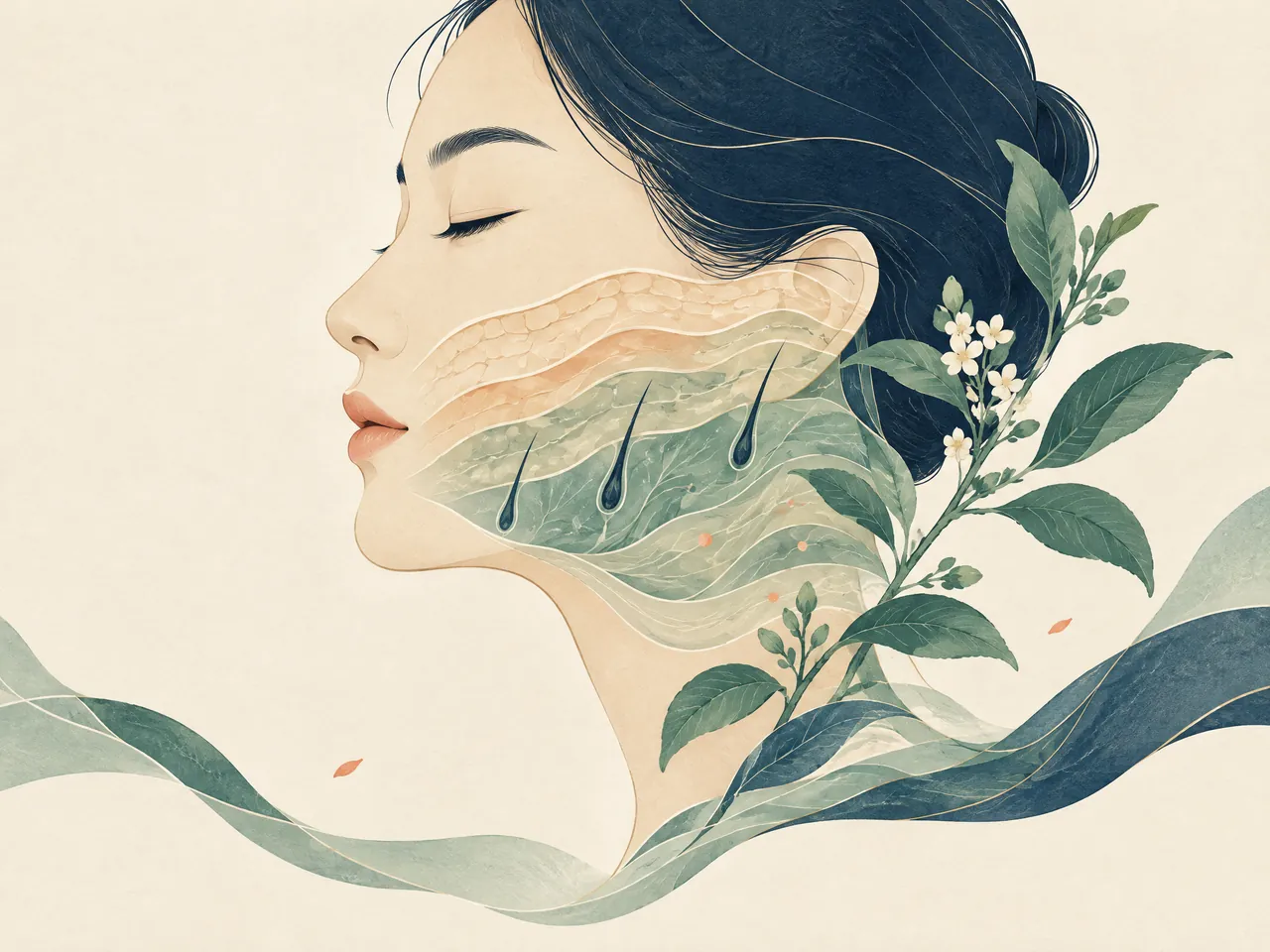
Chinese medicine cannot promise to cure acne permanently, because acne can be influenced by hormones, skin products, medicines and other personal factors. It may be considered as supportive care after an individual consultation, particularly alongside practical skin care and lifestyle discussion. For numerous inflamed spots, painful nodules or cysts, scarring, possible infection, distress, or acne that is not improving, seek medical or dermatology assessment rather than relying on one approach alone.
Transparent pricing
See the fees.
Choose your care.
Explore our complete official price list, including first-trial prices, regular prices, packages and branch-specific options.
Opening WhatsApp prepares an enquiry; it does not send a message, take payment or confirm an appointment. Suitability and individual arrangements are confirmed during consultation.
Chinese medicine
All prices in HKDAcupuncture and Chinese herbal medicine package
Includes a Chinese medicine consultation with pulse assessment, body acupuncture and 3 days of Chinese herbal granules that do not require decoction.
HK$580 (single session)
Chinese medicine consultation with pulse assessment
Hair and scalp
All prices in HKDScalp health and hair-loss management
Includes AI scalp analysis, deep scalp and follicle cleansing, and scalp oil-control care.
HK$380 (first trial)
Regular price: HK$680
- 6 sessions: HK$3,480 (HK$580 per session)
- 12 sessions: HK$5,760 (HK$480 per session)
- 20 sessions: HK$8,600 (HK$430 per session)
- 30 sessions: HK$11,400 (HK$380 per session)
Hair acupuncture and Chinese herbal medicine package
Includes scalp acupuncture and 3 days of Chinese herbal medicine that does not require decoction.
HK$580 (single session)
Registered Chinese Medicine Practitioner consultation
- 6 sessions: HK$3,180 (HK$530 per session)
- 12 sessions: HK$5,760 (HK$480 per session)
- 20 sessions: HK$8,600 (HK$430 per session)
- 30 sessions: HK$11,400 (HK$380 per session)
Combined hair and scalp treatment
Combines acupuncture and Chinese herbal medicine with salon-level scalp and follicle care. Packages include complimentary hair-care shampoo and serum.
HK$1,260 (single session)
Combined treatment
- 8 sessions: HK$8,640 (HK$1,080 per session)
- 16 sessions: HK$15,680 (HK$980 per session)
- 20 sessions: HK$18,600 (HK$930 per session)
- 30 sessions: HK$26,400 (HK$880 per session)
Weight management
All prices in HKDFull-body acupoint embedding for weight management
Includes full-body acupoint embedding. Packages include complimentary Chinese herbal medicine for weight management, with the number of included days scaled to the package. Embedding material and the individual treatment arrangement are confirmed during consultation; this is not a cosmetic thread lift.
HK$980 (single session)
No trial session
- 10 sessions: HK$7,800 (HK$780 per session)
- 20 sessions: HK$14,600 (HK$730 per session)
- 30 sessions: HK$20,400 (HK$680 per session)
Facial acupuncture
All prices in HKDFacial acupuncture (basic)
Includes facial acupuncture and meridian-based facial care, including care for facial puffiness.
HK$480 (first trial)
Regular price: HK$680
- 10 sessions: HK$5,200 (HK$520 per session)
- 20 sessions: HK$9,600 (HK$480 per session)
- 30 sessions: HK$13,500 (HK$450 per session)
Facial acupuncture (advanced)
Includes enhanced facial acupuncture with a specially formulated moisturising mask and serum.
HK$780 (first trial)
Regular price: HK$1,180
- 10 sessions: HK$9,000 (HK$900 per session)
- 20 sessions: HK$16,600 (HK$830 per session)
- 30 sessions: HK$23,400 (HK$780 per session)
Pain care
All prices in HKDExtracorporeal shockwave treatment
Shockwave treatment for deep-tissue and fascial care. The Kwun Tong clinic offers the multi-area options shown below.
Priced by branch
Branch-specific pricing
Prince Edward: HK$250 per area
Kwun Tong: HK$250 for 1 area / HK$450 for 2 areas / HK$600 for 3 areas
Pain care (manual therapy)
Includes Chinese medicine musculoskeletal assessment, manual joint techniques and tui na.
HK$580 (single session)
Chinese medicine musculoskeletal assessment
Pain care (acupuncture and manual therapy)
Combines acupuncture and manual therapy.
HK$680 (single session)
Combined care
Acne Skin Care Advice: Can Chinese Medicine Cure Acne and Is Chinese Medicine Good for Acne? Understanding Acne Patterns
Acne vulgaris is a condition of the hair follicles and their oil glands. It can involve non-inflammatory lesions, such as whiteheads and blackheads, as well as inflammatory papules, pustules and nodules. More than one kind can appear at once on the face, chest or back. A quick look at the area can therefore be misleading: a mostly bumpy forehead with closed comedones calls for a different conversation from tender jawline lumps that hurt when touched. DermNet describes this mixture of inflammatory and non-inflammatory lesions and notes that deeper lesions can persist longer than superficial spots [2].
For day-to-day decision-making, count is less important than pattern and impact. Notice whether the problem is mainly clogged pores, whether redness is spreading, whether individual spots are deep and painful, and whether new marks appear after lesions settle. Dark marks after inflammation may be especially noticeable in darker skin tones, while scars change the texture of the skin. A reader who wants a clearer vocabulary before a consultation can review acne types and severity. This is not self-diagnosis; it is a practical way to describe what has changed and why it matters.
Acne Skin Care Advice: Can Chinese Medicine Cure Acne and Is Chinese Medicine Good for Acne? Recognising Spots and Severity
Whiteheads are closed plugged pores, while blackheads are open plugs that look dark at the surface. Papules are raised inflamed bumps; pustules are raised spots containing pus. Nodules and cyst-like lesions are deeper lumps and may be painful. The NHS advises seeking help if there are many spots, deep or painful lesions, scars, signs of infection, or an effect on mental health [1]. Those signals deserve more weight than an attempt to label every individual blemish at home.
A useful personal record is simple: note where the acne appears, the main lesion types, any soreness, whether it leaves a mark, the products recently used, and any menstrual or medication changes worth discussing with a clinician. Avoid using location alone as a diagnosis. For example, acne around the chin can fluctuate with a cycle, but it does not by itself prove a hormonal condition. A clinician can consider the skin in context and decide whether another condition or a contributing factor needs attention.
Acne Skin Care Advice: Can Chinese Medicine Cure Acne and Is Chinese Medicine Good for Acne? Why Assessment Comes First
Assessment comes first because the main concern may be inflammation, scarring risk, discomfort, a reaction to a product, or the emotional burden of visible skin changes. It also prevents an all-or-nothing choice between ‘natural’ care and conventional care. A pharmacist, doctor or dermatologist can discuss topical or oral options when appropriate; the NHS lists prescription options for more severe acne and notes that referral to a dermatologist may be offered [1]. Starting early is particularly sensible when deep lesions or scars are entering the picture.
Bring the products already in use, including make-up, hair products, supplements and any medicines, to a medical consultation where possible. It is easier to give safe advice when the complete routine is visible. If treatment has been tried consistently without improvement, say what was used and how the skin responded rather than continually switching products. The question When should I see a dermatologist for acne is especially relevant for painful nodules, cysts, signs of infection, scarring, or acne that is taking a significant toll on wellbeing.
Compare your options
| What you notice | A sensible first response | Where Chinese medicine may fit | When medical assessment matters |
|---|---|---|---|
| A few whiteheads or blackheads without pain | Use a gentle cleanser and non-comedogenic products; avoid picking and aggressive scrubs. | A consultation may discuss the overall routine and personal lifestyle concerns. | If the pattern persists, worsens, or treatment choices are unclear. |
| Red papules or pustules that keep returning | Keep the routine simple and review all products that contact the skin. | Supportive care can be discussed alongside conventional acne management. | If self-care is not helping or inflammation is becoming more extensive. |
| Painful deep nodules or cyst-like lumps | Do not squeeze or try to treat them with harsh exfoliation. | Do not rely on supportive care as the only response. | Seek timely medical or dermatology assessment because pain and scarring risk matter. |
| Scars, persistent dark marks, or significant distress | Document changes and discuss how the condition is affecting daily life. | It may accompany, but should not displace, an evidence-informed care plan. | Arrange a clinician or dermatologist review, especially when the impact is ongoing. |
On smaller screens, scroll the table sideways to compare all columns.
Acne Skin Care Advice: Can Chinese Medicine Cure Acne and Is Chinese Medicine Good for Acne? Exploring a Traditional Chinese Medicine View
In traditional Chinese medicine, a practitioner may use the four examinations: observation, listening and smelling, questioning, and palpation. The consultation can include the appearance and distribution of lesions, sleep, appetite, bowel habits, stress, cycle history and the person’s wider health story. Traditional terms such as heat, dampness, toxin or stasis are part of that approach. They are not the same as a laboratory diagnosis, bacterial test or hormone measurement, and they should not be presented as proof of a single cause of acne.
This is why the most grounded answer to ‘Is Chinese medicine good for acne?’ is conditional. Some people value a consultation that puts their routine and symptom pattern into a broader discussion. A CUHK integrative-acne pilot programme described Chinese medicine consultations alongside dietary advice and a dermatologist consultation, rather than setting them up as competing systems [3]. That kind of complementary framing is more realistic than claiming that a formula, acupuncture, or a single pattern label will work for every person or remove acne for good.

Acne Skin Care Advice: Can Chinese Medicine Cure Acne and Is Chinese Medicine Good for Acne? How Pattern-Based Assessment Works
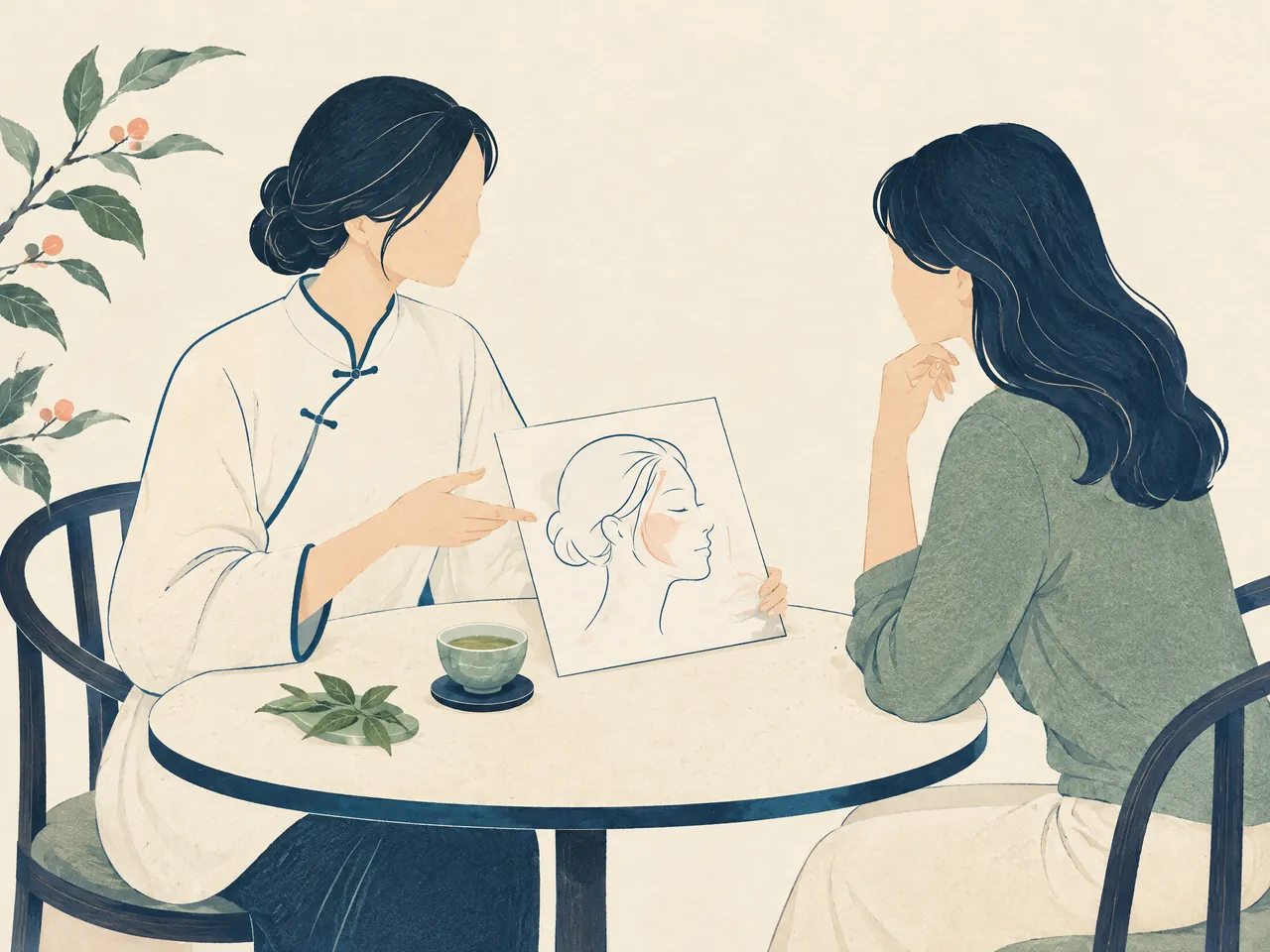
A Chinese medicine practitioner may ask whether spots are red and tender, whether there are mostly small blocked pores, whether breakouts repeat at certain times, and how sleep, food, work pressure and digestion have felt. They may also observe the tongue and take the pulse as part of their traditional assessment. The purpose is to build an individual traditional pattern, not to infer that every cheek or chin spot has one fixed internal meaning. Be direct about pregnancy, plans for pregnancy, allergies, chronic conditions and all medicines or supplements so that care can be considered safely.
Chinese herbs and acupuncture are sometimes discussed in Chinese medicine settings, but an online article cannot decide whether either is suitable for a particular person. Ask what is proposed, what it is intended to address, how it fits with current medical treatment, and what changes should prompt review. Keep a dermatologist or prescribing clinician informed of herbs, supplements and other complementary treatments. For a broader discussion of the question, see does Chinese medicine help acne; use it to prepare questions, not to delay an assessment for severe inflammatory acne.
Acne Skin Care Advice: Can Chinese Medicine Cure Acne and Is Chinese Medicine Good for Acne? Lifestyle, Sleep and Diet Factors
People often notice that breakouts seem to track a hectic period, poorer sleep, a change in meals, sweating under a mask, or a new hair or skin product. These observations can be useful prompts for discussion, but they do not prove a cause. Choose one or two manageable changes rather than imposing a restrictive diet or a complicated routine. For example, keeping meals regular, making time to wind down, removing make-up at the end of the day, and cleaning items that repeatedly touch the face may reduce avoidable irritation without turning eating into a source of anxiety.
Avoid a blanket rule to eliminate whole food groups without professional advice. Acne varies between people, and overly restrictive eating can make daily life and nutrition harder. The better question is whether a repeated, credible pattern exists and whether it can be discussed with a clinician or dietitian. Likewise, do not interpret a flare during a menstrual cycle as a diagnosis on its own. A concise symptom diary gives both medical and Chinese medicine practitioners better information than a list of internet ‘trigger foods’.
Acne Skin Care Advice: Can Chinese Medicine Cure Acne and Is Chinese Medicine Good for Acne? Combining Support with Medical Care
A combined plan can be simple. Gentle, consistent skin care protects the skin barrier while the person seeks appropriate assessment for active inflammation. The NHS recommends washing with a gentle cleanser twice daily, removing make-up at day’s end, and choosing non-comedogenic skin care and make-up; it also advises against scrubbing, picking or squeezing spots [1]. These measures are not a cure, but they are practical acne skin care advice that avoids adding friction and irritation to already inflamed skin.
If someone chooses Chinese medicine support, the safest role is alongside—not instead of—medical care where it is indicated. Continue prescribed treatment unless the prescribing clinician advises otherwise, and tell every practitioner what is being used. If a new product, herb or procedure coincides with worsening irritation, stop guessing and ask the relevant clinician or practitioner for advice. An integrated plan should make the next step clearer: maintain a calm routine, monitor the pattern, and escalate promptly when the skin is painful, extensive, infected-looking, scarring or emotionally overwhelming.
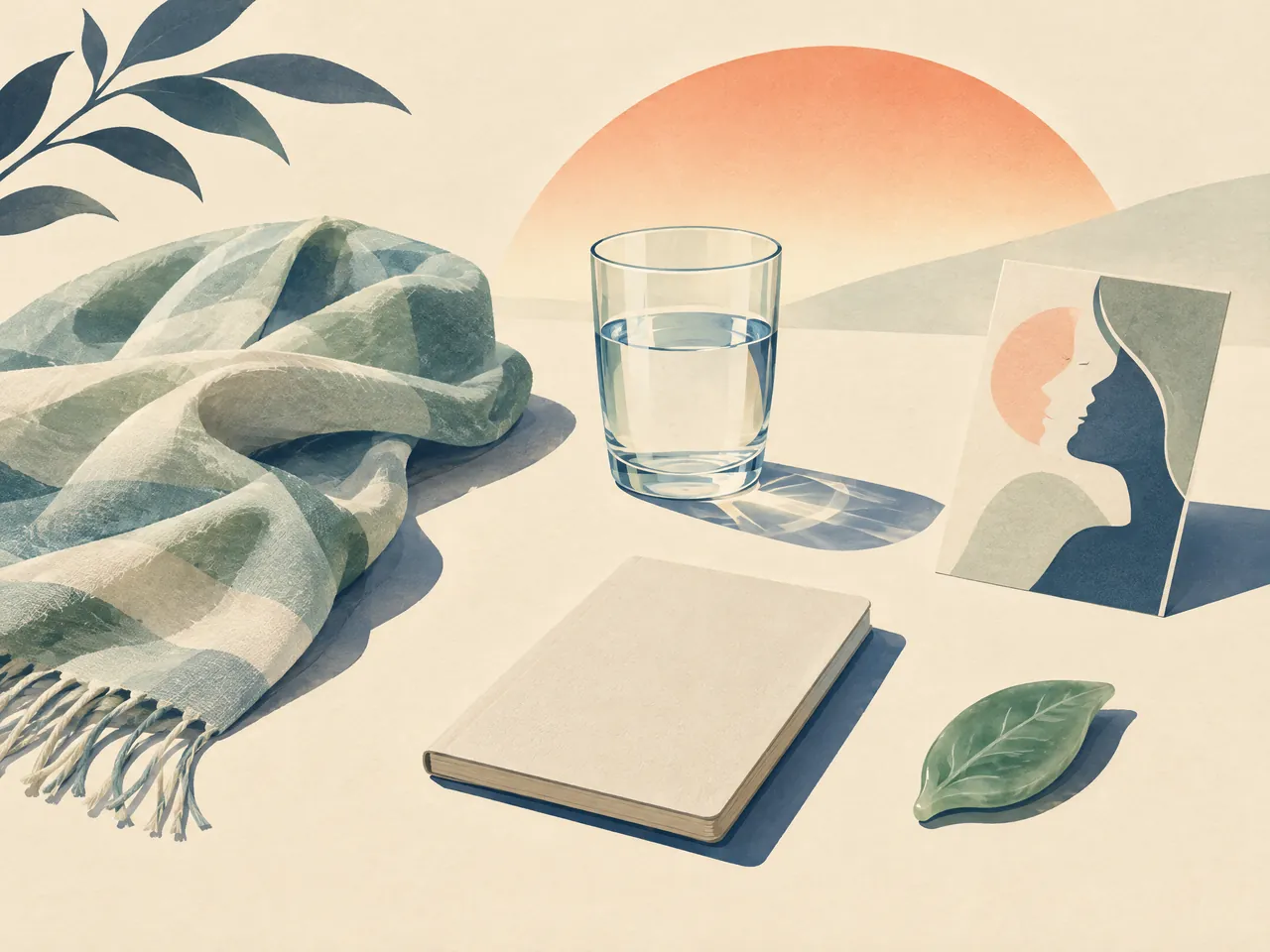
Acne Skin Care Advice: Can Chinese Medicine Cure Acne and Is Chinese Medicine Good for Acne? Gentle Daily Skin Care
Keep the routine deliberately short. Cleanse gently morning and evening and after heavy sweating if needed; use lukewarm rather than harshly hot water; then apply a suitable moisturiser if the skin feels dry or irritated. Look for non-comedogenic products, but remember that a label is not a guarantee that every product will suit every person. Introduce products carefully rather than adding several new actives at once, because a sudden reaction is difficult to interpret when everything has changed together.
Resist the urge to scrub, peel or squeeze an inflamed spot before an important event. Physical picking can add trauma, and the NHS specifically warns it can cause scars [1]. Choose make-up and sunscreen that feel comfortable and remove them gently at night. Clean applicators and keep greasy hair products away from the face if they seem to collect around the hairline. If the same routine stings, flakes or worsens the redness, simplify it and seek individual advice instead of trying to ‘dry out’ the skin.

Acne Skin Care Advice: Can Chinese Medicine Cure Acne and Is Chinese Medicine Good for Acne? When to Seek Dermatology Advice
Arrange medical advice when acne is widespread, deeply painful, leaving scars, not improving with reasonable self-care, or accompanied by hot, swollen and red skin that could indicate infection. Also seek help when acne is affecting mood, confidence, school, work or social life. These are valid health reasons for care, not cosmetic concerns to minimise. A dermatologist can assess severity and discuss treatment choices that may not be available over the counter. A consultation can still leave room for a separate Chinese medicine discussion if that is important to you.
For a Chinese medicine appointment in Hong Kong, contact TCM Lab to explain the acne pattern, current treatment and any language needs before arranging a visit. You may ask about availability at the Kwun Tong Chinese medicine clinic or the Chinese medicine clinic Prince Edward. The aim of that conversation is to establish whether supportive consultation is appropriate; it is not a substitute for urgent or specialist medical assessment when the warning signs above are present.
Care and health guide
Health service information
This directory brings together services, reading, and visit information related to health services, to help you prepare questions for a consultation.
If you are organising health questions, Chinese medicine clinic Hong Kong is a starting point for learning about related services and preparing for a consultation.
People have different needs; acupuncture Hong Kong provides further reading to help you understand options in your own context.


Your questions, answered
Frequently asked questions
Can Chinese medicine cure acne completely?
No. It is not responsible to promise a permanent cure, because acne can be affected by several factors and its course differs between people. Chinese medicine may be considered as one supportive element of care, but deep, scarring, extensive or persistent acne needs appropriate conventional medical assessment.
Is Chinese medicine good for acne if I am already using prescribed treatment?
It may be an option to discuss, but do not stop or alter prescribed treatment on the basis of a website. Tell both the prescribing clinician and the Chinese medicine practitioner about all medicines, supplements, products and herbs so that care can be coordinated around your situation.
Should I cut out every spicy or sugary food for acne?
A blanket, highly restrictive diet is not a good default. Notice repeated patterns, keep meals balanced, and discuss meaningful concerns with a clinician or dietitian. A careful food and symptom record is more useful than assuming one food explains every flare.
Are chin spots proof of a hormone imbalance?
No. Chin or jawline acne can vary with a menstrual cycle, but location alone cannot diagnose a hormone-related condition. If there are concerns about hormonal symptoms or recurrent acne, discuss the full picture with a medical professional who can decide what assessment is appropriate.
Sources and further information
- [1] NHS: Acne
Referenced for: Supports acne spot descriptions, gentle non-comedogenic skin care, avoiding squeezing and scrubbing, and circumstances for medical assessment.
- [2] DermNet: Acne vulgaris
Referenced for: Supports the distinction between inflammatory and non-inflammatory lesions, deeper lesions, post-inflammatory marks and scarring.
- [3] CUHK Integrative Medical Centre: Integrative Medicine Treatment in Acne pilot service programme
Referenced for: Supports the description of a Hong Kong academic pilot programme that combined Chinese medicine consultations with dietary and dermatology input; it is not evidence of guaranteed outcomes.