
TCM Lab · Health reading
Tailbone Pain After Childbirth: Understand the Cause Before Choosing Care
Published Updated
Tailbone pain after childbirth can make feeding a baby, getting up from a chair, travelling in a car or simply sitting through a meal unexpectedly difficult. The delivery may have strained tissues around the coccyx, but persistent pain can also reflect a bruise, altered joint position or another condition that deserves medical assessment. Pressure-relieving habits and a careful review of symptoms are usually the useful first steps. Acupuncture may be discussed as supportive symptom care after assessment; it cannot repair a fracture, severe displacement or degenerative structural change.
Appointments are confirmed through WhatsApp. If you have language requirements, please mention them in your enquiry.
The short answer
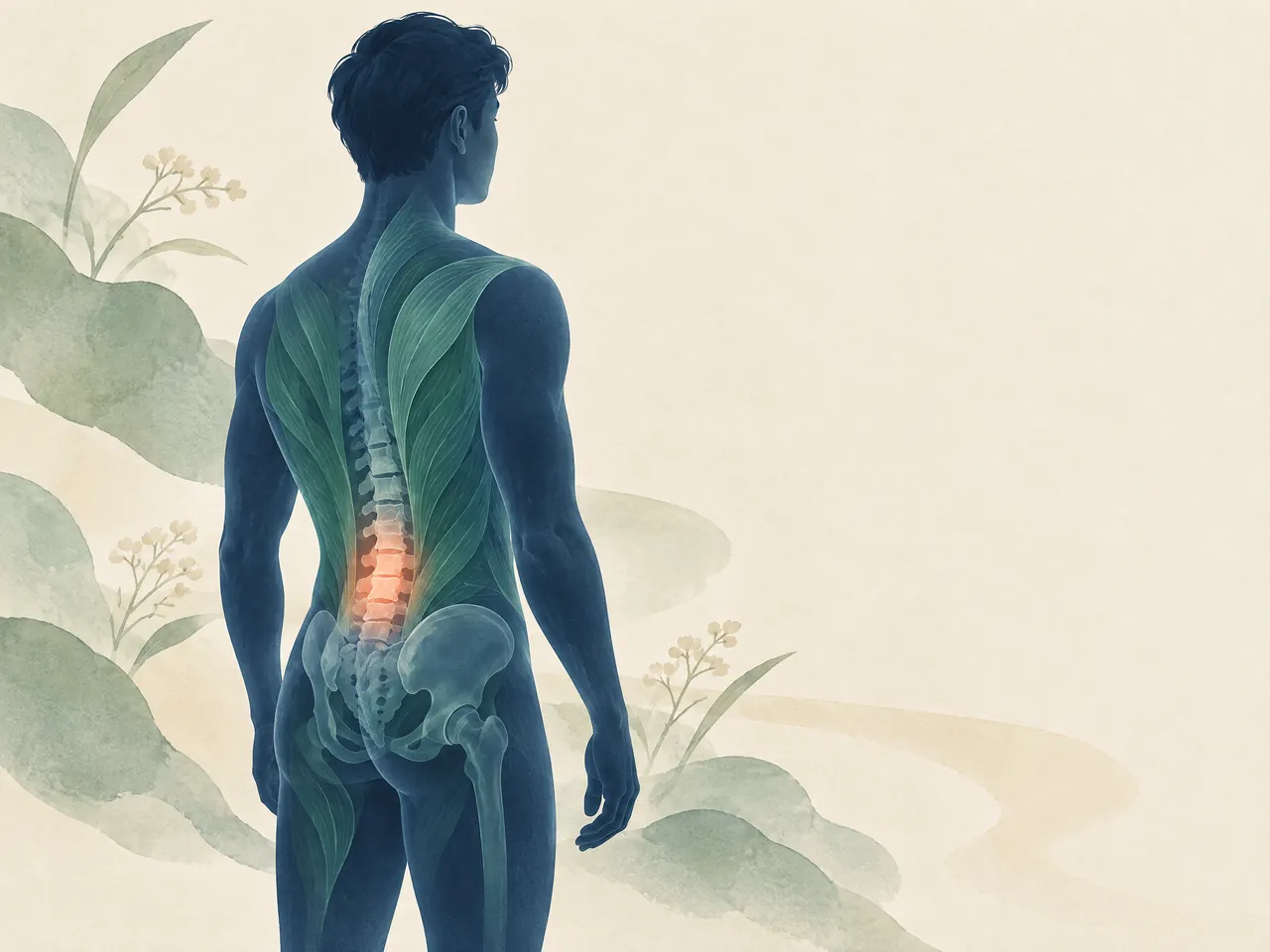
Tailbone pain after childbirth, also called postpartum coccydynia, may be linked to strain around the coccyx during delivery and is often worse when sitting, leaning back or rising. Start by reducing direct pressure and arranging assessment if pain disrupts normal activities or is not improving. Acupuncture can be considered for symptom support after an appropriate assessment, but it cannot correct a fracture or major displacement. Seek prompt medical help for severe or worsening pain, numbness, weakness, bladder or bowel changes, fever, or unexplained weight loss.
Transparent pricing
See the fees.
Choose your care.
Explore our complete official price list, including first-trial prices, regular prices, packages and branch-specific options.
Opening WhatsApp prepares an enquiry; it does not send a message, take payment or confirm an appointment. Suitability and individual arrangements are confirmed during consultation.
Pain care
All prices in HKDExtracorporeal shockwave treatment
Shockwave treatment for deep-tissue and fascial care. The Kwun Tong clinic offers the multi-area options shown below.
Priced by branch
Branch-specific pricing
Prince Edward: HK$250 per area
Kwun Tong: HK$250 for 1 area / HK$450 for 2 areas / HK$600 for 3 areas
Pain care (manual therapy)
Includes Chinese medicine musculoskeletal assessment, manual joint techniques and tui na.
HK$580 (single session)
Chinese medicine musculoskeletal assessment
Pain care (acupuncture and manual therapy)
Combines acupuncture and manual therapy.
HK$680 (single session)
Combined care
Hair and scalp
All prices in HKDScalp health and hair-loss management
Includes AI scalp analysis, deep scalp and follicle cleansing, and scalp oil-control care.
HK$380 (first trial)
Regular price: HK$680
- 6 sessions: HK$3,480 (HK$580 per session)
- 12 sessions: HK$5,760 (HK$480 per session)
- 20 sessions: HK$8,600 (HK$430 per session)
- 30 sessions: HK$11,400 (HK$380 per session)
Hair acupuncture and Chinese herbal medicine package
Includes scalp acupuncture and 3 days of Chinese herbal medicine that does not require decoction.
HK$580 (single session)
Registered Chinese Medicine Practitioner consultation
- 6 sessions: HK$3,180 (HK$530 per session)
- 12 sessions: HK$5,760 (HK$480 per session)
- 20 sessions: HK$8,600 (HK$430 per session)
- 30 sessions: HK$11,400 (HK$380 per session)
Combined hair and scalp treatment
Combines acupuncture and Chinese herbal medicine with salon-level scalp and follicle care. Packages include complimentary hair-care shampoo and serum.
HK$1,260 (single session)
Combined treatment
- 8 sessions: HK$8,640 (HK$1,080 per session)
- 16 sessions: HK$15,680 (HK$980 per session)
- 20 sessions: HK$18,600 (HK$930 per session)
- 30 sessions: HK$26,400 (HK$880 per session)
Weight management
All prices in HKDFull-body acupoint embedding for weight management
Includes full-body acupoint embedding. Packages include complimentary Chinese herbal medicine for weight management, with the number of included days scaled to the package. Embedding material and the individual treatment arrangement are confirmed during consultation; this is not a cosmetic thread lift.
HK$980 (single session)
No trial session
- 10 sessions: HK$7,800 (HK$780 per session)
- 20 sessions: HK$14,600 (HK$730 per session)
- 30 sessions: HK$20,400 (HK$680 per session)
Facial acupuncture
All prices in HKDFacial acupuncture (basic)
Includes facial acupuncture and meridian-based facial care, including care for facial puffiness.
HK$480 (first trial)
Regular price: HK$680
- 10 sessions: HK$5,200 (HK$520 per session)
- 20 sessions: HK$9,600 (HK$480 per session)
- 30 sessions: HK$13,500 (HK$450 per session)
Facial acupuncture (advanced)
Includes enhanced facial acupuncture with a specially formulated moisturising mask and serum.
HK$780 (first trial)
Regular price: HK$1,180
- 10 sessions: HK$9,000 (HK$900 per session)
- 20 sessions: HK$16,600 (HK$830 per session)
- 30 sessions: HK$23,400 (HK$780 per session)
Chinese medicine
All prices in HKDAcupuncture and Chinese herbal medicine package
Includes a Chinese medicine consultation with pulse assessment, body acupuncture and 3 days of Chinese herbal granules that do not require decoction.
HK$580 (single session)
Chinese medicine consultation with pulse assessment
Tailbone Pain After Childbirth: Common Causes and Symptoms
The coccyx is the small bone at the base of the spine, just below the sacrum. It is a point where muscles, ligaments and tendons attach, and it helps support the body when sitting. In pregnancy, the tissues around the coccyx and sacrum become more flexible. During a vaginal birth, pressure and stretching through this area can leave the surrounding tissues sore or can change how the tailbone tolerates sitting afterwards. Childbirth is a recognised cause of coccyx pain, but it is not the only explanation for pain that starts in the postpartum period. [1] [2]
It helps to avoid assuming that every deep ache near the bottom of the spine has one cause. An old fall, a recent slip while carrying a baby, long periods on a hard chair, constipation with painful bowel movements, or a pre-existing low-back or pelvic problem can overlap with delivery-related symptoms. The useful question is not whether the discomfort is ‘normal enough’ to endure. It is whether the location, pattern and effect on daily life fit a straightforward recovery, or whether the history points to a problem that should be examined. A broader guide to tailbone pain causes can help organise that conversation without replacing it.
How Tailbone Pain After Childbirth Can Develop
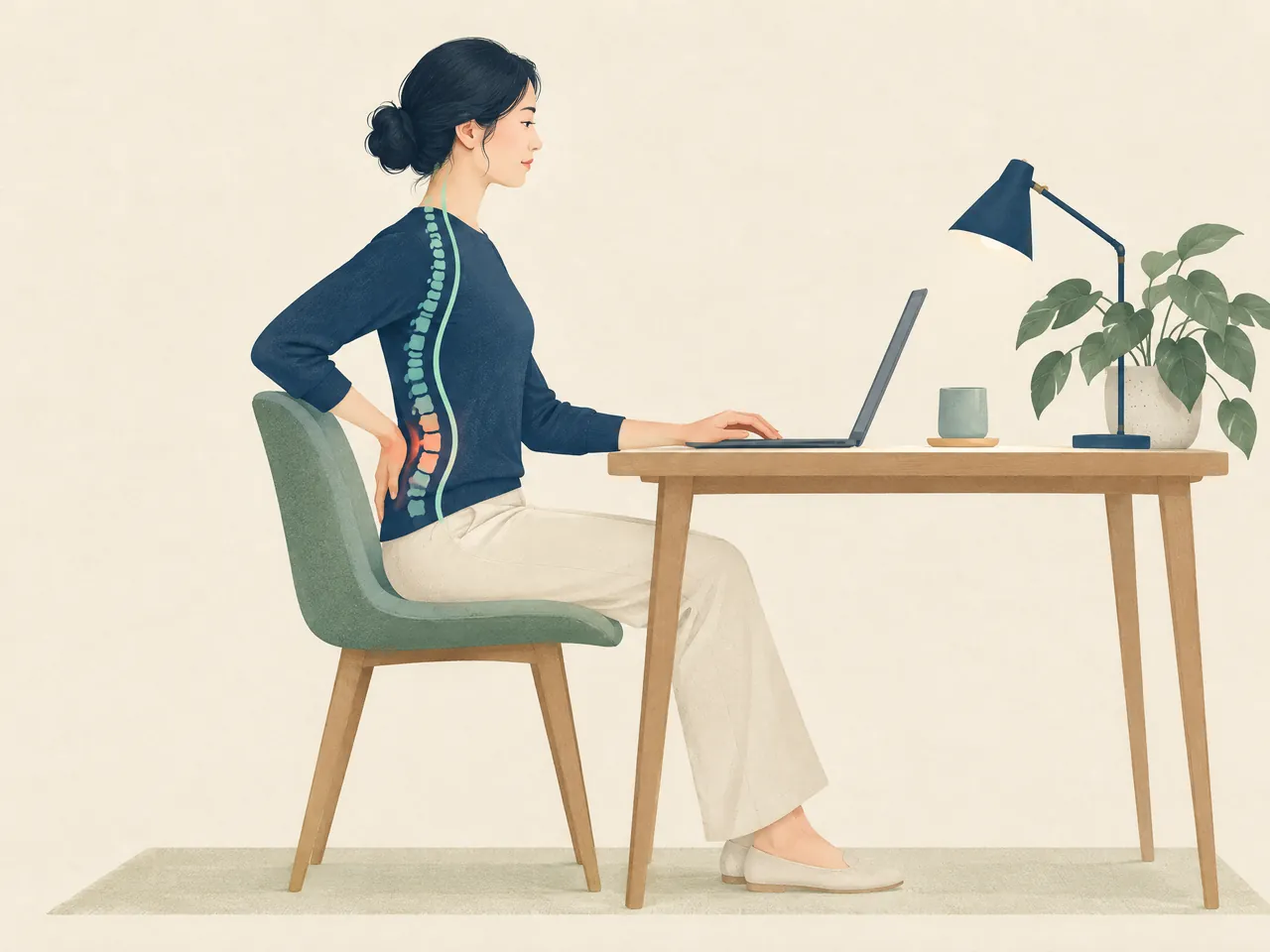
A difficult or prolonged delivery is not required for symptoms to occur. The coccyx may be stressed by the passage of the baby and by the force placed on the pelvic floor and surrounding ligaments. In some people, tenderness settles as the tissues recover. In others, sitting continues to load a sore area, especially during the long, frequent seated periods that can come with feeding, resting or travelling with a newborn. Prolonged sitting, poor posture and repetitive pressure are also recognised contributors to coccyx pain. [1] [2]
The onset can offer useful clues but does not diagnose the cause. Pain that began immediately after a clear injury may call for a different medical discussion from discomfort that gradually became obvious after several days of sitting. Tell a clinician if there was a fall, a sharp pop, visible bruising, severe pain from the beginning, or pain that has steadily intensified. A history of back pain, hip pain, pelvic-floor symptoms or prior coccyx pain also matters. It gives the assessment a fuller starting point than the single phrase ‘tailbone pain after childbirth.’

What Tailbone Pain After Childbirth May Feel Like
Coccydynia is the medical term for pain in the coccyx. It may be a local dull ache, a sharp pain at the moment of sitting down, or a flare when moving from sitting to standing. Leaning back in a chair can be particularly uncomfortable because it brings pressure onto the tailbone. Some people notice pain with bending forward or during a bowel movement. Trouble sleeping or avoiding ordinary activities can be a sign that the problem is affecting more than a brief moment of discomfort. [1] [2]
Map the pattern before an appointment in plain language. Is the pain exactly central at the base of the spine, or more to one buttock? Does it appear only after twenty minutes of sitting, or even when lying down? Does a short walk ease it or trigger it? Pain that spreads down a leg, tingling, numbness or weakness needs particular attention because it may not be explained by an isolated coccyx irritation. Buttock and leg symptoms can have several causes; information on piriformis syndrome acupuncture is related context, not a reason to self-diagnose a piriformis problem.
Compare your options
| Pattern or situation | Useful first step | Why the distinction matters |
|---|---|---|
| Local soreness mainly when sitting, with gradual improvement | Reduce direct pressure, adjust posture and monitor function | Pressure reduction may make daily recovery more manageable while symptoms settle. [1] |
| Pain persists for weeks or interferes with feeding, sleep, travel or routine tasks | Arrange medical or musculoskeletal assessment | The cause and follow-up plan may need to be reviewed instead of extending self-care indefinitely. [1] |
| Clear fall, severe pain after delivery or concern about fracture or displacement | Seek medical assessment before complementary care | Examination and, when indicated, imaging can assess structural injury. [2] |
| Numbness, weakness, bladder or bowel changes, fever or a painful lump | Obtain prompt medical attention | These symptoms need medical judgement and should not be managed as routine coccyx strain. [2] |
| No urgent concern after assessment, but pain and guarding remain limiting | Discuss a coordinated symptom-support plan, which may include acupuncture | The aim is to support function and comfort without claiming structural repair. |
On smaller screens, scroll the table sideways to compare all columns.
Tailbone Pain After Childbirth: Assessment and Acupuncture
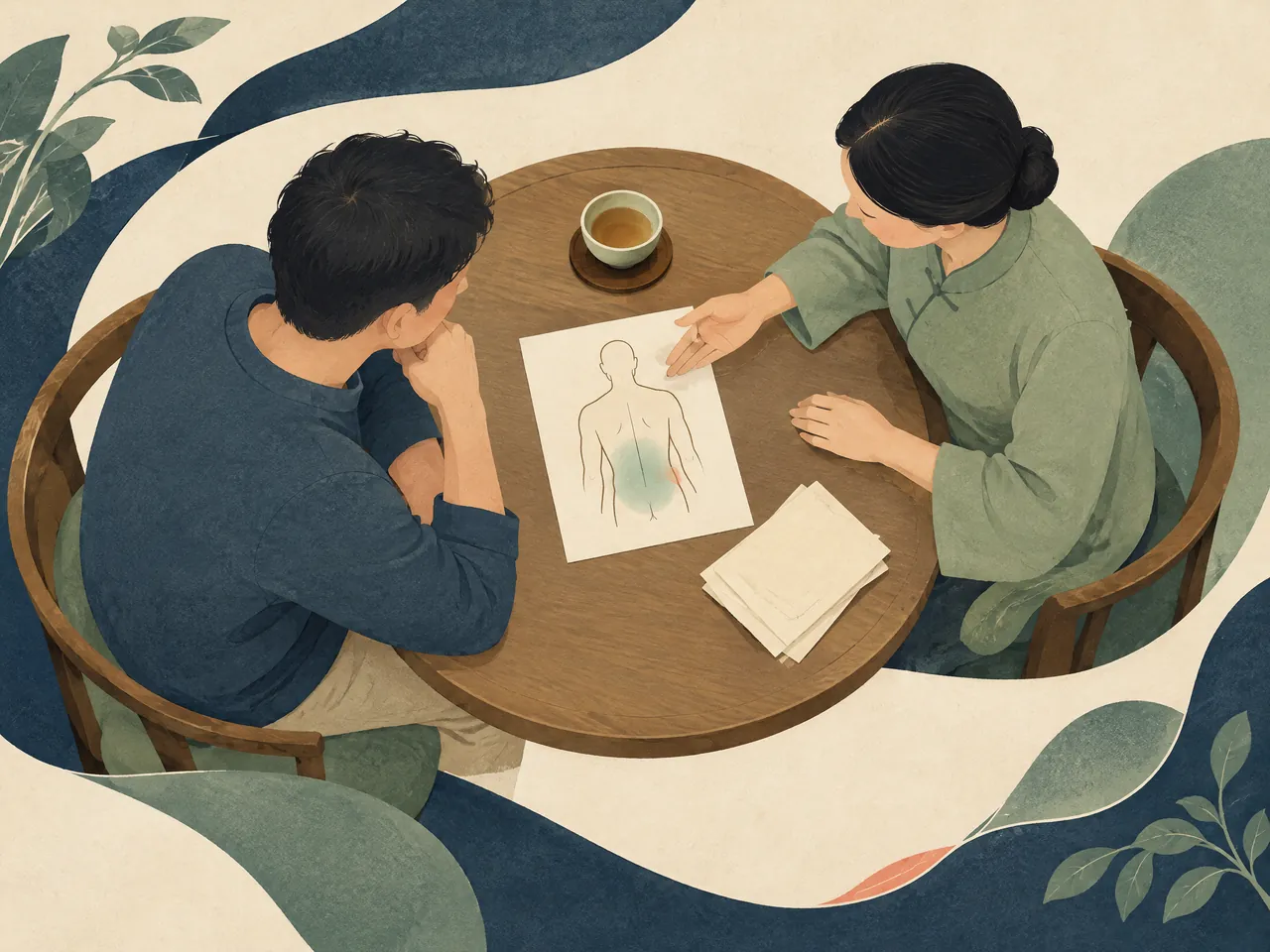
An assessment is not just a search for a tender point. A clinician needs the delivery and injury history, the exact place of pain, what aggravates or relieves it, and whether symptoms are changing. They may examine the area for focal tenderness, swelling, a lump or signs of another condition. Depending on the findings, medical assessment may include imaging. X-rays or CT can be used when a fracture is a concern, while MRI may be considered to investigate soft tissues, inflammation, infection or a mass. [2]
That sequence matters before any complementary treatment is chosen. A person who has a suspected fracture, major displacement, infection or neurological symptoms needs medical evaluation, not a promise of local pain relief. Where assessment has not found an urgent structural concern, care can focus on reducing pressure, restoring comfortable movement and following up if progress stalls. The overview on coccyx pain treatment explains why a treatment discussion should be matched to the likely cause rather than built around one technique.
How Practitioners Assess Tailbone Pain After Childbirth
Before considering acupuncture, a registered Chinese medicine practitioner should ask when the pain started, how the birth and recovery have been, whether there was trauma, and how sitting, standing, bowel movements and sleep are affected. They should also ask about current medicines, bleeding or clotting problems, fever, skin changes, new urinary or bowel symptoms, numbness and leg weakness. These questions are not administrative details. They identify situations in which the next step should be a doctor, an emergency department or coordinated care rather than needle treatment.
In a Chinese medicine consultation, the practitioner may consider the pain in terms of local stagnation or strain and examine tension around the sacrum, hips and surrounding muscles. Acupuncture planning is individual; it may involve points in the sacral region or points away from the tender tailbone, rather than pressing directly into the painful area. An assessment may also show that direct local treatment is not appropriate. If the story suggests a structural injury, medical evaluation and any recommended imaging take priority. Acupuncture does not substitute for finding out whether the bone or joint itself has been injured. [2]
What Acupuncture Can and Cannot Do for Tailbone Pain After Childbirth
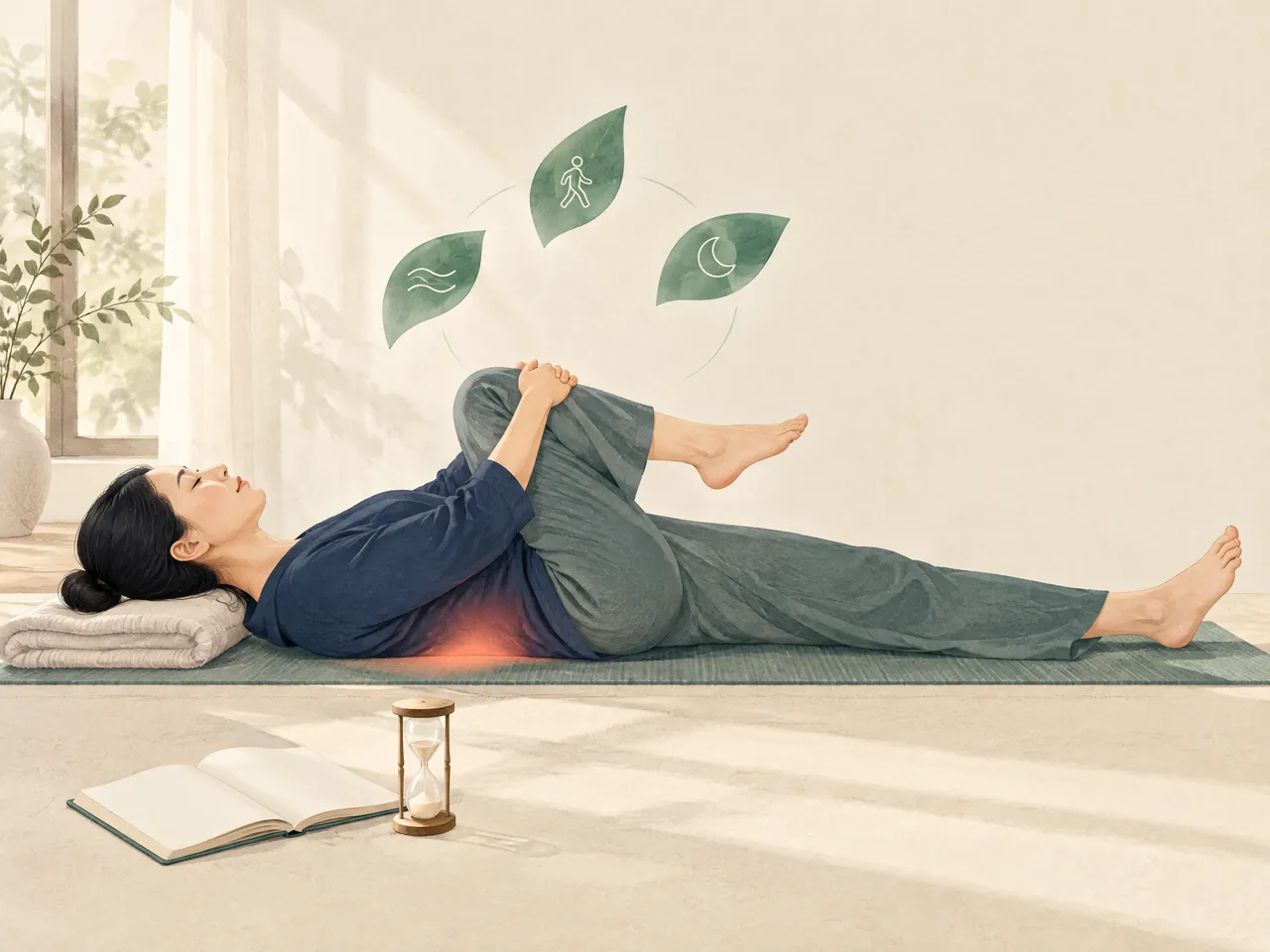
For someone who has been appropriately assessed, acupuncture may be considered as one part of symptom support for pain, guarding or muscle tension around the low back, pelvis and hips. The practical aim should be modest and observable: perhaps sitting for a short feed with less guarding, standing up more comfortably, or tolerating an agreed movement plan. It should be reviewed alongside daily function, not presented as a fixed number of sessions or a guaranteed recovery timetable. A fuller introduction to acupuncture for tailbone pain can help frame those questions.
The limits are as important as the possible role. Acupuncture cannot knit a fractured coccyx, return a severely displaced bone to its prior position, remove a tumour, or reverse joint degeneration. It also should not delay care for severe or progressive symptoms. Cleveland Clinic includes acupuncture among nonsurgical options for coccydynia, but that listing is not proof that it will work for every postpartum cause or replace diagnosis. [2] Ask what symptom is being targeted, how hygiene and sterile single-use needles are managed, and what change would lead the practitioner to recommend medical reassessment.
Tailbone Pain After Childbirth: Self-Care and Warning Signs
Home measures are most useful when they reduce a trigger without making recovery an endurance test. A coccyx cushion with a cut-out or U-shaped design can keep direct pressure away from the tailbone; a conventional soft cushion may not do that. Sit with the lower back supported rather than leaning back onto the coccyx, change position regularly, and lie on your side when this is more comfortable. The NHS also lists wrapped ice for 20 to 30 minutes and heat for longer as possible ways to ease tailbone pain. [1]
Postpartum routines often make ‘avoid sitting for a long time’ sound unrealistic. Instead, break sitting into shorter blocks: prepare water, phone and feeding supplies before sitting; stand carefully between tasks; and use a supportive chair rather than a deep, soft sofa if that is easier. Do not force a painful stretch or carry out strong self-massage over the tailbone. A good self-care plan makes room for rest and gentle activity while watching whether the overall trend is improving. Related questions about buttock pain and acupuncture can be explored in can acupuncture treat piriformis syndrome, but new nerve symptoms still need medical evaluation.

Practical Relief for Tailbone Pain After Childbirth
Make a small, workable experiment rather than changing everything at once. Use the pressure-relieving cushion for the situations that provoke symptoms, such as a car journey or a desk task. Notice whether an upright seat, a side-lying rest or a brief walk changes the discomfort. If bowel movements aggravate pain, discuss safe postpartum options with an appropriate clinician or pharmacist rather than straining through it; the NHS notes that a stool-softening laxative may be considered when coccyx pain is worse during a bowel movement. [1]
Keep a short record for several days: the activity, the time spent sitting, the symptom location, and what helped or worsened it. This is not a test of pain tolerance. It gives a practitioner useful information about the load that is currently difficult, and it shows whether adaptations are helping. If you already have medical advice, physiotherapy exercises or pelvic-floor guidance, follow that plan and tell the practitioner about it. Acupuncture, if chosen, should fit around an agreed recovery plan rather than compete with it.

When Tailbone Pain After Childbirth Needs Medical Attention
Arrange medical review if tailbone pain has not improved after a few weeks of home measures, is affecting daily activities, or occurs with a high temperature and pain elsewhere such as the abdomen or lower back. [1] Seek urgent assessment rather than acupuncture for severe trauma, marked or escalating pain, a visible mass, new loss of bladder or bowel control, difficulty passing urine or stool, numbness in the groin or legs, or leg weakness. These features need timely medical judgement because they may point beyond uncomplicated coccyx strain. [2]
Unexplained weight loss, night pain that is not simply related to position, or feeling generally unwell are additional reasons to speak with a doctor. Most tailbone pain is not a sign of a serious illness, but ongoing symptoms deserve a diagnosis-based plan. If you want to discuss complementary symptom support in Hong Kong after appropriate assessment, TCM Lab can be contacted about an appointment at the Kwun Tong Chinese medicine clinic or the Chinese medicine clinic Prince Edward. Share the delivery history, current warning symptoms and any imaging or medical advice when you enquire.
Care and health guide
Pain-care information
This directory brings together services, reading, and visit information related to pain care, to help you prepare questions for a consultation.
When pain care affects your day, noting when it occurs, its relation to activity, and what you have already tried can help prepare a consultation; Chinese medicine pain management Hong Kong is a relevant service or reading entry point.
Individual circumstances differ, and acupuncture Hong Kong offers related information to help you understand options and prepare questions.


Your questions, answered
Frequently asked questions
How long can tailbone pain after childbirth last?
The course varies with the cause and the amount of ongoing pressure on the coccyx. Tailbone pain may improve after a few weeks, but it can last longer. If it is not improving, affects everyday activities or is getting worse, arrange medical assessment rather than relying only on cushions or repeated treatment. [1]
Should I use a donut cushion for postpartum tailbone pain?
A specially designed coccyx cushion is intended to reduce pressure on the tailbone, and the NHS includes this among self-care options. Choose a design that keeps direct pressure off the painful area and reassess if sitting remains very difficult. [1]
Can acupuncture fix a tailbone that was injured during childbirth?
No. Acupuncture cannot repair a fracture, correct severe displacement or reverse degenerative change. After appropriate assessment, it may be considered as adjunctive symptom support for pain or surrounding muscle tension, with realistic functional goals and medical follow-up when needed.
What should I mention when asking about acupuncture after childbirth?
Explain when pain began, details of the delivery and any fall or trauma, what positions trigger pain, whether symptoms affect bowel or bladder function, and any numbness, weakness, fever, medicines, imaging or medical advice. These details help determine whether acupuncture is an appropriate discussion or whether medical review should come first.
Sources and further information
- [1] [1] NHS: Tailbone (coccyx) pain
Referenced for: Symptoms, pregnancy and childbirth as a cause, self-care measures, non-urgent review and treatment context.
- [2] [2] Cleveland Clinic: Tailbone Pain (Coccydynia)
Referenced for: Childbirth-related strain, causes, symptom patterns, assessment and imaging context, nonsurgical care categories, and warning symptoms.