
TCM Lab · Health reading
Hair Loss Assessment: Acupuncture for Hair Loss and Chinese Herbal Medicine for Hair Loss
Published Updated
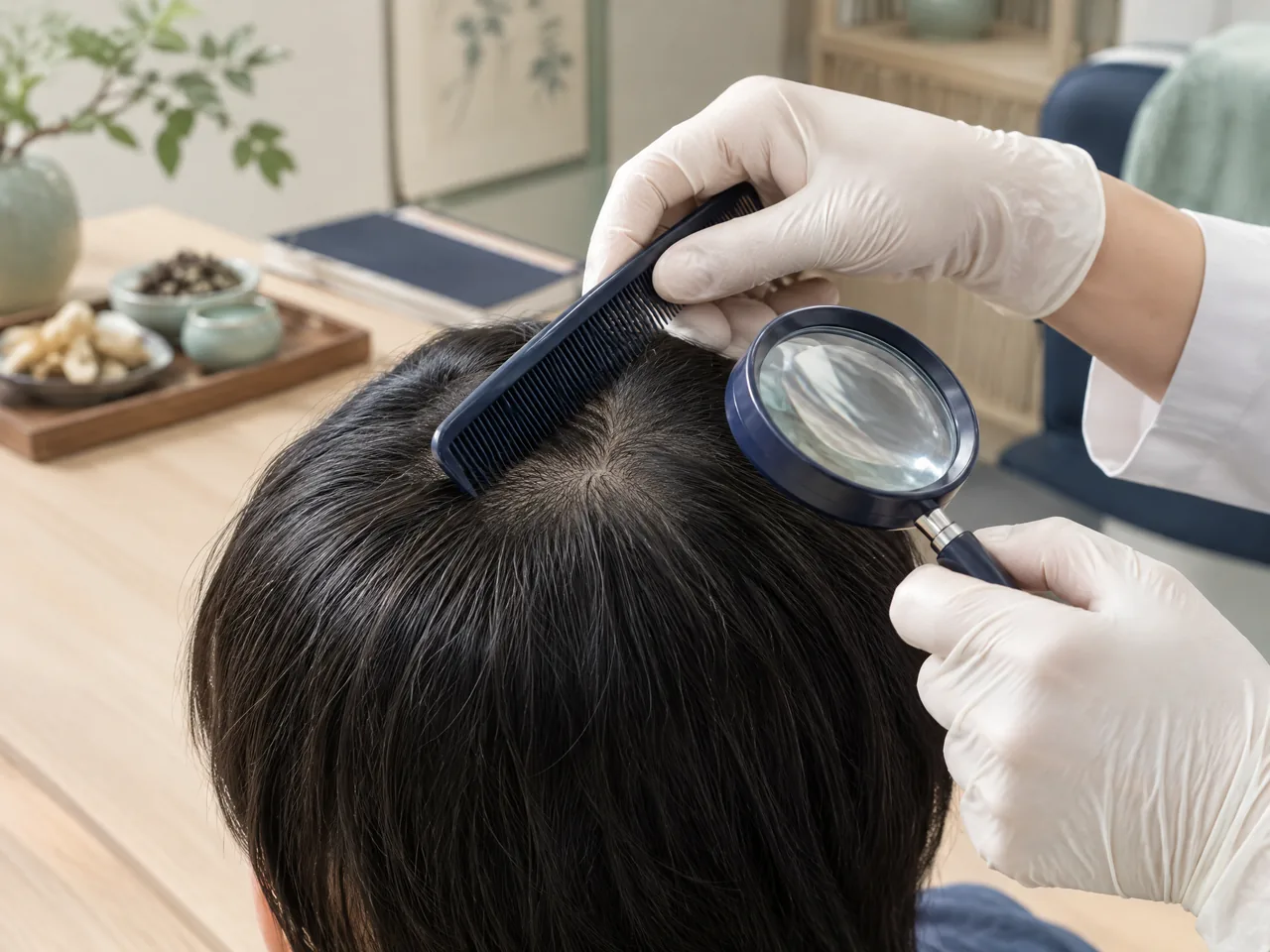
Seeing more hair on a pillow, shower drain or brush can be worrying, but the most useful first step is a hair loss assessment rather than choosing a treatment by name. Hair loss can look like gradual thinning, a widening part, recession at the temples, breakage, shedding after a stressful period, or one or more clear patches. Each pattern raises different questions. A consultation can map what changed, examine the scalp in context and decide whether prompt medical assessment should come first. At TCM Lab, acupuncture for hair loss and Chinese herbal medicine for hair loss may be discussed as individual Chinese medicine options after that conversation. They are not a guaranteed way to regrow hair, and they should not delay medical care for a sudden, patchy, painful or otherwise concerning change.
Appointments are confirmed through WhatsApp. If you have language requirements, please mention them in your enquiry.
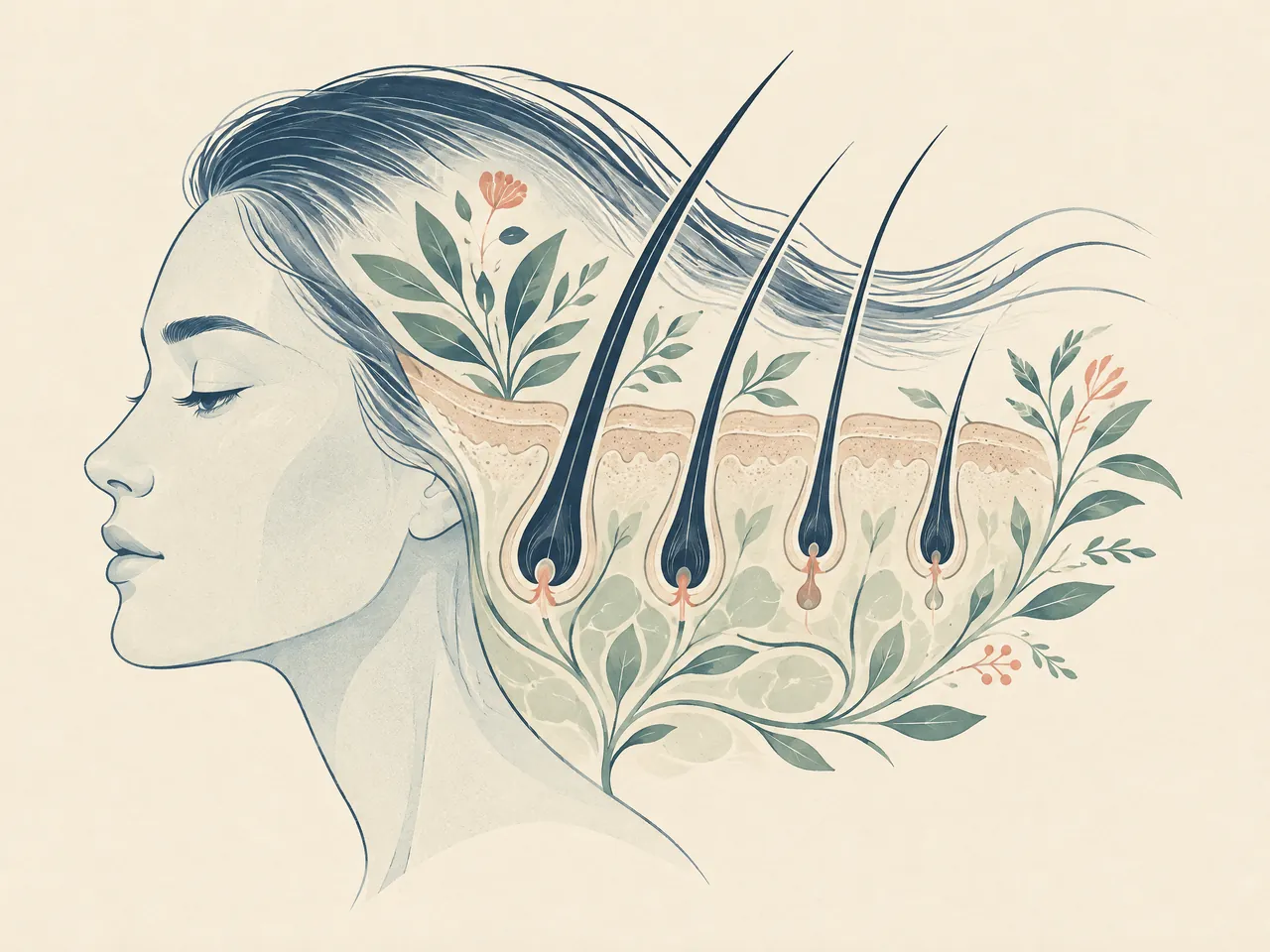
The short answer
A hair loss assessment starts with the pattern, timing, scalp symptoms, family history, health changes and current medicines. This helps distinguish questions that need medical investigation from those that can be explored in a Chinese medicine consultation. Acupuncture for hair loss or Chinese herbal medicine for hair loss may be considered only in light of the individual picture, preferences and safety considerations. No approach can promise a fixed course, permanent improvement or a particular amount of regrowth.
Transparent pricing
See the fees.
Choose your care.
Explore our complete official price list, including first-trial prices, regular prices, packages and branch-specific options.
Opening WhatsApp prepares an enquiry; it does not send a message, take payment or confirm an appointment. Suitability and individual arrangements are confirmed during consultation.
Hair and scalp
All prices in HKDScalp health and hair-loss management
Includes AI scalp analysis, deep scalp and follicle cleansing, and scalp oil-control care.
HK$380 (first trial)
Regular price: HK$680
- 6 sessions: HK$3,480 (HK$580 per session)
- 12 sessions: HK$5,760 (HK$480 per session)
- 20 sessions: HK$8,600 (HK$430 per session)
- 30 sessions: HK$11,400 (HK$380 per session)
Hair acupuncture and Chinese herbal medicine package
Includes scalp acupuncture and 3 days of Chinese herbal medicine that does not require decoction.
HK$580 (single session)
Registered Chinese Medicine Practitioner consultation
- 6 sessions: HK$3,180 (HK$530 per session)
- 12 sessions: HK$5,760 (HK$480 per session)
- 20 sessions: HK$8,600 (HK$430 per session)
- 30 sessions: HK$11,400 (HK$380 per session)
Combined hair and scalp treatment
Combines acupuncture and Chinese herbal medicine with salon-level scalp and follicle care. Packages include complimentary hair-care shampoo and serum.
HK$1,260 (single session)
Combined treatment
- 8 sessions: HK$8,640 (HK$1,080 per session)
- 16 sessions: HK$15,680 (HK$980 per session)
- 20 sessions: HK$18,600 (HK$930 per session)
- 30 sessions: HK$26,400 (HK$880 per session)
Weight management
All prices in HKDFull-body acupoint embedding for weight management
Includes full-body acupoint embedding. Packages include complimentary Chinese herbal medicine for weight management, with the number of included days scaled to the package. Embedding material and the individual treatment arrangement are confirmed during consultation; this is not a cosmetic thread lift.
HK$980 (single session)
No trial session
- 10 sessions: HK$7,800 (HK$780 per session)
- 20 sessions: HK$14,600 (HK$730 per session)
- 30 sessions: HK$20,400 (HK$680 per session)
Facial acupuncture
All prices in HKDFacial acupuncture (basic)
Includes facial acupuncture and meridian-based facial care, including care for facial puffiness.
HK$480 (first trial)
Regular price: HK$680
- 10 sessions: HK$5,200 (HK$520 per session)
- 20 sessions: HK$9,600 (HK$480 per session)
- 30 sessions: HK$13,500 (HK$450 per session)
Facial acupuncture (advanced)
Includes enhanced facial acupuncture with a specially formulated moisturising mask and serum.
HK$780 (first trial)
Regular price: HK$1,180
- 10 sessions: HK$9,000 (HK$900 per session)
- 20 sessions: HK$16,600 (HK$830 per session)
- 30 sessions: HK$23,400 (HK$780 per session)
Pain care
All prices in HKDExtracorporeal shockwave treatment
Shockwave treatment for deep-tissue and fascial care. The Kwun Tong clinic offers the multi-area options shown below.
Priced by branch
Branch-specific pricing
Prince Edward: HK$250 per area
Kwun Tong: HK$250 for 1 area / HK$450 for 2 areas / HK$600 for 3 areas
Pain care (manual therapy)
Includes Chinese medicine musculoskeletal assessment, manual joint techniques and tui na.
HK$580 (single session)
Chinese medicine musculoskeletal assessment
Pain care (acupuncture and manual therapy)
Combines acupuncture and manual therapy.
HK$680 (single session)
Combined care
Chinese medicine
All prices in HKDAcupuncture and Chinese herbal medicine package
Includes a Chinese medicine consultation with pulse assessment, body acupuncture and 3 days of Chinese herbal granules that do not require decoction.
HK$580 (single session)
Chinese medicine consultation with pulse assessment
Hair Loss Assessment, Acupuncture for Hair Loss and Chinese Herbal Medicine for Hair Loss: What to Consider First
Hair loss is a description, not one diagnosis. Some people notice a slowly broader part or reduced density over years; others notice more hairs coming out over weeks, a receding hairline, broken hairs around areas of traction, or round bald areas. The pattern matters because inherited male or female pattern baldness commonly has a family component, while illness, stress, weight loss, iron deficiency and some treatments can be associated with temporary hair loss. [1] A useful starting point is therefore to describe what you see without assuming that every shed hair has the same explanation.
The purpose of an assessment is not to turn normal concern into a label. It is to organise useful clues and decide what happens next. If you are trying to understand what causes hair loss, it helps to separate a change in shedding from thinning, scalp inflammation or hair-shaft breakage. A clear timeline gives a medical professional or registered Chinese medicine practitioner a more reliable basis for discussion than a single photograph or a product recommendation.

Hair Loss Assessment, Acupuncture for Hair Loss and Chinese Herbal Medicine for Hair Loss: Looking Beyond the Scalp
A thorough conversation looks beyond the amount of hair seen in the drain. It may cover when the change started, whether it was abrupt or gradual, where it is most visible, and whether hair seems to fall from the root or snap along the shaft. It should also include scalp itch, tenderness, flakes, redness or sores, as well as recent fever or illness, major stress, dietary changes, weight change, operations, childbirth where relevant, and medicines or supplements. This does not mean each item is a cause. It gives the assessor a sensible way to see which details need further medical attention.
A dermatology assessment similarly begins with questions about duration and speed of onset, followed by close examination of the scalp and other involved areas. Depending on the findings, a dermatologist may consider tests such as blood work or a scalp biopsy; these are clinical decisions rather than routine tests to order for oneself. [2] Bring prior results if you have them, but do not stop prescribed medicine or start high-dose supplements simply to manage hair loss. If deficiency or another condition is suspected, it should be assessed in the appropriate medical setting.
Hair Loss Assessment, Acupuncture for Hair Loss and Chinese Herbal Medicine for Hair Loss: Patterns, History and Daily Habits
Before a visit, write a short timeline in everyday language: “more shedding after a recent illness,” “part widening over a year,” or “two smooth patches appeared this month.” Note where on the head you first noticed it and whether the pattern is continuing, fluctuating or stable. A list of prescriptions, over-the-counter products, vitamins and herbs is equally useful. Include known allergies, pregnancy or breastfeeding, chronic conditions and previous hair or scalp diagnoses. These details matter when discussing any complementary approach, not only conventional treatment.
Family history can be recorded simply: relatives with a receding hairline, thinning at the crown, diffuse thinning or another recognised pattern. A family history may be relevant, yet it does not explain sudden diffuse loss, a rash or a focal patch on its own. The Hong Kong Centre for Health Protection notes that possible causes include family history, certain diseases, scalp infection or skin damage, medicines, nutrition and stress, and advises medical or dermatology input to identify underlying causes before treatment. [3] In other words, an assessment is a decision point, not a promise that one question will reveal one answer.
Compare your options
| What to bring or describe | Why it is useful | What it does not establish by itself |
|---|---|---|
| A start date and change over time | Helps distinguish a sudden concern from gradual thinning or a long-standing pattern. | The exact cause or whether hair will regrow. |
| Where the change is visible and dated photos in similar lighting | Helps show diffuse shedding, a widening part, recession, patches or breakage. | A diagnosis from a photo alone. |
| Scalp symptoms such as itch, scale, pain, redness or sores | Signals whether scalp examination or medical advice may be particularly important. | That a scalp symptom can safely be treated as a cosmetic concern. |
| Health timeline, family history, medicines, supplements and previous test results | Gives medical and Chinese medicine practitioners context for questions and possible referral. | That a family pattern or one recent event explains every change. |
| Your goals and concerns | Makes it possible to discuss medical assessment, self-care, acupuncture or herbs with realistic expectations. | A guarantee that any selected approach will give a particular result. |
On smaller screens, scroll the table sideways to compare all columns.
Hair Loss Assessment, Acupuncture for Hair Loss and Chinese Herbal Medicine for Hair Loss: A TCM View
Chinese medicine considers the hair concern in relation to the whole person rather than treating the scalp in isolation. In traditional language, practitioners may discuss the condition of qi and blood and the functional relationships associated with the Liver and Kidney. These are pattern-based concepts within Chinese medicine, not biomedical diagnoses and not a way to rule out infection, autoimmune hair loss, nutritional deficiency or other medical causes. The value of stating this clearly is that a person can use both appropriate medical assessment and an individual Chinese medicine consultation without confusing their purposes.

Once urgent or unexplained concerns have been addressed, some people explore Chinese medicine for hair loss because they would like a consultation that includes sleep, appetite, energy, stress and scalp comfort alongside the visible hair change. The practitioner may use the four traditional examination methods: observation, listening and smelling, questioning, and pulse palpation. The discussion should remain individual. Similar-looking thinning does not automatically lead to the same Chinese medicine pattern, acupuncture points or herbal prescription.
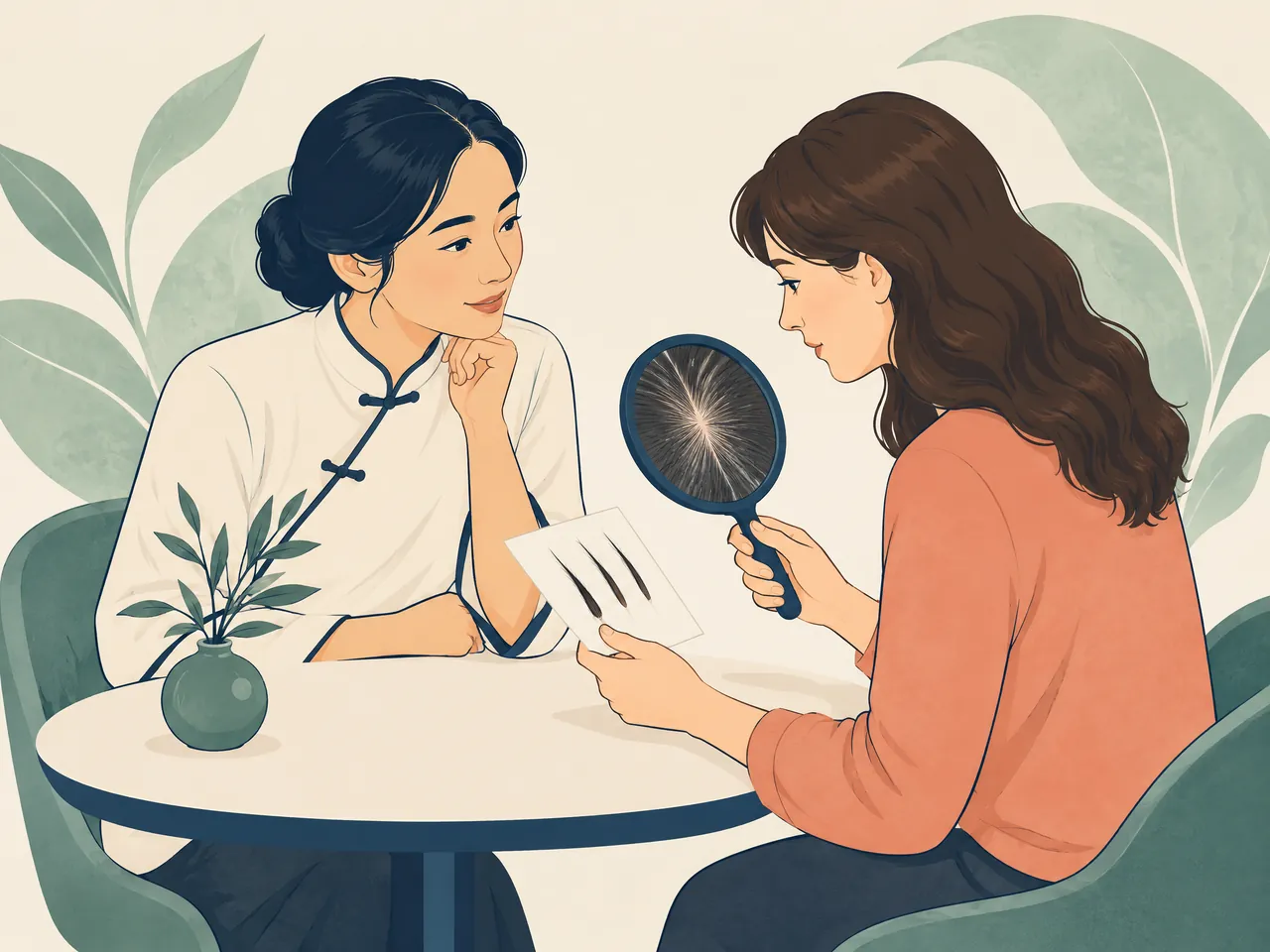
Hair Loss Assessment, Acupuncture for Hair Loss and Chinese Herbal Medicine for Hair Loss: Individual Pattern Differentiation
Pattern differentiation is the Chinese medicine process of bringing symptoms, constitution and examination findings together. A practitioner may ask whether thinning is accompanied by fatigue, sleep difficulty, digestion changes, a greasy or itchy scalp, feelings of heat, or other concerns. These answers help shape the traditional discussion, but they do not prove a cause of hair loss. A person with scalp pain, scarring, pustules, rapid shedding or a new round patch may need timely medical assessment even if they also wish to discuss Chinese medicine.
This individual approach is why a standard online “hair-growth formula” is not a responsible substitute for consultation. The safety of a herbal plan depends on the full health and medication history, and the suitability of any acupuncture approach depends on the person and the proposed treatment. Tell the practitioner about anticoagulants or bleeding concerns, immune conditions, skin infection, pregnancy, allergies, operations and all supplements. Acupuncture involves fine needles; problems are uncommon but can occur with nonsterile needles or improper delivery. [4] Sharing information supports a safer, more informed discussion.
Hair Loss Assessment, Acupuncture for Hair Loss and Chinese Herbal Medicine for Hair Loss: Discussing Suitable Approaches
If acupuncture for hair loss is discussed, ask what the proposed sessions are intended to address, how comfort and skin condition will be checked, and what signs would mean pausing or referring for medical care. Acupuncture is used in a range of health contexts, but the research and safety information for acupuncture in general should not be turned into a guarantee for hair regrowth. The U.S. National Center for Complementary and Integrative Health advises people not to use acupuncture to postpone seeing a health-care provider for a health problem. [4] That advice is especially relevant when the hair loss is new or changing quickly.
If Chinese herbal medicine for hair loss is discussed, request a clear explanation of why the formula is being considered for your presentation, how it will be reviewed and what information the practitioner needs from you. Do not assume that a formula mentioned by a friend, influencer or website fits your health history. Keep your doctors and other qualified health professionals informed about complementary approaches you use. A consultation can be useful for informed choice, but it cannot predict an identical response for different people or guarantee a permanent result.
At TCM Lab, the next step is a face-to-face conversation with a Registered Chinese Medicine Practitioner, not a pre-selected package sold as a cure. You can say whether your priority is scalp discomfort, gradual thinning, a recent shedding episode or simply understanding options. The practitioner can explain whether a Chinese medicine assessment is appropriate, what information is still needed, and when medical evaluation should take priority.
Hair Loss Assessment, Acupuncture for Hair Loss and Chinese Herbal Medicine for Hair Loss: Planning Follow-up
Follow-up is most useful when it returns to the original question: what changed, what has been examined, and what needs rechecking? Hair grows in cycles, and visible change can be slow or uneven. Rather than judging a plan day by day, agree on what will be reviewed: the scalp, new symptoms, comfort, adherence to agreed care, side effects or any change in medical advice. This makes it easier to recognise when a plan needs adjustment and prevents an open-ended sequence of treatments being treated as proof of progress.
A plan can include ordinary, workable habits: gentle hair care suited to the scalp, enough rest where possible, regular meals and a way to manage pressure without claiming that lifestyle alone explains the hair loss. The aim is to reduce avoidable strain and keep observations useful. If you are already under a doctor’s care, continue that relationship. A Chinese medicine consultation should complement clear communication, not ask you to choose between professionals or abandon recommended medical evaluation.
Hair Loss Assessment, Acupuncture for Hair Loss and Chinese Herbal Medicine for Hair Loss: Setting Realistic Expectations
A realistic expectation begins with uncertainty. Hair loss has several possible causes, more than one contributor can coexist, and no single treatment works for everyone. [2] Ask how the practitioner will decide whether the plan remains appropriate, how concerns are recorded between visits, and what would prompt a change of direction. A useful answer describes a review process; it does not promise a number of needles, a fixed number of visits, permanent improvement or an exact amount of new growth.
Consider practical fit as well as hope. Can you attend appointments, keep a simple symptom record and communicate any new medicine or health change? Do you understand the cost and the intended purpose of each part of the plan? If you are comparing options, our page on hair thinning treatment offers broader questions to take to a qualified provider. An approach that leaves you informed and able to seek further assessment is more useful than one that relies on urgency or dramatic before-and-after claims.

Hair Loss Assessment, Acupuncture for Hair Loss and Chinese Herbal Medicine for Hair Loss: When to Seek Further Medical Advice
Seek medical advice promptly for hair loss that begins suddenly, progresses quickly, forms round or patchy bald areas, or appears with scalp pain, marked redness, swelling, pus, sores or scarring. Also arrange appropriate medical care when hair loss follows a new medicine or comes with other unexplained changes in health. The Centre for Health Protection specifically advises consulting a doctor when continuing hair loss is suspected, hair is not growing normally or the involved skin is abnormal. [3] If you are unsure, start with the question when should I see a doctor about hair loss and seek qualified advice rather than waiting for a complementary treatment response.
Even without an urgent sign, it is reasonable to see a doctor or dermatologist if the concern is persistent or upsetting. The NHS advises seeing a GP if you are worried about hair loss and recommends understanding the cause before considering a commercial hair clinic. [1] A medical assessment may run alongside a Chinese medicine consultation when appropriate. Bring the same timeline and medication list to both. Clear information helps each professional understand what has changed and helps you make choices without overstating what any one approach can achieve.
Care and health guide
Hair and scalp care information
This directory brings together services, reading, and visit information related to hair and scalp care, to help you prepare questions for a consultation.
For questions about hair or scalp care, noting the everyday concerns and service questions you want to discuss can help prepare a consultation; Chinese medicine for hair loss is a relevant service or reading entry point.
People may have different priorities, and acupuncture Hong Kong offers related information to help you understand options and prepare questions.

Your questions, answered
Frequently asked questions
What happens during a hair loss assessment?
The conversation may cover timing, pattern, scalp symptoms, family history, general health, recent events, medicines, supplements and previous investigations. A practitioner may also ask about sleep, diet, stress and daily routines. The result may be a Chinese medicine discussion, a recommendation to seek medical assessment, or both; it is not an automatic treatment decision.
Is acupuncture for hair loss suitable for everyone?
Not necessarily. Suitability depends on the pattern of hair loss, scalp condition, health history, medicines, bleeding or infection concerns, pregnancy status where relevant and your expectations. Sudden, patchy, painful or rapidly worsening hair loss needs appropriate medical assessment rather than a delayed response. A practitioner should explain the proposed approach and limitations before you decide.
What should I tell a practitioner before discussing Chinese herbal medicine for hair loss?
Bring or list prescription and non-prescription medicines, supplements, allergies, health conditions, pregnancy or breastfeeding status where relevant, and any recent test results. Explain when the hair change began and whether you have scalp symptoms or other changes in health. Chinese herbal medicine should be discussed individually, not selected from a generic online recommendation.
How long will it take to see a difference?
There is no reliable fixed timetable. Hair changes may be gradual, causes differ, and a plan may need reassessment. Ask what will be reviewed at follow-up and which changes require medical advice. No fixed course, amount of regrowth or permanent improvement can be promised.
Sources and further information
- [1] [1] NHS — Hair loss
Referenced for: General causes, medical advice before commercial treatment and the limits of hair-loss treatments.
- [2] [2] American Academy of Dermatology — Hair loss: Diagnosis and treatment
Referenced for: History, scalp examination, clinician-directed testing and the fact that no one treatment works for everyone.
- [3] [3] Hong Kong Centre for Health Protection — Men's Health Line: Alopecia
Referenced for: Possible causes, suspicious changes and seeking medical or dermatology advice to identify underlying causes.
- [4] [4] NCCIH — Acupuncture: Effectiveness and Safety
Referenced for: General acupuncture safety context and advice not to postpone healthcare for a health problem.