
TCM Lab · Health reading
Can tennis elbow be caused by lifting or twisting the wrist?
Published Updated
A sore outer elbow after carrying shopping, wringing a cloth, opening jars, or turning a tool can be more than a passing ache. Repeated lifting and twisting can load the forearm muscles that control the wrist and attach near the outer elbow. When that pattern is repeated, especially with a firm grip, it can contribute to tennis elbow. The useful question is not simply whether one movement caused it, but which combinations of force, repetition, posture, recovery, and symptoms are present. This guide helps you recognise that pattern, adjust daily tasks sensibly, and know when an assessment is more appropriate than pushing through pain.
Appointments are confirmed through WhatsApp. If you have language requirements, please mention them in your enquiry.
The short answer
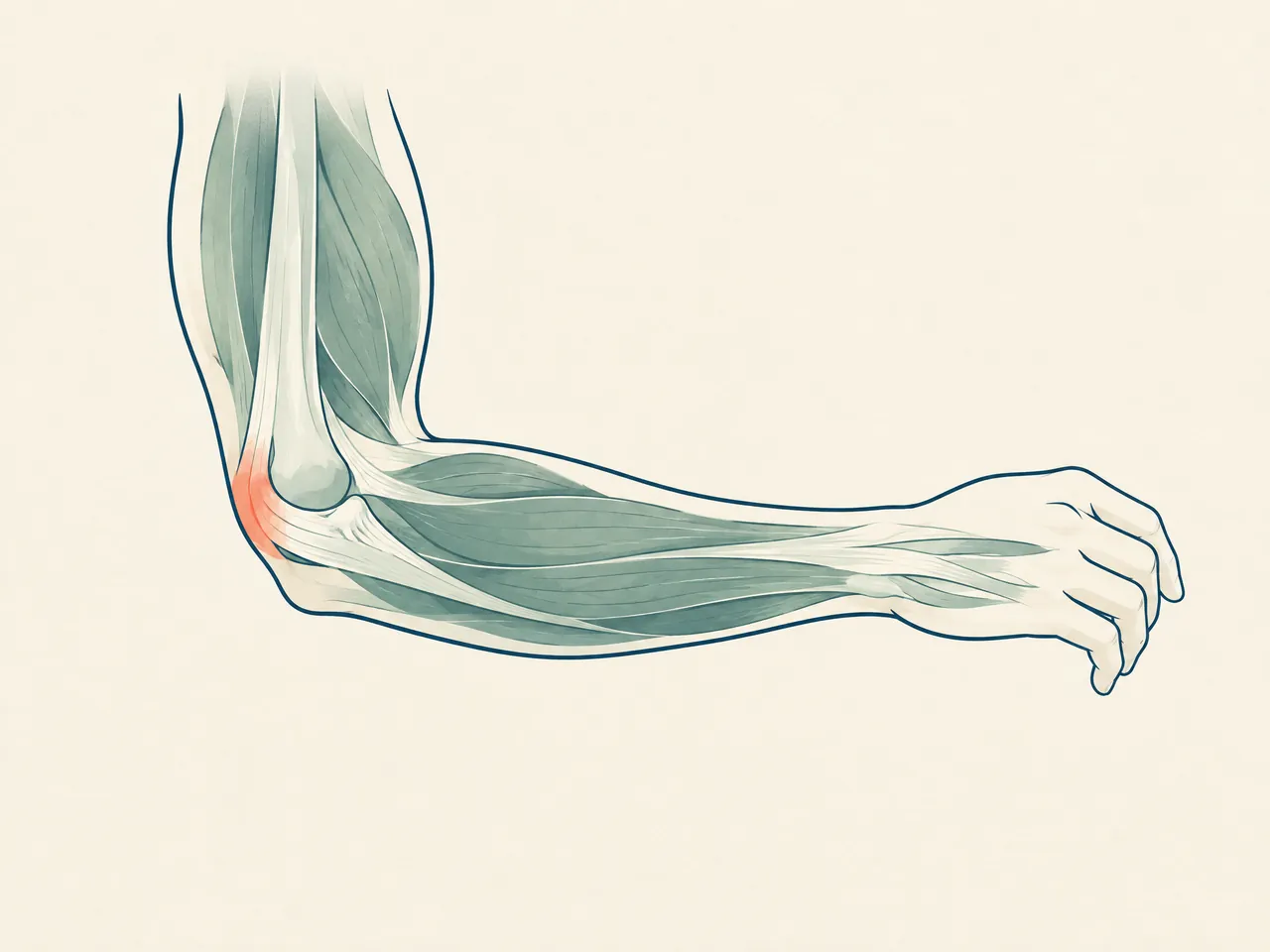
Yes. Lifting or twisting the wrist can contribute to tennis elbow when those actions are repeated or forceful, particularly if they involve gripping and holding the wrist extended. Tennis elbow, also called lateral epicondylitis, commonly causes pain and tenderness around the outside of the elbow that may travel into the forearm. It is not limited to racket sports. Reducing the provoking load can be sensible, but persistent, severe, or unusual symptoms deserve professional assessment.
Transparent pricing
See the fees.
Choose your care.
Explore our complete official price list, including first-trial prices, regular prices, packages and branch-specific options.
Opening WhatsApp prepares an enquiry; it does not send a message, take payment or confirm an appointment. Suitability and individual arrangements are confirmed during consultation.
Pain care
All prices in HKDExtracorporeal shockwave treatment
Shockwave treatment for deep-tissue and fascial care. The Kwun Tong clinic offers the multi-area options shown below.
Priced by branch
Branch-specific pricing
Prince Edward: HK$250 per area
Kwun Tong: HK$250 for 1 area / HK$450 for 2 areas / HK$600 for 3 areas
Pain care (manual therapy)
Includes Chinese medicine musculoskeletal assessment, manual joint techniques and tui na.
HK$580 (single session)
Chinese medicine musculoskeletal assessment
Pain care (acupuncture and manual therapy)
Combines acupuncture and manual therapy.
HK$680 (single session)
Combined care
Hair and scalp
All prices in HKDScalp health and hair-loss management
Includes AI scalp analysis, deep scalp and follicle cleansing, and scalp oil-control care.
HK$380 (first trial)
Regular price: HK$680
- 6 sessions: HK$3,480 (HK$580 per session)
- 12 sessions: HK$5,760 (HK$480 per session)
- 20 sessions: HK$8,600 (HK$430 per session)
- 30 sessions: HK$11,400 (HK$380 per session)
Hair acupuncture and Chinese herbal medicine package
Includes scalp acupuncture and 3 days of Chinese herbal medicine that does not require decoction.
HK$580 (single session)
Registered Chinese Medicine Practitioner consultation
- 6 sessions: HK$3,180 (HK$530 per session)
- 12 sessions: HK$5,760 (HK$480 per session)
- 20 sessions: HK$8,600 (HK$430 per session)
- 30 sessions: HK$11,400 (HK$380 per session)
Combined hair and scalp treatment
Combines acupuncture and Chinese herbal medicine with salon-level scalp and follicle care. Packages include complimentary hair-care shampoo and serum.
HK$1,260 (single session)
Combined treatment
- 8 sessions: HK$8,640 (HK$1,080 per session)
- 16 sessions: HK$15,680 (HK$980 per session)
- 20 sessions: HK$18,600 (HK$930 per session)
- 30 sessions: HK$26,400 (HK$880 per session)
Weight management
All prices in HKDFull-body acupoint embedding for weight management
Includes full-body acupoint embedding. Packages include complimentary Chinese herbal medicine for weight management, with the number of included days scaled to the package. Embedding material and the individual treatment arrangement are confirmed during consultation; this is not a cosmetic thread lift.
HK$980 (single session)
No trial session
- 10 sessions: HK$7,800 (HK$780 per session)
- 20 sessions: HK$14,600 (HK$730 per session)
- 30 sessions: HK$20,400 (HK$680 per session)
Facial acupuncture
All prices in HKDFacial acupuncture (basic)
Includes facial acupuncture and meridian-based facial care, including care for facial puffiness.
HK$480 (first trial)
Regular price: HK$680
- 10 sessions: HK$5,200 (HK$520 per session)
- 20 sessions: HK$9,600 (HK$480 per session)
- 30 sessions: HK$13,500 (HK$450 per session)
Facial acupuncture (advanced)
Includes enhanced facial acupuncture with a specially formulated moisturising mask and serum.
HK$780 (first trial)
Regular price: HK$1,180
- 10 sessions: HK$9,000 (HK$900 per session)
- 20 sessions: HK$16,600 (HK$830 per session)
- 30 sessions: HK$23,400 (HK$780 per session)
Chinese medicine
All prices in HKDAcupuncture and Chinese herbal medicine package
Includes a Chinese medicine consultation with pulse assessment, body acupuncture and 3 days of Chinese herbal granules that do not require decoction.
HK$580 (single session)
Chinese medicine consultation with pulse assessment
Can tennis elbow be caused by lifting or twisting the wrist? Understanding the strain
Yes—lifting or twisting the wrist can be part of the loading pattern behind tennis elbow, especially when the movement is repeated, forceful, or combined with gripping. Tennis elbow is commonly called lateral epicondylitis. The pain is usually felt where forearm-muscle tendons attach to the bony area on the outside of the elbow, rather than at the wrist itself. Mayo Clinic describes the condition as being linked to repeated motions of the wrist and arm and overuse of the elbow muscles and tendons [1]. That connection explains why a person may point to a jar, suitcase, or screwdriver as the moment pain occurs while feeling tenderness at the elbow.
The name can be misleading. Racket sports can be relevant, but many people with this pattern do not play tennis. Work and home activities may repeatedly ask the forearm to stabilise a load while the hand grips it. The NHS specifically lists gripping and repeated twisting of the wrist and forearm, alongside computer work, sewing, and screwdriver use, as possible causes [2]. For a broader explanation of how repeated tasks add up, see our guide to tennis elbow causes.
Can tennis elbow be caused by lifting or twisting the wrist? How repetitive loading affects the forearm
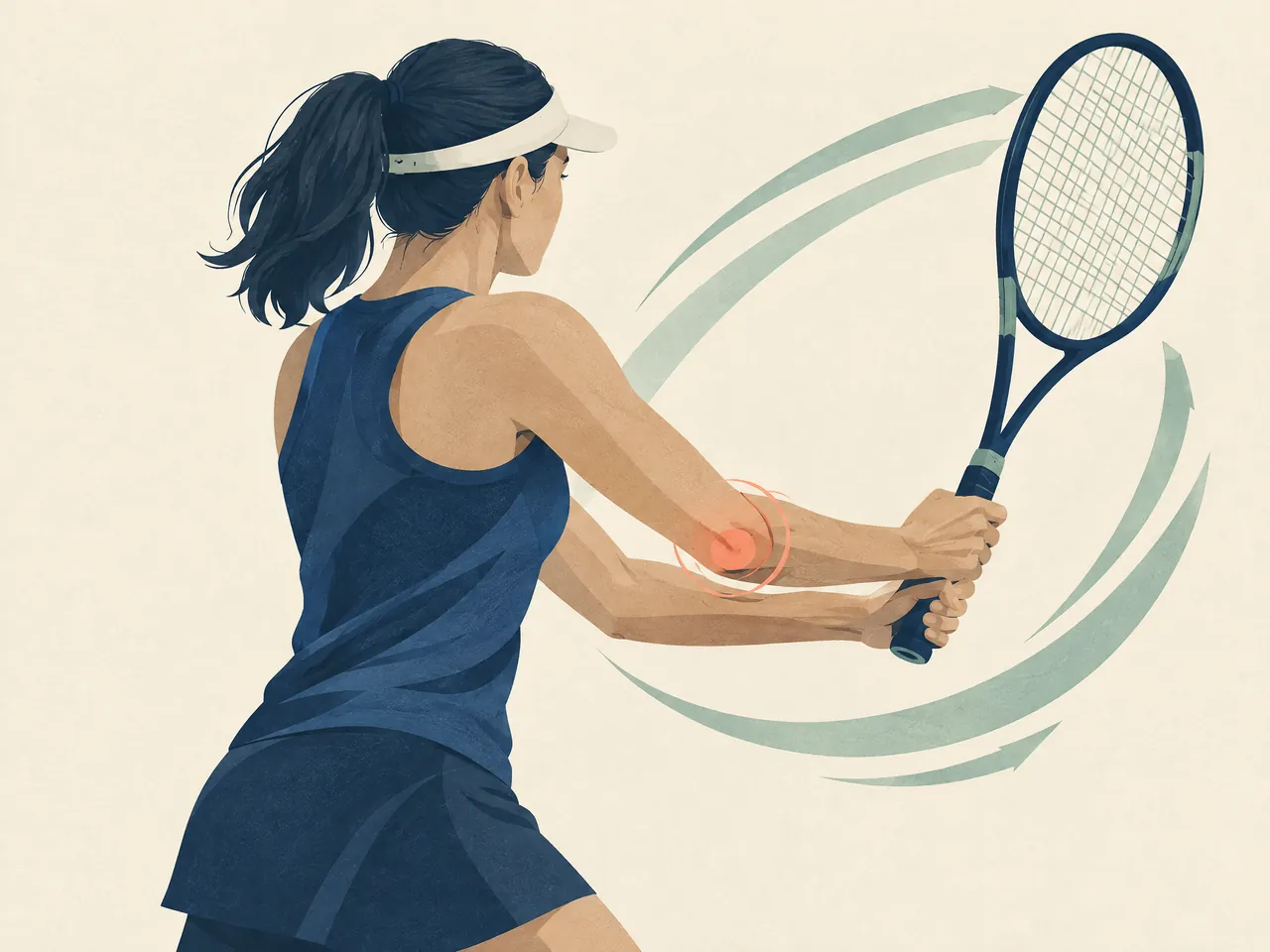
Think about lifting a pan with the palm down, carrying a bag by its handle, or holding a drill steady. The fingers grip, the wrist muscles work to keep the hand from dropping, and the forearm may rotate to position the object. One easy movement is not automatically harmful. The concern grows when the same effort is frequent, the handle is narrow or slippery, the object is heavy for the grip available, or there is little recovery between tasks. Fatigue can also make the wrist drift into an awkward position, increasing the work needed to control it.
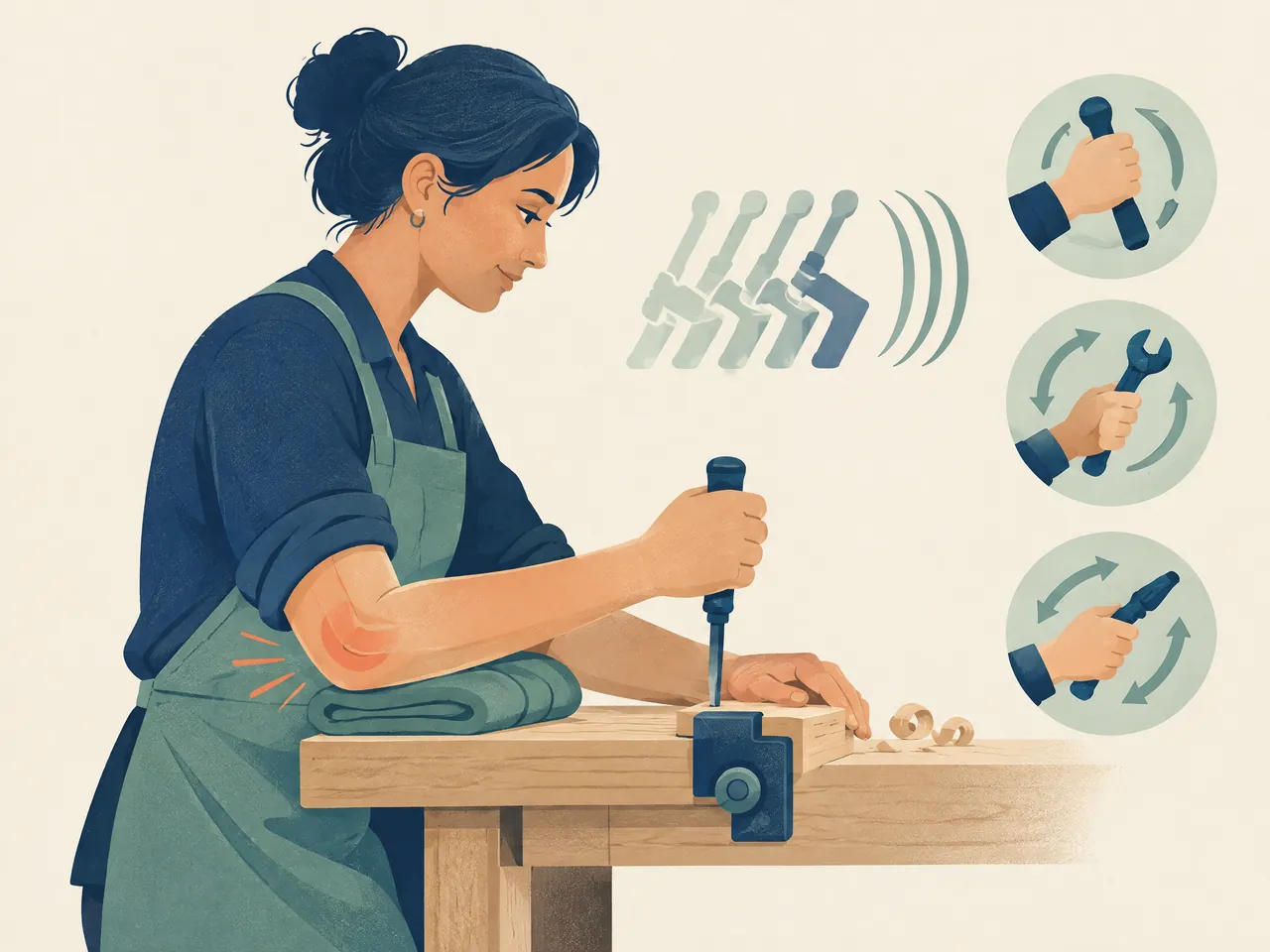
Twisting is often more demanding than it appears. Turning a stuck key, wringing wet laundry, twisting a lid, or using a screwdriver combines rotation with grip. If the wrist is also bent back, the outer forearm muscles may work harder to stabilise the hand. Pain during such tasks does not confirm a diagnosis on its own, but it is a useful clue to report during an assessment. Rather than repeatedly provoking the area to check it, note which direction, hand position, object weight, and time of day make the task difficult. Those details are more helpful than the label of the task alone.
Can tennis elbow be caused by lifting or twisting the wrist? Common everyday triggers
Everyday triggers are often ordinary tasks done many times: transferring boxes, lifting a child from under the arms, carrying grocery bags, pouring from a full kettle, pruning plants, mousing for long periods, or taking cookware from a shelf. A job can create a similar pattern through cutting, painting, tool use, packing, or repeated mouse and keyboard work. The key feature is not that any one task is forbidden. It is that the same tissues may be asked to grip, extend the wrist, or rotate the forearm repeatedly without a workable balance of demand and recovery.
A change in routine is often revealing. Symptoms may follow a move, a weekend of DIY, a new gym exercise, a busier shift, or a return to work after a break. Look for changes in frequency, duration, force, or technique before blaming a single moment. For example, lifting several light parcels with an extended wrist may be more provocative than one carefully held heavier item. If your symptoms arose in this context, our article on lateral epicondylitis causes can help frame the questions to take to a clinician.
Compare your options
| Situation | What may add forearm load | A measured adjustment to try |
|---|---|---|
| Carrying shopping bags | A narrow handle, firm prolonged grip, and wrist held back while the arm hangs | Split the load, use two hands or a trolley, and keep the wrist closer to neutral |
| Opening a tight jar or turning a key | Strong grip combined with forearm rotation and an awkward wrist angle | Use a grip aid, ask for help, or change hand position instead of repeatedly forcing the twist |
| Screwdriver or DIY work | Repeated rotation, gripping, and wrist stabilisation over many repetitions | Choose a suitable handle or powered tool and alternate tasks before pain builds |
| Mouse and keyboard work | Long periods of low-level gripping and wrist extension with little position change | Review reach and support, vary input methods, and take brief movement breaks |
| Gym or racket activity | A rapid rise in resistance, volume, grip demand, or technique challenge | Reduce the provoking variation and rebuild load gradually with professional guidance if needed |
On smaller screens, scroll the table sideways to compare all columns.
Can tennis elbow be caused by lifting or twisting the wrist? Recognising the pattern
The pattern commonly described as tennis elbow is pain on the outside of the elbow, often with local tenderness. It can spread down the forearm toward the wrist. Gripping a cup, shaking hands, turning a doorknob, lifting with the palm down, or moving the wrist may bring it on. Mayo Clinic notes that pain and weakness can make gripping, turning a doorknob, and holding a coffee cup harder [1]. The NHS likewise lists pain with lifting or bending the arm, gripping, and wrist movement [2]. These are clues, not a self-diagnosis checklist.
It helps to observe the pattern over a few ordinary days rather than judging it from one painful test. Is the pain sharply localised to the bony outer elbow or lower down the forearm? Does a grip feel weak because of pain, or is there true loss of control? Does it settle after the task, worsen overnight, or come with neck pain or tingling? A short record of task, symptoms, and recovery can clarify whether a repeated-load explanation is plausible and makes a clinical conversation more efficient.
Can tennis elbow be caused by lifting or twisting the wrist? Signs that fit outer-elbow tendon pain
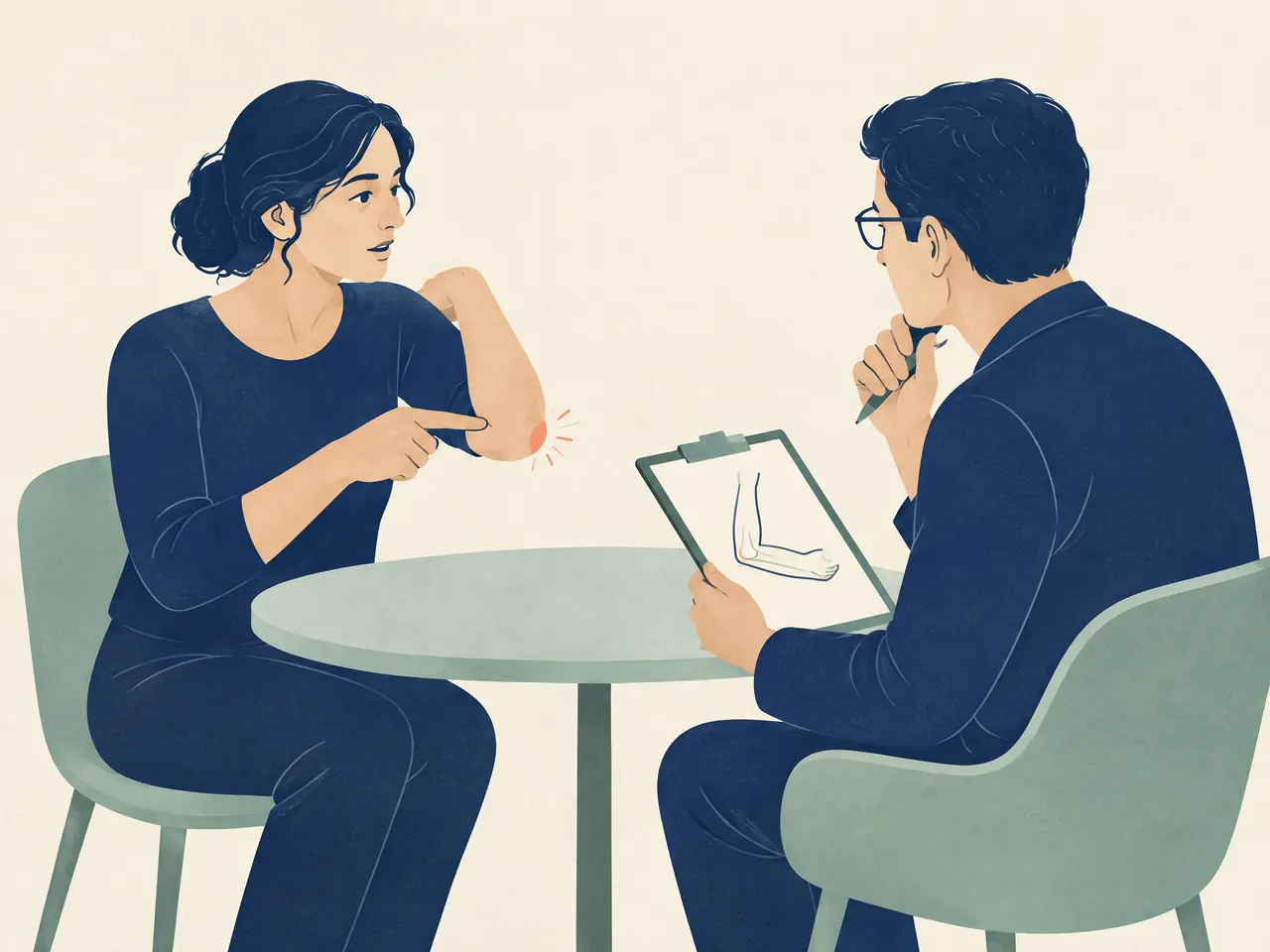
Outer-elbow tendon pain often has a gradual beginning. A person may first notice discomfort when lifting a mug, then feel it when opening a bottle, and later find that a familiar work task stings. Tenderness over the outside of the elbow and pain that increases with gripping or wrist movement fit this general picture. Some people also describe a tired or aching forearm. The NHS notes tenderness or swelling, forearm pain, and difficulty fully straightening the arm among possible accompanying symptoms [2]. The severity can vary from an annoyance during a specific task to pain that interferes with sleep or routine work.
Context matters as much as the symptom location. A load-related pattern is more coherent if pain recurs with a similar grip, wrist position, or twisting action and eases when that demand is reduced. It is less useful to chase a perfect home test or force a stretch through sharp pain. If there is visible swelling or tenderness, it may be useful to compare the pattern with our information on tennis elbow tenderness and swelling, while remembering that an online article cannot establish the cause.

Can tennis elbow be caused by lifting or twisting the wrist? When another cause should be considered
Not every pain near the outer elbow is tennis elbow. Symptoms can be felt in a similar area with a neck-related nerve problem, irritation of the radial nerve in the forearm, joint arthritis, or an injury involving bone or ligament. Pain that begins after a fall or direct blow needs a different level of caution from a slowly building ache after repetitive work. Neck pain together with pins and needles, numbness, or pain travelling from the neck into the arm is another reason not to settle on a tendon explanation without assessment.
Seek prompt medical attention after trauma if the elbow looks deformed, you cannot use the arm normally, or there is severe and rapidly increasing swelling. Redness, warmth and severe pain, a rapidly enlarging lump, or marked numbness or weakness also warrant timely medical advice. For less urgent but persistent symptoms, the NHS advises seeing a GP when elbow pain remains after at least two weeks of rest and self-care [2]. If the location or quality does not feel like the usual outer-elbow pattern, review the wider possibilities in outside elbow pain causes rather than treating every elbow ache as the same condition.
Can tennis elbow be caused by lifting or twisting the wrist? Practical ways to respond
The first response is usually not to prove toughness by continuing the exact action that hurts. Start by identifying the smallest change that reduces the provoking load: use two hands to lift a pan, keep the wrist more neutral when carrying a bag, divide a load into smaller trips, choose a wider handle, or share repetitive tasks. This is not an instruction to avoid all movement indefinitely. It is a way to stop repeatedly aggravating the same combination of grip, wrist extension, and rotation while you work out what the arm currently tolerates.
Comfort measures can be chosen carefully, not as a substitute for evaluation. The NHS suggests a hot or cold pack wrapped in a towel, up to 20 minutes every two to three hours, and advises reducing activities that worsen symptoms [2]. Some people prefer cold after a demanding task and others prefer warmth when the area feels stiff; stop if it aggravates symptoms and protect the skin. A forearm strap or brace may be discussed with a clinician, but equipment should not become permission to continue a painful workload unchanged.
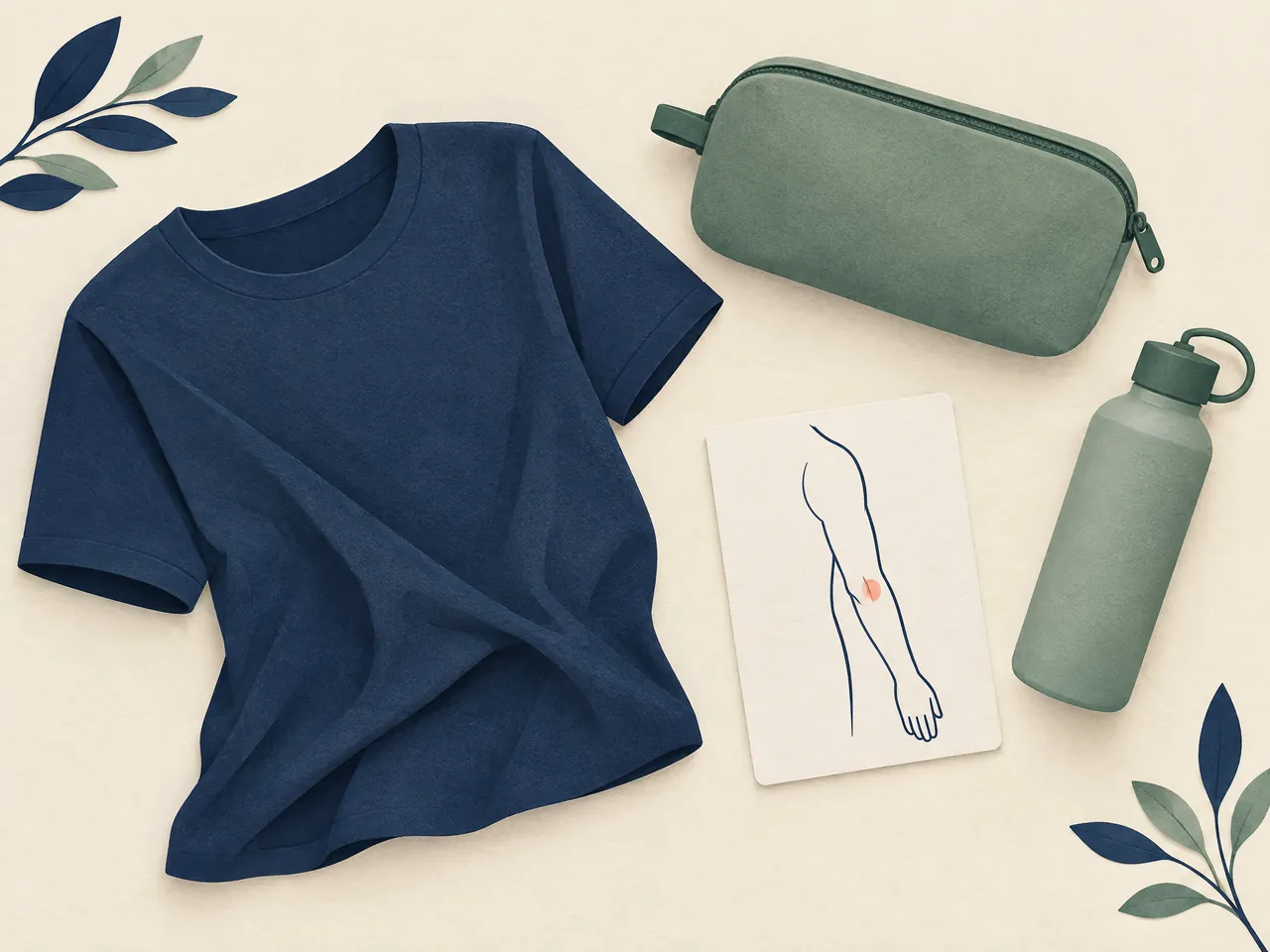
Can tennis elbow be caused by lifting or twisting the wrist? Adjusting activity and daily load
Make modifications task-specific. When using a screwdriver, consider a powered tool or a handle that lets the wrist stay closer to straight. When working at a computer, vary mouse use with keyboard shortcuts, review reach and desk height, and take brief changes of position before the forearm is exhausted. For carrying, keep an object close to the body, avoid a prolonged palm-down grip where possible, and use both hands for awkward loads. In the kitchen, place a heavy bowl on the counter before mixing rather than holding it in one hand. Small alterations are easier to sustain than a vague promise to rest more.
Gradual return matters. If a modified task is comfortable, increase only one variable at a time—such as duration, frequency, or load—rather than all three in one week. A physiotherapist or other qualified clinician can assess movement, strength, and task demands and advise whether stretching or strengthening is suitable. Do not copy a resistance programme from a stranger’s routine if it repeatedly produces sharp pain or worsening symptoms. If you choose to explore a Chinese medicine consultation as an adjunct after assessment, ask what it can and cannot address alongside load management and rehabilitation; it should not replace evaluation of a possible injury or nerve-related symptoms.

Can tennis elbow be caused by lifting or twisting the wrist? When to seek professional advice
Professional advice is sensible when outer-elbow pain keeps returning, affects sleep, work, household tasks, or sport, or does not improve after a period of sensible load adjustment. An assessment may consider where the pain is most tender, how the neck, shoulder, elbow, wrist, and hand function, and which tasks reproduce symptoms. Bring useful details: when the pain began, whether there was an injury, the exact motions that provoke it, what you have changed, and whether numbness or weakness occurs. This helps move the discussion beyond simply asking whether it is tennis elbow.
At TCM Lab, a Registered Chinese Medicine Practitioner can discuss your symptoms in an in-person consultation using a traditional Chinese medicine assessment approach. Traditional pattern descriptions are not the same as a modern medical diagnosis, and no fixed result or number of sessions should be assumed. For a local visit, you may enquire with the Kwun Tong Chinese medicine clinic or the Chinese medicine clinic Prince Edward. You can also review the Chinese medicine clinic price list Hong Kong before asking about an appointment.
Care and health guide
Health service information
This directory brings together services, reading, and visit information related to health services, to help you prepare questions for a consultation.
If you are organising health questions, Chinese medicine clinic Hong Kong is a starting point for learning about related services and preparing for a consultation.
People have different needs; acupuncture Hong Kong provides further reading to help you understand options in your own context.


Your questions, answered
Frequently asked questions
Does tennis elbow only happen to people who play tennis?
No. The name comes from a sporting association, but repeated wrist and arm motions in work, hobbies, cooking, tool use, computer work, or household tasks can also contribute. Mayo Clinic notes that most people who develop tennis elbow do not play tennis [1].
Can lifting weights cause tennis elbow?
It can contribute if gripping, wrist position, technique, or a rapid increase in training load repeatedly irritates the outer-elbow area. It is not possible to identify the cause from one exercise alone. Reduce the painful variation and seek assessment if pain persists or function is limited.
Should I use heat or ice for outer-elbow pain?
Either may be used as a comfort measure if it feels helpful. The NHS suggests a hot or cold pack wrapped in a towel for up to 20 minutes every 2 to 3 hours [2]. Stop if symptoms worsen, protect the skin, and do not rely on a pack instead of modifying the aggravating task or obtaining advice when needed.
When is outer-elbow pain urgent?
Seek prompt medical attention after a significant injury, for deformity, inability to use the arm, severe or rapidly increasing swelling, redness and heat with severe pain, a rapidly enlarging lump, or marked numbness or weakness. These features should not be managed as routine tennis elbow from a webpage.
Sources and further information
- [1] Mayo Clinic — Tennis elbow: Symptoms and causes [1]
Referenced for: Supports the description of lateral epicondylitis, repeated wrist and arm loading, common symptom triggers, and when to seek a healthcare provider.
- [2] NHS — Tennis elbow [2]
Referenced for: Supports symptom and trigger terminology, load reduction, hot or cold pack guidance, and advice to seek care if pain remains after rest and self-care.