
TCM Lab · Health reading
IBS acupuncture, IBS stress management and IBS diet and lifestyle management: a practical guide
Published Updated
Recurring cramps, bloating and unpredictable bowel habits can make meals, travel and a working day feel harder to plan. For people asking about IBS acupuncture, IBS stress management and IBS diet and lifestyle management, the practical starting point is not a single remedy: it is a clear symptom record, appropriate medical assessment, and a manageable routine. Acupuncture may be considered as complementary care after diagnosis, while food, sleep, movement and stress responses can be reviewed in a way that fits the individual rather than a rigid one-size-fits-all plan.
Appointments are confirmed through WhatsApp. If you have language requirements, please mention them in your enquiry.
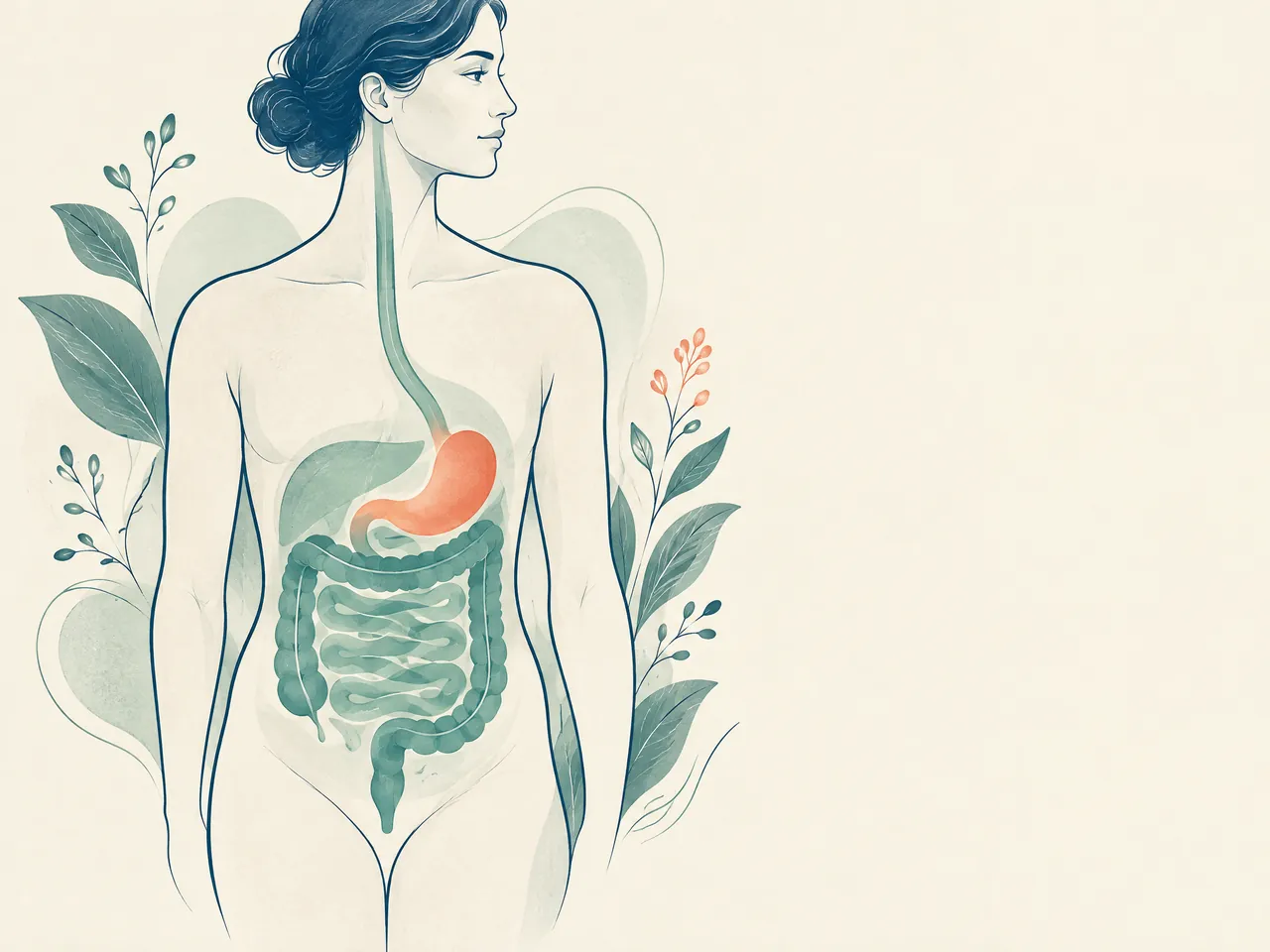
The short answer
IBS management usually starts with medical assessment and a diary of pain, bowel changes, food, sleep and stress. IBS diet and lifestyle management can then focus on personal triggers, regular meals, activity and rest; a clinician or dietitian can guide more restrictive changes. IBS stress management may support daily coping. IBS acupuncture can be discussed as complementary care, but current sham-controlled evidence does not show it is superior to sham acupuncture for IBS symptoms or quality of life [3].
Transparent pricing
See the fees.
Choose your care.
Explore our complete official price list, including first-trial prices, regular prices, packages and branch-specific options.
Opening WhatsApp prepares an enquiry; it does not send a message, take payment or confirm an appointment. Suitability and individual arrangements are confirmed during consultation.
Chinese medicine
All prices in HKDAcupuncture and Chinese herbal medicine package
Includes a Chinese medicine consultation with pulse assessment, body acupuncture and 3 days of Chinese herbal granules that do not require decoction.
HK$580 (single session)
Chinese medicine consultation with pulse assessment
Hair and scalp
All prices in HKDScalp health and hair-loss management
Includes AI scalp analysis, deep scalp and follicle cleansing, and scalp oil-control care.
HK$380 (first trial)
Regular price: HK$680
- 6 sessions: HK$3,480 (HK$580 per session)
- 12 sessions: HK$5,760 (HK$480 per session)
- 20 sessions: HK$8,600 (HK$430 per session)
- 30 sessions: HK$11,400 (HK$380 per session)
Hair acupuncture and Chinese herbal medicine package
Includes scalp acupuncture and 3 days of Chinese herbal medicine that does not require decoction.
HK$580 (single session)
Registered Chinese Medicine Practitioner consultation
- 6 sessions: HK$3,180 (HK$530 per session)
- 12 sessions: HK$5,760 (HK$480 per session)
- 20 sessions: HK$8,600 (HK$430 per session)
- 30 sessions: HK$11,400 (HK$380 per session)
Combined hair and scalp treatment
Combines acupuncture and Chinese herbal medicine with salon-level scalp and follicle care. Packages include complimentary hair-care shampoo and serum.
HK$1,260 (single session)
Combined treatment
- 8 sessions: HK$8,640 (HK$1,080 per session)
- 16 sessions: HK$15,680 (HK$980 per session)
- 20 sessions: HK$18,600 (HK$930 per session)
- 30 sessions: HK$26,400 (HK$880 per session)
Weight management
All prices in HKDFull-body acupoint embedding for weight management
Includes full-body acupoint embedding. Packages include complimentary Chinese herbal medicine for weight management, with the number of included days scaled to the package. Embedding material and the individual treatment arrangement are confirmed during consultation; this is not a cosmetic thread lift.
HK$980 (single session)
No trial session
- 10 sessions: HK$7,800 (HK$780 per session)
- 20 sessions: HK$14,600 (HK$730 per session)
- 30 sessions: HK$20,400 (HK$680 per session)
Facial acupuncture
All prices in HKDFacial acupuncture (basic)
Includes facial acupuncture and meridian-based facial care, including care for facial puffiness.
HK$480 (first trial)
Regular price: HK$680
- 10 sessions: HK$5,200 (HK$520 per session)
- 20 sessions: HK$9,600 (HK$480 per session)
- 30 sessions: HK$13,500 (HK$450 per session)
Facial acupuncture (advanced)
Includes enhanced facial acupuncture with a specially formulated moisturising mask and serum.
HK$780 (first trial)
Regular price: HK$1,180
- 10 sessions: HK$9,000 (HK$900 per session)
- 20 sessions: HK$16,600 (HK$830 per session)
- 30 sessions: HK$23,400 (HK$780 per session)
Pain care
All prices in HKDExtracorporeal shockwave treatment
Shockwave treatment for deep-tissue and fascial care. The Kwun Tong clinic offers the multi-area options shown below.
Priced by branch
Branch-specific pricing
Prince Edward: HK$250 per area
Kwun Tong: HK$250 for 1 area / HK$450 for 2 areas / HK$600 for 3 areas
Pain care (manual therapy)
Includes Chinese medicine musculoskeletal assessment, manual joint techniques and tui na.
HK$580 (single session)
Chinese medicine musculoskeletal assessment
Pain care (acupuncture and manual therapy)
Combines acupuncture and manual therapy.
HK$680 (single session)
Combined care
IBS acupuncture, IBS stress management and IBS diet and lifestyle management: start with the symptom pattern
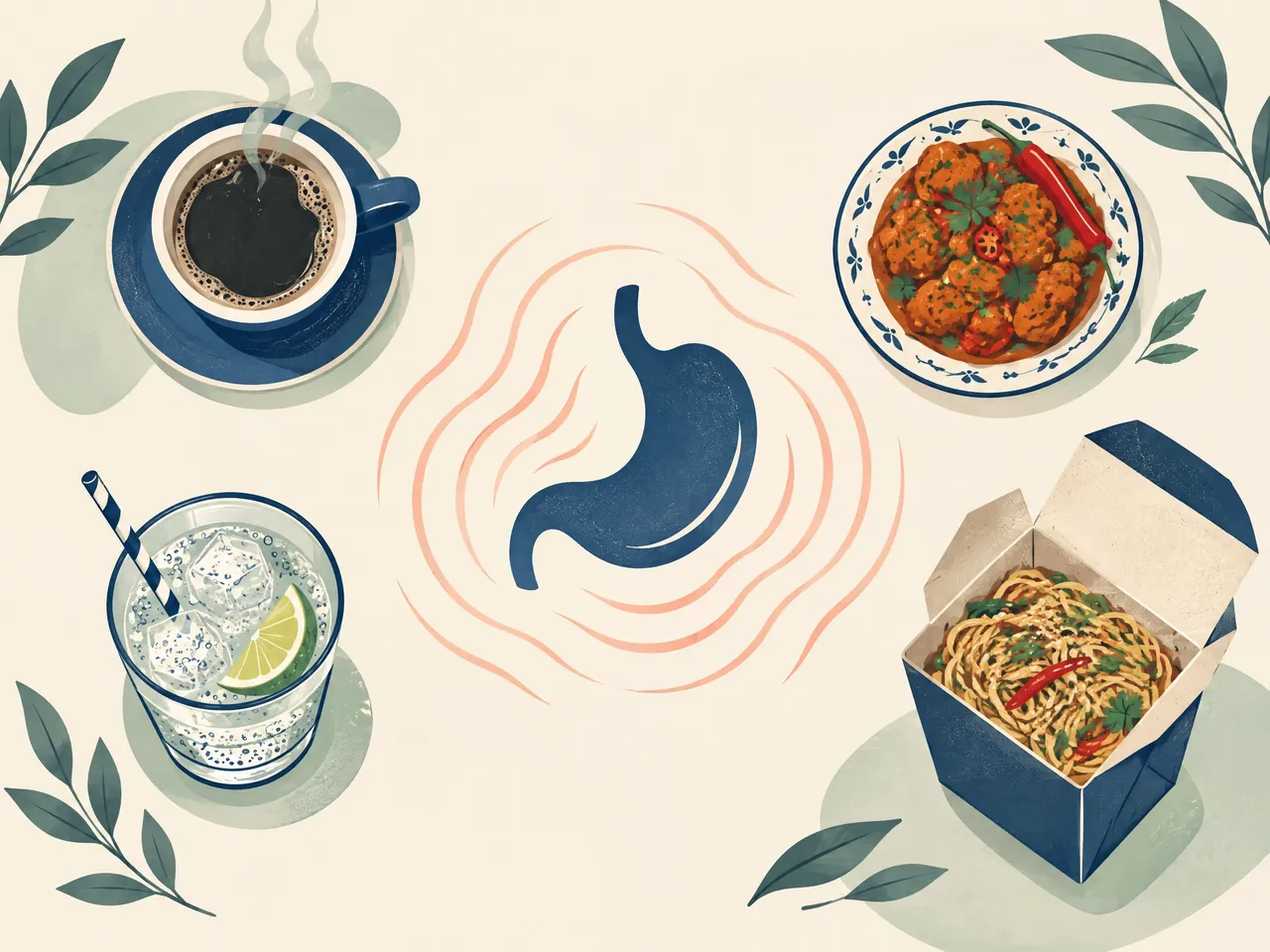
IBS is commonly associated with abdominal pain or cramps, bloating, diarrhoea, constipation, or a change between bowel patterns. Pain may be worse after eating and may ease after a bowel movement, but each person’s pattern is different. The NHS notes that alcohol, caffeine, fatty or spicy foods, and stress or anxiety can be triggers for some people, not universal causes [1]. That distinction matters: a food that causes trouble for a colleague or family member is not automatically the reason for your symptoms. A useful goal is to notice repeatable patterns without becoming afraid of food or preoccupied with every sensation. If symptoms have continued for weeks, disrupt ordinary activities, or have changed noticeably, arrange a medical review. IBS is a diagnosis made from symptoms and clinical judgement; other digestive conditions can produce similar complaints [4].
IBS acupuncture, IBS stress management and IBS diet and lifestyle management: what to record
A brief diary is more useful when it records context as well as food. Write down the time and content of meals, drinks such as coffee or alcohol, the onset and location of discomfort, bloating, stool frequency and consistency, and whether pain improves after opening the bowels. Add practical details: a rushed lunch, a late night, a long commute, a difficult meeting, menstrual timing if relevant, an illness, travel, or a new medicine or supplement. Use plain descriptions rather than trying to decide what every entry means. After two or three weeks, look for repeated links: for example, urgency after large late meals, constipation after disrupted routines, or cramps during high-pressure periods. The diary can help a doctor, dietitian or Chinese medicine practitioner ask better questions. It should not be used to self-diagnose food allergy or to begin a very restrictive diet without advice.
IBS acupuncture, IBS stress management and IBS diet and lifestyle management: when assessment matters
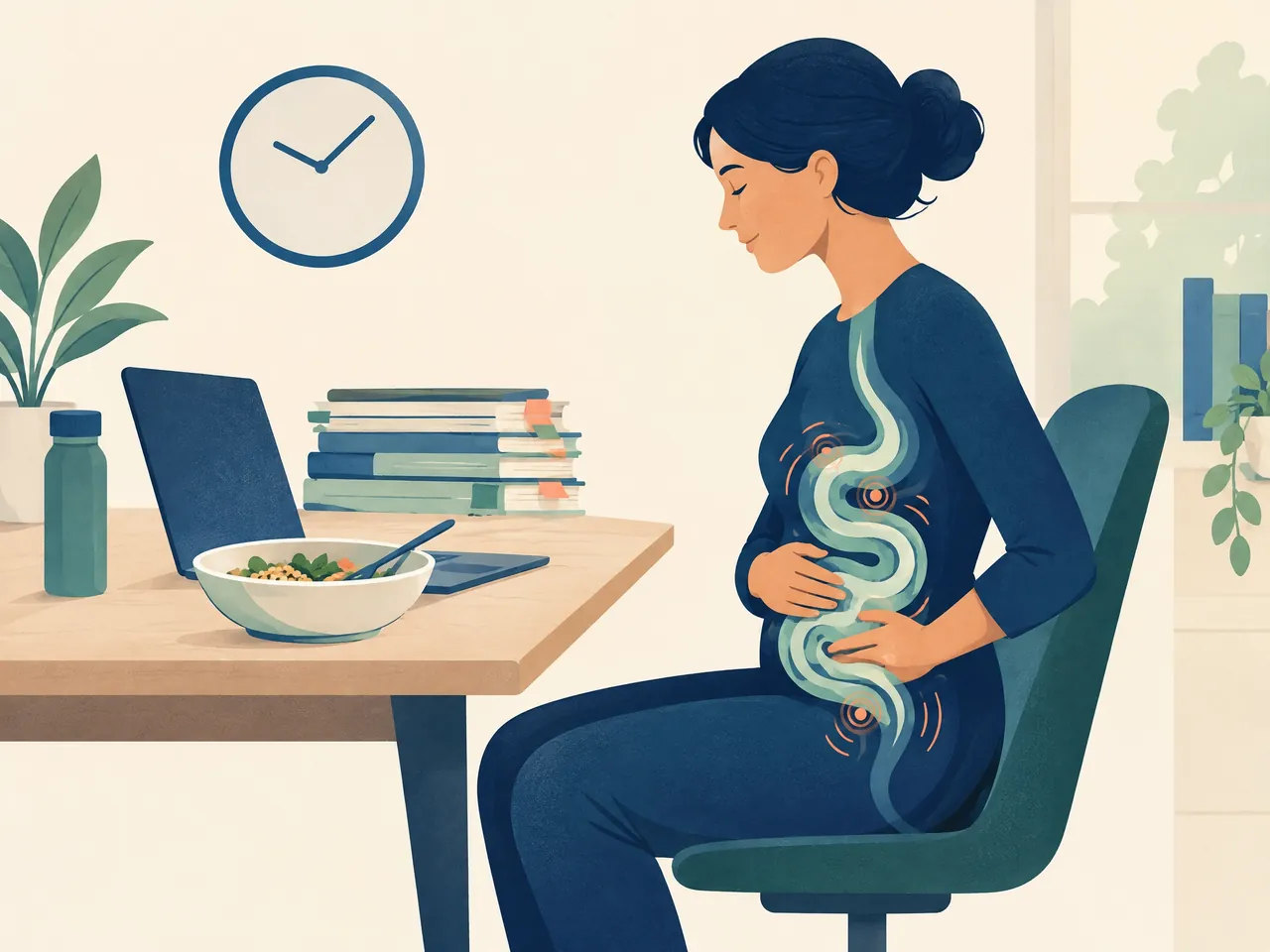
Do not assume that abdominal symptoms are IBS simply because they occur during stress. The Hong Kong consensus advises clinicians to consider factors such as age, family history and alarm symptoms when deciding on investigations, and to actively consider inflammatory bowel disease and colorectal cancer among important alternatives [4]. Seek prompt medical advice for rectal bleeding or bloody diarrhoea, unexplained marked weight loss, a hard abdominal lump or swelling, or palpitations with unusual shortness of breath and paleness; these need assessment rather than a trial of complementary care [2]. Night-time symptoms that wake you, persistent vomiting, fever or a clear deterioration also deserve medical attention. Bring your diary and a list of all prescribed medicines, over-the-counter products, herbs and supplements. A diagnosis and a safety check create a better foundation for discussing Chinese medicine for IBS or any other complementary option.
Compare your options
| What you notice | A practical next step | Who can help or when to escalate |
|---|---|---|
| A repeatable connection between meals or drinks and symptoms | Keep a short food, symptom and routine diary; test one reasonable change at a time. | Discuss a restrictive diet or multiple suspected triggers with a doctor or dietitian. |
| Cramps, bloating or bowel urgency during pressured weeks | Plan a regular meal break, sleep routine, gentle activity and a brief relaxation practice. | Talk with a doctor or mental-health professional if distress, panic, low mood or avoidance is persistent. |
| Interest in acupuncture or Chinese medicine after an IBS diagnosis | Share investigations, medicines, supplements and goals; discuss it as complementary care. | A registered Chinese medicine practitioner can assess suitability; keep your usual medical team informed. |
| Bleeding, unexplained weight loss, a lump, paleness with breathlessness, or a major new change | Seek prompt medical assessment rather than changing diet or booking complementary treatment first. | Contact a doctor or urgent medical service. |
On smaller screens, scroll the table sideways to compare all columns.
IBS acupuncture, IBS stress management and IBS diet and lifestyle management: understanding complementary options
A broad IBS plan may include medical advice for the predominant symptom, dietary support, psychological support when needed, and selected complementary care. These are not competing identities or a test of whether symptoms are “physical” or “emotional”. The Hong Kong IBS consensus describes patient assessment, psychological distress, dietary and alternative approaches, and pharmacological management as connected parts of care [4]. For someone considering Chinese medicine, the most helpful consultation begins with an established diagnosis or the information needed to seek one. It also includes an honest discussion of what is already being tried, what the person wants to change, and what would make a plan impractical. For further orientation, read Can Chinese medicine help IBS?; it should complement, not replace, medical review for new or worrying symptoms.

IBS acupuncture, IBS stress management and IBS diet and lifestyle management: what the evidence says
It is reasonable to ask directly whether IBS acupuncture works. The answer needs to separate interest in a supportive experience from evidence of a specific IBS effect. Cochrane’s review included 17 randomised trials. In the better-designed sham-controlled studies, acupuncture was not better than sham acupuncture for IBS symptom severity or IBS-related quality of life [3]. Some unblinded comparative studies reported greater benefit than medicines, but expectations and treatment preference may have influenced those findings. The Hong Kong consensus likewise states that current evidence does not support acupuncture as an effective treatment for IBS [4]. Acupuncture therefore should not be presented as a cure, a substitute for indicated tests, or a reason to stop prescribed treatment. It may still be a personal complementary option to discuss after assessment, with expectations kept realistic. See Does acupuncture work for IBS? for a focused evidence discussion.
IBS acupuncture, IBS stress management and IBS diet and lifestyle management: how a Chinese medicine consultation works
A Chinese medicine consultation normally starts with your main concern in everyday terms: pain before work, bloating after dinner, urgency on public transport, or constipation after poor sleep. The practitioner asks about the timing and character of symptoms, food and appetite, sleep, mood, temperature preferences, medical history, past investigations and current treatments. In traditional Chinese medicine, observation, listening, questioning and pulse assessment may be used to form a traditional pattern description. That description is not the same as a modern medical diagnosis and does not rule out other disease. A consultation can be useful for making sense of your history and discussing whether acupuncture or herbal care is appropriate, but it should not promise a fixed number of sessions or a guaranteed outcome. If herbs are being considered, disclose every medicine and supplement, and do not change a prescribed drug without the prescriber’s direction.
IBS acupuncture, IBS stress management and IBS diet and lifestyle management: building a safe daily plan
The most sustainable plan is usually small enough to follow on a busy Hong Kong weekday. Choose one or two changes to test, then record the result rather than changing meals, supplements, exercise and sleep all at once. A person whose main issue is constipation may need a different discussion from someone who has frequent loose stools or alternating bowel habits. Make the experiment practical. If mornings are rushed, prepare a simple breakfast and water the night before instead of setting an unrealistic meal plan. If a long meeting precedes urgency, build in a toilet break and use the diary to see whether the pattern is linked to meal timing, caffeine, anxiety or all three. If late dinners are unavoidable, begin by adjusting portion size or pace rather than cutting out entire food groups. Share the result, including changes that did not help, at the next appointment. The comparison below can help turn a vague intention to “be healthier” into a conversation with a clinician. It is not a diagnostic tool and it does not replace a personalised plan. If upper-abdominal burning, fullness or indigestion is your main concern rather than the IBS pattern, Chinese medicine for indigestion may be a more relevant starting point.
Keep the plan flexible enough for real life. Before a work lunch, identify a familiar meal option and give yourself time to eat rather than arriving extremely hungry. When travelling, carry water, note where toilets are available and avoid adding several new foods, supplements or remedies on the same day. At home, make a short list of meals that are both satisfying and usually well tolerated, then rotate them while testing a single suspected trigger under ordinary conditions. This is often more informative than eating an unusually plain diet for a few days. Also record good days. They may reveal the value of regular sleep, a calmer eating pace, manageable portions, a walk, or simply a less pressured schedule. If tracking makes food anxiety worse, simplify the record and raise that concern with your clinician. The purpose of IBS diet and lifestyle management is to support nourishment, participation and confidence, not to produce a perfect list of safe foods.
IBS acupuncture, IBS stress management and IBS diet and lifestyle management: food, routine and movement
Start by making meals regular enough to observe. Avoid routinely skipping breakfast then having a very large late meal if that pattern appears in your diary. Eat at a pace that feels unhurried when possible, and review caffeine, alcohol, fizzy drinks, fatty meals and spicy meals one at a time if they seem linked to flares. The NHS also advises regular exercise, ways to relax and a food-and-symptom diary for diagnosed IBS [5]. For constipation, fibre changes may help, but introduce them gradually: NIDDK notes that adding fibre too quickly can cause gas and bloating, and that soluble fibre may be more helpful for IBS symptoms [6]. For diarrhoea, hydration is important. A low-FODMAP approach can be considered with a doctor or dietitian; NIDDK describes it as a period of reducing certain poorly digested carbohydrates followed by gradual reintroduction to identify tolerance [6]. It is not meant to become a lifelong blanket ban.
IBS acupuncture, IBS stress management and IBS diet and lifestyle management: red flags and medication safety
IBS stress management is not about telling yourself to calm down when you are in pain. It is about creating a repeatable response to the pressure that can amplify gut discomfort: a brief breathing pause before a meal, a walk after work, a protected wind-down period, or support for persistent anxiety or low mood. The local consensus specifically includes exercise, diet, stress-coping strategies and sleep in IBS care, and advises attention to psychological distress [4]. If anxiety, depression, panic, poor sleep or fear of leaving home is becoming the dominant problem, ask a doctor or appropriately qualified mental-health professional for help. Keep medication safety simple: report all medicines and supplements, use prescribed medicines as directed, and do not stop or reduce an antidiarrhoeal, laxative, pain medicine or other prescription because you are starting acupuncture or herbs. For broader, condition-focused reading, visit Chinese medicine for digestive problems.
Care and health guide
Health service information
This directory brings together services, reading, and visit information related to health services, to help you prepare questions for a consultation.
If you are organising health questions, Chinese medicine clinic Hong Kong is a starting point for learning about related services and preparing for a consultation.
People have different needs; acupuncture Hong Kong provides further reading to help you understand options in your own context.


Your questions, answered
Frequently asked questions
Can IBS acupuncture help with symptoms?
It can be discussed as a complementary option after appropriate assessment, but it is not a guaranteed treatment. Cochrane found that the better-designed sham-controlled trials did not show true acupuncture was better than sham acupuncture for IBS symptom severity or IBS-related quality of life [3].
What does IBS stress management involve?
It can involve noticing pressure points in the day, regular meals and sleep, physical activity, a relaxation practice, and professional psychological support where needed. It does not mean symptoms are imagined; it recognises that stress, sleep and gut symptoms can affect one another.
What should I include in an IBS food diary?
Record meal time and content, drinks, pain, bloating, stool frequency and consistency, medicines or supplements, sleep and notable stress or travel. Use the diary to look for repeated patterns with a clinician, not to diagnose an allergy or eliminate many foods without guidance.
Can I stop prescribed IBS medicine when trying acupuncture or herbs?
No. Continue prescribed medicines unless the prescriber tells you otherwise. Tell every practitioner about all medicines, over-the-counter products, herbs and supplements so that care can be coordinated and potential safety issues can be considered.
Sources and further information
- [1] NHS: Irritable bowel syndrome symptoms
Referenced for: Symptoms, common triggers and urgent medical-advice signs.
- [2] NHS: Diet, lifestyle and medicines for IBS
Referenced for: Food diary, routine, activity and symptom-specific self-care context.
- [3] Cochrane: Acupuncture for irritable bowel syndrome
Referenced for: Evidence limits of acupuncture compared with sham acupuncture for IBS.
- [4] Hong Kong Medical Journal: Current treatment landscape of IBS in adults in Hong Kong
Referenced for: Hong Kong consensus context for assessment, psychological distress, diet and complementary approaches.
- [5] NHS: Irritable bowel syndrome overview
Referenced for: General IBS overview.
- [6] NIDDK: Eating, Diet, and Nutrition for Irritable Bowel Syndrome
Referenced for: Dietary options, gradual fibre adjustment, low-FODMAP diet and reintroduction.