
TCM Lab · Health reading
How Do I Know If I Have Plantar Fasciitis? A Practical Guide to Foot Pain
Published Updated
A sore sole can make the first few metres of a Hong Kong morning feel surprisingly difficult. Plantar fasciitis is a common explanation when pain sits under the heel or into the arch and flares as you take the first steps after sleep or a long sit. That pattern is useful, not conclusive. The location, timing, recent change in activity and any numbness or swelling all matter. Use the clues below to decide whether the pattern is plausible, what to modify at home, and when an in-person assessment is the safer next step.
Appointments are confirmed through WhatsApp. If you have language requirements, please mention them in your enquiry.
The short answer
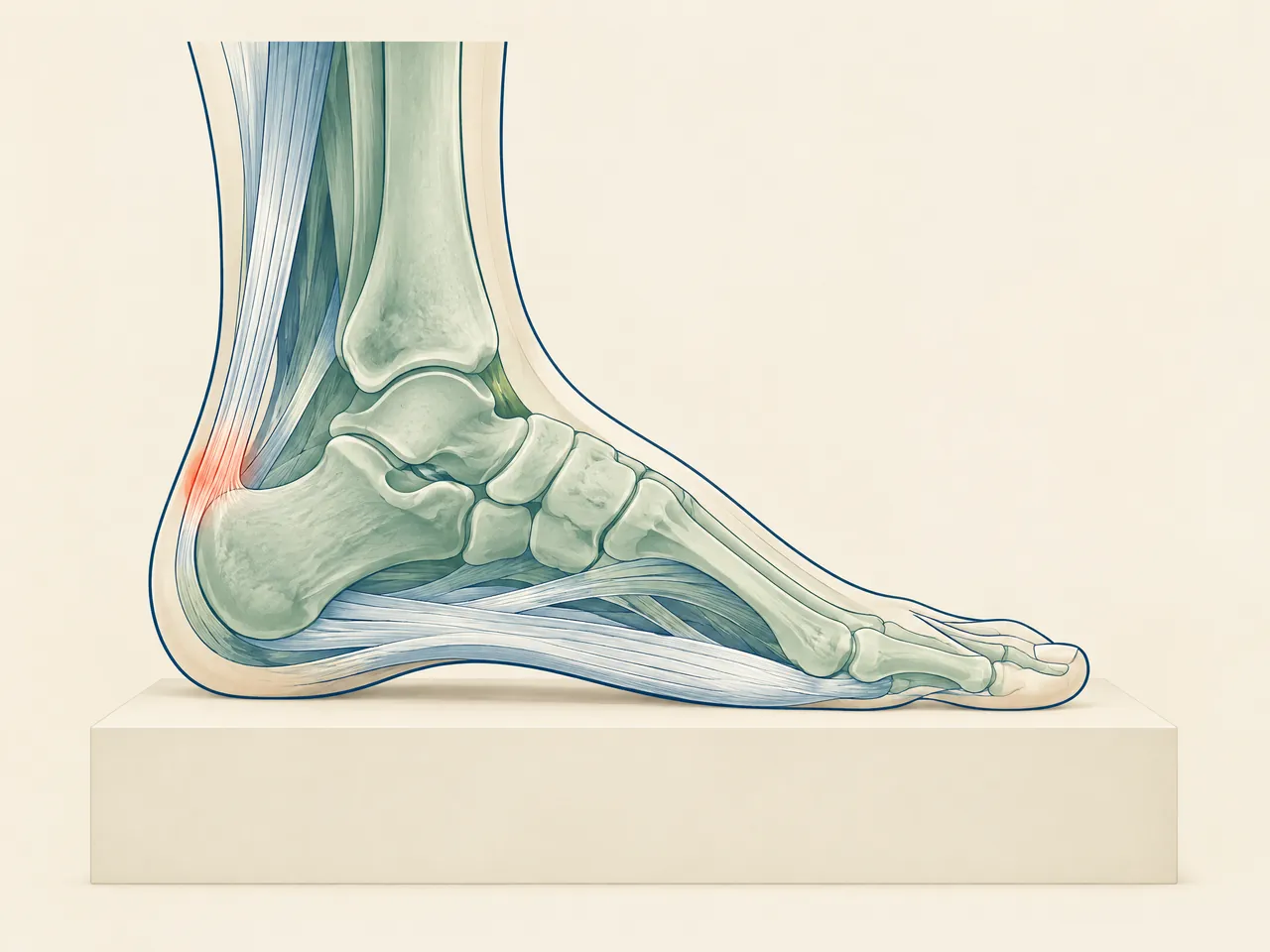
How do I know if I have plantar fasciitis? Pain under the heel or along the arch that is sharpest with the first steps after sleeping or resting, eases somewhat as you move, and returns after long standing, walking or running is a common pattern. It cannot confirm a diagnosis by itself. Burning, numbness, major swelling, an inability to bear weight, or pain that persists despite sensible changes should be assessed professionally.
Transparent pricing
See the fees.
Choose your care.
Explore our complete official price list, including first-trial prices, regular prices, packages and branch-specific options.
Opening WhatsApp prepares an enquiry; it does not send a message, take payment or confirm an appointment. Suitability and individual arrangements are confirmed during consultation.
Pain care
All prices in HKDExtracorporeal shockwave treatment
Shockwave treatment for deep-tissue and fascial care. The Kwun Tong clinic offers the multi-area options shown below.
Priced by branch
Branch-specific pricing
Prince Edward: HK$250 per area
Kwun Tong: HK$250 for 1 area / HK$450 for 2 areas / HK$600 for 3 areas
Pain care (manual therapy)
Includes Chinese medicine musculoskeletal assessment, manual joint techniques and tui na.
HK$580 (single session)
Chinese medicine musculoskeletal assessment
Pain care (acupuncture and manual therapy)
Combines acupuncture and manual therapy.
HK$680 (single session)
Combined care
Hair and scalp
All prices in HKDScalp health and hair-loss management
Includes AI scalp analysis, deep scalp and follicle cleansing, and scalp oil-control care.
HK$380 (first trial)
Regular price: HK$680
- 6 sessions: HK$3,480 (HK$580 per session)
- 12 sessions: HK$5,760 (HK$480 per session)
- 20 sessions: HK$8,600 (HK$430 per session)
- 30 sessions: HK$11,400 (HK$380 per session)
Hair acupuncture and Chinese herbal medicine package
Includes scalp acupuncture and 3 days of Chinese herbal medicine that does not require decoction.
HK$580 (single session)
Registered Chinese Medicine Practitioner consultation
- 6 sessions: HK$3,180 (HK$530 per session)
- 12 sessions: HK$5,760 (HK$480 per session)
- 20 sessions: HK$8,600 (HK$430 per session)
- 30 sessions: HK$11,400 (HK$380 per session)
Combined hair and scalp treatment
Combines acupuncture and Chinese herbal medicine with salon-level scalp and follicle care. Packages include complimentary hair-care shampoo and serum.
HK$1,260 (single session)
Combined treatment
- 8 sessions: HK$8,640 (HK$1,080 per session)
- 16 sessions: HK$15,680 (HK$980 per session)
- 20 sessions: HK$18,600 (HK$930 per session)
- 30 sessions: HK$26,400 (HK$880 per session)
Weight management
All prices in HKDFull-body acupoint embedding for weight management
Includes full-body acupoint embedding. Packages include complimentary Chinese herbal medicine for weight management, with the number of included days scaled to the package. Embedding material and the individual treatment arrangement are confirmed during consultation; this is not a cosmetic thread lift.
HK$980 (single session)
No trial session
- 10 sessions: HK$7,800 (HK$780 per session)
- 20 sessions: HK$14,600 (HK$730 per session)
- 30 sessions: HK$20,400 (HK$680 per session)
Facial acupuncture
All prices in HKDFacial acupuncture (basic)
Includes facial acupuncture and meridian-based facial care, including care for facial puffiness.
HK$480 (first trial)
Regular price: HK$680
- 10 sessions: HK$5,200 (HK$520 per session)
- 20 sessions: HK$9,600 (HK$480 per session)
- 30 sessions: HK$13,500 (HK$450 per session)
Facial acupuncture (advanced)
Includes enhanced facial acupuncture with a specially formulated moisturising mask and serum.
HK$780 (first trial)
Regular price: HK$1,180
- 10 sessions: HK$9,000 (HK$900 per session)
- 20 sessions: HK$16,600 (HK$830 per session)
- 30 sessions: HK$23,400 (HK$780 per session)
Chinese medicine
All prices in HKDAcupuncture and Chinese herbal medicine package
Includes a Chinese medicine consultation with pulse assessment, body acupuncture and 3 days of Chinese herbal granules that do not require decoction.
HK$580 (single session)
Chinese medicine consultation with pulse assessment
How Do I Know If I Have Plantar Fasciitis? Look at Pain Location and Timing
Start with a simple map of your pain. The plantar fascia is a strong band of tissue along the sole that helps support the arch. A plantar-fasciitis pattern is commonly felt at the underside of the heel, often near its inner edge, and it may track forward through the arch. It is usually not the same as pain on top of the foot, pain centred at the back of the heel, or pain limited to a toe. The Hong Kong College of Orthopaedic Surgeons describes pain under the plantar heel as the typical symptom, especially with initial weight-bearing in the morning or after prolonged sitting [2].
Timing gives the map meaning. Think through an ordinary day: how the first step out of bed feels, what happens when you rise after a desk meeting or MTR journey, and whether a long shift, shopping trip or run brings the ache back. The NHS similarly identifies pain around the heel and arch that is worse when walking first starts after sleep or rest, improves as movement begins, then worsens with prolonged standing, walking or running [1]. This pattern can support a discussion about plantar fasciitis, but it does not replace one.

How Do I Know If I Have Plantar Fasciitis? Recognising Heel and Arch Pain
Try to identify one-finger location rather than describing the whole foot as sore. With plantar fasciitis, a person may point to the sole of the heel and say the pain pulls into the arch when they push off. It can feel sharp, stabbing or intensely tender at first, then become a duller ache later. Pain can occur in one foot or both, but either situation deserves the same careful attention to its pattern. If your main complaint is instead pain in the middle of the arch, our guide to pain in the arch of the foot can help you frame the details to raise at an assessment.
Do not rely on one informal test or on the fact that the pain is beneath the foot. Pressing the area, stretching the toes upward, walking up stairs or standing after rest may reproduce discomfort, but these observations are only clues. A clinician usually combines your description with a foot examination; imaging may be considered when another cause is suspected [3]. Before arranging help, note whether pain began gradually or followed a clear incident, whether it stays in one precise spot, and whether shoes, floor surfaces or work demands change it.
How Do I Know If I Have Plantar Fasciitis? Understanding First-Step Pain
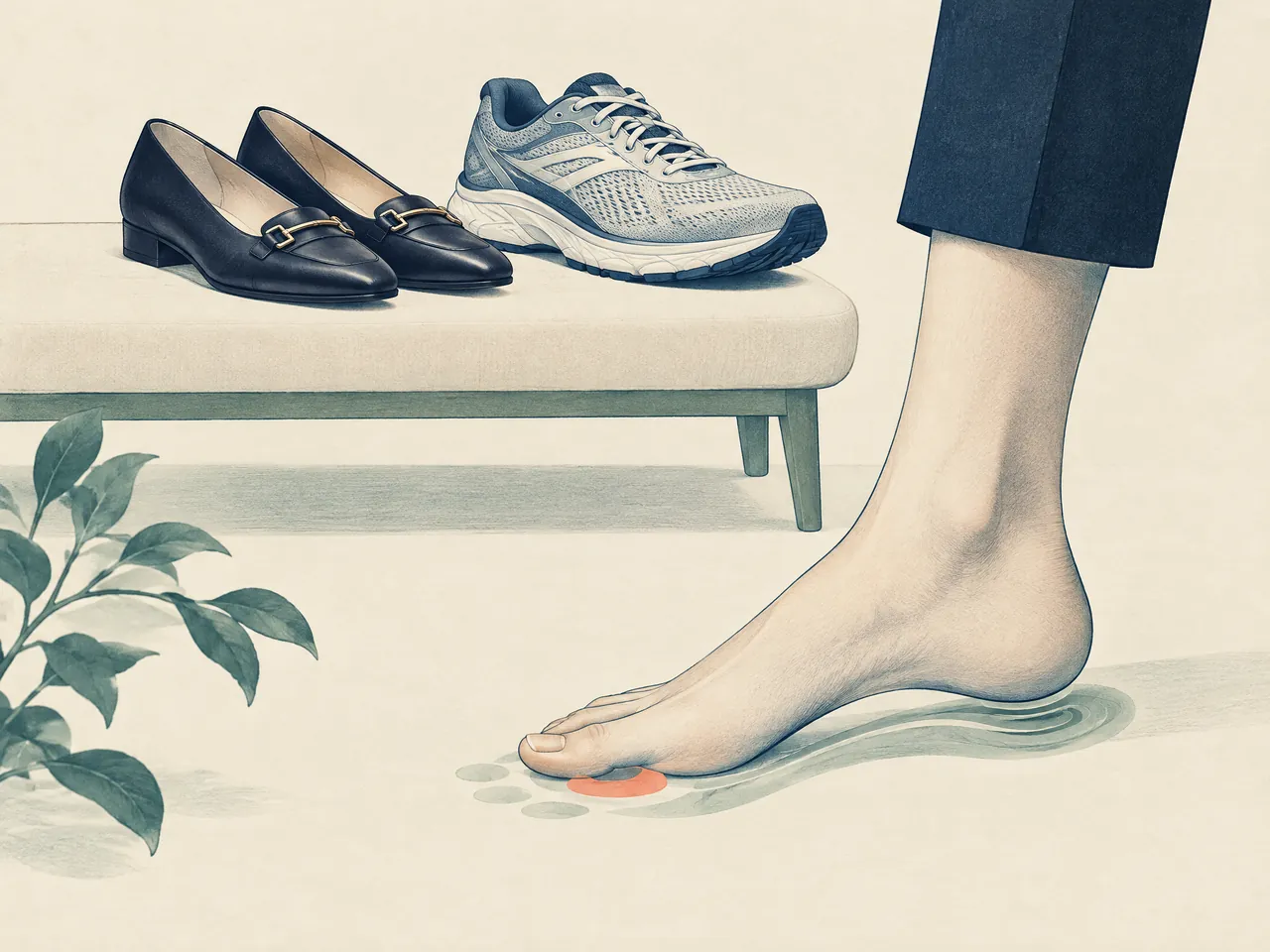
First-step pain means more than simply having a bad morning. It is a distinct sequence: the first few steps after getting out of bed, or standing after sitting for a while, are disproportionately painful; a short period of gentle movement may make the foot feel less stiff; then a longer period on your feet can provoke symptoms again. If that is familiar, write down how long the easing takes and what makes pain return. You can also compare your experience with our explanation of first-step pain before your consultation.
The pattern may be easier to spot when you separate rest from total inactivity. A person can feel reasonably comfortable while seated, yet hesitate when placing weight through the heel. Someone else may hurt steadily from the start of a walk, without any brief easing period. Neither response proves a cause on its own. The useful question is whether the sequence repeats over several days and has a logical relationship to loading the sole of the foot. A short diary of wake-up pain, post-sitting pain and end-of-day pain is more informative than trying to diagnose yourself from a single difficult step.
Compare your options
| What you notice | How it can fit a plantar-fasciitis pattern | Why assessment may be useful |
|---|---|---|
| Pain under the heel or into the arch | This location is commonly described with plantar fascia pain, especially near the underside of the heel. | Location alone overlaps with heel-pad, nerve and other foot problems. |
| First steps after sleep or a long sit are sharp | This is a common clue when symptoms ease somewhat after gentle movement. | A repeated pattern is more useful than a single painful morning. |
| Pain returns after a long shift, walk or run | Prolonged loading can aggravate a plantar-fasciitis pattern. | A recent activity surge or focal bony pain can call for a different assessment. |
| Tingling, burning, numbness or loss of feeling | These are not the usual first-step clues on their own. | Prompt clinical advice is important because nerve-related or other causes may need consideration. |
| Marked swelling, injury or inability to bear weight | These features should not be managed as presumed routine plantar fasciitis. | Seek timely medical evaluation, particularly after injury or with diabetes-related foot concerns. |
On smaller screens, scroll the table sideways to compare all columns.
How Do I Know If I Have Plantar Fasciitis? Comparing Other Causes of Foot Pain
Plantar fasciitis is not the only reason for pain under or around the heel. A heel-pad problem may feel more like a deep bruise under the centre of the heel and remain uncomfortable with continued standing. Nerve irritation may bring tingling, burning or altered sensation. A stress-related bone injury can be associated with a recent, marked rise in running, jumping or walking and may hurt more predictably with weight-bearing. Joint, tendon and skin problems can also change what a person calls heel pain. The point of comparison is not to label yourself; it is to avoid forcing every sore foot into one explanation.
Context often changes the likelihood of each possibility. Consider whether you suddenly increased steps for a new job, returned to sport after a break, changed to unsupportive shoes, or spent more time on hard floors. Those details can be relevant to plantar fascia strain, but they can also help a professional look beyond it. For a broader symptom check, read is my foot pain plantar fasciitis. Bring a concise timeline rather than trying to decide in advance which diagnosis you must have.
How Do I Know If I Have Plantar Fasciitis? Clues That May Point Elsewhere
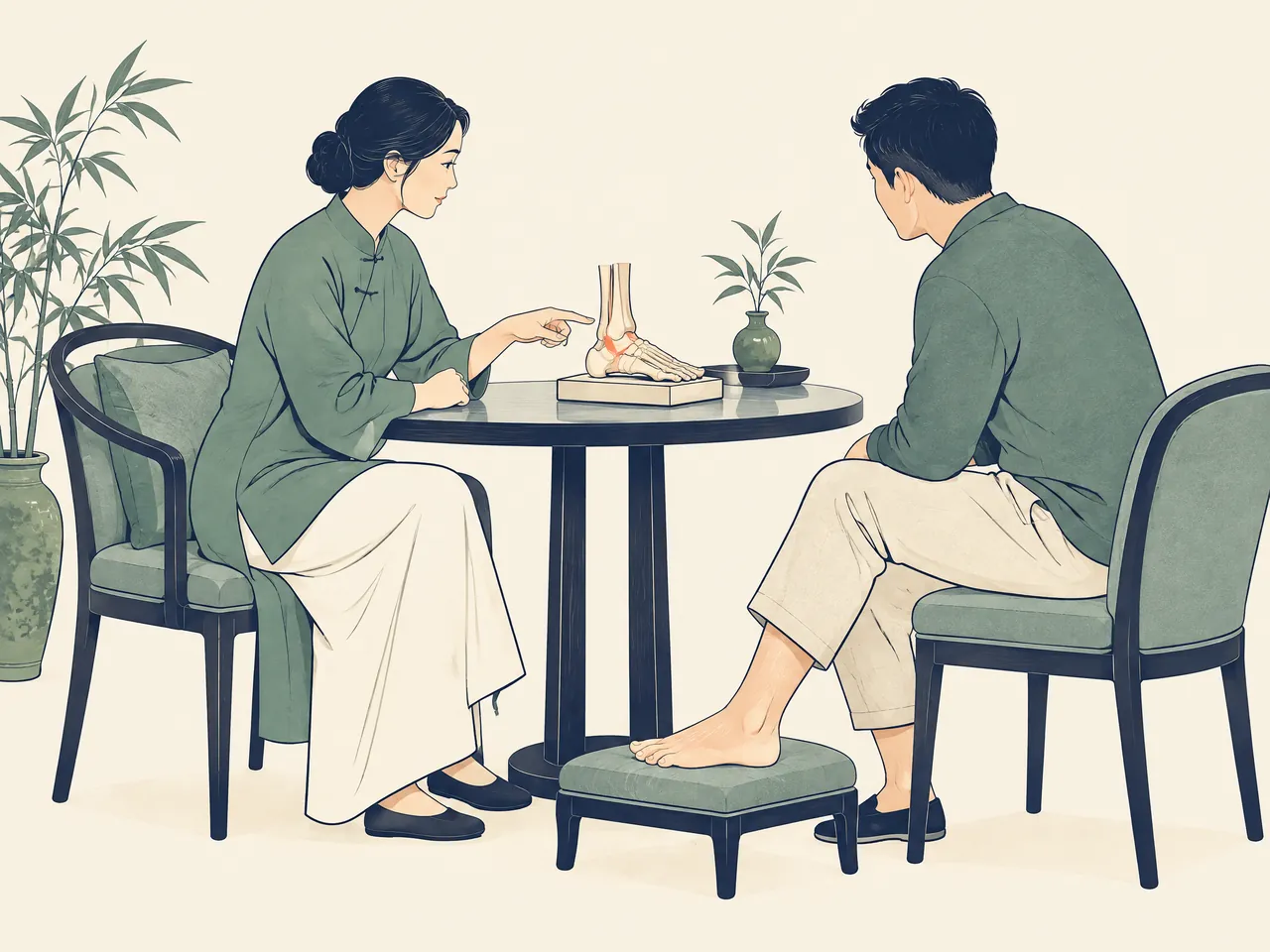
Some features should make you pause before treating the problem as routine plantar fasciitis. Tingling, pins and needles, burning or loss of feeling is not the classic first-step description and needs attention. So does obvious redness, warmth, marked swelling, a wound, fever, pain after a significant injury, or an inability to put weight through the foot. Pain that is mainly at the back of the heel, spreads from the ankle, or keeps intensifying despite reduced activity may need a different examination. People with diabetes should not ignore new foot pain, because foot problems can be more serious; the NHS specifically advises medical help in that situation [1].
It is also worth noticing whether a focal bony tenderness developed after a sharp jump in training. Do not try to walk through it if each step steadily worsens it. Similarly, a constant bruised sensation beneath the heel after long periods of standing may not follow the classic start-worse, move-better, load-worse sequence. These distinctions do not tell you exactly what is wrong, but they tell the clinician what to investigate. That is safer than repeatedly increasing stretches or activity because an online description sounds partly familiar.
How Do I Know If I Have Plantar Fasciitis? When Professional Assessment Matters
Arrange professional assessment promptly if you cannot bear weight, have a clear injury with substantial swelling or deformity, develop numbness or weakness, or have diabetes and a new foot problem. For less urgent symptoms, book an assessment when pain is severe enough to stop normal activity, is worsening or recurring, or has not improved after a short period of sensible self-care. These are practical escalation points echoed in NHS guidance [1]. An evaluation can include your symptom history, footwear and activity changes, examination of the painful area and, when appropriate, consideration of tests for another cause [3].
Prepare for that conversation with useful details: the first date of symptoms, the exact location, pain after getting up or sitting, recent activity changes, a list of shoes you use most, and what you have already tried. If you are exploring Chinese medicine, you may enquire at the Kwun Tong Chinese medicine clinic or the Chinese medicine clinic Prince Edward. Say clearly if you need language support so the clinic can confirm arrangements. An enquiry is a chance to ask whether assessment is appropriate, not a substitute for urgent medical care.
How Do I Know If I Have Plantar Fasciitis? Self-Care and TCM Consultation
When the symptom pattern is mild and there are no warning signs, reduce the aggravating load rather than trying to become completely inactive. A runner might pause hills and speed work; someone who stands at work might use planned sitting breaks where possible; a gym-goer might choose a non-impact option temporarily. The aim is to stop repeatedly provoking the sore area while keeping daily movement manageable. The Hong Kong College of Orthopaedic Surgeons lists rest, insoles, stretching exercise and physiotherapy among initial non-surgical approaches [2]. What is suitable depends on the person and the actual cause of pain.
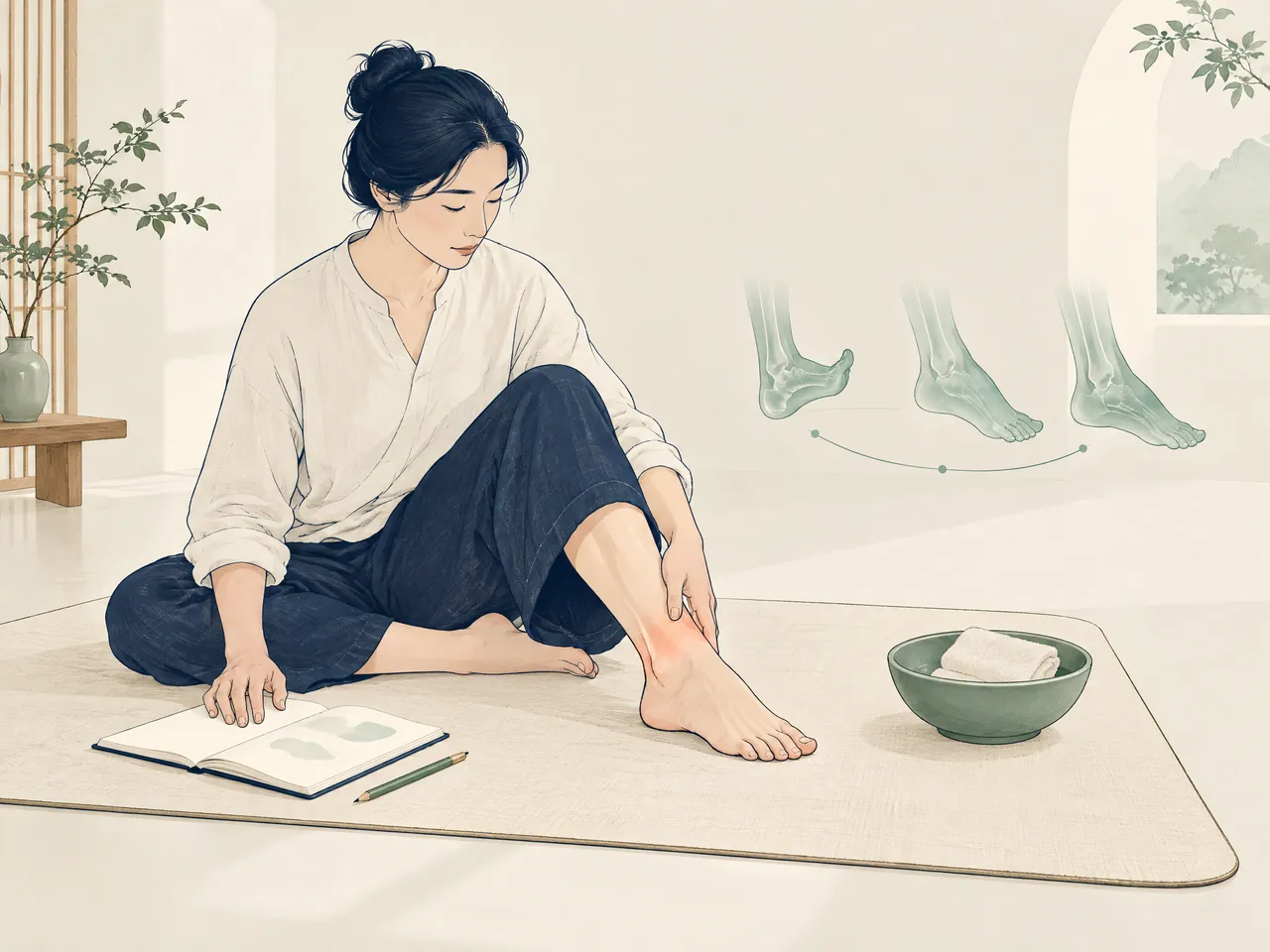
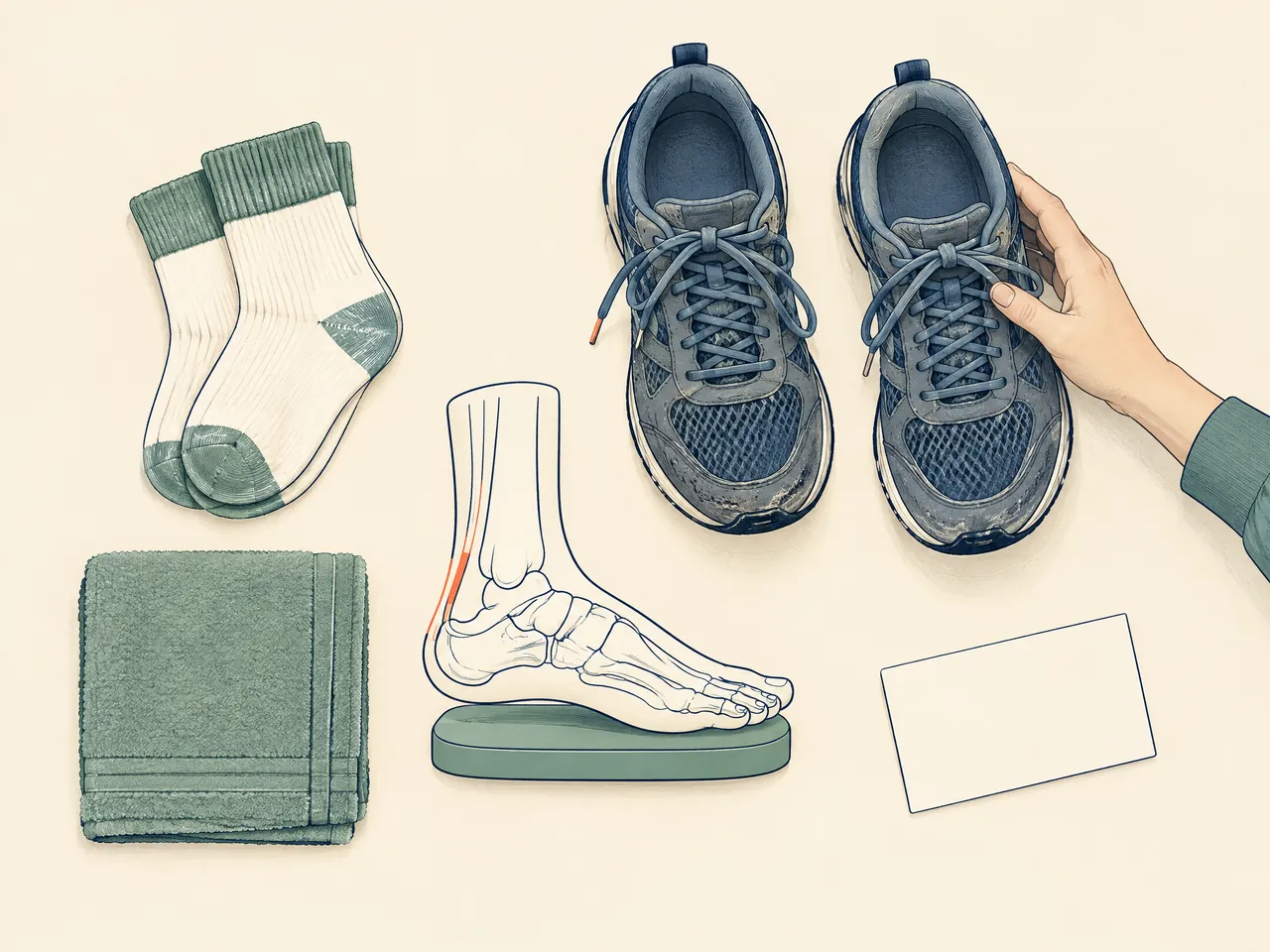
Footwear is part of the daily load. The NHS advises shoes with cushioned heels and good arch support, and advises against long periods of standing, walking barefoot on hard surfaces, flip-flops and backless slippers when managing plantar fasciitis [1]. That does not mean one brand or insert works for everyone. Instead, use footwear as a practical observation: does a supportive, stable shoe make a normal day more tolerable than a thin, worn or unsupportive alternative? Take that answer, and the shoes themselves if practical, to an assessment.
How Do I Know If I Have Plantar Fasciitis? Gentle Stretching and Load Changes
Gentle stretching can be a reasonable part of self-care when it does not sharply increase pain. Common examples include a calf stretch against a wall and a seated sole-of-foot stretch in which the toes are drawn back gently. The NHS recommends regular gentle exercises that stretch the sole of the foot and heel [1]. Work slowly and stop if the movement produces sharp, spreading or escalating pain. Stretching is not a test that confirms a diagnosis, and forcing range after a fresh injury can be counterproductive. Our page on plantar fasciitis exercises explains how to approach this topic cautiously.
Pair stretching with realistic changes to how the foot is loaded. Avoid abruptly exchanging a run for long walks, or returning to full activity the first day pain seems quieter. Think in terms of the next 24 hours: did the chosen activity leave the next first steps much worse? If so, it was likely too much for now. Choose lower-impact movement if it is comfortable, build back gradually, and seek advice if the trend is not improving. The target is a manageable routine, not perfect stillness or a promise of a set recovery timetable.

How Do I Know If I Have Plantar Fasciitis? Discussing Acupuncture Responsibly
A registered Chinese medicine practitioner can take a fuller history of foot pain, daily loading, sleep, general health and your own goals before discussing options within Chinese medicine. Traditional pattern descriptions may be part of that consultation, but they are not the same thing as a modern medical diagnosis of plantar fasciitis. Be direct about warning signs, diabetes, medication, pregnancy, prior injections, recent trauma, and whether a clinician has already assessed the foot. That information helps keep the conversation grounded in the actual problem rather than in a label assumed from symptoms alone.
Acupuncture may be discussed as an adjunct after appropriate assessment, not as a guaranteed cure or a fixed number of sessions. It should not delay urgent evaluation for numbness, inability to bear weight, significant swelling or a possible injury. Ask what the proposed plan is intended to address, what self-care should continue, when to reassess, and when another referral is more suitable. A responsible plan leaves room for footwear, activity modification and medical assessment where needed, instead of implying that one treatment fits every kind of heel or arch pain.
Care and health guide
Foot discomfort: care information
This directory brings together services, reading, and visit information related to foot discomfort, to help you prepare questions for a consultation.
When foot discomfort affects your day, noting when it occurs, its relation to activity, and what you have already tried can help prepare a consultation; acupuncture for foot pain is a relevant service or reading entry point.
Individual circumstances differ, and acupuncture Hong Kong offers related information to help you understand options and prepare questions.


Your questions, answered
Frequently asked questions
How do I know if I have plantar fasciitis from my symptoms?
A common pattern is pain on the bottom of the heel or into the arch that is worst with the first steps after waking or sitting, eases somewhat after moving, then returns with long standing, walking or running. It is a useful clue, not a self-diagnosis.
Could plantar fasciitis cause pain all day?
Symptoms may return or build after prolonged time on your feet, but constant or worsening pain should not simply be assumed to be plantar fasciitis. Note the timing, activity link and exact location, then seek assessment if it is severe, recurrent or not improving.
When should I seek help for heel or arch pain?
Seek prompt care if you cannot bear weight, have major swelling or deformity after injury, numbness, weakness, a wound, fever, or diabetes with new foot pain. Arrange non-urgent assessment for pain that stops normal activity, keeps returning, worsens, or does not improve after sensible self-care.
Can acupuncture cure plantar fasciitis?
Acupuncture may be discussed as an adjunct after appropriate assessment, but it should not be presented as a guaranteed cure or as having a fixed number of sessions. Load adjustment, comfortable supportive footwear, gentle exercise where appropriate, and reassessment when symptoms persist remain important.
Sources and further information
- [1] NHS: Plantar fasciitis
Referenced for: Symptoms, self-care measures, footwear advice and escalation guidance.
- [2] The Hong Kong College of Orthopaedic Surgeons: Plantar Fasciitis
Referenced for: Hong Kong orthopaedic information on typical plantar-heel pain and initial conservative management.
- [3] Cleveland Clinic: Plantar Fasciitis
Referenced for: Symptom description and the role of examination and possible imaging when another cause is suspected.