
TCM Lab · Health reading
Acupuncture for Hip Pain, Acupuncture for Hip Joint Pain and Acupuncture for Chronic Hip Pain: What the Evidence Shows
Published Updated
If you are considering acupuncture for hip pain, begin with the cause of the pain rather than the treatment name. Hip joint pain can follow an injury, build gradually with osteoarthritis, arise from tissues around the joint, or be felt around the hip for another reason. That matters because the best evidence is specifically about hip osteoarthritis, not every painful hip. For acupuncture for chronic hip pain, a record of when the pain started, where it is felt, what walking or sitting changes, and whether there are warning symptoms gives a clinician a more useful starting point than trying to diagnose the problem from a treatment response.
Appointments are confirmed through WhatsApp. If you have language requirements, please mention them in your enquiry.
The short answer
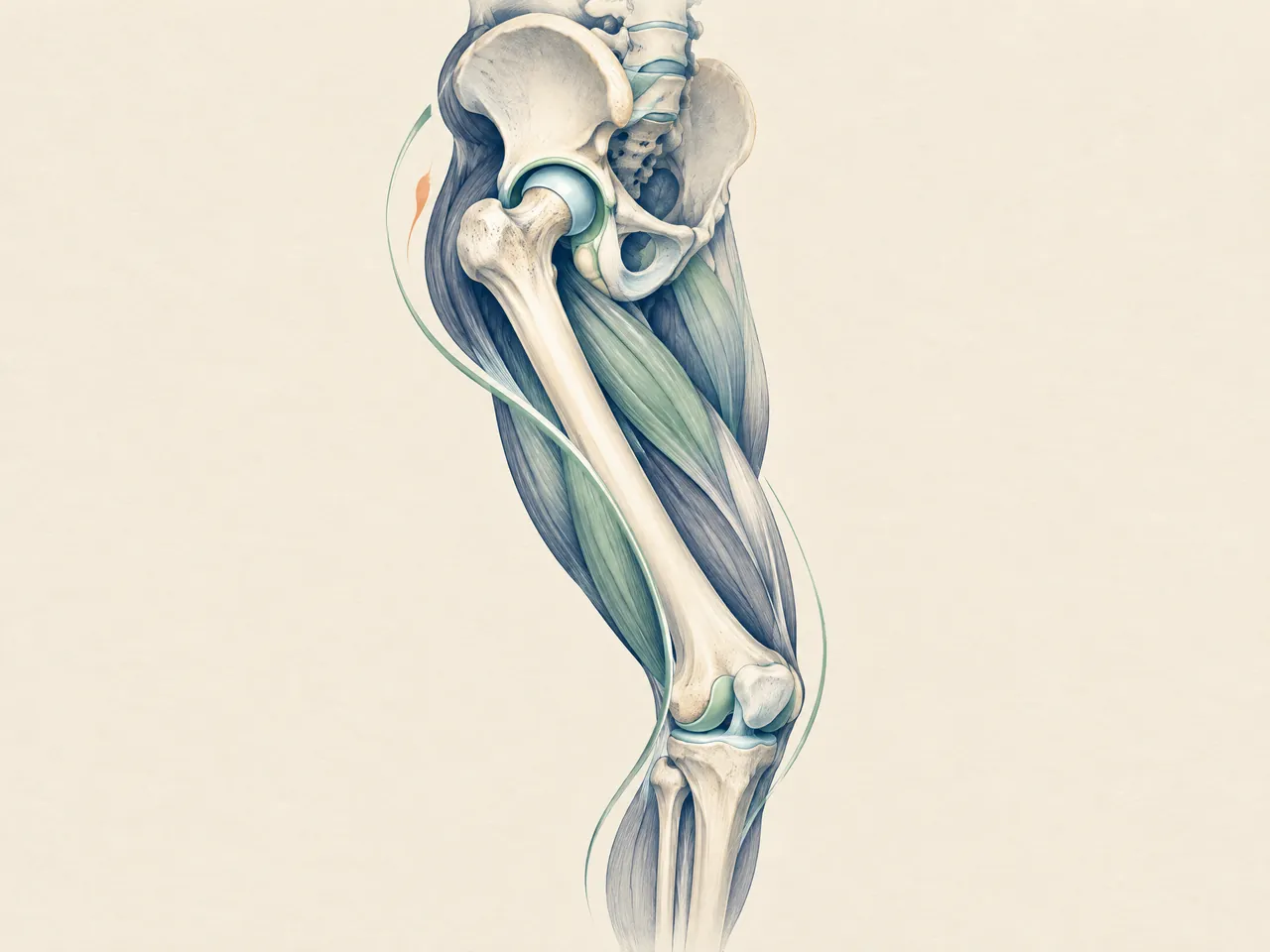
For confirmed hip osteoarthritis, a Cochrane review found that acupuncture probably makes little or no difference to pain or function compared with sham acupuncture at close to eight weeks [1]. NICE advises against offering acupuncture or dry needling to manage osteoarthritis [2]. Broader hip-pain research combines different diagnoses and surgical settings, so it cannot show that acupuncture treats every hip problem. Sudden, severe or injury-related hip pain needs medical assessment first.
Transparent pricing
See the fees.
Choose your care.
Explore our complete official price list, including first-trial prices, regular prices, packages and branch-specific options.
Opening WhatsApp prepares an enquiry; it does not send a message, take payment or confirm an appointment. Suitability and individual arrangements are confirmed during consultation.
Pain care
All prices in HKDExtracorporeal shockwave treatment
Shockwave treatment for deep-tissue and fascial care. The Kwun Tong clinic offers the multi-area options shown below.
Priced by branch
Branch-specific pricing
Prince Edward: HK$250 per area
Kwun Tong: HK$250 for 1 area / HK$450 for 2 areas / HK$600 for 3 areas
Pain care (manual therapy)
Includes Chinese medicine musculoskeletal assessment, manual joint techniques and tui na.
HK$580 (single session)
Chinese medicine musculoskeletal assessment
Pain care (acupuncture and manual therapy)
Combines acupuncture and manual therapy.
HK$680 (single session)
Combined care
Hair and scalp
All prices in HKDScalp health and hair-loss management
Includes AI scalp analysis, deep scalp and follicle cleansing, and scalp oil-control care.
HK$380 (first trial)
Regular price: HK$680
- 6 sessions: HK$3,480 (HK$580 per session)
- 12 sessions: HK$5,760 (HK$480 per session)
- 20 sessions: HK$8,600 (HK$430 per session)
- 30 sessions: HK$11,400 (HK$380 per session)
Hair acupuncture and Chinese herbal medicine package
Includes scalp acupuncture and 3 days of Chinese herbal medicine that does not require decoction.
HK$580 (single session)
Registered Chinese Medicine Practitioner consultation
- 6 sessions: HK$3,180 (HK$530 per session)
- 12 sessions: HK$5,760 (HK$480 per session)
- 20 sessions: HK$8,600 (HK$430 per session)
- 30 sessions: HK$11,400 (HK$380 per session)
Combined hair and scalp treatment
Combines acupuncture and Chinese herbal medicine with salon-level scalp and follicle care. Packages include complimentary hair-care shampoo and serum.
HK$1,260 (single session)
Combined treatment
- 8 sessions: HK$8,640 (HK$1,080 per session)
- 16 sessions: HK$15,680 (HK$980 per session)
- 20 sessions: HK$18,600 (HK$930 per session)
- 30 sessions: HK$26,400 (HK$880 per session)
Weight management
All prices in HKDFull-body acupoint embedding for weight management
Includes full-body acupoint embedding. Packages include complimentary Chinese herbal medicine for weight management, with the number of included days scaled to the package. Embedding material and the individual treatment arrangement are confirmed during consultation; this is not a cosmetic thread lift.
HK$980 (single session)
No trial session
- 10 sessions: HK$7,800 (HK$780 per session)
- 20 sessions: HK$14,600 (HK$730 per session)
- 30 sessions: HK$20,400 (HK$680 per session)
Facial acupuncture
All prices in HKDFacial acupuncture (basic)
Includes facial acupuncture and meridian-based facial care, including care for facial puffiness.
HK$480 (first trial)
Regular price: HK$680
- 10 sessions: HK$5,200 (HK$520 per session)
- 20 sessions: HK$9,600 (HK$480 per session)
- 30 sessions: HK$13,500 (HK$450 per session)
Facial acupuncture (advanced)
Includes enhanced facial acupuncture with a specially formulated moisturising mask and serum.
HK$780 (first trial)
Regular price: HK$1,180
- 10 sessions: HK$9,000 (HK$900 per session)
- 20 sessions: HK$16,600 (HK$830 per session)
- 30 sessions: HK$23,400 (HK$780 per session)
Chinese medicine
All prices in HKDAcupuncture and Chinese herbal medicine package
Includes a Chinese medicine consultation with pulse assessment, body acupuncture and 3 days of Chinese herbal granules that do not require decoction.
HK$580 (single session)
Chinese medicine consultation with pulse assessment
Acupuncture for Hip Pain, Acupuncture for Hip Joint Pain and Acupuncture for Chronic Hip Pain: Start with the Diagnosis
A painful hip does not identify the structure causing the pain. It may be felt deep in the joint, over the outer hip, in the buttock, upper thigh or even near the knee. A fall, a sudden twist, a new training load, prolonged walking, getting up from a low seat and lying on one side can each be useful clues, but none establishes a diagnosis by itself. The NHS lists sudden injury, arthritis, tendon-related problems, bursitis, fracture and joint infection among possible explanations for adult hip pain [3]. The practical point is not to label yourself from a symptom map; it is to make sure the question about acupuncture matches the condition that is actually being assessed.
The time course helps shape that conversation. Someone whose discomfort appears after a long shift on their feet may need to describe the amount and type of activity, footwear, stairs and recovery by the next morning. Someone with gradually increasing stiffness may instead need to explain how walking distance, putting on shoes, sleep or sitting-to-standing has changed. These details can show how the problem affects function, even when pain intensity varies from day to day. If hip and knee symptoms coexist, the separate guide to knee pain self-management can help frame daily-load questions, but it is not a substitute for finding the source of hip pain.

Acupuncture for Hip Pain, Acupuncture for Hip Joint Pain and Acupuncture for Chronic Hip Pain: Why Hip Pain Is a Symptom
Hip osteoarthritis is only one possible diagnosis behind chronic hip pain. A person with a confirmed diagnosis and activity-related pain is not in the same research group as someone with pain after a fall, a hot swollen joint, pain around the outer hip, or pain linked with altered sensation. This distinction protects against two unhelpful shortcuts: treating a familiar-sounding symptom as proof of osteoarthritis, and applying an osteoarthritis result to every hip complaint. It also explains why a treatment page cannot decide whether imaging, rehabilitation, medication review, a specialist opinion or urgent care is appropriate. The diagnosis and the safety question come before a discussion of acupuncture for hip joint pain.
Acupuncture for Hip Pain, Acupuncture for Hip Joint Pain and Acupuncture for Chronic Hip Pain: Symptoms to Record Before Assessment
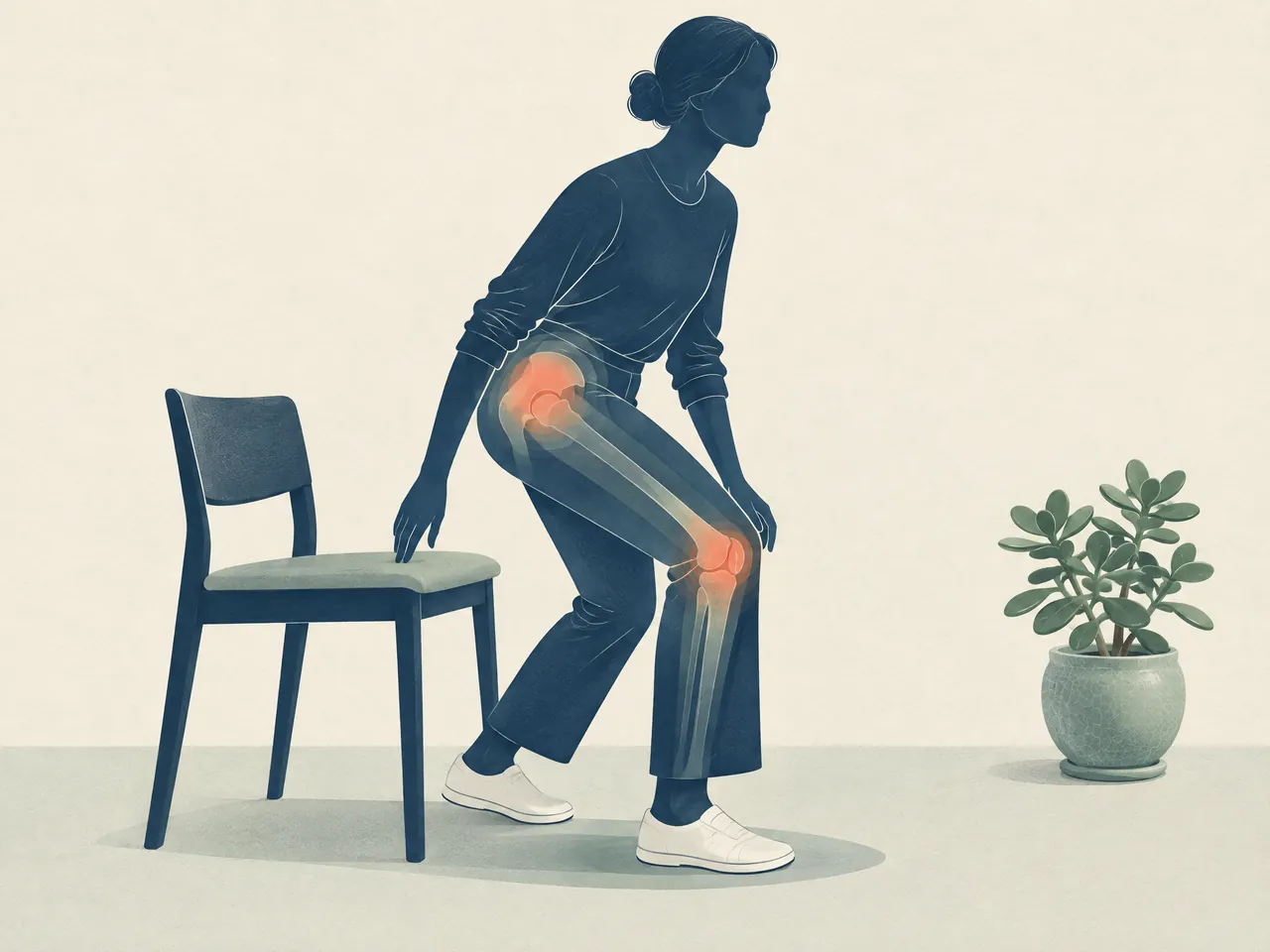
Bring a short, dated account rather than trying to remember a difficult week in general terms. Note when symptoms began and whether there was a fall or other incident; mark the most painful area; describe the sensation in ordinary words; and record what happens with walking, stairs, turning in bed, sitting, standing and putting weight through the leg. Include morning stiffness, night waking, visible swelling, warmth, skin-colour change, fever or feeling unwell, numbness, and whether symptoms travel into the leg. List current medicines and previous investigations or treatment. A simple record also makes it easier to see whether an activity change is associated with a flare, without assuming that association proves the cause.
Compare your options
| Hip-pain setting | What the evidence can reasonably address | Useful next step |
|---|---|---|
| Confirmed hip osteoarthritis | Cochrane found little or no short-term difference in pain or function versus sham acupuncture; this does not test cartilage repair [1]. | Discuss a diagnosis-led plan, including therapeutic exercise and other appropriate care [2]. |
| Outer-hip, thigh or mixed-pattern pain without a diagnosis | Hip osteoarthritis findings cannot identify the cause or be automatically transferred to another condition. | Arrange assessment and bring a symptom-and-activity record. |
| Recent fall, severe pain or inability to bear weight | Acupuncture trials do not rule out fracture, nerve injury or another urgent problem. | Seek urgent local medical assessment rather than waiting to see whether pain changes [3]. |
| Before or after hip-fracture or hip-replacement surgery | Some mixed reviews include perioperative studies, but those results describe a hospital context rather than routine outpatient chronic hip pain [4]. | Follow the surgical and medical team’s plan; discuss any additional therapy with them. |
On smaller screens, scroll the table sideways to compare all columns.
Acupuncture for Hip Pain, Acupuncture for Hip Joint Pain and Acupuncture for Chronic Hip Pain: Understanding the Research
The comparison group determines what an acupuncture study can answer. A trial of acupuncture plus ordinary care against ordinary care alone asks whether that added package is associated with a different result. A true-acupuncture versus sham-acupuncture trial more directly tests whether results differ when participants receive a credible control procedure. Neither design is automatically useless, but they should not be described as if they mean the same thing. Expectation, additional consultation time and treatment preference can influence patient-reported pain and function, especially when participants and practitioners know which treatment was given. This is why a headline saying a person improved after an added treatment does not, by itself, establish a specific needling effect.
The most focused evidence here is the 2018 Cochrane review of acupuncture for hip osteoarthritis. It included six trials with 413 people, chiefly older participants with hip osteoarthritis symptoms over years rather than newly unexplained pain [1]. In its two small, sham-controlled trials, the review found moderate-certainty evidence that acupuncture produced little or no difference in pain or function at close to eight weeks. The other trials used unblinded comparisons, including acupuncture added to routine physician care; the review judged that evidence low or very low certainty and noted that expectations or preference may have contributed to reported benefits [1]. That is a reason for careful interpretation, not a reason to dismiss a person’s symptoms.

Acupuncture for Hip Pain, Acupuncture for Hip Joint Pain and Acupuncture for Chronic Hip Pain: What Hip Osteoarthritis Trials Found
For a person with hip osteoarthritis, the useful summary is narrow: compared with sham acupuncture, the pooled result was little or no difference in pain or function in the short term, while estimates remained imprecise because the samples were small [1]. A separate unblinded study of acupuncture added to routine care cannot replace that comparison; it measures an additional care package under different conditions. The review was also not a study of structural repair: it reported no trial that measured radiographic joint changes [1]. For that reason, neither a short-term symptom change nor a course of treatment can support a promise of regenerated cartilage or avoidance of surgery. Read more about the limits of that claim in Can acupuncture repair hip cartilage?

Acupuncture for Hip Pain, Acupuncture for Hip Joint Pain and Acupuncture for Chronic Hip Pain: Why Results Cannot Be Generalised
A 2023 systematic review of hip-pain acupuncture trials included 12 randomised trials and 806 participants, but the studies covered hip osteoarthritis, hip fracture, avascular necrosis, pain around the hip and contexts before or after hip replacement [4]. They also used different forms of acupuncture, comparison treatments and outcomes, ranging from pain scores and function to anaesthetic or analgesic outcomes around surgery. The authors said that this diversity made only limited meta-analysis possible and that the evidence was weak because of small studies and methodological limitations [4]. Perioperative findings therefore cannot be translated into a promise that outpatient acupuncture will reduce someone’s medicines, prevent a hip replacement or resolve an undiagnosed chronic hip problem. The related question does acupuncture help hip pain is best answered by first specifying the diagnosis and comparison.
Acupuncture for Hip Pain, Acupuncture for Hip Joint Pain and Acupuncture for Chronic Hip Pain: Safer Next Steps
Do not wait for a complementary treatment to test whether a potentially urgent hip problem settles. Seek urgent local medical care after a fall or injury if there is severe pain, an inability to walk or bear weight, or tingling or loss of feeling in the hip or leg. Prompt assessment is also important for a swollen, hot hip; skin colour change around the hip; or hip pain with fever, chills or feeling generally unwell [3]. These patterns can point to problems that need timely medical evaluation. Needling cannot safely rule out fracture, infection or a neurological issue, and a temporary change in pain should not be used as a diagnostic test.
For persistent but non-emergency symptoms, arrange clinical review when pain is worsening, repeatedly returning, disturbing sleep or preventing normal activities [3]. If hip osteoarthritis is diagnosed, NICE describes tailored therapeutic exercise and, where appropriate, weight management, information and support as core care; it recommends against acupuncture or dry needling to manage osteoarthritis [2]. Treatment decisions should still be individual. Ask what diagnosis is being considered, which treatment goal matters most, how progress will be measured, and when the plan should be reviewed. Do not start, stop or alter prescribed medicines on the basis of this page or an acupuncture appointment.

Acupuncture for Hip Pain, Acupuncture for Hip Joint Pain and Acupuncture for Chronic Hip Pain: When Medical Review Comes First
Medical review comes first whenever the story does not fit a stable, already assessed problem. Examples include new severe pain without an injury, rapidly deteriorating ability to walk, a recent fall, marked swelling or heat, fever, general illness, numbness after injury, or a major change in usual function. Even without these warning signs, a clinician should assess pain that has not improved with sensible self-care, lasts beyond a short period or changes the way you move. The assessment may include questions about injury, activity, medical history and medications, as well as an examination. The aim is to identify the likely cause and choose a proportionate next step, rather than assuming all chronic hip pain is the same condition.

Acupuncture for Hip Pain, Acupuncture for Hip Joint Pain and Acupuncture for Chronic Hip Pain: Discussing Care Options Responsibly
If you are considering acupuncture after appropriate assessment, describe the diagnosis or uncertainty, your symptom record, treatment already tried, medicines and the outcomes you want to track, such as a particular walking task or sleep disruption. It is reasonable to ask how the practitioner will decide whether to continue, pause or refer you back for medical review. The hip osteoarthritis trials reported minor bruising, bleeding or insertion-site pain in some participants, so personal risks and medicines should be discussed rather than assumed away [1]. To make an enquiry with TCM Lab, you may contact the Kwun Tong Chinese medicine clinic or the Chinese medicine clinic Prince Edward; for published charges, see the Chinese medicine clinic price list Hong Kong. An enquiry is a chance to clarify suitability and availability, not a guarantee of a particular result.
A clear review point keeps the decision practical. Before any optional treatment, choose one or two ordinary activities that currently matter, such as getting out of a chair, walking from home to public transport, climbing the stairs or sleeping without repeated interruption. Record the starting situation in simple terms, then agree when it should be reconsidered. This is more informative than chasing a single good or bad day, and it avoids turning a temporary change in symptoms into a claim that the underlying diagnosis has changed. If symptoms worsen, new warning signs appear, or the agreed functional goal is not being met, return to the clinician overseeing the hip problem. For osteoarthritis, exercise is a core part of guideline-based management, so any discussion about additional care should keep rehabilitation and safe daily movement in view [2].
Care and health guide
Pain-care information
This directory brings together services, reading, and visit information related to pain care, to help you prepare questions for a consultation.
When pain care affects your day, noting when it occurs, its relation to activity, and what you have already tried can help prepare a consultation; Chinese medicine pain management Hong Kong is a relevant service or reading entry point.
Individual circumstances differ, and acupuncture Hong Kong offers related information to help you understand options and prepare questions.


Your questions, answered
Frequently asked questions
Is acupuncture useful for hip osteoarthritis?
In the Cochrane review, acupuncture probably made little or no difference to pain or function compared with sham acupuncture at close to eight weeks [1]. NICE recommends not offering acupuncture or dry needling to manage osteoarthritis [2]. Discuss a diagnosis-led care plan with a healthcare professional.
Why might acupuncture plus usual care look different from sham-acupuncture research?
They ask different questions. Adding acupuncture to usual care can also add attention, expectation and a preferred treatment. A sham-controlled study is designed to compare true and credible control procedures. In hip osteoarthritis, unblinded added-care findings were lower-certainty than the sham-controlled evidence [1].
Can hip osteoarthritis evidence be applied to bursitis, tendon pain or pain after a fall?
No. These situations have different possible causes, risks and research populations. The broader hip-pain review mixed several diagnoses and surgical settings, which limits a single conclusion for every hip-pain presentation [4]. A new diagnosis is needed before applying evidence from hip osteoarthritis.
When should I seek urgent help for hip pain instead of waiting for an appointment?
Seek urgent local medical care for severe pain after a fall or injury, inability to walk or bear weight, or tingling or loss of feeling after injury. A hot or swollen hip, skin-colour change, fever, chills or feeling unwell also needs prompt assessment [3].
Sources and further information
- [1] [1] Cochrane: Acupuncture for hip osteoarthritis
Referenced for: Systematic review of six trials in hip osteoarthritis; supports the sham-controlled pain and function findings, comparison distinctions, adverse-event summary and absence of radiographic outcomes.
- [2] [2] NICE NG226: Osteoarthritis in over 16s: diagnosis and management
Referenced for: Guideline recommendations on therapeutic exercise, weight management where appropriate, and not offering acupuncture or dry needling for osteoarthritis.
- [3] [3] NHS: Hip pain in adults
Referenced for: Supports adult hip-pain causes, urgent warning symptoms, and reasons to seek non-emergency clinical review.
- [4] [4] Park et al.: Acupuncture Treatment for Hip Pain: A Systematic Review and Meta-Analysis
Referenced for: Supports the mixed-diagnosis, perioperative and outpatient scope of 12 trials, heterogeneous comparisons and the review authors’ caution about weak evidence.