
TCM Lab · Health reading
Acupuncture for Carpal Tunnel Syndrome: Evidence and Practical Boundaries
Published Updated
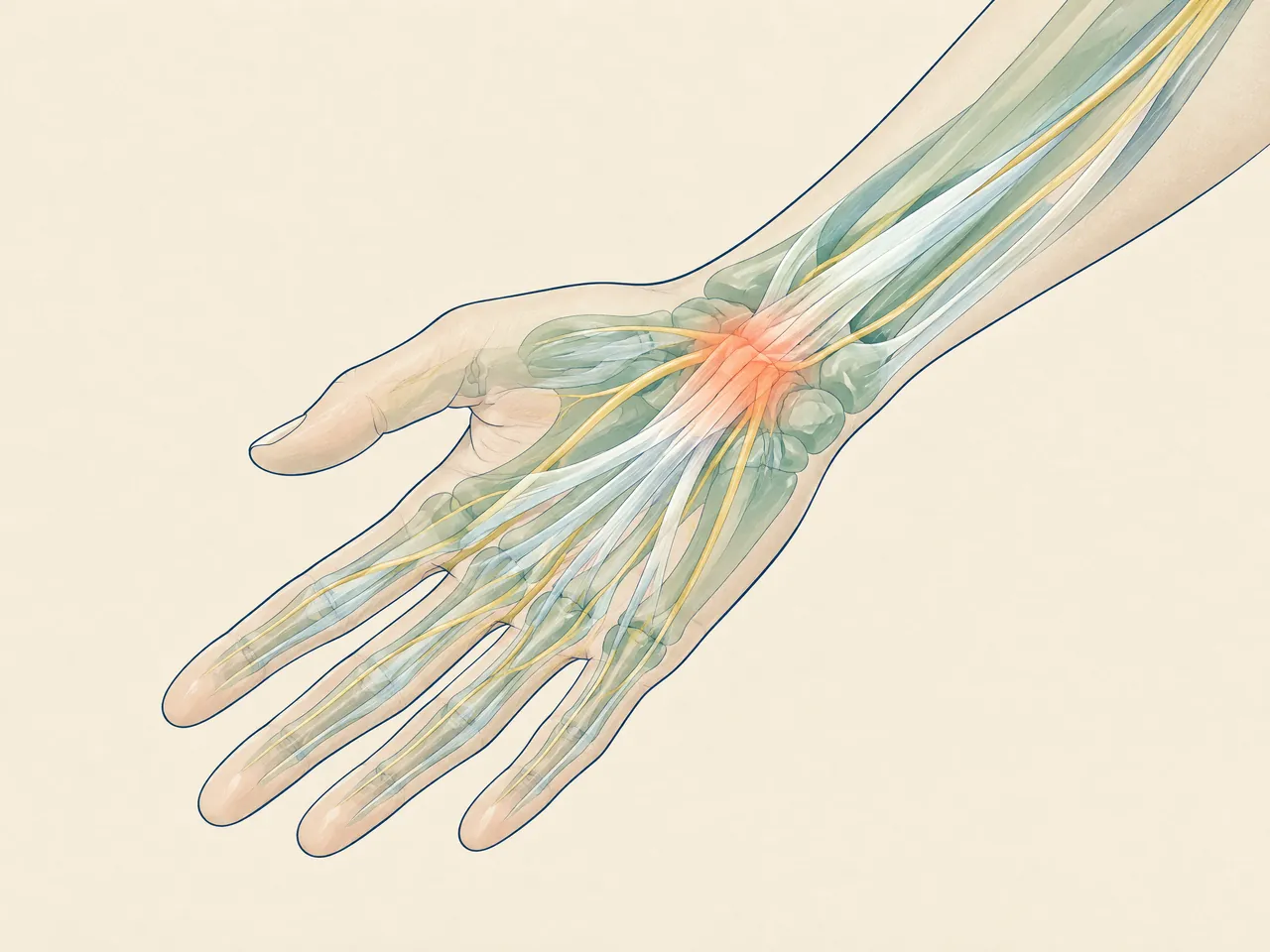
Tingling that wakes you at night, numb fingertips and a grip that suddenly feels less dependable can make people search for acupuncture for carpal tunnel syndrome. Acupuncture may be discussed as an adjunct after the problem has been properly assessed, but it is not a proven stand-alone cure. The current research is low certainty and does not show a clear advantage over sham acupuncture or established options. A safer, more useful starting point is to identify the symptom pattern, protect the wrist from avoidable strain and arrange medical review when symptoms are severe, persistent or changing.
Appointments are confirmed through WhatsApp. If you have language requirements, please mention them in your enquiry.
The short answer
Acupuncture for carpal tunnel syndrome can be considered as supportive care after assessment, not as a replacement for diagnosis, a night splint or conventional treatment when these are indicated. A Cochrane review found low- or very-low-certainty evidence and could not confirm a clear benefit over sham acupuncture or other treatments. Symptoms such as worsening weakness, ongoing numbness or loss of hand function deserve medical review rather than a wait-and-see approach.
Transparent pricing
See the fees.
Choose your care.
Explore our complete official price list, including first-trial prices, regular prices, packages and branch-specific options.
Opening WhatsApp prepares an enquiry; it does not send a message, take payment or confirm an appointment. Suitability and individual arrangements are confirmed during consultation.
Pain care
All prices in HKDExtracorporeal shockwave treatment
Shockwave treatment for deep-tissue and fascial care. The Kwun Tong clinic offers the multi-area options shown below.
Priced by branch
Branch-specific pricing
Prince Edward: HK$250 per area
Kwun Tong: HK$250 for 1 area / HK$450 for 2 areas / HK$600 for 3 areas
Pain care (manual therapy)
Includes Chinese medicine musculoskeletal assessment, manual joint techniques and tui na.
HK$580 (single session)
Chinese medicine musculoskeletal assessment
Pain care (acupuncture and manual therapy)
Combines acupuncture and manual therapy.
HK$680 (single session)
Combined care
Hair and scalp
All prices in HKDScalp health and hair-loss management
Includes AI scalp analysis, deep scalp and follicle cleansing, and scalp oil-control care.
HK$380 (first trial)
Regular price: HK$680
- 6 sessions: HK$3,480 (HK$580 per session)
- 12 sessions: HK$5,760 (HK$480 per session)
- 20 sessions: HK$8,600 (HK$430 per session)
- 30 sessions: HK$11,400 (HK$380 per session)
Hair acupuncture and Chinese herbal medicine package
Includes scalp acupuncture and 3 days of Chinese herbal medicine that does not require decoction.
HK$580 (single session)
Registered Chinese Medicine Practitioner consultation
- 6 sessions: HK$3,180 (HK$530 per session)
- 12 sessions: HK$5,760 (HK$480 per session)
- 20 sessions: HK$8,600 (HK$430 per session)
- 30 sessions: HK$11,400 (HK$380 per session)
Combined hair and scalp treatment
Combines acupuncture and Chinese herbal medicine with salon-level scalp and follicle care. Packages include complimentary hair-care shampoo and serum.
HK$1,260 (single session)
Combined treatment
- 8 sessions: HK$8,640 (HK$1,080 per session)
- 16 sessions: HK$15,680 (HK$980 per session)
- 20 sessions: HK$18,600 (HK$930 per session)
- 30 sessions: HK$26,400 (HK$880 per session)
Weight management
All prices in HKDFull-body acupoint embedding for weight management
Includes full-body acupoint embedding. Packages include complimentary Chinese herbal medicine for weight management, with the number of included days scaled to the package. Embedding material and the individual treatment arrangement are confirmed during consultation; this is not a cosmetic thread lift.
HK$980 (single session)
No trial session
- 10 sessions: HK$7,800 (HK$780 per session)
- 20 sessions: HK$14,600 (HK$730 per session)
- 30 sessions: HK$20,400 (HK$680 per session)
Facial acupuncture
All prices in HKDFacial acupuncture (basic)
Includes facial acupuncture and meridian-based facial care, including care for facial puffiness.
HK$480 (first trial)
Regular price: HK$680
- 10 sessions: HK$5,200 (HK$520 per session)
- 20 sessions: HK$9,600 (HK$480 per session)
- 30 sessions: HK$13,500 (HK$450 per session)
Facial acupuncture (advanced)
Includes enhanced facial acupuncture with a specially formulated moisturising mask and serum.
HK$780 (first trial)
Regular price: HK$1,180
- 10 sessions: HK$9,000 (HK$900 per session)
- 20 sessions: HK$16,600 (HK$830 per session)
- 30 sessions: HK$23,400 (HK$780 per session)
Chinese medicine
All prices in HKDAcupuncture and Chinese herbal medicine package
Includes a Chinese medicine consultation with pulse assessment, body acupuncture and 3 days of Chinese herbal granules that do not require decoction.
HK$580 (single session)
Chinese medicine consultation with pulse assessment
Acupuncture for Carpal Tunnel Syndrome: First Identify the Symptom Pattern
Carpal tunnel syndrome is not simply “wrist pain”. It refers to pressure on the median nerve as it passes through the wrist. That pressure can be felt as pins and needles, numbness, aching or pain in the hand and fingers, a weak thumb, or difficulty holding and gripping objects. Symptoms commonly begin gradually and can be more noticeable at night. The wrist pain causes and treatment guide can help frame the wider range of possibilities, but it cannot diagnose an individual hand. [1]
This distinction matters before deciding whether to explore acupuncture. “Numb” can describe a brief position-related sensation, a persistent change in feeling, or pain that radiates into the hand. “Weak” may mean pain makes someone avoid gripping, or it may mean the thumb no longer has its usual force. Note which fingers are affected, whether the symptoms interrupt sleep, what brings them on and whether shaking the hand changes them. If a clinician is uncertain that the symptoms are carpal tunnel syndrome, examination and, where appropriate, nerve conduction testing may be used to clarify the picture. [1]
Acupuncture for Carpal Tunnel Syndrome: Distinguishing Injury, Tendon and Nerve Symptoms
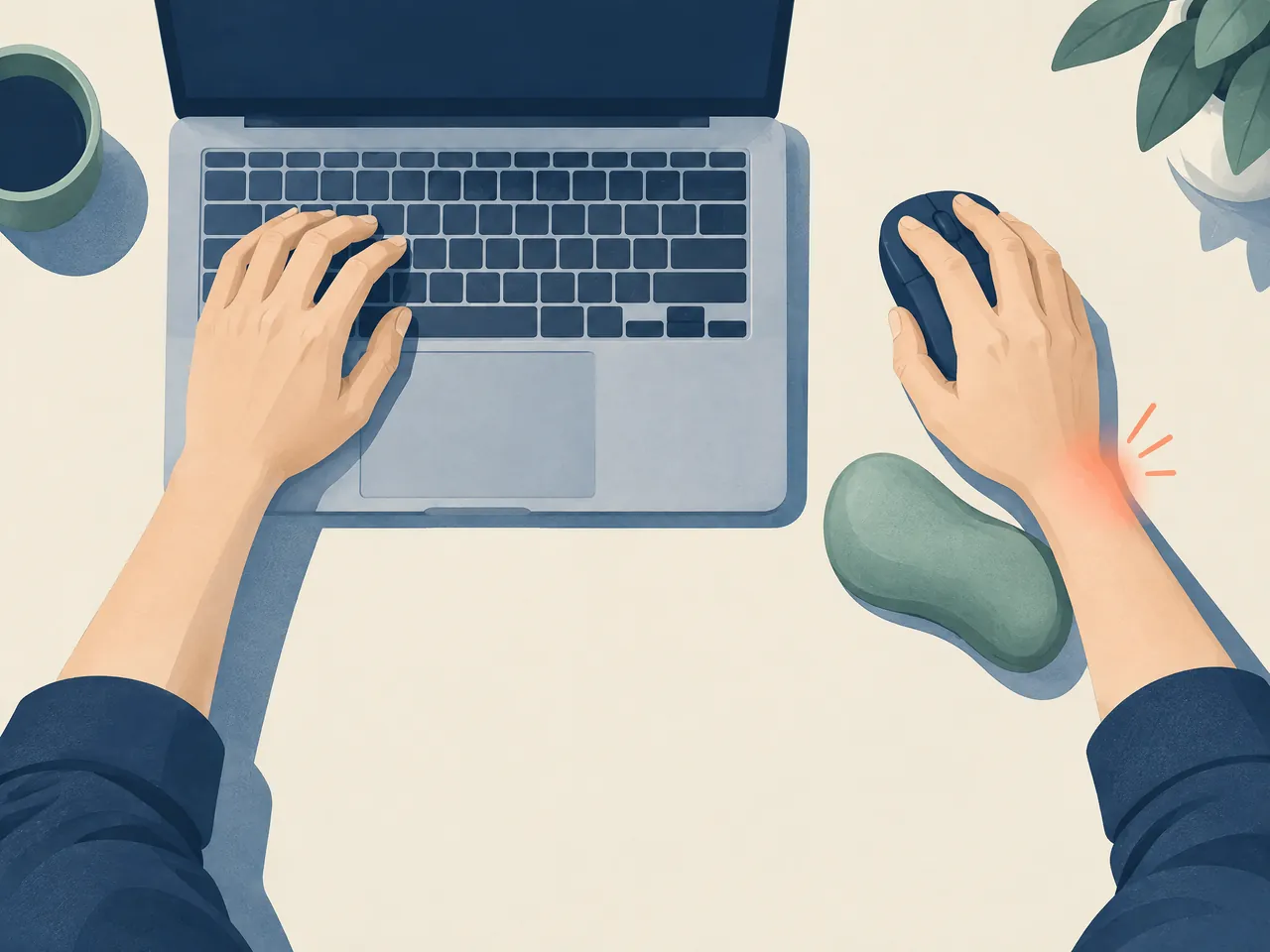
The timing and location of symptoms offer useful clues. A fall onto an outstretched hand followed by immediate swelling, bruising, severe pain or a change in shape raises a different concern from a gradually developing night-time tingling pattern. Pain and stiffness around the base of the thumb that is provoked by thumb movement may fit a tendon or joint problem more closely than median-nerve compression. The article on wrist tendonitis pain is a related read when pain is localised around a tendon, but a new, severe or unclear problem still needs appropriate assessment. [2]
A nerve-pattern complaint is often more sensory than a simple muscle ache: tingling, altered feeling or discomfort may be joined by a weak thumb and difficulty with a key, buttons, chopsticks or a jar lid. Yet symptoms alone cannot reliably sort every cause. Arthritis, a previous wrist injury, pregnancy, diabetes and work or hobbies involving repeated wrist bending or forceful gripping can all be relevant context when discussing carpal tunnel syndrome. Bring that wider history to the appointment. It helps a clinician decide whether a splint, an activity change, investigation, referral or a combination is the sensible next step, instead of treating a search term as a conclusion. [1]
Acupuncture for Carpal Tunnel Syndrome: Signs That Need Medical Assessment
Do not wait for a complementary-care appointment after a significant injury if the wrist looks deformed or discoloured, pain is severe, there was a snap, grinding or popping sound, or you cannot move the wrist or hold things. Loss of feeling in part or all of the hand also needs urgent attention. A wrist that is hot, red, swollen and painful, especially with fever or feeling unwell, needs medical assessment because infection and other urgent causes have to be considered. [2]
For less urgent symptoms, make an appointment with a qualified health professional if tingling or numbness persists, the thumb feels weaker, symptoms are worsening, pain repeatedly disrupts work or sleep, or a trial of sensible self-care is not helping. People with diabetes should be particularly careful about ongoing hand symptoms. Seeking assessment is not a rejection of acupuncture; it is the step that helps place any adjunctive treatment in a plan that does not overlook a fracture, marked nerve problem or another diagnosis. A clear account of duration, hand dominance, previous injury, health conditions and current treatments is more helpful than trying to prove a diagnosis before the visit.
Compare your options
| Situation or option | What it can help clarify or support | When to move beyond self-management |
|---|---|---|
| Night-time tingling, numbness or weak grip | Record the fingers involved, sleep disruption and difficulty with daily tasks; discuss a neutral-wrist night splint. | Symptoms persist, worsen, or affect safe gripping and hand function. |
| Recent fall, severe pain or visible change | Consider injury first rather than assuming a nerve problem. | Urgent assessment is needed for deformity, inability to move or hold things, loss of feeling, or a hot/red painful wrist with illness. |
| Acupuncture as an adjunct | Discuss goals such as symptom support, medical history and how progress will be reviewed; evidence of benefit is uncertain. | Do not let an acupuncture trial replace diagnosis, prescribed care or review of worsening weakness/numbness. |
| Repeated gripping or wrist bending | Identify one task to reduce, break up or adapt and check whether it changes the symptom pattern. | Seek advice when work, sleep or ordinary activities remain limited despite changes. |
On smaller screens, scroll the table sideways to compare all columns.
Acupuncture for Carpal Tunnel Syndrome: What Research Can and Cannot Show
People usually ask two separate questions: “Could acupuncture make this symptom easier to live with?” and “Will it fix the pressure on the nerve?” The evidence does not allow a confident promise for either question. The Cochrane review of acupuncture and related interventions for carpal tunnel syndrome reported that studies were diverse, generally small and at unclear or high risk of bias. Its overall conclusion was that acupuncture or laser acupuncture may have little or no short-term effect compared with placebo or sham acupuncture, and that it remains uncertain how these approaches compare with treatments such as splints, medicines or injections. That is why acupuncture should be discussed honestly as an option with uncertain benefit, not sold as an alternative to assessment. [3]
Low certainty does not mean every person has the same experience, but it does mean the research cannot reliably predict who will improve, by how much, or for how long. It also prevents a responsible clinic from promising a fixed number of sessions, a cure or a way to avoid all other treatment. Small studies reported non-serious effects such as local pain, discomfort, paraesthesia or temporary bruising, while adverse-event information was incomplete in some studies. Discuss medications, bleeding concerns, pregnancy, skin problems and any needle anxiety before treatment. [3]

Acupuncture for Carpal Tunnel Syndrome: Understanding Low-Certainty Evidence
Low certainty means that a better-designed study could change the apparent result. For a person weighing options, the useful takeaway is to keep the conventional basics in view rather than swap them for an unproven promise. A night splint, changes to a task that repeatedly bends the wrist or demands hard gripping, and follow-up for changing symptoms can all be discussed on their own merits. The NHS notes that a wrist splint keeps the wrist straight during sleep and may take up to six weeks before it starts to feel better; that timescale helps prevent judging every option after only a few nights. [1]
It is reasonable to ask a practitioner how progress would be reviewed rather than accepting vague reassurance. Useful markers are practical: whether night waking is less frequent, whether tingling has changed, whether a mug or phone is easier to hold, and whether the thumb seems less weak. These observations are for shared decision-making, not proof that the nerve has healed. If numbness, weakness or function deteriorates, the plan needs reassessment even if discomfort temporarily feels different. Keep the clinician who is managing the diagnosis informed about acupuncture and other treatments so that changes are interpreted in context.
Acupuncture for Carpal Tunnel Syndrome: Why It Is Not a Guaranteed Cure
Carpal tunnel syndrome involves compression of a nerve at the wrist. This is especially important when symptoms interfere with sleep, grip or daily safety. Delaying review while hoping that a complementary treatment will “release” the nerve can allow a worsening pattern to go unaddressed. If a splint does not help and symptoms are getting worse, NHS guidance describes further clinical options such as steroid injection and specialist discussion of surgery; which option suits someone depends on their assessment, not on a webpage. [1]
Avoid a false choice between acupuncture and medical care. Someone may decide, after assessment, to use a night splint and adjust a demanding workstation while also discussing acupuncture as comfort-focused adjunct care. Another person may be advised that investigation or specialist treatment should take priority. Neither route can be chosen safely from a symptom checklist alone. The question is not whether acupuncture is “natural” or whether standard care is “stronger”; it is whether the proposed plan matches the cause, severity, function and pace of change. For a broader explanation of this decision, see does acupuncture help wrist pain.
Acupuncture for Carpal Tunnel Syndrome: Combining Assessment with Self-Care
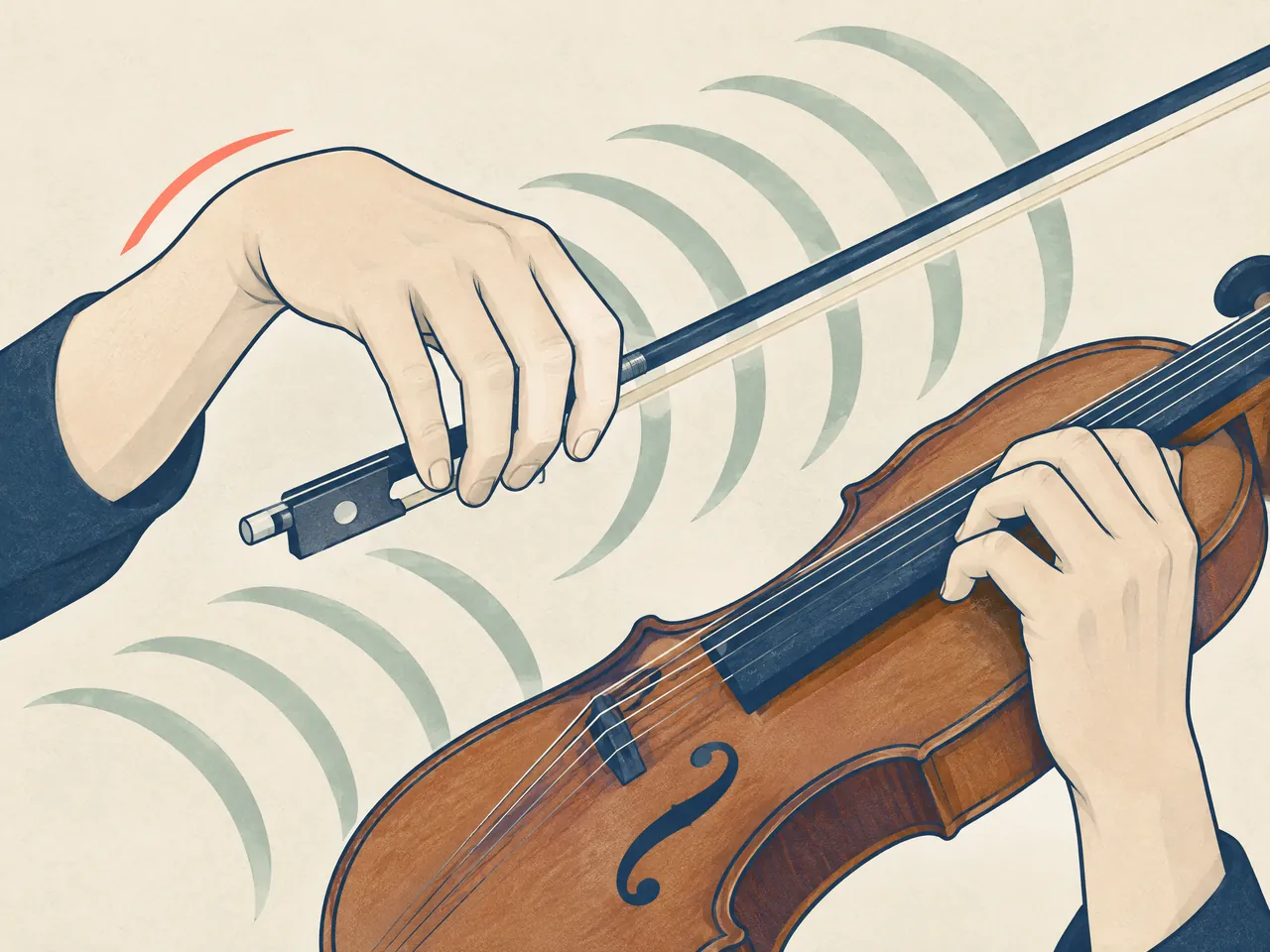
A balanced plan begins with what happens between appointments. Notice the wrist positions and tasks that set symptoms off: prolonged gripping, repetitive bending, a vibrating tool, a musical instrument, scrolling with a flexed wrist, or a keyboard and mouse setup that holds the hand at an awkward angle. Reduce or break up the specific aggravating task where possible rather than simply stopping all movement. If pain started after an acute injury, the advice differs: do not use heat in the first two to three days, and obtain advice if the injury features are concerning. [2]
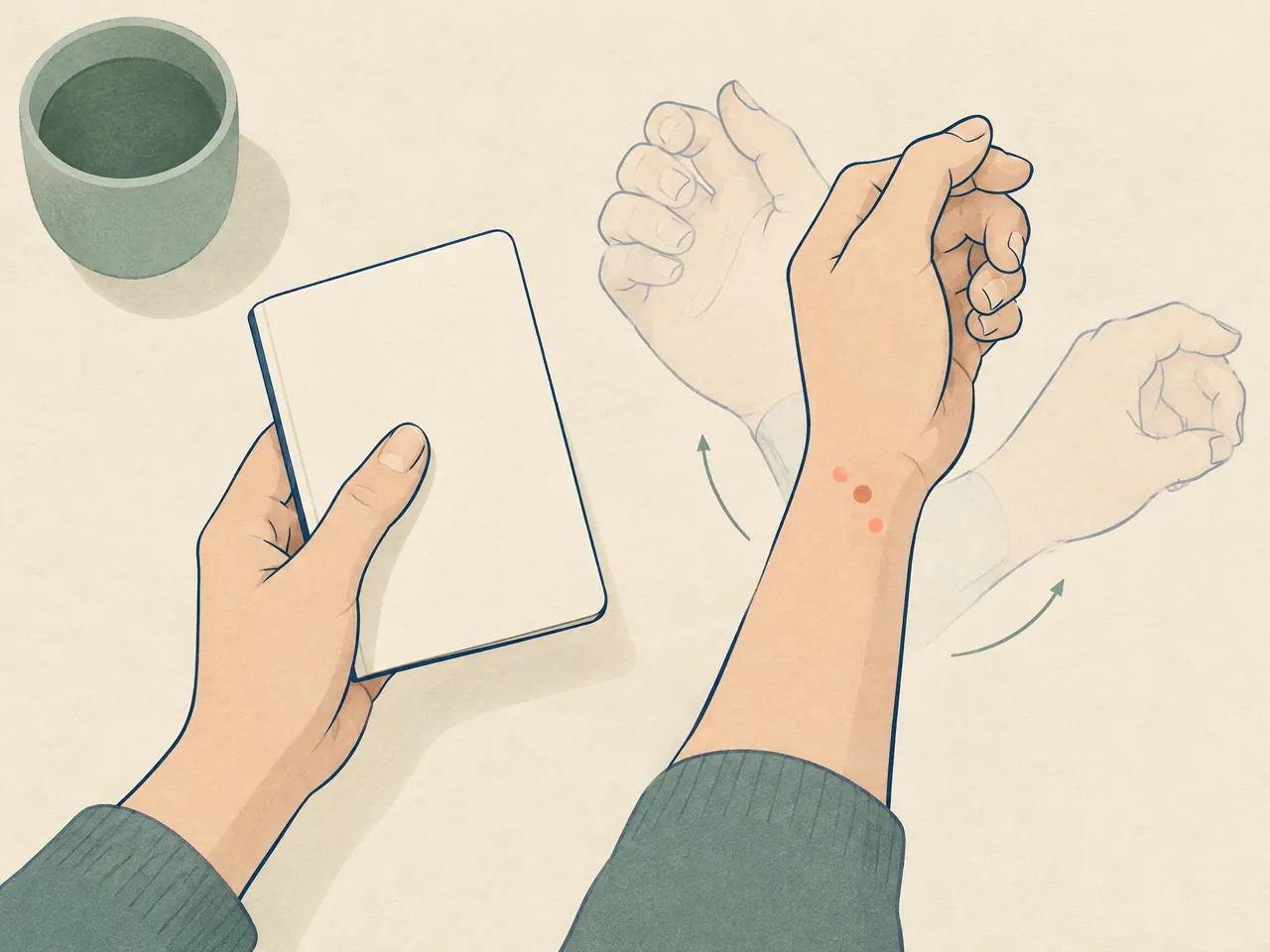
A plan also benefits from clear roles. Medical assessment identifies or checks the diagnosis and considers tests or treatment when needed. A splint can support a neutral wrist at night. Work or home adjustments can reduce predictable strain. A TCM consultation can discuss acupuncture in the context of the whole symptom pattern, health history and current care. No one component automatically replaces the others.
Acupuncture for Carpal Tunnel Syndrome: Splints, Activity Changes and Coordination
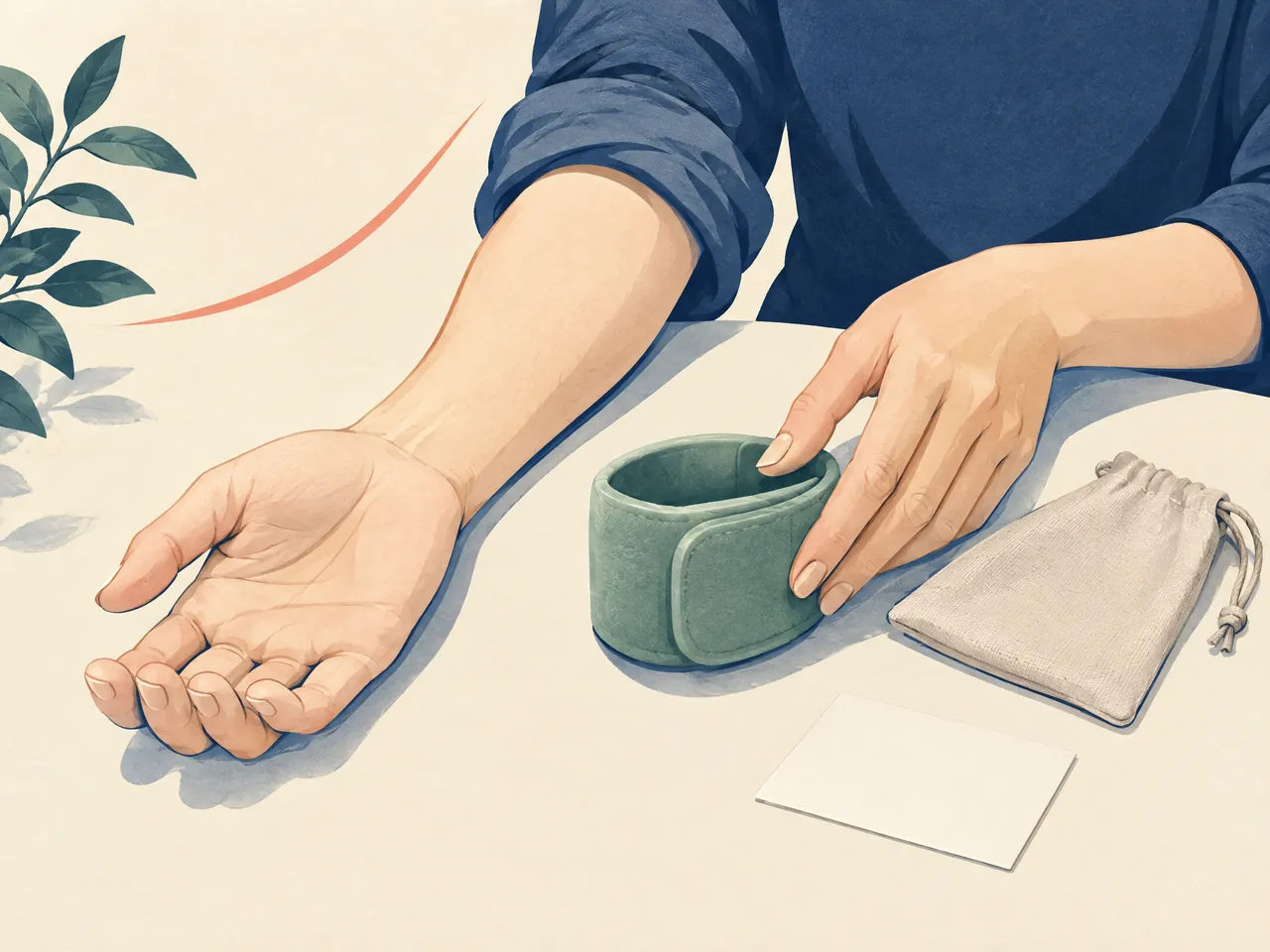
A night splint is often a practical first question because symptoms commonly intensify while sleeping. It is designed to keep the wrist straight rather than tightly immobilise the hand. The page on wrist pain splint at night offers further reading before you buy or use one. Give any self-care measure enough time to assess it safely, but do not use “waiting” as a strategy if sensation is diminishing, thumb weakness is increasing or tasks become unsafe. [1]
Coordination is simple but important: tell each practitioner what else you are using, including a splint, pain medicines, injections, physiotherapy, exercises and acupuncture. Do not stop a prescribed treatment because an adjunct is being tried, and do not conceal a worsening symptom in the hope that it will settle. A short symptom note can help: record night waking, task-related tingling, hand weakness and any reaction around the treatment area. If work tools or repetitive duties are a clear trigger, ask the relevant clinician or employer support service about realistic modifications rather than relying on willpower alone.

Acupuncture for Carpal Tunnel Syndrome: What a TCM Consultation Covers
A TCM consultation for wrist or hand symptoms should start with listening, not with a preset package. A registered Chinese medicine practitioner may ask where sensation changes, what triggers it, whether it wakes you, what movements hurt, how work and sleep are affected, and what diagnoses or treatments you have already received. Traditional observation, questions and examination are part of the TCM assessment approach, but traditional pattern language is not the same thing as an anatomical diagnosis of median-nerve compression.
If acupuncture is discussed, ask what it is intended to support, what the limits of evidence mean for your situation, what side effects should prompt contact, and when medical review should take priority. You can also ask about practical arrangements without assuming a fixed plan. TCM Lab welcomes enquiries for an assessment at its Kwun Tong Chinese medicine clinic or Chinese medicine clinic Prince Edward location; say that the concern is possible carpal tunnel symptoms and explain any language needs when contacting the clinic. For fee information, the Chinese medicine clinic price list Hong Kong page is the appropriate starting point. The final choice of care should remain responsive to assessment, function and warning signs, not to an online promise.
Care and health guide
Health service information
This directory brings together services, reading, and visit information related to health services, to help you prepare questions for a consultation.
If you are organising health questions, Chinese medicine clinic Hong Kong is a starting point for learning about related services and preparing for a consultation.
People have different needs; acupuncture Hong Kong provides further reading to help you understand options in your own context.


Your questions, answered
Frequently asked questions
Is acupuncture for carpal tunnel syndrome effective?
It may be discussed as adjunct care, but the current evidence does not establish a clear, reliable benefit. The Cochrane review judged the evidence low or very low certainty and found that effects compared with sham acupuncture or other treatments remain uncertain. It should not be promised as a cure.
Can I use acupuncture instead of a night splint?
Do not assume one replaces the other. A wrist splint is commonly used at night to keep the wrist straight and relieve pressure on the nerve. Whether it is suitable, and whether acupuncture is worth discussing alongside it, depends on your symptoms and clinical assessment.
When should I seek medical help rather than wait for acupuncture?
Seek urgent assessment after a serious injury, if the wrist changes shape or colour, you cannot move it or hold things, you lose feeling in the hand, or there is severe pain or a hot/red swollen wrist with illness. Persistent or worsening numbness, weakness and loss of function also need clinical review.
What should I bring to a TCM consultation for possible carpal tunnel syndrome?
Bring a short timeline of symptoms, details of night waking and work or hobbies, current medicines, relevant diagnoses, previous injury and any test results or treatment advice. State whether you use a splint or have had physiotherapy, injections or surgery discussions so care can be coordinated.
Sources and further information
- [1] [1] NHS — Carpal tunnel syndrome
Referenced for: Supports the description of CTS symptoms, night splints, activity changes, clinical assessment and conventional treatment pathways.
- [2] [2] NHS — Wrist pain
Referenced for: Supports the distinction between possible wrist-pain causes, self-care boundaries and urgent warning signs.
- [3] [3] Cochrane — Acupuncture and related treatments for symptoms of carpal tunnel syndrome
Referenced for: Supports the low-/very-low-certainty evidence statement and the limits of conclusions on acupuncture and related interventions for CTS.