
TCM Lab · Health reading
Chinese medicine sinus concerns, Chinese medicine tinnitus concerns and Chinese medicine allergic rhinitis concerns explained
Published Updated
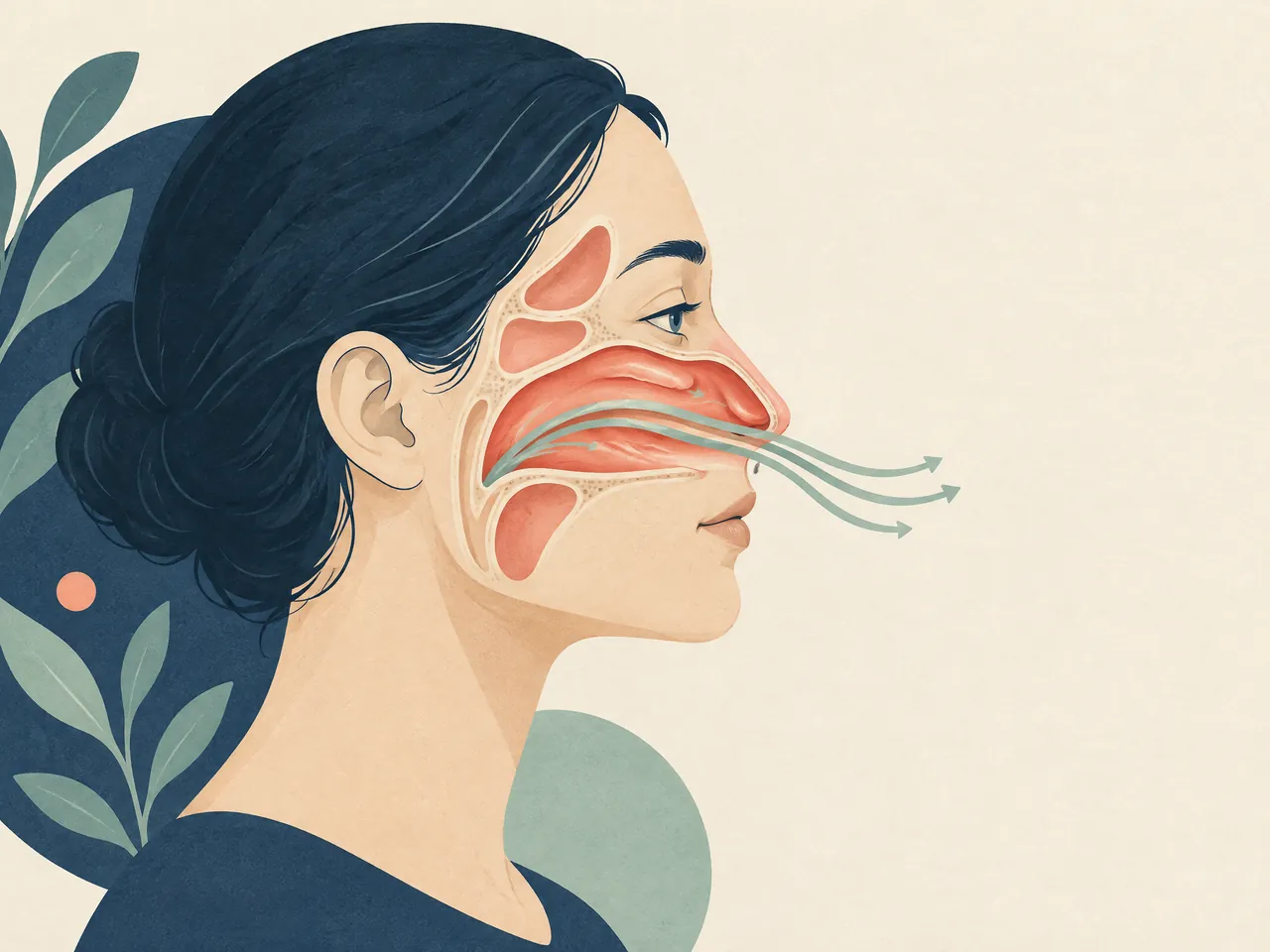
Nasal blockage before a meeting, pressure around the face after a cold, repeated sneezing at home, or a new ringing sound at night can prompt a broad search. Chinese medicine sinus concerns, Chinese medicine tinnitus concerns and Chinese medicine allergic rhinitis concerns are useful starting phrases, but they do not name one condition or fixed treatment. These symptoms may overlap around the nose and ears while needing different questions and sometimes medical assessment. This page explains how to describe the concern clearly in a Hong Kong consultation, what pattern details to note, and when ear, nose and throat assessment should not be delayed.
Appointments are confirmed through WhatsApp. If you have language requirements, please mention them in your enquiry.
The short answer
Chinese medicine sinus concerns, Chinese medicine tinnitus concerns and Chinese medicine allergic rhinitis concerns are broad enquiries rather than diagnoses. A useful consultation starts with the actual symptom: what is blocked, itchy, painful, ringing or changing; when it occurs; and what has already been assessed or tried. Sinus-type pressure, allergy-like nasal symptoms and tinnitus can coexist, but they should not be assumed to have the same cause. New, severe or changing symptoms may need medical assessment alongside any Chinese medicine discussion.
Transparent pricing
See the fees.
Choose your care.
Explore our complete official price list, including first-trial prices, regular prices, packages and branch-specific options.
Opening WhatsApp prepares an enquiry; it does not send a message, take payment or confirm an appointment. Suitability and individual arrangements are confirmed during consultation.
Chinese medicine
All prices in HKDAcupuncture and Chinese herbal medicine package
Includes a Chinese medicine consultation with pulse assessment, body acupuncture and 3 days of Chinese herbal granules that do not require decoction.
HK$580 (single session)
Chinese medicine consultation with pulse assessment
Hair and scalp
All prices in HKDScalp health and hair-loss management
Includes AI scalp analysis, deep scalp and follicle cleansing, and scalp oil-control care.
HK$380 (first trial)
Regular price: HK$680
- 6 sessions: HK$3,480 (HK$580 per session)
- 12 sessions: HK$5,760 (HK$480 per session)
- 20 sessions: HK$8,600 (HK$430 per session)
- 30 sessions: HK$11,400 (HK$380 per session)
Hair acupuncture and Chinese herbal medicine package
Includes scalp acupuncture and 3 days of Chinese herbal medicine that does not require decoction.
HK$580 (single session)
Registered Chinese Medicine Practitioner consultation
- 6 sessions: HK$3,180 (HK$530 per session)
- 12 sessions: HK$5,760 (HK$480 per session)
- 20 sessions: HK$8,600 (HK$430 per session)
- 30 sessions: HK$11,400 (HK$380 per session)
Combined hair and scalp treatment
Combines acupuncture and Chinese herbal medicine with salon-level scalp and follicle care. Packages include complimentary hair-care shampoo and serum.
HK$1,260 (single session)
Combined treatment
- 8 sessions: HK$8,640 (HK$1,080 per session)
- 16 sessions: HK$15,680 (HK$980 per session)
- 20 sessions: HK$18,600 (HK$930 per session)
- 30 sessions: HK$26,400 (HK$880 per session)
Weight management
All prices in HKDFull-body acupoint embedding for weight management
Includes full-body acupoint embedding. Packages include complimentary Chinese herbal medicine for weight management, with the number of included days scaled to the package. Embedding material and the individual treatment arrangement are confirmed during consultation; this is not a cosmetic thread lift.
HK$980 (single session)
No trial session
- 10 sessions: HK$7,800 (HK$780 per session)
- 20 sessions: HK$14,600 (HK$730 per session)
- 30 sessions: HK$20,400 (HK$680 per session)
Facial acupuncture
All prices in HKDFacial acupuncture (basic)
Includes facial acupuncture and meridian-based facial care, including care for facial puffiness.
HK$480 (first trial)
Regular price: HK$680
- 10 sessions: HK$5,200 (HK$520 per session)
- 20 sessions: HK$9,600 (HK$480 per session)
- 30 sessions: HK$13,500 (HK$450 per session)
Facial acupuncture (advanced)
Includes enhanced facial acupuncture with a specially formulated moisturising mask and serum.
HK$780 (first trial)
Regular price: HK$1,180
- 10 sessions: HK$9,000 (HK$900 per session)
- 20 sessions: HK$16,600 (HK$830 per session)
- 30 sessions: HK$23,400 (HK$780 per session)
Pain care
All prices in HKDExtracorporeal shockwave treatment
Shockwave treatment for deep-tissue and fascial care. The Kwun Tong clinic offers the multi-area options shown below.
Priced by branch
Branch-specific pricing
Prince Edward: HK$250 per area
Kwun Tong: HK$250 for 1 area / HK$450 for 2 areas / HK$600 for 3 areas
Pain care (manual therapy)
Includes Chinese medicine musculoskeletal assessment, manual joint techniques and tui na.
HK$580 (single session)
Chinese medicine musculoskeletal assessment
Pain care (acupuncture and manual therapy)
Combines acupuncture and manual therapy.
HK$680 (single session)
Combined care
Chinese medicine sinus concerns, Chinese medicine tinnitus concerns and Chinese medicine allergic rhinitis concerns: what these searches mean
These words are often typed by someone seeking a traditional Chinese medicine perspective without knowing how to name the experience. ‘Sinus’ may mean blockage, pressure around the cheeks or forehead, reduced smell, post-cold congestion, or a full-headed feeling. The NHS describes sinusitis as swelling of the sinuses and lists facial pain or tenderness, nasal blockage or discharge, reduced smell and fever among possible symptoms [2]. That description frames a discussion; it does not establish the cause for any one person. Begin with what changes during the day, rather than assuming every blocked nose is sinusitis.
‘Allergic rhinitis’ has a recognisable symptom language, but the trigger matters. Sneezing, an itchy nose, a runny or blocked nose and itchy, watery eyes are common NHS-listed features [3]. Some people notice a pattern around cleaning, pets, mould, pollen, air-conditioned rooms or a workplace; others cannot. Recording setting and timing is more useful than deciding in advance that an allergy is present. For wider ear, nose and throat vocabulary, see Chinese medicine ENT. It provides context, not a diagnosis.

Tinnitus is different. It means hearing a sound without an outside source, often described as ringing, buzzing, humming, hissing or whooshing [4]. It can be intermittent or constant, in one ear, both ears or the head. A person may connect it with a quiet bedroom, fatigue, noise exposure or an ear problem, but those observations do not prove a cause. An enquiry should leave room for medical history, hearing changes, medicines and prior assessment.
Chinese medicine sinus concerns, Chinese medicine tinnitus concerns and Chinese medicine allergic rhinitis concerns in an ENT context
ENT is the usual abbreviation for ear, nose and throat. It is a Western medical specialty, so it can locate the symptom without turning a Chinese medicine enquiry into surgery or a medical diagnosis. If the term is unclear, what does ENT mean explains it in plain language. In Hong Kong, the Health Bureau uses categories including Internal Medicine in CM and Acupuncture and Moxibustion in CM, while stating there is no specialty system for Chinese medicine practitioners under Hong Kong’s legal regimes [1]. Ask how the individual concern will be understood rather than assuming a formal ‘TCM ENT’ specialty.
The shared body area should not flatten the differences. Nasal itch with repeated sneezing and watery eyes calls for a different conversation from one-sided facial discomfort after a cold. A ringing sound without nasal symptoms is not automatically related to rhinitis. An educational page cannot inspect an ear, assess hearing or determine whether allergy, infection, medicine effects or another factor is involved. This distinction keeps medical pathways open.

How Chinese medicine sinus concerns, Chinese medicine tinnitus concerns and Chinese medicine allergic rhinitis concerns differ as topics
A sinus-focused enquiry is usually about blockage, pressure, drainage, smell or a cold-related change. An allergic-rhinitis-focused enquiry is usually about itch, sneezing, clear discharge, eye symptoms and exposure. A tinnitus-focused enquiry concerns the sound, its side, timing, sleep or concentration impact, and whether hearing feels different. Start with the symptom that prompted today’s search, then mention others as context.
It is also useful to distinguish a pattern from an outcome claim. Traditional Chinese medicine may offer its own consultation approach, yet no web page can tell a reader that a particular symptom will respond in a particular way. Discuss what has already happened: whether a pharmacist, GP or ENT clinician has assessed the problem; whether a test, scan or hearing check was suggested; and what self-care or prescribed medicines have been used. For readers who are mainly trying to understand the nasal-allergy phrase, allergic rhinitis Chinese medicine provides a more focused related topic. Use it to prepare questions, not to replace an assessment.
Compare your options
| Main concern | Useful details to record | Why the distinction matters |
|---|---|---|
| Sinus-type nasal or facial symptoms | Start date, recent cold, facial area, blocked or runny nose, smell change, fever, one- or two-sided symptoms | Helps describe a symptom pattern without assuming a diagnosis or infection |
| Allergy-like rhinitis symptoms | Sneezing, itch, eye symptoms, likely exposures, seasonality, home or work setting, asthma changes | Supports a discussion of triggers and whether medical or pharmacy advice is already involved |
| Tinnitus or perceived ear noise | Sound description, one or both ears, constant or intermittent pattern, sleep impact, hearing or balance changes | Identifies details that can affect the need and urgency of medical assessment |
| Existing clinical care | Diagnoses, test or hearing results, medicines, sprays, supplements, referrals and unanswered questions | Allows the consultation to be discussed alongside rather than instead of existing care |
On smaller screens, scroll the table sideways to compare all columns.
Chinese medicine sinus concerns, Chinese medicine tinnitus concerns and Chinese medicine allergic rhinitis concerns: consultation context
A productive consultation begins with a short, accurate story. Note the main concern, approximate start date, whether it is stable or changing, and what makes it better or worse. Bring a medication list and names of sprays, antihistamines, supplements or other products. Mention relevant diagnoses, recent colds, known allergies, loud-sound exposure, clinician-identified earwax or ear infections, and prior ENT or hearing assessments. This prevents a vague phrase such as ‘sinus problem’ from implying more certainty than the history supports.
Daily function deserves equal attention. Does nasal blockage disturb sleep or lead to mouth breathing? Does sneezing interrupt work? Does a sound in the ear make quiet rooms, reading or concentration difficult? Does facial discomfort prevent normal activity? The NHS advises assessment for allergic rhinitis when symptoms worsen, affect sleep or everyday life, the trigger is uncertain, or pharmacy treatment is not helping [3]. These are useful practical thresholds for a Hong Kong visitor too: if the impact is significant or the cause remains unclear, bring the issue to an appropriate clinician rather than simply extending self-management.

Questions to discuss about Chinese medicine sinus concerns, Chinese medicine tinnitus concerns and Chinese medicine allergic rhinitis concerns
Ask questions that clarify the next step: what information is needed before an approach is discussed; whether a report should be brought; what changes need medical assessment; and how prescribed or over-the-counter products should be disclosed. If symptoms follow a home or work exposure, ask how to record the pattern without assuming it proves an allergy. For tinnitus, describe whether it is constant, affects sleep, is in one ear or both, or comes with hearing change. The NHS advises review for tinnitus that is regular, constant, worsening or troubling daily life [4].
There is value in asking what the consultation cannot answer. A practitioner can listen to the account and discuss their Chinese medicine perspective, but the visit does not by itself confirm an infection, identify an allergen, measure hearing or rule out an ear condition. This is not a limitation to hide; it is how a visitor can make better choices. If the enquiry is partly about a Western medical specialty, the related guide on Chinese medicine ear nose and throat can help keep the terms separate. Clear language supports shared decision-making and avoids treating a search phrase as a diagnosis.

What to share when asking about Chinese medicine sinus concerns, Chinese medicine tinnitus concerns and Chinese medicine allergic rhinitis concerns
For nasal or sinus-type concerns, bring a timeline: any cold or flu, facial area affected, temperature if measured, smell change, discharge, sleep disruption and one- or two-sided symptoms. For allergy-like concerns, note exposures, eye symptoms, seasonality and asthma changes. For tinnitus, record the sound in your own words, its duration, any link to silence or noise, and hearing, balance, headache or neurological symptoms. Do not stop prescribed treatment because of a web article; give the full list to the assessing clinician.
It also helps to be direct about expectations. Are you looking for an explanation of consultation options, advice on what records to bring, or a discussion that sits alongside a GP or ENT plan? Ask about appointment arrangements rather than assuming a same-day procedure or a fixed course. An enquiry can include language needs and accessibility needs for confirmation. The aim is not to collect every possible detail. It is to make the first conversation specific enough that the practitioner can say what is within the consultation’s scope and whether another assessment should come first.
Chinese medicine sinus concerns, Chinese medicine tinnitus concerns and Chinese medicine allergic rhinitis concerns: practical next steps
Choose the next step by urgency and impact, not by the search phrase. Mild, familiar symptoms may call for a record and routine enquiry. Persistent, recurring or disruptive symptoms deserve an appropriate health professional. Sinus symptoms that do not improve with self-care, recur, occur on one side of the face or worsen need medical advice; the NHS also highlights urgent review when someone is very unwell, symptoms worsen or pain relief does not help [2]. Use this as a safety prompt, not a Hong Kong booking instruction.
Tinnitus needs particular care when the pattern changes. The NHS advises urgent assessment for tinnitus that beats in time with the pulse, and immediate emergency care after a head injury or when tinnitus occurs with sudden hearing loss, facial weakness or spinning vertigo [4]. Do not wait for a Chinese medicine enquiry to resolve those situations. This is about recognising a potentially time-sensitive change, not predicting its cause. For a wider decision guide, read when should ear nose or throat symptoms be assessed by an ENT doctor.

Finding suitable guidance for Chinese medicine sinus concerns, Chinese medicine tinnitus concerns and Chinese medicine allergic rhinitis concerns
Suitable guidance matches the question. After medical assessment, bring the result or referral details and say that you want to discuss a Chinese medicine perspective. If no assessment has occurred and a symptom is recurrent, changing or difficult to live with, ask which medical route is appropriate first. For a suspected allergy pattern, focus on exposure and response rather than announcing a cause. The NHS lists pollen, dust mites, animal dander and mould among common allergic-rhinitis triggers and notes that non-allergic rhinitis has other causes [3]. Similar nasal symptoms therefore need context.
TCM Lab can be contacted by WhatsApp at +852 6940 5663 to ask about an enquiry and appointment arrangements. The available clinics are in Prince Edward and Kwun Tong, with appointment timing to be confirmed. If location matters, use the pages for Kwun Tong Chinese medicine clinic and Chinese medicine clinic Prince Edward to check the relevant clinic information before asking. A clear enquiry can state the main symptom, whether medical assessment has already occurred, and any urgency or language requirement that needs confirmation.

When to seek medical assessment alongside Chinese medicine sinus concerns, Chinese medicine tinnitus concerns and Chinese medicine allergic rhinitis concerns
Medical assessment should sit alongside the enquiry whenever symptoms are sudden, severe, one-sided, progressive, linked with a significant injury, or affecting hearing, balance, breathing, sleep or normal daily life. For sinus-type symptoms, fever, marked swelling, serious deterioration or a weakened immune system are especially important reasons to seek prompt advice [2]. For allergy-like symptoms, worsening asthma or symptoms that are not responding to usual pharmacy support merit medical review [3]. A Chinese medicine conversation may still be relevant later, but it should not delay evaluation of a potentially urgent concern.
Bring the same care to uncertainty. If you cannot tell whether a nasal problem follows a cold, an exposure or something else, say so. If a sound seems to beat with your pulse, describe that exactly. If a medicine was started or changed near the onset of a symptom, record its name rather than deciding it is responsible. Good guidance does not require a visitor to diagnose themselves before making contact. It requires a precise account, sensible escalation for warning signs, and honest discussion of what a consultation can and cannot establish. That approach keeps Chinese medicine sinus concerns, Chinese medicine tinnitus concerns and Chinese medicine allergic rhinitis concerns useful as questions rather than misleading as conclusions.
Care and health guide
Health service information
This directory brings together services, reading, and visit information related to health services, to help you prepare questions for a consultation.
If you are organising health questions, Chinese medicine clinic Hong Kong is a starting point for learning about related services and preparing for a consultation.
People have different needs; acupuncture Hong Kong provides further reading to help you understand options in your own context.


Your questions, answered
Frequently asked questions
What do Chinese medicine sinus concerns, Chinese medicine tinnitus concerns and Chinese medicine allergic rhinitis concerns cover?
They are broad information-seeking phrases for nose, sinus, ear-noise and allergy-pattern symptoms in a traditional Chinese medicine context. They do not establish a diagnosis, identify one cause, or determine a treatment plan. Describe the actual symptom and its timing when making an enquiry.
Are Chinese medicine sinus concerns, Chinese medicine tinnitus concerns and Chinese medicine allergic rhinitis concerns ENT surgery terms?
No. ENT is a Western medical specialty for ear, nose and throat concerns. This page uses it only to help readers understand where medical assessment may fit. It is not a description of surgery or a claim that Chinese medicine consultation provides ENT procedures.
What tinnitus changes need prompt medical attention?
Seek urgent medical advice for tinnitus that beats in time with the pulse. Emergency assessment is important after a head injury or when tinnitus occurs with sudden hearing loss, facial weakness or spinning vertigo. These situations should not wait for a routine enquiry.
How can I prepare an enquiry with TCM Lab?
State the main symptom, when it began, the pattern or triggers you notice, any assessment already completed, and medicines or products you use. WhatsApp +852 6940 5663 can be used to ask about appointment arrangements at Prince Edward or Kwun Tong.
Sources and further information
- [1] [1] Hong Kong Health Bureau — Chinese Medicine Clinical Services
Referenced for: Hong Kong Chinese medicine service terminology, holistic consultation framing, and the statement that there is no legal specialty system for Chinese medicine practitioners.
- [2] [2] NHS — Sinusitis (sinus infection)
Referenced for: General sinusitis symptom description and assessment or referral prompts; not a diagnosis for an individual reader.
- [3] [3] NHS — Allergic rhinitis
Referenced for: Common allergic-rhinitis symptoms, potential triggers, and practical assessment prompts; not a diagnosis for an individual reader.
- [4] [4] NHS — Tinnitus
Referenced for: Tinnitus description, common sound experiences, and urgency prompts; not a diagnosis or treatment recommendation for an individual reader.