
TCM Lab · Health reading
Can Chinese medicine help eczema? Can acupuncture help eczema itching? What should parents know before Chinese medicine for children's eczema?
Published Updated
Eczema can make ordinary things—sleeping, showering, choosing clothes, or letting a child play without scratching—feel unexpectedly difficult. Chinese medicine may be worth discussing as complementary care when the aim is to understand a recurring skin pattern and support an existing eczema plan, not to replace prescribed treatment. Acupuncture may also be discussed for itch, but it is not a substitute for skin care or medical assessment. For children, good preparation matters: bring clear photos, a record of itch and sleep, every product and medicine used, and any allergy or diet history. New weeping, yellow crusts, fast spread, pain, warmth or fever need medical assessment promptly.
Appointments are confirmed through WhatsApp. If you have language requirements, please mention them in your enquiry.
The short answer
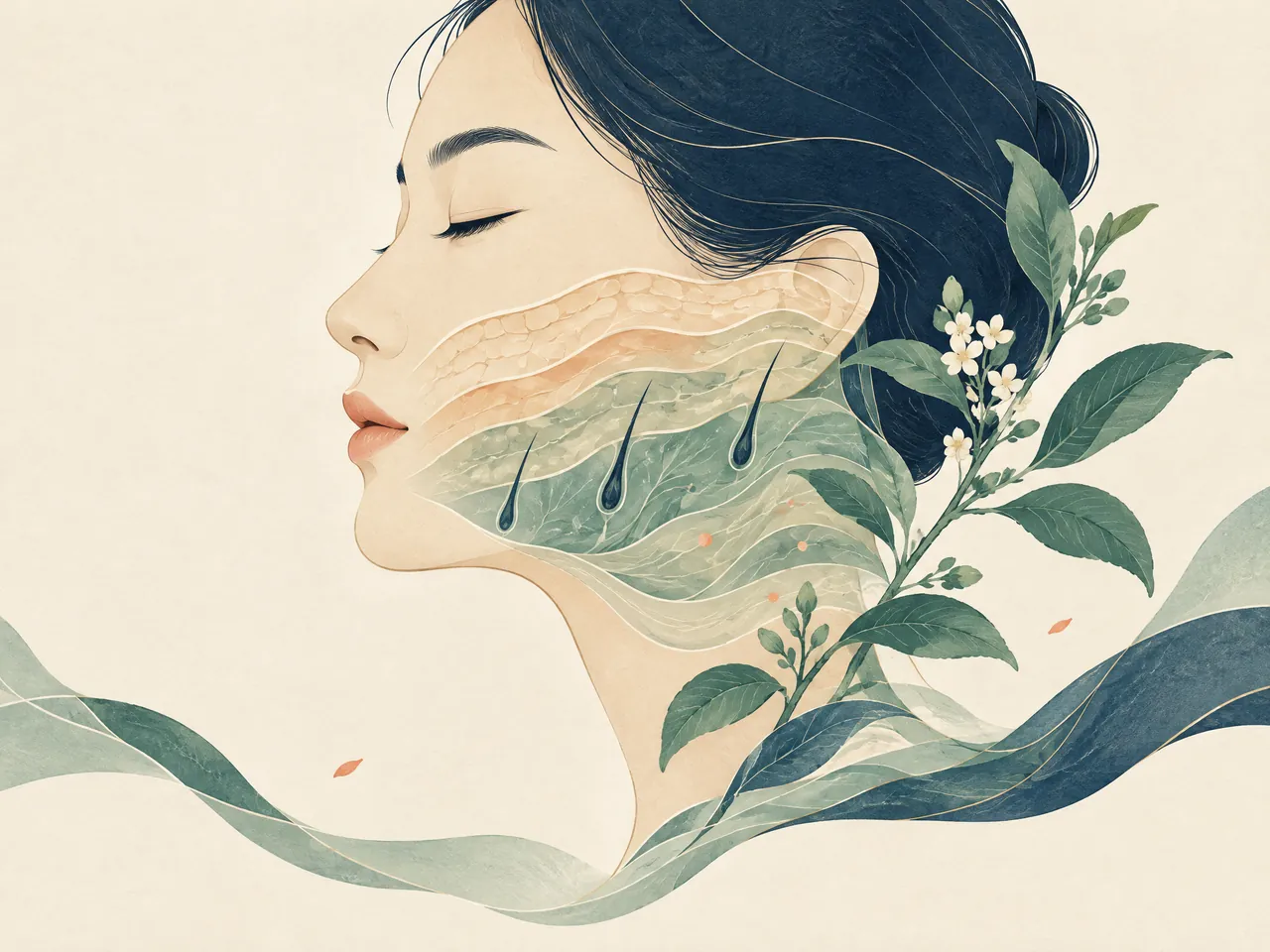
Chinese medicine can be considered as complementary eczema care after a careful review of the skin, daily triggers, medicines and health history. It should not replace moisturising, prescribed anti-inflammatory treatment or assessment for infection. Acupuncture may be discussed for itch, but expectations should stay cautious and safety comes first. Parents should bring photos, an itch-and-sleep record, product and medicine lists, allergies and details of any diet changes; broad food restriction should not start without appropriate clinical or nutrition advice.
Transparent pricing
See the fees.
Choose your care.
Explore our complete official price list, including first-trial prices, regular prices, packages and branch-specific options.
Opening WhatsApp prepares an enquiry; it does not send a message, take payment or confirm an appointment. Suitability and individual arrangements are confirmed during consultation.
Chinese medicine
All prices in HKDAcupuncture and Chinese herbal medicine package
Includes a Chinese medicine consultation with pulse assessment, body acupuncture and 3 days of Chinese herbal granules that do not require decoction.
HK$580 (single session)
Chinese medicine consultation with pulse assessment
Hair and scalp
All prices in HKDScalp health and hair-loss management
Includes AI scalp analysis, deep scalp and follicle cleansing, and scalp oil-control care.
HK$380 (first trial)
Regular price: HK$680
- 6 sessions: HK$3,480 (HK$580 per session)
- 12 sessions: HK$5,760 (HK$480 per session)
- 20 sessions: HK$8,600 (HK$430 per session)
- 30 sessions: HK$11,400 (HK$380 per session)
Hair acupuncture and Chinese herbal medicine package
Includes scalp acupuncture and 3 days of Chinese herbal medicine that does not require decoction.
HK$580 (single session)
Registered Chinese Medicine Practitioner consultation
- 6 sessions: HK$3,180 (HK$530 per session)
- 12 sessions: HK$5,760 (HK$480 per session)
- 20 sessions: HK$8,600 (HK$430 per session)
- 30 sessions: HK$11,400 (HK$380 per session)
Combined hair and scalp treatment
Combines acupuncture and Chinese herbal medicine with salon-level scalp and follicle care. Packages include complimentary hair-care shampoo and serum.
HK$1,260 (single session)
Combined treatment
- 8 sessions: HK$8,640 (HK$1,080 per session)
- 16 sessions: HK$15,680 (HK$980 per session)
- 20 sessions: HK$18,600 (HK$930 per session)
- 30 sessions: HK$26,400 (HK$880 per session)
Weight management
All prices in HKDFull-body acupoint embedding for weight management
Includes full-body acupoint embedding. Packages include complimentary Chinese herbal medicine for weight management, with the number of included days scaled to the package. Embedding material and the individual treatment arrangement are confirmed during consultation; this is not a cosmetic thread lift.
HK$980 (single session)
No trial session
- 10 sessions: HK$7,800 (HK$780 per session)
- 20 sessions: HK$14,600 (HK$730 per session)
- 30 sessions: HK$20,400 (HK$680 per session)
Facial acupuncture
All prices in HKDFacial acupuncture (basic)
Includes facial acupuncture and meridian-based facial care, including care for facial puffiness.
HK$480 (first trial)
Regular price: HK$680
- 10 sessions: HK$5,200 (HK$520 per session)
- 20 sessions: HK$9,600 (HK$480 per session)
- 30 sessions: HK$13,500 (HK$450 per session)
Facial acupuncture (advanced)
Includes enhanced facial acupuncture with a specially formulated moisturising mask and serum.
HK$780 (first trial)
Regular price: HK$1,180
- 10 sessions: HK$9,000 (HK$900 per session)
- 20 sessions: HK$16,600 (HK$830 per session)
- 30 sessions: HK$23,400 (HK$780 per session)
Pain care
All prices in HKDExtracorporeal shockwave treatment
Shockwave treatment for deep-tissue and fascial care. The Kwun Tong clinic offers the multi-area options shown below.
Priced by branch
Branch-specific pricing
Prince Edward: HK$250 per area
Kwun Tong: HK$250 for 1 area / HK$450 for 2 areas / HK$600 for 3 areas
Pain care (manual therapy)
Includes Chinese medicine musculoskeletal assessment, manual joint techniques and tui na.
HK$580 (single session)
Chinese medicine musculoskeletal assessment
Pain care (acupuncture and manual therapy)
Combines acupuncture and manual therapy.
HK$680 (single session)
Combined care
Can Chinese medicine help eczema? Can acupuncture help eczema itching? What should parents know before Chinese medicine for children's eczema? — Start with the skin picture
The most useful first question is not “Which treatment fixes eczema?” but “What is this skin doing today?” Atopic eczema can look dry, cracked, scaly, thickened, discoloured, blistered or scratched, and the same person can have quieter periods and flare-ups. Location also matters: hands that meet frequent washing have different pressures from a child’s cheeks, elbow creases or legs. A practical eczema Chinese medicine discussion begins with this visible and lived picture, rather than guessing a label from one symptom. Itch intensity, sleep interruption, skin pain and whether the child is avoiding activities all help establish what needs attention now. The NHS describes itch, dryness, cracking and flare-ups as common features, while emphasising that eczema can look different across skin tones.[1]
Also note the order of events. For example, did a flare follow hot weather, a new detergent, swimming, a cold, disrupted sleep, a new cosmetic product, or a lapse in the usual routine? This is more useful than trying to identify one universal cause. A structured skin condition assessment can turn a vague account of “it got worse” into information a practitioner can weigh alongside current medical care.

Can Chinese medicine help eczema? Can acupuncture help eczema itching? What should parents know before Chinese medicine for children's eczema? — Describe symptoms clearly
Describe itch in its own right. Is it an occasional urge, a long evening of rubbing, or repeated waking? Does scratching leave open areas or bleeding? Ask whether the person rubs while concentrating, wakes hot, wears gloves or mittens at night, or needs to reapply moisturiser during the day. For a child, record what the behaviour looks like rather than relying only on a number: rubbing their face into bedding, taking socks off, becoming irritable after bathing, or waking a parent. These details give an honest picture of burden without assuming that every flare has the same trigger.
List everything placed on or taken for the skin, even products thought of as “natural.” Include emollients, washes, soaps, shampoo, sunscreen, topical prescriptions, oral medicines, supplements, herbal products and recent antibiotics. The name or a phone photo of the label is better than memory. This lets a complementary-care discussion stay connected to the treatment already in place. It also avoids a risky pattern: stopping a prescribed cream because a new approach has begun. Eczema care commonly includes emollients and, when prescribed, topical corticosteroids; treatment decisions should remain coordinated with the clinician who knows the patient’s medical history.[1]

Can Chinese medicine help eczema? Can acupuncture help eczema itching? What should parents know before Chinese medicine for children's eczema? — Recognise flare-ups and possible infection
A flare can mean more itch, dryness, redness or colour change, roughness and scratching. It deserves attention, but it is not automatically a sign that a food or a single product is responsible. Pause and check the basics: has the usual moisturising routine changed, are there more heat or sweat exposures, has a detergent or fabric changed, and is prescribed treatment being used as directed? Keeping this short record can make follow-up more focused. It may also show that the rash changes by body area, so a “whole body” explanation is not the only explanation worth considering.
Possible infection changes the order of priorities. The NHS advises urgent assessment for eczema that is blistered, crusty, leaking fluid, has pus-filled spots, is painful, swollen or warm, suddenly worsens or spreads, or comes with a high temperature or feeling unwell.[1] A child who is unusually sleepy, distressed or reluctant to use a limb also needs prompt clinical attention. Do not try to manage these signs solely through diet, moisturiser, herbs or online advice. For a clearer checklist before deciding what to do next, read eczema infection signs.
Compare your options
| Current situation | Useful information to bring or discuss | What should remain in place or happen first |
|---|---|---|
| Dry, itchy skin that is stable but keeps returning | Photos over time, itch and sleep notes, body sites, products used and possible contact triggers | Continue the agreed moisturising routine and prescribed treatment while discussing complementary options |
| Itch is disrupting sleep or causing repeated scratching | When itch is worst, nighttime behaviour, skin damage from scratching, and what has already helped | Discuss acupuncture cautiously as a possible adjunct; do not treat it as a replacement for eczema care |
| Considering Chinese herbal medicine | Full medicine, supplement and allergy list; medical conditions; whether a product would be oral or topical | Ask about safety, follow-up and how the proposal fits with existing treatment; do not assume benefit is proven |
| Wet, crusted, hot, painful or rapidly worsening rash, or fever | When the change began, photos if available, and all treatment already used | Seek medical assessment promptly before relying on a routine complementary consultation |
On smaller screens, scroll the table sideways to compare all columns.
Can Chinese medicine help eczema? Can acupuncture help eczema itching? What should parents know before Chinese medicine for children's eczema? — Coordinate care safely
Complementary care works best when it adds information and support rather than creates a parallel plan that nobody else can see. Tell each clinician what has been recommended or started elsewhere, including the exact name of any herb, prepared product or supplement. State any history of medicine reactions, liver or kidney conditions, pregnancy, breastfeeding, asthma, food allergy or other long-term conditions. This is not just paperwork. It gives the practitioner a chance to decide whether a proposed approach is appropriate and gives the wider care team a chance to recognise a reaction or a changing skin problem early.
Chinese medicine consultations may include observation and questions about the rash, sleep, appetite, bowel habits, stress and wider health before a plan is discussed. A CUHK Integrative Medical Centre page describes its Chinese medicine consultation approach as inspection, listening or smelling, inquiry and palpation.[4] Those approaches can help structure a conversation, but they do not remove the need to identify a suspected infection, contact reaction or other medical issue. The goal is a plan the person understands: what continues, what is being added, what to watch, and who should be contacted if the skin deteriorates.
Can Chinese medicine help eczema? Can acupuncture help eczema itching? What should parents know before Chinese medicine for children's eczema? — Discuss acupuncture and herbal options
Can acupuncture help eczema itching? It may be discussed as one possible adjunct when itch is persistent or sleep is affected, but it should not be presented as a replacement for eczema treatment or as a guaranteed result. A useful consultation asks what the person hopes to change—settling before bed, fewer scratch episodes, or a greater sense of control—and then sets a practical way to observe change without abandoning established care. Acupuncture involves inserting fine needles into the skin. The U.S. National Center for Complementary and Integrative Health advises people not to use it to postpone seeing a health-care provider and to discuss complementary approaches with their care providers.[3]
For herbs, the most important conversation is about identity, form and safety—not a promise that “natural” means harmless. Ask what is proposed, whether it is oral or topical, how it fits with current medicines, what symptoms would mean stopping and seeking advice, and how follow-up will be arranged. The Cochrane review of Chinese herbal medicine for atopic eczema found the available evidence inconclusive and reported that many included studies had high risk of bias or substantial inconsistency.[2] That is a reason for careful, individual discussion—not for claiming a cure or silently replacing a medically indicated treatment.
Can Chinese medicine help eczema? Can acupuncture help eczema itching? What should parents know before Chinese medicine for children's eczema? — Keep prescribed skin care in place
Routine skin care remains the platform on which any complementary choice sits. Follow the existing moisturising plan, use prescribed treatment exactly as directed, and ask the prescriber before changing the frequency or stopping a medicine. Keeping nails short, reducing friction and choosing a simple routine can also reduce the damage caused by scratching. The NHS advises continuing emollients even when eczema improves and avoiding known aggravating factors such as certain soaps, detergents or fabrics.[1] For families, a written routine shared between caregivers can be more protective than a complicated plan remembered differently by everyone.
Avoid changing several things on the same week. If a new moisturiser, a restricted diet, a herb and a change in prescribed medication all start together, it becomes difficult to tell what helped, what irritated the skin or what coincided with a natural flare. Introduce only changes agreed with the relevant clinician and keep the rest of the routine steady where possible. If the skin becomes more painful, wet, hot or widespread, the priority is reassessment, not “pushing through” to test whether a new complementary approach will eventually work. This approach respects both the person’s wish to explore options and the need for safe continuity.
Can Chinese medicine help eczema? Can acupuncture help eczema itching? What should parents know before Chinese medicine for children's eczema? — Prepare for a thoughtful consultation
Preparation turns a consultation from a general conversation into a useful review of real life. Bring the record rather than trying to reconstruct several difficult weeks under pressure. A brief diary can include the body sites involved, morning and night itch, sleep interruptions, bathing and moisturising, suspected contact exposures, school or work disruption, and any use of rescue treatment. It does not need to be perfect or exhaustive. A few accurate notes about what happened before a flare are usually more helpful than a long list of foods or products blamed after the fact.
Parents should also tell the practitioner the child’s age, weight, growth concerns, allergies, other diagnoses and all medicines. Do not begin broad exclusion diets simply because eczema is troublesome. Food can be relevant for some people, but it is not a universal explanation for eczema. The NHS specifically advises against changing diet unless a doctor tells you to do so, including for someone breastfeeding a baby with eczema.[1] This matters especially for a growing child, for whom an unnecessary restriction may make meals stressful and reduce nutritional variety.

Can Chinese medicine help eczema? Can acupuncture help eczema itching? What should parents know before Chinese medicine for children's eczema? — What parents can record
Use a simple one-page record for seven to fourteen days if the situation is stable enough to wait for a routine consultation. Write the date; affected areas; dryness, itch or discomfort; sleep; scratching or rubbing; products used; prescribed treatments used; and anything unusual such as a new soap, heat, sport, pool visit or illness. A photo at the start and end of the period can supplement the notes. Mention what has already been tried, including remedies that were stopped because the child disliked them or the skin reacted. Honest negative information prevents repeated experiments and helps set a realistic next step.
Before booking, decide the questions that matter most. Some families want to ask whether acupuncture is appropriate; others want an explanation of an herbal proposal, help organising a routine, or time to discuss whether a flare needs conventional review first. You can ask about a Chinese medicine clinic Prince Edward or a Kwun Tong Chinese medicine clinic when discussing appointment arrangements. In Hong Kong, the government links the current list of registered Chinese medicine practitioners; checking registration is a sensible part of choosing care.[5]

Can Chinese medicine help eczema? Can acupuncture help eczema itching? What should parents know before Chinese medicine for children's eczema? — When to seek medical assessment first
Medical assessment comes first when the diagnosis is uncertain, prescribed treatment is not helping, a child is very young with troubling symptoms, or the rash has new warning features. Do not wait for a routine complementary appointment if there is fluid leakage, crusting, pus-like spots, severe pain, warmth, swelling, a rapid change or spread, fever, or the person feels unwell. These can be signs of infected eczema or another condition needing timely care.[1] The practical question is not whether Chinese medicine and medical care are competing choices; it is what needs to happen first for the skin’s current state.
For non-urgent uncertainty, the guide on when to see a doctor for eczema can help you prepare for the right conversation. If you are exploring a complementary consultation after medical review, bring the clinician’s advice and product list with you. Ask how updates will be shared and what changes should lead to reassessment. If cost is part of planning, consult the Chinese medicine clinic price list Hong Kong before making an enquiry. Clear information about the skin, the current plan and the purpose of the visit gives families a safer basis for deciding what to do next.
Care and health guide
Health service information
This directory brings together services, reading, and visit information related to health services, to help you prepare questions for a consultation.
If you are organising health questions, Chinese medicine clinic Hong Kong is a starting point for learning about related services and preparing for a consultation.
People have different needs; acupuncture Hong Kong provides further reading to help you understand options in your own context.


Your questions, answered
Frequently asked questions
Can Chinese medicine help eczema?
Chinese medicine can be discussed as complementary care, especially when you want a structured review of recurrent itch, dryness, flares and daily pressures. It should not be described as a cure or used to replace moisturisers, prescribed treatment or assessment for infection. Evidence for Chinese herbal medicine in atopic eczema remains inconclusive, so a proposal should be individual, transparent and coordinated with current care.
Can acupuncture help eczema itching?
Acupuncture may be discussed as an adjunct for a person whose itch affects sleep or daily life. It is not a substitute for prescribed skin care, and it should never delay assessment of a hot, painful, leaking, crusted or rapidly worsening rash. Share all medicines, allergies and health conditions, and ask what safety and follow-up arrangements apply.
What should parents know before Chinese medicine for children's eczema?
Bring photos, a short itch-and-sleep diary, the child’s age and weight, all skin products and medicines, known allergies, other health conditions and previous diet changes. Keep the prescribed skin routine in place unless the prescriber advises otherwise. Avoid broad food exclusions without suitable medical or nutrition guidance, particularly while a child is growing.
Can photos diagnose a child’s eczema flare or infection?
No. Photos can help show change over time, but they cannot replace an examination. Seek medical assessment promptly if there is weeping or leaking fluid, yellow crusting, pus-like spots, pain, warmth, swelling, rapid spread, fever or the child seems unwell.
Sources and further information
- [1] [1] NHS: Atopic eczema
Referenced for: Symptoms, flare-ups, infection warning signs, emollient care and diet guidance.
- [2] [2] Cochrane: Chinese herbal medicine for atopic eczema in children and adults
Referenced for: Evidence limitations and safety context for Chinese herbal medicine in atopic eczema.
- [3] [3] NCCIH: Acupuncture—Effectiveness and Safety
Referenced for: Nature of acupuncture, safety considerations and coordination with health-care providers.
- [4] [4] CUHK Integrative Medical Centre: Chinese Medicine Treatment for Eczema Program
Referenced for: Example of a Chinese medicine consultation approach and eczema symptom language; not evidence of efficacy or a TCM Lab service claim.
- [5] [5] GovHK: Chinese Medicine
Referenced for: Hong Kong public links to the list of registered Chinese medicine practitioners.