
TCM Lab · Health reading
Foot Pain Stretches: Are Stretches Good for Foot Pain? Calf Stretches for Heel Pain
Published Updated
Foot pain is not automatically a stretching problem. The useful question is not how far you can pull your toes, but whether a clinician has judged stretching appropriate for your pattern of pain and whether your foot tolerates it. For some people with heel-and-arch symptoms, a gentle towel or calf stretch can be one part of a wider plan. For others, especially after an injury or with altered sensation, it is the wrong place to start.
Appointments are confirmed through WhatsApp. If you have language requirements, please mention them in your enquiry.
The short answer
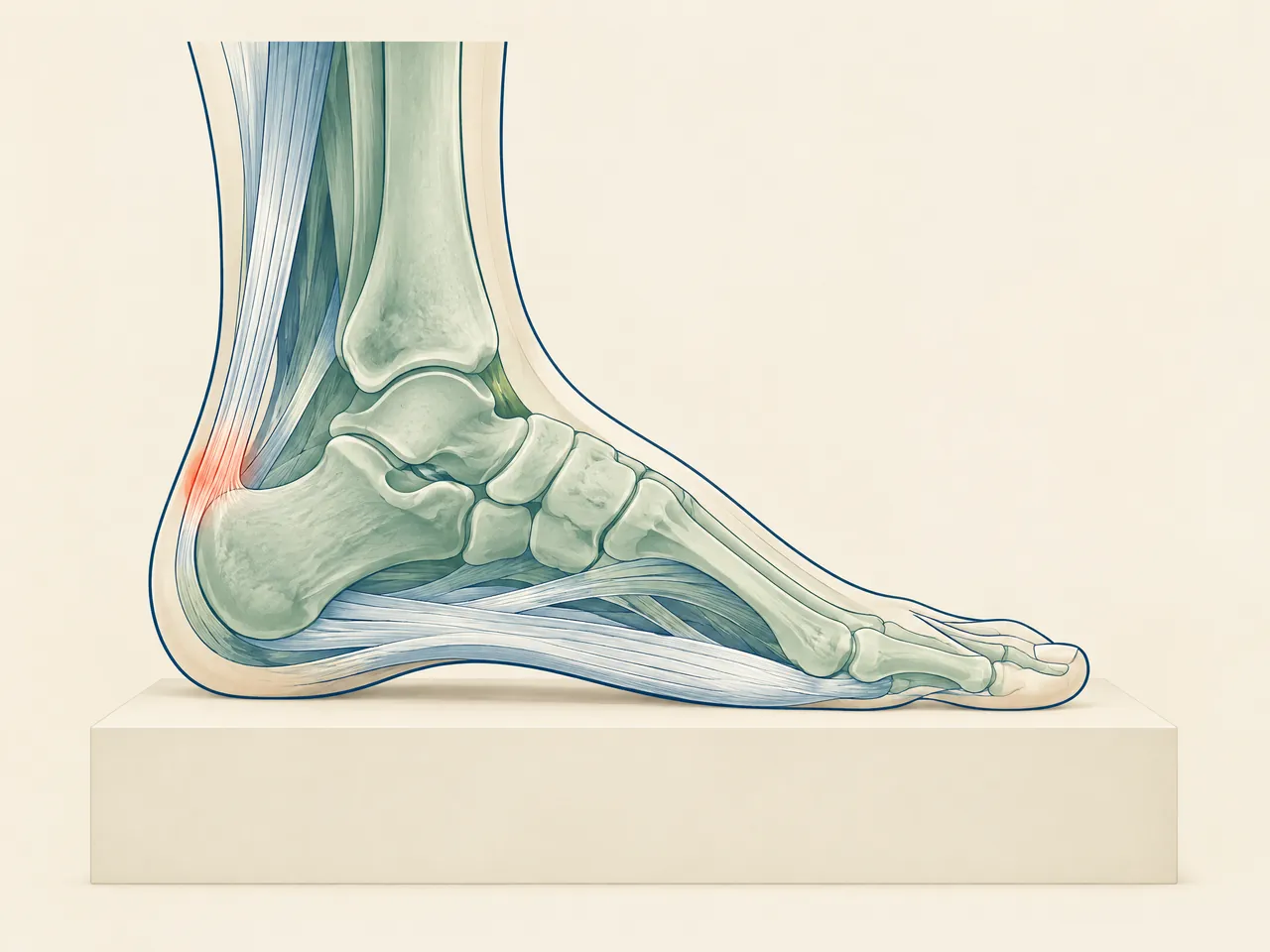
Sometimes—after suitable assessment. Gentle foot pain stretches may be reasonable when a clinician has advised plantar fascia or calf work for your symptoms, provided they create only a mild pull and do not make pain worse. A seated towel stretch or supported wall stretch can be a starting option. Stop if pain clearly increases or your first steps the next morning are worse. Do not self-treat with stretching after a new injury, when you cannot bear weight, or when there is numbness, deformity or diabetes-related foot pain.
Transparent pricing
See the fees.
Choose your care.
Explore our complete official price list, including first-trial prices, regular prices, packages and branch-specific options.
Opening WhatsApp prepares an enquiry; it does not send a message, take payment or confirm an appointment. Suitability and individual arrangements are confirmed during consultation.
Pain care
All prices in HKDExtracorporeal shockwave treatment
Shockwave treatment for deep-tissue and fascial care. The Kwun Tong clinic offers the multi-area options shown below.
Priced by branch
Branch-specific pricing
Prince Edward: HK$250 per area
Kwun Tong: HK$250 for 1 area / HK$450 for 2 areas / HK$600 for 3 areas
Pain care (manual therapy)
Includes Chinese medicine musculoskeletal assessment, manual joint techniques and tui na.
HK$580 (single session)
Chinese medicine musculoskeletal assessment
Pain care (acupuncture and manual therapy)
Combines acupuncture and manual therapy.
HK$680 (single session)
Combined care
Hair and scalp
All prices in HKDScalp health and hair-loss management
Includes AI scalp analysis, deep scalp and follicle cleansing, and scalp oil-control care.
HK$380 (first trial)
Regular price: HK$680
- 6 sessions: HK$3,480 (HK$580 per session)
- 12 sessions: HK$5,760 (HK$480 per session)
- 20 sessions: HK$8,600 (HK$430 per session)
- 30 sessions: HK$11,400 (HK$380 per session)
Hair acupuncture and Chinese herbal medicine package
Includes scalp acupuncture and 3 days of Chinese herbal medicine that does not require decoction.
HK$580 (single session)
Registered Chinese Medicine Practitioner consultation
- 6 sessions: HK$3,180 (HK$530 per session)
- 12 sessions: HK$5,760 (HK$480 per session)
- 20 sessions: HK$8,600 (HK$430 per session)
- 30 sessions: HK$11,400 (HK$380 per session)
Combined hair and scalp treatment
Combines acupuncture and Chinese herbal medicine with salon-level scalp and follicle care. Packages include complimentary hair-care shampoo and serum.
HK$1,260 (single session)
Combined treatment
- 8 sessions: HK$8,640 (HK$1,080 per session)
- 16 sessions: HK$15,680 (HK$980 per session)
- 20 sessions: HK$18,600 (HK$930 per session)
- 30 sessions: HK$26,400 (HK$880 per session)
Weight management
All prices in HKDFull-body acupoint embedding for weight management
Includes full-body acupoint embedding. Packages include complimentary Chinese herbal medicine for weight management, with the number of included days scaled to the package. Embedding material and the individual treatment arrangement are confirmed during consultation; this is not a cosmetic thread lift.
HK$980 (single session)
No trial session
- 10 sessions: HK$7,800 (HK$780 per session)
- 20 sessions: HK$14,600 (HK$730 per session)
- 30 sessions: HK$20,400 (HK$680 per session)
Facial acupuncture
All prices in HKDFacial acupuncture (basic)
Includes facial acupuncture and meridian-based facial care, including care for facial puffiness.
HK$480 (first trial)
Regular price: HK$680
- 10 sessions: HK$5,200 (HK$520 per session)
- 20 sessions: HK$9,600 (HK$480 per session)
- 30 sessions: HK$13,500 (HK$450 per session)
Facial acupuncture (advanced)
Includes enhanced facial acupuncture with a specially formulated moisturising mask and serum.
HK$780 (first trial)
Regular price: HK$1,180
- 10 sessions: HK$9,000 (HK$900 per session)
- 20 sessions: HK$16,600 (HK$830 per session)
- 30 sessions: HK$23,400 (HK$780 per session)
Chinese medicine
All prices in HKDAcupuncture and Chinese herbal medicine package
Includes a Chinese medicine consultation with pulse assessment, body acupuncture and 3 days of Chinese herbal granules that do not require decoction.
HK$580 (single session)
Chinese medicine consultation with pulse assessment
Foot Pain Stretches: Are Stretches Good for Foot Pain? Calf Stretches for Heel Pain—Check Suitability First
People searching for foot pain stretches often want a practical answer before getting out of bed, returning to a standing shift, or resuming a walk. The answer is conditional: stretching can be a sensible self-care component when the symptom pattern has been assessed and the movement is tolerated, but it cannot identify the cause of pain under the foot. The NHS describes plantar fasciitis as pain around the heel and arch that is often worse when walking starts after rest, then can worsen again after prolonged standing, walking or running [1].
Think of a stretch as a small, reversible test rather than a challenge to overcome. Before trying one, note the exact area that hurts, whether symptoms began gradually or after an event, and what happens after a commute, exercise class or a long day on your feet. This makes it easier to tell a healthcare professional whether the issue sounds consistent with plantar heel pain or needs a different route of assessment.

Foot Pain Stretches: Are Stretches Good for Foot Pain? Calf Stretches for Heel Pain—Why One Pattern Does Not Fit Every Foot
Pain on the sole is a location, not a diagnosis. A classic heel-and-arch pattern may lead a clinician to consider plantar fasciitis, but pain under the foot can also follow a sprain, arise around the ball of the foot, relate to skin problems, or involve a nerve. The NHS symptom guide specifically advises people not to self-diagnose the cause of pain in the bottom of the foot [3]. A stretch that feels reasonable for a gradual heel-and-arch complaint is not automatically appropriate for sharp pain after a twist, a focal painful spot, or a burning or shooting sensation.
The time pattern is useful, but it has limits. First-step discomfort after sleep or sitting, easing with some movement, and later aggravation after a long period on your feet are features reported on NHS plantar-fasciitis guidance [1]. Record whether your pain follows that pattern, rather than using it as proof. If tingling, loss of feeling or weakness is part of the story, do not treat it as ordinary tightness. Read about tarsal tunnel syndrome foot pain for a focused discussion of nerve-related symptoms, and arrange clinical advice rather than repeatedly stretching through them.
Foot Pain Stretches: Are Stretches Good for Foot Pain? Calf Stretches for Heel Pain—When Assessment Comes Before Exercise
Assessment comes first when there is a new injury, a snap or pop at the time of injury, obvious change in foot shape, severe pain, or an inability to walk or bear weight. Those signs call for urgent medical advice rather than a home stretch. The same principle applies if your foot has reduced sensation or you have diabetes and new foot pain: the NHS advises seeking clinical help in these situations because foot problems can be more serious [1] [3]. Do not use a towel stretch to test whether you can “work through” these warning signs.
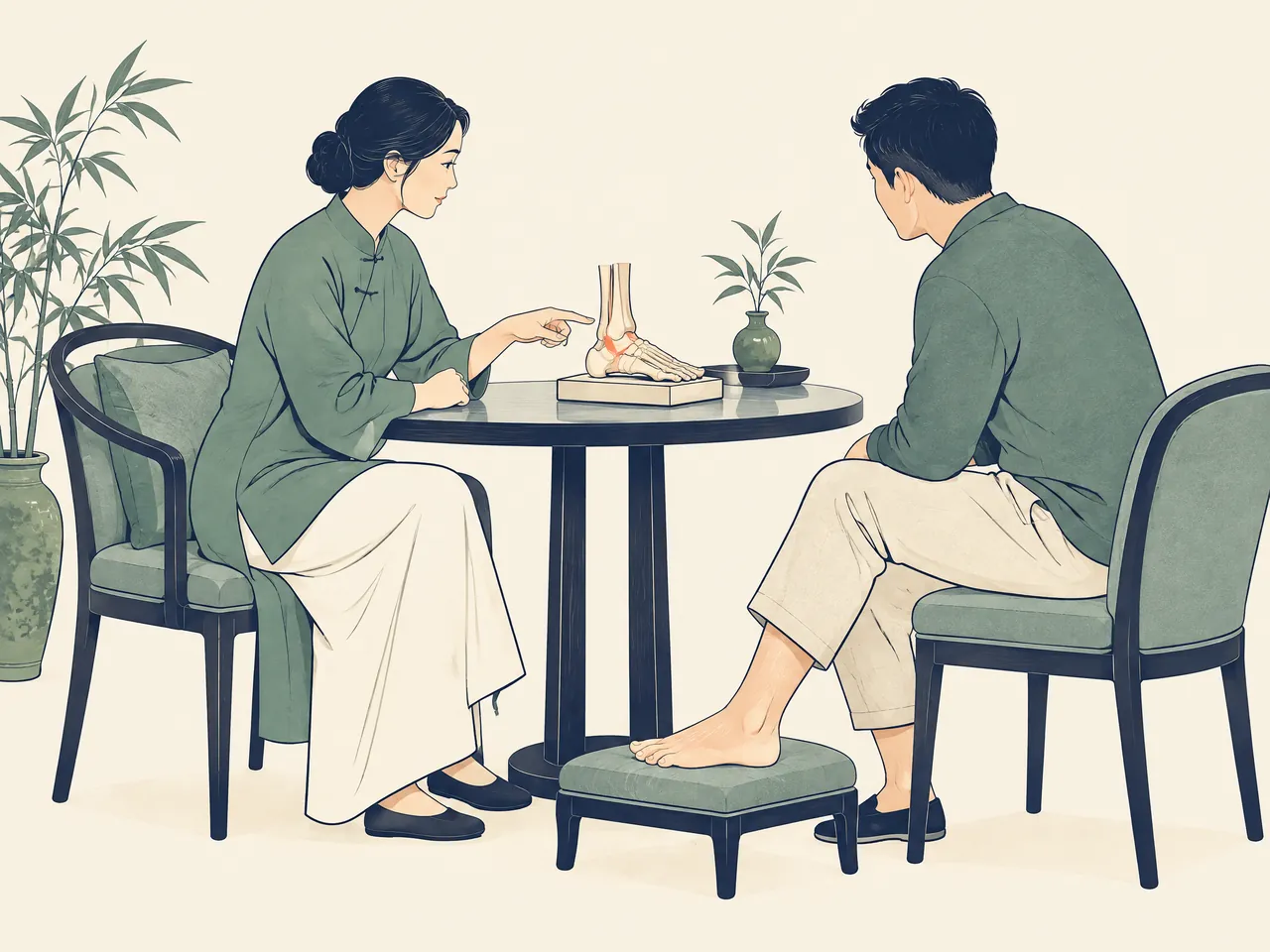
A less urgent appointment is still worthwhile when pain is stopping normal activities, keeps returning, is worsening, or has not improved after about two weeks of sensible self-care [1]. Bring useful details: which footwear you use at work, recent changes in running or walking, where the pain begins, and whether you have already tried rest, insoles or exercises. A Chinese medicine consultation can be a place to discuss your history and whether a complementary approach is appropriate, but it should not delay a needed medical assessment. For an appointment enquiry, choose the practical location first—either Chinese medicine clinic Prince Edward or Kwun Tong Chinese medicine clinic.
Compare your options
| Situation or option | What to set up | What a suitable response looks like | When to stop or seek advice |
|---|---|---|---|
| Seated towel stretch | Stable seat; affected knee straight; heel stays on the floor; towel around the ball of the foot. | A mild, controllable pull under the foot or in the back of the calf that eases on release. | Stop for sharp, burning or increasing pain, or if symptoms clearly flare afterwards. |
| Supported wall calf stretch | Hands on a wall; affected foot behind; heel down; toes point towards the wall. | A gentle calf pull without loss of balance, twisting or forcing the heel down. | Do not continue if standing is unsafe, heel pain is sharp, or the foot cannot bear weight normally. |
| After a rest period | Notice the first few steps before adding any stretch; keep the rest of the morning routine consistent. | Symptoms are no worse than usual and settle back towards your baseline after activity. | Reduce the movement and ask for advice if the next morning is clearly worse or stiffness persists. [2] |
| During a high-standing day | Pair any agreed stretch with manageable walking and standing demands, supportive footwear and breaks where possible. | The plan remains tolerable across the workday without a progressive flare. | Seek assessment if pain limits normal activity, is recurrent or worsening, or has sensory symptoms. [1] |
On smaller screens, scroll the table sideways to compare all columns.
Foot Pain Stretches: Are Stretches Good for Foot Pain? Calf Stretches for Heel Pain—Gentle Starting Options
If assessment has indicated that plantar fascia or calf stretching is appropriate, start with the least demanding version you can control. The goal is a mild, steady pulling feeling, not a sharp sting in the heel, cramping in the arch, or a contest with stiffness. Avoid bouncing, forcing the toes upward, or adding a new stretch on the same day that you substantially increase running, hill walking or time standing. The NHS Ayrshire & Arran MSK guidance presents both towel and wall-based options and asks people to seek professional advice first if they are unsure that an exercise suits them [2].
Choose the position that makes the movement safe and easy to observe. A seated towel stretch reduces the balance demand and may suit a person who is cautious about loading the foot. A wall stretch uses body position and can be useful where calf tightness has been identified, but it needs a stable surface and confident weight-bearing. Neither is automatically superior. The better starting choice is the one you can set up without twisting, rushing or holding your breath. The comparison below can help you choose what to ask about, not prescribe a programme for every foot.
Foot Pain Stretches: Are Stretches Good for Foot Pain? Calf Stretches for Heel Pain—A Seated Towel Stretch
For the seated option, sit on a stable chair or firm surface with the affected leg comfortably forward. Keep the knee straight and the heel in contact with the floor. Loop a towel around the ball of the foot, hold both ends, and draw it gently towards you until there is only a mild pull along the sole or the back of the calf. NHS Ayrshire & Arran describes this as a plantar-fascia towel stretch and likewise specifies heel contact and avoiding a bent knee [2]. Ease back to the start smoothly; do not jerk the towel or curl the toes to gain extra range.
The seated position makes it easier to notice what the stretch is actually doing. A broad, light pull that settles when you release is different from a local sharp heel pain, electric feeling or pain that changes your gait afterwards. If you feel the latter, stop and note the response rather than repeating it in search of relief. A morning routine may be easier after rest, but timing alone does not make the exercise safe. If you want further context on variations, use the linked guide to foot and ankle stretching exercises as a discussion aid, then keep the plan matched to your assessment.
Foot Pain Stretches: Are Stretches Good for Foot Pain? Calf Stretches for Heel Pain—A Supported Wall Stretch
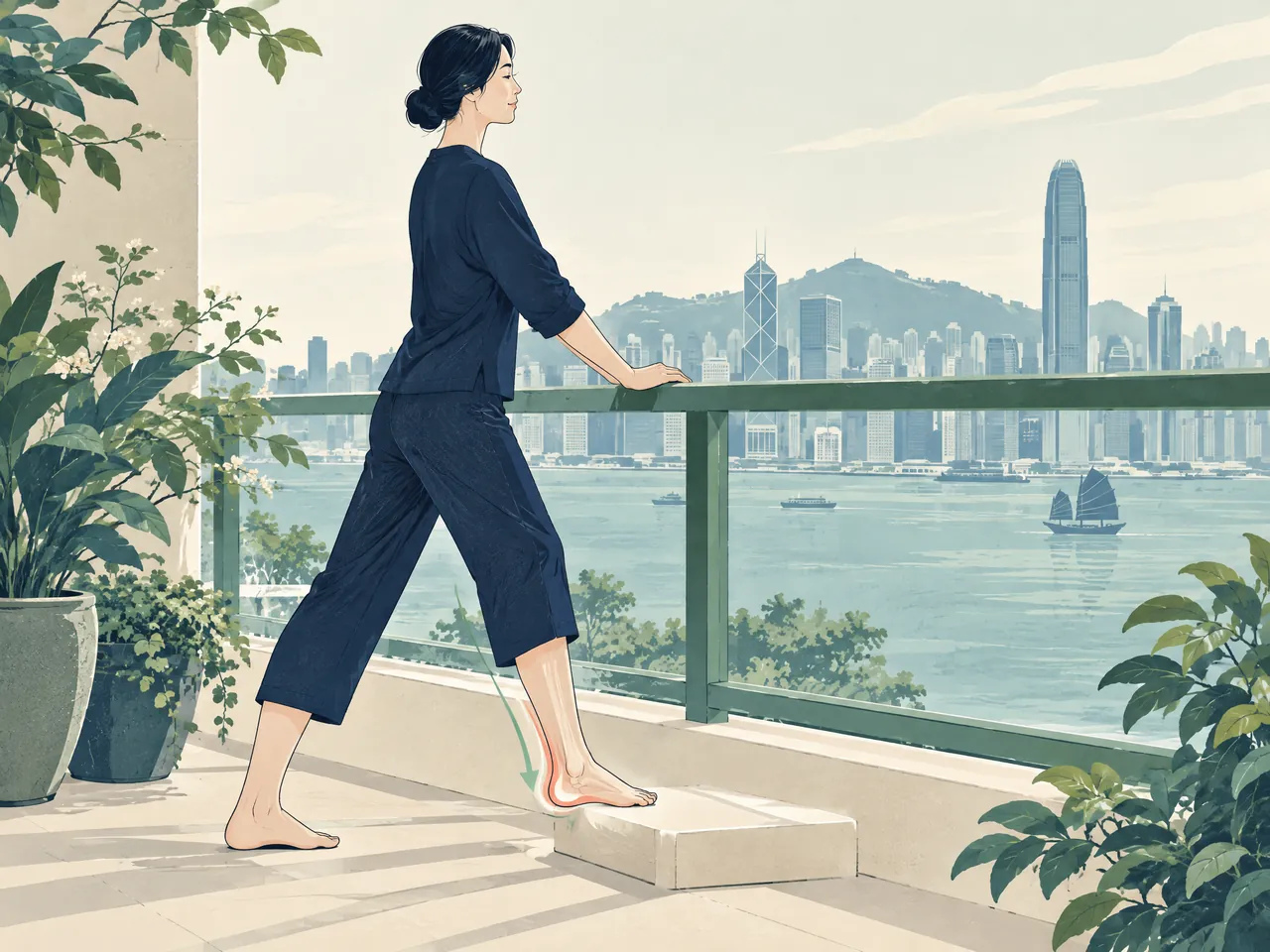
For a supported wall calf stretch, face a wall and place both hands on it for balance. Put the affected foot behind, keep that heel down, and point both sets of toes towards the wall rather than letting the back foot turn out. Bend the front knee and move your body forward only until the back of the calf feels a gentle stretch. The NHS Ayrshire & Arran instructions emphasise wall support, heel contact and toe direction for its standing calf stretch [2]. Step out rather than bouncing out of the position, and do not attempt it if standing feels unsafe.
A wall stretch can involve the calf and may also be felt through the foot depending on placement. That does not mean more sensation is better. Use a smaller shift of body weight if the pull is too strong, and keep your hands on the wall rather than reaching for extra depth. Some people find a foot-on-wall position more specific to the sole; others tolerate a conventional back-leg calf stretch better. The practical question is whether the movement remains controlled and whether symptoms return to their usual level afterwards. The separate resource on gentle stretches for heel pain can help frame questions about an appropriately gentle progression.
Foot Pain Stretches: Are Stretches Good for Foot Pain? Calf Stretches for Heel Pain—Monitor the Response
A stretch is not judged only by how it feels in the moment. Check the area later that day, after your usual work or household tasks, and on the first few steps the following morning. NHS Ayrshire & Arran advises adjusting exercise if pain becomes too high and says symptoms should return to the pre-exercise baseline within 30 minutes; it also flags increased pain or stiffness lasting beyond 60 minutes the next morning as a sign to modify the activity [2]. Those response markers are more useful than chasing a deeper stretch or following someone else’s routine exactly.
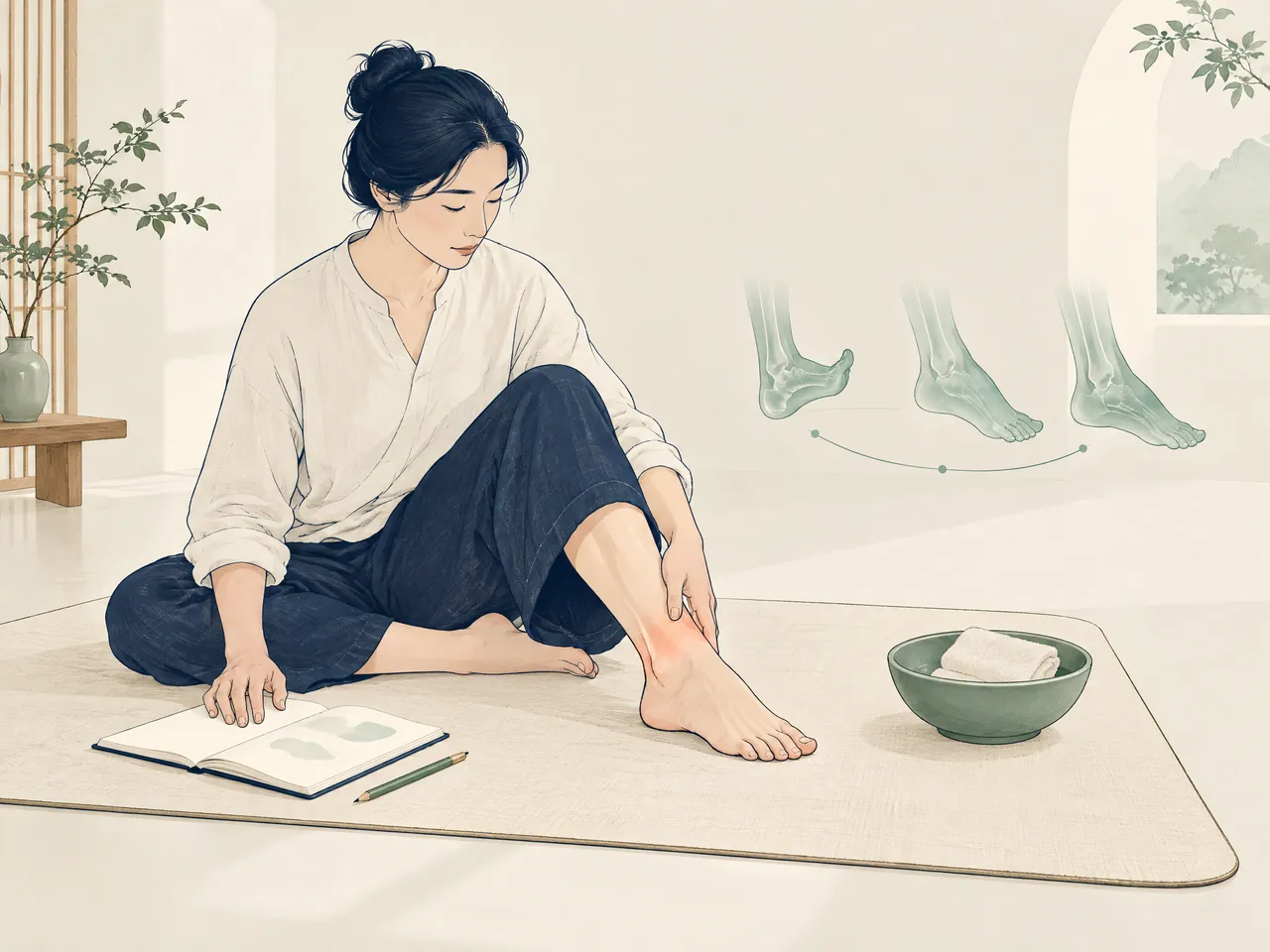
Keep the experiment simple. Change one thing at a time: perhaps introduce a gentle stretch while holding walking distance steady, rather than adding stretches, a new training plan and extra errands together. A short note on first-step pain, comfort during a shift, and response after sitting can reveal whether the approach is neutral, helpful or aggravating. If a stretch repeatedly causes a clear flare, leave it out and ask for advice. More force is not a substitute for a reassessment of the source of pain.
Foot Pain Stretches: Are Stretches Good for Foot Pain? Calf Stretches for Heel Pain—Adjust Walking and Standing Loads
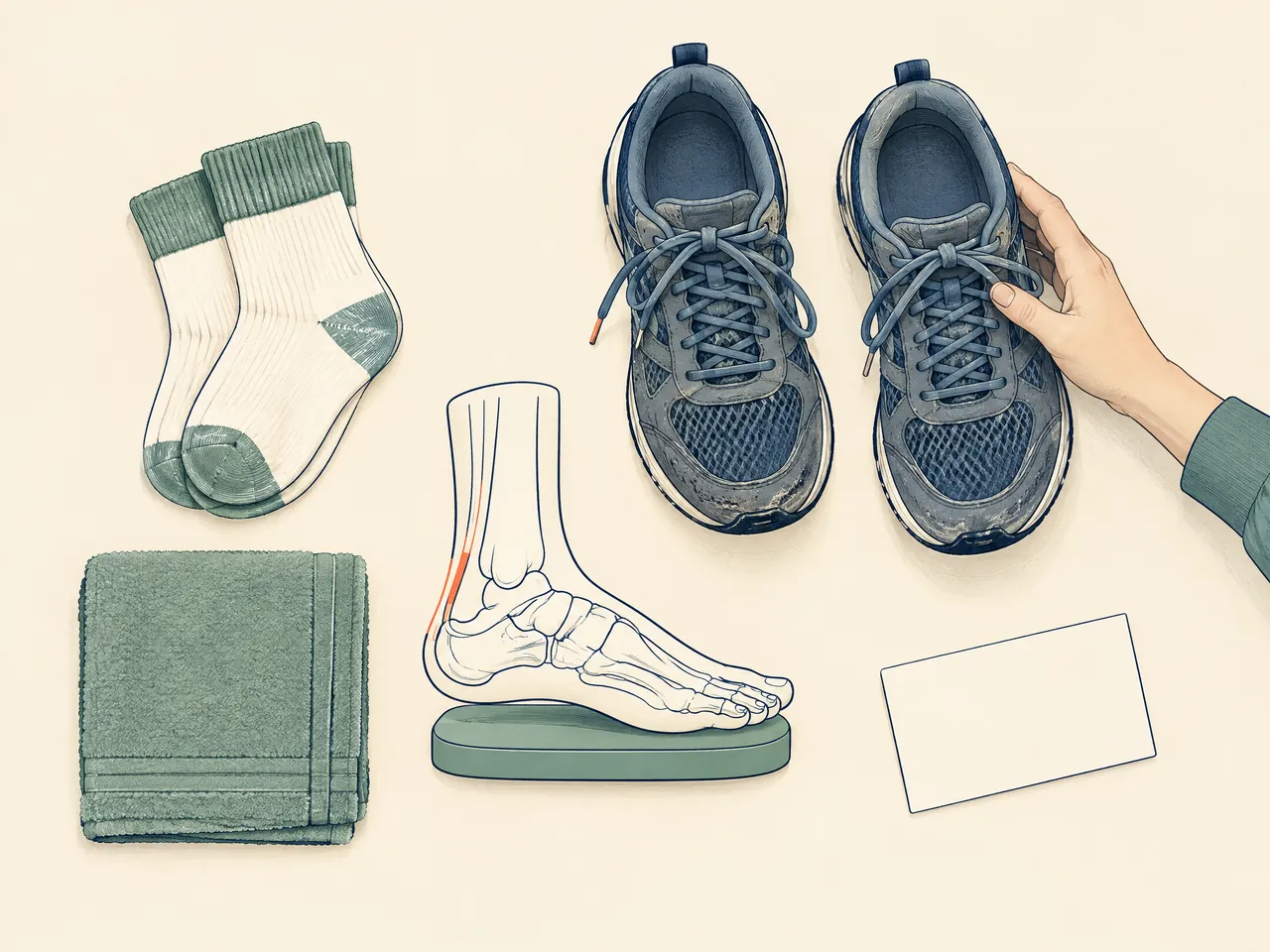
Stretching works best as one small part of load management, not as permission to ignore a day of aggravating activity. If standing, walking or running makes heel-and-arch pain worse, the NHS suggests avoiding long periods of these activities while staying active in ways that do not put pressure on the foot, such as swimming [1]. Break a demanding task into shorter blocks where possible. For a Hong Kong commute or retail shift, that may mean planning a seat during a break, choosing the least aggravating route where practical, and avoiding an extra recreational walk on a day when symptoms are already increasing.
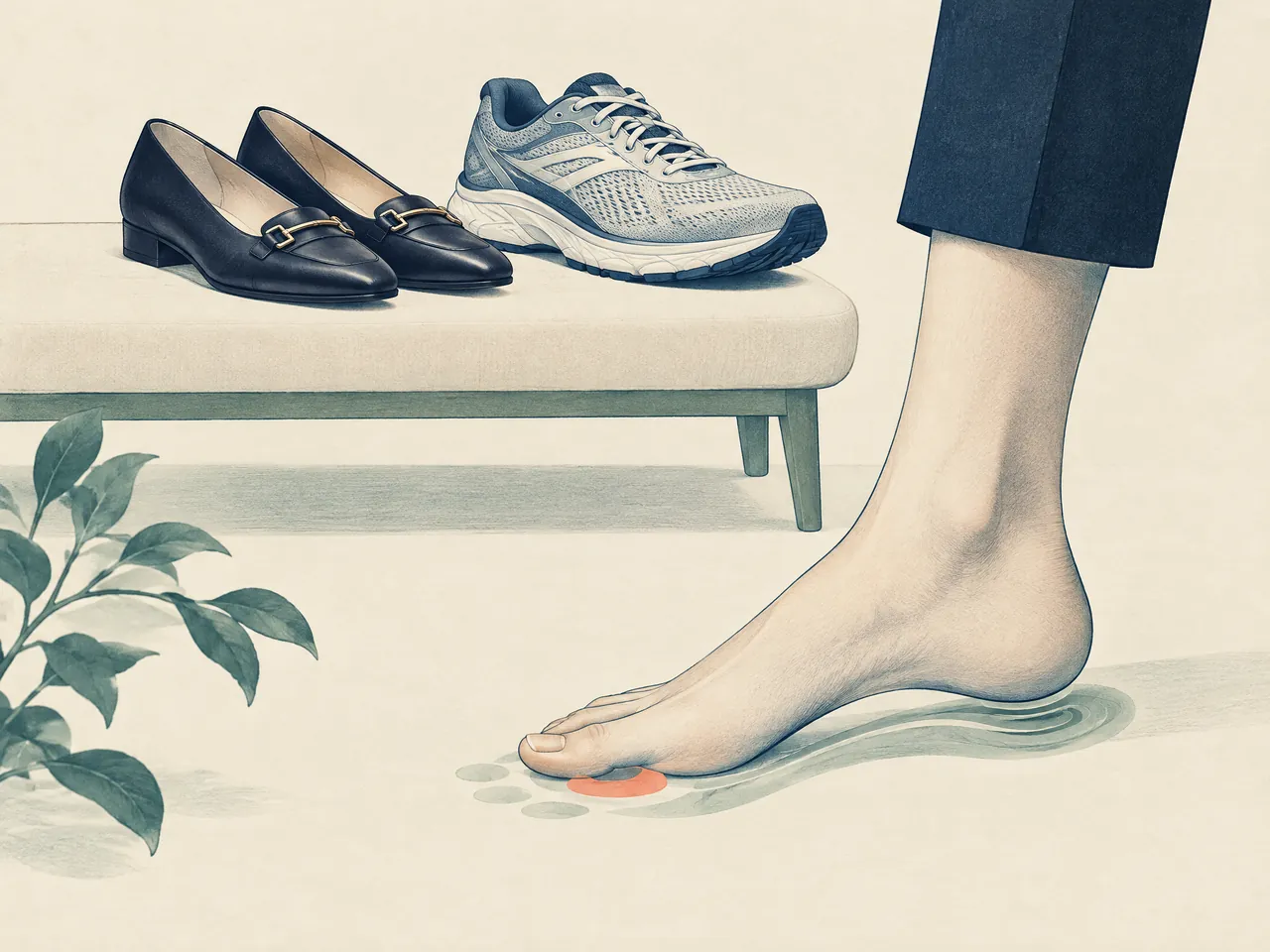
Footwear is part of the same conversation. NHS advice for plantar fasciitis includes shoes with cushioned heels and good arch support, while advising against prolonged barefoot walking on hard surfaces, high heels and tight or pointy shoes [1]. The aim is not to buy a miracle shoe or assume one style works for everyone. Instead, observe whether a pair is cramped, unstable, worn down or noticeably aggravating. Make changes gradually and describe what you notice at an assessment. If you are comparing consultation costs before asking about a visit, the Chinese medicine clinic price list Hong Kong page provides the relevant clinic information without suggesting that stretching alone is a treatment package.
Foot Pain Stretches: Are Stretches Good for Foot Pain? Calf Stretches for Heel Pain—Know When to Get Help
Stop the stretch and seek prompt medical assessment for severe pain, inability to walk, a foot that has changed shape, or a snap, grinding or popping noise at the time of injury [3]. Seek non-urgent clinical advice for pain that limits normal life, becomes worse or recurrent, persists despite two weeks of self-care, or comes with tingling or loss of sensation [1] [3]. These boundaries are not a reason to worry about every ache. They are a way to avoid mistaking a potentially different problem for ordinary heel tightness.
For a non-urgent enquiry with TCM Lab, a helpful WhatsApp message to +852 6940 5663 can state where the pain is, when it began, whether there was an injury, what your first steps feel like, and which activities aggravate it. Mention your preferred Prince Edward or Kwun Tong location and any medicines or health conditions relevant to the conversation. A Registered Chinese Medicine Practitioner can discuss your presentation and complementary options, but no stretch, consultation or treatment can be promised to resolve every cause of foot pain. If you need urgent evaluation, use the appropriate medical service rather than wait for a routine appointment.
Care and health guide
Foot discomfort: care information
This directory brings together services, reading, and visit information related to foot discomfort, to help you prepare questions for a consultation.
When foot discomfort affects your day, noting when it occurs, its relation to activity, and what you have already tried can help prepare a consultation; acupuncture for foot pain is a relevant service or reading entry point.
Individual circumstances differ, and acupuncture Hong Kong offers related information to help you understand options and prepare questions.


Your questions, answered
Frequently asked questions
How can I begin a towel stretch safely?
Only after a clinician has said that this type of movement suits your symptoms. Sit securely, keep the affected knee straight and heel on the floor, and loop a towel around the ball of the foot. Draw it towards you only to a mild pull in the sole or calf, then release smoothly. Do not bounce, force the toes or use pain as a measure of progress. [2]
Should I stretch through heel pain if it feels tight?
No. Tightness is not a reason to push through sharp or rising pain. Reduce the movement or stop if the stretch worsens symptoms, changes how you walk, or leaves you clearly worse later or the next morning. Reassess the plan instead of increasing intensity. [2]
Does first-step pain mean I definitely have plantar fasciitis?
No. Heel-and-arch pain that is worse on first walking after rest can occur with plantar fasciitis, but a symptom pattern alone does not confirm a diagnosis. The location of pain, onset, injury history and signs such as numbness all matter. Persistent, recurrent or unusual symptoms deserve clinical assessment. [1] [3]
Can Chinese medicine replace an assessment for a new foot injury?
No. New trauma, inability to walk, deformity, severe pain, altered sensation or diabetes-related foot pain need appropriate medical assessment first. Chinese medicine may be discussed as a complementary option after or alongside suitable evaluation, but it should not delay urgent care.
Sources and further information
- [1] NHS — Plantar fasciitis
Referenced for: Official NHS information on heel-and-arch symptoms, gentle exercises, footwear and activity advice, and when to seek medical help.
- [2] NHS Ayrshire & Arran — Plantar Fasciitis MSK Patient Portal
Referenced for: NHS exercise descriptions for plantar fascia towel, wall and standing calf stretches, plus activity-response guidance.
- [3] NHS — Pain in the bottom of the foot
Referenced for: Official NHS guidance on possible causes of sole pain, avoiding self-diagnosis, and urgent and non-urgent warning signs.