
TCM Lab · Health reading
Hip Pain When Walking and Groin Pain and Hip Pain: A Practical Guide
Published Updated
Hip pain when walking can feel like a catch in the groin, an ache over the outside of the hip, or a pull through the buttock and upper thigh. Those differences matter, but they do not identify the cause alone. Note what happened before it began, how far you can walk, whether stairs, turning, getting out of a chair or putting on socks are limited, and whether there is numbness, weakness or night pain. Groin pain and hip pain can arise from the joint, nearby soft tissues or the lower back, so describe the pattern and function rather than assuming one explanation.
Appointments are confirmed through WhatsApp. If you have language requirements, please mention them in your enquiry.
The short answer
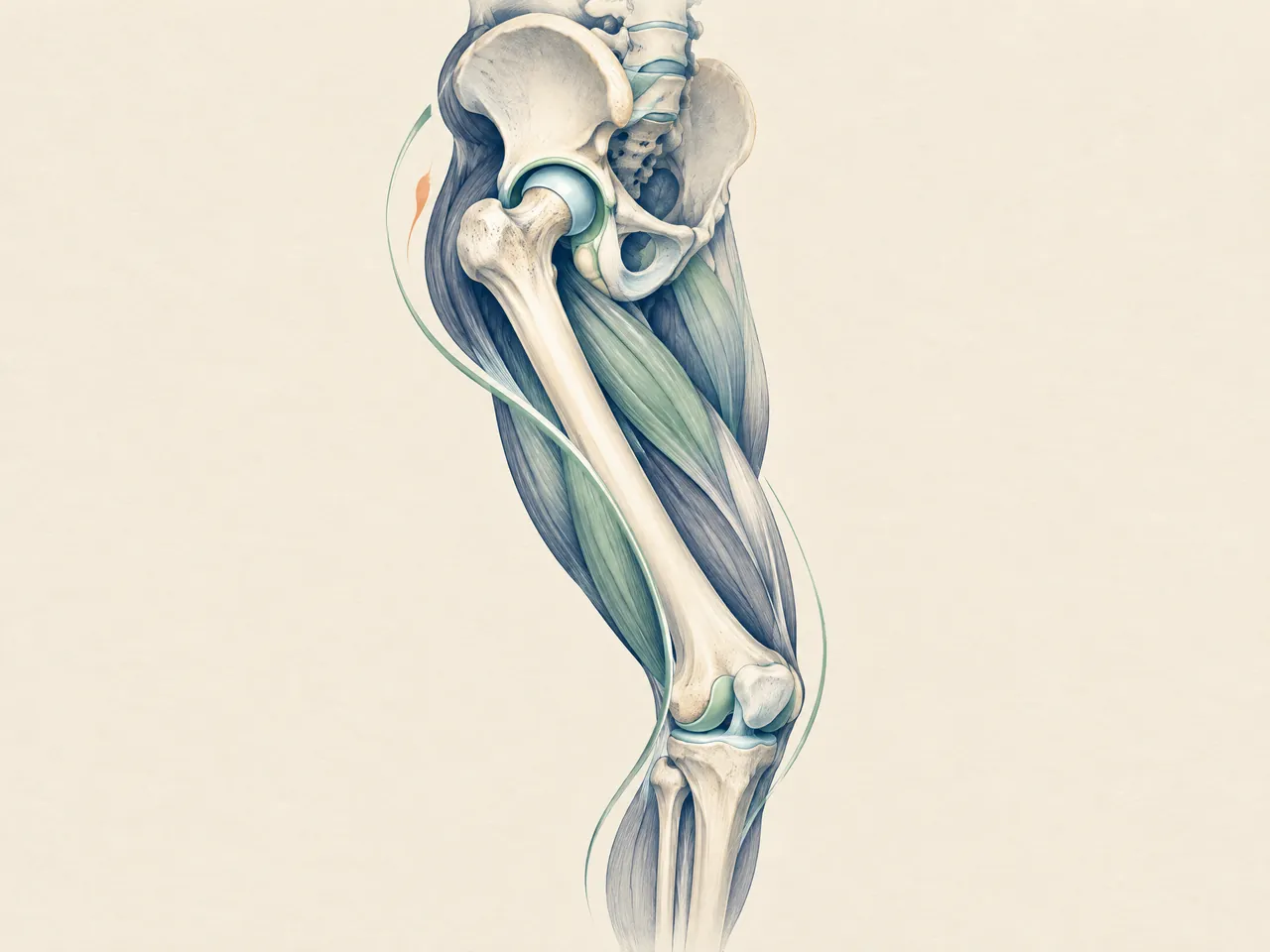
Hip pain when walking and groin pain and hip pain may come from the joint, muscles, tendons, bursae or pain referred from the lower back. Note the exact location, onset, walking tolerance and movements that trigger it. Severe pain after a fall, an inability to walk or bear weight, a visible deformity, persistent tingling after injury, or a hot swollen hip with fever needs medical assessment first. [1] [2]
Transparent pricing
See the fees.
Choose your care.
Explore our complete official price list, including first-trial prices, regular prices, packages and branch-specific options.
Opening WhatsApp prepares an enquiry; it does not send a message, take payment or confirm an appointment. Suitability and individual arrangements are confirmed during consultation.
Pain care
All prices in HKDExtracorporeal shockwave treatment
Shockwave treatment for deep-tissue and fascial care. The Kwun Tong clinic offers the multi-area options shown below.
Priced by branch
Branch-specific pricing
Prince Edward: HK$250 per area
Kwun Tong: HK$250 for 1 area / HK$450 for 2 areas / HK$600 for 3 areas
Pain care (manual therapy)
Includes Chinese medicine musculoskeletal assessment, manual joint techniques and tui na.
HK$580 (single session)
Chinese medicine musculoskeletal assessment
Pain care (acupuncture and manual therapy)
Combines acupuncture and manual therapy.
HK$680 (single session)
Combined care
Hair and scalp
All prices in HKDScalp health and hair-loss management
Includes AI scalp analysis, deep scalp and follicle cleansing, and scalp oil-control care.
HK$380 (first trial)
Regular price: HK$680
- 6 sessions: HK$3,480 (HK$580 per session)
- 12 sessions: HK$5,760 (HK$480 per session)
- 20 sessions: HK$8,600 (HK$430 per session)
- 30 sessions: HK$11,400 (HK$380 per session)
Hair acupuncture and Chinese herbal medicine package
Includes scalp acupuncture and 3 days of Chinese herbal medicine that does not require decoction.
HK$580 (single session)
Registered Chinese Medicine Practitioner consultation
- 6 sessions: HK$3,180 (HK$530 per session)
- 12 sessions: HK$5,760 (HK$480 per session)
- 20 sessions: HK$8,600 (HK$430 per session)
- 30 sessions: HK$11,400 (HK$380 per session)
Combined hair and scalp treatment
Combines acupuncture and Chinese herbal medicine with salon-level scalp and follicle care. Packages include complimentary hair-care shampoo and serum.
HK$1,260 (single session)
Combined treatment
- 8 sessions: HK$8,640 (HK$1,080 per session)
- 16 sessions: HK$15,680 (HK$980 per session)
- 20 sessions: HK$18,600 (HK$930 per session)
- 30 sessions: HK$26,400 (HK$880 per session)
Weight management
All prices in HKDFull-body acupoint embedding for weight management
Includes full-body acupoint embedding. Packages include complimentary Chinese herbal medicine for weight management, with the number of included days scaled to the package. Embedding material and the individual treatment arrangement are confirmed during consultation; this is not a cosmetic thread lift.
HK$980 (single session)
No trial session
- 10 sessions: HK$7,800 (HK$780 per session)
- 20 sessions: HK$14,600 (HK$730 per session)
- 30 sessions: HK$20,400 (HK$680 per session)
Facial acupuncture
All prices in HKDFacial acupuncture (basic)
Includes facial acupuncture and meridian-based facial care, including care for facial puffiness.
HK$480 (first trial)
Regular price: HK$680
- 10 sessions: HK$5,200 (HK$520 per session)
- 20 sessions: HK$9,600 (HK$480 per session)
- 30 sessions: HK$13,500 (HK$450 per session)
Facial acupuncture (advanced)
Includes enhanced facial acupuncture with a specially formulated moisturising mask and serum.
HK$780 (first trial)
Regular price: HK$1,180
- 10 sessions: HK$9,000 (HK$900 per session)
- 20 sessions: HK$16,600 (HK$830 per session)
- 30 sessions: HK$23,400 (HK$780 per session)
Chinese medicine
All prices in HKDAcupuncture and Chinese herbal medicine package
Includes a Chinese medicine consultation with pulse assessment, body acupuncture and 3 days of Chinese herbal granules that do not require decoction.
HK$580 (single session)
Chinese medicine consultation with pulse assessment
Hip Pain When Walking and Groin Pain and Hip Pain: Start with Location and Function
The first useful distinction is between where you feel pain and what the leg can still do. Deep front or groin pain, outer-side tenderness and buttock pain can lead an assessor to different questions. The location is a clue, not a verdict. Mayo Clinic notes that groin or inner-hip pain more often suggests a problem within the hip joint, whereas outer hip, upper-thigh or outer-buttock pain may relate to nearby soft tissues; pain can also be referred from the lower back. [2] For a wider map of the area, see hip pain.
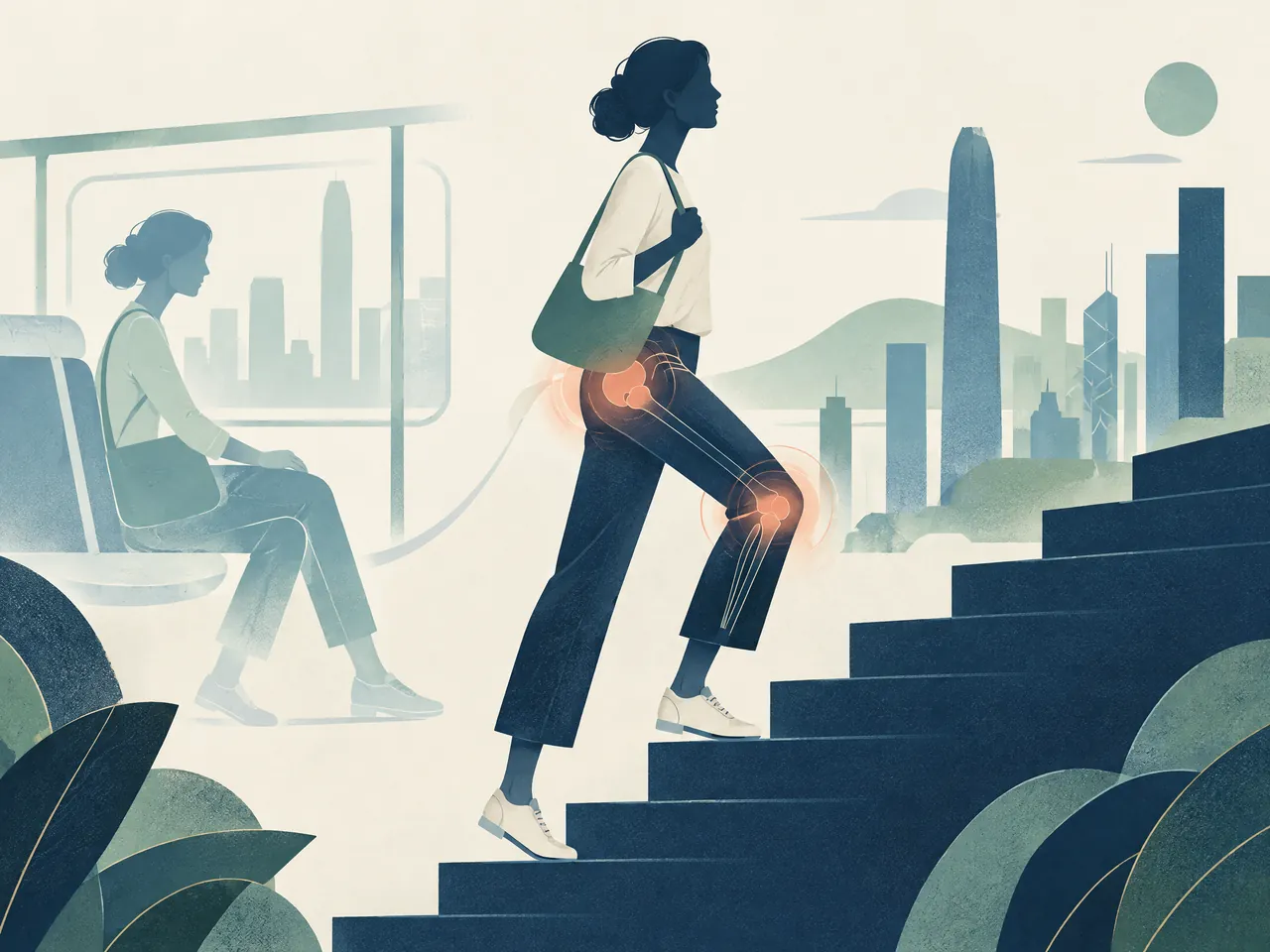
Function makes that clue more meaningful. Write down whether the pain begins with the first few steps, only after a longer walk, on slopes, when turning, or after sitting. Notice if you limp, shorten your stride, use the handrail on stairs, avoid standing on one leg to dress, or wake when rolling in bed. These ordinary tasks load the hip in different ways. The Hong Kong College of Orthopaedic Surgeons lists walking, bending, getting in and out of a chair, and putting on shoes and socks among activities that hip pain and stiffness can make difficult. [4] This record is more useful at an appointment than trying to name the condition yourself.
Hip Pain When Walking and Groin Pain and Hip Pain: Note Where It Hurts
Use one finger to indicate the main spot before describing how much it hurts. Deep front-of-hip or groin pain may be noticed during a longer stride, rising from a low seat or rotating the leg. Pain over the bony outer side may be more obvious when walking, climbing stairs or lying on that side. Discomfort mainly in the rear of the pelvis or buttock can coexist with back symptoms and may not originate in the hip joint. HSS similarly describes front hip and groin patterns, outer-hip patterns and buttock pain often related to the spine. [3] See hip pain in the buttock for details to report.
Location may shift during the day. For example, an ache can start in the groin after getting out of a car and later be felt in the thigh because walking has changed. That does not prove that the pain has spread or that there is one particular injury. Instead, record the original point, any spread, the direction of spread and the activity immediately before it. Also mention a new lump, skin colour change, swelling, bruising, clicking, catching or a sense that the leg gives way. These observations help a clinician decide whether examination, imaging or another route of assessment is appropriate; a webpage or pressure point cannot confirm the source.
Hip Pain When Walking and Groin Pain and Hip Pain: Record Weight-Bearing Limits
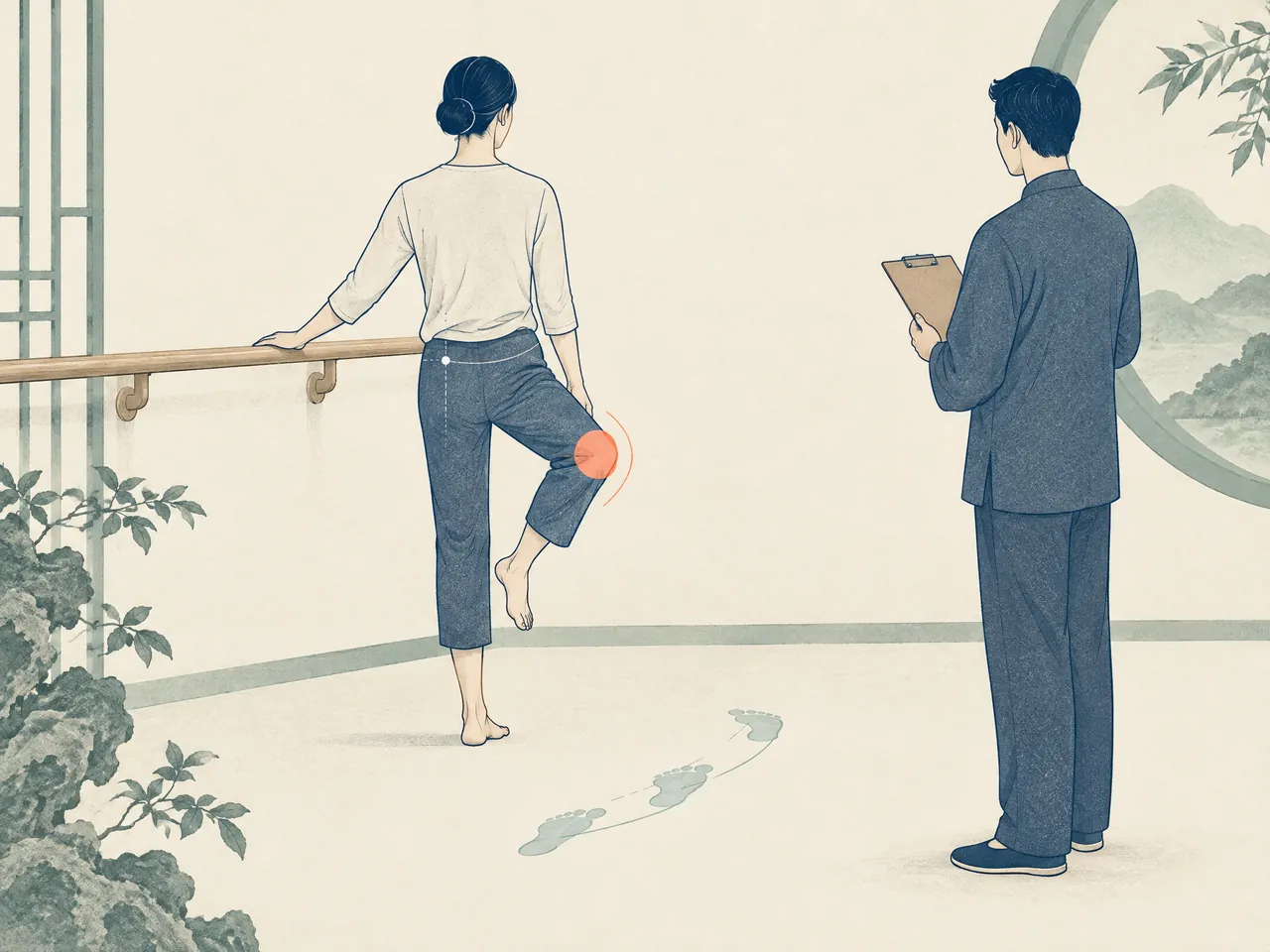
Weight-bearing means how comfortably the painful leg accepts your body weight, not simply whether you can force yourself to move. Compare a few safe everyday actions: standing from a chair, taking the first ten steps indoors, walking on level ground, climbing one flight of stairs and standing briefly while holding support. Note whether pain is immediate, builds with distance, or settles quickly when you stop. Include any limp or need to hold a rail. A clear timeline of these changes helps distinguish a manageable activity limit from a sudden loss of function that should not be tested repeatedly.
Do not push through a major change in weight-bearing to see if it loosens up. NHS guidance says severe pain after a fall or injury, being unable to walk or put weight on the leg, and tingling or loss of feeling after an injury are reasons for emergency assessment. [1] A leg that looks misshapen, appears shorter, or cannot be moved after an injury also requires urgent medical care. [2] When walking is increasingly restricted, sleep is disrupted, or pain is recurring, arrange an assessment rather than treating it as a routine sore muscle. [1]
Compare your options
| What to observe | Examples to note | Why it helps the next assessment |
|---|---|---|
| Exact location | Deep groin, front hip, outer side, buttock, thigh or lower back | Separates the pain map from a presumed diagnosis. |
| Onset and trigger | Fall, twist, new route, repeated lifting, gradual onset or no clear trigger | Shows whether the pattern followed an injury, a load change or a gradual loss of function. |
| Weight-bearing | First steps, level walking, stairs, turning, standing from a chair and any limp | Shows how pain changes with load and whether walking is becoming unsafe. |
| Associated changes | Stiffness, swelling, bruising, fever, numbness, weakness, clicking or night pain | Identifies details that may affect the urgency and type of assessment. |
| What changes it | Rest, sitting, lying on one side, a shorter route, gentle movement or a specific position | Helps explain the behaviour of symptoms without claiming the cause. |
On smaller screens, scroll the table sideways to compare all columns.
Hip Pain When Walking and Groin Pain and Hip Pain: Possible Sources
Hip pain when walking has many possible sources. A sudden turn, a trip, a fall, a new running routine, repeated lifting or gradual stiffness can each change the starting question. Conditions involving the joint, tendons, muscles, bursae, bone and lower spine can overlap in the same area. Use patterns such as groin pain with rotation or outer-hip pain after a longer walk as descriptions, not as a self-diagnosis. The NHS lists injuries, arthritis, tendon problems, bursitis and infection among possible categories of adult hip pain. [1] Read more about broad hip pain causes if you need a structured starting point.
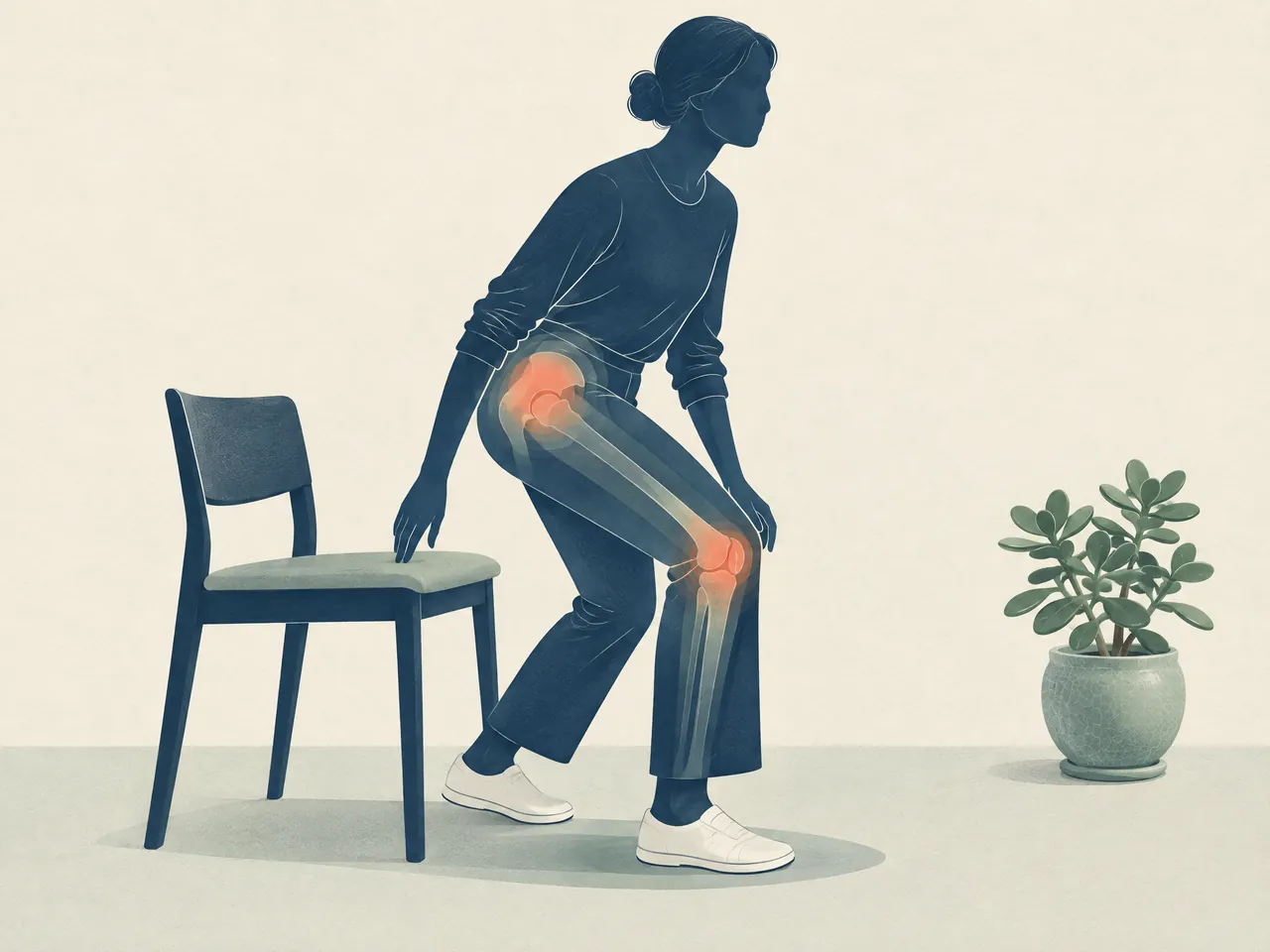
Age, activity and medical history can alter what needs attention, but none settles the answer alone. A new pain after direct impact differs from gradual loss of movement, and a return to sport requires a different history from stiffness after rest. Previous hip surgery, known arthritis, medication changes, bone-health concerns and recent illness may matter. Assessment can include questions about daily function and examination of mobility, strength and alignment; further tests are selected when appropriate. [4] Bring prior reports if you have them, but do not assume an older scan fully explains a new walking pattern.
Hip Pain When Walking and Groin Pain and Hip Pain: Joint, Tendon or Bursa Clues
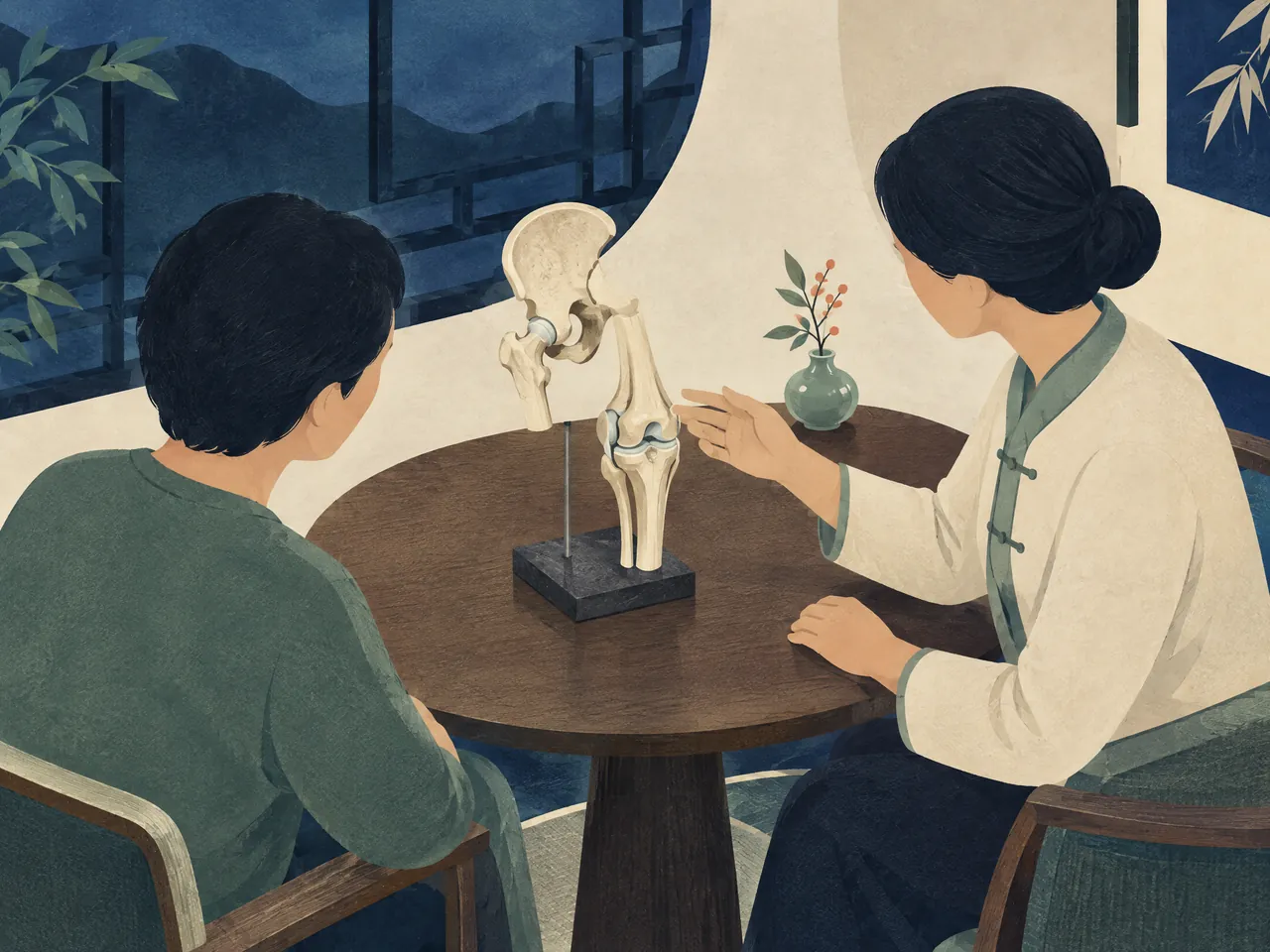
Deep groin pain and reduced ease with rotation, bending or dressing can be consistent with a joint-related pattern, while outer-side pain can be associated with structures surrounding the hip. However, the same activity may aggravate several structures, and tenderness over one area does not rule out another source. HSS explains that outer-hip pain may arise with abductor-muscle problems or bursitis, while front hip and groin pain can occur with several conditions. [3] Describe whether the symptom is deep, superficial, sharp, aching, stiff, catching or unstable and what reliably changes it.
A short activity log can prevent vague answers at a consultation. Record the onset date, a possible trigger, the pain location, the provoking movement, what lets it settle, and whether sleep or work is affected. If you start a new exercise, change only one variable at a time and avoid adding distance, hills and speed together. For tolerable, non-urgent symptoms, keep moving within a range that does not clearly aggravate pain rather than using prolonged complete bed rest; NHS also advises avoiding overloading the hip. [1] The related page on hip pain symptoms offers more prompts.
Hip Pain When Walking and Groin Pain and Hip Pain: When Back Referral Matters
The hip and lower back work together during walking, so buttock or side-of-hip pain does not automatically mean the hip joint is the source. Pain that begins in the back or buttock and travels down the leg, changes with sitting or spinal movement, or occurs alongside tingling, altered sensation or weakness needs a fuller history. HSS notes that conditions of the lower spine can present as hip pain and may radiate from the hip area down the leg. [3] That is why a clinician may examine more than the point that hurts. It also explains why a normal-looking hip region on one test may not end the assessment.
Back referral should not become a catch-all explanation. New weakness, loss of feeling, inability to bear weight, severe pain after injury or rapid worsening still needs timely medical assessment. The same is true if pain is paired with fever, feeling unwell, a hot swollen hip or colour change in the surrounding skin. [1] Say whether pain starts in the groin, side, buttock or back; whether it reaches the thigh or below the knee; and which positions change it. The question Why does my hip hurt? is best approached through history, function and examination, not one online symptom match.
Hip Pain When Walking and Groin Pain and Hip Pain: Care and Safety
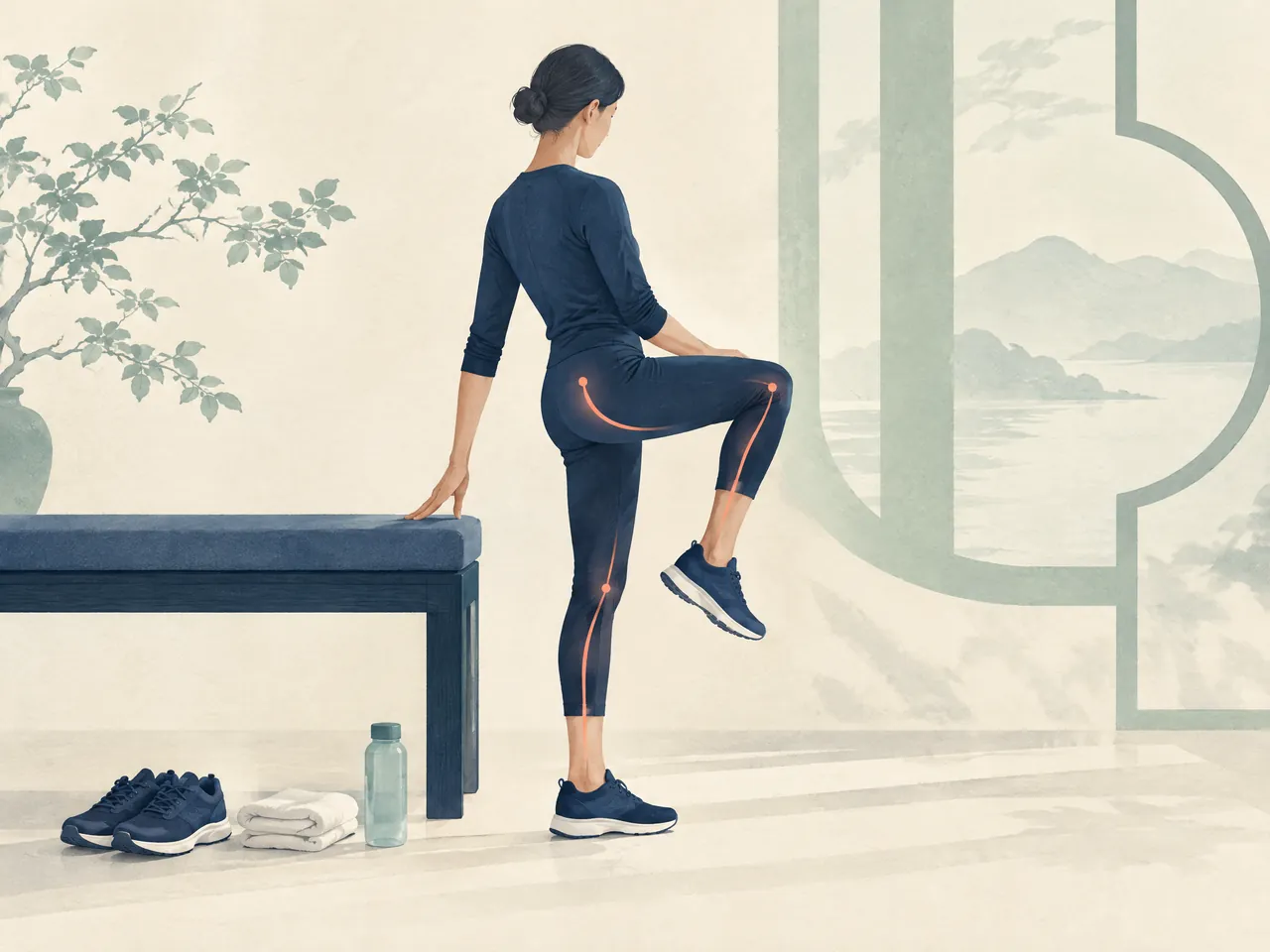
For a mild pattern without warning signs, reduce the particular load that clearly flares symptoms while keeping ordinary movement within a tolerable range. A shorter, flatter route may be more sensible than testing a steep hill; a higher chair can be easier than a low, deep seat. NHS suggests avoiding excessive strain, keeping moving if possible, avoiding heavy carrying and not sitting in low chairs. It also describes a wrapped ice pack for up to 20 minutes every 2 to 3 hours as a self-care option. [1] These measures do not prove the cause is minor or replace assessment when function is declining.
Plan the next step according to change and impact. Make a routine medical appointment if pain is stopping normal activities, affecting sleep, worsening, recurring or not improving after two weeks of home care. [1] A clinician can determine whether rehabilitation, medication, imaging, referral or another approach is appropriate. Avoid forceful manipulation, vigorous stretching or trying to walk off sudden severe pain before an injury has been assessed. If considering complementary care, share your diagnosis, current treatment and any new red flags rather than running two separate plans.
Hip Pain When Walking and Groin Pain and Hip Pain: Supportive TCM Discussion
A Traditional Chinese Medicine consultation can be a place to discuss the pattern of pain, relevant medical history, walking limits, sleep and activity goals after urgent causes have been addressed. Bring information about a fall or change in training, where groin pain and hip pain are felt, prior diagnoses, medicines, imaging reports if available, and what rehabilitation or medical care you are already receiving. The conversation should fit around, not replace, appropriate medical evaluation and a rehabilitation plan. It should also be clear that an individual examination is needed before deciding whether any supportive option is suitable.
Acupuncture may be discussed as a supportive option, but not as a guaranteed solution for hip pain when walking. A Cochrane review of hip osteoarthritis found that acupuncture probably made little or no difference in pain or function compared with sham acupuncture; evidence for several other comparisons was uncertain. [5] That evidence cannot establish the cause of an individual’s groin, outer-hip or buttock pain. If acupuncture is considered, ask how it fits with medical assessment, graded activity and rehabilitation, and report symptom change rather than committing to a fixed number of sessions.

Hip Pain When Walking and Groin Pain and Hip Pain: Signs to Seek Medical Help
Seek emergency medical attention after a fall or injury when hip pain is severe, you cannot walk or bear weight, the hip or leg looks deformed, or tingling or loss of feeling continues after the injury. [1] [2] Do not drive yourself if you need emergency help. A sudden severe pain without a fall, or a hip that is hot, swollen, red or otherwise changed in colour, especially with fever, chills or feeling unwell, also needs urgent medical assessment. [1] These signs do not identify the condition from a distance; they indicate that self-treatment, massage or stretching should wait.
Even without an emergency sign, seek a medical review for pain that is persistent, worsening, recurrent, limiting sleep or making normal walking and standing difficult. [1] For a non-urgent TCM consultation after those concerns have been assessed, you can message TCM Lab on WhatsApp at +852 6940 5663 with the location of pain, when it began, your weight-bearing ability and any diagnosis already given. Appointments may be discussed at the Kwun Tong Chinese medicine clinic or Chinese medicine clinic Prince Edward; say if you have language needs so arrangements can be confirmed.
Care and health guide
Pain-care information
This directory brings together services, reading, and visit information related to pain care, to help you prepare questions for a consultation.
When pain care affects your day, noting when it occurs, its relation to activity, and what you have already tried can help prepare a consultation; Chinese medicine pain management Hong Kong is a relevant service or reading entry point.
Individual circumstances differ, and acupuncture Hong Kong offers related information to help you understand options and prepare questions.


Your questions, answered
Frequently asked questions
Does groin pain always mean a hip-joint problem?
No. Groin pain can be a clue to the hip joint, but it does not confirm a joint diagnosis. Nearby soft tissues and pain referred from the lower back can also contribute. Location should be considered with onset, movement limits, weight-bearing and an examination. [2]
Should I stop all activity when walking is painful?
Not necessarily. In the absence of urgent warning signs, prolonged complete bed rest is usually not the aim. Reduce activities that clearly aggravate symptoms and keep moving within a tolerable range. If you cannot bear weight, have new weakness or altered sensation, or pain is rapidly worsening, seek medical care first. [1]
Can I use heat or ice for hip pain when walking?
For minor symptoms, NHS lists a wrapped ice pack for up to 20 minutes every 2 to 3 hours as one self-care measure. [1] Heat may feel soothing for some muscular discomfort, but neither option diagnoses the problem. Do not rely on home care after a serious injury or when the hip is hot, swollen or accompanied by fever.
Can acupuncture be considered for hip pain?
It may be discussed as supportive care after an appropriate assessment, alongside suitable activity or rehabilitation planning. Evidence for hip osteoarthritis is limited: a Cochrane review found little or no difference versus sham acupuncture for pain or function, and uncertainty for several other comparisons. [5] It cannot confirm a diagnosis, guarantee improvement or replace medical care.
Sources and further information
- [1] [1] NHS — Hip pain in adults
Referenced for: Adult hip-pain causes, self-care wording and routine, urgent and emergency assessment signs.
- [2] [2] Mayo Clinic — Hip pain
Referenced for: Pain-location clues, referred pain and signs that need immediate medical care.
- [3] [3] Hospital for Special Surgery — Hip Pain Causes, Conditions and Treatments
Referenced for: Hip-pain location patterns, soft-tissue possibilities, spinal referral and assessment context.
- [4] [4] The Hong Kong College of Orthopaedic Surgeons — Hip Pain and Loss of Hip Mobility
Referenced for: Hong Kong orthopaedic information on hip function, clinical assessment and mobility limits.
- [5] [5] Cochrane — Acupuncture for hip osteoarthritis
Referenced for: Systematic-review evidence on acupuncture for pain and function in hip osteoarthritis.