
TCM Lab · Health reading
Does Hair Loss Need a Blood Test? Is Sudden Hair Loss a Sign of Illness, and What Causes Sudden Patchy Hair Loss?
Published Updated
Hair loss is easier to describe when you focus on its pattern rather than trying to count every strand. A parting that widens over months, hair that comes out from all over after a recent change, and a new smooth bald patch are different stories for a clinician to investigate. The same is true when the scalp feels sore, looks red or produces scale. This guide explains when a blood test may be useful, why sudden loss can sometimes accompany an illness or other trigger, and what to write down before arranging an assessment in Hong Kong.
Appointments are confirmed through WhatsApp. If you have language requirements, please mention them in your enquiry.
The short answer
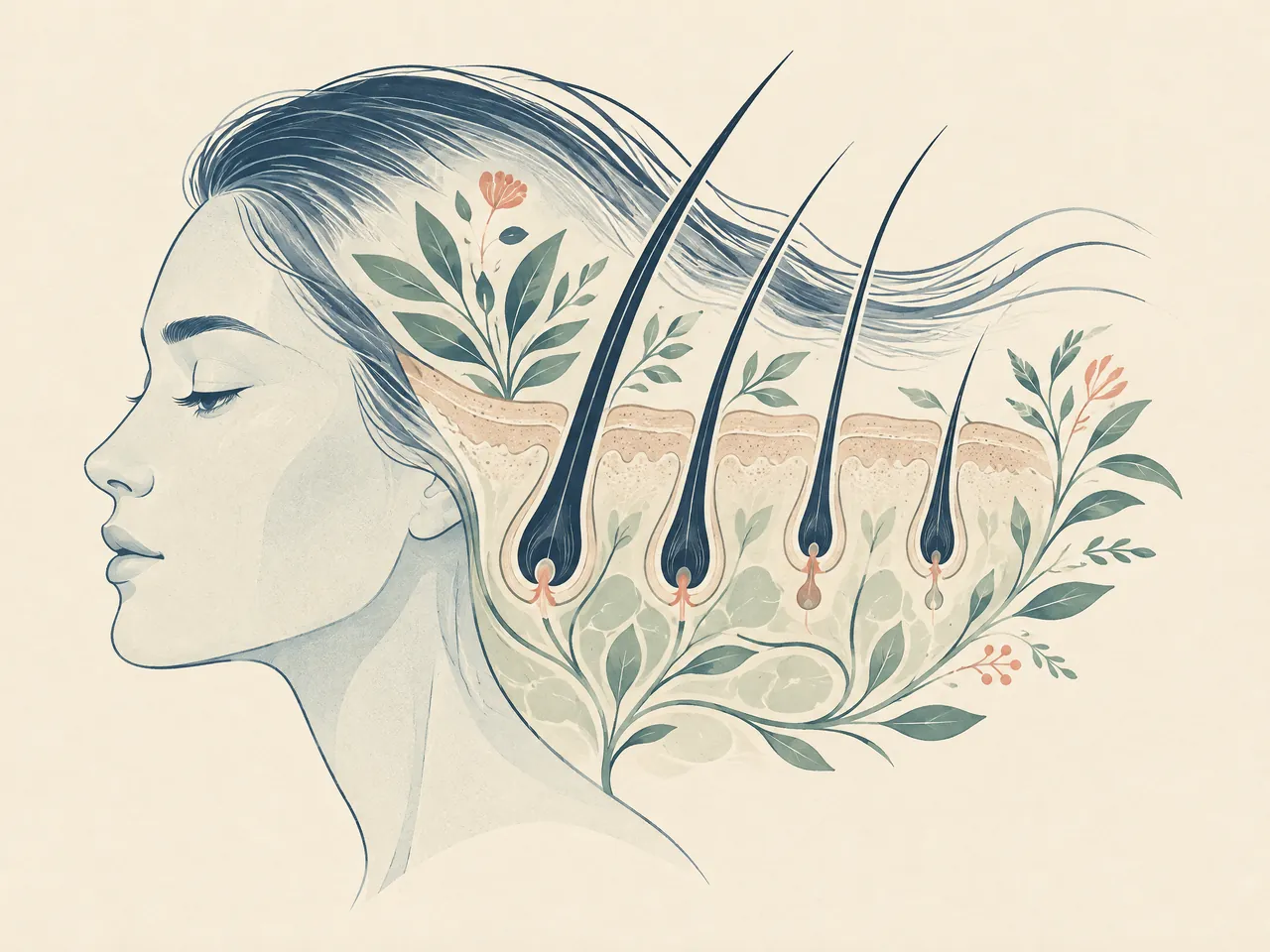
No, hair loss does not automatically need a blood test. A clinician normally starts with when the change began, whether it was gradual or sudden, the distribution of loss, scalp findings, medicines and recent health events. Blood tests, hair examination or a scalp biopsy may be considered if that assessment suggests an infection, deficiency, hormone issue or another condition. Sudden shedding, new patches, scalp inflammation or symptoms elsewhere in the body are good reasons to arrange medical advice rather than guess the cause.
Transparent pricing
See the fees.
Choose your care.
Explore our complete official price list, including first-trial prices, regular prices, packages and branch-specific options.
Opening WhatsApp prepares an enquiry; it does not send a message, take payment or confirm an appointment. Suitability and individual arrangements are confirmed during consultation.
Hair and scalp
All prices in HKDScalp health and hair-loss management
Includes AI scalp analysis, deep scalp and follicle cleansing, and scalp oil-control care.
HK$380 (first trial)
Regular price: HK$680
- 6 sessions: HK$3,480 (HK$580 per session)
- 12 sessions: HK$5,760 (HK$480 per session)
- 20 sessions: HK$8,600 (HK$430 per session)
- 30 sessions: HK$11,400 (HK$380 per session)
Hair acupuncture and Chinese herbal medicine package
Includes scalp acupuncture and 3 days of Chinese herbal medicine that does not require decoction.
HK$580 (single session)
Registered Chinese Medicine Practitioner consultation
- 6 sessions: HK$3,180 (HK$530 per session)
- 12 sessions: HK$5,760 (HK$480 per session)
- 20 sessions: HK$8,600 (HK$430 per session)
- 30 sessions: HK$11,400 (HK$380 per session)
Combined hair and scalp treatment
Combines acupuncture and Chinese herbal medicine with salon-level scalp and follicle care. Packages include complimentary hair-care shampoo and serum.
HK$1,260 (single session)
Combined treatment
- 8 sessions: HK$8,640 (HK$1,080 per session)
- 16 sessions: HK$15,680 (HK$980 per session)
- 20 sessions: HK$18,600 (HK$930 per session)
- 30 sessions: HK$26,400 (HK$880 per session)
Weight management
All prices in HKDFull-body acupoint embedding for weight management
Includes full-body acupoint embedding. Packages include complimentary Chinese herbal medicine for weight management, with the number of included days scaled to the package. Embedding material and the individual treatment arrangement are confirmed during consultation; this is not a cosmetic thread lift.
HK$980 (single session)
No trial session
- 10 sessions: HK$7,800 (HK$780 per session)
- 20 sessions: HK$14,600 (HK$730 per session)
- 30 sessions: HK$20,400 (HK$680 per session)
Facial acupuncture
All prices in HKDFacial acupuncture (basic)
Includes facial acupuncture and meridian-based facial care, including care for facial puffiness.
HK$480 (first trial)
Regular price: HK$680
- 10 sessions: HK$5,200 (HK$520 per session)
- 20 sessions: HK$9,600 (HK$480 per session)
- 30 sessions: HK$13,500 (HK$450 per session)
Facial acupuncture (advanced)
Includes enhanced facial acupuncture with a specially formulated moisturising mask and serum.
HK$780 (first trial)
Regular price: HK$1,180
- 10 sessions: HK$9,000 (HK$900 per session)
- 20 sessions: HK$16,600 (HK$830 per session)
- 30 sessions: HK$23,400 (HK$780 per session)
Pain care
All prices in HKDExtracorporeal shockwave treatment
Shockwave treatment for deep-tissue and fascial care. The Kwun Tong clinic offers the multi-area options shown below.
Priced by branch
Branch-specific pricing
Prince Edward: HK$250 per area
Kwun Tong: HK$250 for 1 area / HK$450 for 2 areas / HK$600 for 3 areas
Pain care (manual therapy)
Includes Chinese medicine musculoskeletal assessment, manual joint techniques and tui na.
HK$580 (single session)
Chinese medicine musculoskeletal assessment
Pain care (acupuncture and manual therapy)
Combines acupuncture and manual therapy.
HK$680 (single session)
Combined care
Chinese medicine
All prices in HKDAcupuncture and Chinese herbal medicine package
Includes a Chinese medicine consultation with pulse assessment, body acupuncture and 3 days of Chinese herbal granules that do not require decoction.
HK$580 (single session)
Chinese medicine consultation with pulse assessment
Does Hair Loss Need a Blood Test? Is Sudden Hair Loss a Sign of Illness? What Causes Sudden Patchy Hair Loss? Start with the Pattern
The first useful question is not simply, "How much hair came out today?" It is, "What changed, where, and how quickly?" Hair naturally sheds, and seeing more hairs after washing may reflect the time since the last wash as well as a real change. What is more informative is a clear shift from your usual baseline: a broader parting, more scalp showing under the same light, clumps from across the head, broken hairs around the hairline, or a defined bare area. The NHS notes that hair loss can be temporary or part of a longer-running pattern, and it advises speaking to a GP if you are worried. [2]
Use a simple timeline. Note the first day or week you noticed the change, whether it is continuing, and whether the hair appears to be shedding from the root or breaking along the shaft. Take photographs from the same angle, distance and lighting every few weeks rather than comparing a new photograph with an old holiday image. This record cannot diagnose hair loss, but it gives a consultation a clearer starting point. For a broader decision guide, read when to see a doctor for hair loss.

Does Hair Loss Need a Blood Test? Is Sudden Hair Loss a Sign of Illness? What Causes Sudden Patchy Hair Loss? Gradual Thinning
Gradual thinning often becomes noticeable through styling rather than an abrupt shower of hairs. You may find that a centre part looks wider, the crown shows more under overhead light, a ponytail feels less full, or the temples and front hairline have changed. A family pattern can be a relevant clue, but it is only one part of the story. The Hong Kong Centre for Health Protection lists family history among possible causes of hair loss and also lists thyroid disorders, poor nutrition, medicines, stress, scalp infection and skin damage. [3] A clinician can put those possibilities alongside your age, distribution of thinning, scalp appearance and family history instead of assuming one explanation.
Because the change is slow, it can be tempting to keep changing shampoo, supplements or hairstyles without establishing what is happening. Begin with low-risk observation: avoid tightly pulling the same area when styling, make a note of recent colouring or heat damage, and list every medicine and supplement you take. If thinning continues, affects your confidence, or differs clearly from relatives' familiar pattern, make a non-urgent medical appointment. The aim is not to prove that a blood test is needed before you go; it is to give the clinician enough detail to decide whether any test would answer a useful question.
Does Hair Loss Need a Blood Test? Is Sudden Hair Loss a Sign of Illness? What Causes Sudden Patchy Hair Loss? Sudden Changes
Sudden diffuse shedding means hair seems to be coming from many areas, rather than one neat spot. Think back over the preceding months and record events that may otherwise be forgotten: a fever or other illness, surgery, childbirth, a demanding period, a marked weight change, a restrictive diet, or a new or stopped medicine. These events do not establish cause on their own. They are context that can help the clinician ask more precise questions. The AAD specifically starts a hair-loss assessment by asking how long the loss has been present and whether it came on quickly. [1]
A rapid change deserves attention when it is persistent, visibly progresses, or comes with tiredness, temperature intolerance, weight change, menstrual changes, muscle weakness or other symptoms that are unusual for you. Bring dates rather than a general impression such as "recently". Also say whether the loss began before, during or after the health event. This helps distinguish a possible association from a coincidence and can guide whether a clinician considers blood work or another investigation. Do not stop prescribed medicine because of hair loss without discussing it with the prescriber.
Compare your options
| Pattern or finding | Useful details to record | Why the detail may shape assessment |
|---|---|---|
| Gradual thinning at the parting, crown or hairline | First noticed date, family pattern, styling changes, hair breakage and comparison photos taken in consistent lighting | Helps distinguish a slow distribution change from a sudden shedding episode |
| Hair shedding from many areas | Timing of illness, surgery, childbirth where relevant, weight or diet change, stress and medicine changes | Gives the clinician context for deciding what questions or tests are relevant |
| Round or smooth patch | Number, location, speed of enlargement, broken hairs, and changes to brows, lashes or beard hair | Shows whether the loss is localised and whether other hair-bearing areas are involved |
| Red, painful, itchy, scaly, crusted or oozing scalp | Exact symptoms, product exposure, skin changes, close contacts with scalp symptoms and photographs before applying new treatments | May indicate that scalp examination should be prioritised rather than treating it as ordinary shedding |
| Hair loss with other body changes | Fatigue, temperature sensitivity, menstrual changes, weight change, rash, muscle weakness and existing diagnoses | Helps the clinician decide whether an underlying medical issue needs investigation |
On smaller screens, scroll the table sideways to compare all columns.
Does Hair Loss Need a Blood Test? Is Sudden Hair Loss a Sign of Illness? What Causes Sudden Patchy Hair Loss? Recognise Warning Signs
Some presentations are worth arranging for assessment sooner because the scalp itself may provide an important clue. New hair loss with redness, swelling, pain, burning, marked itch, scale, crusts, blisters or discharge is different from uncomplicated thinning. So is skin that seems unusually smooth, shiny or altered in texture in the affected area. These features do not tell you the diagnosis at home, but they are specific observations to report. The Centre for Health Protection advises medical review when loss continues, hair does not grow normally, or the skin under the involved area is abnormal. [3]

It also helps to look beyond the scalp. Check whether eyebrows, eyelashes or beard hair have changed, whether nails look different, and whether anyone in the household has an itchy or scaly scalp. Mention fever, new skin rashes and contact with possible infection when relevant. This is not about creating a long list of self-diagnoses; it prevents important details from being left out because the appointment is focused on the hair. Our related explainer, hair loss warning signs, can help you organise what you have noticed before you speak with a clinician.
Does Hair Loss Need a Blood Test? Is Sudden Hair Loss a Sign of Illness? What Causes Sudden Patchy Hair Loss? Round or Smooth Patches
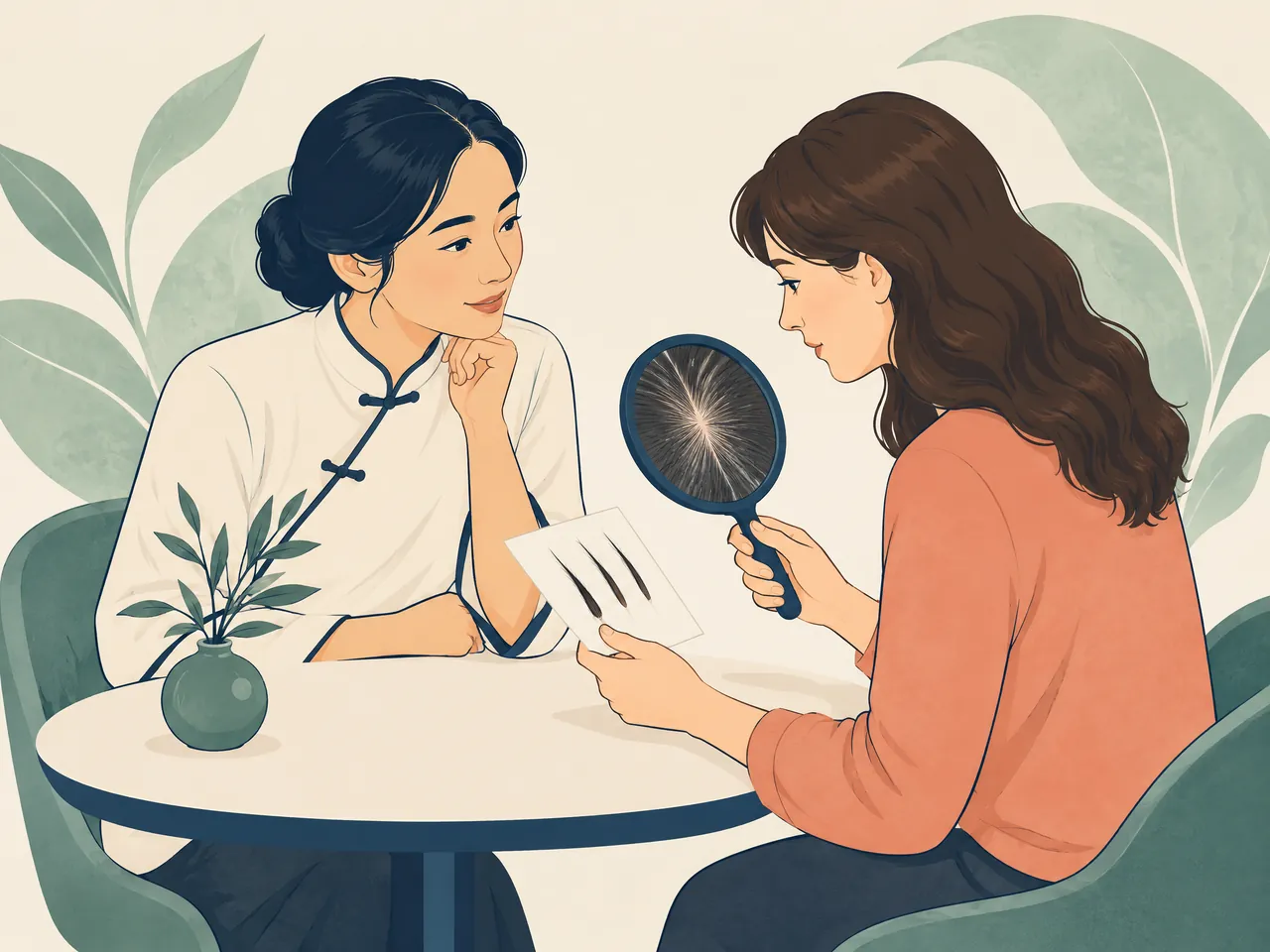
One or more round or oval areas that look smooth can appear quickly. Alopecia areata is one condition that can produce small, round patches, but a patch's shape is not enough to confirm it. [3] A patch can also occur with other scalp or hair conditions. Record how many patches you can see, whether their edges are expanding, whether there are short broken hairs, and whether brows, lashes or beard hair are involved. Avoid covering the area with an untested product that could irritate the skin before it is examined.
Book medical assessment rather than waiting for a patch to become large, especially if new areas appear or the scalp is uncomfortable. Photographs can show change over time, but the assessment may include looking closely at the scalp and checking the health of hairs. The AAD notes that clinicians examine the scalp, nails and other areas with hair loss, and may gently pull hair as part of finding the cause. [1] That hands-on assessment answers questions a photograph cannot.
Does Hair Loss Need a Blood Test? Is Sudden Hair Loss a Sign of Illness? What Causes Sudden Patchy Hair Loss? Scalp Symptoms
A flaky scalp is common, but it should not be dismissed when hair loss appears at the same time. Note whether the flakes are dry or greasy, whether the scalp is red, whether there are tender spots, and whether the symptoms began before or after a new product, hairstyle or chemical treatment. Infection, inflammation and irritation need different responses, so repeated scratching, vigorous scrubbing and strong home treatments can make the picture harder to read. If there is pain, spreading redness, oozing, crusting or a rapidly changing area, seek prompt medical advice.
If itch and flakes are the main concern, see is an itchy flaky scalp with hair loss serious for a focused set of observations to take to an appointment. Tell the clinician about hair oils, sprays, dry shampoo, colouring, relaxing or straightening products, as well as close contact with anyone who has a scalp rash. These details can be more useful than trying to identify the condition by the colour of a flake alone.
Does Hair Loss Need a Blood Test? Is Sudden Hair Loss a Sign of Illness? What Causes Sudden Patchy Hair Loss? Prepare for Assessment
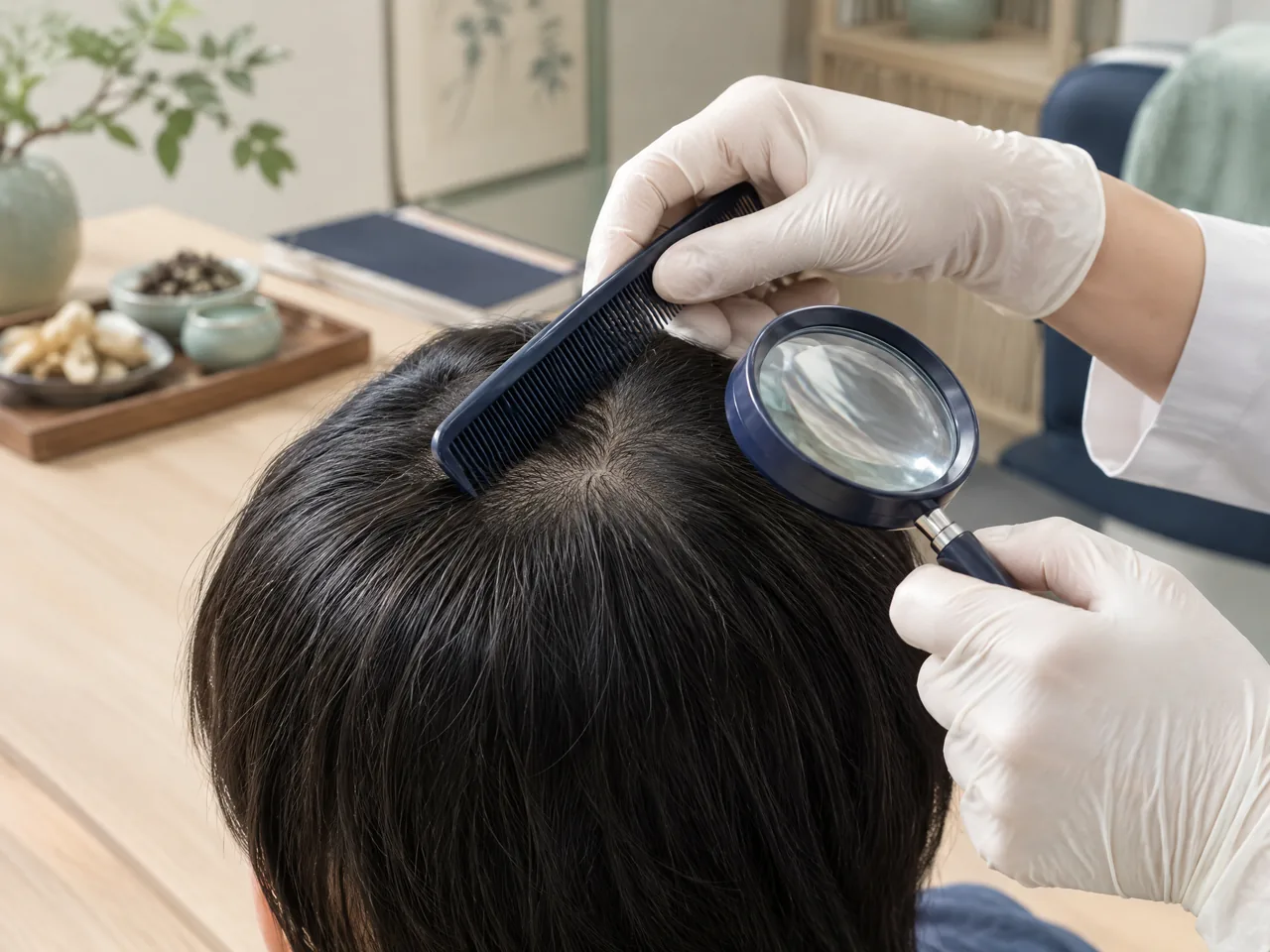
A good hair-loss consultation is usually a sequence: describe the pattern, examine the scalp and hair, connect relevant health history, then decide whether any investigations are needed. The AAD explains that blood tests or a scalp biopsy may be considered when the clinician suspects a disease, vitamin deficiency, hormone imbalance or infection. [1] This is why two people who both say "my hair is falling out" may not be offered the same test. Asking for a particular test is reasonable, but the useful question is what it would help clarify in your own situation.
Prepare a short note on your phone before the appointment. Include onset, pace, sites affected, shedding versus breakage, scalp symptoms, recent illnesses, operations, pregnancy or childbirth where relevant, significant stress, diet or weight change, family pattern, medicines and supplements. Bring prior blood results or dermatology letters if you have them, but do not repeat tests simply because they were done long ago. For everyday choices while you wait, our guide to scalp health and hair loss management covers gentle observation and scalp-care questions without promising a diagnosis.

Does Hair Loss Need a Blood Test? Is Sudden Hair Loss a Sign of Illness? What Causes Sudden Patchy Hair Loss? Medical History
Medical history is not a formality in this situation. The order of events may matter: did shedding start before an illness, after recovery, around a diet change, or after a medication was added? State the full name and dose of medicines, injections, over-the-counter products, vitamins and herbal products where possible. Mention previous episodes and whether they settled, family members with similar thinning, and any diagnosed skin, thyroid or autoimmune conditions. A clinician may find that the scalp pattern already points strongly in one direction, or may decide that the history raises a question a blood test could help explore.
Be accurate about uncertainty. It is fine to say "I noticed the patch sometime between these two haircuts" or "I am not sure whether the hair has a bulb at the end." Guessing at a diagnosis can distract from the details that are actually known. If the change has affected sleep, work, social plans or confidence, say that too. Hair loss can be distressing, and the NHS recognises that it may affect wellbeing even when it is not dangerous. [2] That impact belongs in the discussion of next steps.

Does Hair Loss Need a Blood Test? Is Sudden Hair Loss a Sign of Illness? What Causes Sudden Patchy Hair Loss? Next Steps
After assessment, the next step may be reassurance and observation, advice about a suspected trigger, treatment for a scalp condition, investigation of a possible underlying issue, or referral. There is no single hair-loss pathway that fits every pattern. Keep a copy of results and the names of any products or medicines discussed so that follow-up has a clear baseline. Be wary of claims that one supplement, oil or procedure is guaranteed to restore every kind of hair loss. Finding the cause first gives you a more meaningful basis for weighing options.
If you would also like to enquire about a Chinese medicine consultation for hair or scalp concerns, ask what information to bring and describe your language needs when you contact TCM Lab. You can compare the published Chinese medicine clinic price list Hong Kong before making an enquiry. For a location-specific discussion, contact the Kwun Tong Chinese medicine clinic or the Chinese medicine clinic Prince Edward. A consultation enquiry does not replace prompt medical assessment for a rapidly changing or inflamed scalp.
Care and health guide
Hair and scalp care information
This directory brings together services, reading, and visit information related to hair and scalp care, to help you prepare questions for a consultation.
For questions about hair or scalp care, noting the everyday concerns and service questions you want to discuss can help prepare a consultation; Chinese medicine for hair loss is a relevant service or reading entry point.
People may have different priorities, and acupuncture Hong Kong offers related information to help you understand options and prepare questions.

Your questions, answered
Frequently asked questions
Does hair loss need a blood test if my hair is only gradually thinning?
Not necessarily. Gradual thinning can still be worth discussing, but a clinician will normally begin with the pattern, scalp examination, family and medical history, medicines and other symptoms. A blood test is considered when those details suggest it could clarify a possible issue; it is not automatically required for gradual thinning.
Is sudden hair loss a sign of illness even if I feel well now?
Sudden shedding can follow an illness or other major change, but it does not prove that illness is the cause. Record when it started and any events in the preceding months, including medicines, surgery, stress, weight change or dietary change. Arrange assessment if it is marked, persistent, patchy, worsening or accompanied by new symptoms.
What causes sudden patchy hair loss that looks smooth?
A smooth round or oval patch can occur with alopecia areata, but other scalp and hair conditions can also cause localised loss. The appearance alone cannot confirm the cause. Note the onset, number of patches, scalp symptoms and changes to brows, lashes or beard hair, then arrange a medical assessment.
Should I wait if hair loss comes with an itchy or flaky scalp?
Do not rely on a shampoo change alone if hair loss occurs with redness, pain, burning, marked itch, scaling, crusting, blisters or discharge. These observations should be assessed, particularly if they are spreading or rapidly changing. Avoid harsh scratching and tell the clinician about recent products and chemical treatments.
Sources and further information
- [1] [1] American Academy of Dermatology — Hair loss: Diagnosis and treatment
Referenced for: Assessment history, scalp and hair examination, and circumstances in which clinicians may consider blood tests or scalp biopsy.
- [2] [2] NHS — Hair loss
Referenced for: General causes, advice to seek assessment when concerned, and the potential wellbeing impact of hair loss.
- [3] [3] Hong Kong Centre for Health Protection — Men's Health Line: Alopecia
Referenced for: Hong Kong public-health information on possible causes, round patchy loss, abnormal scalp skin, and possible investigations.