
TCM Lab · Health reading
Plantar Fasciitis Exercises, Plantar Fasciitis Stretches and the Answer to Can Stretching Make Plantar Fasciitis Worse?
Published Updated
A tight or sore sole does not automatically need a stronger stretch. If you are searching for plantar fasciitis exercises because your heel hurts on the first few steps from bed, the safer question is whether a gentle movement suits your symptoms today. Plantar fasciitis commonly causes pain around the heel or arch on the bottom of the foot; the pattern may ease as you begin moving and return after prolonged standing, walking or running. That pattern is useful to describe, but it is not a diagnosis by itself. [1] Start by reducing the urge to test the foot repeatedly. A low-force towel stretch or a supported calf stretch can be a reasonable discussion point after assessment, while a sudden injury, numbness, changed foot shape or inability to bear weight calls for assessment rather than an online routine. This guide explains how to choose a cautious starting option, watch the response later that day and the next morning, and decide when not to progress.
Appointments are confirmed through WhatsApp. If you have language requirements, please mention them in your enquiry.
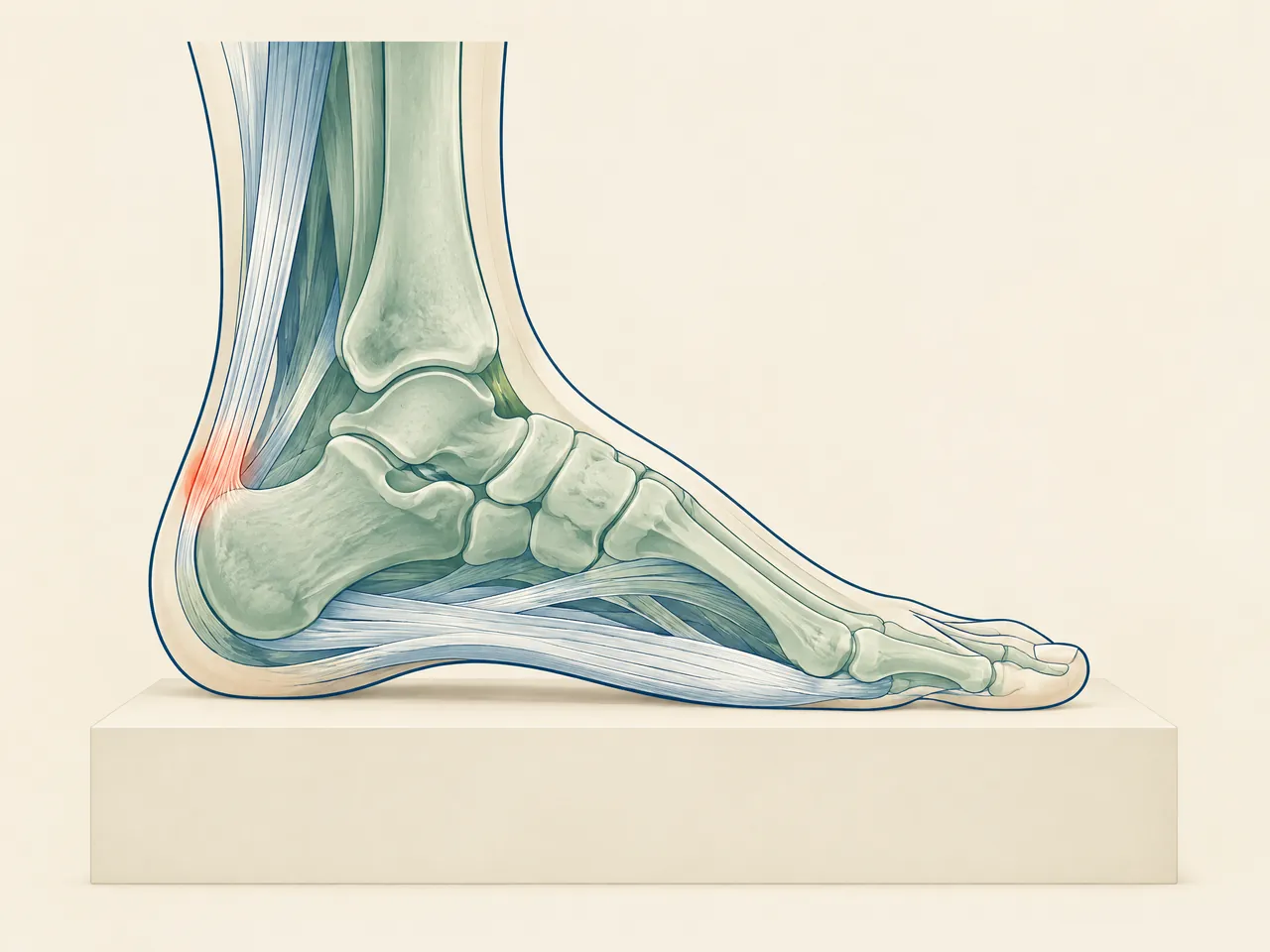
The short answer
Can stretching make plantar fasciitis worse? Yes—if the cause of foot pain has not been assessed, the stretch is forced, or the overall load rises faster than the foot tolerates. For people advised that stretching is appropriate, aim for a mild pulling sensation rather than pain and change one variable at a time. Stop a movement that brings new or clearly worsening pain, especially if the following morning is noticeably worse, and seek assessment for concerning symptoms.
Transparent pricing
See the fees.
Choose your care.
Explore our complete official price list, including first-trial prices, regular prices, packages and branch-specific options.
Opening WhatsApp prepares an enquiry; it does not send a message, take payment or confirm an appointment. Suitability and individual arrangements are confirmed during consultation.
Pain care
All prices in HKDExtracorporeal shockwave treatment
Shockwave treatment for deep-tissue and fascial care. The Kwun Tong clinic offers the multi-area options shown below.
Priced by branch
Branch-specific pricing
Prince Edward: HK$250 per area
Kwun Tong: HK$250 for 1 area / HK$450 for 2 areas / HK$600 for 3 areas
Pain care (manual therapy)
Includes Chinese medicine musculoskeletal assessment, manual joint techniques and tui na.
HK$580 (single session)
Chinese medicine musculoskeletal assessment
Pain care (acupuncture and manual therapy)
Combines acupuncture and manual therapy.
HK$680 (single session)
Combined care
Hair and scalp
All prices in HKDScalp health and hair-loss management
Includes AI scalp analysis, deep scalp and follicle cleansing, and scalp oil-control care.
HK$380 (first trial)
Regular price: HK$680
- 6 sessions: HK$3,480 (HK$580 per session)
- 12 sessions: HK$5,760 (HK$480 per session)
- 20 sessions: HK$8,600 (HK$430 per session)
- 30 sessions: HK$11,400 (HK$380 per session)
Hair acupuncture and Chinese herbal medicine package
Includes scalp acupuncture and 3 days of Chinese herbal medicine that does not require decoction.
HK$580 (single session)
Registered Chinese Medicine Practitioner consultation
- 6 sessions: HK$3,180 (HK$530 per session)
- 12 sessions: HK$5,760 (HK$480 per session)
- 20 sessions: HK$8,600 (HK$430 per session)
- 30 sessions: HK$11,400 (HK$380 per session)
Combined hair and scalp treatment
Combines acupuncture and Chinese herbal medicine with salon-level scalp and follicle care. Packages include complimentary hair-care shampoo and serum.
HK$1,260 (single session)
Combined treatment
- 8 sessions: HK$8,640 (HK$1,080 per session)
- 16 sessions: HK$15,680 (HK$980 per session)
- 20 sessions: HK$18,600 (HK$930 per session)
- 30 sessions: HK$26,400 (HK$880 per session)
Weight management
All prices in HKDFull-body acupoint embedding for weight management
Includes full-body acupoint embedding. Packages include complimentary Chinese herbal medicine for weight management, with the number of included days scaled to the package. Embedding material and the individual treatment arrangement are confirmed during consultation; this is not a cosmetic thread lift.
HK$980 (single session)
No trial session
- 10 sessions: HK$7,800 (HK$780 per session)
- 20 sessions: HK$14,600 (HK$730 per session)
- 30 sessions: HK$20,400 (HK$680 per session)
Facial acupuncture
All prices in HKDFacial acupuncture (basic)
Includes facial acupuncture and meridian-based facial care, including care for facial puffiness.
HK$480 (first trial)
Regular price: HK$680
- 10 sessions: HK$5,200 (HK$520 per session)
- 20 sessions: HK$9,600 (HK$480 per session)
- 30 sessions: HK$13,500 (HK$450 per session)
Facial acupuncture (advanced)
Includes enhanced facial acupuncture with a specially formulated moisturising mask and serum.
HK$780 (first trial)
Regular price: HK$1,180
- 10 sessions: HK$9,000 (HK$900 per session)
- 20 sessions: HK$16,600 (HK$830 per session)
- 30 sessions: HK$23,400 (HK$780 per session)
Chinese medicine
All prices in HKDAcupuncture and Chinese herbal medicine package
Includes a Chinese medicine consultation with pulse assessment, body acupuncture and 3 days of Chinese herbal granules that do not require decoction.
HK$580 (single session)
Chinese medicine consultation with pulse assessment
Plantar Fasciitis Exercises, Plantar Fasciitis Stretches and Can Stretching Make Plantar Fasciitis Worse? Start with the Right Assessment
The label matters less than the pattern at the start. Plantar fasciitis is one explanation for pain on the bottom of the foot near the heel or arch. The NHS notes that pain may be worse when walking starts after sleep or rest, improve as a person gets moving, and become worse again after long periods of standing, walking or running. Pain when the sole is stretched can also occur. [1] These clues can help you describe what happens, but they cannot tell you by themselves whether every heel or arch pain is plantar fasciitis. Location, onset, footwear, recent activity changes and associated sensations all affect the next step.
Think about the context before choosing a movement. Did the pain begin gradually after more time on hard floors, a new walking route, a return to running, or a long work shift? Or did it follow a twist, fall, pop or a moment when you could no longer continue? Gradual symptoms may still need assessment, but a traumatic onset deserves a different level of attention. Do not use a home stretch to test a foot that cannot safely take weight. A visible deformity, tingling, loss of feeling, or foot pain in someone with diabetes also warrants professional advice rather than a self-selected exercise plan. [1]
The aim of an early routine is not to prove toughness or reach a dramatic range. It is to introduce a movement that you can control and observe. That means a stable position, unhurried breathing, a mild sense of lengthening rather than sharp pain, and no bouncing. If you are comparing options, our overview of foot pain stretches can help organise questions for a clinician, but it should not replace an assessment for a new, severe or unclear problem.

Plantar Fasciitis Exercises and Plantar Fasciitis Stretches Are Not Right for Every Cause of Foot Pain: Can Stretching Make Plantar Fasciitis Worse?
The phrase “heel pain” covers more than one situation. Discomfort may sit directly beneath the heel, along the arch, at the edge of the foot, or travel with pins and needles. Some people mainly notice it after rest; others find the pain builds during a long day. A footwear change, an increase in stairs, standing work, running, or walking barefoot on hard surfaces may be relevant. The NHS advises shoes with cushioned heels and good arch support, and advises against long periods of standing or walking and walking barefoot on hard surfaces while symptoms are troublesome. [1] These are practical load questions, not a promise that one shoe or one stretch resolves the problem.
Before Plantar Fasciitis Exercises or Plantar Fasciitis Stretches, Ask: Can Stretching Make Plantar Fasciitis Worse?
Set a deliberately modest definition of success. The first session is successful if you can perform it with control and gather useful information, not if you can pull farther than yesterday. Keep a simple note of the time of day, the type of movement, where you felt it, what you did later, and how the first steps felt next morning. For a broader symptom-focused prompt, read is my foot pain plantar fasciitis; it can help you prepare a clearer description for an assessment.
Compare your options
| Situation | Lower-load choice to discuss | What to observe before progressing |
|---|---|---|
| First steps after rest are uncomfortable, but you can sit securely | Seated towel approach with heel supported | Only mild tension; no new sharp pain; next-morning first steps are not clearly worse |
| You can stand steadily and calf tightness is part of the assessed plan | Wall-supported calf option | Rear heel remains grounded without forcing; balance feels secure; later standing is not more difficult |
| Symptoms rose after a longer workday or more walking | Reduce the added exercise demand and review footwear and activity load | Whether symptoms return towards their usual level before you add another variable |
| Pain is new, severe, unusual, or linked with numbness, trauma or inability to bear weight | Pause self-directed stretching and seek assessment | Changes in sensation, shape, weight bearing and everyday function |
| Pain keeps returning or limits normal activities | Arrange clinical review rather than rotate through online routines | A clear account of timing, location, activity triggers and response to prior self-care |
On smaller screens, scroll the table sideways to compare all columns.
Plantar Fasciitis Exercises and Plantar Fasciitis Stretches: Can Stretching Make Plantar Fasciitis Worse When You Start — Can stretching make plantar fasciitis worse?
Start with the option that has the fewest moving parts. The plantar fascia runs along the sole from heel towards toes, and the calf can also feel tight when heel symptoms are present. That does not mean every area needs an aggressive pull. An appropriate stretch should feel like a manageable, localised tension. Burning, electric sensations, sharp catching pain, a sense of instability, or a rapid rise in pain are not signals to push through. Stop, return to an easier daily activity, and seek individual advice if those responses occur.
Both towel and wall-supported approaches appear in NHS Ayrshire & Arran patient guidance. That guidance stresses consultation if there is doubt about fitness to perform the exercises and recommends modifying movement, repetitions, speed or rest if the response is too high. [2] The useful principle for home practice is not to copy someone else’s volume. Your starting amount should reflect the assessment, your balance, the sensitivity of the foot, and the other demands already placed on it that day.
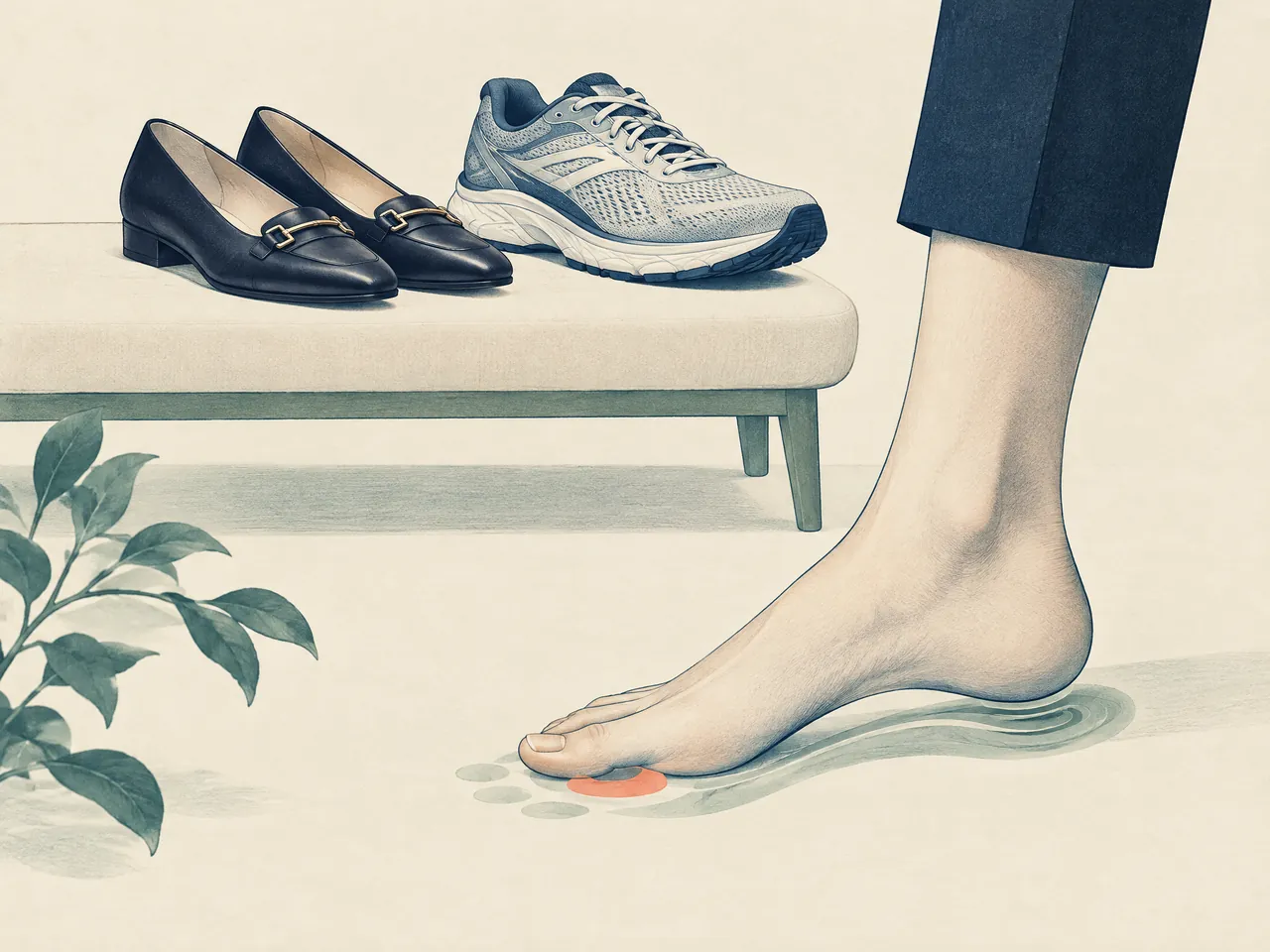
There is a difference between making room for gentle movement and treating the foot as though it must be completely inactive. NHS guidance suggests choosing exercises that do not put pressure on the feet, such as swimming, when appropriate, while avoiding aggravating standing or walking loads. [1] In day-to-day life, this could mean breaking up a long errand, sitting for part of a household task, or postponing a run while you see whether a low-load alternative is tolerated. The decision is based on the response, not on a fixed calendar date.
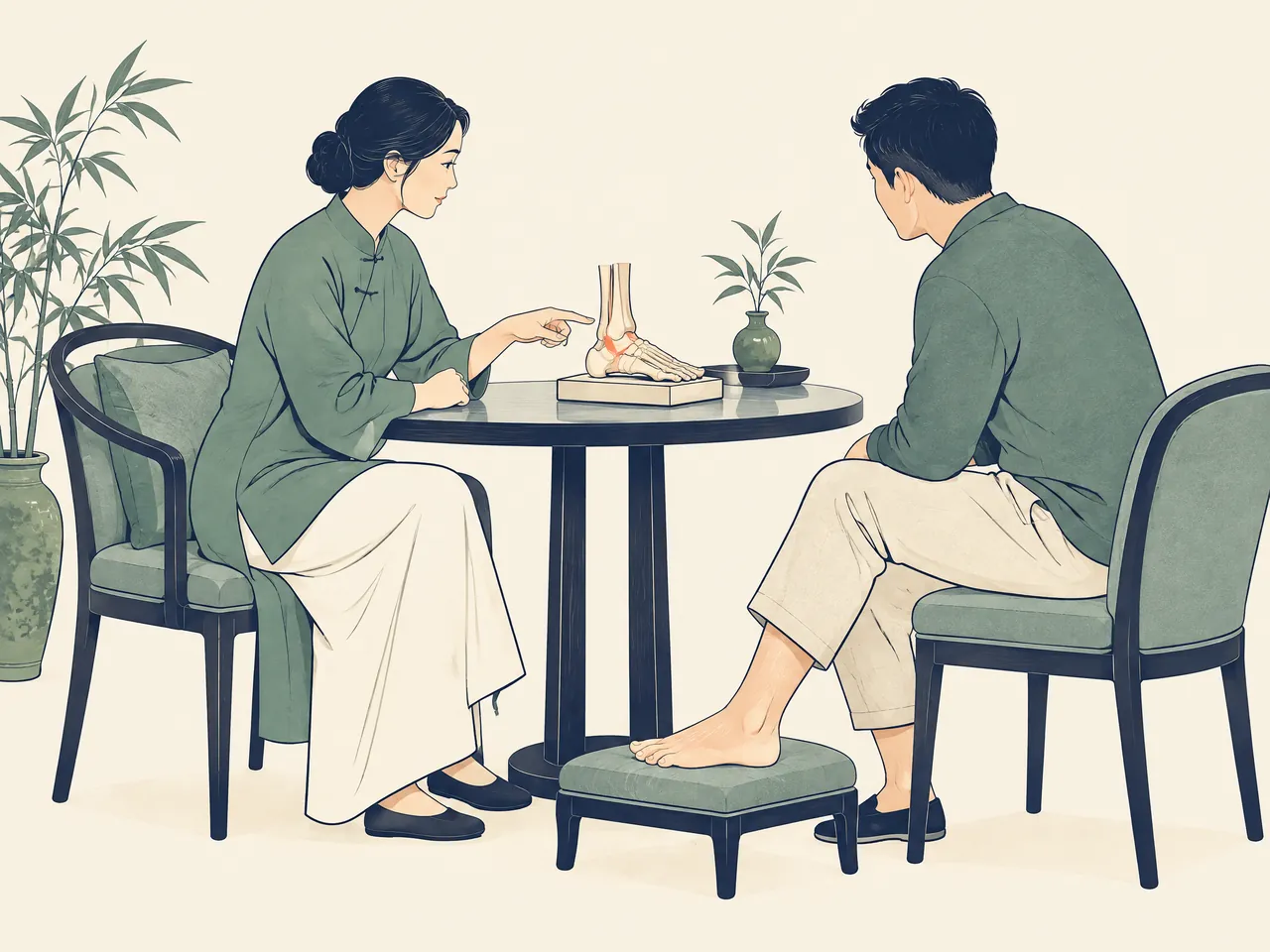
A Gentle Towel Approach in Plantar Fasciitis Exercises and Plantar Fasciitis Stretches: Can Stretching Make Plantar Fasciitis Worse?
A towel stretch becomes less gentle when the shoulders tense, the toes are yanked back, the heel lifts, or you repeatedly pull farther because the sensation fades. Instead, let the foot settle between attempts. This seated choice may be easier when first steps after rest are uncomfortable because it does not require balancing on the sore foot. It is still not suitable simply because it is seated: stop for sharp pain, altered sensation, cramping that persists, or a clear flare after the session. If you want a related technique to discuss after assessment, our page on a plantar fascia stretch explains why setup and response matter.
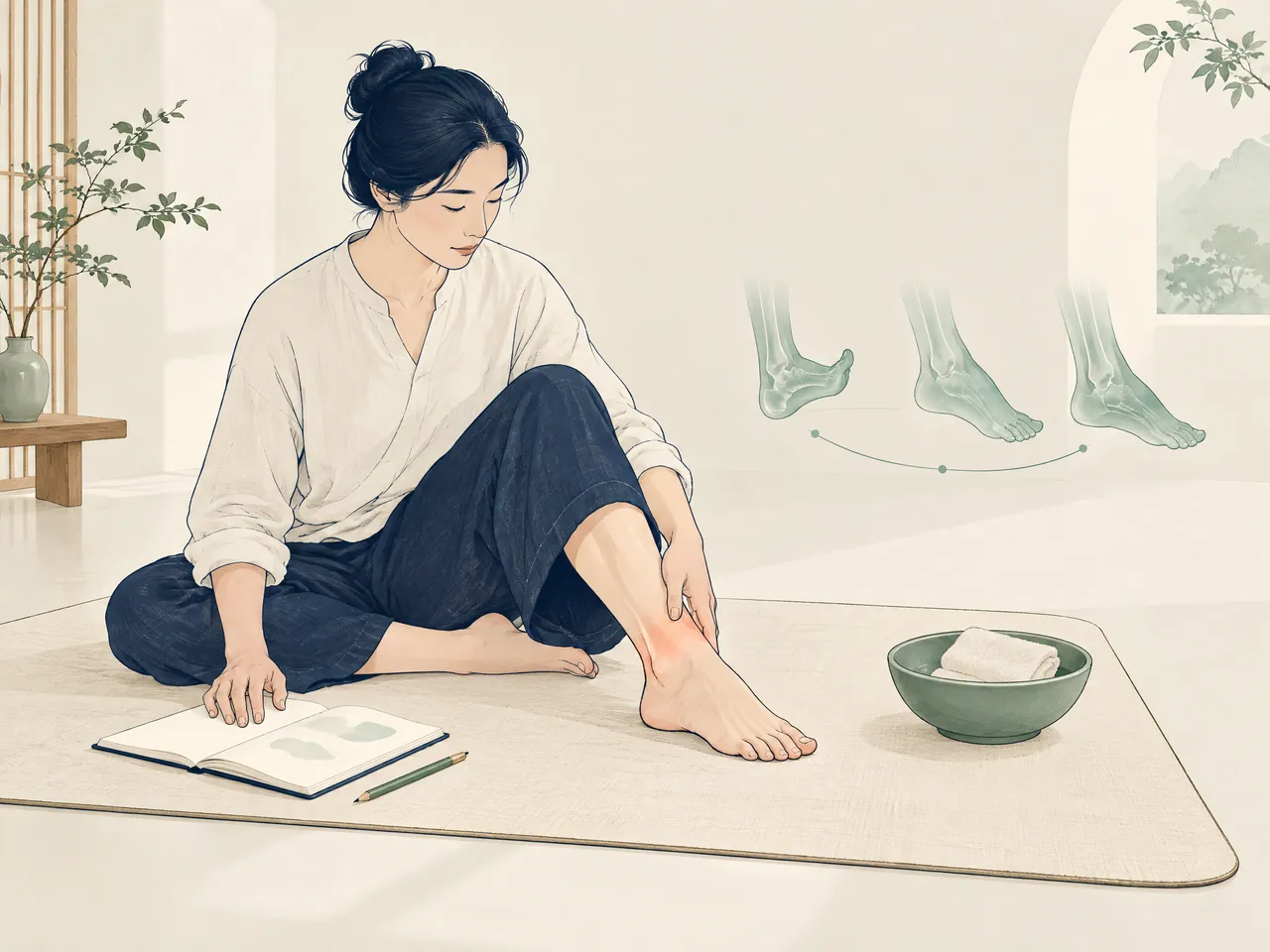
A Supported Calf Option for Plantar Fasciitis Exercises and Plantar Fasciitis Stretches: Can Stretching Make Plantar Fasciitis Worse?
A wall-supported calf option asks more of balance and body weight than a towel stretch. It may therefore be a poor first experiment after a difficult day of standing, when the foot is acutely sore, or for someone who feels unsafe shifting weight. If a clinician has recommended it, make the step shorter or the lean smaller rather than forcing the heel down. Do not layer it immediately with hills, jumping, prolonged walking or a new training session. Readers looking for an even more cautious symptom-led starting point can compare gentle stretches for heel pain before deciding what to discuss with a professional.
Monitoring Plantar Fasciitis Exercises and Plantar Fasciitis Stretches: Can Stretching Make Plantar Fasciitis Worse Over Time — Can stretching make plantar fasciitis worse?
The most useful feedback is rarely the intensity at the exact moment you stretch. Check the whole response: how the foot feels when you finish, whether standing later is different, and whether the first steps after sleep or sitting are noticeably worse. NHS Ayrshire & Arran uses a practical monitoring guide in which symptoms should return to the pre-exercise baseline within 30 minutes and should not leave increased pain or stiffness lasting more than 60 minutes the next morning. [2] Treat those figures as a conservative signal from that service’s guidance, not a substitute for individual clinical advice or a licence to ignore a worsening trend.
Keep total load visible. A stretch can seem harmless in isolation but still be too much when it sits on top of a demanding commute, a long retail shift, a hard court sport session and insufficient recovery. Conversely, stopping every form of movement without a plan may make it harder to judge what is tolerated. Choose one small adjustment at a time: shorten an aggravating walk, use a more supportive shoe, change the stretch position, or take a gentler activity. Write down the change and review the next-morning pattern before adding another.
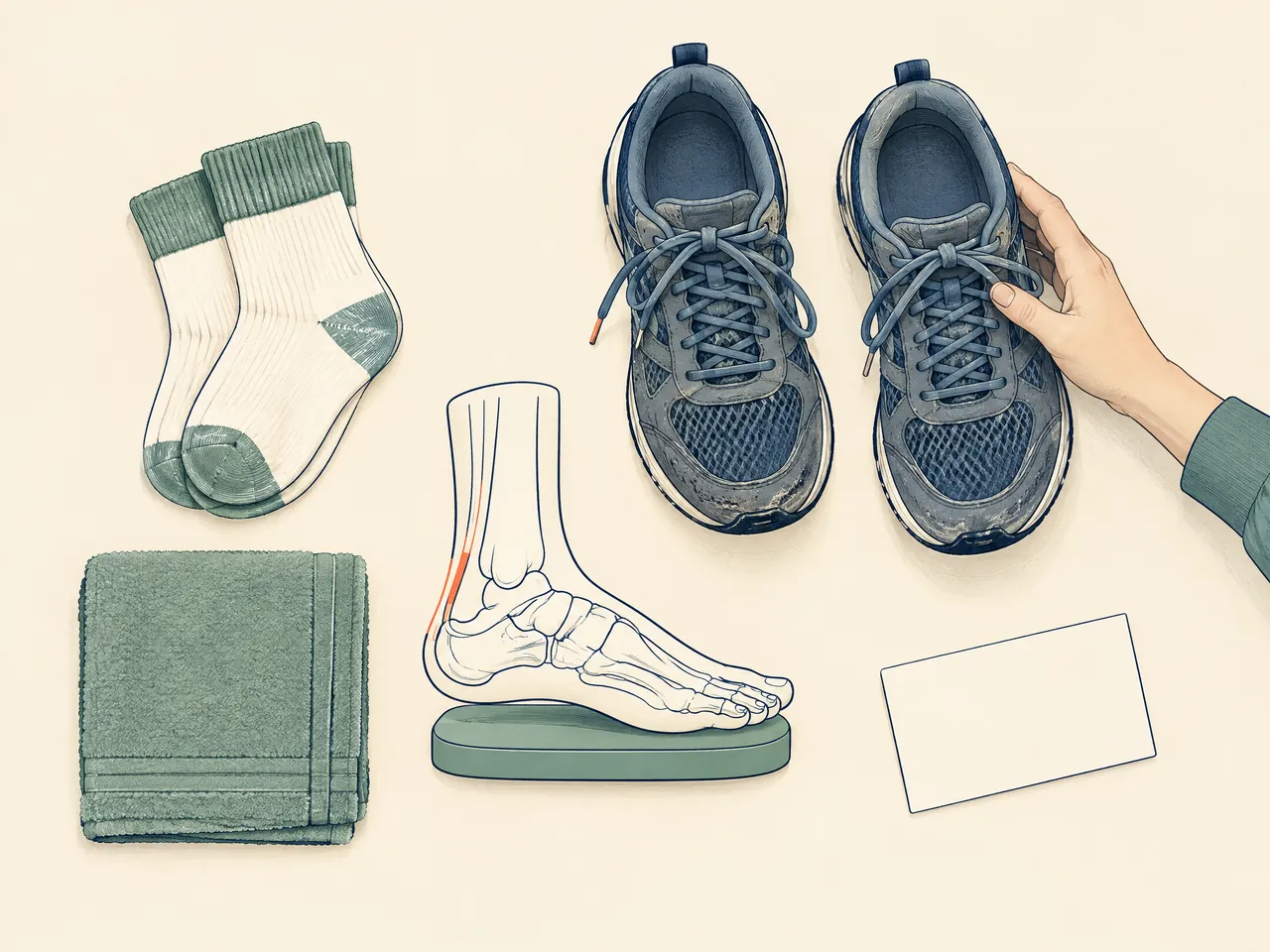
If symptoms persist, recur, become severe, or interfere with normal activities, arrange assessment rather than cycling through online exercises. The NHS advises seeing a GP for severe foot pain, worsening or recurrent pain, symptoms not improving after two weeks of self-care, tingling or loss of feeling, and foot pain with diabetes. [1] An individual assessment can consider your symptom location, function, footwear and activity demands. It can also clarify whether a stretch, a strengthening plan, a footwear change, or a different referral is the more sensible next conversation.
Pain and Next-Morning Checks After Plantar Fasciitis Exercises and Plantar Fasciitis Stretches: Can Stretching Make Plantar Fasciitis Worse?
Do not compensate for a flare by repeatedly testing the painful area. Pressing, stretching and walking on it to see whether it has changed can become extra load. Return to ordinary, tolerable movement and note the result. If symptoms settle and an assessed plan remains appropriate, a clinician may suggest how to progress it. If they do not settle, reducing the range or changing the technique yourself may not address the issue; ask for review. For another symptom guide, see how do I know if I have plantar fasciitis.

When to Pause Plantar Fasciitis Exercises and Plantar Fasciitis Stretches: Can Stretching Make Plantar Fasciitis Worse?
Seek timely medical advice for inability to bear weight, a significant new injury, a visible deformity, numbness or reduced sensation. Seek advice as well for diabetic foot pain, severe pain that limits normal activities, or pain that is worsening, recurrent or not improving with self-care. [1] At TCM Lab, an enquiry can be used to ask about an assessment and to describe your symptoms, medicines and any existing medical advice. It is not a promise that stretching, acupuncture or any one approach will cure plantar fasciitis; conventional diagnosis and coordinated care remain important when the cause is uncertain.
Care and health guide
Foot discomfort: care information
This directory brings together services, reading, and visit information related to foot discomfort, to help you prepare questions for a consultation.
When foot discomfort affects your day, noting when it occurs, its relation to activity, and what you have already tried can help prepare a consultation; acupuncture for foot pain is a relevant service or reading entry point.
Individual circumstances differ, and acupuncture Hong Kong offers related information to help you understand options and prepare questions.


Your questions, answered
Frequently asked questions
How do I begin plantar fasciitis exercises or plantar fasciitis stretches without pushing too hard?
First make sure an assessment has indicated that gentle stretching is appropriate. Begin in a stable, supported position and look for mild tension, not sharp pain. A towel around the ball of the foot with the heel down and knee straight is one cautious option described in NHS guidance. Avoid bouncing, toe-yanking or adding multiple new activities on the same day. [2]
Can stretching make plantar fasciitis worse the next morning?
Yes. A clear increase in first-step pain or stiffness the next morning suggests that the current movement or total load may be too much. NHS Ayrshire & Arran advises that pain or other symptoms should return to the pre-exercise baseline within 30 minutes and should not leave increased pain or stiffness lasting more than 60 minutes the following morning. Reduce or stop the provoking option and seek advice if the response is substantial or persists. [2]
Should I keep stretching if heel pain increases after standing or walking?
Do not respond by automatically stretching harder. Consider the full load: time standing, walking distance, running, footwear and any new exercise. The NHS advises avoiding long periods of standing or walking if they aggravate symptoms and using cushioned, supportive footwear. If pain is worsening, keeps returning, or limits normal activities, arrange assessment. [1]
When should I seek help instead of trying plantar fasciitis stretches?
Seek assessment promptly for inability to bear weight, a significant injury, visible deformity, tingling or loss of feeling, or diabetic foot pain. NHS guidance also recommends medical advice for severe foot pain, pain that worsens or recurs, or pain that has not improved after two weeks of self-care. [1]
Sources and further information
- [1] [1] NHS — Plantar fasciitis
Referenced for: Symptoms around the heel and arch, self-care and footwear guidance, activity modification, and situations where medical advice is recommended.
- [2] [2] NHS Ayrshire & Arran — Plantar Fasciitis MSK Patient Portal
Referenced for: Towel and wall-supported calf stretch setup, exercise-response monitoring, and advice to seek review for a large pain increase.