
TCM Lab · Health reading
Ankle Sprain Ice or Heat? Heat or Cold for Ankle Sprain and Ice for Ankle Sprain
Published Updated
When an ankle rolls on a kerb, during a game, or on the last step of a staircase, it is natural to ask whether ankle sprain ice or heat is the better first move. In the first two to three days, wrapped cold is usually the safer choice over heat or massage: it can ease pain while you protect the ankle, rest relatively, use appropriate compression and elevate it. The answer changes as swelling settles and movement returns. This guide separates first-day care from recovery, explains warning signs that need assessment, and places Chinese medicine support alongside—not instead of—appropriate injury evaluation.
Appointments are confirmed through WhatsApp. If you have language requirements, please mention them in your enquiry.
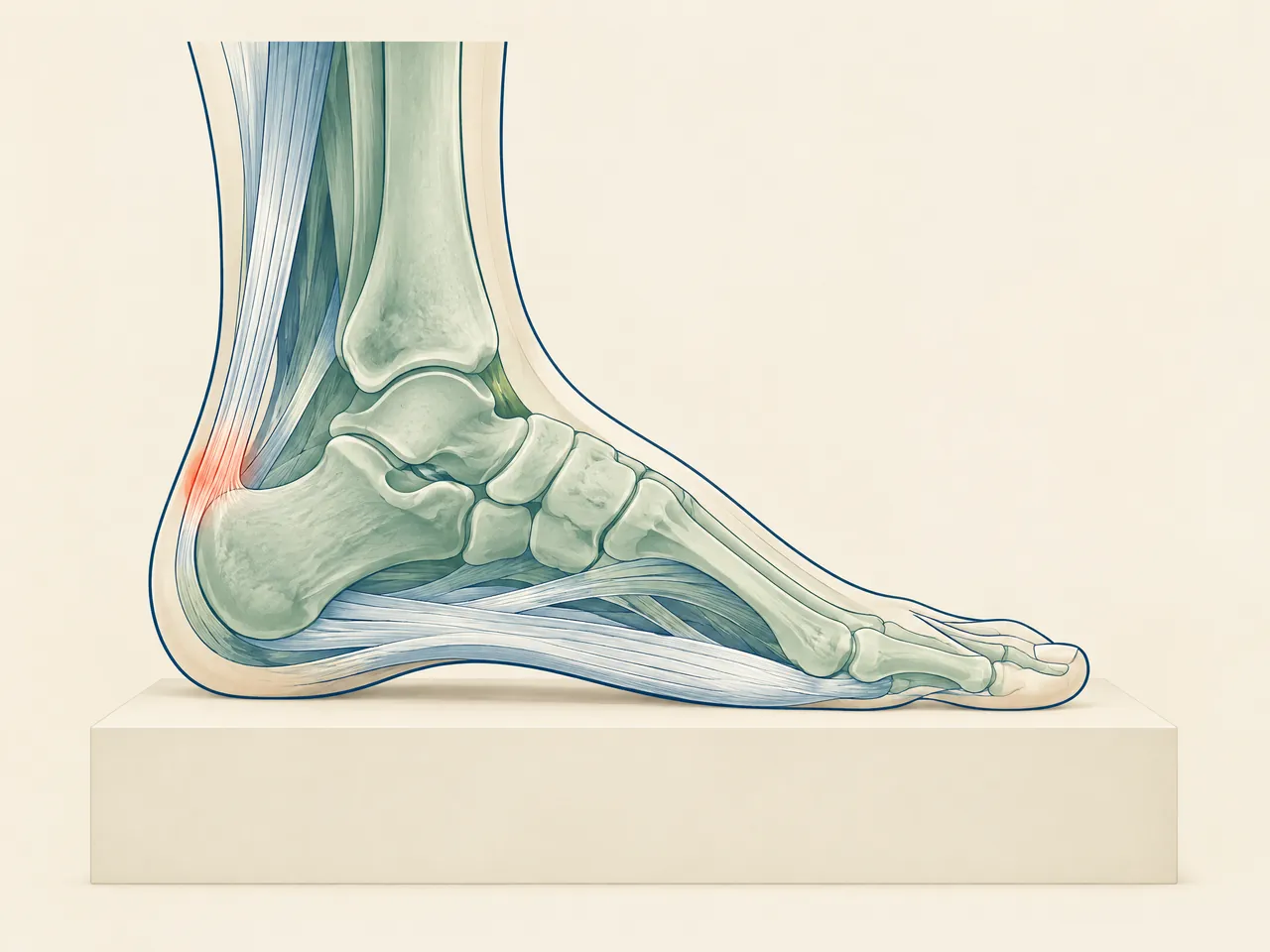
The short answer
For ankle sprain ice or heat, choose wrapped cold rather than heat or massage during the first two to three days. An ice pack or frozen vegetables should be wrapped in cloth, not placed on bare skin; the NHS advises up to 20 minutes every two to three hours. Protect the ankle, rest from painful activity, compress appropriately and elevate it. Seek urgent assessment for a crack, deformity, persistent numbness or colour change, or if you cannot bear weight. [1]
Transparent pricing
See the fees.
Choose your care.
Explore our complete official price list, including first-trial prices, regular prices, packages and branch-specific options.
Opening WhatsApp prepares an enquiry; it does not send a message, take payment or confirm an appointment. Suitability and individual arrangements are confirmed during consultation.
Pain care
All prices in HKDExtracorporeal shockwave treatment
Shockwave treatment for deep-tissue and fascial care. The Kwun Tong clinic offers the multi-area options shown below.
Priced by branch
Branch-specific pricing
Prince Edward: HK$250 per area
Kwun Tong: HK$250 for 1 area / HK$450 for 2 areas / HK$600 for 3 areas
Pain care (manual therapy)
Includes Chinese medicine musculoskeletal assessment, manual joint techniques and tui na.
HK$580 (single session)
Chinese medicine musculoskeletal assessment
Pain care (acupuncture and manual therapy)
Combines acupuncture and manual therapy.
HK$680 (single session)
Combined care
Hair and scalp
All prices in HKDScalp health and hair-loss management
Includes AI scalp analysis, deep scalp and follicle cleansing, and scalp oil-control care.
HK$380 (first trial)
Regular price: HK$680
- 6 sessions: HK$3,480 (HK$580 per session)
- 12 sessions: HK$5,760 (HK$480 per session)
- 20 sessions: HK$8,600 (HK$430 per session)
- 30 sessions: HK$11,400 (HK$380 per session)
Hair acupuncture and Chinese herbal medicine package
Includes scalp acupuncture and 3 days of Chinese herbal medicine that does not require decoction.
HK$580 (single session)
Registered Chinese Medicine Practitioner consultation
- 6 sessions: HK$3,180 (HK$530 per session)
- 12 sessions: HK$5,760 (HK$480 per session)
- 20 sessions: HK$8,600 (HK$430 per session)
- 30 sessions: HK$11,400 (HK$380 per session)
Combined hair and scalp treatment
Combines acupuncture and Chinese herbal medicine with salon-level scalp and follicle care. Packages include complimentary hair-care shampoo and serum.
HK$1,260 (single session)
Combined treatment
- 8 sessions: HK$8,640 (HK$1,080 per session)
- 16 sessions: HK$15,680 (HK$980 per session)
- 20 sessions: HK$18,600 (HK$930 per session)
- 30 sessions: HK$26,400 (HK$880 per session)
Weight management
All prices in HKDFull-body acupoint embedding for weight management
Includes full-body acupoint embedding. Packages include complimentary Chinese herbal medicine for weight management, with the number of included days scaled to the package. Embedding material and the individual treatment arrangement are confirmed during consultation; this is not a cosmetic thread lift.
HK$980 (single session)
No trial session
- 10 sessions: HK$7,800 (HK$780 per session)
- 20 sessions: HK$14,600 (HK$730 per session)
- 30 sessions: HK$20,400 (HK$680 per session)
Facial acupuncture
All prices in HKDFacial acupuncture (basic)
Includes facial acupuncture and meridian-based facial care, including care for facial puffiness.
HK$480 (first trial)
Regular price: HK$680
- 10 sessions: HK$5,200 (HK$520 per session)
- 20 sessions: HK$9,600 (HK$480 per session)
- 30 sessions: HK$13,500 (HK$450 per session)
Facial acupuncture (advanced)
Includes enhanced facial acupuncture with a specially formulated moisturising mask and serum.
HK$780 (first trial)
Regular price: HK$1,180
- 10 sessions: HK$9,000 (HK$900 per session)
- 20 sessions: HK$16,600 (HK$830 per session)
- 30 sessions: HK$23,400 (HK$780 per session)
Chinese medicine
All prices in HKDAcupuncture and Chinese herbal medicine package
Includes a Chinese medicine consultation with pulse assessment, body acupuncture and 3 days of Chinese herbal granules that do not require decoction.
HK$580 (single session)
Chinese medicine consultation with pulse assessment
Ankle Sprain Ice or Heat: Heat or Cold for Ankle Sprain and Ice for Ankle Sprain in the First Days
An ankle sprain involves one or more ligaments around the joint. It often follows an inward or outward twist, but a fall, uneven pavement, unsuitable footwear or a sudden change of direction can also be relevant. Pain, tenderness, swelling, bruising, stiffness and difficulty walking are common features, yet the intensity of any one symptom does not reliably tell you how serious the injury is. A useful note for an assessment records when it happened, what the foot was doing, where the pain is most focused, whether the ankle felt or sounded unusual, and whether you could take steps afterwards. The Hong Kong College of Orthopaedic Surgeons notes that imaging may be used when needed to clarify the severity or look for associated injury. [2]
For the immediate ankle sprain ice or heat decision, think first about preventing a painful ankle from being repeatedly stressed. The NHS recommends PRICE for the first two to three days: protection, rest, ice, compression and elevation. That means pausing the run, training session or long errand that provoked symptoms; using a support or supportive shoe when appropriate; elevating the foot on a pillow; and using a bandage only if it feels comfortable and does not interfere with circulation. Cold is an option within this package, not a reason to test the ankle repeatedly. For a fuller practical sequence, see ankle sprain first aid and ankle sprain compression and elevation. [1]

Ankle Sprain Ice or Heat: Heat or Cold for Ankle Sprain and Ice for Ankle Sprain Basics
Ice for ankle sprain care is best used as a protected, time-limited comfort measure. Put a cold pack, or a bag of frozen vegetables, inside a tea towel or similar cloth rather than putting it straight on the ankle. The NHS advises applying it for up to 20 minutes every two to three hours during the first two to three days. [1] Take it off if the skin becomes painfully cold or uncomfortable. There is no need to force a fixed routine through commuting, sleeping or a work meeting: protection, avoiding a painful load and elevating the foot when resting remain part of the same early-care decision. Avoid hot baths, heat packs, alcohol and massage in this initial period because early swelling can be aggravated. [1]
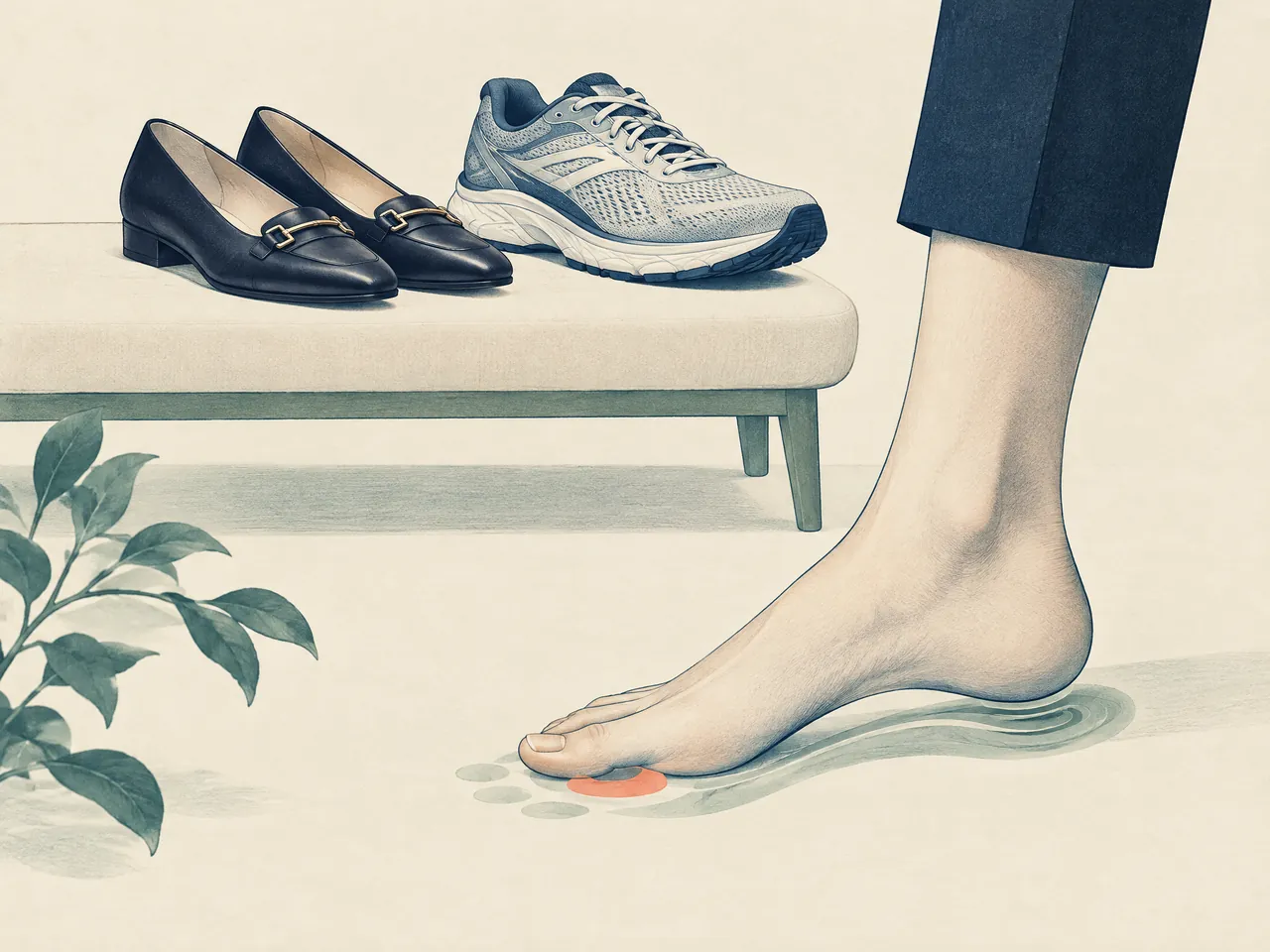
Ankle Sprain Ice or Heat: Heat or Cold for Ankle Sprain and Ice for Ankle Sprain Safety Checks
Do not let a cold-versus-heat question delay care for a possible fracture or a more serious injury. Immediate assessment is important if you heard a crack, the ankle or foot looks misshapen, the skin becomes blue or grey or feels cold, or there is numbness, tingling or pins and needles. [1] Marked pain, increasing swelling or bruising, inability to walk more than a few steps, or movement that is becoming more difficult are also reasons to seek timely medical advice. [1] Remove any compression that causes tingling, increasing pain, unusual colour or a cold foot. In the absence of those signs, keep observations simple: note whether swelling is settling, whether short supported steps are becoming easier, and whether the ankle feels as though it may give way.
Compare your options
| Situation | Priority | Cold or heat decision | Useful next step |
|---|---|---|---|
| First 2–3 days with new swelling or bruising | Protect, rest relatively, compress appropriately and elevate | Use wrapped cold; avoid heat and massage | Record how the injury happened and reduce painful weight-bearing [1] |
| Cold pack is being used | Protect the skin and keep sessions brief | Cold pack wrapped in cloth, up to 20 minutes every 2–3 hours | Remove it if it is painfully cold or uncomfortable [1] |
| Movement is returning without pain stopping it | Begin gradual, controlled activity | Heat is optional for stiffness only after early swelling has settled | Increase ordinary walking or exercises according to symptoms and guidance [1] [2] |
| Crack, deformity, numbness, colour change or no weight-bearing | Prompt medical assessment | Do not rely on cold or heat to manage it | Seek urgent care; a fracture or more serious injury needs consideration [1] |
| Repeated giving way or slow progress | Assessment and rehabilitation planning | Cold or warmth may be comfort measures, not the main solution | Discuss stability, loading and structured rehabilitation [2] [3] |
On smaller screens, scroll the table sideways to compare all columns.
Ankle Sprain Ice or Heat: Heat or Cold for Ankle Sprain and Ice for Ankle Sprain During Recovery
The early period is not the whole recovery. Once pain no longer stops movement, the NHS advises keeping the injured area moving so that it does not become stiff. [1] That is different from ignoring a limp or pushing through a sharp pain. The question becomes how to reintroduce ordinary loading—short walks at home, stairs, standing at work—without a large jump in demand. Recovery varies with the injury and the person. The NHS says most sprains and strains feel better after two weeks, while severe injuries can take months; the Hong Kong College of Orthopaedic Surgeons likewise describes recovery ranging from weeks to months depending on severity. [1] [2] A staged overview of RICE for ankle sprain can help keep early protection in perspective as activity is resumed.
Rather than choosing a calendar date for heat, use the ankle’s current state. If the joint is still visibly swollen, throbbing after simple activity or tender enough that you are protecting it with every step, heat is not the priority; reduce the provoking load and consider assessment. When the early swelling has eased and stiffness is the dominant concern, gentle warmth may feel comfortable before easy mobility work for some people. It is optional, and it should never make the ankle feel more swollen or encourage an abrupt return to sport. Cold can also still be used for short-term comfort after activity if it helps you. For symptom-focused ideas that fit alongside an assessment, read ankle sprain pain relief.
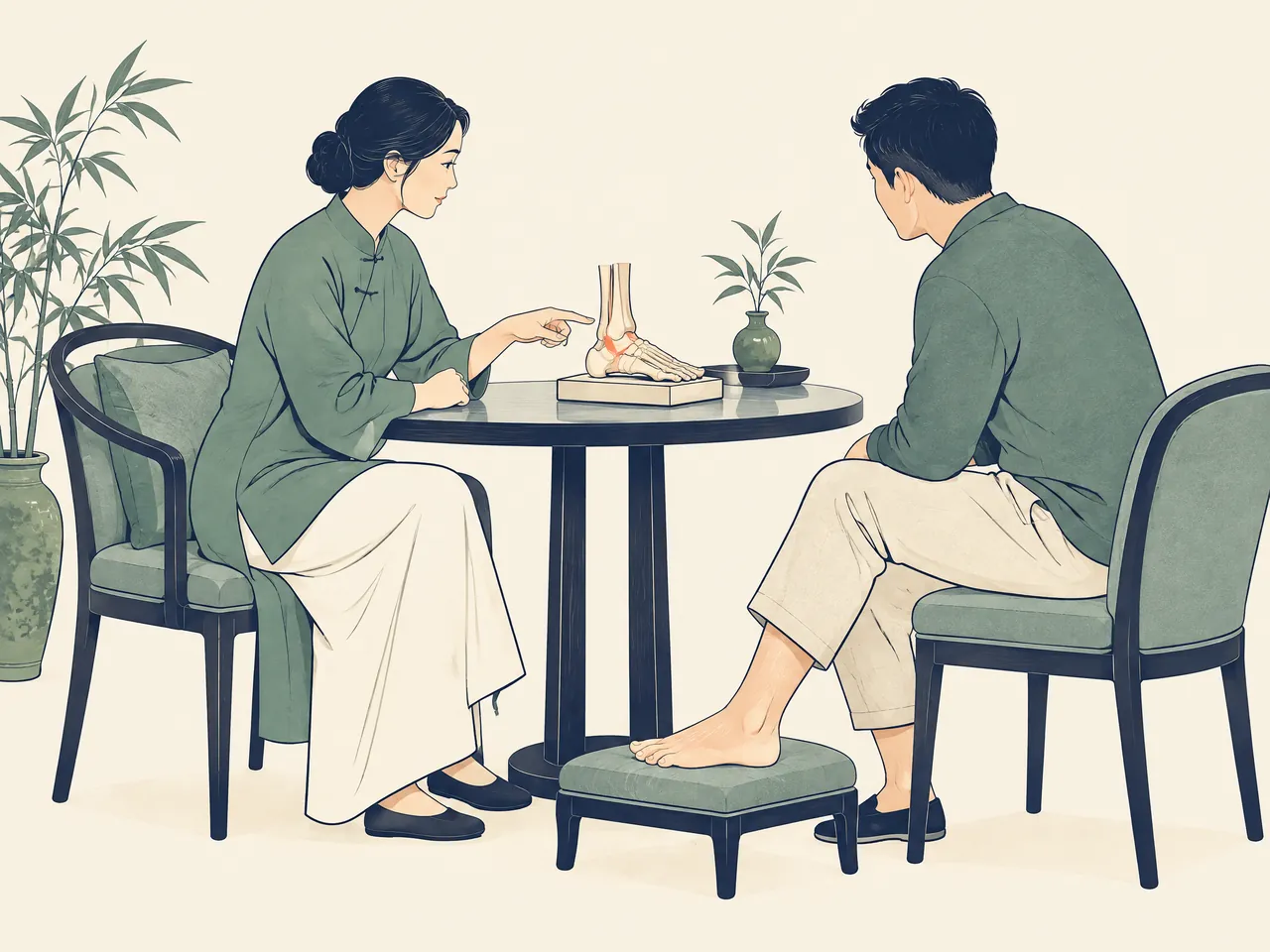
A return to full activity should be based on function, not just on how the ankle looks in a shoe. Someone who can walk on level ground may still notice weakness or uncertainty when turning quickly, stepping off a bus, carrying groceries or walking on wet Hong Kong pavements. These are useful details to raise with a clinician. The Hong Kong College of Orthopaedic Surgeons describes rehabilitation as moving from swelling reduction and stabilisation to restoration of range of motion, strength, flexibility, stamina and proprioception—the joint’s sense of position. [2] That progression explains why prolonged complete rest is not the aim, yet neither is a sudden return to twisting and jumping.
Ankle Sprain Ice or Heat: Heat or Cold for Ankle Sprain and Ice for Ankle Sprain, Then Gradual Loading
Gradual loading means changing one demand at a time. A person may first practise short, controlled walks in a stable shoe, then extend distance, then tolerate stairs or uneven ground, according to symptoms and professional advice. A support, crutches or a stabilising device may be considered after assessment; the right choice depends on the injury, balance and ability to bear weight. The local orthopaedic guidance notes that rehabilitation progresses in stages and that early exercises may be introduced for less severe cases, while more significant injuries can need stabilisation and non-weight-bearing periods. [2] If an activity leaves pain or swelling clearly worse later that day or the next morning, scale back rather than treating heat or ice as permission to repeat it.
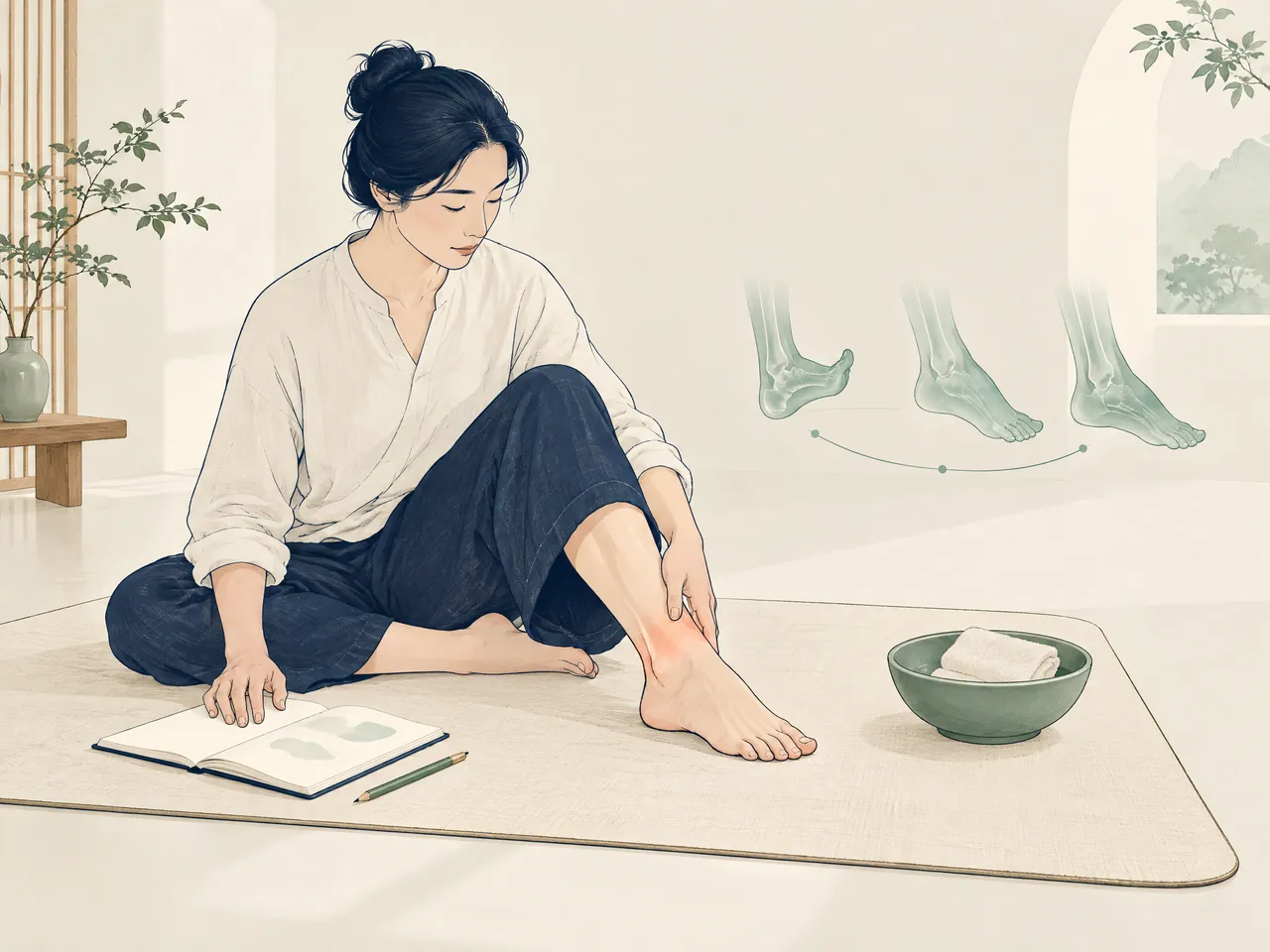
Ankle Sprain Ice or Heat: Heat or Cold for Ankle Sprain and Ice for Ankle Sprain With Rehabilitation
Rehabilitation commonly addresses comfortable motion, calf and surrounding-leg strength, balance and controlled reactions to changing surfaces. It is especially important to discuss rehabilitation when the ankle has been sprained before, repeatedly feels unstable, or limits confidence during ordinary walking. The 2021 American Physical Therapy Association clinical guideline covers diagnosis and management of acute lateral ankle sprain and ankle instability in adolescents and adults. [3] A clinician can decide whether a structured rehabilitation plan, further examination or imaging is appropriate. Until then, avoid practising pivots, sprints, court sports or trail running simply because the bruising has faded. A steadier, symptom-led build-up is more useful than testing the ankle with a single demanding session.
Ankle Sprain Ice or Heat: Heat or Cold for Ankle Sprain and Ice for Ankle Sprain With Chinese Medicine Support
Chinese medicine can be discussed as an adjunct after the injury has been considered clinically; it does not replace evaluation for a fracture, major ligament injury, circulation problem or nerve symptoms. At an in-person consultation, a Registered Chinese Medicine Practitioner may ask how the twist happened, where it hurts, what makes it worse, whether swelling or bruising is changing, whether the ankle has been injured before and what medicines or treatments you are already using. Traditional Chinese medicine may describe patterns such as qi stagnation and blood stasis, cold-damp obstruction, or liver-and-kidney deficiency. These are traditional assessment terms, not modern imaging findings or a substitute for a medical diagnosis. Sharing reports, scans and the details of current care helps make the discussion safer and more coordinated. A visit can be arranged at the Kwun Tong Chinese medicine clinic by appointment.
Acupuncture is sometimes raised when pain, stiffness or recovery concerns persist, but it should be approached with realistic expectations. A systematic review of acupuncture for acute ankle sprain reported possible benefit while also identifying small samples, varied interventions and methodological limitations; its authors called for larger, better-designed trials. [4] That does not support a promise that acupuncture will repair a torn ligament, remove the need for protection, or deliver a fixed number of sessions. It may be a topic for an individual consultation after safety checks, alongside suitable loading and rehabilitation. Do not attempt self-needling. Tell the practitioner about medicines, allergies, pregnancy, bleeding concerns, prior ankle surgery and any other treatment being used so that the plan can be considered in context.
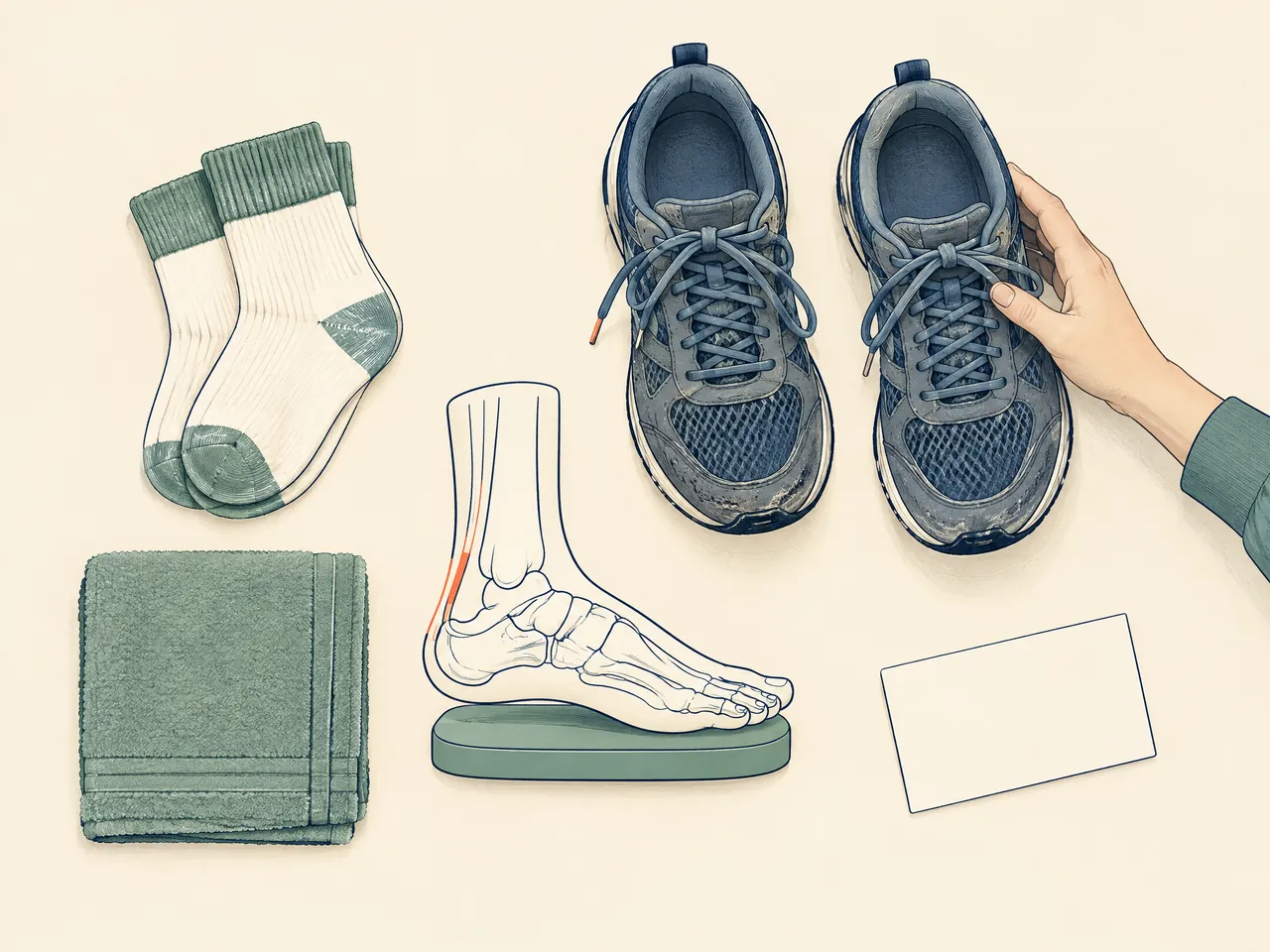
Ankle Sprain Ice or Heat: Heat or Cold for Ankle Sprain and Ice for Ankle Sprain and Clinical Assessment
A useful assessment does more than choose cold, heat or a treatment modality. It considers the location of tenderness, the ability to bear weight, swelling and bruising, ankle stability, the mechanism of injury and the demands of work or sport. The Hong Kong College of Orthopaedic Surgeons notes that an orthopaedic examination and, when necessary, X-ray, MRI or CT can be used to determine injury severity. [2] Bring a brief symptom timeline instead of trying to grade the sprain yourself. If you want to ask about Chinese medicine alongside conventional care, the Chinese medicine clinic Prince Edward also accepts appointments. Urgent warning signs should be assessed promptly rather than waiting for a complementary consultation.

Ankle Sprain Ice or Heat: Heat or Cold for Ankle Sprain and Ice for Ankle Sprain and Acupuncture Questions
Before discussing acupuncture, ask practical questions: has a fracture or serious injury been considered; what is the immediate plan for support and loading; what change should prompt reassessment; and how would any adjunct fit with rehabilitation? It is reasonable to ask what a practitioner is assessing and to say clearly that you are using ice, a brace, pain medicine or physiotherapy. Good coordination matters more than pursuing several treatments at once without a plan. TCM Lab consultations are arranged by appointment; for current visit information, see the Chinese medicine clinic price list Hong Kong or contact TCM Lab on WhatsApp at +852 6940 5663. The immediate choice remains simple: protect a new injury and use wrapped cold early, then let symptoms and assessment guide the next step.
Care and health guide
Health service information
This directory brings together services, reading, and visit information related to health services, to help you prepare questions for a consultation.
If you are organising health questions, Chinese medicine clinic Hong Kong is a starting point for learning about related services and preparing for a consultation.
People have different needs; acupuncture Hong Kong provides further reading to help you understand options in your own context.


Your questions, answered
Frequently asked questions
For ankle sprain ice or heat, which is better during the first two to three days?
Wrapped cold is generally preferred in the first two to three days. The NHS advises avoiding heat, alcohol and massage in that early period, while using protection, rest, ice, compression and elevation to support the injury. [1]
Can I put ice directly on a sprained ankle?
No. Put a cloth barrier between the skin and the cold pack. The NHS suggests an ice pack or frozen vegetables wrapped in a tea towel for up to 20 minutes at a time, every two to three hours in the early phase. [1]
When can I use heat for an ankle sprain?
Avoid heat during the first two to three days, particularly when swelling is new or increasing. After that initial phase, gentle warmth may feel comfortable for stiffness once swelling has settled, but it is optional and should not substitute for assessment or gradual rehabilitation.
Should I keep completely still after an ankle sprain?
Protect the ankle and stop painful activity at first, but prolonged complete inactivity is not normally the goal. When pain no longer stops movement, gentle movement and gradual loading can help avoid stiffness. The pace depends on the injury and should be reviewed if walking remains difficult or the ankle feels unstable. [1] [2]
Can acupuncture cure my ankle sprain?
No treatment should promise to cure an ankle sprain or give a fixed recovery time. Acupuncture can be discussed as an adjunct after assessment, but evidence has important limitations and it does not replace evaluation for fracture, protection, appropriate loading or rehabilitation. [4]
Sources and further information
- [1] [1] NHS — Sprains and strains
Referenced for: First two to three days of PRICE care, cold-pack timing and wrapping, avoidance of early heat and massage, recovery context and urgent warning signs.
- [2] [2] The Hong Kong College of Orthopaedic Surgeons — Ankle Sprain
Referenced for: Ankle-sprain symptoms, diagnosis and imaging context, RICE, staged rehabilitation and variable recovery.
- [3] [3] American Physical Therapy Association — Lateral Ankle Ligament Sprains Revision
Referenced for: Scope of the 2021 clinical practice guideline for acute lateral ankle sprain and ankle instability.
- [4] [4] Liu et al. — Efficacy and Safety of Acupuncture Therapy for Patients with Acute Ankle Sprain
Referenced for: Systematic-review conclusion and limitations for acupuncture in acute ankle sprain.