
TCM Lab · Health reading
Is acupuncture suitable for elbow pain? What happens during acupuncture for elbow pain? What are the alternatives to acupuncture for elbow pain?
Published Updated
Elbow pain is often labelled ‘tennis elbow’ too quickly. Repetitive gripping, lifting, tool use, a sporting movement, a strain, joint irritation and several other problems can all make the outside, inside or back of the elbow sore. Is acupuncture suitable for elbow pain? It can be discussed as supportive symptom care when an assessment suggests that is appropriate, but it is not a way to repair a fracture, a torn ligament or an infected joint. The useful first question is not simply whether a needle might help; it is what is provoking the pain, how the arm moves, and whether there is a reason to seek medical assessment first. That approach keeps the choice realistic and gives acupuncture, physiotherapy and self-protection their proper places.
Appointments are confirmed through WhatsApp. If you have language requirements, please mention them in your enquiry.
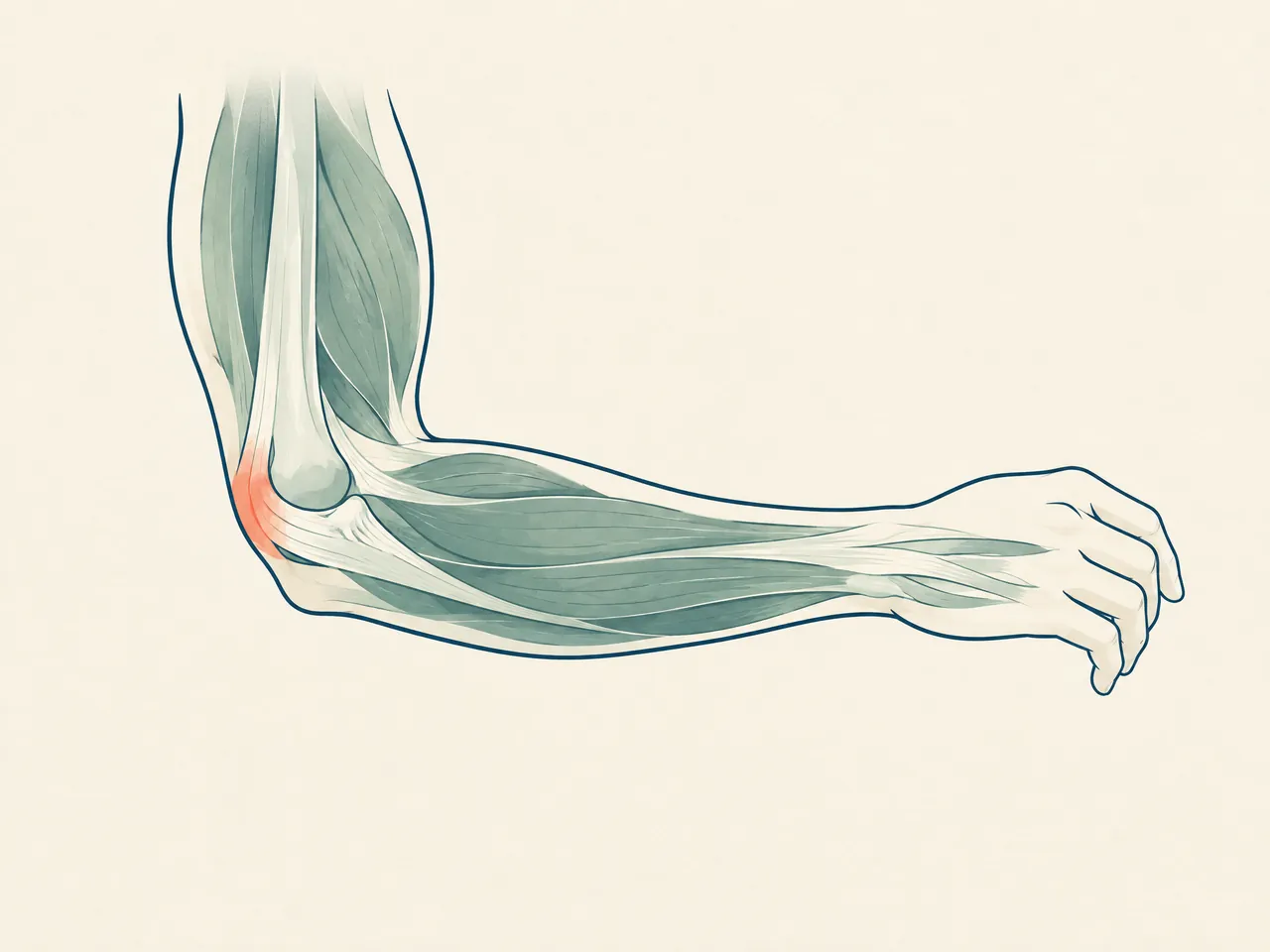
The short answer
Acupuncture may be considered as supportive care for elbow pain after a practitioner has reviewed the onset, movement, swelling, relevant health history and likely source of symptoms. It should not delay medical review for severe pain, deformity after an injury, marked heat or swelling, numbness or weakness. A session commonly involves assessment, comfortable positioning, skin preparation, carefully selected needles and aftercare discussion. Physiotherapy, activity adjustment, a brace, medication advice or medical investigation may be more suitable depending on the findings.
Transparent pricing
See the fees.
Choose your care.
Explore our complete official price list, including first-trial prices, regular prices, packages and branch-specific options.
Opening WhatsApp prepares an enquiry; it does not send a message, take payment or confirm an appointment. Suitability and individual arrangements are confirmed during consultation.
Pain care
All prices in HKDExtracorporeal shockwave treatment
Shockwave treatment for deep-tissue and fascial care. The Kwun Tong clinic offers the multi-area options shown below.
Priced by branch
Branch-specific pricing
Prince Edward: HK$250 per area
Kwun Tong: HK$250 for 1 area / HK$450 for 2 areas / HK$600 for 3 areas
Pain care (manual therapy)
Includes Chinese medicine musculoskeletal assessment, manual joint techniques and tui na.
HK$580 (single session)
Chinese medicine musculoskeletal assessment
Pain care (acupuncture and manual therapy)
Combines acupuncture and manual therapy.
HK$680 (single session)
Combined care
Hair and scalp
All prices in HKDScalp health and hair-loss management
Includes AI scalp analysis, deep scalp and follicle cleansing, and scalp oil-control care.
HK$380 (first trial)
Regular price: HK$680
- 6 sessions: HK$3,480 (HK$580 per session)
- 12 sessions: HK$5,760 (HK$480 per session)
- 20 sessions: HK$8,600 (HK$430 per session)
- 30 sessions: HK$11,400 (HK$380 per session)
Hair acupuncture and Chinese herbal medicine package
Includes scalp acupuncture and 3 days of Chinese herbal medicine that does not require decoction.
HK$580 (single session)
Registered Chinese Medicine Practitioner consultation
- 6 sessions: HK$3,180 (HK$530 per session)
- 12 sessions: HK$5,760 (HK$480 per session)
- 20 sessions: HK$8,600 (HK$430 per session)
- 30 sessions: HK$11,400 (HK$380 per session)
Combined hair and scalp treatment
Combines acupuncture and Chinese herbal medicine with salon-level scalp and follicle care. Packages include complimentary hair-care shampoo and serum.
HK$1,260 (single session)
Combined treatment
- 8 sessions: HK$8,640 (HK$1,080 per session)
- 16 sessions: HK$15,680 (HK$980 per session)
- 20 sessions: HK$18,600 (HK$930 per session)
- 30 sessions: HK$26,400 (HK$880 per session)
Weight management
All prices in HKDFull-body acupoint embedding for weight management
Includes full-body acupoint embedding. Packages include complimentary Chinese herbal medicine for weight management, with the number of included days scaled to the package. Embedding material and the individual treatment arrangement are confirmed during consultation; this is not a cosmetic thread lift.
HK$980 (single session)
No trial session
- 10 sessions: HK$7,800 (HK$780 per session)
- 20 sessions: HK$14,600 (HK$730 per session)
- 30 sessions: HK$20,400 (HK$680 per session)
Facial acupuncture
All prices in HKDFacial acupuncture (basic)
Includes facial acupuncture and meridian-based facial care, including care for facial puffiness.
HK$480 (first trial)
Regular price: HK$680
- 10 sessions: HK$5,200 (HK$520 per session)
- 20 sessions: HK$9,600 (HK$480 per session)
- 30 sessions: HK$13,500 (HK$450 per session)
Facial acupuncture (advanced)
Includes enhanced facial acupuncture with a specially formulated moisturising mask and serum.
HK$780 (first trial)
Regular price: HK$1,180
- 10 sessions: HK$9,000 (HK$900 per session)
- 20 sessions: HK$16,600 (HK$830 per session)
- 30 sessions: HK$23,400 (HK$780 per session)
Chinese medicine
All prices in HKDAcupuncture and Chinese herbal medicine package
Includes a Chinese medicine consultation with pulse assessment, body acupuncture and 3 days of Chinese herbal granules that do not require decoction.
HK$580 (single session)
Chinese medicine consultation with pulse assessment
Is acupuncture suitable for elbow pain? — Understanding causes and assessment | What happens during acupuncture for elbow pain? | What are the alternatives to acupuncture for elbow pain?
Acupuncture is not an automatic answer to any painful elbow. The word ‘elbow pain’ describes a location, not a diagnosis. Someone may feel a sharp pull when turning a screwdriver, an ache after carrying a child, or stiffness after a fall; those histories point to different questions. The NHS lists tennis elbow, tendonitis or bursitis, sprains and strains, arthritis, and joint infection among the possible explanations for elbow and arm symptoms [1]. A useful consultation therefore starts with the story: whether the problem followed a single event or built up gradually, where it is felt, what the arm can no longer do comfortably, and what already helps or aggravates it. For a broader discussion of this choice, see does acupuncture help elbow pain.
Suitability also depends on what acupuncture is being asked to do. For an overuse pattern with local tenderness or tightness, a person may wish to discuss it alongside load adjustment and rehabilitation. That is different from expecting it to reunite a torn structure or correct a displaced bone. UCLA Health describes acupuncture as one of several modalities for tennis elbow and notes that the research does not establish a sustained response; it places physical therapy among the other treatment approaches [2]. This is a practical reason to state the goal plainly: perhaps easing discomfort enough to participate in a recovery plan, rather than treating acupuncture as a stand-alone cure. Where symptoms are persistent, assessment should also consider whether a change in work setup, sport technique or training volume is continuing to irritate the area.
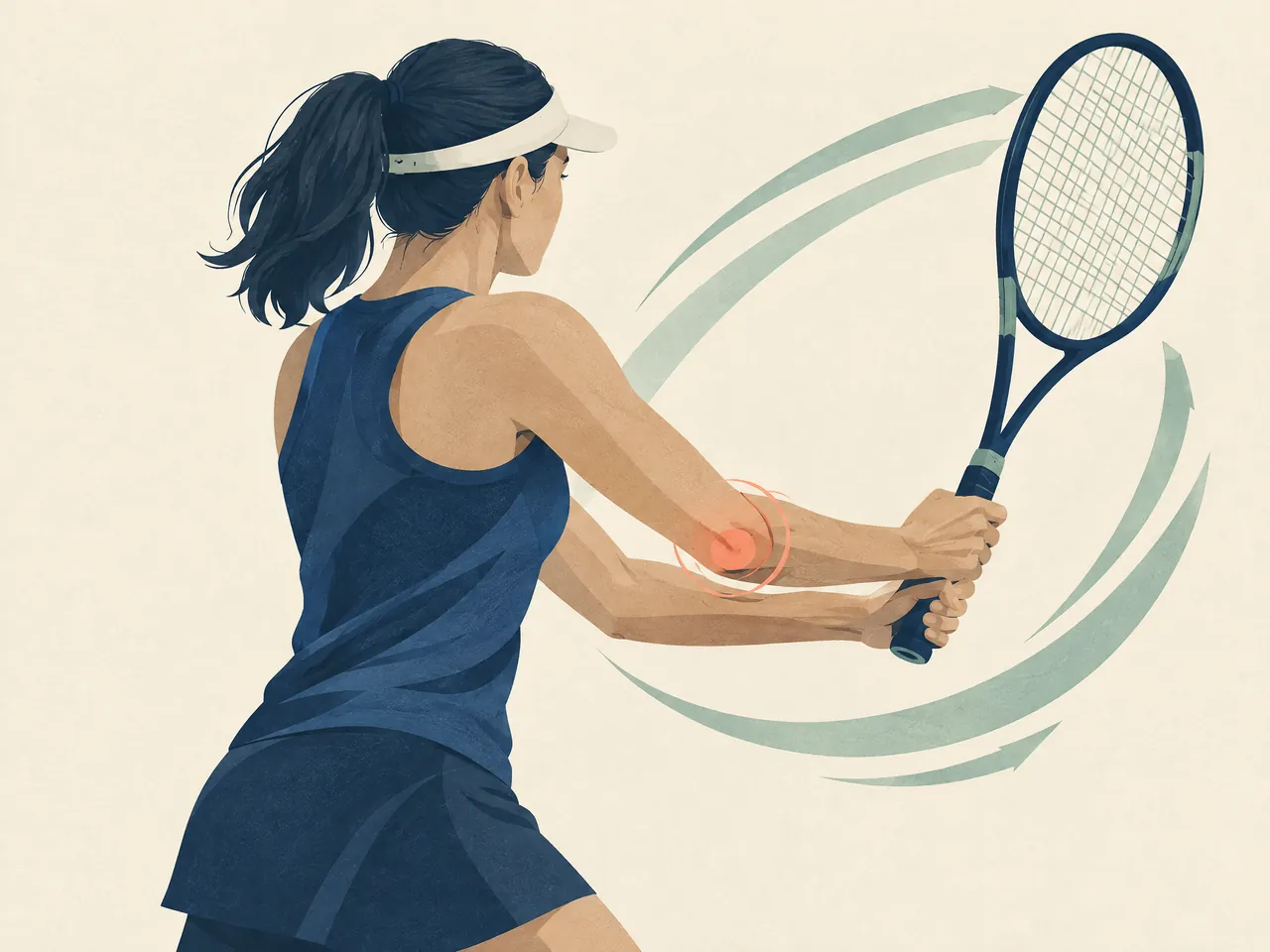
Is acupuncture suitable for elbow pain? — Overuse, tendon and joint considerations | What happens during acupuncture for elbow pain? | What are the alternatives to acupuncture for elbow pain?
Pain on the outer elbow during gripping or wrist movement is often associated with the pattern commonly called tennis elbow, while pain on the inner side can occur with repeated wrist flexion or throwing-type demands. These descriptions are clues, not a diagnosis made from a webpage. A clinician may also consider whether the discomfort is more muscular, tendinous, joint-related or referred from elsewhere in the arm or neck. Swelling, bruising, a recent fall, a catching sensation, fever or pain that is rapidly worsening changes the priority. The NHS advises urgent assessment for severe pain with difficulty moving the arm, a snapping noise or altered shape after injury, or tingling or numbness [1]. In those situations, do not use acupuncture as a substitute for timely medical care.
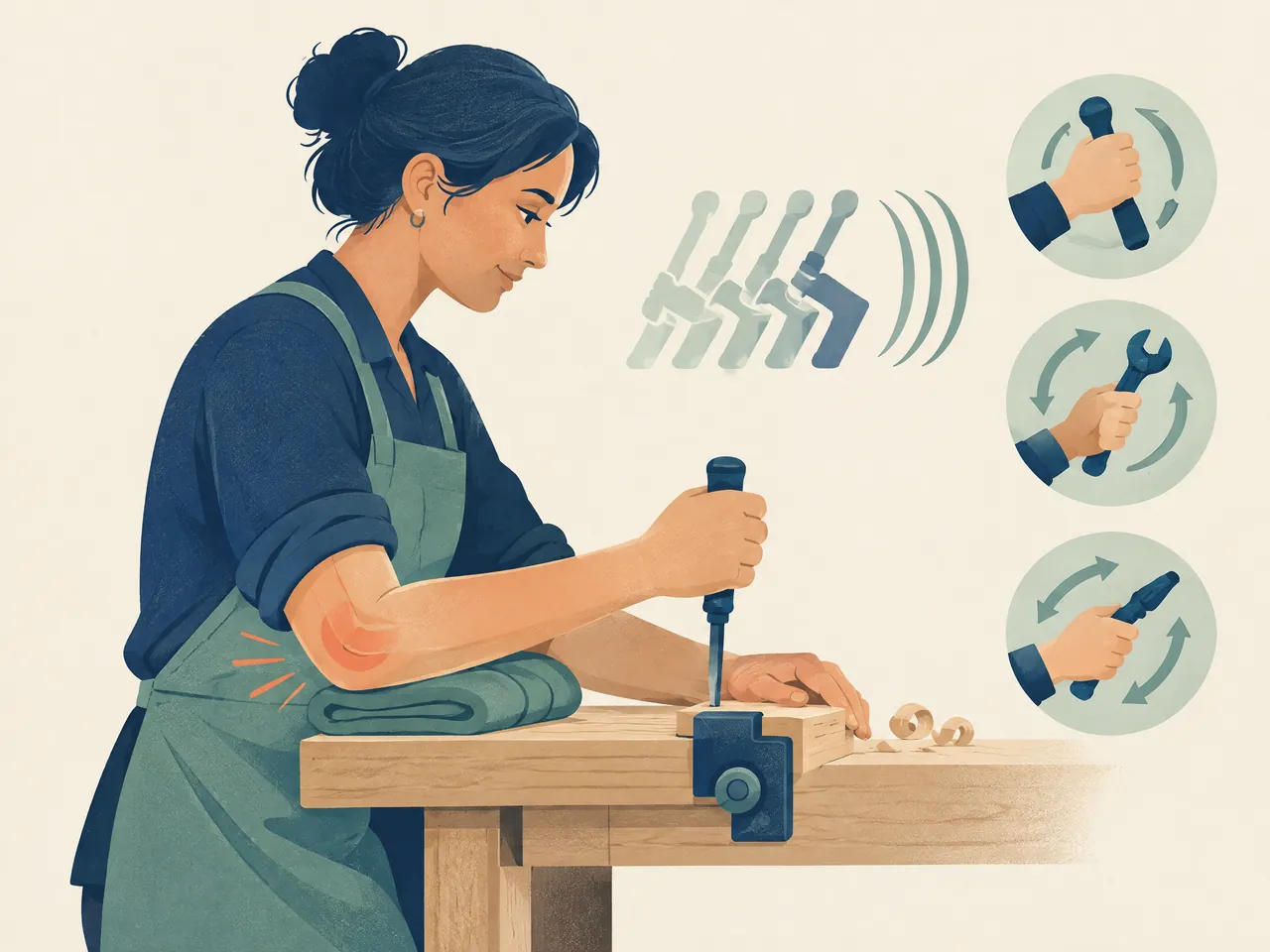
Is acupuncture suitable for elbow pain? — Why movement assessment matters | What happens during acupuncture for elbow pain? | What are the alternatives to acupuncture for elbow pain?
Movement testing makes the discussion more specific than pointing to a sore spot. A practitioner may observe the elbow, compare comfortable flexion, extension and rotation, and ask what happens when you grip, lift a kettle, open a jar, type, use a mouse or hold a bag. The pattern of pain matters as much as its intensity: pain only at the end of a movement has a different practical effect from pain that begins at rest or wakes you at night. Share any prior X-ray, scan, physiotherapy assessment or medical advice rather than starting from scratch. Our guide to elbow pain physical examination explains why this review is useful before deciding whether a supportive therapy fits the situation. The assessment is also an opportunity to set a measurable, everyday goal, such as tolerating a work task or dressing more comfortably, without promising a particular outcome.
Compare your options
| Situation or goal | A sensible next step to discuss | Why it may take priority |
|---|---|---|
| Severe pain, altered shape after injury, or major difficulty moving the arm | Urgent medical assessment | These symptoms may need prompt evaluation rather than supportive treatment. |
| Hot or swollen joint with fever, chills or feeling unwell | Prompt medical care | Infection is a concern that should not be managed by acupuncture alone. |
| Gradual pain with gripping, lifting or repeated wrist movement | Assessment, activity modification and physiotherapy discussion; acupuncture may be considered as support | The plan can address both symptom management and the repeated load that provokes it. |
| Persistent symptoms despite changing activity | Medical or physiotherapy review and reconsideration of the diagnosis | A review can identify whether further examination or a different management approach is needed. |
On smaller screens, scroll the table sideways to compare all columns.
What happens during acupuncture for elbow pain? — A practical consultation overview | Is acupuncture suitable for elbow pain? | What are the alternatives to acupuncture for elbow pain?
The first part of an acupuncture appointment should be conversation and examination, not rushing to the needles. Expect questions about the onset of pain, the movements that reproduce it, previous injury, current treatment and relevant health information. It is important to mention medicines, a history of fainting with needles, skin problems near the proposed area, pregnancy, bleeding or clotting concerns, and anything that makes a position difficult. A practitioner can then explain the intended supportive role of treatment and whether another referral is more appropriate. This is the point to ask what will be treated, what sensations are possible, and what you should do if you feel uncomfortable. Open communication allows the plan to be changed or stopped rather than endured.
If treatment is agreed, the arm is positioned so the elbow and surrounding tissues can be reached without straining the painful movement. Selected skin areas are prepared, and needles may be placed around the elbow or at other relevant points after individual assessment. Needle placement is not a test of bravery: tell the practitioner immediately if you feel faint, unwell, unusually sharp pain or anxiety. NCCIH notes that complications are uncommon but can arise from nonsterile needles or improper treatment; it also states that acupuncture needles regulated by the U.S. FDA must be sterile and labelled for single use [3]. That information supports a simple patient question anywhere: how are single-use needles and hygiene handled here? It does not mean that every elbow problem should be treated with acupuncture.
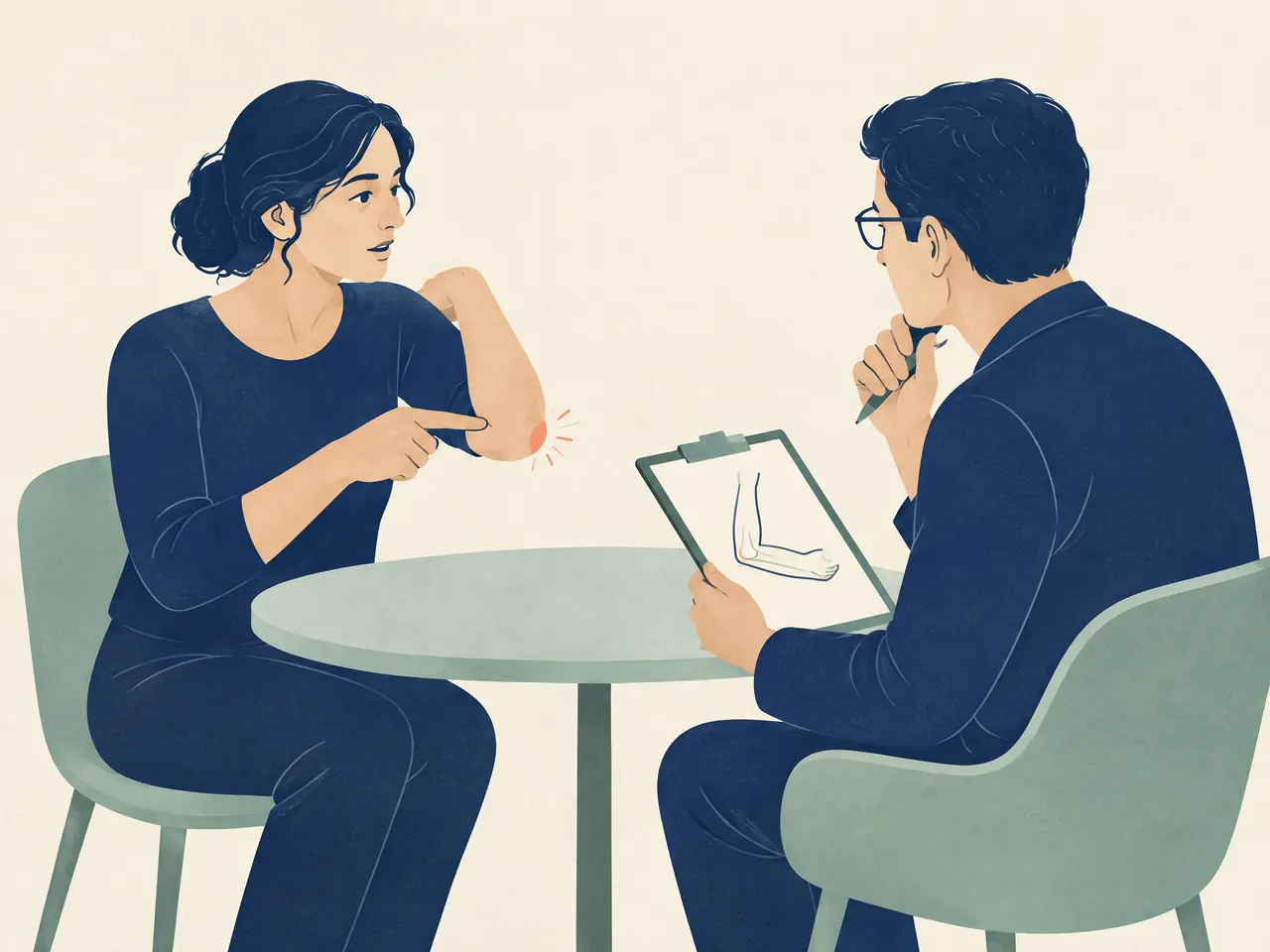
What happens during acupuncture for elbow pain? — Examination, positioning and needle care | Is acupuncture suitable for elbow pain? | What are the alternatives to acupuncture for elbow pain?
A careful appointment is individual rather than a fixed elbow-pain script. The practitioner may ask you to sit or lie in a position that leaves the shoulder and forearm relaxed, then recheck which movements are limited or provoking symptoms. In traditional Chinese medicine, assessment may also include the wider pattern of tension, sleep, activity and general health; this does not remove the need to recognise a possible structural injury. Before a needle is used, you can ask why a particular area has been selected, whether the arm needs to remain still, and what aftercare is planned. Readers seeking a condition-specific explanation can explore acupuncture for tennis elbow, but an online description cannot replace the examination of an individual painful elbow.

What happens during acupuncture for elbow pain? — Sensations, retention and aftercare | Is acupuncture suitable for elbow pain? | What are the alternatives to acupuncture for elbow pain?
People do not all experience needling in the same way. Some notice a brief prick at insertion, then a dull, heavy, tingling or spreading sensation; others notice little. Sensation should be reported rather than silently tolerated, especially if it is sharp, distressing or radiates unexpectedly. After needles are removed, a practitioner may use gentle pressure at the sites and discuss the next few hours or days. The useful aftercare conversation returns to the load that caused trouble: whether to pause a painful grip, alter a workstation, avoid a demanding gym movement temporarily, or seek physiotherapy. Keep a simple note of which activity affected symptoms and whether there was bruising, skin reaction or a new concern. This makes a follow-up more informative than a vague report that the elbow was ‘better’ or ‘worse’.
What are the alternatives to acupuncture for elbow pain? — Choosing supportive next steps | Is acupuncture suitable for elbow pain? | What happens during acupuncture for elbow pain?
The best alternative to acupuncture is not always another treatment; sometimes it is a more appropriate next assessment. If symptoms follow a forceful injury, the arm looks different, movement is severely limited, or there is numbness, medical review takes priority. A hot, swollen joint with fever or feeling unwell also needs prompt medical attention because joint infection is among the causes flagged in NHS guidance [1]. For a non-urgent but stubborn problem, a clinician or physiotherapist can help clarify the diagnosis and rebuild tolerance for the activities that matter. Pain that has not settled after a few weeks is another reason to seek clinical advice rather than repeatedly trying the same self-care approach [1].
For many overuse presentations, the practical choice is a combination: reduce the movement that triggers symptoms, maintain comfortable general movement, work on graded strengthening when appropriate, and choose symptom relief carefully with a healthcare professional. A strap or brace, medicine advice, heat or cold, and a physiotherapy programme may be discussed depending on the person and diagnosis. The comparison is not a contest between traditions. If you are weighing is acupuncture better than physiotherapy for tennis elbow, focus on the function you want back and the intervention that addresses the limiting factor. Acupuncture may sit alongside a plan; it should not distract from rehabilitation, load management or investigation when those are indicated.

What are the alternatives to acupuncture for elbow pain? — Physiotherapy, medical review and protection | Is acupuncture suitable for elbow pain? | What happens during acupuncture for elbow pain?
Physiotherapy can be particularly helpful when the main issue is how the elbow copes with work, sport or repetitive household tasks. A programme may look at the wrist, forearm, shoulder and task demands rather than treating the elbow in isolation. Its value is not that everyone receives the same exercises; it is that loading can be progressed or reduced according to symptoms, strength and goals. Medical review is the safer alternative when the diagnosis is unclear or warning signs are present, and imaging may be considered by the appropriate clinician when it would change management. Protection can also be active: changing the size of a grip, sharing a lifting task, taking short breaks or adjusting a keyboard and mouse setup may reduce repeated provocation. None of these measures should be read as a diagnosis or a guarantee of recovery.

What are the alternatives to acupuncture for elbow pain? — Tui Na, cupping and personalised discussion | Is acupuncture suitable for elbow pain? | What happens during acupuncture for elbow pain?
Some people who do not want needles ask about Tui Na, cupping or a Chinese herbal consultation. These options also require a discussion of the pain history, skin condition, medicines and the reason treatment is being considered. They are not workarounds for an arm that needs urgent medical evaluation, and they do not repair a suspected fracture or a torn ligament. It is reasonable to ask what a proposed approach is intended to support, what marks or short-term sensations could occur, and how it will fit with physiotherapy or medical advice already in place. The related question Can acupuncture repair an elbow injury? is especially important when a person is tempted to postpone assessment after trauma. A personalised plan should leave room to change course if symptoms evolve.
Care and health guide
Pain-care information
This directory brings together services, reading, and visit information related to pain care, to help you prepare questions for a consultation.
When pain care affects your day, noting when it occurs, its relation to activity, and what you have already tried can help prepare a consultation; Chinese medicine pain management Hong Kong is a relevant service or reading entry point.
Individual circumstances differ, and acupuncture Hong Kong offers related information to help you understand options and prepare questions.


Your questions, answered
Frequently asked questions
Is acupuncture suitable for elbow pain if I cannot fully straighten my arm?
Restricted movement needs assessment before treatment is chosen. Explain when it began, whether it followed an injury, and whether there is swelling, numbness or severe pain. If the arm is difficult to move after an injury, looks deformed, or has tingling or numbness, seek prompt medical assessment rather than relying on acupuncture.
What happens during acupuncture for elbow pain at a first visit?
A first visit should begin with questions about symptoms, movement, relevant health history and current treatment, followed by an examination. If acupuncture is appropriate and agreed, the arm is positioned comfortably, selected skin areas are prepared, and needles are placed according to the individual assessment. Ask about hygiene, expected sensations and aftercare before treatment starts.
Does acupuncture fix tennis elbow or a torn elbow ligament?
Acupuncture should not be presented as a way to repair a torn ligament, fracture or other serious structural injury. For tennis-elbow-type symptoms, it may be discussed as one supportive modality, often alongside activity changes and rehabilitation. A clinical assessment is needed to decide what is causing the pain and which care is appropriate.
What are the alternatives to acupuncture for elbow pain if I dislike needles?
Alternatives depend on the cause and severity. They can include medical review, physiotherapy, modifying the painful task, a brace or support where advised, and medication guidance from a suitable healthcare professional. Some people also ask about Tui Na or cupping, but these still require screening and do not replace urgent care when warning signs are present.
Sources and further information
- [1] NHS: Elbow and arm pain
Referenced for: Possible causes of elbow and arm pain, self-care framing, and urgent or non-urgent escalation signs.
- [2] UCLA Health: Can acupuncture ease the pain of tennis elbow?
Referenced for: Context on acupuncture as one of several modalities for tennis elbow and the limits of sustained-effect evidence discussed in the article.
- [3] NCCIH: Acupuncture: What You Need To Know
Referenced for: Needle safety, single-use sterile needles, and the importance of discussing complementary care with healthcare providers.