
TCM Lab · Health reading
Sudden Low Back Pain, New Onset Low Back Pain and Sciatica and Low Back Pain Explained
Published Updated
A sudden catch in the lower back after lifting a suitcase, turning out of a car, or simply getting out of bed can be alarming. New onset low back pain is often related to a short-lived strain or spasm, but the pattern matters more than the trigger alone. Pain that travels from the buttock into a leg can occur with sciatica and low back pain. This page helps you record useful details, recognise symptoms that need urgent assessment, and choose sensible next steps in Hong Kong.
Appointments are confirmed through WhatsApp. If you have language requirements, please mention them in your enquiry.
The short answer
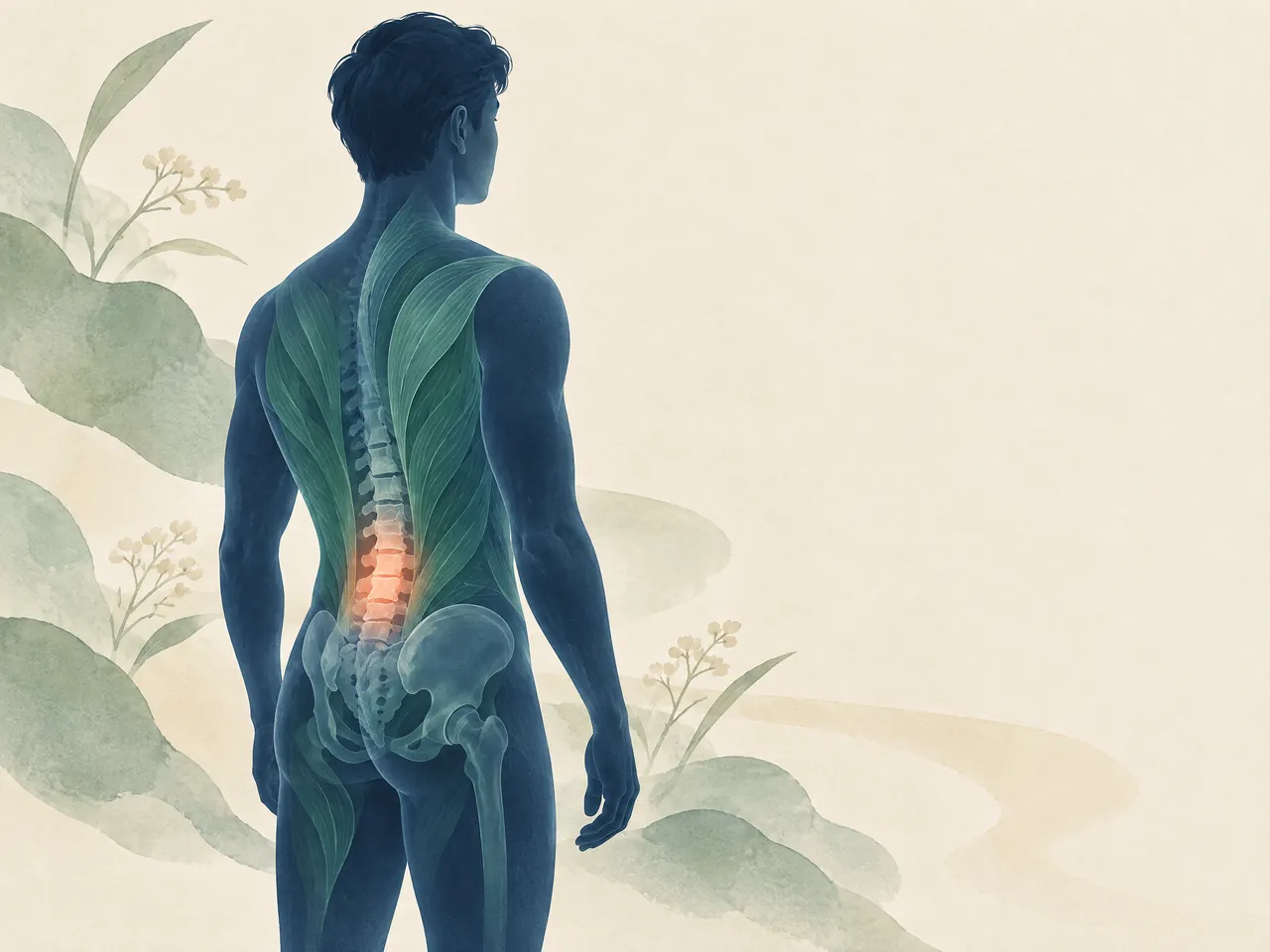
Sudden low back pain can follow a strain, muscle spasm, awkward movement, disc-related problem, or another cause; sometimes there is no single explanation. New onset low back pain that stays local is different from pain with new leg weakness, altered saddle-area sensation, or bladder or bowel changes. Seek urgent medical help for those warning signs, fever or feeling unwell, chest pain, or pain after major trauma. Otherwise, keep a clear symptom record and arrange appropriate assessment if it is severe, persistent, or limiting daily life.
Transparent pricing
See the fees.
Choose your care.
Explore our complete official price list, including first-trial prices, regular prices, packages and branch-specific options.
Opening WhatsApp prepares an enquiry; it does not send a message, take payment or confirm an appointment. Suitability and individual arrangements are confirmed during consultation.
Pain care
All prices in HKDExtracorporeal shockwave treatment
Shockwave treatment for deep-tissue and fascial care. The Kwun Tong clinic offers the multi-area options shown below.
Priced by branch
Branch-specific pricing
Prince Edward: HK$250 per area
Kwun Tong: HK$250 for 1 area / HK$450 for 2 areas / HK$600 for 3 areas
Pain care (manual therapy)
Includes Chinese medicine musculoskeletal assessment, manual joint techniques and tui na.
HK$580 (single session)
Chinese medicine musculoskeletal assessment
Pain care (acupuncture and manual therapy)
Combines acupuncture and manual therapy.
HK$680 (single session)
Combined care
Hair and scalp
All prices in HKDScalp health and hair-loss management
Includes AI scalp analysis, deep scalp and follicle cleansing, and scalp oil-control care.
HK$380 (first trial)
Regular price: HK$680
- 6 sessions: HK$3,480 (HK$580 per session)
- 12 sessions: HK$5,760 (HK$480 per session)
- 20 sessions: HK$8,600 (HK$430 per session)
- 30 sessions: HK$11,400 (HK$380 per session)
Hair acupuncture and Chinese herbal medicine package
Includes scalp acupuncture and 3 days of Chinese herbal medicine that does not require decoction.
HK$580 (single session)
Registered Chinese Medicine Practitioner consultation
- 6 sessions: HK$3,180 (HK$530 per session)
- 12 sessions: HK$5,760 (HK$480 per session)
- 20 sessions: HK$8,600 (HK$430 per session)
- 30 sessions: HK$11,400 (HK$380 per session)
Combined hair and scalp treatment
Combines acupuncture and Chinese herbal medicine with salon-level scalp and follicle care. Packages include complimentary hair-care shampoo and serum.
HK$1,260 (single session)
Combined treatment
- 8 sessions: HK$8,640 (HK$1,080 per session)
- 16 sessions: HK$15,680 (HK$980 per session)
- 20 sessions: HK$18,600 (HK$930 per session)
- 30 sessions: HK$26,400 (HK$880 per session)
Weight management
All prices in HKDFull-body acupoint embedding for weight management
Includes full-body acupoint embedding. Packages include complimentary Chinese herbal medicine for weight management, with the number of included days scaled to the package. Embedding material and the individual treatment arrangement are confirmed during consultation; this is not a cosmetic thread lift.
HK$980 (single session)
No trial session
- 10 sessions: HK$7,800 (HK$780 per session)
- 20 sessions: HK$14,600 (HK$730 per session)
- 30 sessions: HK$20,400 (HK$680 per session)
Facial acupuncture
All prices in HKDFacial acupuncture (basic)
Includes facial acupuncture and meridian-based facial care, including care for facial puffiness.
HK$480 (first trial)
Regular price: HK$680
- 10 sessions: HK$5,200 (HK$520 per session)
- 20 sessions: HK$9,600 (HK$480 per session)
- 30 sessions: HK$13,500 (HK$450 per session)
Facial acupuncture (advanced)
Includes enhanced facial acupuncture with a specially formulated moisturising mask and serum.
HK$780 (first trial)
Regular price: HK$1,180
- 10 sessions: HK$9,000 (HK$900 per session)
- 20 sessions: HK$16,600 (HK$830 per session)
- 30 sessions: HK$23,400 (HK$780 per session)
Chinese medicine
All prices in HKDAcupuncture and Chinese herbal medicine package
Includes a Chinese medicine consultation with pulse assessment, body acupuncture and 3 days of Chinese herbal granules that do not require decoction.
HK$580 (single session)
Chinese medicine consultation with pulse assessment
Sudden Low Back Pain, New Onset Low Back Pain and Sciatica and Low Back Pain: Recognising the Pattern
Sudden low back pain describes timing, not a diagnosis. It may begin with a sharp pull, a tightening spasm, a stiff feeling on waking, or discomfort that steadily builds after sitting or standing in one position. The lower back carries everyday load, so a small change in bending, carrying, sleep position, training, or work routine can coincide with a flare. Acute low back pain is often linked to an injury of muscles or ligaments, but a trigger cannot by itself identify the tissue involved [1].
Start by separating the location of pain from its effect. Local low-back ache and guarded movement are one pattern. Pain that moves through a buttock and down the back or side of a leg is another pattern that may be described as sciatica and low back pain. Burning, pins and needles, numbness, or a sense that a foot or leg is weak should be recorded precisely rather than labelled from an online description. For a broader explanation of common triggers, see our guide to acute low back pain causes.
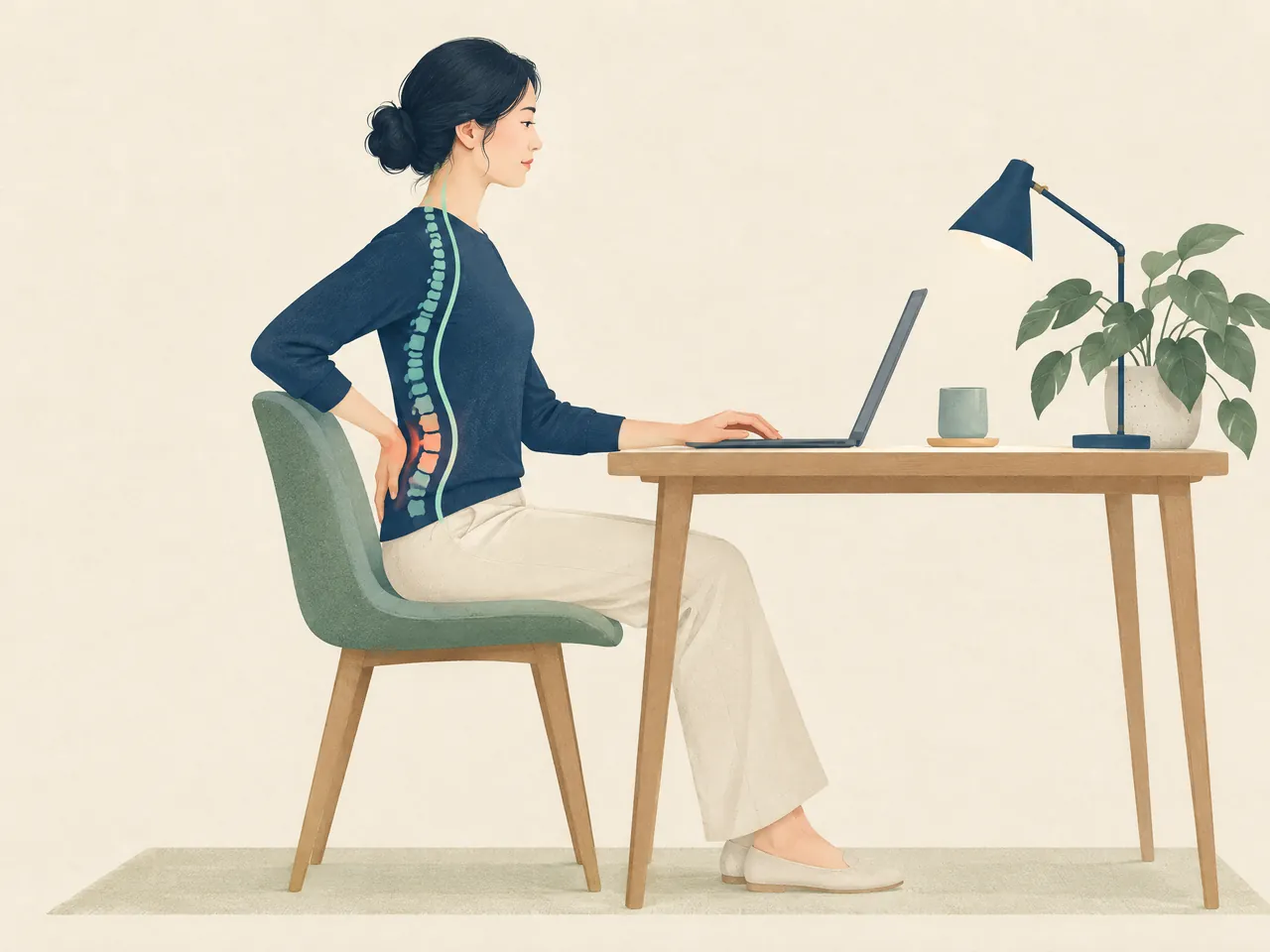
Sudden Low Back Pain, New Onset Low Back Pain and Sciatica and Low Back Pain After Lifting or Turning
A lift or turn can be the moment pain becomes noticeable, particularly when the load is held away from the body or the trunk twists at the same time. It can also reveal irritation that had been building through repetitive tasks, long commutes, poor sleep, or a new activity. Do not assume that a painful ‘pop’ proves a disc injury, or that no memorable movement means nothing physical is happening. Instead, note the task, load, direction of movement, immediate symptoms, and what happened over the next day. This practical detail is more useful at an assessment than trying to diagnose yourself from the trigger.
Sudden Low Back Pain, New Onset Low Back Pain and Sciatica and Low Back Pain Symptom Notes
Keep a short, factual diary for several days. Include pain location, whether it is sharp, dull, cramping, burning, or electric, and whether coughing, sitting, walking, bending, or lying down changes it. Record sleep interruption, ability to put on shoes, walk, work, and use stairs. Also record medicines and other care already tried, including any change after heat or cold. A focused note helps a GP, physiotherapist, or Chinese medicine practitioner understand the episode without treating the pain score as the whole story.
Try to describe change over time rather than only the worst moment. For example, note whether a brief walk loosens stiffness or whether sitting makes leg symptoms appear, whether pain stays above the knee or continues further down, and whether a familiar task now needs support or more time. If you work at a desk, record the duration before you need to change position. If you do physical work, note the specific reach, carry, push, pull, or rotation that is difficult. This information supports a more useful conversation about temporary adjustments and a return to normal routines.
Compare your options
| Pattern or change | Useful details to record | Appropriate next step |
|---|---|---|
| Local pain after lifting or turning | Task, load, movement, pain location, and whether it settles with a change of position | Reduce provoking load briefly, keep gently active as tolerated, and arrange assessment if it is severe, persistent, or limiting |
| Pain into buttock or leg | Side, route below the knee, tingling, numbness, weakness, and walking tolerance | Seek timely clinical assessment, especially if neurological symptoms are new or progressing |
| Fever, feeling unwell, or rapidly worsening severe pain | Temperature symptoms, onset, recent infection, injury, and relevant medical history | Obtain urgent medical advice rather than relying on self-care alone |
| Both-leg symptoms, saddle-area sensory change, bladder or bowel change, chest pain, or major trauma | Exact change and when it started; do not delay to complete a diary | Seek emergency assessment now [3] |
On smaller screens, scroll the table sideways to compare all columns.
Sudden Low Back Pain, New Onset Low Back Pain and Sciatica and Low Back Pain: Causes and Red Flags
Many new episodes are called non-specific low back pain because a single precise structure cannot be confirmed, even after a careful history and examination. That does not mean the pain is unreal or that a person should ignore it. Strain or tears in supporting muscles or ligaments, muscle spasm, herniated disc, spinal narrowing, fracture, and sciatica all appear among possible causes in NIH patient information [1]. Clinicians also consider whether symptoms suggest infection, inflammatory disease, cancer, or trauma [2].
A safe response is based on change and context. Pain that is preventing ordinary life, persists despite sensible self-management, becomes worse at night, or comes with unexplained weight loss, swelling, or a change in the back’s shape warrants medical review [3]. The table below is a preparation aid, not a tool for deciding that a serious cause is absent. If you are unsure how urgent a symptom is, seek clinical advice rather than waiting for a perfect match to an online list.

Sudden Low Back Pain, New Onset Low Back Pain and Sciatica and Low Back Pain From Strain or Structure
A strain pattern may feel close to the spine or across one side of the low back, with pain when rising, rolling in bed, or changing position. A structural or nerve-related problem can also produce back pain, but it may include a clearer leg component, altered sensation, or weakness. These descriptions overlap, and neither pain severity nor a single movement confirms the cause. If you are comparing your experience with low back pain muscle strain or herniated disc symptoms in the lower back, use the comparison to prepare questions, not to replace an examination.
Sudden Low Back Pain, New Onset Low Back Pain and Sciatica and Low Back Pain Warning Signs
Seek emergency assessment now if back pain comes with numbness, tingling, weakness, or loss of feeling in both legs; loss of sensation around the genitals or anus; new bladder or bowel difficulty or incontinence; chest pain; or follows a serious accident. The NHS also advises urgent help for severe pain that starts suddenly or worsens quickly, especially if you feel hot, cold, shivery, or generally unwell [3]. These are not symptoms to observe at home while arranging a routine complementary-care visit.
There is an important difference between pain that is unpleasant and pain accompanied by a new loss of function or a whole-body symptom. A person may still be able to move despite a serious concern, so do not use the ability to walk as a reason to dismiss altered saddle sensation or bladder and bowel changes. Similarly, an ordinary-looking back does not rule out a problem when pain occurs after major trauma or with fever. Tell the urgent-care team exactly when the change began and take your medication list if possible.
Sudden Low Back Pain, New Onset Low Back Pain and Sciatica and Low Back Pain: Assessment and Self-Care
For a non-emergency episode, an assessment usually begins with what changed, where the symptoms travel, and how they affect walking, work, sleep, and self-care. Relevant medical history, previous episodes, recent injury, fever, unintentional weight loss, pregnancy, medicines, and any existing scan or clinician advice all matter. NICE recommends advice tailored to a person’s needs and capabilities, including encouragement to continue normal activity, and says that routine imaging is not generally offered outside specialist settings [2].
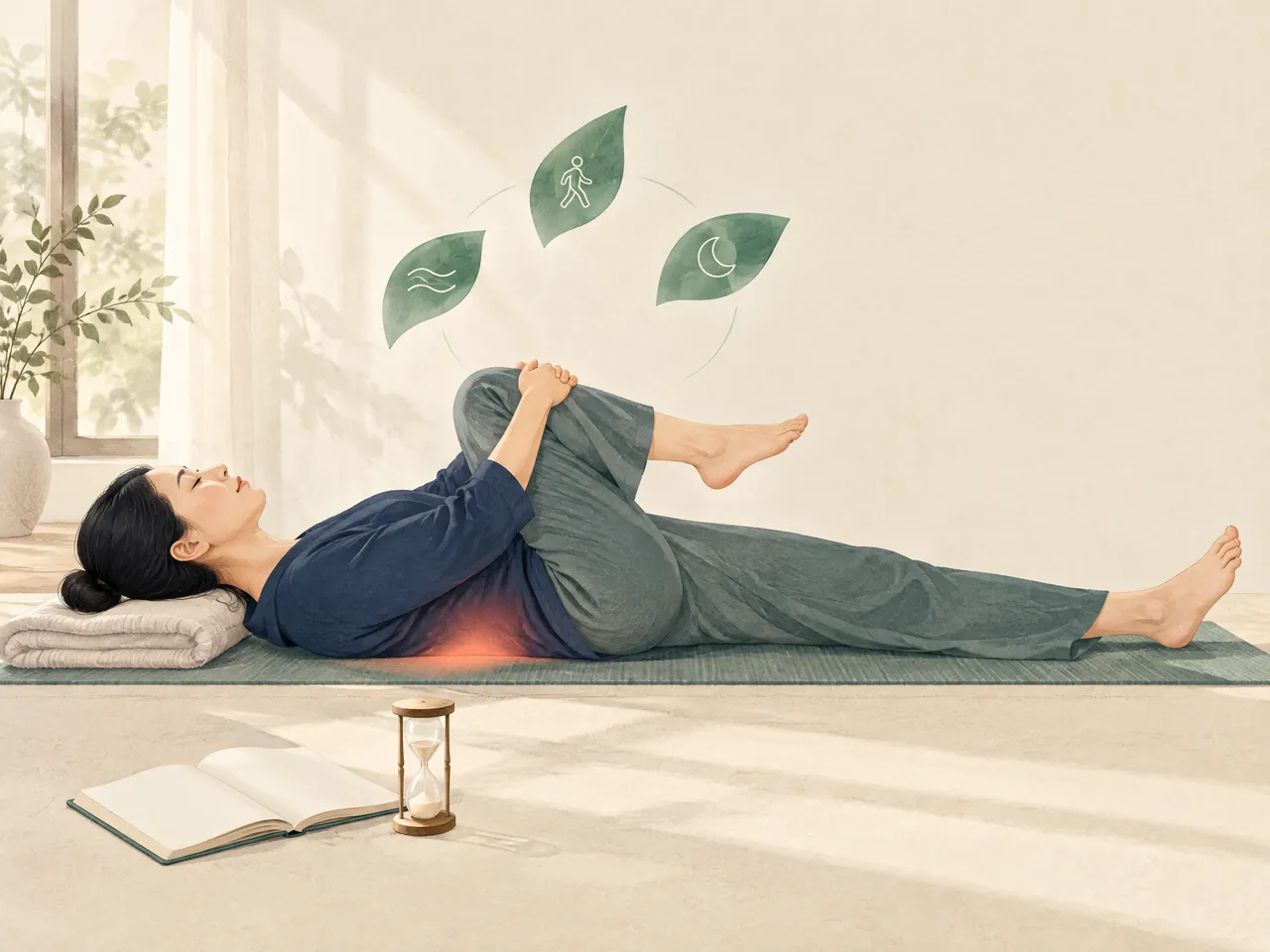
The immediate goal is not to force a normal day through escalating pain, nor to become completely still. Break a task into tolerable portions: stand and walk briefly after sitting, use both hands for light loads, and postpone heavy lifting, repeated twisting, or a new intense workout while the pain is highly irritable. Reconsider the plan if symptoms spread, weakness appears, or normal function is declining. A clinician can help decide when a graded return to particular duties or exercise is appropriate.

Sudden Low Back Pain, New Onset Low Back Pain and Sciatica and Low Back Pain in a Chinese Medicine Assessment
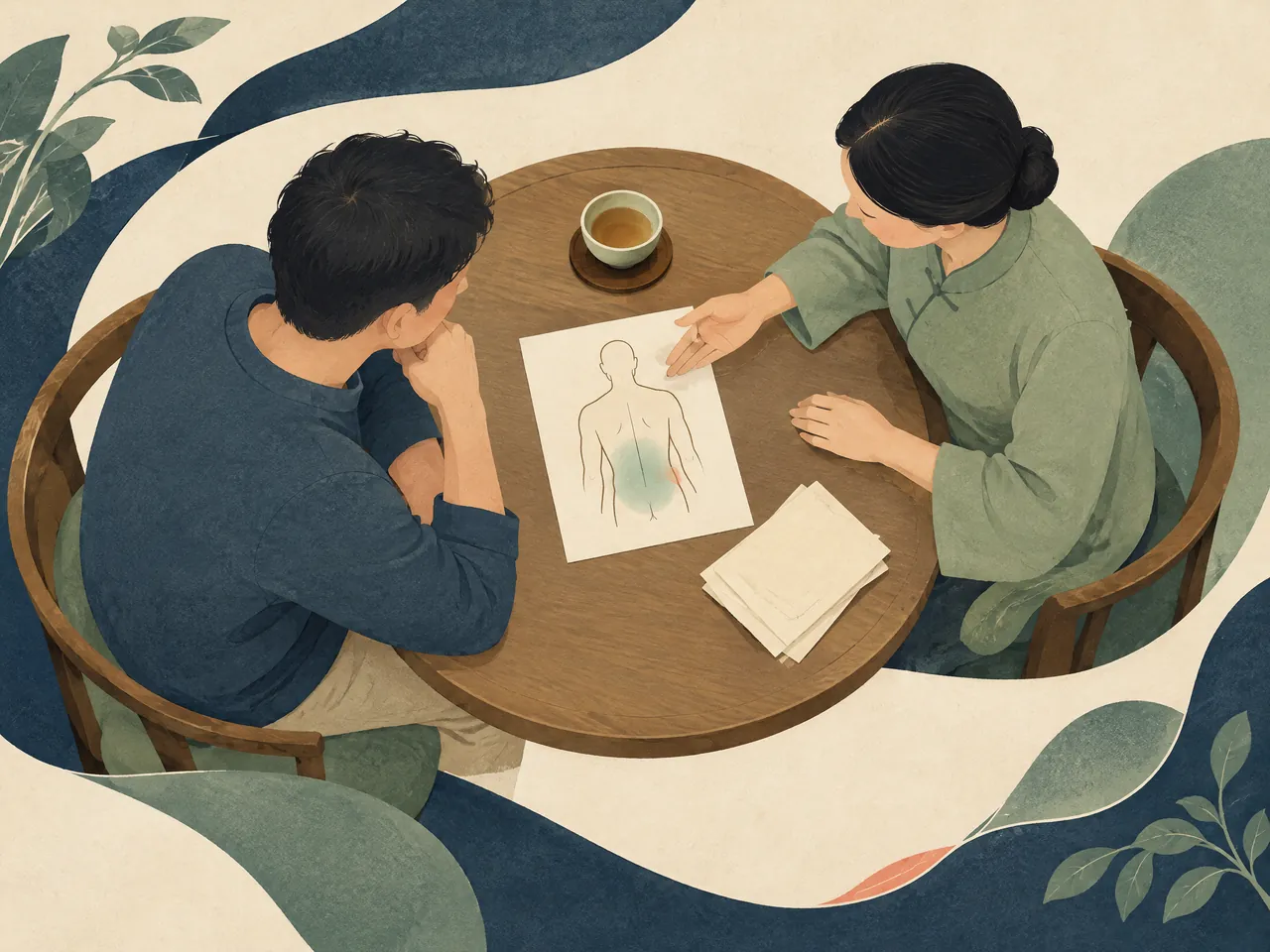
A registered Chinese medicine practitioner can take a full history of the pain episode alongside sleep, appetite, energy, mood, medical conditions, and current medicines, then discuss whether Chinese medicine care is appropriate alongside conventional assessment. Traditional pattern terms, such as cold-dampness, qi stagnation and blood stasis, are part of a Chinese medicine approach; they are not modern medical diagnoses and should not be used to dismiss neurological or systemic warning signs. Bring referral letters, imaging reports, and a medication list if available. A consultation should make room for questions about goals, risks, and coordination with other care.

Sudden Low Back Pain, New Onset Low Back Pain and Sciatica and Low Back Pain Activity Management
Avoid prolonged bed rest unless a treating clinician has given a specific reason. NHS guidance encourages staying active and continuing daily activities as able, while avoiding long periods in bed [3]. Choose a small amount of comfortable movement, such as a short indoor walk or changing position regularly, rather than testing how far you can push through pain. Stop an exercise that clearly worsens symptoms and seek advice if the reaction does not settle. Gentle progression should be based on function: getting up, dressing, walking, and returning to ordinary responsibilities with fewer compensations.
Heat and cold are comfort measures, not tests of the cause. A wrapped cold pack may feel preferable when an area feels newly sore; a wrapped heat pack may feel better for stiffness or spasm. Protect the skin and stop if either makes symptoms worse. Our pages on heat or ice for lower back pain and heat therapy for back pain explain how to think about these options without promising a cure. Do not use temporary relief as a reason to ignore worsening leg symptoms or red flags.
At work or home, change the task before repeatedly testing a painful movement. Bring frequently used items closer, ask for help with an awkward load, divide carrying into smaller trips, and turn your feet instead of twisting through the trunk when possible. These are temporary workload adjustments, not a diagnosis or a fixed rehabilitation plan. If work duties cannot be changed, explain the functional limit to an appropriate clinician so advice can be tailored to the role rather than copied from a generic exercise routine.
Acupuncture may be something to discuss after an individual assessment, but it is not a substitute for urgent care or a guaranteed answer to sudden pain. NICE’s current guideline says not to offer acupuncture for managing low back pain with or without sciatica [2]. If you are considering any treatment, ask how it fits with activity, medical assessment, and your own priorities. Keep your GP or other treating professional informed, especially if symptoms evolve or you are taking medicines that affect bleeding, pain, or other health conditions.
Care and health guide
Sciatica: care information
This directory brings together services, reading, and visit information related to sciatica, to help you prepare questions for a consultation.
When sciatica affects your day, noting when it occurs, its relation to activity, and what you have already tried can help prepare a consultation; acupuncture for sciatica is a relevant service or reading entry point.
Individual circumstances differ, and acupuncture Hong Kong offers related information to help you understand options and prepare questions.


Your questions, answered
Frequently asked questions
What commonly causes sudden low back pain?
A sudden episode can be related to a muscle or ligament strain, spasm, a disc-related problem, nerve irritation, or another condition. A trigger such as lifting is a clue, not proof of the cause. If the pattern is unusual for you, severe, or not improving, arrange clinical assessment.
Is new onset low back pain with leg pain always a herniated disc?
No. Pain travelling into a leg can occur in sciatica and low back pain, but symptoms overlap and need an individual history and examination. New or worsening weakness, numbness, or difficulty walking should not be self-diagnosed from a web page.
Should I rest in bed when my lower back suddenly hurts?
Long periods of bed rest are generally not advised for uncomplicated back pain. Within comfortable limits, continue gentle movement and daily activity, while temporarily avoiding heavy lifting or movements that clearly aggravate symptoms. Stop and seek advice if symptoms worsen or red flags develop.
Can Chinese medicine guarantee relief for sudden low back pain?
No treatment should promise to cure every episode. Chinese medicine may be discussed as a supportive option after an individual assessment, but it does not replace medical assessment for warning signs, neurological symptoms, systemic illness, or significant trauma.
Sources and further information
- [1] MedlinePlus: Low back pain - acute
Referenced for: NIH National Library of Medicine patient information supporting possible acute low-back-pain causes, symptom descriptions, and reasons to seek prompt care.
- [2] NICE: Low back pain and sciatica in over 16s
Referenced for: Clinical guideline supporting assessment considerations, non-routine imaging in non-specialist settings, activity and self-management guidance, and its acupuncture recommendation.
- [3] NHS: Back pain
Referenced for: NHS patient guidance supporting urgent and emergency warning signs and advice to remain active rather than stay in bed for long periods.