
TCM Lab · Health reading
Back Pain Symptoms, Low Back Pain Red Flags and Low Back Pain Self-Care
Published Updated
Back pain is not one single experience. It may feel like a local ache after sitting, a sharp catch while turning, or pain that travels through the buttock and into a leg. The details that accompany it are what make a safer next step possible. Record when it began, what changed beforehand, what you can and cannot do, and whether numbness, weakness, fever, injury, chest pain, bladder or bowel changes are present. This guide explains how to describe back pain symptoms, recognise low back pain red flags, and use cautious low back pain self-care when urgent assessment is not indicated.
Appointments are confirmed through WhatsApp. If you have language requirements, please mention them in your enquiry.
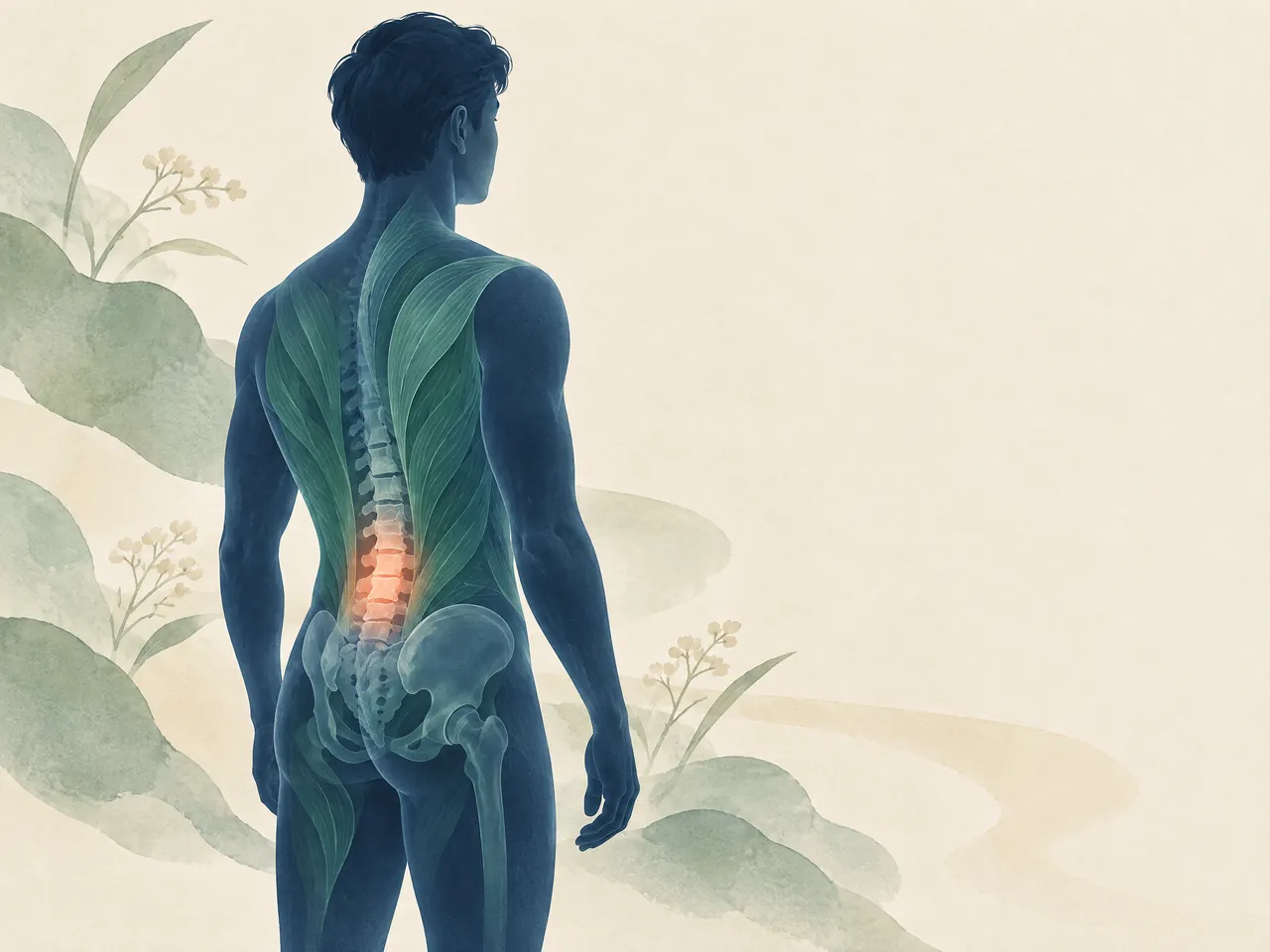
The short answer
Back pain symptoms can include local stiffness, aching, a sharp pain with movement, or pain, tingling, numbness or weakness reaching the buttock or leg. Seek urgent medical assessment rather than self-care for symptoms such as new bladder or bowel changes, altered sensation around the genitals or anus, symptoms in both legs, chest pain, serious trauma, fever with feeling unwell, or rapidly worsening severe pain. When these are absent, gentle movement, pacing and carefully wrapped heat or cold may be reasonable comfort measures.
Transparent pricing
See the fees.
Choose your care.
Explore our complete official price list, including first-trial prices, regular prices, packages and branch-specific options.
Opening WhatsApp prepares an enquiry; it does not send a message, take payment or confirm an appointment. Suitability and individual arrangements are confirmed during consultation.
Pain care
All prices in HKDExtracorporeal shockwave treatment
Shockwave treatment for deep-tissue and fascial care. The Kwun Tong clinic offers the multi-area options shown below.
Priced by branch
Branch-specific pricing
Prince Edward: HK$250 per area
Kwun Tong: HK$250 for 1 area / HK$450 for 2 areas / HK$600 for 3 areas
Pain care (manual therapy)
Includes Chinese medicine musculoskeletal assessment, manual joint techniques and tui na.
HK$580 (single session)
Chinese medicine musculoskeletal assessment
Pain care (acupuncture and manual therapy)
Combines acupuncture and manual therapy.
HK$680 (single session)
Combined care
Hair and scalp
All prices in HKDScalp health and hair-loss management
Includes AI scalp analysis, deep scalp and follicle cleansing, and scalp oil-control care.
HK$380 (first trial)
Regular price: HK$680
- 6 sessions: HK$3,480 (HK$580 per session)
- 12 sessions: HK$5,760 (HK$480 per session)
- 20 sessions: HK$8,600 (HK$430 per session)
- 30 sessions: HK$11,400 (HK$380 per session)
Hair acupuncture and Chinese herbal medicine package
Includes scalp acupuncture and 3 days of Chinese herbal medicine that does not require decoction.
HK$580 (single session)
Registered Chinese Medicine Practitioner consultation
- 6 sessions: HK$3,180 (HK$530 per session)
- 12 sessions: HK$5,760 (HK$480 per session)
- 20 sessions: HK$8,600 (HK$430 per session)
- 30 sessions: HK$11,400 (HK$380 per session)
Combined hair and scalp treatment
Combines acupuncture and Chinese herbal medicine with salon-level scalp and follicle care. Packages include complimentary hair-care shampoo and serum.
HK$1,260 (single session)
Combined treatment
- 8 sessions: HK$8,640 (HK$1,080 per session)
- 16 sessions: HK$15,680 (HK$980 per session)
- 20 sessions: HK$18,600 (HK$930 per session)
- 30 sessions: HK$26,400 (HK$880 per session)
Weight management
All prices in HKDFull-body acupoint embedding for weight management
Includes full-body acupoint embedding. Packages include complimentary Chinese herbal medicine for weight management, with the number of included days scaled to the package. Embedding material and the individual treatment arrangement are confirmed during consultation; this is not a cosmetic thread lift.
HK$980 (single session)
No trial session
- 10 sessions: HK$7,800 (HK$780 per session)
- 20 sessions: HK$14,600 (HK$730 per session)
- 30 sessions: HK$20,400 (HK$680 per session)
Facial acupuncture
All prices in HKDFacial acupuncture (basic)
Includes facial acupuncture and meridian-based facial care, including care for facial puffiness.
HK$480 (first trial)
Regular price: HK$680
- 10 sessions: HK$5,200 (HK$520 per session)
- 20 sessions: HK$9,600 (HK$480 per session)
- 30 sessions: HK$13,500 (HK$450 per session)
Facial acupuncture (advanced)
Includes enhanced facial acupuncture with a specially formulated moisturising mask and serum.
HK$780 (first trial)
Regular price: HK$1,180
- 10 sessions: HK$9,000 (HK$900 per session)
- 20 sessions: HK$16,600 (HK$830 per session)
- 30 sessions: HK$23,400 (HK$780 per session)
Chinese medicine
All prices in HKDAcupuncture and Chinese herbal medicine package
Includes a Chinese medicine consultation with pulse assessment, body acupuncture and 3 days of Chinese herbal granules that do not require decoction.
HK$580 (single session)
Chinese medicine consultation with pulse assessment
Back Pain Symptoms: Low Back Pain Red Flags and Low Back Pain Self-Care Basics
A useful description starts with the pattern, not just the word “backache.” Low back pain commonly means pain between the lower edge of the ribs and the buttock. It may be dull, tight, burning or sharp, and it can limit getting out of a chair, putting on shoes, walking, sleeping or concentrating at work. Pain may also radiate into a leg. The World Health Organization notes that numbness, tingling or weakness can occur with spine-related leg pain, which is why the presence and distribution of those symptoms are worth recording rather than brushing aside. [1]
Begin a short symptom log before choosing any remedy. Note the date and time, whether pain followed a lift, twist, fall, prolonged sitting, new training session or appeared without an obvious trigger. Mark the central spot and whether it spreads to a buttock, thigh, calf or foot. Then note what happens with sitting, standing, bending, coughing, turning in bed and walking. This gives a clinician more usable information than a pain score alone, and it helps you notice a changing pattern.
Also record function: Can you stand upright? Are stairs, getting in and out of a taxi, carrying a work bag or sleeping different from usual? Include medicines already tried and relevant conditions such as osteoporosis, cancer history, recent infection or pregnancy. The purpose is not self-diagnosis; it is to make assessment more informed.

Record Back Pain Symptoms Before Choosing Low Back Pain Self-Care, and Check Low Back Pain Red Flags
For a new episode without warning signs, use a “change and function” check once or twice a day. Is the area less guarded? Can you walk a little more comfortably? Has pain begun to spread, or has weakness appeared? A short note distinguishes a stable sore back from a pattern that needs reassessment. It can also prevent the cycle of trying several treatments at once and never knowing which activity, position or measure made symptoms worse.
Low back pain self-care is best kept simple at first. The NHS advises staying active and continuing daily activities as able rather than remaining in bed for long periods. It also describes a wrapped ice pack for pain and swelling and wrapped heat for joint stiffness or muscle spasm. [2] Use either only as a comfort measure: protect the skin, do not sleep on a heat source, and stop if skin discomfort, pain or neurological symptoms increase. If you need advice focused on these options, see Should I use heat or ice for lower back pain?.
How Back Pain Symptoms Relate to Movement, Legs and Low Back Pain Red Flags During Low Back Pain Self-Care
Movement-related pain is common, but movement does not prove a muscle strain. Pain after a difficult lift may coexist with leg symptoms; pain after a quiet day may still need attention if it is severe or worsening. Rather than forcing a stretch or avoiding all movement, choose short, tolerable changes of position. A gentle walk around the home, a brief standing break after desk work, or changing how a bag is carried may be more informative and more manageable than a demanding exercise routine during an acute flare.
Pain, tingling, numbness or weakness in a leg deserves clear wording. Say which side, where it begins and ends, whether it is constant, and whether it affects foot placement, balance or stairs. Symptoms in both legs, progressive weakness, or altered feeling around the genitals or anus are not situations to test with more stretching. These are urgent low back pain red flags. The practical next step is medical assessment, not a home experiment. For broader orientation, our low back pain topic centre links related questions without assuming every leg symptom has one cause.
Compare your options
| Pattern to record | Details that make the description clearer | Safer next step |
|---|---|---|
| Local pain or stiffness | Onset, movement that aggravates it, sitting or standing tolerance, and effect on walking or sleep | Use gentle activity and pacing if there are no warning signs; arrange assessment if it persists or disrupts normal life |
| Pain, tingling or numbness into a leg | Which side, how far it travels, whether it is constant, and any effect on balance, stairs or foot movement | Seek clinical advice, particularly if symptoms are new, spreading or affecting function |
| Weakness, symptoms in both legs, or saddle-area sensation change | Progression, walking safety, and new changes around the genitals or anus | Seek urgent medical assessment rather than continuing low back pain self-care |
| Bladder or bowel change, chest pain, serious trauma, fever or feeling very unwell | When it started, severity, accident details, and relevant medical history | Seek emergency or urgent medical help; do not rely on home remedies |
On smaller screens, scroll the table sideways to compare all columns.
Back Pain Symptoms, Low Back Pain Red Flags and Low Back Pain Self-Care After a Sudden Episode
A sudden episode can be alarming because the body may tighten and normal movements become difficult quickly. Acute low back pain can occur after lifting, a sudden movement, a prolonged position, an injury or sometimes without a memorable event. Muscle and ligament strain are among possible explanations, but other structures and conditions may also be relevant. [3] The safe conclusion is not “it must be a strain”; it is “describe the event and screen for warning signs before deciding how much to manage at home.”
In the first day or two, adapt the task that clearly provokes pain without becoming completely inactive. Divide groceries into lighter loads, avoid twisting while carrying, change position during a long commute and resume ordinary movement gradually. A sudden catch that eases with careful movement differs from pain that rapidly worsens, follows a serious accident, or comes with illness or new neurological change.

If the episode followed a fall, collision or heavy impact, mention that specifically when seeking care. The same is true if there is burning on urination, blood in urine, abdominal symptoms, unexplained weight loss or pain that wakes you persistently at night. These details do not identify the cause by themselves, but they change the questions a clinician may need to ask. A lower-back location is only one part of the picture; our guide to lower back pain can help you organise the everyday language for describing that picture.

Sudden Back Pain Symptoms: Possible Patterns, Low Back Pain Red Flags and Low Back Pain Self-Care
Compare the patterns before choosing a next step. Local soreness that is linked to a movement and gradually allows more comfortable activity may be managed conservatively while monitored. Pain that runs down a leg, causes a foot to feel weak, or changes walking calls for more careful assessment. Fever, chills or feeling generally unwell with back pain should not be explained away as simple overuse. The NHS lists severe pain that starts suddenly or worsens quickly, and systemic illness, among reasons for urgent advice. [2]
If no red flags are present, plan the day around pacing rather than a perfect posture. Alternate brief periods of sitting, standing and slow walking; use the hips and knees when reaching low; keep objects close before lifting; and stop a new activity before symptoms flare sharply. Later, an appropriate clinician or physiotherapist can advise when individual stretching or strengthening is suitable. The Hong Kong Hospital Authority similarly describes assessment from history and physical findings, with imaging used in some circumstances rather than as an automatic first answer. [4]

Why Scans May Not Explain All Back Pain Symptoms, Low Back Pain Red Flags or Low Back Pain Self-Care Needs
An imaging report is a piece of information, not a complete explanation of a person’s pain or function. Some back pain is described as non-specific, meaning a single structural reason cannot be confidently identified. WHO explains that this is the most common presentation and that care should be tailored through a comprehensive clinical assessment. [1] A report should therefore be interpreted alongside where symptoms travel, the neurological examination, functional limitation and the timeline, rather than used alone to declare a diagnosis.
This matters in both directions. A scan finding does not tell you to ignore new weakness, bladder or bowel change, fever, chest pain or serious trauma. Conversely, a scan is not the only route to a sensible plan for every uncomplicated episode. Ask what question the test is meant to answer, what the result would change, and which symptoms should trigger faster review. If you are comparing routes of support after a medical screen, Hong Kong low back pain care outlines considerations for discussing care options in the local setting.
Back Pain Symptoms, Low Back Pain Red Flags and Low Back Pain Self-Care: When to Seek Help
Escalate urgently when the symptom pattern suggests that waiting is unsafe. Immediate emergency assessment is appropriate for back pain with numbness, tingling, weakness or pain in both legs; loss of feeling around the genitals or anus; new difficulty passing urine; loss of bladder or bowel control; chest pain; or symptoms after a serious accident. [2] These features can signal conditions that need prompt medical evaluation. They are not problems to manage first with heat, cold, massage, acupuncture, exercise videos or online advice.
Seek timely medical advice as well if you feel feverish, hot, cold or shivery, are generally unwell, have unexplained weight loss, a lump or change in back shape, pain that is worse at night, or pain that is rapidly worsening. The Hospital Authority also flags fever of unknown origin, marked weight loss, appetite loss and organ-related symptoms as reasons to seek medical advice. [4] If you are unsure whether a symptom counts, err toward contacting an appropriate medical service and state the exact change you noticed.

Not every episode needs emergency care, but persistent or disabling pain should be assessed. Arrange help if home measures have not brought improvement over a few weeks, daily work or sleep is substantially affected, or you are worried about the change. Take symptom notes, medicines, allergies, previous injuries and imaging reports to support a clearer conversation about rehabilitation, physiotherapy or other options.
Urgent Low Back Pain Red Flags Alongside Back Pain Symptoms That Should Not Wait for Low Back Pain Self-Care
Think of red flags as a combination of symptoms and context, not a checklist to minimise. A new saddle-area sensation change or bladder and bowel change needs urgent attention even if the back pain itself seems modest. A serious crash or fall changes the threshold for assessment. So do progressive leg weakness, inability to walk safely, or pain accompanied by chest pain or a severe systemic illness. Communicate the onset time, whether symptoms are getting worse, and any recent trauma or medical history when you seek help.
Avoid driving yourself if pain, weakness, numbness or an emergency symptom makes that unsafe. Ask for emergency assistance or a safe ride. Do not delay to finish work, wait for a clinic slot or test another heat pack. Once urgent causes have been addressed, a clinician can discuss rehabilitation, monitored activity or another pathway without overlooking the warning signs.

Discussing Low Back Pain Self-Care After Reviewing Back Pain Symptoms and Low Back Pain Red Flags
For a non-urgent consultation, prepare a concise opening: “The pain began after…; it is here…; it travels to…; I notice numbness or weakness…; and these activities are now difficult.” Say whether symptoms affect one or both legs and whether there have been any bladder, bowel, fever, trauma or chest symptoms. If considering Chinese medicine as part of a wider plan, share existing diagnoses, medicines, supplements and any neurological symptoms first. It should not replace the medical assessment indicated by red flags.
TCM Lab can receive an enquiry about a low-back-pain consultation after appropriate urgent issues have been screened. You may ask about an appointment at the Kwun Tong Chinese medicine clinic or the Chinese medicine clinic Prince Edward, and explain your symptoms and language needs by WhatsApp before arrangements are confirmed. Bring the information gathered above so that the discussion begins with your actual pattern, limits and care already received, not an assumption based on one painful spot.
Care and health guide
Low back discomfort: care information
This directory brings together services, reading, and visit information related to low back discomfort, to help you prepare questions for a consultation.
When low back discomfort affects your day, noting when it occurs, its relation to activity, and what you have already tried can help prepare a consultation; acupuncture for low back pain is a relevant service or reading entry point.
Individual circumstances differ, and acupuncture Hong Kong offers related information to help you understand options and prepare questions.


Your questions, answered
Frequently asked questions
Are sudden back pain symptoms always a muscle strain?
No. A strain or muscle spasm is one possible explanation, especially after an awkward movement or lift, but discs, joints, nerves, fractures, referred pain and other conditions can also be relevant. Note the trigger and associated symptoms, and seek assessment promptly if red flags are present.
What low back pain red flags need urgent medical assessment?
Urgent assessment is needed for new bladder or bowel changes, altered sensation around the genitals or anus, pain, numbness, tingling or weakness in both legs, progressive weakness, chest pain, serious trauma, or severe pain that starts suddenly or rapidly worsens. Fever with feeling unwell also needs prompt medical advice.
What low back pain self-care is reasonable when there are no warning signs?
Keep gently active within a tolerable range and avoid prolonged bed rest. Pace ordinary activities, vary position, and consider a wrapped cold pack for pain or swelling or wrapped warmth for stiffness or spasm if comfortable. Stop an activity or measure if symptoms worsen, and seek assessment if function is not improving.
Why might a clinician not order a scan immediately for back pain?
A clinician considers the history, examination and warning signs first. Imaging can be helpful for particular questions, but an image alone may not explain the pain pattern or determine the best plan. New neurological symptoms, trauma or other red flags can change what assessment is needed.
Sources and further information
- [1] [1] World Health Organization — Low back pain
Referenced for: Definitions of low back pain; leg symptoms; non-specific low back pain; assessment, rehabilitation and self-care context.
- [2] [2] NHS — Back pain
Referenced for: Urgent and emergency warning symptoms; staying active; avoiding prolonged bed rest; wrapped heat and ice guidance.
- [3] [3] MedlinePlus — Low back pain, acute
Referenced for: Possible patterns and causes of acute low back pain; symptom history and warning signs.
- [4] [4] Hong Kong Hospital Authority Smart Patient — Low Back Pain
Referenced for: Hong Kong patient information on symptoms, clinical assessment, selected investigation context and serious warning symptoms.