
TCM Lab · Health reading
Outside Elbow Pain Causes: Is Outside Elbow Pain Always Tennis Elbow? Understanding Tennis Elbow Risk Factors
Published Updated
Pain on the outer side of an elbow is often called tennis elbow, but that label is only a starting point. A gradual ache that is tender near the outer bony point and flares when you grip a cup, turn a key or lift with the palm down can fit a common tendon-overload pattern. It is still important not to diagnose yourself from the location alone. Nerve irritation, a neck-related problem, joint disease and an injury can also produce pain around the elbow. This guide helps you recognise the pattern, notice clues that need a wider assessment, and make sensible changes while arranging professional advice when needed. [1] [2]
Appointments are confirmed through WhatsApp. If you have language requirements, please mention them in your enquiry.
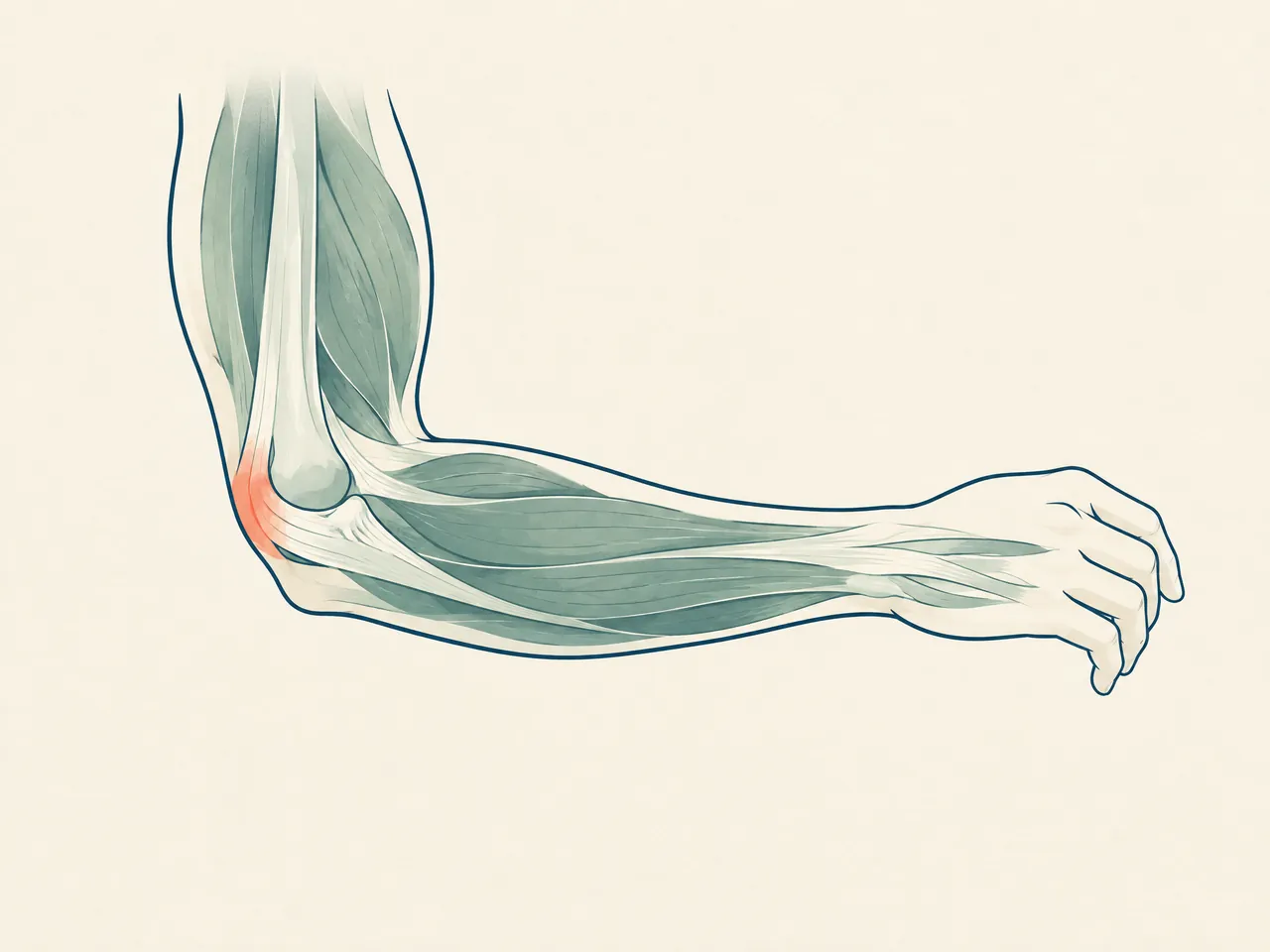
The short answer
No. Tennis elbow is a common cause of pain on the outside of the elbow, especially when repeated gripping, wrist extension or forearm twisting makes it worse. Yet similar pain can follow an injury or relate to nerve compression, arthritis or pain referred from the neck. The name does not mean tennis caused it: work, computer use, tools and everyday lifting can be relevant. Persistent, severe, numb or weak symptoms deserve professional assessment. [1] [2]
Transparent pricing
See the fees.
Choose your care.
Explore our complete official price list, including first-trial prices, regular prices, packages and branch-specific options.
Opening WhatsApp prepares an enquiry; it does not send a message, take payment or confirm an appointment. Suitability and individual arrangements are confirmed during consultation.
Pain care
All prices in HKDExtracorporeal shockwave treatment
Shockwave treatment for deep-tissue and fascial care. The Kwun Tong clinic offers the multi-area options shown below.
Priced by branch
Branch-specific pricing
Prince Edward: HK$250 per area
Kwun Tong: HK$250 for 1 area / HK$450 for 2 areas / HK$600 for 3 areas
Pain care (manual therapy)
Includes Chinese medicine musculoskeletal assessment, manual joint techniques and tui na.
HK$580 (single session)
Chinese medicine musculoskeletal assessment
Pain care (acupuncture and manual therapy)
Combines acupuncture and manual therapy.
HK$680 (single session)
Combined care
Hair and scalp
All prices in HKDScalp health and hair-loss management
Includes AI scalp analysis, deep scalp and follicle cleansing, and scalp oil-control care.
HK$380 (first trial)
Regular price: HK$680
- 6 sessions: HK$3,480 (HK$580 per session)
- 12 sessions: HK$5,760 (HK$480 per session)
- 20 sessions: HK$8,600 (HK$430 per session)
- 30 sessions: HK$11,400 (HK$380 per session)
Hair acupuncture and Chinese herbal medicine package
Includes scalp acupuncture and 3 days of Chinese herbal medicine that does not require decoction.
HK$580 (single session)
Registered Chinese Medicine Practitioner consultation
- 6 sessions: HK$3,180 (HK$530 per session)
- 12 sessions: HK$5,760 (HK$480 per session)
- 20 sessions: HK$8,600 (HK$430 per session)
- 30 sessions: HK$11,400 (HK$380 per session)
Combined hair and scalp treatment
Combines acupuncture and Chinese herbal medicine with salon-level scalp and follicle care. Packages include complimentary hair-care shampoo and serum.
HK$1,260 (single session)
Combined treatment
- 8 sessions: HK$8,640 (HK$1,080 per session)
- 16 sessions: HK$15,680 (HK$980 per session)
- 20 sessions: HK$18,600 (HK$930 per session)
- 30 sessions: HK$26,400 (HK$880 per session)
Weight management
All prices in HKDFull-body acupoint embedding for weight management
Includes full-body acupoint embedding. Packages include complimentary Chinese herbal medicine for weight management, with the number of included days scaled to the package. Embedding material and the individual treatment arrangement are confirmed during consultation; this is not a cosmetic thread lift.
HK$980 (single session)
No trial session
- 10 sessions: HK$7,800 (HK$780 per session)
- 20 sessions: HK$14,600 (HK$730 per session)
- 30 sessions: HK$20,400 (HK$680 per session)
Facial acupuncture
All prices in HKDFacial acupuncture (basic)
Includes facial acupuncture and meridian-based facial care, including care for facial puffiness.
HK$480 (first trial)
Regular price: HK$680
- 10 sessions: HK$5,200 (HK$520 per session)
- 20 sessions: HK$9,600 (HK$480 per session)
- 30 sessions: HK$13,500 (HK$450 per session)
Facial acupuncture (advanced)
Includes enhanced facial acupuncture with a specially formulated moisturising mask and serum.
HK$780 (first trial)
Regular price: HK$1,180
- 10 sessions: HK$9,000 (HK$900 per session)
- 20 sessions: HK$16,600 (HK$830 per session)
- 30 sessions: HK$23,400 (HK$780 per session)
Chinese medicine
All prices in HKDAcupuncture and Chinese herbal medicine package
Includes a Chinese medicine consultation with pulse assessment, body acupuncture and 3 days of Chinese herbal granules that do not require decoction.
HK$580 (single session)
Chinese medicine consultation with pulse assessment
Outside Elbow Pain Causes: Is Outside Elbow Pain Always Tennis Elbow? Start with the Common Pattern and Tennis Elbow Risk Factors
The usual tennis-elbow pattern is also called lateral epicondylitis. It involves the tendons that connect forearm muscles to the outside of the elbow, where those muscles help extend the wrist and fingers. Repeating the same loading movement can irritate or overload this area. The change is often gradual rather than tied to one memorable accident: an initial discomfort becomes more noticeable when carrying a shopping bag, pouring from a kettle, opening a jar or using a hand tool. Outer-elbow tenderness with these tasks is useful information, but it is not by itself a diagnosis. [2] [3]
Think about the movement as well as the location. A person may be fine at rest but feel a sharp pull when their wrist is held back while gripping, or an ache after a long session of preparation work. Another may notice discomfort after swapping to a heavier pan, taking up pruning, or doing more DIY than usual. These are examples of how load can change; they do not prove that the tendon is the source. For a fuller introduction to the common pattern and activity links, read tennis elbow causes.
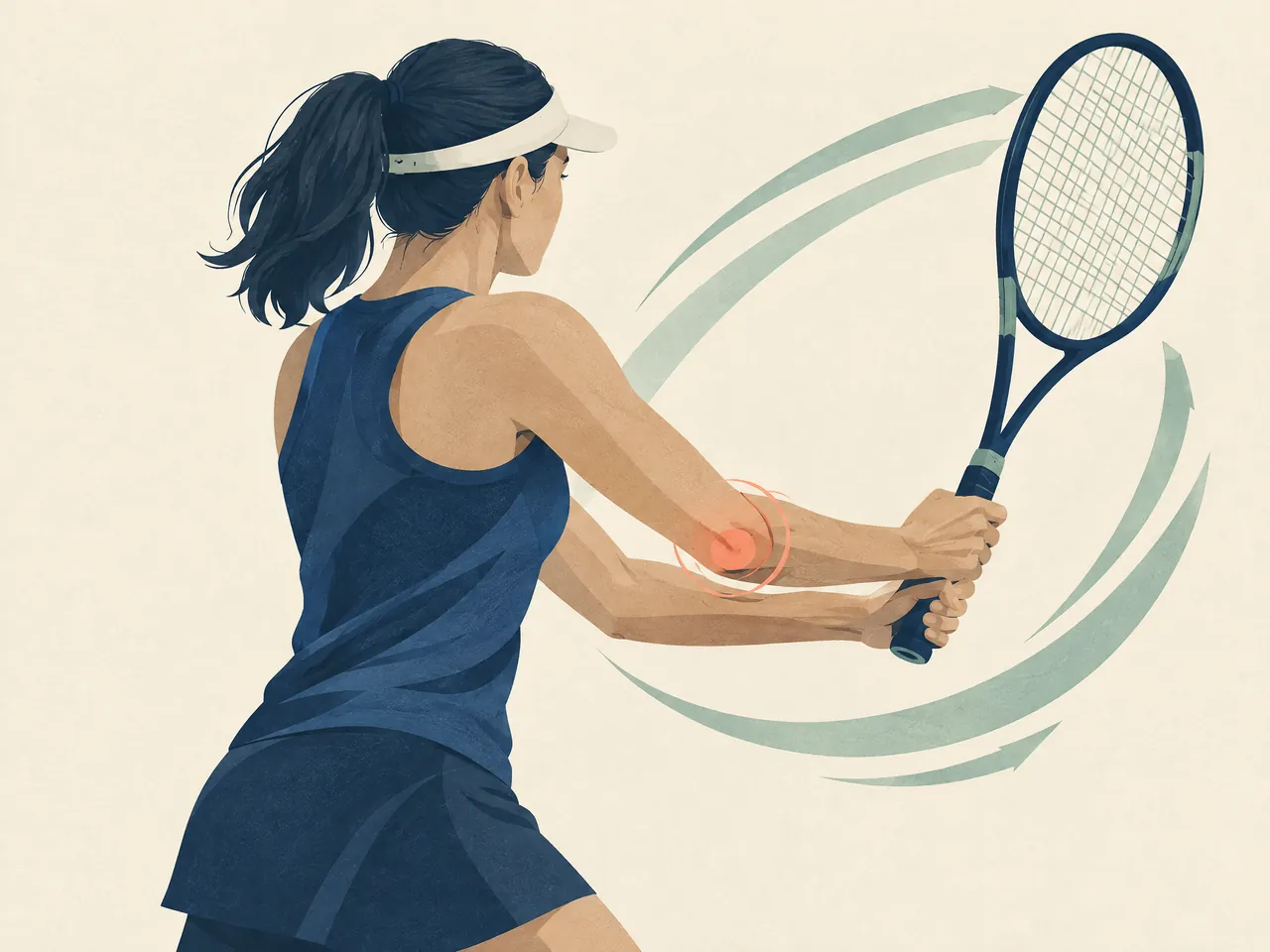
Outside Elbow Pain Causes and Repeated Wrist or Forearm Use: Is Outside Elbow Pain Always Tennis Elbow? Consider Tennis Elbow Risk Factors
Repeated gripping is not the only issue. Wrist extension, forearm rotation and holding a load away from the body can combine, particularly when there is little recovery between tasks. Typing alone may be comfortable, while prolonged mouse use, clicking, reaching across a desk and tense gripping of a device may expose a sensitive arm to many small repetitions. Manual tasks can do the same through screwdriving, painting, cutting food, sewing or tool use. The practical question is not simply ‘What activity do I do?’ but ‘Which position, force, duration and frequency bring on my symptoms?’ [1] [3]
A useful short record for a few days is specific rather than dramatic: note the task, which hand, grip style, wrist position, duration, pain during it and how the arm feels later. This can reveal whether a sudden workload increase, fewer breaks, a new tool or a different workstation is the clearer trigger. It also gives a clinician a better starting point than the broad phrase ‘my elbow hurts’. Readers whose discomfort seems tied to desk work can explore tennis elbow from computer mouse use for a more focused discussion of that activity.
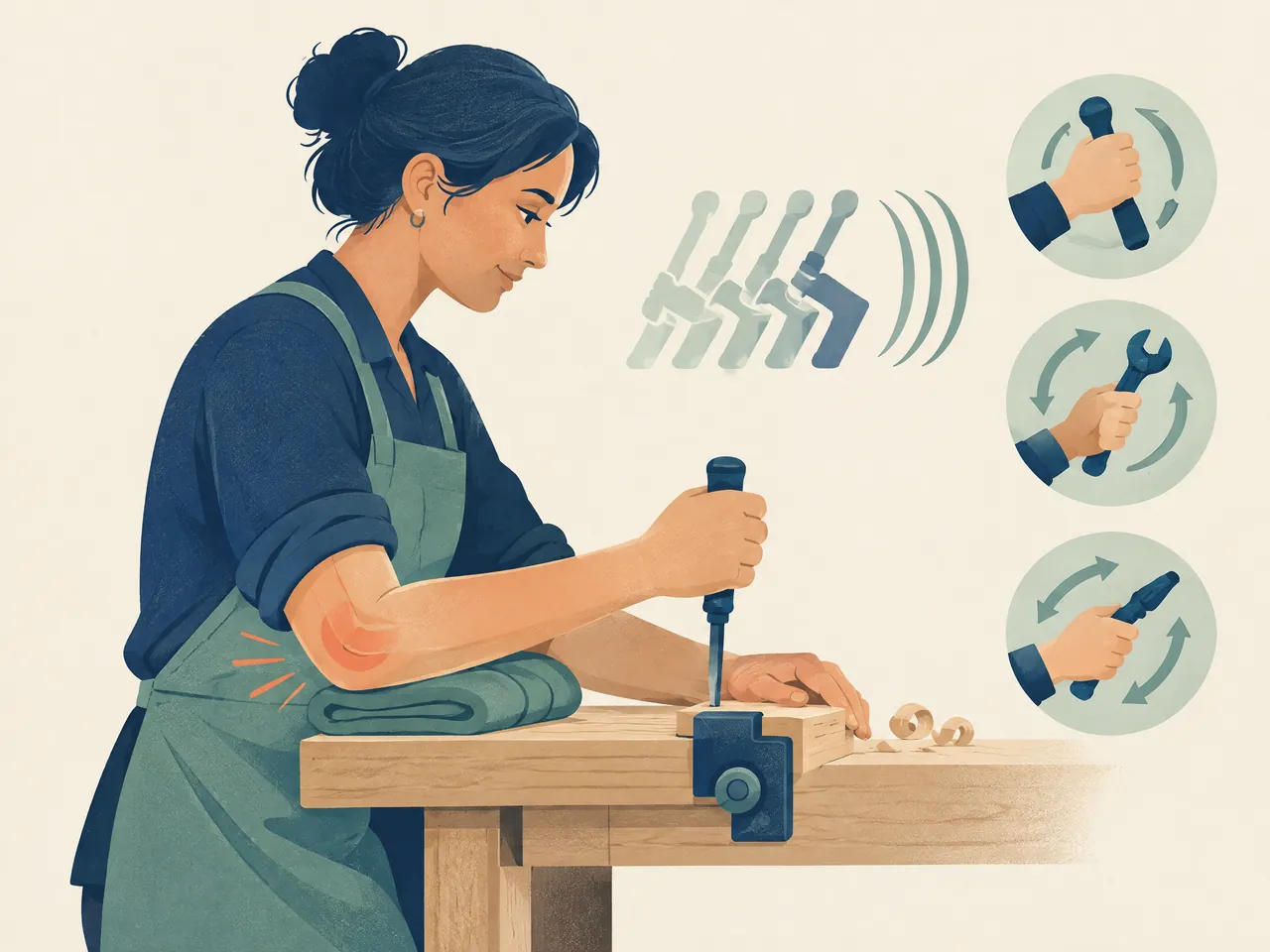
Tennis Elbow Risk Factors in Work, Sport and Everyday Activities: Outside Elbow Pain Causes Explained — Is Outside Elbow Pain Always Tennis Elbow?
A sport can be relevant, but tennis is not required. Racquet strokes, especially if technique or equipment puts repeated demand on the forearm, are one possible contributor. So are jobs and hobbies that involve vigorous or frequent wrist-and-arm use. In everyday life, the total amount matters: a weekend of moving boxes, repetitive cooking preparation, assembling furniture, gardening or an unfamiliar gym routine may be more important than the name of the activity. The symptom pattern should be considered alongside workload, hand dominance, prior injury and the pace at which activity changed. [2] [3]
This is why a risk-factor list should not become a blame list. Two people can perform the same task and have different responses. One may have built capacity gradually, while another is returning after a break or is working through a period of poor sleep and less recovery. Rather than stopping all arm use indefinitely, identify the painful version of the task and consider a smaller, more manageable exposure. When lifting or wrist twisting is the concern, Can tennis elbow be caused by lifting or twisting the wrist? explains why the details of the action matter.
Compare your options
| Pattern or clue | What to note | Why it changes the next step |
|---|---|---|
| Gradual outer-elbow tenderness with gripping or wrist movement | Which grip, twist, lift or wrist position brings it on; how long it lasts afterwards | This can fit a load-related tendon pattern and helps guide activity modification and rehabilitation discussion. [1] [2] |
| Tingling, altered feeling or weakness in the forearm or hand | Exact area, timing, neck symptoms and whether grip changes are new | Nerve or neck-related causes can overlap with elbow pain and deserve a wider assessment. [2] |
| Pain after a fall, impact or sudden force | What happened, immediate swelling, shape change and ability to use the arm | An injury should not simply be labelled tennis elbow; a clinician may need to assess bone, ligament or joint structures. [2] |
| Symptoms remain despite reduced aggravating activity | Changes already tried and the impact on sleep, work and daily grip | Persistent pain warrants professional advice; NHS advises GP review after at least two weeks of rest and self-care without improvement. [1] |
On smaller screens, scroll the table sideways to compare all columns.
Is Outside Elbow Pain Always Tennis Elbow? Compare Symptoms with Tennis Elbow Risk Factors and Outside Elbow Pain Causes
The most helpful answer to ‘Is outside elbow pain always tennis elbow?’ is no, because several structures can create a similar map of pain. Tennis elbow commonly causes pain or burning at the outer elbow and may affect grip, but the arm is connected to the wrist, shoulder, neck and nerves. A health professional usually asks how symptoms began, which actions reproduce them, whether there was trauma, and whether there are neurological or joint symptoms. Examination may include checking tenderness and resisted movements; testing or imaging is considered when the history suggests another cause. [2]
Location gives clues but should be interpreted cautiously. Pain precisely at the outer bony prominence during gripping and wrist motion is more compatible with the common tendon pattern than pain concentrated well below it, pain that begins in the neck, or symptoms that are mostly tingling. Stiffness, a blocked feeling in the joint, or pain after a fall changes the conversation. The table below is not a self-diagnosis tool. It is a way to notice what to report, so the next step is based on the whole story rather than one internet label.
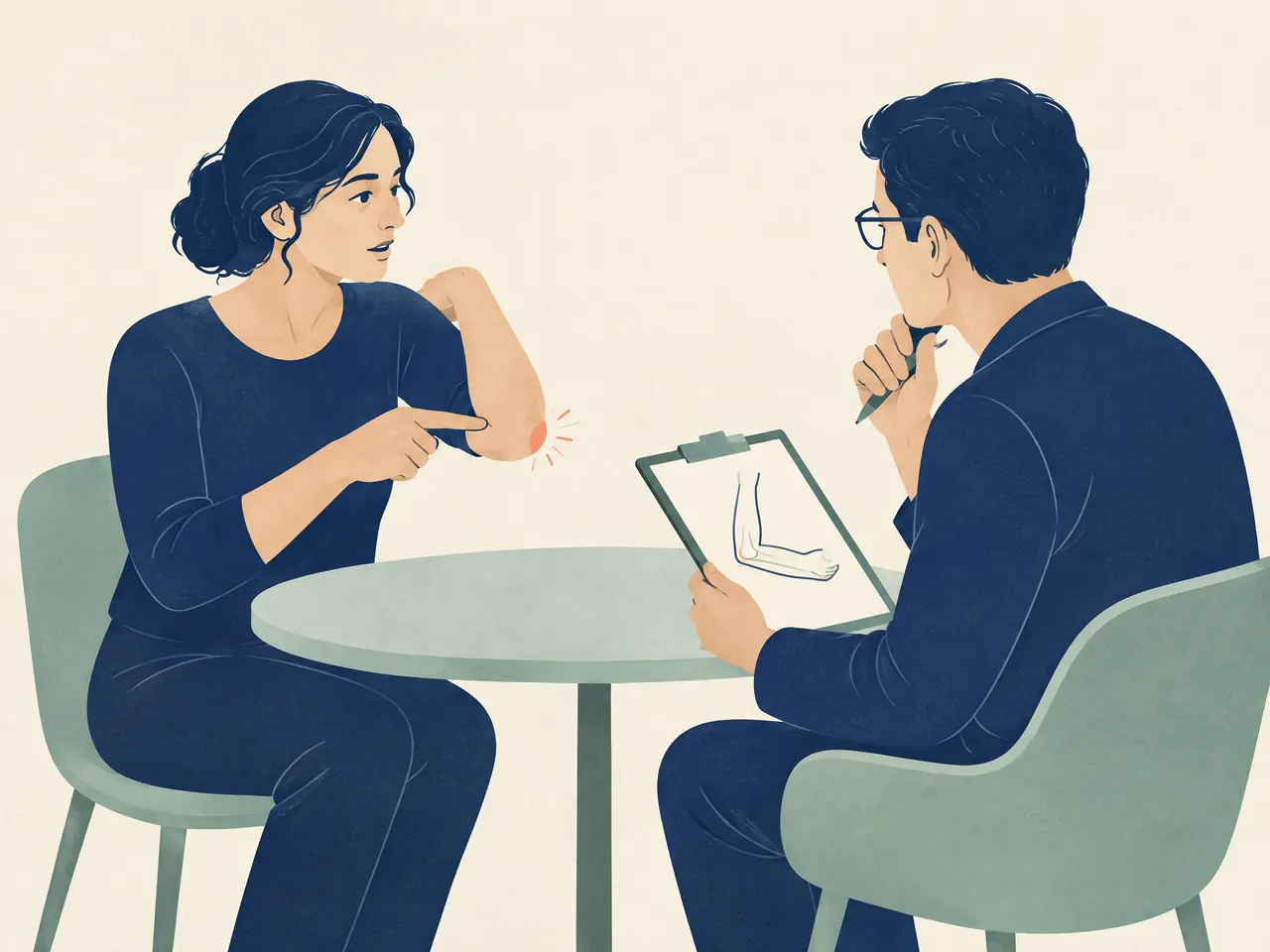
When Outside Elbow Pain Causes Need a Wider Assessment: Is Outside Elbow Pain Always Tennis Elbow? Consider Tennis Elbow Risk Factors
Consider a wider assessment when the story does not match a gradual, activity-related pattern. A sudden injury, direct blow, visible change in shape, major swelling or difficulty using the arm should not be assumed to be overuse. A clinician may need to consider bone, ligament or joint injury. Likewise, an elbow that is mainly stiff or swollen, rather than mainly painful with gripping, may point the assessment in another direction. AAOS notes that clinicians may use X-rays to help rule out elbow arthritis and may investigate other injuries when the history or examination warrants it. [2]
Neck-related pain and nerve compression can also overlap with outer-elbow symptoms. A person may describe pain travelling along the forearm, altered sensation, pins and needles, or weakness that feels out of proportion to local elbow tenderness. Those symptoms do not establish a nerve condition, but they are important to mention rather than treating them as a routine feature of tennis elbow. AAOS specifically notes that nerve compression and neck problems can cause arm symptoms that resemble this condition. If you have persistent numbness, clear weakness, or pain that is spreading or changing quickly, arrange medical assessment instead of escalating exercises on your own. [2]

Tennis Elbow Risk Factors, Nerve Symptoms and Injury Clues among Outside Elbow Pain Causes — Is Outside Elbow Pain Always Tennis Elbow?
It can help to separate a load-sensitive symptom from a warning clue. A load-sensitive pattern is predictable: the same grip, twist or wrist position brings symptoms on, and adapting it reduces the response. A warning clue is less predictable, such as marked loss of grip, persistent altered sensation, pain after a fall, or a joint that looks visibly different. Neither category replaces an examination, but this distinction can stop a person from repeatedly testing a painful movement in the hope of ‘confirming’ the diagnosis. Repeated provocation can add irritation without giving a reliable answer.
Describe your symptoms in ordinary functional language when seeking care. For example: ‘Turning a door handle hurts at the outer elbow,’ ‘My little and ring fingers tingle at night,’ or ‘I fell and could not use the arm normally afterwards.’ Say whether pain began gradually or suddenly, whether it wakes you, what you have already adjusted, and whether you have neck, hand or shoulder symptoms. If your primary issue is pain when closing the hand around an object, the related page on tennis elbow from gripping may help you identify the task pattern to discuss at an appointment.
Managing Outside Elbow Pain Causes: Is Outside Elbow Pain Always Tennis Elbow? Practical Care and Tennis Elbow Risk Factors
When the pattern appears consistent with uncomplicated overuse and no warning signs are present, begin with proportionate load adjustment. This does not mean immobilising the arm or avoiding every daily activity. It means temporarily reducing the movements and amounts that reliably flare symptoms: split a long task into shorter blocks, use two hands for a heavy container, move a mouse closer, choose a larger-handled tool if available, or ask for help with a high-force job. The goal is to make activity tolerable enough that you can observe whether it settles, rather than cycling between complete rest and a painful catch-up day. [1]
Comfort measures can be selected cautiously. NHS guidance includes a hot or cold pack wrapped in a towel for short periods; stop if it aggravates symptoms and protect the skin. A forearm strap or brace may be something to discuss with a qualified professional, but it is not a substitute for changing the task that overloads the arm. Gentle movement can be preferable to guarding the elbow rigidly, while stretching and progressive strengthening should fit the individual assessment and pain response. [1] [2]
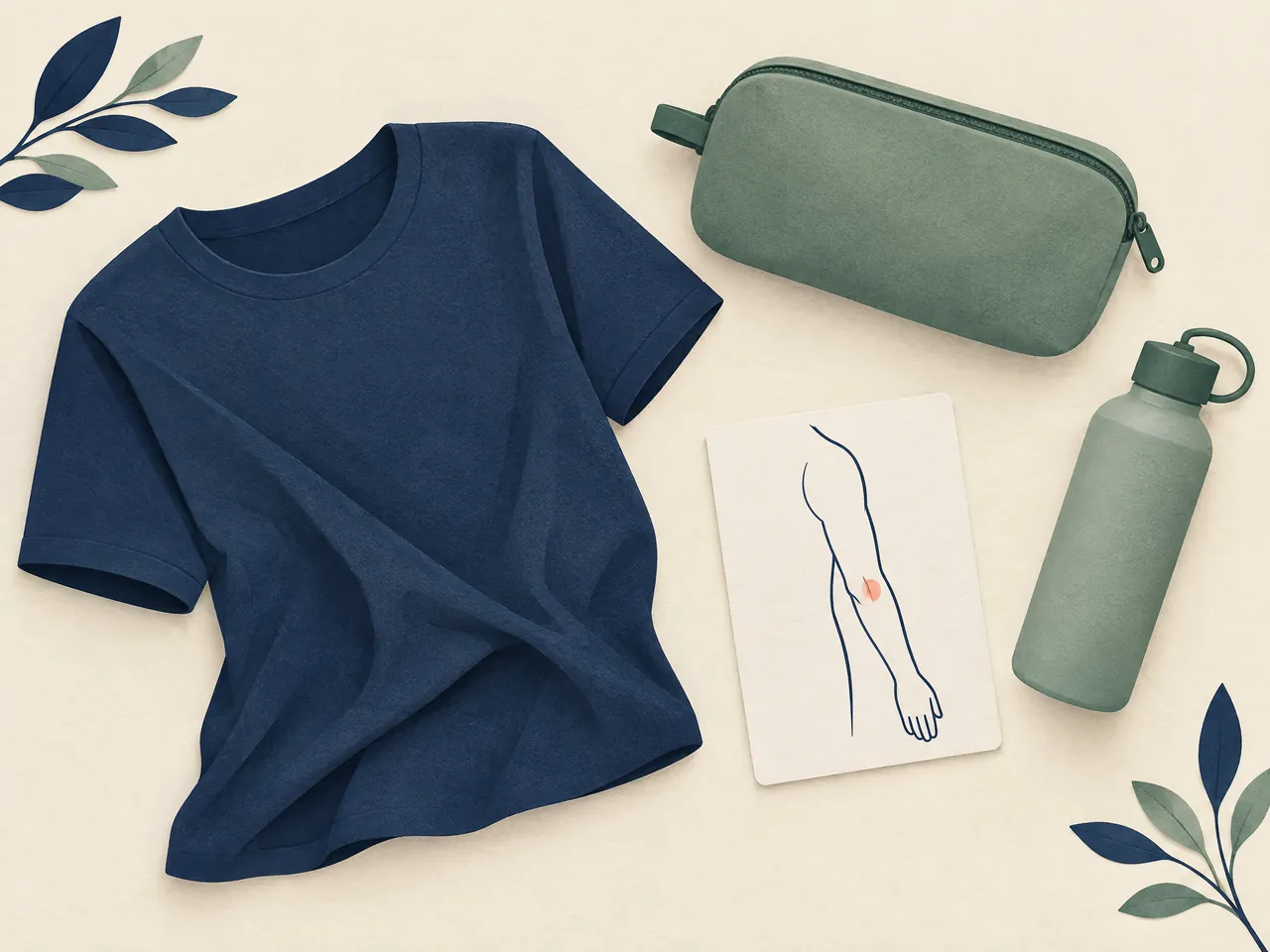
Reducing Tennis Elbow Risk Factors while Responding to Outside Elbow Pain Causes: Is Outside Elbow Pain Always Tennis Elbow?
Make one or two changes first so you can judge their effect. A home cook might lighten the heaviest preparation task and alternate hands where safe. Someone at a desk might take regular task changes, rest the forearm, reduce an extended reach to the mouse and avoid holding the wrist rigidly while clicking. A person who uses tools might try to space repetitive work across days or change the angle of the workpiece. These adjustments are not a cure or a universal ergonomic prescription; they are practical experiments that reduce repeated strain while preserving useful movement.
Rehabilitation is usually more useful when it is gradual and purposeful. A physiotherapist or other qualified clinician can assess motion, grip, relevant joints and the demands of work or sport before suggesting a progression. The aim is not to force through a painful exercise number, but to build tolerance over time with an appropriate dose. If you are considering Chinese medicine, a Registered Chinese Medicine Practitioner can discuss your symptoms and traditional assessment in person. Acupuncture may be discussed as a complementary option after assessment, but it should not replace evaluation of injury, nerve symptoms or a progressive activity plan.

When to Seek Assessment for Outside Elbow Pain Causes: Is Outside Elbow Pain Always Tennis Elbow? and Tennis Elbow Risk Factors
Arrange an assessment if self-care and reducing aggravating activity are not easing elbow pain, or if the problem is interfering with work, sleep or ordinary grip. NHS advises seeing a GP when elbow pain remains after resting the elbow and trying self-care for at least two weeks. Seek prompt care after a significant injury, if there is a visible deformity, or if marked numbness or weakness develops. An assessment can distinguish whether the next sensible step is activity modification, rehabilitation, investigation, or referral rather than a one-size-fits-all treatment. [1] [2]
For a non-urgent consultation with TCM Lab, use WhatsApp to describe where the pain is, how it started, which task triggers it, any injury, and whether numbness or weakness is present. This helps the clinic advise on arranging an appropriate assessment rather than promising a diagnosis by message. You can ask about availability at the Chinese medicine clinic Prince Edward or the Kwun Tong Chinese medicine clinic. If symptoms are acute or concerning, seek appropriate medical care first.
Care and health guide
Pain-care information
This directory brings together services, reading, and visit information related to pain care, to help you prepare questions for a consultation.
When pain care affects your day, noting when it occurs, its relation to activity, and what you have already tried can help prepare a consultation; Chinese medicine pain management Hong Kong is a relevant service or reading entry point.
Individual circumstances differ, and acupuncture Hong Kong offers related information to help you understand options and prepare questions.


Your questions, answered
Frequently asked questions
Is outside elbow pain always tennis elbow?
No. Tennis elbow is a common explanation for gradual outer-elbow pain that worsens with gripping or wrist use, but an injury, arthritis, nerve compression or a neck-related problem can look similar. The history, examination and any neurological or injury clues matter more than the location alone. [2]
What are common tennis elbow risk factors if I do not play tennis?
Should I stop using my arm completely for outside elbow pain?
Usually, the practical starting point is to reduce or modify movements that clearly aggravate symptoms rather than repeatedly pushing through them. Keeping activity within a tolerable range and discussing a gradual exercise plan with a qualified clinician is often more useful than either complete avoidance or an abrupt return to heavy tasks. [1] [2]
When should I seek professional assessment for elbow pain?
Seek assessment after a significant injury, for visible deformity, substantial numbness or weakness, or when pain is worsening or limiting normal function. For persistent pain, NHS advises GP review if resting the elbow and trying self-care for at least two weeks has not helped. [1]
Sources and further information
- [1] [1] NHS — Tennis elbow
Referenced for: Symptoms, activity triggers, simple self-care and timing for GP advice.
- [2] [2] American Academy of Orthopaedic Surgeons — Tennis Elbow (Lateral Epicondylitis)
Referenced for: Overuse mechanism, symptom pattern, clinical assessment, differential considerations and non-operative care.
- [3] [3] Mayo Clinic — Tennis elbow: Symptoms and causes
Referenced for: Everyday trigger examples, risk factors, symptoms and care-seeking context.