
TCM Lab · Health reading
Neck Muscle Strain, Pinched Nerve in Neck, Neck Pain After Injury: How to Read Your Symptoms
Published Updated
A stiff, sore neck after desk work or an awkward night’s sleep often behaves like a local muscle problem, but pain travelling into an arm changes the picture. A neck muscle strain may make turning, looking up, or holding the head in one position uncomfortable. A pinched nerve in neck is an everyday term for possible nerve compression and can be associated with pain, tingling, altered sensation, or weakness beyond the neck. Neck pain after injury deserves a slower, safety-first read: note the mechanism, the timing, and every new symptom rather than trying to label it from one painful spot.
Appointments are confirmed through WhatsApp. If you have language requirements, please mention them in your enquiry.

The short answer
A neck muscle strain more often feels local, tight, and movement-related. A pinched nerve in neck may be associated with symptoms that run into the shoulder, arm, or hand, including tingling, numbness, or weakness. Neck pain after injury should be assessed urgently when it is severe or followed by neurological changes. Track where symptoms travel, what movement changes them, and whether function is changing; these details help a clinician decide what needs examination.
Transparent pricing
See the fees.
Choose your care.
Explore our complete official price list, including first-trial prices, regular prices, packages and branch-specific options.
Opening WhatsApp prepares an enquiry; it does not send a message, take payment or confirm an appointment. Suitability and individual arrangements are confirmed during consultation.
Pain care
All prices in HKDExtracorporeal shockwave treatment
Shockwave treatment for deep-tissue and fascial care. The Kwun Tong clinic offers the multi-area options shown below.
Priced by branch
Branch-specific pricing
Prince Edward: HK$250 per area
Kwun Tong: HK$250 for 1 area / HK$450 for 2 areas / HK$600 for 3 areas
Pain care (manual therapy)
Includes Chinese medicine musculoskeletal assessment, manual joint techniques and tui na.
HK$580 (single session)
Chinese medicine musculoskeletal assessment
Pain care (acupuncture and manual therapy)
Combines acupuncture and manual therapy.
HK$680 (single session)
Combined care
Hair and scalp
All prices in HKDScalp health and hair-loss management
Includes AI scalp analysis, deep scalp and follicle cleansing, and scalp oil-control care.
HK$380 (first trial)
Regular price: HK$680
- 6 sessions: HK$3,480 (HK$580 per session)
- 12 sessions: HK$5,760 (HK$480 per session)
- 20 sessions: HK$8,600 (HK$430 per session)
- 30 sessions: HK$11,400 (HK$380 per session)
Hair acupuncture and Chinese herbal medicine package
Includes scalp acupuncture and 3 days of Chinese herbal medicine that does not require decoction.
HK$580 (single session)
Registered Chinese Medicine Practitioner consultation
- 6 sessions: HK$3,180 (HK$530 per session)
- 12 sessions: HK$5,760 (HK$480 per session)
- 20 sessions: HK$8,600 (HK$430 per session)
- 30 sessions: HK$11,400 (HK$380 per session)
Combined hair and scalp treatment
Combines acupuncture and Chinese herbal medicine with salon-level scalp and follicle care. Packages include complimentary hair-care shampoo and serum.
HK$1,260 (single session)
Combined treatment
- 8 sessions: HK$8,640 (HK$1,080 per session)
- 16 sessions: HK$15,680 (HK$980 per session)
- 20 sessions: HK$18,600 (HK$930 per session)
- 30 sessions: HK$26,400 (HK$880 per session)
Weight management
All prices in HKDFull-body acupoint embedding for weight management
Includes full-body acupoint embedding. Packages include complimentary Chinese herbal medicine for weight management, with the number of included days scaled to the package. Embedding material and the individual treatment arrangement are confirmed during consultation; this is not a cosmetic thread lift.
HK$980 (single session)
No trial session
- 10 sessions: HK$7,800 (HK$780 per session)
- 20 sessions: HK$14,600 (HK$730 per session)
- 30 sessions: HK$20,400 (HK$680 per session)
Facial acupuncture
All prices in HKDFacial acupuncture (basic)
Includes facial acupuncture and meridian-based facial care, including care for facial puffiness.
HK$480 (first trial)
Regular price: HK$680
- 10 sessions: HK$5,200 (HK$520 per session)
- 20 sessions: HK$9,600 (HK$480 per session)
- 30 sessions: HK$13,500 (HK$450 per session)
Facial acupuncture (advanced)
Includes enhanced facial acupuncture with a specially formulated moisturising mask and serum.
HK$780 (first trial)
Regular price: HK$1,180
- 10 sessions: HK$9,000 (HK$900 per session)
- 20 sessions: HK$16,600 (HK$830 per session)
- 30 sessions: HK$23,400 (HK$780 per session)
Chinese medicine
All prices in HKDAcupuncture and Chinese herbal medicine package
Includes a Chinese medicine consultation with pulse assessment, body acupuncture and 3 days of Chinese herbal granules that do not require decoction.
HK$580 (single session)
Chinese medicine consultation with pulse assessment
Neck Muscle Strain, Pinched Nerve in Neck, Neck Pain After Injury: Start With the Symptom Pattern
The first useful distinction is not a self-diagnosis; it is the pattern. A neck muscle strain commonly feels like a tight band, soreness, spasm, or a guarded neck that objects when you turn toward one side. It may follow a long spell with the head angled down, an unfamiliar pillow, a heavy bag on one shoulder, or a sudden but minor movement. By contrast, a pinched nerve in neck is commonly used to describe irritation or compression around a nerve. The clue is not simply that the neck hurts: pain, tingling, numbness, or weakness may extend through the shoulder and into part of the arm or hand. Poor posture and injury can both contribute to neck pain, while nerve compression can produce arm symptoms. [1] [2] Start by noting the first day of symptoms, whether the onset was gradual or sudden, and whether the sensation is one-sided or central. This creates a useful baseline: a symptom that is improving day by day calls for a different conversation from one that spreads or interferes with everyday tasks. For broader context on possible contributors, see neck pain causes.
Neck Muscle Strain, Pinched Nerve in Neck, Neck Pain After Injury: What Movement Can Reveal
Use ordinary movements as observations, not as tests to push through. Notice whether rotating the head, looking down at a phone, looking upward, lifting an arm, or sitting through a meeting changes the symptom. A local strain may be most obvious when a sore muscle is stretched or asked to hold the head still. Symptoms that reproduce in the neck alone are still worth tracking, but symptoms that consistently travel below the shoulder should be mentioned clearly. Record the direction of travel: for example, neck to shoulder, shoulder to outer arm, or arm to fingers. Also write down whether changing position settles the sensation and how quickly it returns. A single movement cannot establish the cause, because joints, discs, muscles, and nerves work closely together. Still, the pattern gives a clinician a more useful starting point than the general statement that the neck is “out.”

Neck Muscle Strain, Pinched Nerve in Neck, Neck Pain After Injury: Track Pain, Tingling and Weakness
Separate pain from altered feeling and from loss of strength. Tingling can feel like pins and needles; numbness may mean less sensation; weakness means an activity that was normally easy now feels less reliable. Note whether a cup is harder to hold, buttons are clumsier, or an arm tires unexpectedly. Compare with your usual ability rather than repeatedly testing the painful side. Also note whether symptoms are intermittent or present at rest, and whether they wake you at night. The Hong Kong College of Orthopaedic Surgeons advises medical assessment for persistent numbness, reduced sensation, or limb weakness, because these may need a neurological examination. [2] A short symptom diary is particularly helpful if the symptoms fluctuate during work, commuting, exercise, or sleep. It keeps the conversation focused on function as well as discomfort.
Compare your options
| Pattern to note | Useful detail to record | Why the detail matters |
|---|---|---|
| Local soreness or stiffness | Which neck movement is limited and whether the pain stays in the neck | Helps distinguish a local movement-related pattern from symptoms that travel |
| Pain into shoulder, arm, or hand | The route, side, and whether tingling or numbness accompanies it | Gives a clinician a clearer picture of possible nerve-related symptoms |
| Change in strength or dexterity | Trouble gripping, lifting, fastening buttons, or using the hand normally | Function change needs prompt discussion rather than repeated self-testing |
| Neck pain after injury | What happened, when it happened, pain severity, and any symptoms since | The mechanism and new symptoms help determine the urgency of assessment |
| Daily triggers | Screen time, driving, sleep position, carrying load, and relief from changing position | Identifies modifiable demands without assuming they are the sole cause |
On smaller screens, scroll the table sideways to compare all columns.
Neck Muscle Strain, Pinched Nerve in Neck, Neck Pain After Injury: Common Causes and Boundaries
It is tempting to blame every episode on “bad posture,” yet the timing matters. Looking down for prolonged periods, a poorly arranged workstation, repetitive neck positions, or sleeping with the head awkwardly placed can load neck muscles and make stiffness more likely. A fall, sports contact, or traffic collision brings a different question: could force have injured more than a muscle? Whiplash is one type of soft-tissue neck injury that may follow a sudden forward-and-backward head movement. [1] Remember that an ordinary-looking incident can still be important if it is followed by escalating pain or new arm symptoms. Conversely, a similar ache after a demanding week may improve as the load and positions change. Do not assume that a familiar history of desk-related pain explains a new episode after trauma. The page why does my neck hurt can help you prepare a fuller history, but it cannot replace an examination when the pattern has changed.

Neck Muscle Strain, Pinched Nerve in Neck, Neck Pain After Injury: Posture, Sleep and Daily Habits
Daily load is often more changeable than people expect. Consider how long the head stays forward during laptop work, whether the monitor is low, whether calls are held between ear and shoulder, and whether breaks actually involve moving rather than scrolling. A practical change may be to raise the device, support the forearms, and stand up briefly between blocks of concentrated work. During sleep, aim for a position that keeps the head roughly in line with the rest of the body instead of sharply bent or twisted. The NHS suggests a low, firm pillow and advises against keeping the neck in one position for too long. [3] These adjustments do not prove that posture was the cause, but they may reduce repeated irritation while you monitor recovery. If this resembles your routine, our practical guide to neck pain from poor posture offers focused everyday considerations.
Neck Muscle Strain, Pinched Nerve in Neck, Neck Pain After Injury: When Symptoms Need Medical Review
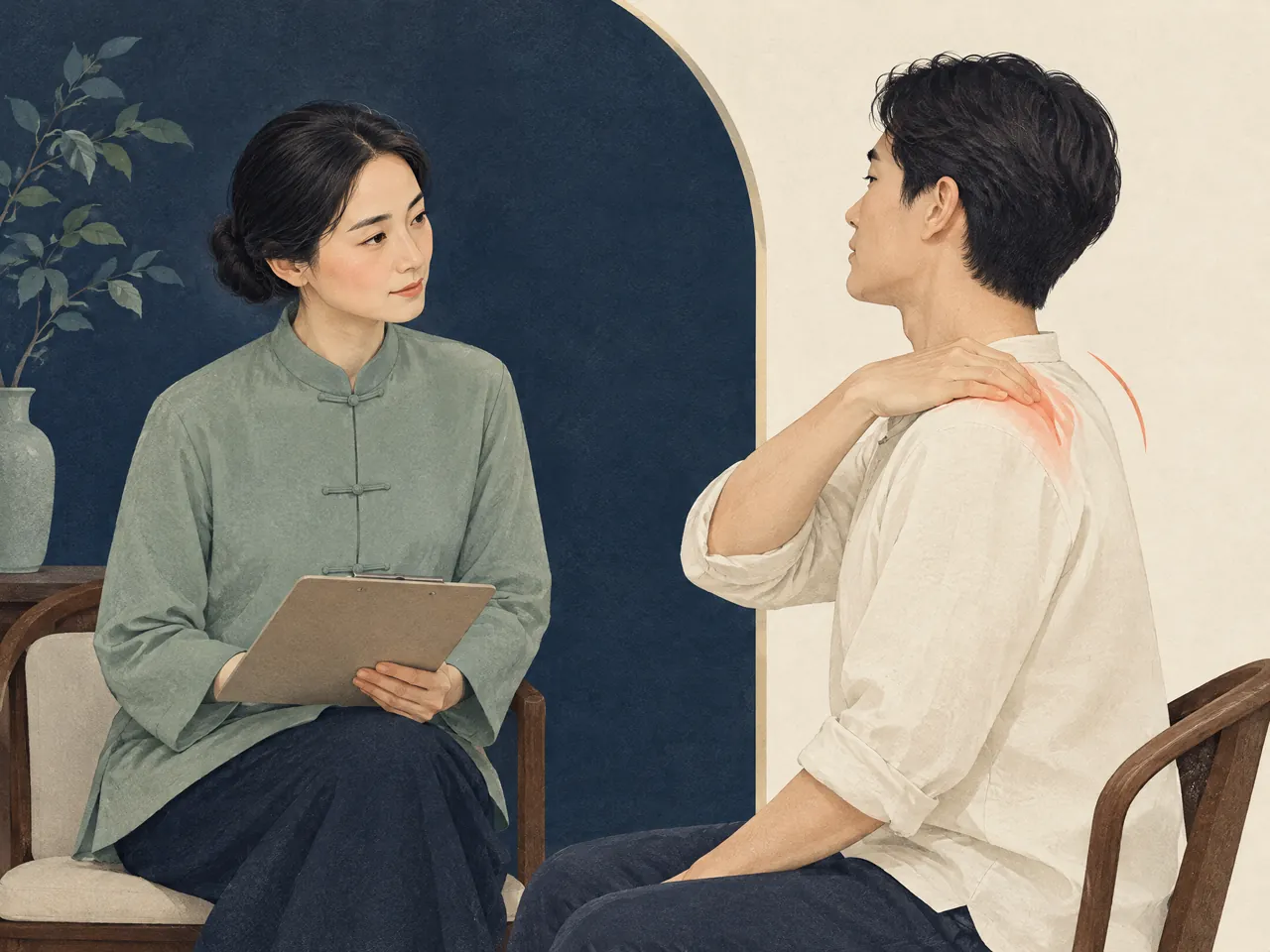
Arrange prompt medical assessment if neck pain is intense, is getting worse, spreads into an arm or leg, or comes with numbness, tingling, or weakness. Severe neck pain after a motor-vehicle accident, fall, diving accident, or other significant injury needs emergency medical care rather than home treatment. [1] The same is true for new trouble walking, loss of coordination, or changes in bladder or bowel control; these are warning signals identified by the Hong Kong College of Orthopaedic Surgeons. [2] Fever, unexplained weight loss, a history of cancer, or pain that remains troubling at night also warrant medical review. If you are unsure whether an event was significant, explain exactly what happened and what you can no longer do normally. This is not about assuming the worst. It is about not allowing a potentially important symptom to be hidden under the familiar label of a neck muscle strain.
Neck Muscle Strain, Pinched Nerve in Neck, Neck Pain After Injury: Safe Self-Care and Assessment
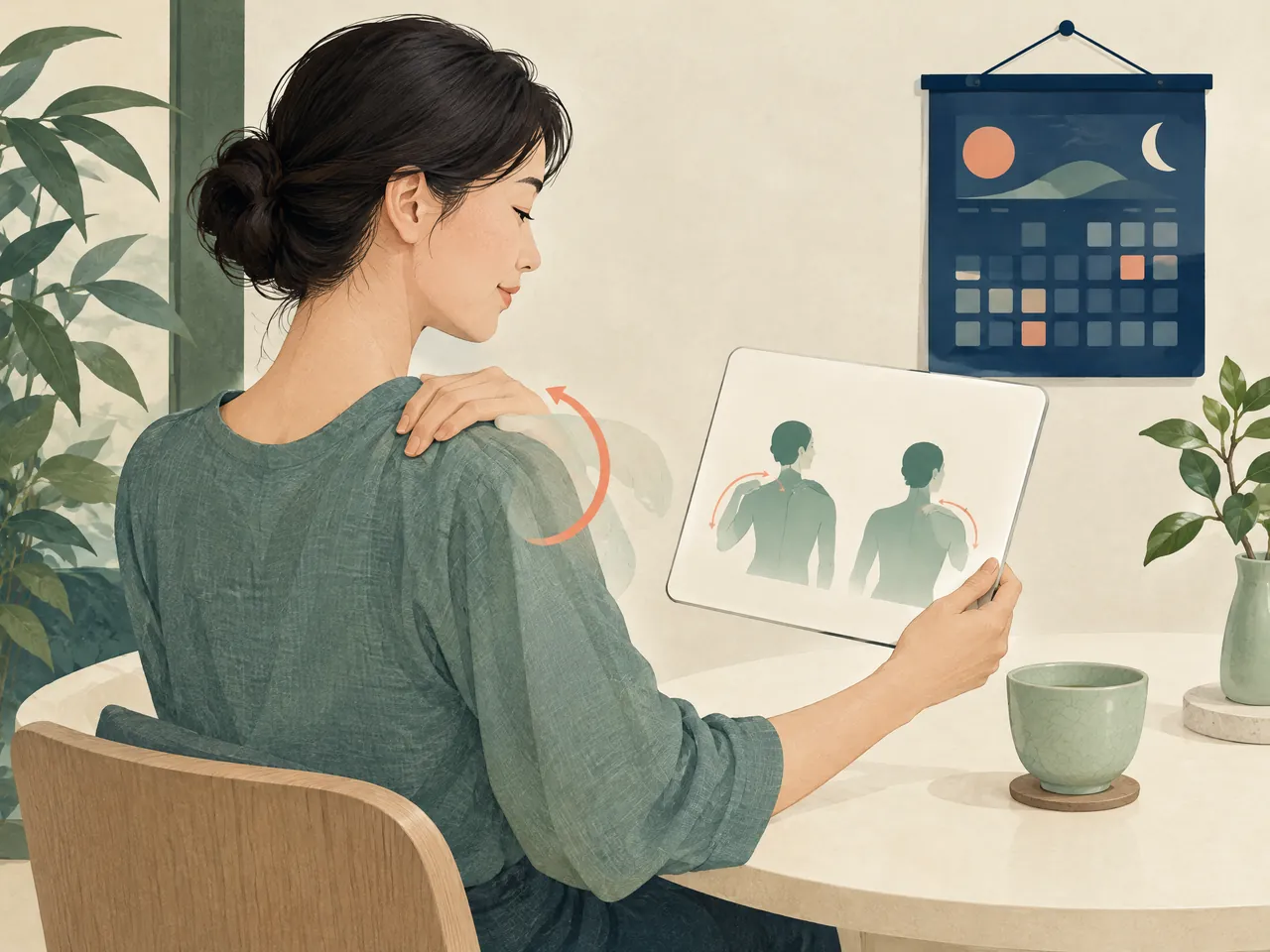
When there has not been a significant injury and there are no warning signs, start with conservative steps that make daily activity more manageable. Avoid forcing a stretch through sharp pain or repeatedly checking the neck with extreme movements. Instead, vary positions, take short movement breaks, and return to ordinary activity within comfort. It may help to split a long task into shorter periods and choose a temporary position that does not provoke symptoms, rather than waiting until the neck feels completely normal before moving again. A clinician may consider the history, neck movement, arm sensation and strength, reflexes, and other findings before deciding whether any tests are needed. This is why a scan is not the automatic answer to every stiff neck, and why a label such as “pinched nerve” should not be treated as confirmation. Your notes about symptoms, work demands, medicines, previous episodes, and injury details make that assessment more precise.

Neck Muscle Strain, Pinched Nerve in Neck, Neck Pain After Injury: Gentle Activity, Heat and Cold
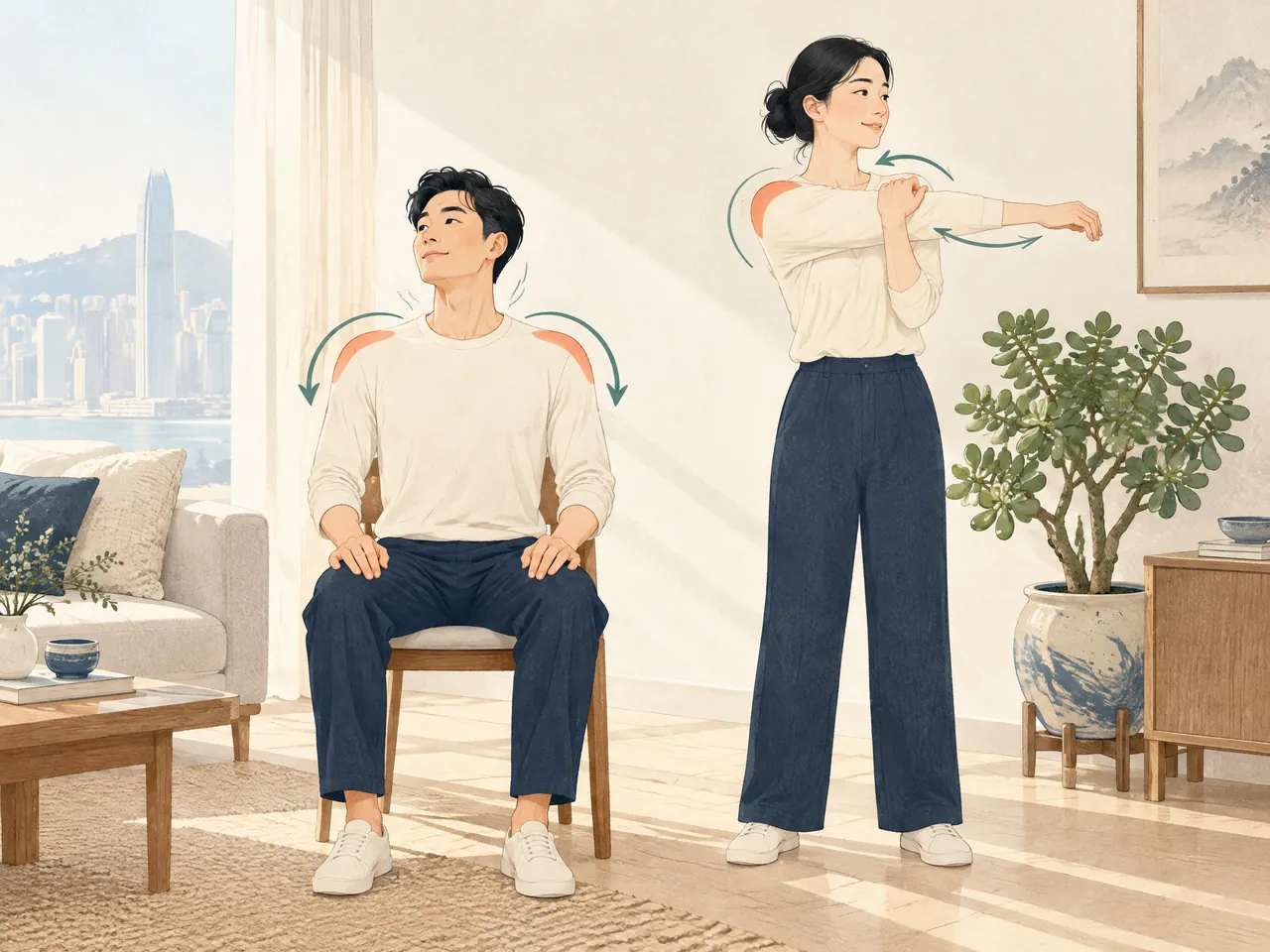
For a simple sore or stiff neck, choose heat or cold according to what feels comfortable, with a cloth barrier between the pack and skin. The NHS lists both options and advises keeping the neck moving rather than wearing a collar unless a doctor has told you otherwise. [3] Heat may feel soothing around tight muscles, while cold may be preferred soon after a minor strain; neither is a way to assess whether a nerve is involved. Do not fall asleep with a pack on, and do not place intense heat or ice directly on the skin. Stop if it worsens your symptoms or affects the skin. Gentle turning and shoulder movement should stay in a comfortable range. More detail about choosing and using a pack is available in neck pain heat or ice. Avoid driving, cycling, or other tasks where reduced neck movement would make the activity unsafe.
Neck Muscle Strain, Pinched Nerve in Neck, Neck Pain After Injury: Discussing Chinese Medicine Support
After urgent or medical concerns have been addressed, a Registered Chinese Medicine Practitioner can discuss neck symptoms in a traditional Chinese medicine assessment alongside your health history and current treatment. Traditional pattern terms are not the same as a modern diagnosis of nerve compression, fracture, or disc disease. Acupuncture may be discussed as an adjunct for some people with pain, but it is not a substitute for assessment after trauma or for progressive neurological symptoms. NCCIH notes that research suggests acupuncture may help some pain conditions, including neck pain, while also noting that its mechanism is not fully understood and that improper delivery can cause serious adverse effects. [4] Before a consultation, bring details of any imaging or medical advice already received and say clearly whether symptoms include tingling, altered sensation, or weakness. Share medicines, previous reactions, and any medical findings. You can ask about an appointment at the Kwun Tong Chinese medicine clinic or Chinese medicine clinic Prince Edward; if cost is part of your decision, consult the Chinese medicine clinic price list Hong Kong before contacting the clinic.
Care and health guide
Neck discomfort: care information
This directory brings together services, reading, and visit information related to neck discomfort, to help you prepare questions for a consultation.
When neck discomfort affects your day, noting when it occurs, its relation to activity, and what you have already tried can help prepare a consultation; acupuncture for neck pain is a relevant service or reading entry point.
Individual circumstances differ, and acupuncture Hong Kong offers related information to help you understand options and prepare questions.


Your questions, answered
Frequently asked questions
How can I tell a neck muscle strain from a pinched nerve in neck?
A strain often produces local tightness, soreness, spasm, or restricted neck movement. A possible pinched nerve pattern is more concerning when pain, tingling, numbness, or weakness travels into the shoulder, arm, or hand. The distinction cannot be confirmed safely from symptoms alone, particularly when function is changing. [1] [2]
What should I do for neck pain after injury?
After a significant impact, do not rely on heat, stretches, or a previous neck-pain routine to decide it is minor. Emergency medical care is appropriate for severe neck pain after a motor-vehicle accident, fall, or diving accident. New weakness, numbness, walking difficulty, or bladder or bowel changes also needs urgent assessment. [1] [2]
Is heat or cold better for a neck muscle strain?
There is no single choice that suits every person. If there has been no significant injury or warning sign, either heat or cold may be tried for comfort with a protective cloth barrier. Keep the neck gently mobile within comfort and stop if symptoms worsen. [3]
Can Chinese medicine replace medical assessment for arm numbness or weakness?
No. Persistent or progressive numbness, loss of sensation, or weakness requires conventional medical assessment to consider neurological and other causes. Chinese medicine support, including acupuncture where appropriate, should only be discussed as an adjunct after the safety issues are addressed. [2] [4]
Sources and further information
- [1] [1] Mayo Clinic: Neck pain — Symptoms and causes
Referenced for: Supports common causes, arm symptoms from nerve compression, and guidance to seek care after injury or with neurological symptoms.
- [2] [2] The Hong Kong College of Orthopaedic Surgeons: Neck Pain
Referenced for: Supports the Hong Kong context for posture-related neck pain and warning signs such as persistent numbness, weakness, gait difficulty, and bladder or bowel changes.
- [3] [3] NHS: Neck pain
Referenced for: Supports cautious self-care information on movement, heat or cold packs, pillow choice, and when to seek medical advice.
- [4] [4] National Center for Complementary and Integrative Health: Acupuncture — Effectiveness and Safety
Referenced for: Supports a limited adjunct discussion of acupuncture, the uncertainty around mechanisms, and safety considerations.