
TCM Lab · Health reading
return to sport after ankle sprain: return to play after ankle sprain and ankle sprain return to running
Published Updated
The useful question after an ankle sprain is not simply how many days have passed, but whether the ankle can accept the demands of your next activity. Before you run, play football, join a hiking group or return to a court session, look at comfortable weight bearing, settling swelling, usable ankle movement, strength, balance and confidence. A gradual return gives you a chance to notice a flare-up at a lower-demand stage rather than during a fast turn, landing or sprint.
Appointments are confirmed through WhatsApp. If you have language requirements, please mention them in your enquiry.
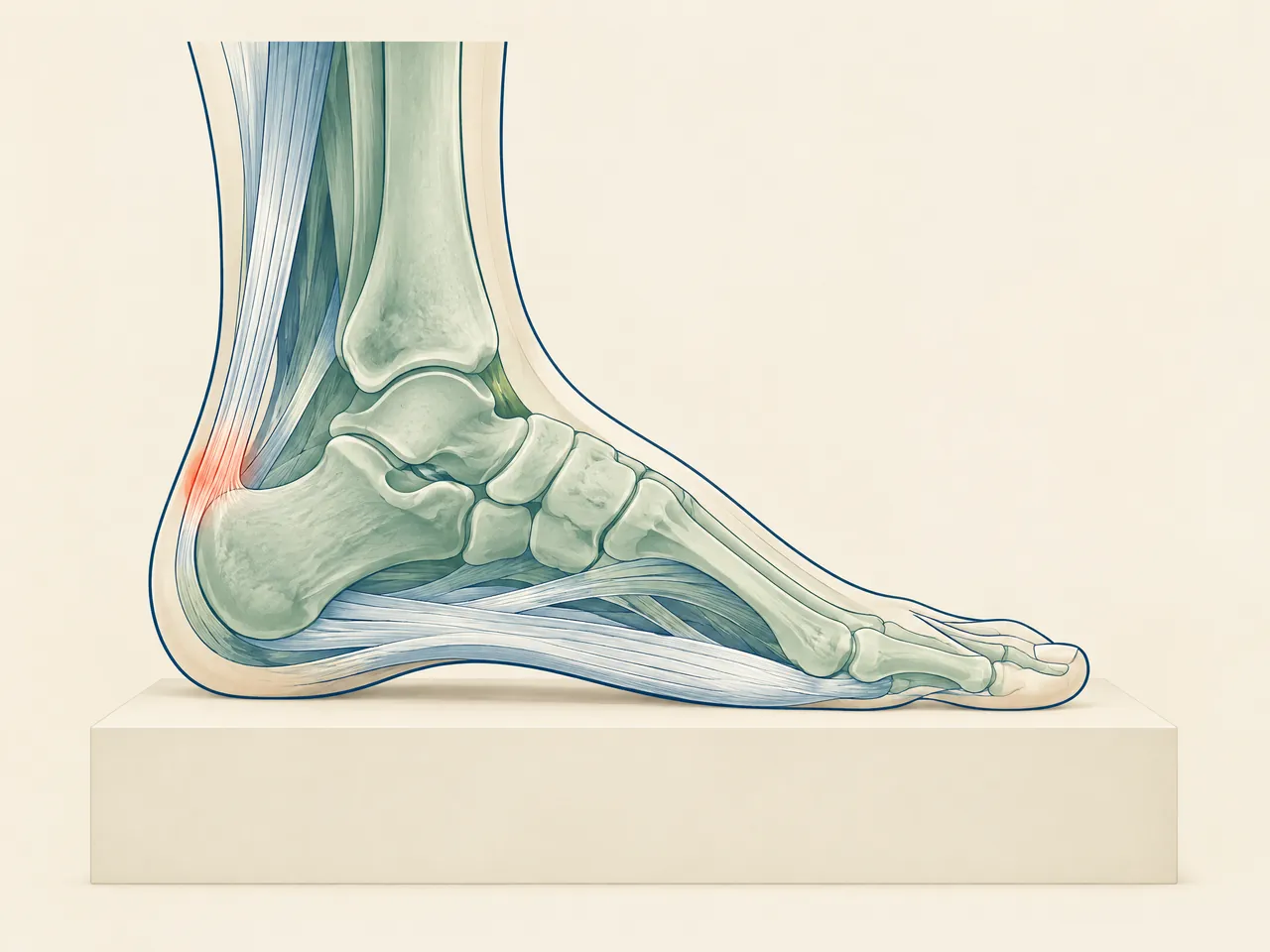
The short answer
Return to sport after an ankle sprain should be based on function, not a calendar date. Start only when daily walking and weight bearing are comfortable and swelling is settling. Then rebuild movement, strength and balance before adding running, jumping, turns and sport drills. If pain, swelling or a feeling that the ankle will give way increases as activity rises, step back. Inability to bear weight, deformity or persistent numbness needs prompt medical assessment.
Transparent pricing
See the fees.
Choose your care.
Explore our complete official price list, including first-trial prices, regular prices, packages and branch-specific options.
Opening WhatsApp prepares an enquiry; it does not send a message, take payment or confirm an appointment. Suitability and individual arrangements are confirmed during consultation.
Pain care
All prices in HKDExtracorporeal shockwave treatment
Shockwave treatment for deep-tissue and fascial care. The Kwun Tong clinic offers the multi-area options shown below.
Priced by branch
Branch-specific pricing
Prince Edward: HK$250 per area
Kwun Tong: HK$250 for 1 area / HK$450 for 2 areas / HK$600 for 3 areas
Pain care (manual therapy)
Includes Chinese medicine musculoskeletal assessment, manual joint techniques and tui na.
HK$580 (single session)
Chinese medicine musculoskeletal assessment
Pain care (acupuncture and manual therapy)
Combines acupuncture and manual therapy.
HK$680 (single session)
Combined care
Hair and scalp
All prices in HKDScalp health and hair-loss management
Includes AI scalp analysis, deep scalp and follicle cleansing, and scalp oil-control care.
HK$380 (first trial)
Regular price: HK$680
- 6 sessions: HK$3,480 (HK$580 per session)
- 12 sessions: HK$5,760 (HK$480 per session)
- 20 sessions: HK$8,600 (HK$430 per session)
- 30 sessions: HK$11,400 (HK$380 per session)
Hair acupuncture and Chinese herbal medicine package
Includes scalp acupuncture and 3 days of Chinese herbal medicine that does not require decoction.
HK$580 (single session)
Registered Chinese Medicine Practitioner consultation
- 6 sessions: HK$3,180 (HK$530 per session)
- 12 sessions: HK$5,760 (HK$480 per session)
- 20 sessions: HK$8,600 (HK$430 per session)
- 30 sessions: HK$11,400 (HK$380 per session)
Combined hair and scalp treatment
Combines acupuncture and Chinese herbal medicine with salon-level scalp and follicle care. Packages include complimentary hair-care shampoo and serum.
HK$1,260 (single session)
Combined treatment
- 8 sessions: HK$8,640 (HK$1,080 per session)
- 16 sessions: HK$15,680 (HK$980 per session)
- 20 sessions: HK$18,600 (HK$930 per session)
- 30 sessions: HK$26,400 (HK$880 per session)
Weight management
All prices in HKDFull-body acupoint embedding for weight management
Includes full-body acupoint embedding. Packages include complimentary Chinese herbal medicine for weight management, with the number of included days scaled to the package. Embedding material and the individual treatment arrangement are confirmed during consultation; this is not a cosmetic thread lift.
HK$980 (single session)
No trial session
- 10 sessions: HK$7,800 (HK$780 per session)
- 20 sessions: HK$14,600 (HK$730 per session)
- 30 sessions: HK$20,400 (HK$680 per session)
Facial acupuncture
All prices in HKDFacial acupuncture (basic)
Includes facial acupuncture and meridian-based facial care, including care for facial puffiness.
HK$480 (first trial)
Regular price: HK$680
- 10 sessions: HK$5,200 (HK$520 per session)
- 20 sessions: HK$9,600 (HK$480 per session)
- 30 sessions: HK$13,500 (HK$450 per session)
Facial acupuncture (advanced)
Includes enhanced facial acupuncture with a specially formulated moisturising mask and serum.
HK$780 (first trial)
Regular price: HK$1,180
- 10 sessions: HK$9,000 (HK$900 per session)
- 20 sessions: HK$16,600 (HK$830 per session)
- 30 sessions: HK$23,400 (HK$780 per session)
Chinese medicine
All prices in HKDAcupuncture and Chinese herbal medicine package
Includes a Chinese medicine consultation with pulse assessment, body acupuncture and 3 days of Chinese herbal granules that do not require decoction.
HK$580 (single session)
Chinese medicine consultation with pulse assessment
return to sport after ankle sprain: Assess Weight Bearing Before Activity; return to play after ankle sprain; ankle sprain return to running
A sprain can injure one or more ankle ligaments, and the amount of pain or bruising alone does not tell you exactly what has been injured. Start with a plain record: how the foot turned, whether you could take steps straight afterwards, where tenderness is most noticeable, and whether swelling or bruising appeared. Note what happens on stairs, uneven pavements and your first steps after sitting. This history is useful if assessment is needed, and it prevents a return-to-sport decision from resting on a single good moment.
For daily activity, ask whether you can stand with weight through the foot, walk at your usual pace and manage a normal household route without protecting one side. A limp, a shortened step, or pain that rises through an ordinary walk suggests that jogging is a jump in demand. The Hong Kong College of Orthopaedic Surgeons describes rehabilitation as progressing from swelling control to restoring range of motion, strength and flexibility, then stability and function. That sequence is more useful than treating a weekend fixture as the first test of recovery. [2]

return to play after ankle sprain: Walking, swelling and movement checkpoints; return to sport after ankle sprain; ankle sprain return to running
Compare the injured ankle with the other side during simple tasks rather than forcing a deep stretch. Can you point the foot, pull the toes upward and make a controlled circle without a sharp block? Can you walk across a room, turn slowly and go up or down a few steps without a worsening limp? Stiffness can be part of recovery, but pain that becomes sharper, swelling that rises, or a joint that repeatedly feels unreliable are reasons to reduce the activity and seek individual advice rather than push through.
Use a short response check after each new activity. Look at comfort while doing it, how the ankle feels over the following hours, and how it feels the next morning. This is especially practical in Hong Kong when a person walks to MTR stations, uses stairs or spends long periods standing at work before a planned evening workout. A quiet ankle during a brief indoor walk is not the same as an ankle that has tolerated commuting, carrying a bag and repeated changes of pace. Let daily loading become comfortable before adding impact.
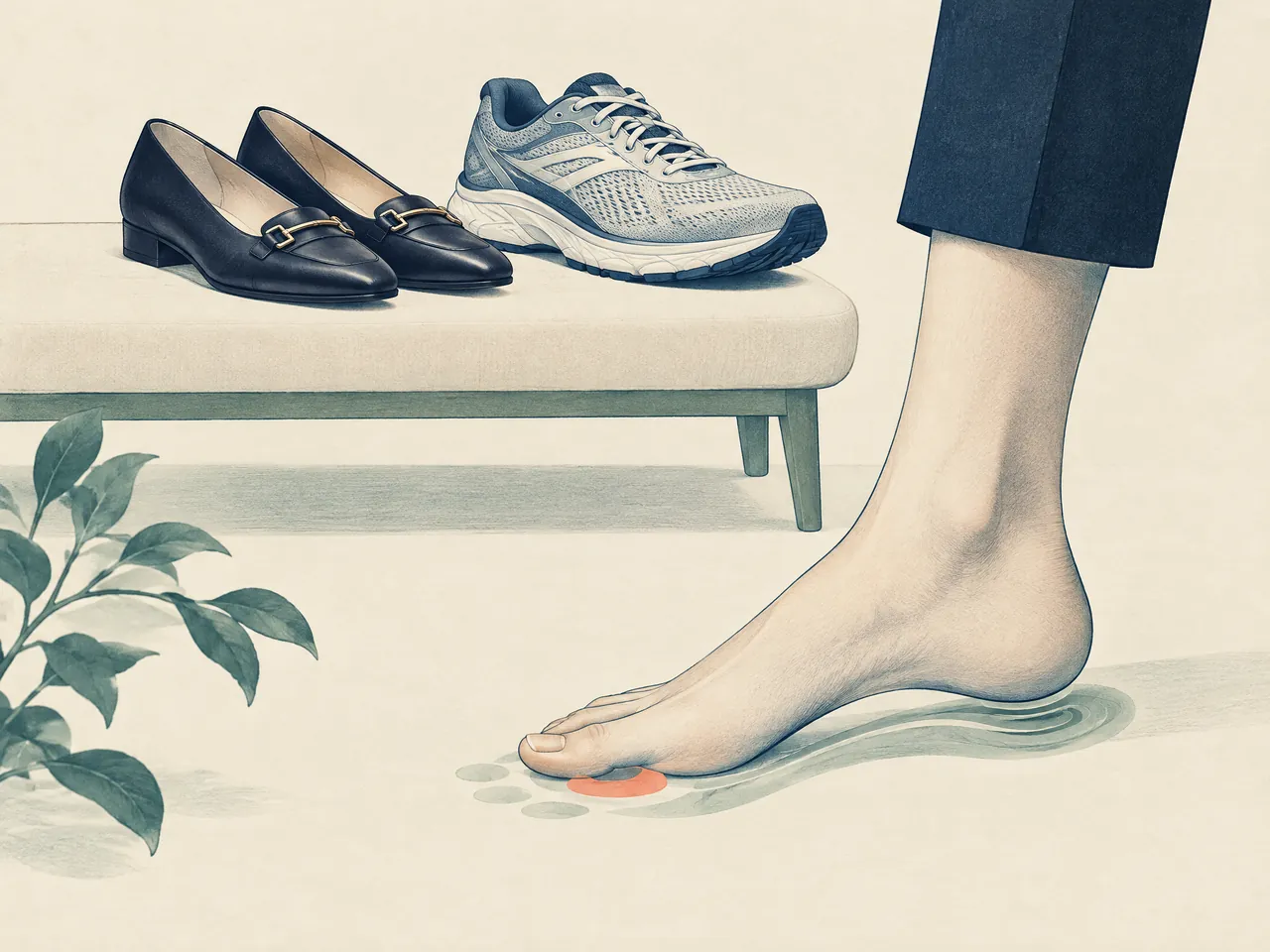
ankle sprain return to running: Pain, bruising and early running readiness; return to sport after ankle sprain; return to play after ankle sprain
Running asks for repeated single-leg loading, faster ankle motion and the ability to absorb impact. A sensible early readiness screen is therefore broader than being able to walk. You should be able to put weight through the foot comfortably, move the ankle with improving control, and do simple supported calf and balance work without a substantial symptom increase. If you want more detail on the transition, read when can I run after an ankle sprain before making a route or training plan.
Bruising can look dramatic, but appearance by itself cannot clear an ankle for a run or prove that it is unsafe. Pay greater attention to current function and the direction of symptoms. Pain that is severe, swelling or bruising that remains substantial or does not settle, inability to tolerate any weight, and an obvious deformity are features that need healthcare assessment. Do not try to work through pain to meet a race, team or gym deadline. [4]
Compare your options
| Stage | Useful check | Appropriate next step | Pause and reassess if |
|---|---|---|---|
| Daily weight bearing | You can stand and walk with improving comfort and without a protective limp. | Continue ordinary activity within symptoms and regain comfortable ankle movement. | Walking pain rises, swelling increases or you cannot tolerate weight. |
| Basic control | Simple ankle movement, calf work and supported single-leg control are improving. | Build strength and balance with advice matched to the injury. | Movement produces sharp pain, the ankle repeatedly gives way or function deteriorates. |
| Easy running | Daily life is comfortable and an easy, predictable run does not change normal walking afterwards. | Increase one element at a time, such as duration or pace, while keeping the route simple. | Symptoms worsen during the run, later that day or the following morning. |
| Sport drills and play | You can tolerate relevant stops, turns, landings or repeated efforts with control and confidence. | Progress from planned drills to fuller training before competition where appropriate. | Pain, instability, fear of a movement or loss of control returns under sport demand. |
On smaller screens, scroll the table sideways to compare all columns.
return to sport after ankle sprain: Build Movement, Strength and Stability; return to play after ankle sprain; ankle sprain return to running
Once the immediate pain and swelling are improving, recovery becomes a capacity-building task. Controlled ankle movement, calf and lower-leg strength, and balance all matter because sport combines them. The ankle has to deal with a step off a kerb, a sudden stop or a sideways reach without relying on a protective limp. Mayo Clinic notes that rehabilitation after pain and swelling improve aims to restore movement, strength, flexibility and stability, with balance exercises used to retrain coordinated muscle control. [3]
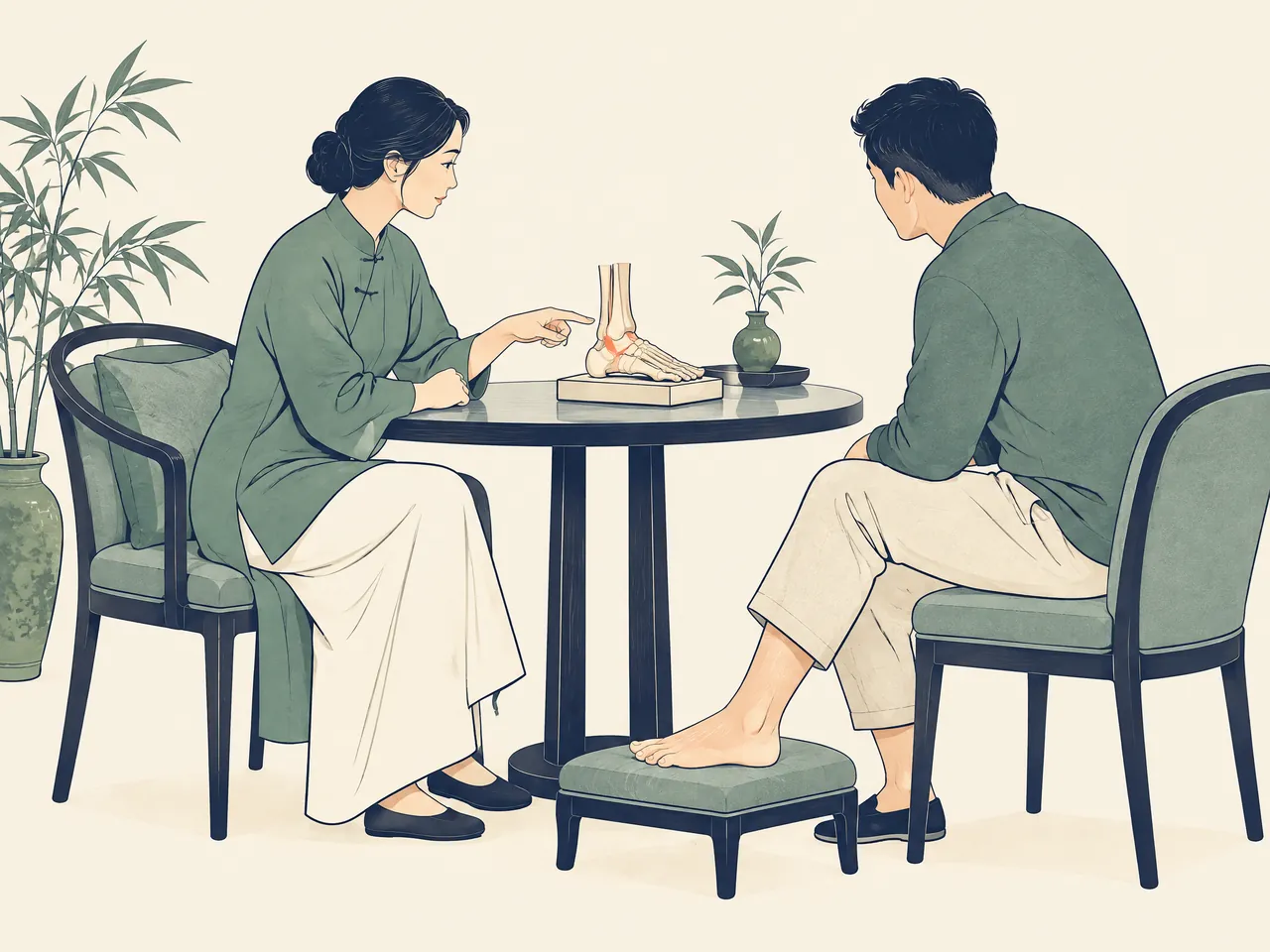
Think of the return as a ladder, not a pass-or-fail test. First make usual walking comfortable. Next, build controlled movement and simple strength work according to professional guidance. Then add single-leg control, low-impact fitness or light hops if appropriate, followed by short running exposure and the movements specific to your sport. The order may change for a swimmer, dancer, runner or basketball player, but the principle remains the same: only add a harder demand when the present demand is well tolerated.
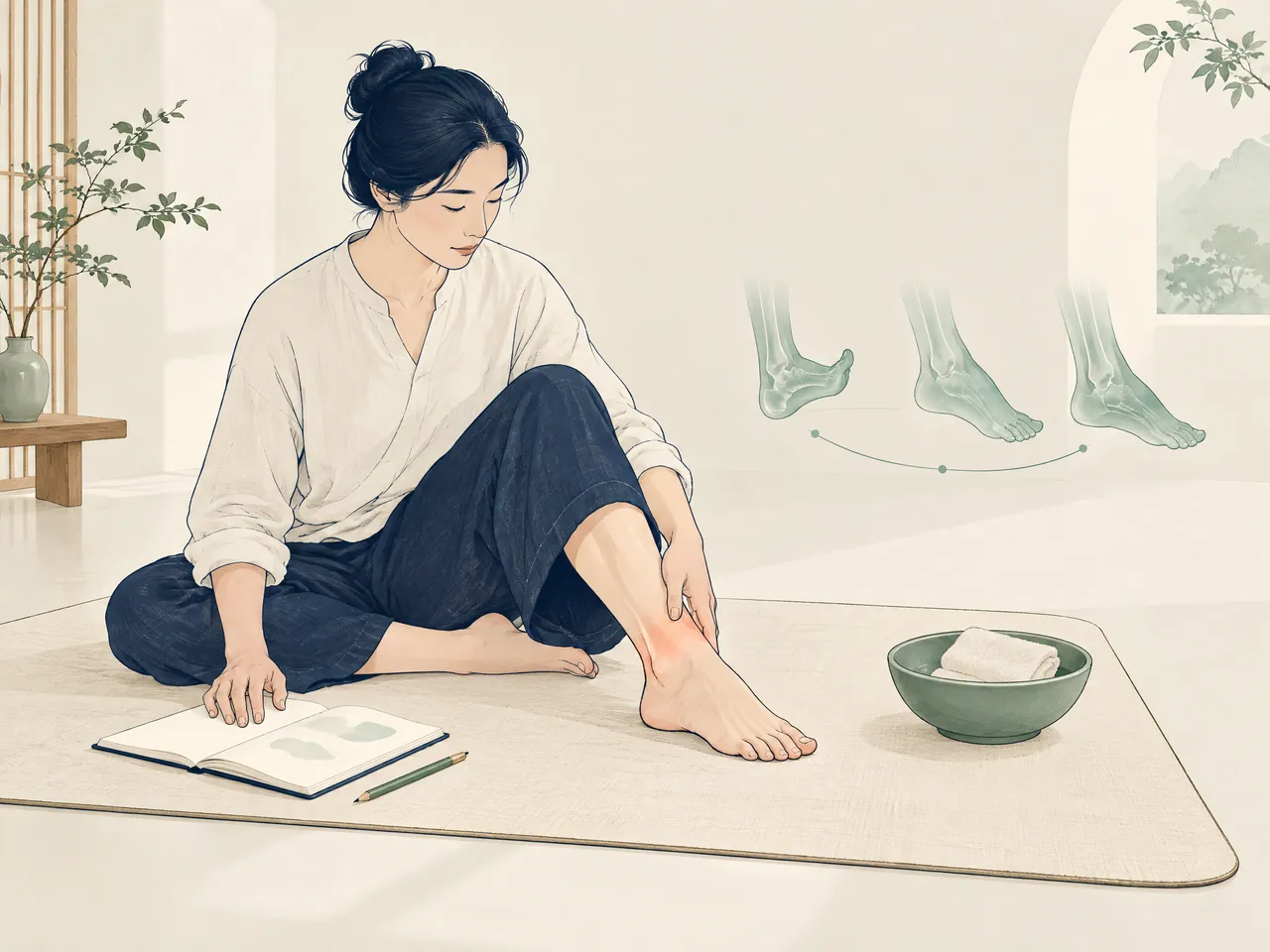
return to play after ankle sprain: Progress from daily steps to sport drills; return to sport after ankle sprain; ankle sprain return to running
A return-to-play decision should include the sport, not just the ankle. A runner may need confidence with steady, repeated strides; a badminton player needs braking, reaching and lateral recovery; a footballer needs acceleration, cutting and contact awareness. The PAASS consensus describes five areas clinicians can consider after an acute lateral ankle sprain: pain, ankle impairments, the athlete’s perception, sensorimotor control, and sport or functional performance. It is a structured lens for discussion, not a self-clearance score or a fixed set of home test cut-offs. [1]
Make each progression small enough to learn from it. For example, move from a level walk to controlled jogging, then to a short run with planned stops, and only later to sharper turns or reactive drills. Keep the session simpler than normal while testing a new demand; a hard interval workout, unfamiliar shoes and a crowded uneven route all change the load at once. For examples of the kinds of capacity a clinician may examine, see ankle sprain functional tests.
ankle sprain return to running: Increase running load gradually and monitor symptoms; return to sport after ankle sprain; return to play after ankle sprain
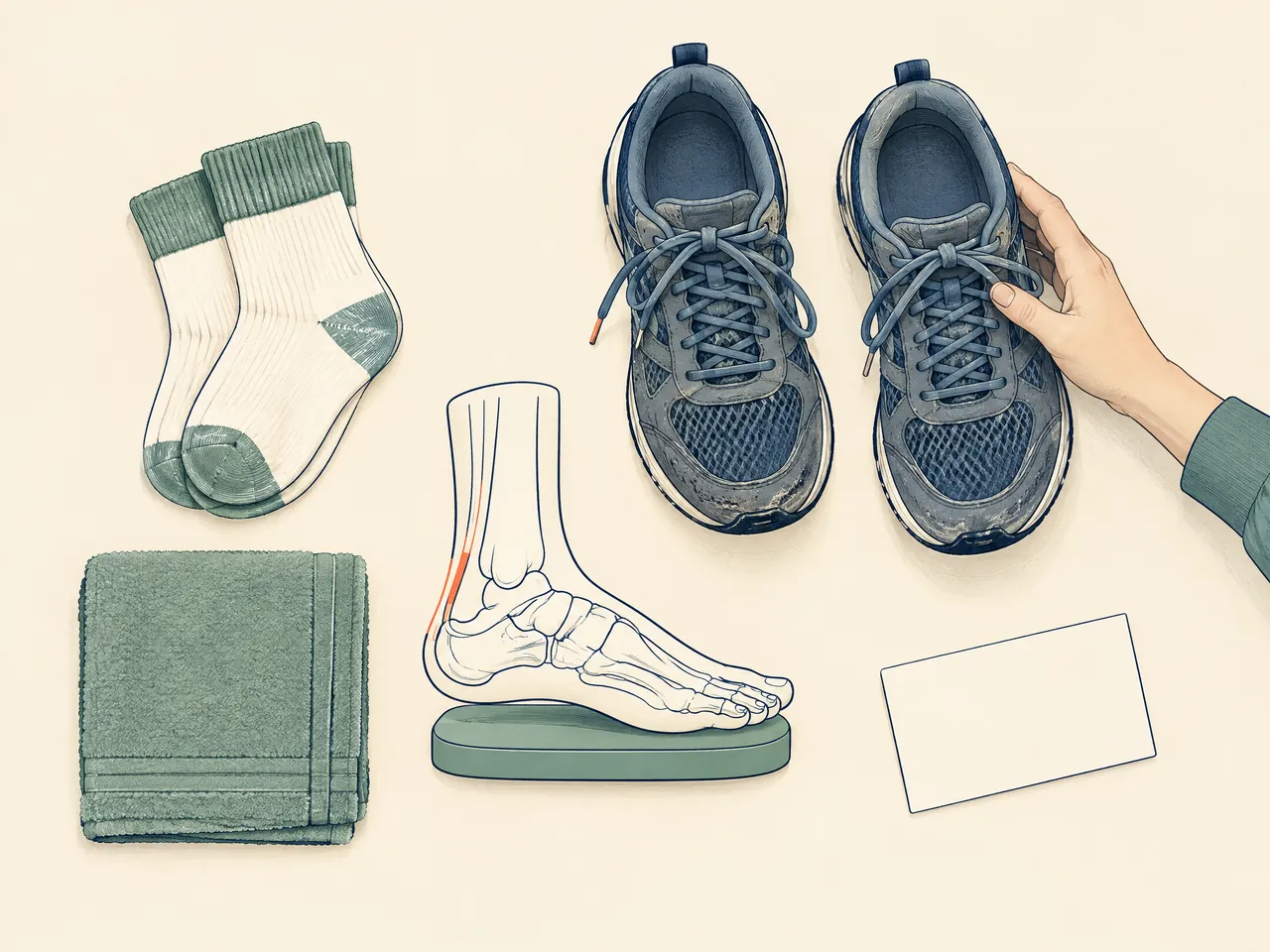
Early runs are best treated as checks, not fitness tests. Choose a predictable, level surface and leave enough time afterwards to observe the ankle. Start with an easy pace and a modest exposure that fits your current walking and balance tolerance, rather than trying to regain missed distance in one outing. Keep turns, hills, trail ground and speed work for later stages. A return should leave you able to walk normally afterwards, not create a fresh limp that changes the next day’s ordinary movement.
If symptoms increase, reduce one variable first: distance, pace, surface complexity, direction changes or session frequency. Then allow symptoms to settle before retesting a simpler version. Repeatedly rolling the same ankle, hesitating on a single leg, or feeling that it may give way deserves attention even if pain is low. Those patterns can be relevant to recurrent ankle sprains and chronic ankle instability. A gradual plan is not a promise of a particular recovery date; it is a way to match loading to the function you have regained.
return to sport after ankle sprain: Know When to Pause and Seek Assessment; return to play after ankle sprain; ankle sprain return to running
Pause the return plan when the ankle sends a clear message that daily life or training is too much. Escalating pain, renewed swelling after a small load, repeated giving way, an inability to regain a normal walk, or symptoms that stop improving are all reasons not to add another training stage. An assessment can consider the injury mechanism, tenderness, movement and whether imaging is appropriate to rule out a fracture or other injury. This is particularly important after a fall, a forceful twist or a direct impact rather than a straightforward minor roll.
It is also worth separating an early sore ankle from an urgent problem. You should seek prompt medical attention if you cannot bear weight at all, the foot or ankle looks deformed, severe pain or swelling is present, or there is ongoing numbness, unusual colour change or coldness in the foot. Do not depend on massage, a wrap or a planned acupuncture discussion to exclude a fracture or a circulation or nerve concern. Appropriate early protection and medical triage come before any return-to-running plan. [4]

return to play after ankle sprain: Red flags that need medical attention; return to sport after ankle sprain; ankle sprain return to running
A crack or pop at the time of injury, marked tenderness over bone, worsening bruising, altered sensation, or a foot that appears pale, blue or cold should not be treated as a routine training interruption. These signs may point to a problem that needs an urgent examination. Bring useful details: the mechanism, whether you managed four or more steps after the injury, the location of the pain, previous sprains, and what has changed since. This makes it easier to decide what needs to be checked and what protection is appropriate.
For less urgent but stubborn problems, arrange assessment when pain or instability continues despite sensible protection and progressive rehabilitation. Recurrence matters: repeated sprains may change how an ankle is supported, strengthened and tested before sport. The Hong Kong College of Orthopaedic Surgeons notes that imaging can be used when needed to assess injury severity, and that rehabilitation progresses through motion, strength, flexibility and later stability work. [2]
ankle sprain return to running: Discuss individual recovery at TCM Lab Hong Kong; return to sport after ankle sprain; return to play after ankle sprain
If you would like to discuss your recovery at TCM Lab Hong Kong, describe the original incident, current ability to bear weight, changes in swelling, your sport and the movement that still feels uncertain. An in-person discussion can consider how Chinese medicine may sit alongside appropriate medical assessment and a structured rehabilitation plan; it should not substitute for urgent fracture or neurovascular evaluation. You can enquire at the Kwun Tong Chinese medicine clinic or the Chinese medicine clinic Prince Edward location.
Come with a practical aim rather than a fixed return date: walking through a workday, resuming a short easy run, handling court movement, or preparing for a race later in the season. That goal helps frame the next safe step and the symptoms that should pause it. If this is not your first roll, it can also help to review why does my ankle keep spraining. Message or call before attending to explain your needs and confirm a suitable appointment arrangement.
Care and health guide
Health service information
This directory brings together services, reading, and visit information related to health services, to help you prepare questions for a consultation.
If you are organising health questions, Chinese medicine clinic Hong Kong is a starting point for learning about related services and preparing for a consultation.
People have different needs; acupuncture Hong Kong provides further reading to help you understand options in your own context.


Your questions, answered
Frequently asked questions
How soon can I return to sport after an ankle sprain?
There is no dependable universal timetable. Return is more safely guided by comfortable daily weight bearing, improving movement and strength, balance, confidence and the ability to tolerate the movements of your sport. Injury severity, previous sprains and the demands of the activity all matter.
Can I run if my ankle is still swollen?
Do not use a run as a test when swelling is increasing, walking remains painful or you are limping. Settling swelling is only one part of readiness. Progress once daily activity, ankle movement and simple control work are tolerable, then observe the response to an easy run before adding harder demands.
What is the difference between returning to running and returning to play?
Running is a repeated straight-line impact task, while return to play may add rapid braking, cutting, jumping, landing, contact and decisions under fatigue. Tolerating a short easy run is therefore a useful step, not automatic clearance for a court or field sport.
When should I seek medical assessment instead of progressing exercises?
Seek prompt assessment for inability to bear weight, an obvious deformity, severe or persistent swelling or bruising, numbness, unusual colour or coldness in the foot, or symptoms that are getting worse. Arrange assessment too if pain or instability does not improve with sensible protection and rehabilitation.
Sources and further information
- [1] Smith et al., Return to sport decisions after an acute lateral ankle sprain injury: introducing the PAASS approach — British Journal of Sports Medicine
Referenced for: Expert-consensus return-to-sport domains: pain, ankle impairments, athlete perception, sensorimotor control, and sport or functional performance.
- [2] Ankle Sprain — The Hong Kong College of Orthopaedic Surgeons
Referenced for: Ankle-sprain symptoms, staged rehabilitation, imaging context and gradual restoration of function.
- [3] Sprained ankle: Diagnosis and treatment — Mayo Clinic
Referenced for: Rehabilitation goals, balance work, support options and discussion before resuming sport.
- [4] Sports Injuries: Diagnosis, Treatment, and Steps to Take — National Institute of Arthritis and Musculoskeletal and Skin Diseases
Referenced for: Serious-injury features, early protection and the rationale for rehabilitation before returning to activity.