
TCM Lab · Health reading
acupuncture for De Quervain's tenosynovitis: Hong Kong acupuncture for De Quervain's tenosynovitis and De Quervain's tenosynovitis acupuncture guidance
Published Updated
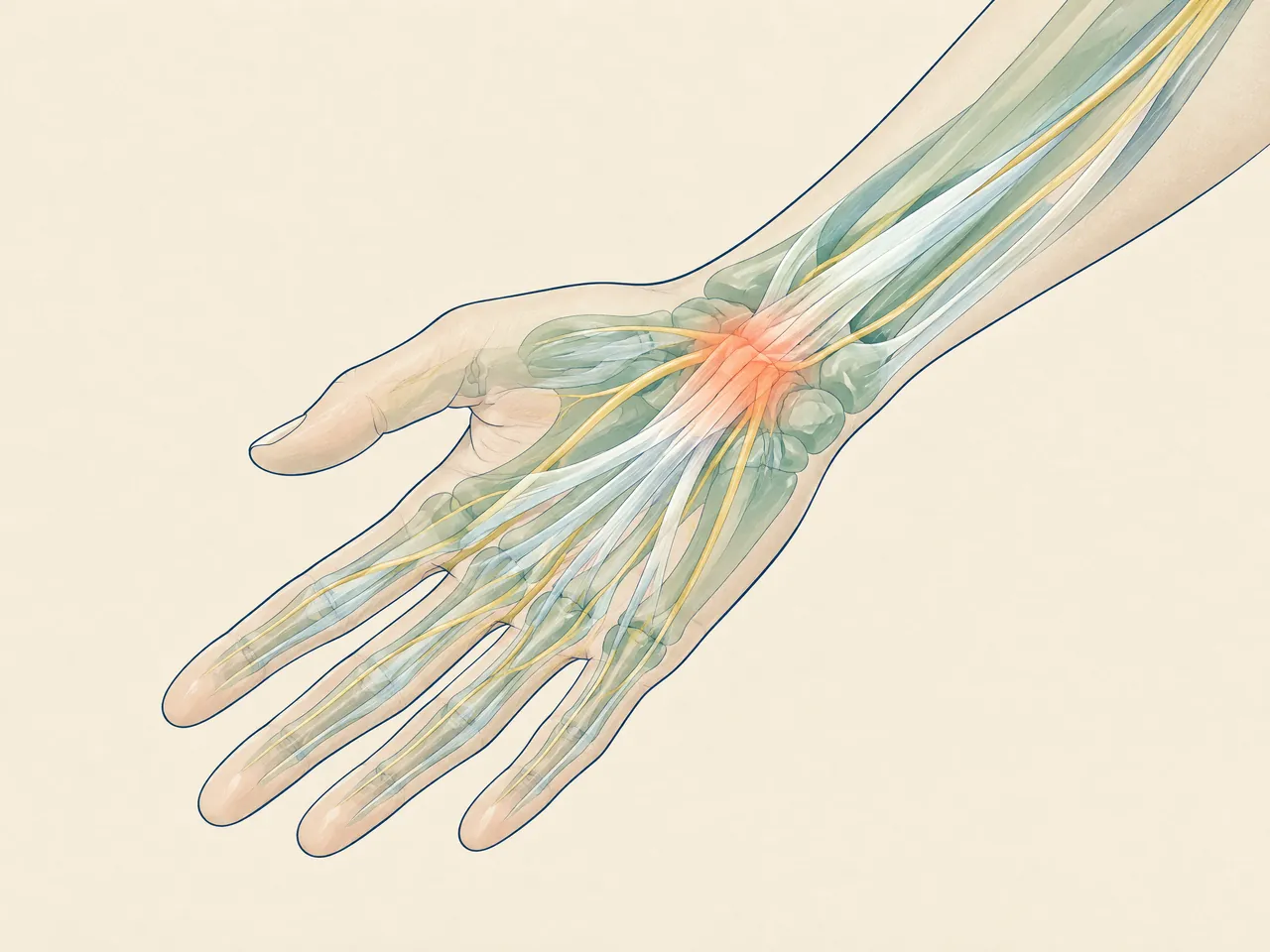
Pain on the thumb side of the wrist can make lifting a baby, opening a jar, scrolling a phone or wringing a cloth unexpectedly difficult. Acupuncture for De Quervain's tenosynovitis may be discussed as one part of symptom management after an individual assessment, alongside changes to painful hand use. It is not a way to repair a narrowed tendon compartment or another structural problem. A careful plan starts by checking whether the pain pattern fits, whether medical assessment should happen first, and which practical supports may reduce strain.
Appointments are confirmed through WhatsApp. If you have language requirements, please mention them in your enquiry.
The short answer
Acupuncture for De Quervain's tenosynovitis can be considered as part of an individual symptom-management plan, but it does not repair tendon-sheath narrowing or replace assessment of a different hand or wrist problem. A practitioner should ask about the pain pattern, gripping load, injury and any numbness or weakness. Rest from provoking tasks, a thumb-and-wrist support, hand therapy and medical treatment may also be appropriate depending on the assessment.
Transparent pricing
See the fees.
Choose your care.
Explore our complete official price list, including first-trial prices, regular prices, packages and branch-specific options.
Opening WhatsApp prepares an enquiry; it does not send a message, take payment or confirm an appointment. Suitability and individual arrangements are confirmed during consultation.
Pain care
All prices in HKDExtracorporeal shockwave treatment
Shockwave treatment for deep-tissue and fascial care. The Kwun Tong clinic offers the multi-area options shown below.
Priced by branch
Branch-specific pricing
Prince Edward: HK$250 per area
Kwun Tong: HK$250 for 1 area / HK$450 for 2 areas / HK$600 for 3 areas
Pain care (manual therapy)
Includes Chinese medicine musculoskeletal assessment, manual joint techniques and tui na.
HK$580 (single session)
Chinese medicine musculoskeletal assessment
Pain care (acupuncture and manual therapy)
Combines acupuncture and manual therapy.
HK$680 (single session)
Combined care
Hair and scalp
All prices in HKDScalp health and hair-loss management
Includes AI scalp analysis, deep scalp and follicle cleansing, and scalp oil-control care.
HK$380 (first trial)
Regular price: HK$680
- 6 sessions: HK$3,480 (HK$580 per session)
- 12 sessions: HK$5,760 (HK$480 per session)
- 20 sessions: HK$8,600 (HK$430 per session)
- 30 sessions: HK$11,400 (HK$380 per session)
Hair acupuncture and Chinese herbal medicine package
Includes scalp acupuncture and 3 days of Chinese herbal medicine that does not require decoction.
HK$580 (single session)
Registered Chinese Medicine Practitioner consultation
- 6 sessions: HK$3,180 (HK$530 per session)
- 12 sessions: HK$5,760 (HK$480 per session)
- 20 sessions: HK$8,600 (HK$430 per session)
- 30 sessions: HK$11,400 (HK$380 per session)
Combined hair and scalp treatment
Combines acupuncture and Chinese herbal medicine with salon-level scalp and follicle care. Packages include complimentary hair-care shampoo and serum.
HK$1,260 (single session)
Combined treatment
- 8 sessions: HK$8,640 (HK$1,080 per session)
- 16 sessions: HK$15,680 (HK$980 per session)
- 20 sessions: HK$18,600 (HK$930 per session)
- 30 sessions: HK$26,400 (HK$880 per session)
Weight management
All prices in HKDFull-body acupoint embedding for weight management
Includes full-body acupoint embedding. Packages include complimentary Chinese herbal medicine for weight management, with the number of included days scaled to the package. Embedding material and the individual treatment arrangement are confirmed during consultation; this is not a cosmetic thread lift.
HK$980 (single session)
No trial session
- 10 sessions: HK$7,800 (HK$780 per session)
- 20 sessions: HK$14,600 (HK$730 per session)
- 30 sessions: HK$20,400 (HK$680 per session)
Facial acupuncture
All prices in HKDFacial acupuncture (basic)
Includes facial acupuncture and meridian-based facial care, including care for facial puffiness.
HK$480 (first trial)
Regular price: HK$680
- 10 sessions: HK$5,200 (HK$520 per session)
- 20 sessions: HK$9,600 (HK$480 per session)
- 30 sessions: HK$13,500 (HK$450 per session)
Facial acupuncture (advanced)
Includes enhanced facial acupuncture with a specially formulated moisturising mask and serum.
HK$780 (first trial)
Regular price: HK$1,180
- 10 sessions: HK$9,000 (HK$900 per session)
- 20 sessions: HK$16,600 (HK$830 per session)
- 30 sessions: HK$23,400 (HK$780 per session)
Chinese medicine
All prices in HKDAcupuncture and Chinese herbal medicine package
Includes a Chinese medicine consultation with pulse assessment, body acupuncture and 3 days of Chinese herbal granules that do not require decoction.
HK$580 (single session)
Chinese medicine consultation with pulse assessment
What acupuncture for De Quervain's tenosynovitis means: Hong Kong acupuncture for De Quervain's tenosynovitis and De Quervain's tenosynovitis acupuncture context
De Quervain's tenosynovitis is commonly used to describe pain involving the tendons on the thumb side of the wrist. The Hong Kong College of Orthopaedic Surgeons describes stenosing tenosynovitis in the first extensor compartment: the covering can become narrow, or the tendons within it can swell, creating pressure and pain [1]. That anatomy matters when considering acupuncture. Needling may be part of a conversation about comfort and function, but it does not widen a compartment, repair a damaged structure or confirm a diagnosis.
For someone seeking Hong Kong acupuncture for De Quervain's tenosynovitis, the useful question is not simply whether needles can be used. It is whether the current symptoms are suitable for conservative management and what else is keeping the wrist irritated. A plan may also include medical advice, a splint, activity changes or hand therapy. If a clinician suspects a condition that needs imaging, injection or surgical discussion, acupuncture should not delay that route.
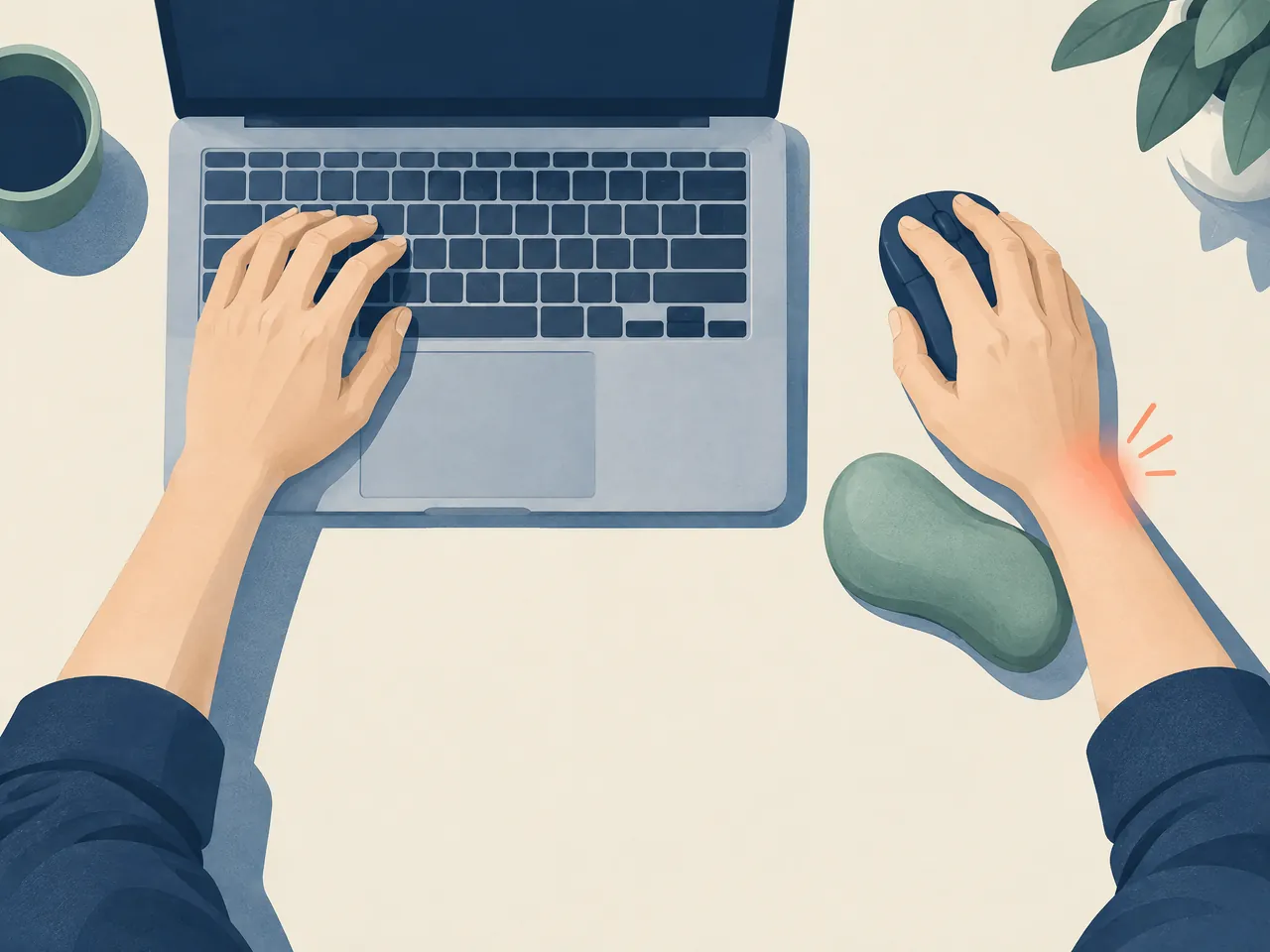
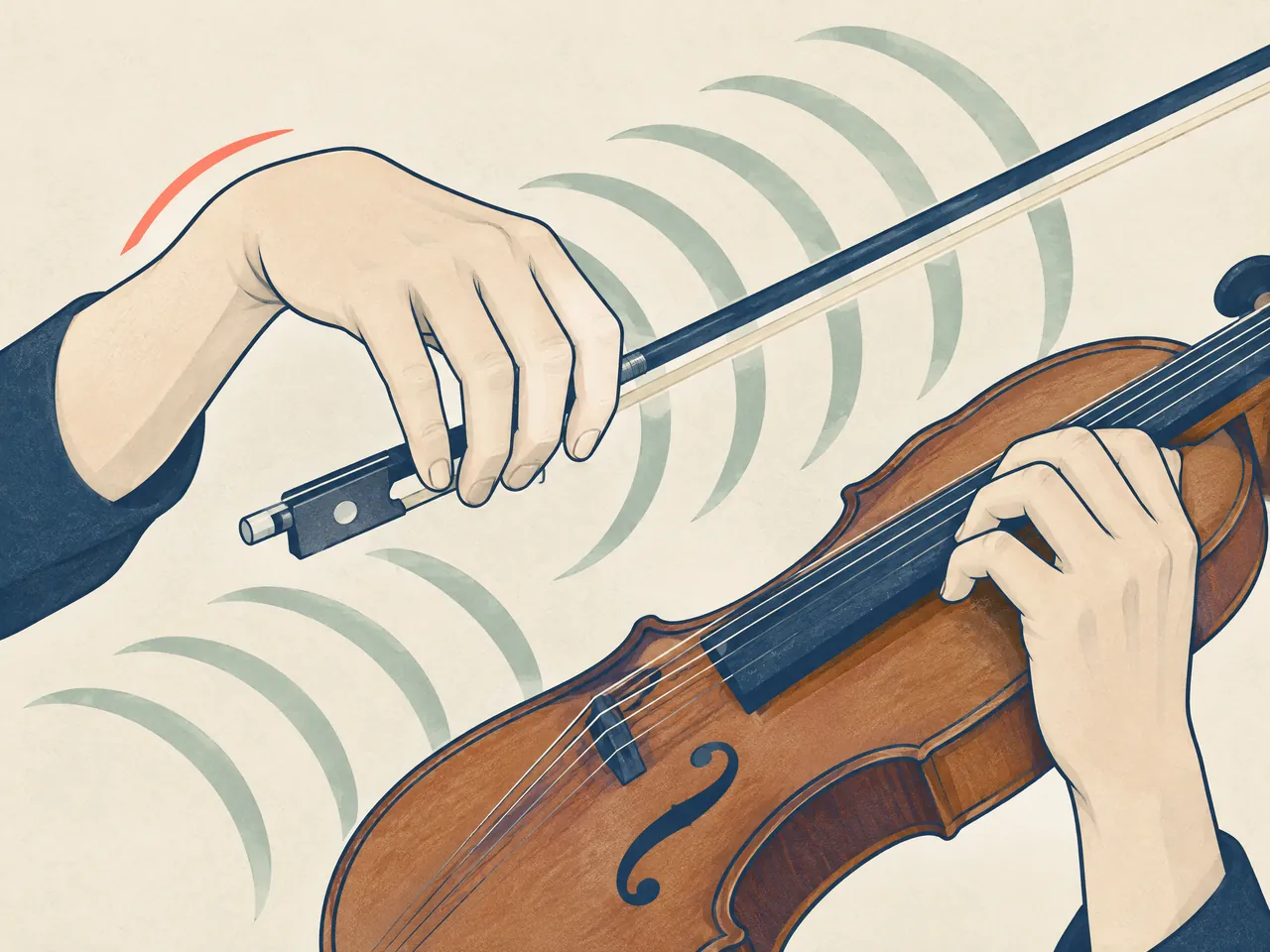
The label is often associated with caring for a newborn, yet it is not limited to parents. Repeated or unfamiliar hand-and-thumb loading, forceful grasping, twisting and an isolated injury can all be relevant history. The Hong Kong orthopaedic guidance notes repetitive use and the postpartum period as recognised contexts [1]. Looking at the actual trigger is more useful than blaming one activity: holding a phone one-handed, lifting a pan, keyboard and mouse position, sport, crafts, cleaning and baby-carrying each load the thumb and wrist differently.
Symptoms considered with acupuncture for De Quervain's tenosynovitis, Hong Kong acupuncture for De Quervain's tenosynovitis and De Quervain's tenosynovitis acupuncture
A typical description is pain or swelling at the base of the thumb or at the wrist below it. Pain may become clearer when the wrist moves, when an object is grasped, or when the thumb and wrist have to work together. Some people notice weakness or difficulty positioning the thumb and wrist [1]. These clues can support a discussion, but they are not a self-diagnosis. See our guide to De Quervain's tenosynovitis symptoms for a fuller description of the pattern people often report.
An assessment should map the exact site rather than treating every radial-side ache as the same condition. Is the pain at the thumb base, higher in the forearm, or over a bony point after a fall? Is there visible swelling? Does pinching, lifting or turning a key reproduce it? Mayo Clinic notes that clinicians examine the hand and may use a Finkelstein test, in which a specific thumb-and-wrist movement reproduces pain on the thumb side of the wrist [2]. A test is one clinical clue, not a reason to force the movement at home.
Why acupuncture for De Quervain's tenosynovitis does not repair structure: Hong Kong acupuncture for De Quervain's tenosynovitis and De Quervain's tenosynovitis acupuncture
The first extensor compartment is a physical passage for tendons. When space is restricted or the tissues within it are irritated, a needle cannot be assumed to reverse that mechanical situation. It is clearer and safer to separate symptom management from structural repair. Acupuncture can be considered as one conservative option after assessment; it is not a substitute for investigating a suspected fracture, tendon problem, nerve issue or persistent condition that needs medical care.
This distinction avoids an all-or-nothing choice. Conservative care for confirmed De Quervain disease may include reducing painful activity, a thumb splint, anti-inflammatory medicine where medically appropriate, occupational or physical therapy, and sometimes injection; surgery can be considered when less-invasive measures have not helped [1] [2]. The right mix depends on the diagnosis, duration, hand demands and medical history. No fixed series of acupuncture sessions can be assumed to replace those options.
Compare your options
| Current situation | What to clarify at assessment | Possible next discussion |
|---|---|---|
| Pain mainly with lifting, gripping or twisting | Which motion and load reproduce it, and whether the pain site fits the suspected pattern | Activity modification, support, acupuncture as symptom-management discussion, or hand therapy |
| Symptoms after a fall or other significant injury | Whether bone, joint or tendon injury needs to be excluded | Medical assessment before an acupuncture plan |
| Weakness, dropping objects or persistent numbness | Whether a nerve or another hand condition may be involved | Prompt medical review and a targeted management plan |
| Pain continues despite changing activities | Diagnosis, brace fit, work demands and what has already been tried | Review of conservative care, rehabilitation or medical options |
| Postpartum lifting or repeated care tasks | Which lift, hold and wrist position provoke symptoms | Practical load changes, support and appropriate professional review |
On smaller screens, scroll the table sideways to compare all columns.
Assessment before acupuncture for De Quervain's tenosynovitis: Hong Kong acupuncture for De Quervain's tenosynovitis and De Quervain's tenosynovitis acupuncture
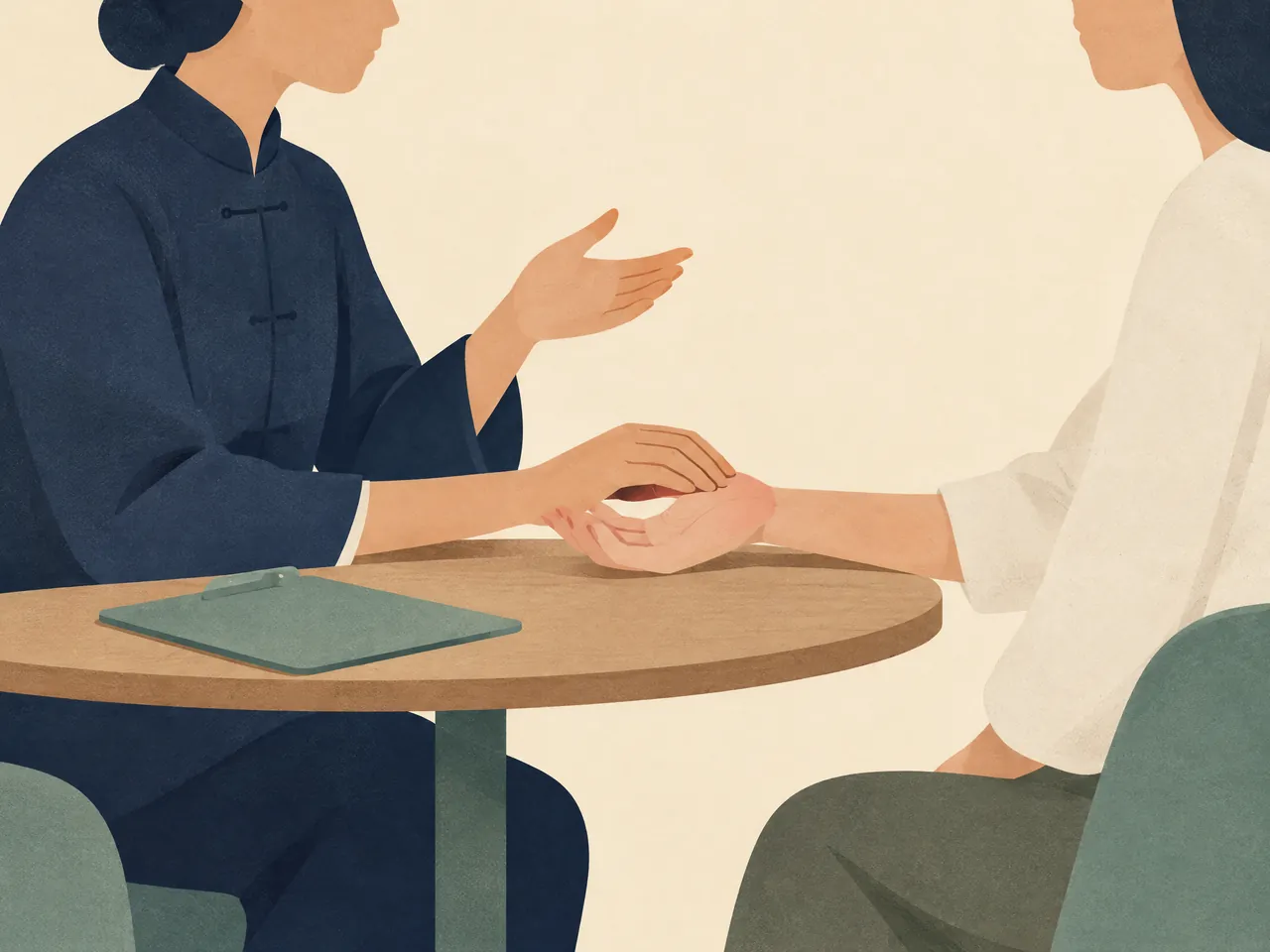
A useful acupuncture consultation begins with the story behind the wrist, not with a pre-set point list. It should cover when symptoms began, whether they followed a change in work, childcare, sport or a fall, what movement brings them on, and what has already been tried. The practitioner also needs to know about diagnoses, medicines and any current medical advice. In Hong Kong, acupuncture forms part of Chinese medicine practice, and the Department of Health explains that registration as a registered Chinese medicine practitioner requires the relevant approved training or equivalent and the Licensing Examination [3].
It is reasonable to ask how an acupuncture plan would be reviewed. The practitioner can explain the intended role of local and distal needling, the expected sensations, and what changes in hand use would be discussed between visits. Disposable sterile needles are normally used. Some people may feel a local ache, heaviness, tingling or a spreading sensation during needling; communicating discomfort matters. Point choice, technique and whether treatment is appropriate are individual clinical decisions, not a universal protocol for everyone with thumb-side pain.
Questions to ask about acupuncture for De Quervain's tenosynovitis, Hong Kong acupuncture for De Quervain's tenosynovitis and De Quervain's tenosynovitis acupuncture
Start with the fit: does the practitioner think the current symptoms can be discussed within acupuncture care, or is medical review preferable first? Ask what findings prompted that view. Then ask what the plan is trying to address: pain during a specific task, hand-use tolerance, or another stated goal. Clear wording is better than a promise to 'fix' the tendon. If an explanation sounds as though a structural narrowing will be repaired by acupuncture alone, ask how that claim is being supported.
A good conversation also covers daily adaptation. Ask which movements to reduce for now, how to use a thumb-and-wrist support if one is advised, and whether a referral or co-management with medical or rehabilitation professionals would be helpful. Bring a short list of the tasks that trigger the pain. If dropping objects or reduced hold is a concern, read about weak grip and wrist pain and raise it specifically rather than treating it as an expected inconvenience.
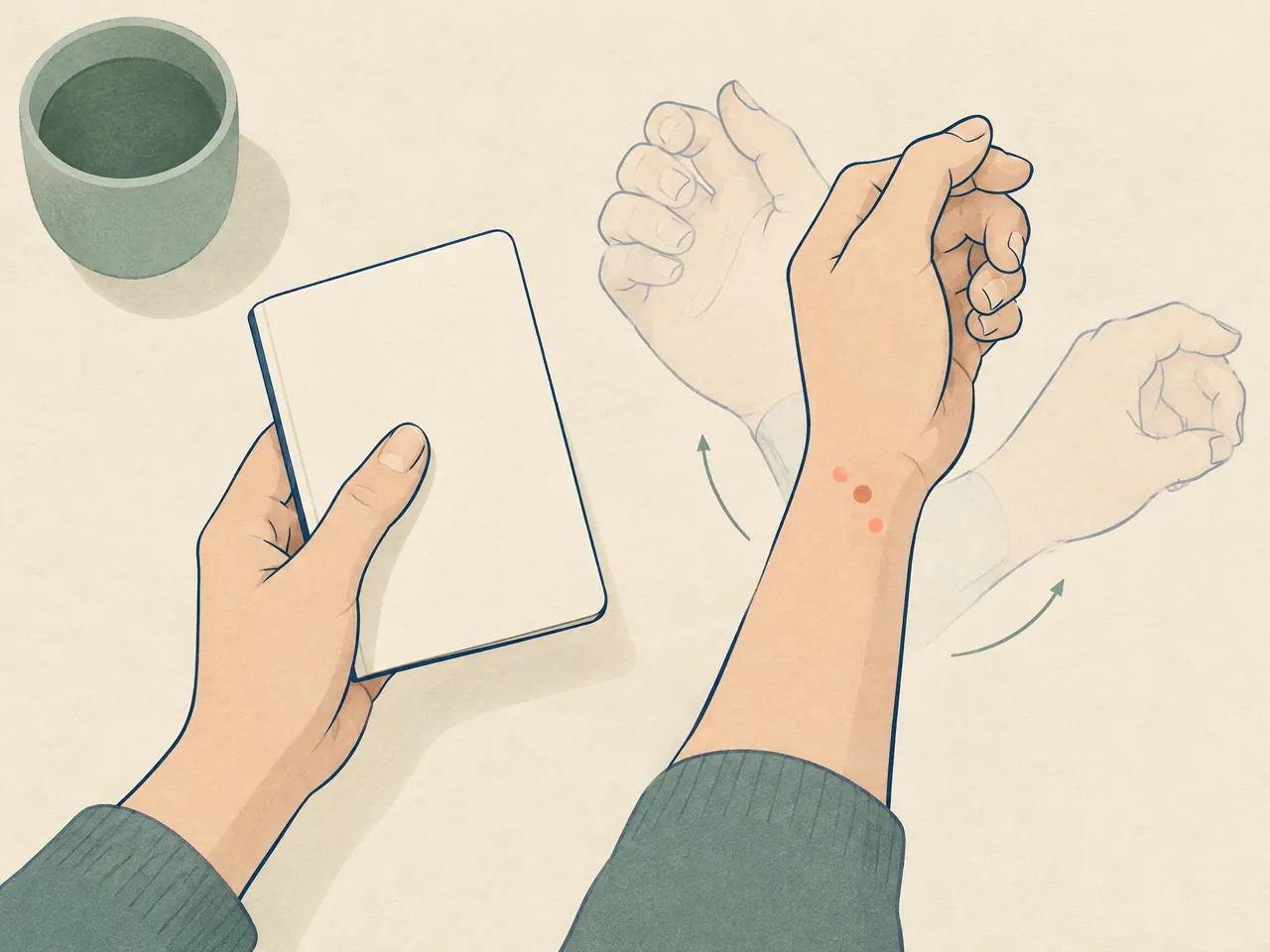
When medical assessment comes first with acupuncture for De Quervain's tenosynovitis, Hong Kong acupuncture for De Quervain's tenosynovitis and De Quervain's tenosynovitis acupuncture
Medical assessment comes first when the history suggests that the diagnosis may be different or more urgent. Examples include substantial trauma, inability to move or use the hand normally, fever with a hot or markedly swollen area, rapidly progressing symptoms, or new and persistent numbness. These features are reasons not to self-manage indefinitely. Tell the clinician exactly when the symptoms began and whether there was an injury or wound.
Persistent pain also warrants a review even when there is no emergency. The Hong Kong College of Orthopaedic Surgeons notes that diagnosis is usually clinical, while an X-ray may sometimes be used to exclude conditions such as fracture or thumb-base osteoarthritis; MRI is rarely needed for diagnosis [1]. Mayo Clinic likewise says imaging is generally not needed to diagnose De Quervain tenosynovitis [2]. Those statements explain why the purpose of assessment is not simply to obtain a scan, but to decide what problem is most likely and what information would change care.
Pregnancy, breastfeeding, other health conditions and medication use can change the conversation about pain relief, injection or activity demands. De Quervain symptoms may appear around the postpartum period with repeated lifting or carrying [1]. That context is a reason for a careful, practical plan, not a reason to dismiss severe pain as inevitable. Discuss safer lift set-ups, support, help with repetitive tasks and appropriate medical review with the professionals involved in your care.
Practical care after acupuncture for De Quervain's tenosynovitis: Hong Kong acupuncture for De Quervain's tenosynovitis and De Quervain's tenosynovitis acupuncture
After an acupuncture appointment, the most useful next step is often to observe the wrist in ordinary activities rather than testing it with a painful movement. Notice which task is easier, which still causes pain, and whether the load or position can be changed. That information makes a follow-up conversation more precise. It also protects against a common cycle: feeling slightly better, doing the exact high-load task repeatedly, and then interpreting the return of pain as a failure of the treatment rather than a signal about exposure.
A support plan should be specific enough to use on a busy Hong Kong day. Carry a bag on the less painful side where feasible, use both hands for a heavier object, take a break from prolonged one-handed phone use, and reorganise a workstation if mouse or keyboard work is a trigger. These are examples to adapt, not rigid rules. The key is to avoid the repeated thumb-and-wrist action that reliably reproduces pain, consistent with prevention advice from the Hong Kong College of Orthopaedic Surgeons [1].
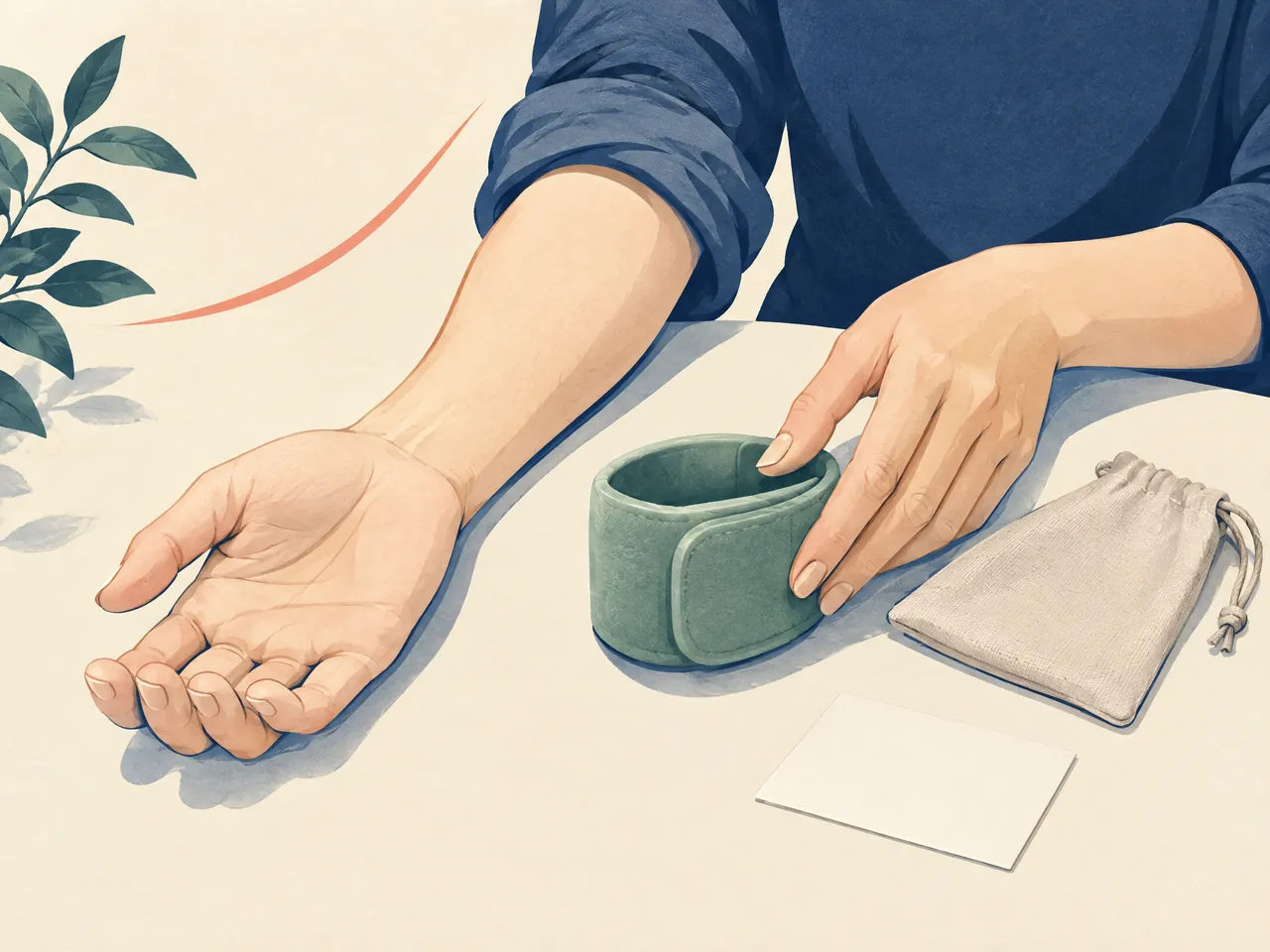
What a session may involve in acupuncture for De Quervain's tenosynovitis, Hong Kong acupuncture for De Quervain's tenosynovitis and De Quervain's tenosynovitis acupuncture
The first visit commonly involves discussion and examination before any needles are considered. The practitioner may ask the person to show the painful motion, check the area of tenderness, and review daily loading. If acupuncture is considered suitable, a selection of local and distal points may be proposed. Local work means points around the wrist area; distal work means points elsewhere, such as along the arm. The approach should be explained in relation to the assessment rather than described as a guaranteed formula.
During needling, tell the practitioner promptly about sharp pain, dizziness, anxiety or anything that feels wrong. A brief ache, heaviness, tingling or distending sensation can occur, but treatment should not depend on enduring severe discomfort. The Chinese reference for this page notes disposable sterile needles and describes local and distal choices, with the details varying by the person. It is sensible to ask what aftercare is suggested and when to seek reassessment if symptoms change.
A session is also a chance to make the hand-use plan workable. Rather than an instruction to 'rest completely', ask which one or two high-irritation tasks to modify first. A person who lifts a child may benefit from changing grip and getting help for repeated lifts; someone at a desk may need a different mouse set-up or more frequent pauses. The practical detail is important because the tendons are used in ordinary life, not only in exercise.
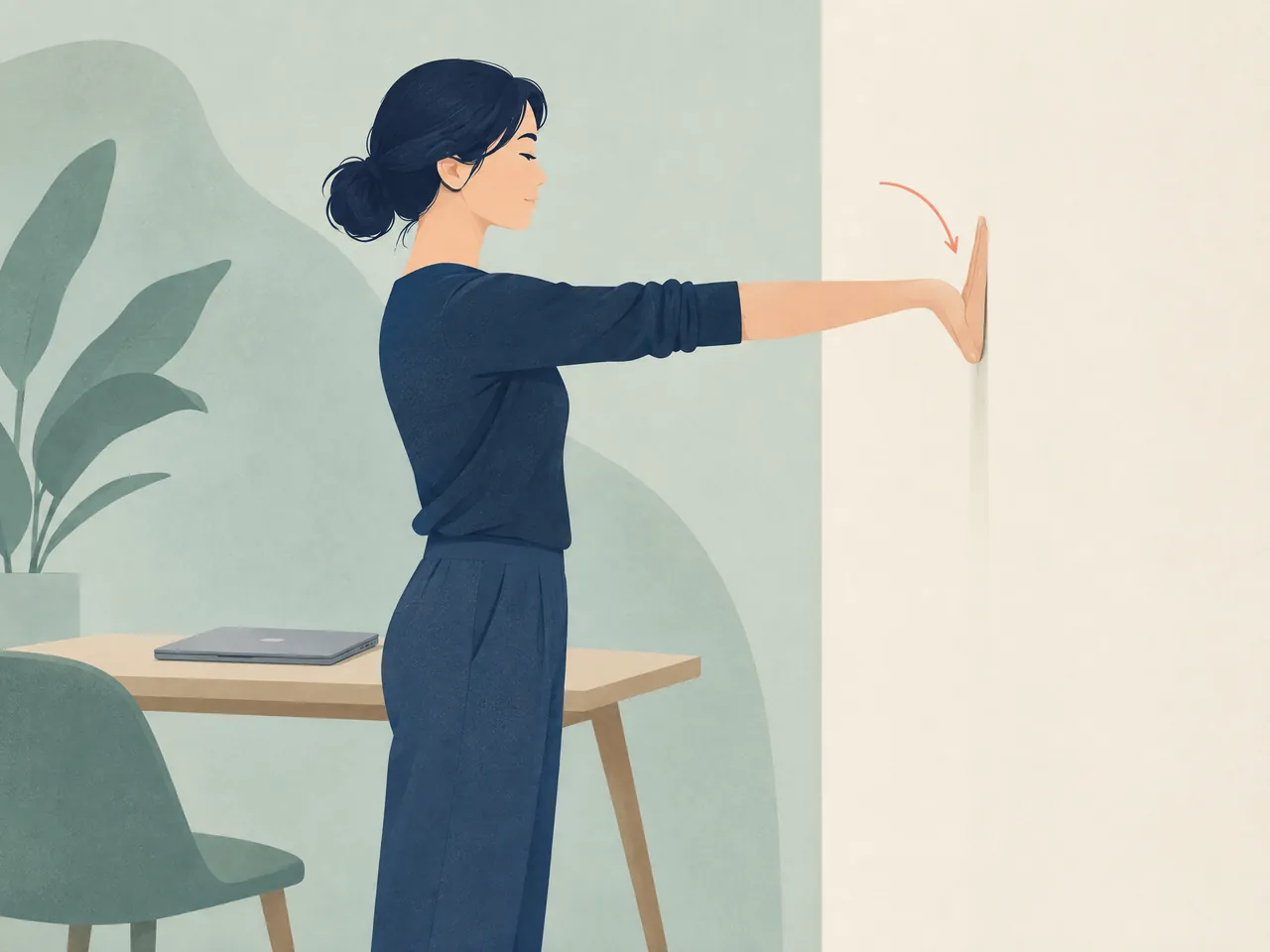
Rest, support and alternatives to acupuncture for De Quervain's tenosynovitis, Hong Kong acupuncture for De Quervain's tenosynovitis and De Quervain's tenosynovitis acupuncture
Rest does not have to mean stopping every activity. It means reducing the movements that reproduce pain while finding less provocative ways to complete essential tasks. A splint or brace may be used to keep the thumb and wrist in a more protected position, but fit and timing should be discussed with an appropriate clinician. Mayo Clinic includes a thumb-and-wrist splint or brace, avoiding repetitive thumb movement and avoiding pinching or gripping while moving the wrist side to side among commonly used measures [2].
Hand therapy or physiotherapy can be particularly useful when someone needs help identifying strain patterns, changing equipment or rebuilding function after symptoms settle. The Hong Kong orthopaedic guidance describes activity modification and a custom-made thumb splint as conservative options; it also notes medication and local steroid injection as possible treatments, with surgery for resistant cases after other approaches have failed [1]. These are medical choices, not instructions to self-treat. Ask the treating professional which option fits the diagnosis and your health history.
If you want to discuss De Quervain's tenosynovitis acupuncture at TCM Lab, contact the team with a brief description of the wrist problem, its triggers and any prior assessment. Appointment arrangements can be discussed for the Chinese medicine clinic Prince Edward or Kwun Tong Chinese medicine clinic. You can also review the Chinese medicine clinic price list Hong Kong before asking about a consultation.
Care and health guide
Health service information
This directory brings together services, reading, and visit information related to health services, to help you prepare questions for a consultation.
If you are organising health questions, Chinese medicine clinic Hong Kong is a starting point for learning about related services and preparing for a consultation.
People have different needs; acupuncture Hong Kong provides further reading to help you understand options in your own context.


Your questions, answered
Frequently asked questions
What should I ask before considering acupuncture for De Quervain's tenosynovitis?
Ask whether your symptoms and health situation are suitable for acupuncture or whether medical assessment should come first. Ask what the practitioner thinks is causing the pain, what role treatment is intended to have, what sensations can occur, how hand use may need to change afterwards, and how the plan will be reviewed. Mention injury, numbness, weakness, medicines and previous investigations.
What may happen during an acupuncture session for thumb-side wrist pain?
The practitioner should first assess the symptom pattern and may use local points near the wrist together with distal points elsewhere on the arm. Disposable sterile needles may be used. Some people notice an ache, tingling, heaviness or a distending sensation. Point selection, technique and the time needles remain in place vary with the individual rather than following one fixed protocol.
Can acupuncture cure the structural problem behind De Quervain's tenosynovitis?
No. De Quervain disease involves a tendon compartment and surrounding tissues; acupuncture should not be described as repairing a narrowed compartment or another structural injury. It may be discussed as one part of symptom management after assessment. Depending on the diagnosis, support, activity changes, hand therapy, medication, injection or surgery may also be relevant.
When should I seek medical assessment instead of relying on self-care or acupuncture?
Seek prompt medical assessment after significant trauma, if the hand cannot be used normally, or if you develop marked heat, redness and swelling, fever, new persistent numbness or pronounced weakness. Arrange a review for symptoms that keep worsening or do not improve despite avoiding provoking activities. These features may need assessment for causes other than routine overuse.
Sources and further information
- [1] [1] Hong Kong College of Orthopaedic Surgeons — De Quervain Disease
Referenced for: Supports the Hong Kong description of symptoms, clinical diagnosis, repetitive-use and postpartum contexts, activity modification, splinting, injection and surgery pathways.
- [2] [2] Mayo Clinic — De Quervain tenosynovitis: Diagnosis and treatment
Referenced for: Supports assessment, Finkelstein test context, brace and activity advice, therapy and medical treatment options; it does not support acupuncture efficacy claims.
- [3] [3] Hong Kong Department of Health, Chinese Medicine Regulatory Office — Regulation of Chinese Medicine Practitioner
Referenced for: Supports the local regulation and registration context for Chinese medicine practice; it does not support treatment-effect claims.
- [4] American Society for Surgery of the Hand — De Quervain's Tenosynovitis
Referenced for: Additional patient-facing reference on painful thumb-side wrist tendons, forceful grasping or twisting, splinting, hand therapy and surgical discussion.