
TCM Lab · Health reading
low back stiffness and limited movement — Can lumbar spondylosis cause leg pain and numbness?
Published Updated
Low back stiffness and limited movement can be frustrating when getting out of bed, turning to reverse a car, carrying shopping or sitting through a long commute. Lumbar spondylosis is one possible context: it describes age-related changes in the lower spine, yet many people with those changes have no pain at all. Can lumbar spondylosis cause leg pain and numbness? Yes—if a change affects or inflames a nerve—but that pattern can also arise from other back, hip or nerve conditions. The sensible next step is a history and examination that considers the whole pattern, not an assumption based on one scan finding or one painful day.
Appointments are confirmed through WhatsApp. If you have language requirements, please mention them in your enquiry.
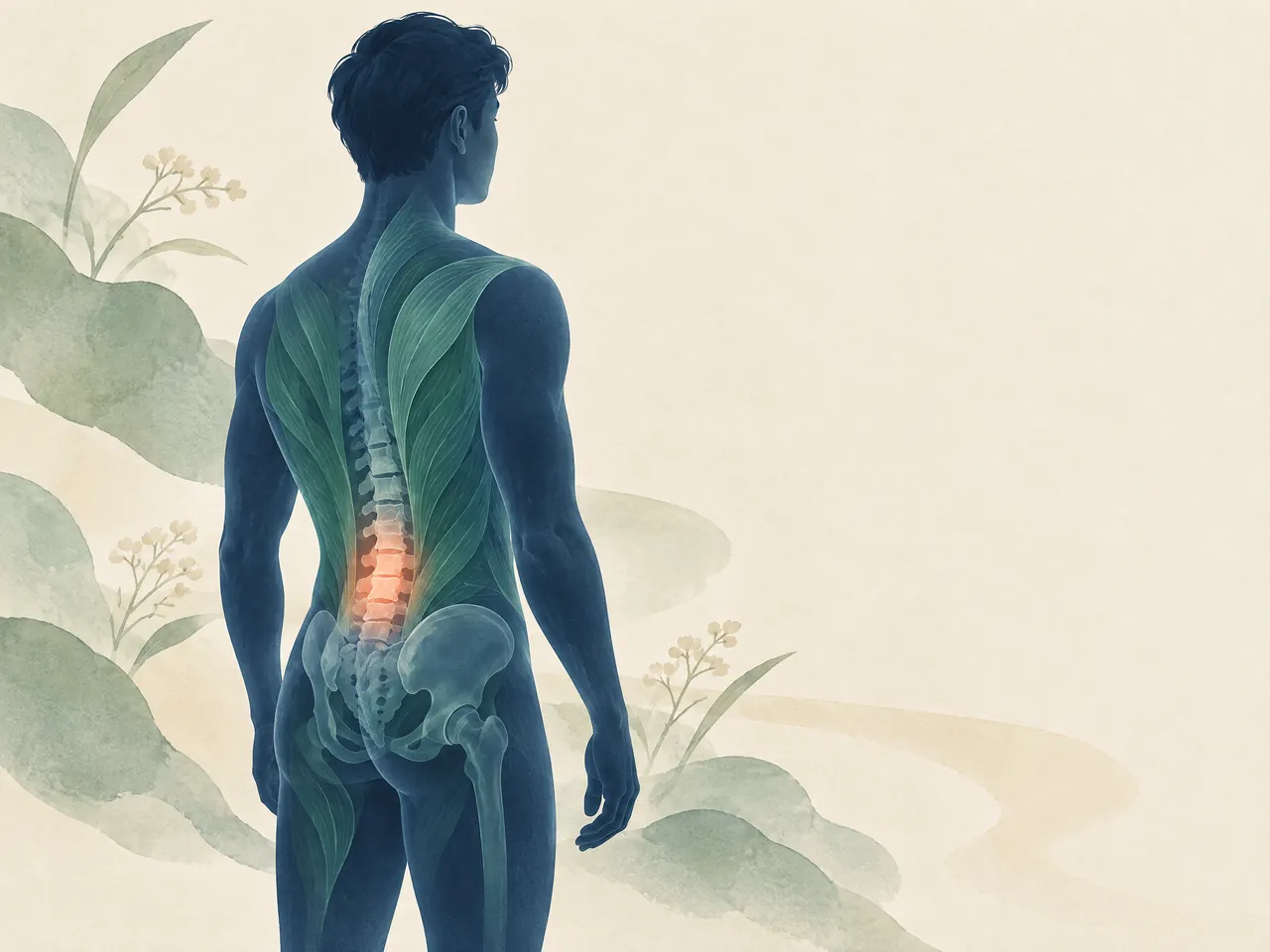
The short answer
Can lumbar spondylosis cause leg pain and numbness? It can. Degenerative changes in the lumbar spine may contribute to nerve irritation or compression, which can cause pain, tingling, numbness or weakness travelling into a leg. However, similar symptoms have other causes and need an individual assessment. Acupuncture may be discussed as one option for symptom management after assessment; it cannot remove bone spurs, restore disc height or replace medical, physiotherapy or urgent care when these are needed.
Transparent pricing
See the fees.
Choose your care.
Explore our complete official price list, including first-trial prices, regular prices, packages and branch-specific options.
Opening WhatsApp prepares an enquiry; it does not send a message, take payment or confirm an appointment. Suitability and individual arrangements are confirmed during consultation.
Pain care
All prices in HKDExtracorporeal shockwave treatment
Shockwave treatment for deep-tissue and fascial care. The Kwun Tong clinic offers the multi-area options shown below.
Priced by branch
Branch-specific pricing
Prince Edward: HK$250 per area
Kwun Tong: HK$250 for 1 area / HK$450 for 2 areas / HK$600 for 3 areas
Pain care (manual therapy)
Includes Chinese medicine musculoskeletal assessment, manual joint techniques and tui na.
HK$580 (single session)
Chinese medicine musculoskeletal assessment
Pain care (acupuncture and manual therapy)
Combines acupuncture and manual therapy.
HK$680 (single session)
Combined care
Hair and scalp
All prices in HKDScalp health and hair-loss management
Includes AI scalp analysis, deep scalp and follicle cleansing, and scalp oil-control care.
HK$380 (first trial)
Regular price: HK$680
- 6 sessions: HK$3,480 (HK$580 per session)
- 12 sessions: HK$5,760 (HK$480 per session)
- 20 sessions: HK$8,600 (HK$430 per session)
- 30 sessions: HK$11,400 (HK$380 per session)
Hair acupuncture and Chinese herbal medicine package
Includes scalp acupuncture and 3 days of Chinese herbal medicine that does not require decoction.
HK$580 (single session)
Registered Chinese Medicine Practitioner consultation
- 6 sessions: HK$3,180 (HK$530 per session)
- 12 sessions: HK$5,760 (HK$480 per session)
- 20 sessions: HK$8,600 (HK$430 per session)
- 30 sessions: HK$11,400 (HK$380 per session)
Combined hair and scalp treatment
Combines acupuncture and Chinese herbal medicine with salon-level scalp and follicle care. Packages include complimentary hair-care shampoo and serum.
HK$1,260 (single session)
Combined treatment
- 8 sessions: HK$8,640 (HK$1,080 per session)
- 16 sessions: HK$15,680 (HK$980 per session)
- 20 sessions: HK$18,600 (HK$930 per session)
- 30 sessions: HK$26,400 (HK$880 per session)
Weight management
All prices in HKDFull-body acupoint embedding for weight management
Includes full-body acupoint embedding. Packages include complimentary Chinese herbal medicine for weight management, with the number of included days scaled to the package. Embedding material and the individual treatment arrangement are confirmed during consultation; this is not a cosmetic thread lift.
HK$980 (single session)
No trial session
- 10 sessions: HK$7,800 (HK$780 per session)
- 20 sessions: HK$14,600 (HK$730 per session)
- 30 sessions: HK$20,400 (HK$680 per session)
Facial acupuncture
All prices in HKDFacial acupuncture (basic)
Includes facial acupuncture and meridian-based facial care, including care for facial puffiness.
HK$480 (first trial)
Regular price: HK$680
- 10 sessions: HK$5,200 (HK$520 per session)
- 20 sessions: HK$9,600 (HK$480 per session)
- 30 sessions: HK$13,500 (HK$450 per session)
Facial acupuncture (advanced)
Includes enhanced facial acupuncture with a specially formulated moisturising mask and serum.
HK$780 (first trial)
Regular price: HK$1,180
- 10 sessions: HK$9,000 (HK$900 per session)
- 20 sessions: HK$16,600 (HK$830 per session)
- 30 sessions: HK$23,400 (HK$780 per session)
Chinese medicine
All prices in HKDAcupuncture and Chinese herbal medicine package
Includes a Chinese medicine consultation with pulse assessment, body acupuncture and 3 days of Chinese herbal granules that do not require decoction.
HK$580 (single session)
Chinese medicine consultation with pulse assessment
What low back stiffness and limited movement can mean: Can lumbar spondylosis cause leg pain and numbness?
Lumbar spondylosis is a broad description of degenerative or wear-related changes in the lower spine. Discs can lose height over time, while facet joints and supporting ligaments may also change. An X-ray, CT or MRI can show some of these structures, but an image alone does not tell the full story of someone’s pain or movement. The Hospital for Special Surgery notes that people with spondylosis may have no symptoms, while others experience pain or a limited range of movement [1]. That is why a report saying “degenerative changes” should start a clinical conversation rather than end it.
Can lumbar spondylosis cause leg pain and numbness? It can when a nerve root is compressed or inflamed. This may be called lumbar radiculopathy. Pain can radiate to the hip, buttock, thigh, calf or foot; tingling, numbness and weakness may accompany it. The pathway does not have to match a person’s idea of “sciatica” perfectly. HSS describes lumbar spondylosis as a possible setting for low-back pain, leg pain and signs of nerve compression, including radiating pain, tingling, numbness or weakness [1]. Similar symptoms can nevertheless come from a disc problem, spinal narrowing, a hip condition, peripheral nerve issues or another cause.

A scan finding and a symptom pattern can coexist without being a simple one-to-one explanation. Bring existing imaging reports rather than relying on memory of terms such as “bone spurs” or “disc wear.” The related guide to lumbar spondylosis symptoms can help you put words to the pattern before an appointment, but it cannot diagnose the source of symptoms for you.
Understanding low back stiffness and limited movement: Can lumbar spondylosis cause leg pain and numbness?
It helps to distinguish local back symptoms from symptoms that suggest a nerve may be involved. Local stiffness can be an ache, a sense of reduced flexibility or discomfort near the lower spine during certain movements. Nerve-related symptoms may feel sharp, burning, electric, prickling or numb, and can travel farther down one or both legs. These words are clues, not a self-diagnosis. A clinician also considers whether coughing, walking, sitting, bending or extending the back changes the symptom, along with the findings of a physical examination.
Spinal narrowing is one reason the activity pattern matters. If narrowing affects the central spinal canal, some people develop neurogenic claudication: leg pain, heaviness, tingling or weakness when standing or walking that improves with sitting or bending forward. HSS describes this pattern in its discussion of lumbar spondylosis and central spinal stenosis [1]. It is different from simply feeling stiff after exercise. Note how far you can walk before symptoms begin, what position relieves them and whether the response is consistent; those observations are useful during assessment.
Traditional Chinese medicine may frame persistent back discomfort through pattern identification, but that approach does not replace a medical explanation for leg numbness or weakness. A Hong Kong acupuncture guideline covers both conventional low-back-pain diagnosis and TCM syndrome differentiation, and it makes clear that the evidence level for the traditional differentiation roadmap is relatively low [2]. In practical terms, the history, examination and available investigations should guide whether conservative symptom management is reasonable or whether another service should lead care.

Common symptoms behind low back stiffness and limited movement: Can lumbar spondylosis cause leg pain and numbness?
Common does not mean harmless, and not every symptom needs the same response. A dull low-back ache, morning tightness and a cautious range of movement may be suitable for a planned assessment if there are no warning signs. Pain that begins in the back and travels down a leg, altered sensation in the foot, or a leg that feels unreliable needs more careful questioning. If a leg feels heavy only after standing or walking and settles with sitting, say so specifically; it helps distinguish an exertional pattern from pain that is present in every position.
Keep track of function as well as pain intensity. Can you rise from a chair without using your arms? Are stairs different from level walking? Has sleep changed because turning in bed is difficult? Do you avoid lifting a child, getting on public transport or working at a desk? These details make “limited movement” concrete. They also help set realistic goals, such as tolerating a short journey or moving more comfortably during routine tasks, rather than promising a structural cure. For a fuller discussion of the condition and treatment boundaries, see acupuncture for lumbar spondylosis.
Compare your options
| What you notice | Why it needs attention | A sensible next step |
|---|---|---|
| Low-back stiffness after a long position, without numbness or weakness | A mechanical or local pain pattern is possible, but symptoms still need context | Arrange a routine assessment and describe movement triggers and functional limits |
| Pain, tingling or numbness travelling from the back or buttock into a leg | Nerve irritation or compression is one possibility; other causes can overlap | Seek an assessment that considers history, examination and existing imaging |
| Leg heaviness, pain, tingling or weakness with standing or walking that eases on sitting or bending forward | This pattern can occur with neurogenic claudication and should not be treated as ordinary stiffness | Discuss the walking and relief pattern with a medical clinician |
| New weakness, foot-lifting difficulty, frequent falls or progressively reduced sensation | These may signal meaningful nerve involvement | Seek prompt medical review rather than relying on conservative treatment alone |
| Bladder or bowel changes, difficulty passing urine, saddle-area numbness or sudden major weakness | These are urgent neurological warning signs | Go to urgent or emergency medical care immediately |
On smaller screens, scroll the table sideways to compare all columns.
Assessment for low back stiffness and limited movement: Can lumbar spondylosis cause leg pain and numbness?
Assessment should begin before deciding whether acupuncture, physiotherapy, medication, imaging or specialist review is appropriate. The central question is not just “where is the pain?” It is also when it began, whether it followed a fall or unusual lifting, how it behaves during rest and activity, and whether there are symptoms beyond pain. Medical history, prior operations, current medicines, long-term conditions and test results can change the safest plan. If you have an MRI or X-ray report, bring it; if you do not, do not assume an image is automatically needed.
An examination may include observing how you stand or walk, checking lower-back and hip movement, and assessing sensation or strength where appropriate. The purpose is to see whether the description matches the physical findings and whether a nerve-related problem needs further evaluation. Ask How is lumbar spondylosis assessed? if you want a focused explanation of why history, examination and imaging can each contribute different information.

A conservative care discussion should include what treatment can and cannot change. It may be reasonable to discuss comfort, movement confidence and day-to-day function. It is not reasonable to promise that needling will eliminate a bony overgrowth, restore disc thickness or prove that a compressed nerve has been released. The Hong Kong guideline advises that low-back-pain assessment should help exclude conditions unsuitable for acupuncture; it identifies bleeding disorders and severe visceral disease as situations in which acupuncture may be inappropriate, and severe spinal or systemic pathology may require it to be only complementary care [2].
Clinical history for low back stiffness and limited movement: Can lumbar spondylosis cause leg pain and numbness?
Prepare a short timeline. Include the first episode, any recent change in work, exercise, driving or caring responsibilities, and whether symptoms are improving, stable or worsening. Mark the route of pain or altered sensation: does it stay around the back, pass through the buttock, reach below the knee or affect the toes? Also note whether one side is different. This is more helpful than trying to name the exact vertebra yourself.
Share medicines and health information openly. This includes medicines that affect bleeding, prior fainting with needles, skin problems near a proposed treatment area, pregnancy, previous spine procedures and conditions already under medical care. A registered Chinese medicine practitioner can use that information when considering a TCM approach, but should not ask you to disregard a doctor’s plan. The Chinese Medicine Hospital of Hong Kong describes systematic pattern identification alongside medical-history assessment and integrated Chinese-Western care for low back pain [3]; that is a useful local care context, not a claim about identical services at TCM Lab.

How care is considered for low back stiffness and limited movement: Can lumbar spondylosis cause leg pain and numbness?
Care is considered against the current problem, not a fixed package. When the history and examination do not suggest urgent pathology, a plan may combine medical advice, physiotherapy-led exercise or rehabilitation, activity adjustments and, where appropriate, acupuncture for symptom management. The order matters. New neurological signs, severe pain after significant injury or symptoms that raise concern for systemic illness may need medical assessment first. A quieter pain day should not be treated as proof that all concerns have resolved.
If acupuncture is being considered, ask what area will be assessed, how treatment will be adapted to your history, what you may feel and when the plan should be reviewed. The guideline recommends informed consent, discussion of possible side effects and clean-needle technique [2]. Individual response is variable, so no fixed number of visits, duration of relief or outcome should be promised.
Managing low back stiffness and limited movement: Can lumbar spondylosis cause leg pain and numbness?
Managing low back stiffness and limited movement often means reducing unnecessary aggravation while keeping within tolerable movement. Long, unbroken sitting, repeated twisting under load or suddenly returning to strenuous exercise can expose a sensitive pattern, but complete bed rest and forceful self-treatment are not a universal answer. Follow the advice of the clinician who has examined you. In everyday life, pacing may mean splitting a lifting task, changing position during desk work, using a route with rest opportunities or increasing a walk gradually rather than testing the back with one ambitious day.
If you wish to ask TCM Lab whether an assessment may be appropriate, practical details are available through the Kwun Tong Chinese medicine clinic and the Chinese medicine clinic Prince Edward. You can also review the Chinese medicine clinic price list Hong Kong before enquiring. Contacting a clinic is not a diagnosis or confirmation that acupuncture is suitable; describe any leg numbness, weakness and relevant reports when asking about the next step.

Acupuncture limits for low back stiffness and limited movement: Can lumbar spondylosis cause leg pain and numbness?
Acupuncture has limits that should be explicit. It cannot reverse lumbar degeneration, remove a bone spur, restore lost disc height, stabilise an unstable spine or correct serious nerve compression. It should never be used to delay a needed diagnosis. If it is included after assessment, its role is a conservative discussion about symptoms and function. Any perceived improvement should be considered alongside the full plan and should not be taken as proof that a structural change has disappeared.
Review is part of safe management. Tell the practitioner if symptoms spread farther down the leg, numbness becomes more noticeable, walking tolerance drops, or a new weakness appears. It may be appropriate to pause or redirect care rather than simply repeat the same session. A credible plan welcomes physiotherapy, medical and specialist input when indicated. The goal is not to defend one treatment label; it is to respond appropriately when the presentation changes.

When low back stiffness and limited movement needs medical review: Can lumbar spondylosis cause leg pain and numbness?
Seek prompt medical review for new or worsening leg weakness, trouble lifting the front of the foot, frequent falls, progressive numbness, severe pain that is escalating, or symptoms after a significant fall or accident. Medical attention is also important when back pain occurs with fever, unexplained weight loss or a history that makes infection or cancer a concern. HSS advises more immediate care for nerve-pressure symptoms including weakness, foot drop and bladder or bowel dysfunction [1]. These signs sit outside routine self-management or a trial of acupuncture.
Go to urgent or emergency care for new loss of bladder or bowel control, difficulty passing urine, numbness around the groin or saddle area, sudden major leg weakness or rapidly progressing neurological symptoms. Do not wait for a routine acupuncture appointment to see whether they settle. If you are unsure how serious a symptom is, seek medical advice promptly. Clear safety boundaries allow conservative care to have its proper role without overlooking a condition that needs urgent assessment.
Care and health guide
Low back discomfort: care information
This directory brings together services, reading, and visit information related to low back discomfort, to help you prepare questions for a consultation.
When low back discomfort affects your day, noting when it occurs, its relation to activity, and what you have already tried can help prepare a consultation; acupuncture for low back pain is a relevant service or reading entry point.
Individual circumstances differ, and acupuncture Hong Kong offers related information to help you understand options and prepare questions.


Your questions, answered
Frequently asked questions
Can lumbar spondylosis cause numbness in one foot or leg?
It can if degenerative changes contribute to irritation or compression of a lumbar nerve. However, one-sided numbness has more than one possible cause, and the route, onset, associated back pain and any weakness need assessment. New, worsening or persistent numbness should not be assumed to be harmless because a scan shows spondylosis.
Can acupuncture fix bone spurs or restore a lumbar disc?
No. Acupuncture cannot remove bone spurs, reverse structural degeneration or restore disc height. After a suitable assessment, it may be discussed as one option for managing symptoms and function. It does not replace medical review, physiotherapy or other care when those are indicated.
What information should I bring to an assessment for back stiffness and leg symptoms?
Bring imaging reports if you have them, a list of medicines, relevant medical history and a short description of when symptoms began. Explain where pain or numbness travels, which movements or positions change it, walking tolerance, sleep disruption, injuries and any change in strength. These details help determine whether conservative care is appropriate.
When are leg symptoms from low back pain an emergency?
Seek urgent or emergency care for new bladder or bowel control loss, difficulty passing urine, numbness around the saddle area, sudden major weakness or rapidly progressing neurological symptoms. Prompt medical review is also needed for new weakness, foot drop, frequent falls, severe worsening pain, fever, unexplained weight loss or symptoms after significant trauma.
Sources and further information
- [1] [1] Hospital for Special Surgery — Lumbar and Cervical Spondylosis: Symptoms and Treatments
Referenced for: Definition of spondylosis, lumbar symptoms, nerve compression, radiculopathy, neurogenic claudication, assessment and urgent nerve-related warning signs.
- [2] [2] PubMed Central — Acupuncture for low back pain: a clinical practice guideline from the Hong Kong taskforce of standardized acupuncture practice
Referenced for: Assessment scope, TCM syndrome-differentiation evidence level, conditions unsuitable for acupuncture, complementary-care boundary, informed consent and clean-needle practice.
- [3] [3] Chinese Medicine Hospital of Hong Kong — Low Back Pain Care Programme
Referenced for: Hong Kong terminology for low back pain, systematic pattern identification, medical-history assessment and integrated Chinese-Western care context.