
TCM Lab · Health reading
Why does my wrist hurt and feel numb or tingly? Understanding common symptom patterns
Published Updated
Wrist pain with numbness or tingling can happen after an injury, with a tendon or joint problem, or when a nerve is being irritated or compressed. The combination does not identify one cause by itself. What matters is the pattern: the exact site of pain, whether the sensation reaches particular fingers, whether symptoms wake you at night, and whether swelling or grip has changed. Start by noting those details and how they affect everyday tasks such as typing, carrying a bag, opening a jar or using a phone. A clinician can use that history with an examination of movement, strength and feeling; imaging or other tests may sometimes be needed. Sudden severe pain, an altered wrist shape or colour, inability to hold things, or loss of feeling needs urgent medical assessment. [1] [2]
Appointments are confirmed through WhatsApp. If you have language requirements, please mention them in your enquiry.
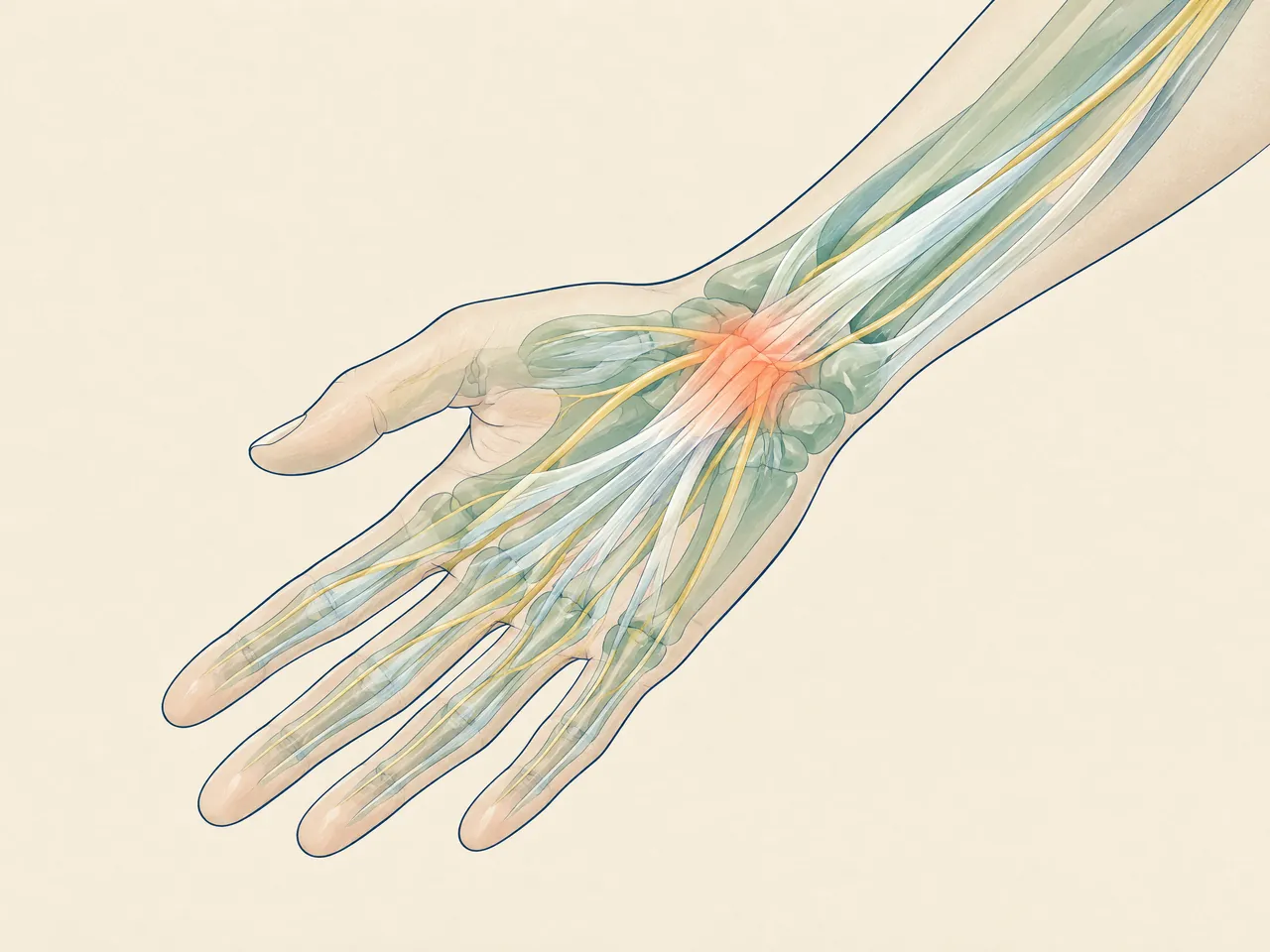
The short answer
Pain plus numbness or tingling in the wrist may relate to an injury, irritated tendons, a joint condition or pressure on a nerve. The symptom pattern is a useful clue but cannot confirm the cause online. Record where the symptoms are, which fingers are affected, what movements trigger them, and any change in swelling or grip. Seek urgent medical help after a significant injury or if feeling, movement or hand function is suddenly lost.
Transparent pricing
See the fees.
Choose your care.
Explore our complete official price list, including first-trial prices, regular prices, packages and branch-specific options.
Opening WhatsApp prepares an enquiry; it does not send a message, take payment or confirm an appointment. Suitability and individual arrangements are confirmed during consultation.
Pain care
All prices in HKDExtracorporeal shockwave treatment
Shockwave treatment for deep-tissue and fascial care. The Kwun Tong clinic offers the multi-area options shown below.
Priced by branch
Branch-specific pricing
Prince Edward: HK$250 per area
Kwun Tong: HK$250 for 1 area / HK$450 for 2 areas / HK$600 for 3 areas
Pain care (manual therapy)
Includes Chinese medicine musculoskeletal assessment, manual joint techniques and tui na.
HK$580 (single session)
Chinese medicine musculoskeletal assessment
Pain care (acupuncture and manual therapy)
Combines acupuncture and manual therapy.
HK$680 (single session)
Combined care
Hair and scalp
All prices in HKDScalp health and hair-loss management
Includes AI scalp analysis, deep scalp and follicle cleansing, and scalp oil-control care.
HK$380 (first trial)
Regular price: HK$680
- 6 sessions: HK$3,480 (HK$580 per session)
- 12 sessions: HK$5,760 (HK$480 per session)
- 20 sessions: HK$8,600 (HK$430 per session)
- 30 sessions: HK$11,400 (HK$380 per session)
Hair acupuncture and Chinese herbal medicine package
Includes scalp acupuncture and 3 days of Chinese herbal medicine that does not require decoction.
HK$580 (single session)
Registered Chinese Medicine Practitioner consultation
- 6 sessions: HK$3,180 (HK$530 per session)
- 12 sessions: HK$5,760 (HK$480 per session)
- 20 sessions: HK$8,600 (HK$430 per session)
- 30 sessions: HK$11,400 (HK$380 per session)
Combined hair and scalp treatment
Combines acupuncture and Chinese herbal medicine with salon-level scalp and follicle care. Packages include complimentary hair-care shampoo and serum.
HK$1,260 (single session)
Combined treatment
- 8 sessions: HK$8,640 (HK$1,080 per session)
- 16 sessions: HK$15,680 (HK$980 per session)
- 20 sessions: HK$18,600 (HK$930 per session)
- 30 sessions: HK$26,400 (HK$880 per session)
Weight management
All prices in HKDFull-body acupoint embedding for weight management
Includes full-body acupoint embedding. Packages include complimentary Chinese herbal medicine for weight management, with the number of included days scaled to the package. Embedding material and the individual treatment arrangement are confirmed during consultation; this is not a cosmetic thread lift.
HK$980 (single session)
No trial session
- 10 sessions: HK$7,800 (HK$780 per session)
- 20 sessions: HK$14,600 (HK$730 per session)
- 30 sessions: HK$20,400 (HK$680 per session)
Facial acupuncture
All prices in HKDFacial acupuncture (basic)
Includes facial acupuncture and meridian-based facial care, including care for facial puffiness.
HK$480 (first trial)
Regular price: HK$680
- 10 sessions: HK$5,200 (HK$520 per session)
- 20 sessions: HK$9,600 (HK$480 per session)
- 30 sessions: HK$13,500 (HK$450 per session)
Facial acupuncture (advanced)
Includes enhanced facial acupuncture with a specially formulated moisturising mask and serum.
HK$780 (first trial)
Regular price: HK$1,180
- 10 sessions: HK$9,000 (HK$900 per session)
- 20 sessions: HK$16,600 (HK$830 per session)
- 30 sessions: HK$23,400 (HK$780 per session)
Chinese medicine
All prices in HKDAcupuncture and Chinese herbal medicine package
Includes a Chinese medicine consultation with pulse assessment, body acupuncture and 3 days of Chinese herbal granules that do not require decoction.
HK$580 (single session)
Chinese medicine consultation with pulse assessment
Why does my wrist hurt and feel numb or tingly? Start with a clear symptom record
A useful record turns a vague complaint into information that can guide an assessment. Write down when the problem first appeared and whether it followed a fall, twist, impact, a new workout, a long work task or no clear event. Mark the painful spot: palm side, back of the wrist, thumb side, little-finger side, or deeper in the joint. Also note whether it is an ache, a sharp pain, stiffness, burning, pins and needles or reduced feeling. Wrist problems may include pain, swelling, decreased strength and sudden numbness or tingling, but the combination differs between conditions. [2]
Keep the record short enough to use. A phone note can capture a morning, workday and night-time pattern for several days. It is more helpful to say “tingling wakes me and settles after I move my hand” than simply “my wrist hurts.” Include what changed after rest, a splint, a change in workstation position or stopping the aggravating task. This is not self-diagnosis; it helps a clinician decide which questions and examinations are most relevant.

Why does my wrist hurt and feel numb or tingly? Track pain, swelling and movement
Look at function as well as pain. Can you turn a key, hold a cup, twist a wet cloth, use chopsticks, type, lift a child or put weight through the palm? Note if a particular movement causes a catch, pop, painful stretch or loss of range. Compare the two wrists for visible swelling, bruising or a change in shape, but do not repeatedly press or force-test a sore area. The NHS lists sudden sharp pain with swelling and a pop during injury among patterns that require consideration of a fracture, while pain, swelling and difficulty moving or gripping can occur with a sprain. [1]
If symptoms began after an incident, record the mechanism rather than guessing the diagnosis: for example, “fell onto an outstretched hand,” “twisted a lid,” or “started after a racquet session.” That context belongs in any discussion of wrist pain after injury. Pain without a clear accident can still deserve attention when it repeatedly returns, limits work or is becoming more intense. The length of a symptom list is less important than a clear timeline and what it stops you from doing.
Why does my wrist hurt and feel numb or tingly? Note numbness, tingling and grip changes
Describe the sensation precisely. Is it prickling, burning, numbness, a feeling that the hand has “fallen asleep,” or a brief electric sensation? Does it stay at the wrist or travel into the palm, thumb, index finger, little finger or forearm? Record whether it appears when the wrist is bent, when cycling, after holding a device, or at night. A change in grip can mean dropping objects, avoiding a firm grasp because it hurts, or a thumb that feels weaker. These are different experiences, and they give an assessor different clues.
It is also worth separating pain-limited grip from a true-feeling loss of control. If your hand is sore but you can release and re-grip normally, record that. If you cannot securely hold a mug, notice objects slipping unexpectedly, or have trouble with fine actions such as buttons, say so promptly. For a focused checklist, see weak grip and wrist pain. Sudden numbness or complete loss of sensation should not be watched at home; it is a reason to seek urgent care. [1]
Compare your options
| What to observe | Examples to record | Why it is useful to mention |
|---|---|---|
| Onset and trigger | After a fall, a twist, a new task, repeated gripping, or no clear event | Helps distinguish an injury-related history from a gradual or recurring pattern |
| Exact location | Palm side, back of wrist, thumb side, little-finger side, or fingers involved | Shows where pain or altered sensation is felt without assuming the cause |
| Sensation and timing | Pins and needles, numbness, burning, night waking, or symptoms after a posture | Helps the clinician ask whether a nerve pattern may need assessment |
| Function and grip | Dropping items, painful twisting, trouble buttoning, weak thumb or inability to hold a cup | Shows the real-life effect and whether hand function has changed |
| Visible or systemic changes | Swelling, bruising, redness, heat, altered shape, feverishness or feeling unwell | Can identify reasons to seek more prompt medical assessment |
On smaller screens, scroll the table sideways to compare all columns.
Why does my wrist hurt and feel numb or tingly? Possible patterns to discuss
Many structures meet at the wrist: small bones and joints, ligaments, tendons and nerves. That is why a single area of discomfort can have more than one possible explanation. Common categories include fractures, sprains or strains, tendinitis, arthritis, ganglion cysts and carpal tunnel syndrome. [2] The purpose of comparing patterns is not to choose a label at home. It is to help you explain why one possibility may need to be considered, especially if a symptom began after trauma or is changing over time.
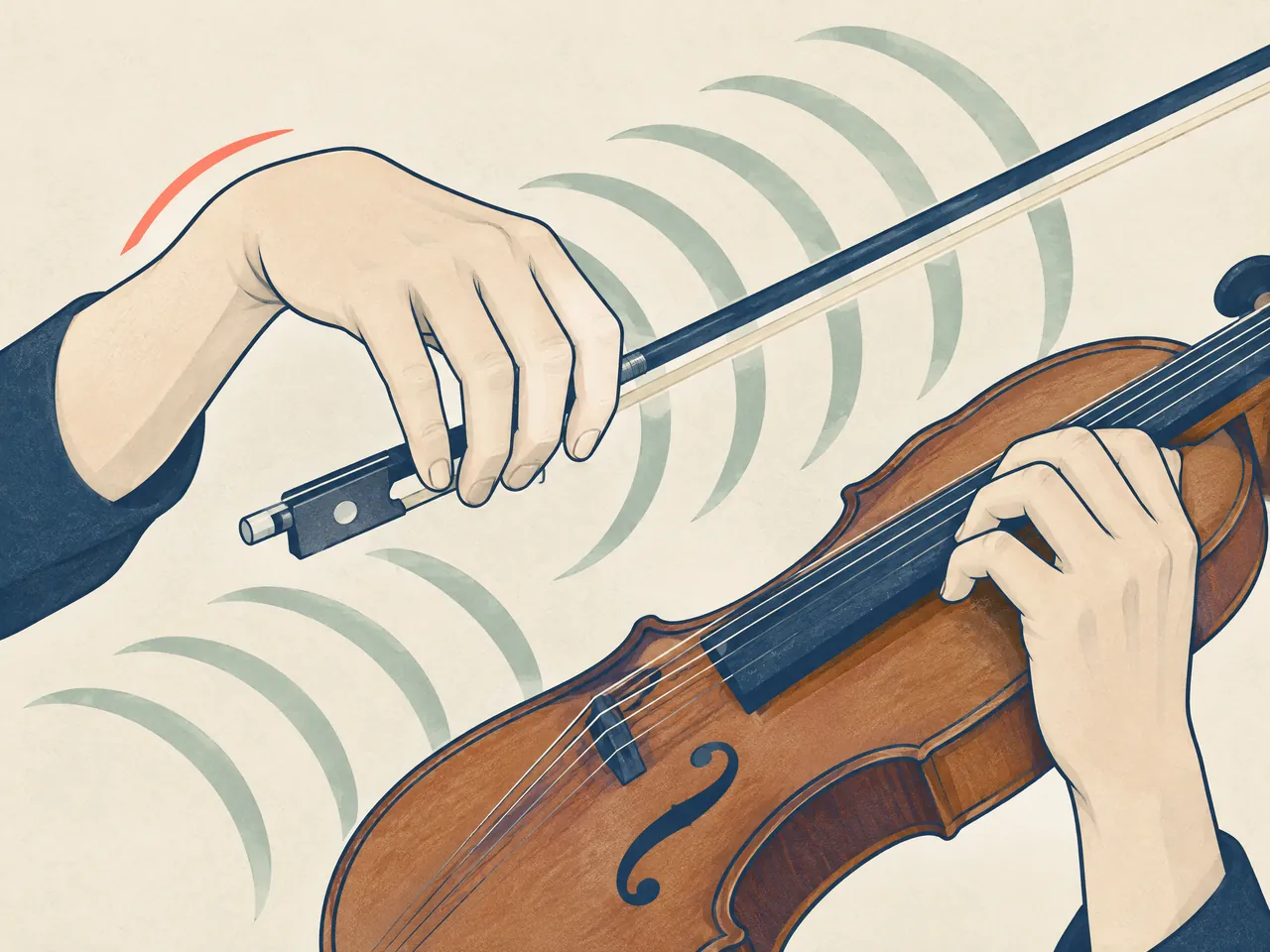
The comparison below is a conversation guide. Overlap is common. For example, soreness at the thumb side may make gripping difficult, while a nerve-related problem may also feel painful. A clinician considers the history, location, movement, strength and sensation together rather than treating one internet symptom as a verdict.

Why does my wrist hurt and feel numb or tingly? Comparing nerve and tendon patterns
Carpal tunnel syndrome is one reason a clinician may ask detailed questions about the fingers and the night. It involves pressure on the median nerve at the wrist. Symptoms can include pain or ache in the fingers, hand or arm, numbness, tingling, a weak thumb or difficulty gripping; they often start gradually and may be worse at night. [3] That pattern is suggestive, not conclusive. An assessment may include questions and an examination, and a nerve-conduction test or scan can sometimes be considered when the diagnosis is unclear. [3]
A tendon-focused pattern may be more local. With de Quervain tendinitis, the tendons on the thumb side of the wrist are irritated or thickened; pain may be noticed at the back of the thumb when making a fist, grabbing or turning the wrist. Swelling, pain on thumb or wrist bending, and difficulty pinching are also described. [4] Tendon problems do not always produce the same type of tingling as a compressed nerve, but symptoms can coexist or be described imprecisely. Mention which action hurts most rather than relying on a self-test from a video.
A new lump, focal tenderness, joint stiffness, visible swelling or pain after a fall creates a different set of questions. The wrist pain symptoms overview and the focused question Is wrist pain with swelling or weak grip serious? can help you prepare what to report, but they cannot rule out a fracture, infection or other condition.
Why does my wrist hurt and feel numb or tingly? Why symptoms do not confirm one cause
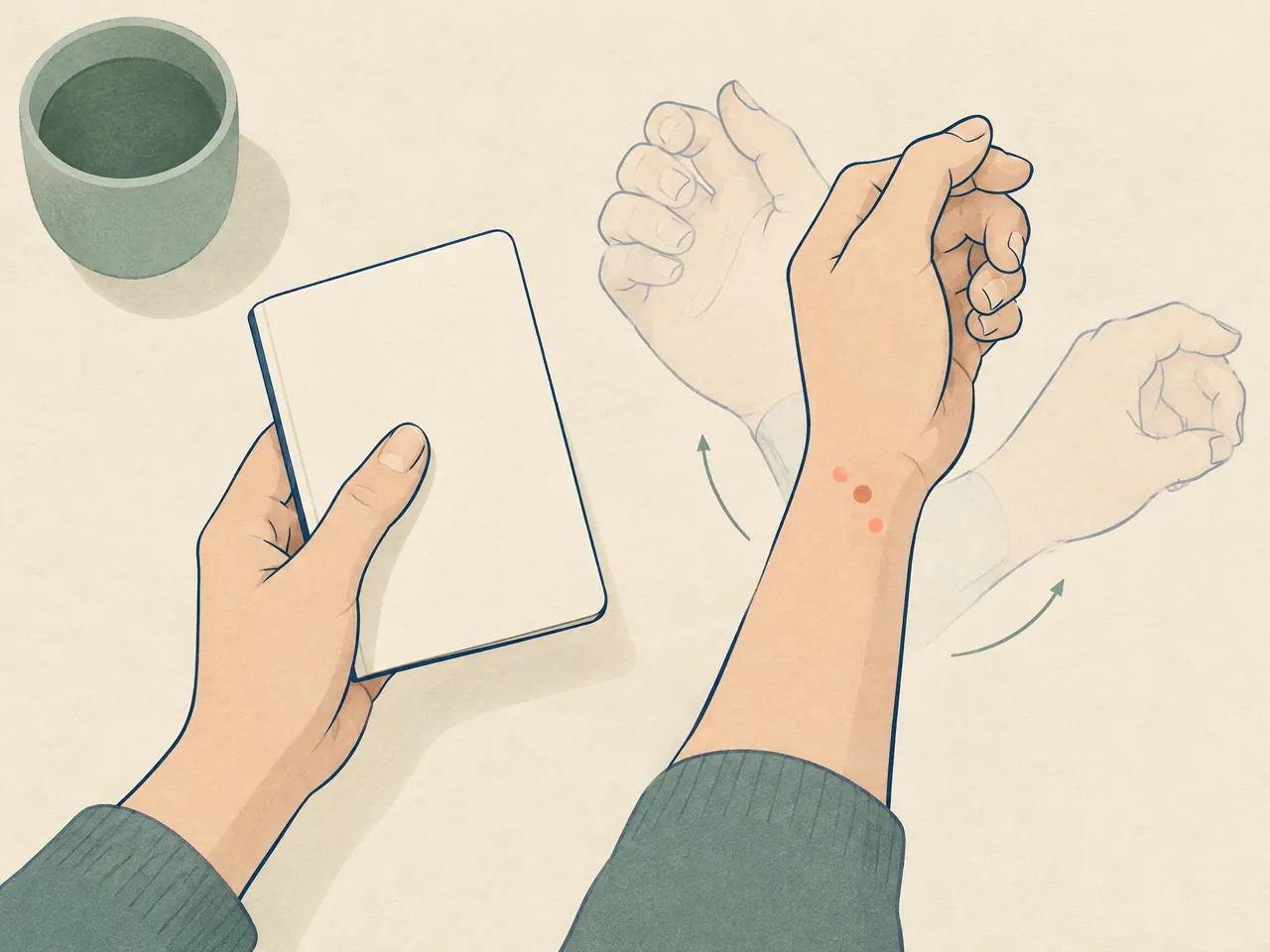
Location is useful, but it is not a diagnosis. Numbness in the hand can arise from different levels of the arm, and pain can cause someone to grip less firmly even when nerve strength is unchanged. Repetitive work, hard gripping or using vibrating tools may aggravate a wrist problem, yet the same activity can affect people differently. Diabetes, arthritis and previous wrist injury are also among factors that may be relevant when considering carpal tunnel syndrome. [3] A careful history prevents the assumption that one desk habit, sport or carrying task is the whole explanation.
Avoid testing a painful wrist by repeatedly bending it hard, squeezing strongly or pushing through a position that brings on numbness. Instead, note the response to ordinary activities and take that record to a qualified healthcare professional. Persistent symptoms, recurrent symptoms, tingling or loss of sensation, and pain that disrupts normal activity all warrant clinical advice rather than a prolonged cycle of online comparison. [1]
Why does my wrist hurt and feel numb or tingly? Safe next steps
The safest next step depends on how the symptoms started and whether function or sensation has changed. For mild pain without alarm signs, reducing the movement that provokes it and keeping a clear record can be reasonable while you arrange advice. NHS guidance includes resting the wrist, avoiding heavy lifting or tight gripping, and reducing activities that cause pain; it also advises against heat packs or hot baths in the first two to three days after an injury. [1] These general measures do not replace assessment after trauma or when symptoms are progressing.
Make an appointment sooner rather than later if pain prevents normal activity, keeps returning, is getting worse, or is accompanied by tingling, loss of sensation, warmth, swelling and stiffness, or feeling unwell. [1] Bring your symptom timeline, relevant medical history, current medicines and details of any brace, home measure or activity modification you have tried.
Why does my wrist hurt and feel numb or tingly? When urgent assessment matters
Seek urgent medical assessment after a significant injury if pain is severe, you heard a snap, grinding or popping sound, you cannot move the wrist or hold things, or the wrist has changed shape or colour. Urgent assessment is also appropriate for a very painful hot or red lump, loss of feeling in part or all of the hand, or severe pain with feeling generally unwell. These features may signal a fracture, infection or another problem that needs timely examination. [1] Do not attempt to straighten a deformed wrist or test its strength at home.
It is sensible to remove rings or other jewellery if the hand is swelling, because they can become difficult to remove as swelling increases. Keep the wrist protected from further knocks while seeking care. If symptoms are less dramatic but feeling is progressively reduced, grip is failing, or pain and swelling are escalating, do not wait for a routine wellness treatment to decide what is happening. A conventional medical assessment is the priority; subsequent supportive options can be discussed once serious causes have been considered.

Why does my wrist hurt and feel numb or tingly? Discussing supportive care after assessment
After appropriate assessment, management may include activity changes, a splint, pain management, rehabilitation or another plan matched to the cause. [2] If you are considering Chinese medicine or acupuncture as a supportive option, share the diagnosis or assessment findings, medication list, injury details and any changes in sensation. A Registered Chinese Medicine Practitioner can discuss whether an in-person consultation is appropriate and whether coordination with another clinician is needed. It should not be used to delay care for a suspected fracture, infection or rapidly worsening nerve symptoms.
Evidence should also shape expectations. A Cochrane review found little or no evidence of a short-term difference between acupuncture or laser acupuncture and sham treatment for carpal tunnel symptoms, and concluded that comparisons with other treatments remained uncertain because the evidence was low or very low certainty. [5] Acupuncture therefore cannot be presented as a confirmed cure for wrist numbness or carpal tunnel syndrome. If you wish to discuss a supportive consultation after assessment, you can enquire with the Kwun Tong Chinese medicine clinic or Chinese medicine clinic Prince Edward. Ask about practical arrangements and fees through the Chinese medicine clinic price list Hong Kong.
Care and health guide
Fees and booking information
This directory brings together services, reading, and visit information related to fees and booking, to help you prepare questions for a consultation.
Before arranging a consultation, you can review acupoint embedding Hong Kong and note the service or booking questions that matter to you.
For questions about a particular service, acupuncture Hong Kong offers related reading so you can prepare your questions.


Your questions, answered
Frequently asked questions
Why does my wrist hurt and feel numb or tingly at night?
Night-time numbness, tingling, pain or a weak thumb can occur with carpal tunnel syndrome, but this is not enough to diagnose it. Note which fingers are affected, whether changing position helps, and whether symptoms are becoming more frequent. Bring that record to a qualified healthcare professional. [3]
Should I use ice or heat for a painful wrist?
For a recent injury, NHS guidance advises an ice pack wrapped in a towel and advises against heat packs or hot baths during the first two to three days. Stop an approach that worsens symptoms and seek advice for severe pain, deformity, loss of feeling or loss of function. [1]
Can typing cause wrist pain with tingling?
Repeated wrist motion or a work setup may aggravate symptoms in some people, but typing does not prove a particular diagnosis. Record the task, posture, duration, exact symptoms and what happens after a break. An assessment can consider this alongside injury, tendon, joint and nerve possibilities. [2]
Can acupuncture cure carpal tunnel syndrome?
No cure can be promised. A Cochrane review found uncertain, low- or very-low-certainty evidence for acupuncture and related interventions for carpal tunnel syndrome, including little or no short-term difference from sham treatment. Discuss supportive options only after appropriate assessment, particularly when symptoms are worsening or affecting function. [5]
Sources and further information
- [1] [1] NHS: Wrist pain
Referenced for: Common wrist-pain patterns, self-care cautions, non-urgent and urgent assessment signs.
- [2] [2] MedlinePlus: Wrist Injuries and Disorders
Referenced for: Wrist anatomy, possible injury and disorder categories, symptoms and diagnostic approaches.
- [3] [3] NHS: Carpal tunnel syndrome
Referenced for: Carpal tunnel symptoms, assessment and factors that may be relevant.
- [4] [4] MedlinePlus: De Quervain tendinitis
Referenced for: Thumb-side tendon symptom pattern and activities that may provoke pain.
- [5] [5] Cochrane: Acupuncture and related treatments for symptoms of carpal tunnel syndrome
Referenced for: Evidence certainty and conclusions about acupuncture-related interventions for carpal tunnel syndrome.