
TCM Lab · Health reading
Acne Breakouts, Inflammatory Acne and Acne Skin Care: A Practical Guide
Published Updated
A breakout on the face is not automatically the same concern as a red mark, a brown mark or an acne scar. Active acne can mean blocked pores, inflamed spots or deeper painful lesions; each asks a different question of your acne skin care. Start by identifying what is active today, then look at the products and medicines already touching your skin. This prevents the common cycle of adding stronger products to irritation while new spots continue to form. If you are considering Chinese medicine or facial acupuncture, treat that conversation as an adjunctive assessment, not a substitute for diagnosis or prescribed care. Deep pain, rapid worsening, pus, signs of infection or continuing scars deserve timely medical or dermatology assessment.
Appointments are confirmed through WhatsApp. If you have language requirements, please mention them in your enquiry.
The short answer
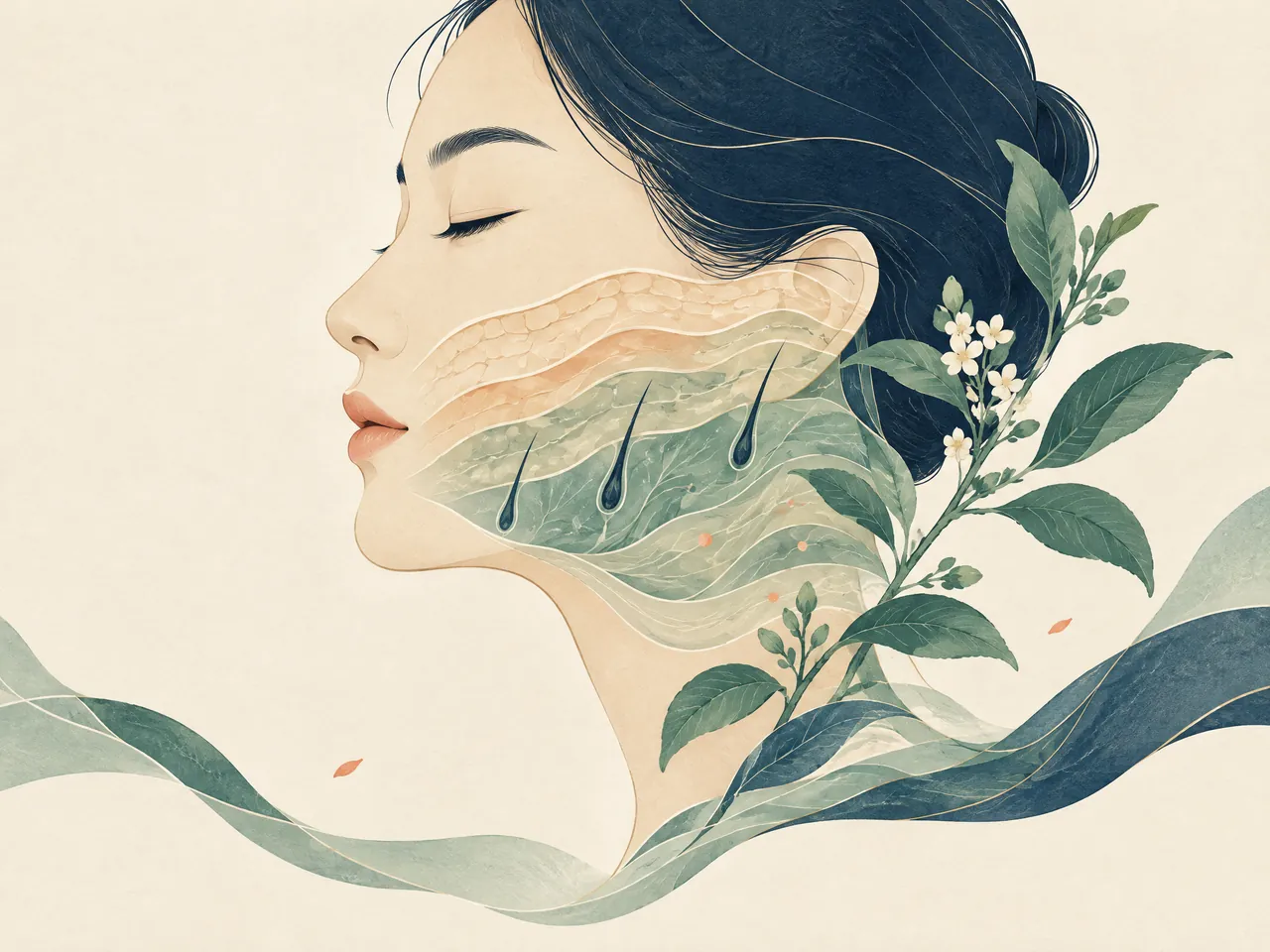
Separate active acne from flat post-inflammatory marks and textured scars before changing your routine. For acne breakouts, keep a record of products, medicines, locations and timing, then simplify avoidable irritation. Inflammatory acne with many tender spots, deep nodules, spreading redness, possible infection or new scars needs medical or dermatology assessment. Chinese medicine can be discussed as a complementary option only after those priorities and your current treatment are clear.
Transparent pricing
See the fees.
Choose your care.
Explore our complete official price list, including first-trial prices, regular prices, packages and branch-specific options.
Opening WhatsApp prepares an enquiry; it does not send a message, take payment or confirm an appointment. Suitability and individual arrangements are confirmed during consultation.
Chinese medicine
All prices in HKDAcupuncture and Chinese herbal medicine package
Includes a Chinese medicine consultation with pulse assessment, body acupuncture and 3 days of Chinese herbal granules that do not require decoction.
HK$580 (single session)
Chinese medicine consultation with pulse assessment
Hair and scalp
All prices in HKDScalp health and hair-loss management
Includes AI scalp analysis, deep scalp and follicle cleansing, and scalp oil-control care.
HK$380 (first trial)
Regular price: HK$680
- 6 sessions: HK$3,480 (HK$580 per session)
- 12 sessions: HK$5,760 (HK$480 per session)
- 20 sessions: HK$8,600 (HK$430 per session)
- 30 sessions: HK$11,400 (HK$380 per session)
Hair acupuncture and Chinese herbal medicine package
Includes scalp acupuncture and 3 days of Chinese herbal medicine that does not require decoction.
HK$580 (single session)
Registered Chinese Medicine Practitioner consultation
- 6 sessions: HK$3,180 (HK$530 per session)
- 12 sessions: HK$5,760 (HK$480 per session)
- 20 sessions: HK$8,600 (HK$430 per session)
- 30 sessions: HK$11,400 (HK$380 per session)
Combined hair and scalp treatment
Combines acupuncture and Chinese herbal medicine with salon-level scalp and follicle care. Packages include complimentary hair-care shampoo and serum.
HK$1,260 (single session)
Combined treatment
- 8 sessions: HK$8,640 (HK$1,080 per session)
- 16 sessions: HK$15,680 (HK$980 per session)
- 20 sessions: HK$18,600 (HK$930 per session)
- 30 sessions: HK$26,400 (HK$880 per session)
Weight management
All prices in HKDFull-body acupoint embedding for weight management
Includes full-body acupoint embedding. Packages include complimentary Chinese herbal medicine for weight management, with the number of included days scaled to the package. Embedding material and the individual treatment arrangement are confirmed during consultation; this is not a cosmetic thread lift.
HK$980 (single session)
No trial session
- 10 sessions: HK$7,800 (HK$780 per session)
- 20 sessions: HK$14,600 (HK$730 per session)
- 30 sessions: HK$20,400 (HK$680 per session)
Facial acupuncture
All prices in HKDFacial acupuncture (basic)
Includes facial acupuncture and meridian-based facial care, including care for facial puffiness.
HK$480 (first trial)
Regular price: HK$680
- 10 sessions: HK$5,200 (HK$520 per session)
- 20 sessions: HK$9,600 (HK$480 per session)
- 30 sessions: HK$13,500 (HK$450 per session)
Facial acupuncture (advanced)
Includes enhanced facial acupuncture with a specially formulated moisturising mask and serum.
HK$780 (first trial)
Regular price: HK$1,180
- 10 sessions: HK$9,000 (HK$900 per session)
- 20 sessions: HK$16,600 (HK$830 per session)
- 30 sessions: HK$23,400 (HK$780 per session)
Pain care
All prices in HKDExtracorporeal shockwave treatment
Shockwave treatment for deep-tissue and fascial care. The Kwun Tong clinic offers the multi-area options shown below.
Priced by branch
Branch-specific pricing
Prince Edward: HK$250 per area
Kwun Tong: HK$250 for 1 area / HK$450 for 2 areas / HK$600 for 3 areas
Pain care (manual therapy)
Includes Chinese medicine musculoskeletal assessment, manual joint techniques and tui na.
HK$580 (single session)
Chinese medicine musculoskeletal assessment
Pain care (acupuncture and manual therapy)
Combines acupuncture and manual therapy.
HK$680 (single session)
Combined care
Acne Breakouts, Inflammatory Acne and Acne Skin Care: Tell Active Acne, Marks and Scars Apart
The most helpful first step is to name what you can see and feel rather than calling every change a blemish. Blackheads and whiteheads are comedones, which are clogged pores. A red tender bump is more consistent with a papule; a spot with a visible white centre may be a pustule. Larger hard lumps beneath the skin, or deeper painful breakouts, need a different level of attention. The American Academy of Dermatology notes that acne may include blackheads, whiteheads, pimples and deep painful cysts or nodules, and that the right treatment depends on the type of blemish present [1]. A face can show several of these at the same time, so one product or one procedure should not be assumed to address every feature.
A flat red, pink, brown or grey-brown area left where a spot settled is not necessarily new acne. It may be a post-inflammatory mark. An indentation, a raised firm area or an uneven texture is more consistent with scarring. This difference changes the immediate priority: new inflammation can create fresh marks and scars, while a stable mark or scar calls for a separate conversation about realistic options. Picking and squeezing can add trauma. NHS Inform specifically advises against trying to clean out blackheads or squeeze spots because it can worsen acne and contribute to permanent scarring [2]. Taking a clear, consistent photograph for your own comparison can also be more useful than judging a spot from one difficult morning.
If you are learning the vocabulary and choices around complementary assessment, the broader acne Chinese medicine topic can help organise the discussion. It does not turn a visible description into a diagnosis. A clinician may need to distinguish acne from other rashes or follicular conditions, especially when the pattern is unfamiliar, itchy, suddenly widespread or not responding as expected.

Acne Breakouts, Inflammatory Acne and Acne Skin Care: Recognise Comedones, Papules and Deeper Lesions
Comedonal acne often looks like small dark or pale plugs rather than sore, swollen spots. Papules are red bumps that can feel tender. Pustules resemble papules but contain visible pus. A nodule sits deeper and may feel like a painful hard lump; cysts can also be deep and inflamed. These labels are practical observations, not an invitation to self-treat every lesion aggressively. NHS Inform describes nodules as large, hard lumps beneath the skin that can be painful, and identifies nodules and cysts among severe forms that may lead to scarring [2]. If you are unsure whether a painful lump is acne, or it is recurring in the same place, avoid attempting to drain it yourself. The focused guide to acne nodules and cysts is a useful next read before an assessment.
Acne Breakouts, Inflammatory Acne and Acne Skin Care: Why Flat Marks Differ from Textured Scars
A mark is a colour change on an otherwise flat surface. In daylight it may look red, pink, brown or darker than the surrounding skin, depending on the stage of inflammation and your skin tone. A scar changes the surface itself: it may be indented, raised or irregular to the touch. Neither should be casually promised away, and neither is proof that someone has failed at skin care. The practical issue is sequence. When fresh inflammatory acne is still appearing, trying to pursue every old mark at once can leave the main source of new marks untouched. Control and assessment of active inflammation usually come first; afterwards, a practitioner can discuss the specific concern, the time course and whether a dermatology referral is appropriate.
Compare your options
| What you notice | What it may represent | Useful next discussion |
|---|---|---|
| Blackheads or whiteheads with little soreness | Comedones or clogged pores | Review gentle, non-comedogenic product choices and a treatment plan matched to comedonal acne. |
| Red, tender bumps or spots with a white centre | Inflammatory papules or pustules | List new products and medicines; consider medical advice if inflammation is widespread, painful or persistent. |
| Deep, painful hard lumps or cyst-like lesions | Nodules or cysts that may carry a greater scarring concern | Arrange medical or dermatology assessment rather than squeezing or attempting to drain lesions. |
| Flat red, pink, brown or darker areas after spots settle | Post-inflammatory marks rather than a new active lesion | Prioritise control of fresh inflammation, then discuss the mark type and realistic options. |
| Indented, raised or uneven texture | Acne scarring | Ask for an assessment that distinguishes scar texture from colour change and discusses suitable referral options. |
On smaller screens, scroll the table sideways to compare all columns.
Acne Breakouts, Inflammatory Acne and Acne Skin Care: Review Products, Medicines and Patterns
Acne skin care is easier to review when the routine is visible on paper. List your cleanser, moisturiser, sunscreen, makeup, spot products, masks and hair products that touch the hairline. Add how often you use each item and when you introduced it. Include prescribed creams, oral medicines, supplements and any treatment obtained elsewhere. This is not about blaming one ingredient without context. It helps identify duplicated actives, frequent scrubbing, a product that stings or a change that occurred just before a flare. A gentle routine is often more useful than trying to strip oil away. The AAD advises gentle skin care and suggests choosing oil-free or non-comedogenic skin care, sunscreen and makeup for acne-prone skin [1].
Patterns can provide useful questions, but they do not prove a cause. Note the areas involved: forehead, cheeks, jawline, chin, chest, back or the hairline. Record whether lesions are mainly blocked pores, tender inflamed spots or deep lumps. Also note a new cosmetic product, friction from equipment, stress, a prescribed medicine, or menstrual timing if relevant. The NHS page lists periods, pregnancy, polycystic ovary syndrome, certain cosmetics and certain medicines among factors that can be relevant in some people [2]. This kind of log gives a doctor, dermatologist or registered Chinese medicine practitioner a clearer starting point than a memory of simply having poor skin.

For a practical routine checklist, see the acne care guide. If the question centres on a chin or jawline pattern, Is acne on the chin always hormonal? explains why location alone cannot confirm a hormonal cause.
Acne Breakouts, Inflammatory Acne and Acne Skin Care: Bring Your Routine and Treatment History to Assessment
Bring product names or photographs of labels rather than relying on broad labels such as natural, medical grade or anti-acne. State which products are leave-on, which are rinsed off, and whether they cause burning, peeling or tightness. Bring the name and directions for prescribed topical or oral medicine, and say if you have stopped, reduced or missed it. Do not stop a prescribed medicine simply because you are exploring Chinese medicine or acupuncture. A complementary discussion should be coordinated around the care already in place. The National Center for Complementary and Integrative Health advises people not to use acupuncture to postpone seeing a health-care provider and to discuss complementary approaches with their providers [3]. That is especially relevant when acne is painful, extensive or leaving scars.
Acne Breakouts, Inflammatory Acne and Acne Skin Care: Track Locations, Period Changes and Possible Irritation
Keep the record simple enough to use. Once or twice a week, note the number of new inflamed spots in broad terms, the dominant area, tenderness, the first day of a period when relevant, and changes to the routine. Do not try to diagnose hormones from a chin breakout alone. Instead, bring a pattern of observations to a medical professional if flares are regularly connected with periods or there are other health concerns. Also record mechanical irritation: helmet straps, masks, a phone pressed to one cheek, sports equipment or hair products may matter in particular areas. This log is useful even when no single trigger emerges, because it shows whether the skin is calming or whether new inflammation and scarring risk are continuing.
Acne Breakouts, Inflammatory Acne and Acne Skin Care: Set Safe Priorities and Next Steps
A sensible order of priorities protects your skin from being pulled in opposite directions. First, identify any deep pain, possible infection, rapid spread or scarring. Second, keep the current routine understandable and avoid adding several strong products at once. Third, work with the clinician managing prescribed treatment rather than substituting an unverified remedy. Only then consider supportive questions, including whether Chinese medicine assessment is relevant to your circumstances. The article Can Chinese medicine help with acne? outlines this adjunctive role. It should not be read as a guarantee of clearer skin, removal of marks or replacement for dermatology care.
This order is also kinder to expectations. Acne treatment can take time, while a single overnight change in redness does not establish that a routine has prevented future lesions. Avoid judging a plan solely by one good or bad day. If a product leaves the skin persistently burning or very irritated, pause the experimentation and seek appropriate advice rather than adding another active product to counter it. If facial acupuncture is raised, the skin state matters: broken areas, marked redness, pus, possible infection and severe painful lesions need assessment first. Acupuncture involves needles entering the skin; NCCIH notes that complications can result from nonsterile needles or improper delivery, and it describes sterile, single-use needles as an FDA requirement in the United States [3].
For an in-person enquiry about a complementary consultation, TCM Lab can discuss availability at its Kwun Tong Chinese medicine clinic or Chinese medicine clinic Prince Edward location. Mention active prescriptions, broken skin, current pain and your language needs when you enquire, so the right next step can be confirmed rather than assumed.

Acne Breakouts, Inflammatory Acne and Acne Skin Care: Put Inflammation Control Before Chasing Marks
When new red or painful lesions are still appearing, the priority is usually to reduce the chance of another inflammatory episode rather than to pursue an immediate solution for every residual mark. This is not a rule that marks must be ignored; it is a way to avoid treating colour and texture as if they were the same active process. Review whether your routine is gentle, whether you are squeezing lesions, and whether you need medical care for the active pattern. The AAD explains that treating acne early can help prevent acne scars and that deep painful acne needs dermatology help because care may need to address several contributors at once [1]. Once the skin is more stable, the discussion about a persistent flat mark or textured scar can become more precise.

Acne Breakouts, Inflammatory Acne and Acne Skin Care: Know When a Doctor or Dermatologist Should Assess You
Arrange medical or dermatology assessment promptly for multiple deep painful nodules, rapidly increasing redness or swelling, pus with concern for infection, widespread severe acne, or scars that are continuing to form. Seek support as well if acne is causing substantial distress, avoidance of work or social situations, or a marked effect on mood. These are not cosmetic trivialities. NHS Inform states that severe acne may involve a large number of papules and pustules or painful nodules and may require referral to a dermatologist [2]. A pharmacist, GP or dermatologist can help decide the right clinical route in your setting. Bring the routine and symptom record, ask what type of lesions are present and clarify how prescribed care, skin care and any complementary approach can fit together safely.
Care and health guide
Health service information
This directory brings together services, reading, and visit information related to health services, to help you prepare questions for a consultation.
If you are organising health questions, Chinese medicine clinic Hong Kong is a starting point for learning about related services and preparing for a consultation.
People have different needs; acupuncture Hong Kong provides further reading to help you understand options in your own context.


Your questions, answered
Frequently asked questions
Are acne breakouts, acne marks and acne scars the same problem?
No. Active acne includes comedones and inflamed lesions. A flat colour change after a spot may be a post-inflammatory mark, while an indented, raised or uneven surface is more consistent with a scar. The goals and options differ, so identify the concern before changing treatment.
Can I have facial acupuncture during inflammatory acne?
It is not an automatic yes or no. Broken skin, pus, marked redness, pain, possible infection or rapidly worsening lesions should be medically assessed first. Tell the practitioner about current medicines and skin symptoms. Do not use acupuncture to postpone appropriate medical or dermatology care.
Should I stop prescribed acne medicine before a Chinese medicine consultation?
No. Do not independently stop, reduce or replace a prescribed topical or oral medicine. Bring the medicine names, directions and any side effects to the discussion. Your prescriber remains the appropriate person to advise on changes to medical treatment.
When should I see a doctor or dermatologist for acne?
Seek assessment for deep painful nodules, rapidly spreading redness or swelling, possible infection, widespread severe acne, ongoing new scars or substantial emotional distress. A dermatologist may be needed when acne is severe, difficult to classify or not improving with the care already tried.
Sources and further information
- [1] [1] American Academy of Dermatology — Acne: Overview
Referenced for: Acne lesion terminology, matching treatment to lesion type, gentle skin care, non-comedogenic product wording, and the importance of early care for scar prevention.
- [2] [2] NHS Inform — Acne
Referenced for: Descriptions of blackheads, whiteheads, papules, pustules, nodules and cysts; skin-care cautions; period-related patterns; severe-acne referral considerations.
- [3] [3] National Center for Complementary and Integrative Health — Acupuncture: Effectiveness and Safety
Referenced for: Cautious complementary-health framing, the need not to postpone health-care assessment, and needle safety context; not evidence that acupuncture treats acne.