
TCM Lab · Health reading
Nonallergic Rhinitis, Weather Change Rhinitis and TCM Support for Rhinitis
Published Updated
A nose that blocks or runs when you step from Hong Kong heat into strong air-conditioning is not automatically an allergy. Weather change rhinitis can reflect an allergy, nonallergic rhinitis, a viral illness, or another nasal problem, so the useful first question is what else happens and what reliably comes before it. Temperature, humidity, smoke, fragrance and traffic pollution are practical clues to record. If the pattern is new, troublesome or unclear, start with a symptom diary and appropriate medical assessment rather than guessing. This guide explains how allergic rhinitis or non-allergic rhinitis may differ, how to reduce avoidable exposure, and how TCM support for rhinitis can be discussed alongside—not instead of—usual care.
Appointments are confirmed through WhatsApp. If you have language requirements, please mention them in your enquiry.
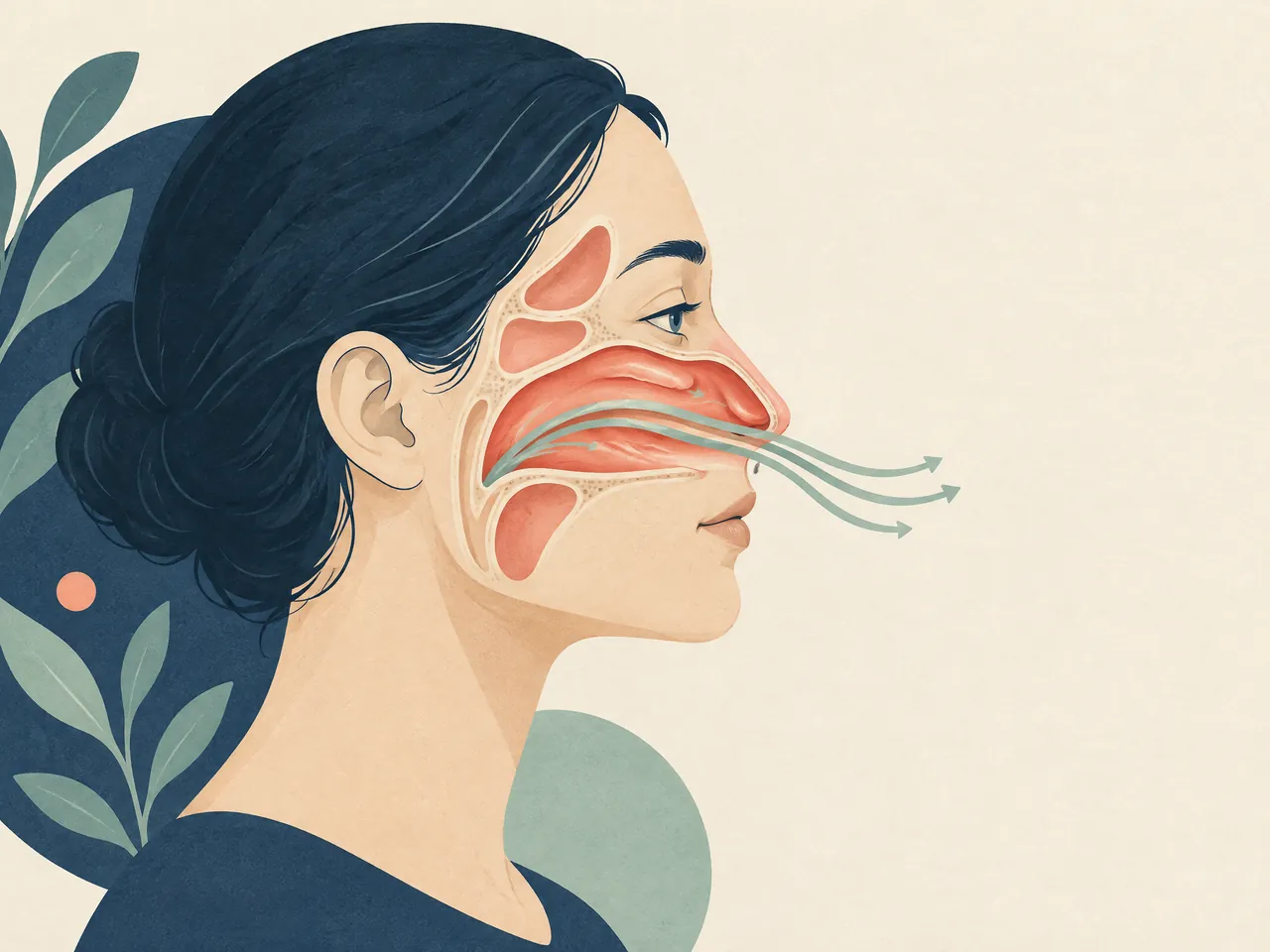
The short answer
Weather change rhinitis describes nasal symptoms that appear around shifts in temperature, humidity, air-conditioning or irritants; it does not by itself confirm an allergy. Nonallergic rhinitis commonly causes a stuffy or runny nose and sneezing, while itch in the nose or eyes may point more towards allergy. Record the setting and symptoms, limit clear triggers, and arrange medical review for persistent, severe or unusual symptoms. TCM support for rhinitis can be considered after an individual assessment alongside appropriate medical care.
Transparent pricing
See the fees.
Choose your care.
Explore our complete official price list, including first-trial prices, regular prices, packages and branch-specific options.
Opening WhatsApp prepares an enquiry; it does not send a message, take payment or confirm an appointment. Suitability and individual arrangements are confirmed during consultation.
Chinese medicine
All prices in HKDAcupuncture and Chinese herbal medicine package
Includes a Chinese medicine consultation with pulse assessment, body acupuncture and 3 days of Chinese herbal granules that do not require decoction.
HK$580 (single session)
Chinese medicine consultation with pulse assessment
Hair and scalp
All prices in HKDScalp health and hair-loss management
Includes AI scalp analysis, deep scalp and follicle cleansing, and scalp oil-control care.
HK$380 (first trial)
Regular price: HK$680
- 6 sessions: HK$3,480 (HK$580 per session)
- 12 sessions: HK$5,760 (HK$480 per session)
- 20 sessions: HK$8,600 (HK$430 per session)
- 30 sessions: HK$11,400 (HK$380 per session)
Hair acupuncture and Chinese herbal medicine package
Includes scalp acupuncture and 3 days of Chinese herbal medicine that does not require decoction.
HK$580 (single session)
Registered Chinese Medicine Practitioner consultation
- 6 sessions: HK$3,180 (HK$530 per session)
- 12 sessions: HK$5,760 (HK$480 per session)
- 20 sessions: HK$8,600 (HK$430 per session)
- 30 sessions: HK$11,400 (HK$380 per session)
Combined hair and scalp treatment
Combines acupuncture and Chinese herbal medicine with salon-level scalp and follicle care. Packages include complimentary hair-care shampoo and serum.
HK$1,260 (single session)
Combined treatment
- 8 sessions: HK$8,640 (HK$1,080 per session)
- 16 sessions: HK$15,680 (HK$980 per session)
- 20 sessions: HK$18,600 (HK$930 per session)
- 30 sessions: HK$26,400 (HK$880 per session)
Weight management
All prices in HKDFull-body acupoint embedding for weight management
Includes full-body acupoint embedding. Packages include complimentary Chinese herbal medicine for weight management, with the number of included days scaled to the package. Embedding material and the individual treatment arrangement are confirmed during consultation; this is not a cosmetic thread lift.
HK$980 (single session)
No trial session
- 10 sessions: HK$7,800 (HK$780 per session)
- 20 sessions: HK$14,600 (HK$730 per session)
- 30 sessions: HK$20,400 (HK$680 per session)
Facial acupuncture
All prices in HKDFacial acupuncture (basic)
Includes facial acupuncture and meridian-based facial care, including care for facial puffiness.
HK$480 (first trial)
Regular price: HK$680
- 10 sessions: HK$5,200 (HK$520 per session)
- 20 sessions: HK$9,600 (HK$480 per session)
- 30 sessions: HK$13,500 (HK$450 per session)
Facial acupuncture (advanced)
Includes enhanced facial acupuncture with a specially formulated moisturising mask and serum.
HK$780 (first trial)
Regular price: HK$1,180
- 10 sessions: HK$9,000 (HK$900 per session)
- 20 sessions: HK$16,600 (HK$830 per session)
- 30 sessions: HK$23,400 (HK$780 per session)
Pain care
All prices in HKDExtracorporeal shockwave treatment
Shockwave treatment for deep-tissue and fascial care. The Kwun Tong clinic offers the multi-area options shown below.
Priced by branch
Branch-specific pricing
Prince Edward: HK$250 per area
Kwun Tong: HK$250 for 1 area / HK$450 for 2 areas / HK$600 for 3 areas
Pain care (manual therapy)
Includes Chinese medicine musculoskeletal assessment, manual joint techniques and tui na.
HK$580 (single session)
Chinese medicine musculoskeletal assessment
Pain care (acupuncture and manual therapy)
Combines acupuncture and manual therapy.
HK$680 (single session)
Combined care
Nonallergic Rhinitis, Weather Change Rhinitis and TCM Support for Rhinitis: What the Pattern May Mean
Nonallergic rhinitis is a term for nasal symptoms that resemble hay fever but are not caused by an allergy. A stuffy or drippy nose, sneezing, mucus at the back of the throat and cough can come and go across the year. Weather changes, dust, fumes and strong odours are among the triggers described by Mayo Clinic [1]. That is why someone may notice a flare on the MTR platform, after perfume in a lift, or immediately on entering a very cold office, even when there is no obvious pollen season.
Allergic rhinitis and nonallergic rhinitis may overlap in everyday language because both can produce congestion and a runny nose. Allergic rhinitis involves a response to an allergen such as dust mite, pollen, fungus or animal material. Itch is a useful clue: an itchy nose, eyes or throat and red or watery eyes occur more typically with allergy, whereas nonallergic rhinitis usually does not cause those itchy symptoms [1]. A person can also have an allergy and react to irritants, so a familiar diagnosis should not stop a fresh look at a changed pattern.

Consider the symptom pattern rather than trying to label yourself after one difficult day. A cold may bring a different course and contact with people who are unwell; chronic blockage can have several possible causes. If symptoms disrupt sleep, concentration, work or exercise, it is reasonable to ask a family doctor or ear, nose and throat clinician whether allergy testing, examination or a change in management is appropriate.
Nonallergic Rhinitis, Weather Change Rhinitis and TCM Support for Rhinitis: Separating Triggers from Allergy
A trigger is something that precedes a flare; it is not necessarily the underlying cause. A sharp change from humid outdoor air to a chilled shop can be a trigger. So can cigarette smoke, vehicle exhaust, paint fumes or scented personal-care products. In nonallergic rhinitis, the lining of the nose may swell and make more mucus when it reacts to these exposures [1]. In allergic rhinitis, exposure to a particular allergen is central. Both processes can leave you with the same immediate complaint—blocked breathing through the nose—so the surrounding details matter.
Use the contrast as a prompt for assessment, not as a home test. Repeated symptoms after cleaning dusty bedding, with itchy eyes, may support a discussion about allergy. Symptoms that appear with cold air, cooking fumes or a fragrance but without itch may suggest a nonallergic component. The Hong Kong Department of Health also lists air pollution and sudden weather change as factors that can induce or worsen rhinitis symptoms [2]. A clinician can consider the history, examination and, where useful, allergy testing before deciding what the pattern most likely represents.

Nonallergic Rhinitis, Weather Change Rhinitis and TCM Support for Rhinitis: Building a Useful Symptom Diary
A diary is most helpful when it records comparison points, not just “bad nose today.” For each episode, write the date and time, main symptom, severity in your own words, duration and whether one or both sides felt blocked. Add where you were in the prior hour: outside after rain, in a heavily air-conditioned office, near traffic, cleaning, cooking, or around smoke or fragrance. Record eye itch, fever, sore throat, facial discomfort, cough, wheeze and sleep disturbance separately. These details help avoid treating every episode as the same condition.
Also note what you tried and what happened afterwards. That can include moving away from an odour, changing a wet mask, ventilating a room, using a treatment already recommended by a clinician, or avoiding a known allergen. Write down all medicines and nasal products rather than stopping them for the diary. Decongestant nasal sprays used for too long can worsen congestion when their effect wears off [1]. Bringing the record to an appointment gives the practitioner a clearer starting point than memory alone, especially when the weather has changed several times in a week.
Compare your options
| What you notice | Details worth recording | A sensible next step |
|---|---|---|
| Symptoms start after entering cold air-conditioning | Indoor–outdoor change, vent direction, how soon blockage or dripping begins, and whether eye itch is present | Reduce direct cold airflow, note the result, and discuss repeated symptoms at an assessment |
| Symptoms occur during damp or dusty home conditions | Room, visible dampness or odour, bedding or filter cleaning, and whether symptoms improve away from home | Improve ventilation and cleaning; consider allergy assessment if a repeat allergen pattern is suspected |
| Symptoms follow fragrance, smoke, paint or traffic fumes | Specific exposure, duration, throat or cough symptoms, and whether others notice the irritant | Move away, ventilate where safe, avoid repeat exposure, and mention workplace fumes to a clinician |
| Blockage persists or includes unusual features | Duration, one-sided symptoms, blood, facial pain, reduced smell, sleep impact, wheeze or treatment response | Arrange medical assessment rather than assuming the weather is the cause |
On smaller screens, scroll the table sideways to compare all columns.
Nonallergic Rhinitis, Weather Change Rhinitis and TCM Support for Rhinitis: Temperature and Humidity
Hong Kong days can involve a damp outdoor commute, a cold indoor workspace and another warm, polluted journey home. That sequence can matter more than the weather forecast alone. Changes in temperature or humidity can trigger swelling in the nasal lining and lead to a blocked or runny nose in nonallergic rhinitis [1]. For someone with allergic rhinitis, the same changes may aggravate symptoms without being the allergen itself. The practical aim is to notice which transition is difficult and whether the symptoms settle after leaving that environment.
Humidity deserves attention, but it is not a number to chase without context. A room that is persistently damp can encourage mould, while stale, dusty or strongly scented air may also be irritating. Hong Kong Department of Health advice includes keeping kitchen and bathroom areas dry and well ventilated, cleaning air-conditioner filters, and avoiding smoke around the affected person [2]. Those measures can reduce exposure burdens whether the final explanation is allergic, nonallergic or mixed. They are not a substitute for assessment when symptoms are persistent.
It is useful to separate comfort changes from medical claims. Wearing an extra layer before entering a cold office, moving away from spray fragrance, or planning ventilation while cleaning may make the exposure less abrupt. None of these steps proves a diagnosis or promises that congestion will disappear. If you are comparing how damp conditions affect you, the article on humidity and nasal congestion can help you frame observations for a consultation.
Nonallergic Rhinitis, Weather Change Rhinitis and TCM Support for Rhinitis: Cold Air, Air-Conditioning and Irritants
Cold air and air-conditioning are not identical exposures. A very cold stream directed at the face may be the immediate irritant, while an air-conditioning unit that has accumulated dust or mould is an environmental issue worth checking. Sudden indoor–outdoor temperature differences can be relevant too. The Department of Health advises being mindful of these changes, taking a jacket to air-conditioned places and keeping rooms from being excessively cold [2]. Adjusting the vent direction, taking a brief transition break, and maintaining the appliance are practical experiments to record in the diary.
Irritants are often easier to overlook because they may be intermittent. Cigarette smoke, incense, aerosol cleaners, perfume, paint and traffic fumes can all be relevant to a sensitive nose. Hong Kong Adventist Hospital lists polluted air and chemicals such as cosmetics, perfume, paint, camphor and insecticides among common aggravating exposures [3]. Rather than adding many new products to “fix” the nose, simplify the immediate environment: avoid smoke, ventilate after cleaning or painting, and choose lower-odour options where possible. Tell a clinician if workplace fumes form part of the pattern.

Nonallergic Rhinitis, Weather Change Rhinitis and TCM Support for Rhinitis: What to Discuss at an Assessment
A productive assessment begins with the pattern and its impact. Explain whether congestion is intermittent or daily, how long it has continued, whether it wakes you, and whether it affects smell, exercise, work or school. Bring the diary and a list of prescribed, pharmacy and traditional products. Mention pregnancy, hormonal changes, reflux symptoms, recent respiratory infection and medication changes when relevant, because these can matter in the broader evaluation of rhinitis [1]. If allergy is suspected, ask whether testing would add useful information rather than assuming a weather trigger has answered the question.
Be specific about warning features. One-sided blockage, recurrent blood-stained nasal discharge, significant facial pain or swelling, reduced smell, severe symptoms, breathlessness or asthma symptoms should not be managed by repeated environmental experiments alone. Medical review is also sensible when over-the-counter measures have not helped or have caused side effects [1]. The aim is not to create alarm around every blocked nose; it is to make sure an apparently routine “weather reaction” does not delay evaluation of a different nasal, sinus or respiratory problem.
Nonallergic Rhinitis, Weather Change Rhinitis and TCM Support for Rhinitis: Practical Care and Next Steps
Practical care starts with the least complicated actions that fit the observed trigger. For a fragrance-related flare, leave the exposure and ventilate. For repeated cold-office symptoms, avoid a direct vent and prepare for the transition. For dust or dampness, clean and maintain the relevant part of the home rather than relying on scent to mask it. Allergic-rhinitis guidance from Hong Kong’s Department of Health names allergen avoidance, antihistamines and steroid nasal spray as first-line options for allergic rhinitis, with treatment discussed with a doctor [2]. Those options should be tailored to the diagnosis and your personal medical situation.
Do not independently stop prescribed medicines because you are exploring TCM support for rhinitis. Likewise, do not extend use of a decongestant nasal spray beyond the directions because rebound congestion can become part of the problem [1]. If a regular treatment is not helping, take the diary and product list to the prescriber or pharmacist for review. The page on persistent nasal congestion causes is a useful prompt to consider when blockage continues beyond the situation that first seemed to trigger it.

Nonallergic Rhinitis, Weather Change Rhinitis and TCM Support for Rhinitis: Home Measures and Medical Follow-up
Use the table as a planning tool, not a diagnostic scorecard. Pick one or two changes for a short period so you can tell what altered the pattern. For example, clean an air-conditioner filter and redirect the vent, or reduce a scented product and note whether the morning symptoms change. Washing bedding regularly, keeping damp corners dry, and ventilating cooking or cleaning areas are sensible environmental measures supported in local guidance [2] [3]. Trying everything at once may make a diary less useful and can add unnecessary expense or irritation.
Arrange follow-up when the pattern remains intrusive, changes materially or includes the warning features discussed above. A family doctor can assess common causes and guide treatment; an ear, nose and throat clinician may be appropriate when examination of persistent nasal symptoms is needed. If you have known asthma or notice wheeze, chest tightness or shortness of breath alongside nasal symptoms, raise that promptly with your usual clinician. Where allergies are part of the picture, reducing established allergens remains relevant even if weather shifts also play a role.

Nonallergic Rhinitis, Weather Change Rhinitis and TCM Support for Rhinitis: Discussing Acupuncture or Herbal Care
A Registered Chinese Medicine Practitioner may ask about the timing and character of nasal symptoms, sensitivity to cold or damp conditions, sleep, appetite, bowel habit, energy, current diagnoses and medicines. This is an individual traditional assessment, not a substitute for confirming an allergy or excluding another medical cause. In traditional Chinese medicine, practitioners may describe the presentation through pattern differentiation. That traditional language should not be read as an allergy test or as a guarantee that a particular treatment will prevent every weather-related flare.
After assessment, acupuncture or herbal care may be discussed as adjunctive options, depending on the person’s circumstances. Tell the practitioner about antihistamines, steroid sprays, decongestants, supplements and all other medicines, and do not change prescribed treatment without the advice of the prescriber. If you would like to enquire about an assessment, TCM Lab has a Chinese medicine clinic Prince Edward and a Kwun Tong Chinese medicine clinic. The consultation is the place to discuss suitability, safety and whether medical follow-up should take priority.
Care and health guide
Health service information
This directory brings together services, reading, and visit information related to health services, to help you prepare questions for a consultation.
If you are organising health questions, Chinese medicine clinic Hong Kong is a starting point for learning about related services and preparing for a consultation.
People have different needs; acupuncture Hong Kong provides further reading to help you understand options in your own context.


Your questions, answered
Frequently asked questions
How is nonallergic rhinitis assessed when weather change rhinitis is suspected?
Assessment starts with the timing and pattern of congestion or a runny nose, including temperature or humidity changes, air-conditioning and irritant exposure. A diary helps show repeatable patterns. A clinician may consider the examination, other health factors and allergy testing when needed, because weather-related timing alone does not establish the cause. Persistent or unusual symptoms should be assessed rather than self-labelled.
Can TCM support for rhinitis be discussed alongside usual care?
It may be discussed as an adjunct after an individual assessment. Tell the practitioner about every medicine, nasal spray, supplement and diagnosis, and do not stop prescribed treatment independently. Traditional pattern differentiation does not replace medical evaluation for allergy, infection, sinus disease or breathing symptoms. Medical follow-up should take priority for severe, changing or unusual symptoms.
What can I do at home for weather change rhinitis?
Record the setting and symptoms, reduce clear irritants such as smoke and strong fragrance, avoid direct cold air from an air-conditioner, and keep relevant home areas clean, dry and ventilated. Wash bedding regularly and maintain air-conditioning filters. Make one or two changes at a time so you can understand the pattern. Seek advice if symptoms persist or interfere with daily life.
When should I seek medical advice for a blocked or runny nose?
Seek assessment when symptoms are serious, do not improve with sensible measures or recommended treatment, or have medicine side effects. One-sided blockage, blood-stained discharge, significant facial pain or swelling, a reduced sense of smell, wheeze or shortness of breath also deserve prompt medical attention. These signs need evaluation beyond a weather or allergy assumption.
Sources and further information
- [1] [1] Mayo Clinic — Nonallergic rhinitis
Referenced for: Symptoms, weather and irritant triggers, assessment considerations, and cautions about prolonged decongestant use.
- [2] [2] Hong Kong Department of Health Student Health Service — Allergic Rhinitis
Referenced for: Hong Kong guidance on allergic-rhinitis symptoms, environmental measures, weather changes and conventional management.
- [3] [3] Hong Kong Adventist Hospital — Allergic Rhinitis
Referenced for: Local hospital guidance on symptoms, temperature and humidity changes, irritants and household environmental measures.