
TCM Lab · Health reading
Ankle Sprain Compression and Elevation — What Should I Do in the First 2 Days After an Ankle Sprain?
Published Updated
A rolled ankle can look like a minor mishap, yet the first two days are when sensible protection and a timely assessment matter most. If you have pain, swelling or bruising after the foot twists, begin by reducing load on the joint, using a cloth-wrapped cold pack for brief sessions, applying comfortable support and raising the foot when resting. Do not try to prove that it is ‘only a sprain’ by walking through sharp pain. This guide explains ankle sprain compression and elevation, what to avoid early on, and the warning signs that need prompt medical assessment before you plan the next step.
Appointments are confirmed through WhatsApp. If you have language requirements, please mention them in your enquiry.
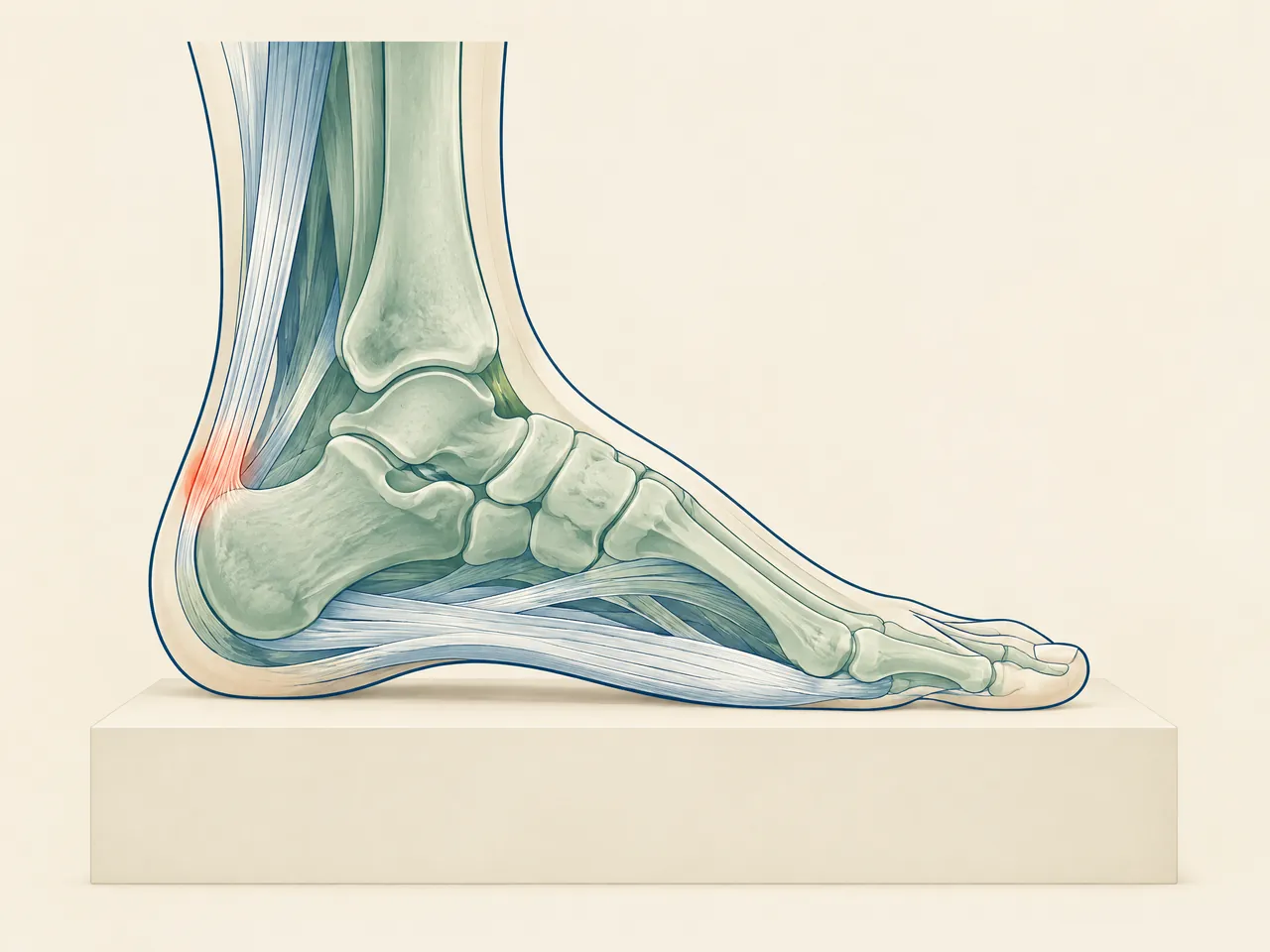
The short answer
For the first 48 hours after a suspected ankle sprain, protect the ankle, rest from painful activity, use a cold pack wrapped in cloth for up to 20 minutes at a time, use comfortable compression and elevate the foot on pillows when resting. Avoid heat and massage in the early stage. Seek urgent assessment instead of relying on self-care if there is deformity, a crack at injury, numbness, a cold or discoloured foot, or an inability to bear weight.
Transparent pricing
See the fees.
Choose your care.
Explore our complete official price list, including first-trial prices, regular prices, packages and branch-specific options.
Opening WhatsApp prepares an enquiry; it does not send a message, take payment or confirm an appointment. Suitability and individual arrangements are confirmed during consultation.
Pain care
All prices in HKDExtracorporeal shockwave treatment
Shockwave treatment for deep-tissue and fascial care. The Kwun Tong clinic offers the multi-area options shown below.
Priced by branch
Branch-specific pricing
Prince Edward: HK$250 per area
Kwun Tong: HK$250 for 1 area / HK$450 for 2 areas / HK$600 for 3 areas
Pain care (manual therapy)
Includes Chinese medicine musculoskeletal assessment, manual joint techniques and tui na.
HK$580 (single session)
Chinese medicine musculoskeletal assessment
Pain care (acupuncture and manual therapy)
Combines acupuncture and manual therapy.
HK$680 (single session)
Combined care
Hair and scalp
All prices in HKDScalp health and hair-loss management
Includes AI scalp analysis, deep scalp and follicle cleansing, and scalp oil-control care.
HK$380 (first trial)
Regular price: HK$680
- 6 sessions: HK$3,480 (HK$580 per session)
- 12 sessions: HK$5,760 (HK$480 per session)
- 20 sessions: HK$8,600 (HK$430 per session)
- 30 sessions: HK$11,400 (HK$380 per session)
Hair acupuncture and Chinese herbal medicine package
Includes scalp acupuncture and 3 days of Chinese herbal medicine that does not require decoction.
HK$580 (single session)
Registered Chinese Medicine Practitioner consultation
- 6 sessions: HK$3,180 (HK$530 per session)
- 12 sessions: HK$5,760 (HK$480 per session)
- 20 sessions: HK$8,600 (HK$430 per session)
- 30 sessions: HK$11,400 (HK$380 per session)
Combined hair and scalp treatment
Combines acupuncture and Chinese herbal medicine with salon-level scalp and follicle care. Packages include complimentary hair-care shampoo and serum.
HK$1,260 (single session)
Combined treatment
- 8 sessions: HK$8,640 (HK$1,080 per session)
- 16 sessions: HK$15,680 (HK$980 per session)
- 20 sessions: HK$18,600 (HK$930 per session)
- 30 sessions: HK$26,400 (HK$880 per session)
Weight management
All prices in HKDFull-body acupoint embedding for weight management
Includes full-body acupoint embedding. Packages include complimentary Chinese herbal medicine for weight management, with the number of included days scaled to the package. Embedding material and the individual treatment arrangement are confirmed during consultation; this is not a cosmetic thread lift.
HK$980 (single session)
No trial session
- 10 sessions: HK$7,800 (HK$780 per session)
- 20 sessions: HK$14,600 (HK$730 per session)
- 30 sessions: HK$20,400 (HK$680 per session)
Facial acupuncture
All prices in HKDFacial acupuncture (basic)
Includes facial acupuncture and meridian-based facial care, including care for facial puffiness.
HK$480 (first trial)
Regular price: HK$680
- 10 sessions: HK$5,200 (HK$520 per session)
- 20 sessions: HK$9,600 (HK$480 per session)
- 30 sessions: HK$13,500 (HK$450 per session)
Facial acupuncture (advanced)
Includes enhanced facial acupuncture with a specially formulated moisturising mask and serum.
HK$780 (first trial)
Regular price: HK$1,180
- 10 sessions: HK$9,000 (HK$900 per session)
- 20 sessions: HK$16,600 (HK$830 per session)
- 30 sessions: HK$23,400 (HK$780 per session)
Chinese medicine
All prices in HKDAcupuncture and Chinese herbal medicine package
Includes a Chinese medicine consultation with pulse assessment, body acupuncture and 3 days of Chinese herbal granules that do not require decoction.
HK$580 (single session)
Chinese medicine consultation with pulse assessment
Ankle Sprain Compression and Elevation: What Should I Do in the First 2 Days After an Ankle Sprain? — Assess the Injury
An ankle sprain means one or more ligaments around the joint have been stretched or torn. It often follows an inward or outward roll of the foot: missing a step, landing awkwardly, turning while playing sport, or walking on an uneven surface. Pain, tenderness, swelling, bruising, stiffness and trouble walking can all occur. The Hong Kong College of Orthopaedic Surgeons notes that severity varies with the number of ligaments involved and whether a tear is partial or complete. [2]
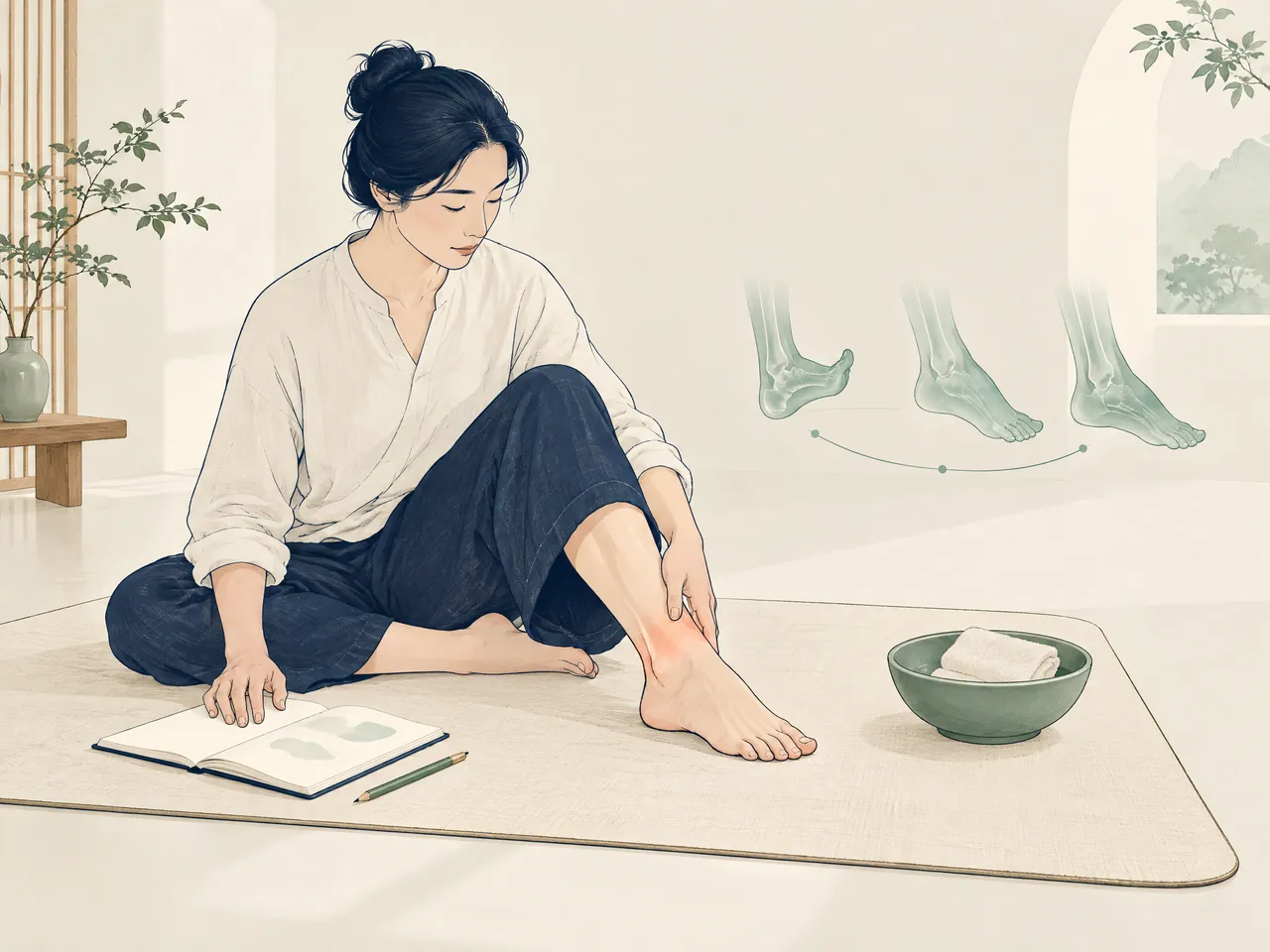
Start with a short, useful record rather than repeatedly testing the ankle. Note when it happened, whether the foot rolled in or out, where the pain is most focused, whether swelling appeared quickly, and whether you could take steps afterwards. Also note a pop or crack, numbness, altered skin colour, or a feeling that the joint has changed shape.
A mild-looking injury can still need a proper examination, while a dramatic bruise does not by itself establish the diagnosis. Imaging may be considered by a clinician when the examination suggests a fracture or another injury; it is not something that an online checklist can rule in or out. For a step-by-step refresher focused on immediate protection, see ankle sprain first aid. In the meantime, treat uncertainty as a reason to reduce strain on the joint rather than a reason to push through it.

Ankle Sprain Compression and Elevation: What Should I Do in the First 2 Days After an Ankle Sprain? — Note the Mechanism and Symptoms
The movement that caused the injury can be informative. A foot that suddenly turns inward commonly stresses ligaments on the outside of the ankle, but pain on the inside, above the ankle, across the mid-foot or directly over bone deserves attention too. A direct collision, a fall, or a high-energy twist may call for a different level of caution than a brief misstep at home.
Look at both ankles in the same light, without repeatedly pressing the sore area. Compare swelling, bruising and skin colour, then note what normal tasks are limited: climbing stairs, wearing a shoe, moving from a chair, or standing at work. If pain is steadily increasing rather than settling, or swelling is becoming marked, arrange assessment rather than escalating home treatments. [1]
Ankle Sprain Compression and Elevation: What Should I Do in the First 2 Days After an Ankle Sprain? — Recognise When Walking Is Difficult
Difficulty walking is important because it changes how safely you manage the first two days. Stop the activity that caused pain and arrange a lift, use a handrail, or ask someone to help rather than limping for a long distance. The NHS advises urgent help when a person cannot put weight on the injury or cannot walk more than a few steps, especially with severe or worsening pain, large or worsening swelling, or major difficulty moving the joint. [1]
Call emergency services or go to emergency care if you heard a crack at the injury, the ankle or foot looks deformed, the skin is blue or grey or cold, or there is numbness, tingling or pins and needles. Those signs should not be managed with a tighter wrap, massage or an attempt to ‘walk it off’. [1] Until you have been assessed, protect the limb from extra pressure and avoid unnecessary twisting. A support is not a substitute for assessment when these red flags are present.
Compare your options
| Situation | Practical first response | What to avoid or when to seek help |
|---|---|---|
| Pain and swelling after a twist | Protect the ankle, stop painful activity and use a cloth-wrapped cold pack for up to 20 minutes at a time. [1] | Avoid direct ice on skin, heat packs, alcohol and massage early on. |
| Resting at home | Use comfortable daytime support if appropriate and raise the leg and foot on pillows. | Do not make a bandage painfully tight; numbness, colour change or a cold foot need attention. [3] |
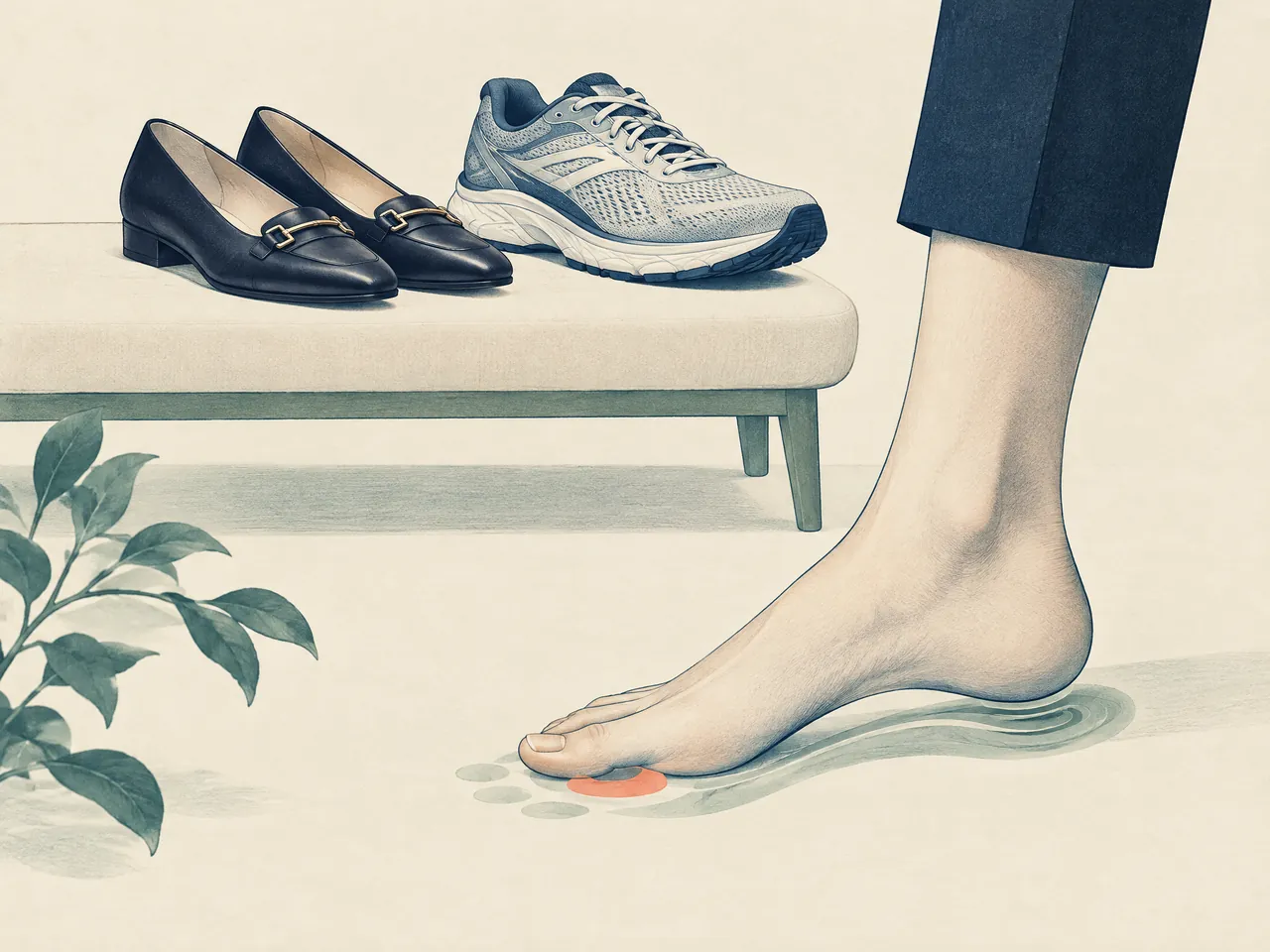
| Getting around | Keep trips short, use a stable shoe or recommended aid, and stop if pain prevents normal steps. | Do not force weight through sharp pain or test running and jumping in the first two days. |
| Crack, deformity, numbness or inability to bear weight | Seek urgent medical assessment and protect the limb while arranging help. [1] | Do not rely on compression, massage or a home exercise plan before serious injury has been considered. |
On smaller screens, scroll the table sideways to compare all columns.
Ankle Sprain Compression and Elevation: What Should I Do in the First 2 Days After an Ankle Sprain? — Use Early Self-Care
For a suspected uncomplicated sprain, the early aim is to protect the injury and control discomfort while you observe its course. The commonly used PRICE approach is protection, rest, ice, compression and elevation. NHS guidance recommends these measures for the first two to three days: protect the injury, stop exercise and avoid loading it, apply a wrapped ice pack for up to 20 minutes every two to three hours, wrap a bandage for daytime support and raise the limb on a pillow as much as possible. [1] The exact schedule is less important than doing each measure safely and reassessing when symptoms change.
Compression and elevation are a pair, not a challenge to make the bandage as firm as possible. A flexible bandage or suitable ankle support may provide a feeling of steadiness and help with swelling. It should not cause increasing pain, numbness, pins and needles, a cold foot or a change in colour. UCLA Health similarly cautions that an overly tight wrap can impede circulation. [3]
Elevation is easiest to use during natural rest periods: lying on a sofa, reading in bed, or sitting with the leg safely supported. Prop the lower leg and foot on pillows so the ankle is comfortably raised, without placing pressure directly on the tender outer ankle. If you are unsure whether cold or warmth fits this early stage, our ankle sprain ice or heat guide explains the distinction in more detail.
Ankle Sprain Compression and Elevation: What Should I Do in the First 2 Days After an Ankle Sprain? — Choose Ice over Heat at First
In the first two days, use cold for short, protected sessions if it helps your pain. Put a cold pack or a bag of frozen vegetables inside a tea towel; never place ice directly on bare skin. The NHS suggests up to 20 minutes at a time, repeated every two to three hours during the initial period. [1] Set a timer, check the skin after use and stop if the cold is uncomfortable. This is a comfort and swelling-management measure, not a test of toughness and not a guarantee that the injury is minor.
Avoid heat packs, hot baths, alcohol and massage in the first couple of days, because these may aggravate early swelling. [1] The search for ankle sprain pain relief often leads people to try several remedies at once. Keep the early plan simple instead: protect the joint, use wrapped cold if suitable, rest from provoking activity, apply gentle support and elevate. If your pain control needs are more than simple self-care can address, ask a pharmacist or clinician what is safe for you.
Ankle Sprain Compression and Elevation: What Should I Do in the First 2 Days After an Ankle Sprain? — Protect, Rest and Elevate
Protection does not always mean complete immobility. It means removing the activity that causes sharp pain and making the next few days safer. Wear a stable shoe if you must move about, use a support recommended for you, and avoid running, court sports, uneven paths and fast turns. At home, carry fewer items, take stairs slowly and keep frequently used items within easy reach. If a job requires prolonged standing or travel across a large site, tell the relevant person that walking is restricted while you arrange assessment or a modified plan.
Rest is relative. In the first phase, do not exercise through pain or keep checking whether you can sprint, jump or balance on the ankle. Yet when pain no longer prevents movement, the NHS advises keeping the joint moving so it does not become stiff. [1] A clinician or rehabilitation professional can show you what movement and loading is appropriate for your presentation. The Hong Kong College of Orthopaedic Surgeons describes rehabilitation as progressing from swelling reduction to restoring range of motion, strength, flexibility and later proprioception, or the body’s sense of joint position. [2]
Ankle Sprain Compression and Elevation: What Should I Do in the First 2 Days After an Ankle Sprain? — Plan Recovery and Support
The first 48 hours are the time to protect the ankle and decide whether it needs prompt assessment. Once severe injury has been considered and pain begins to settle, the question becomes how to return to ordinary walking without repeatedly irritating the joint. Recovery varies by the severity of the injury, the demands of your work or sport, previous sprains and the rehabilitation plan. The Hong Kong College of Orthopaedic Surgeons says recovery can range from weeks to months depending on severity. [2] Avoid setting a fixed return date based only on a friend’s experience.
A sensible progression has small checkpoints: moving around the home, walking on level ground, handling stairs, then restoring ankle motion, strength, balance and activity-specific control. If one step produces swelling later that day or marked pain the next morning, it is a signal to scale back and discuss it with a clinician, not a reason to ignore the response. People whose ankle repeatedly gives way, especially on uneven ground or during turns, should not simply buy stronger supports indefinitely. Read about recurrent ankle sprains and chronic ankle instability and arrange an appropriate evaluation.
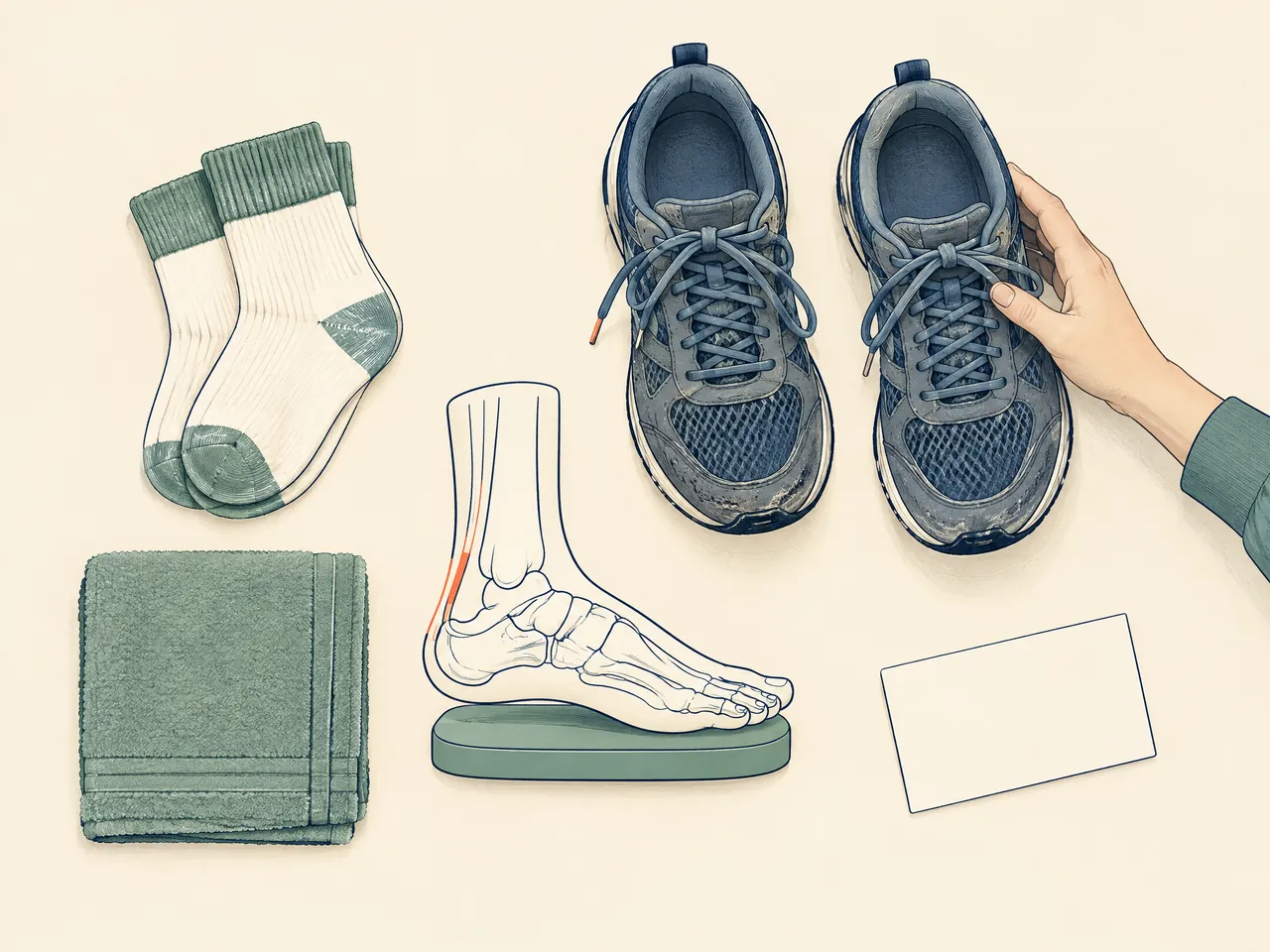
The comparison below separates useful early choices from actions better postponed. It is designed for the common situation of a recent twist without emergency warning signs. If you are pregnant, have reduced sensation, circulation problems, diabetes, take medicines that affect bleeding, or have another condition that changes injury care, get individual advice rather than applying a generic routine.
Ankle Sprain Compression and Elevation: What Should I Do in the First 2 Days After an Ankle Sprain? — Consider Chinese Medicine as Support
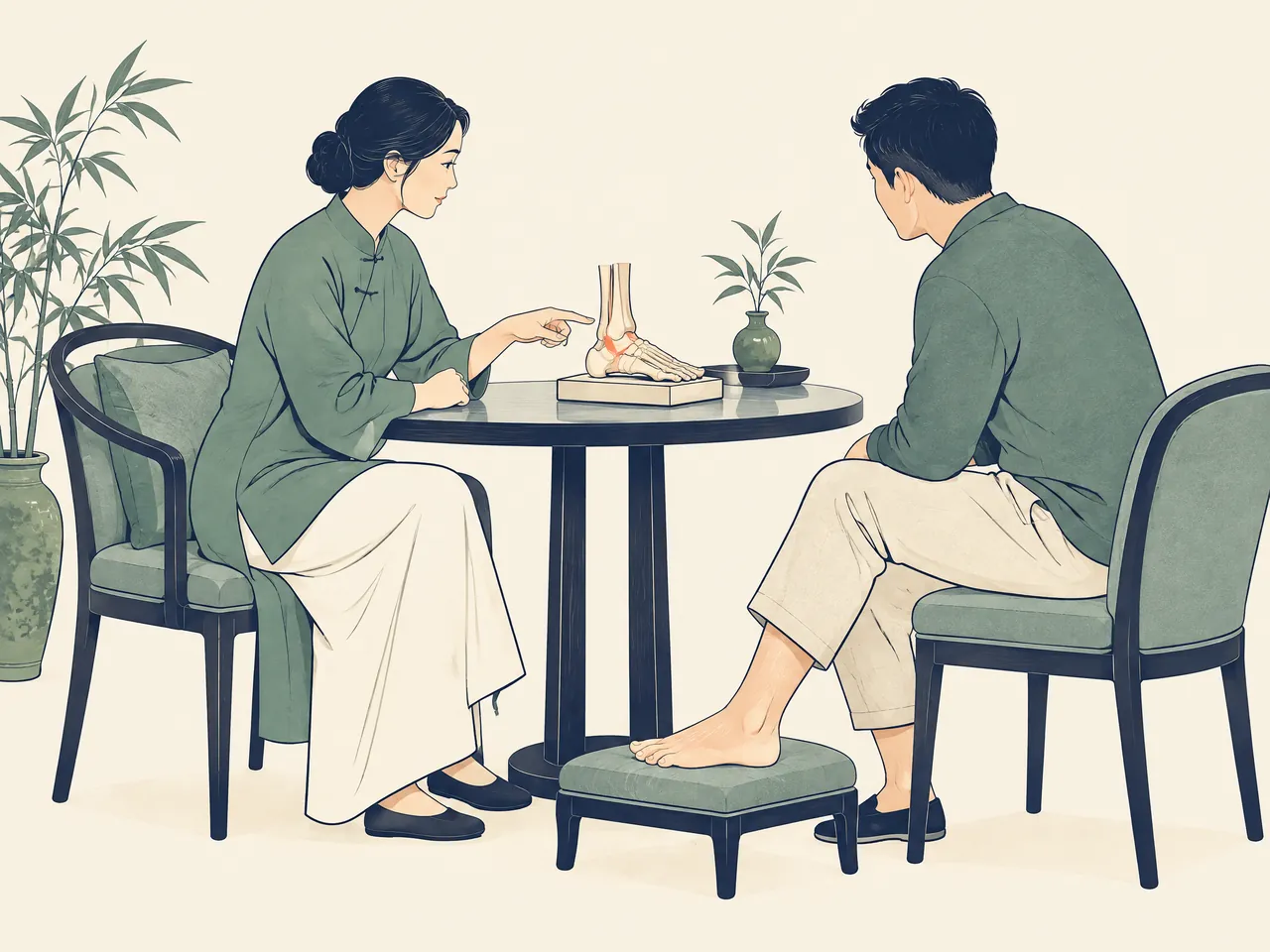
After a conventional assessment has addressed urgent concerns, some people choose to discuss Chinese medicine as an additional form of support. A Registered Chinese Medicine Practitioner can take a history of the injury, ask about the pain and daily limitations, and consider the person’s wider health situation. In traditional Chinese medicine, pattern terms may be used to describe the presentation; they are part of a traditional clinical approach and are not the same thing as a modern orthopaedic diagnosis. Bring any imaging reports, a medication list and the details you recorded after the injury to the consultation.
Acupuncture may be discussed as a supportive option after individual assessment, but it should not displace protection, assessment for fracture or significant ligament injury, progressive loading and rehabilitation. Research findings and clinical recommendations on acupuncture for ankle sprain are not uniform, so it is not reasonable to promise a fixed number of sessions or a particular result. Do not attempt needling or follow an individualised herbal prescription from a webpage. If you are considering care, you can ask about practical arrangements at the Kwun Tong Chinese medicine clinic or the Chinese medicine clinic Prince Edward.
Ankle Sprain Compression and Elevation: What Should I Do in the First 2 Days After an Ankle Sprain? — Return to Weight-Bearing Gradually
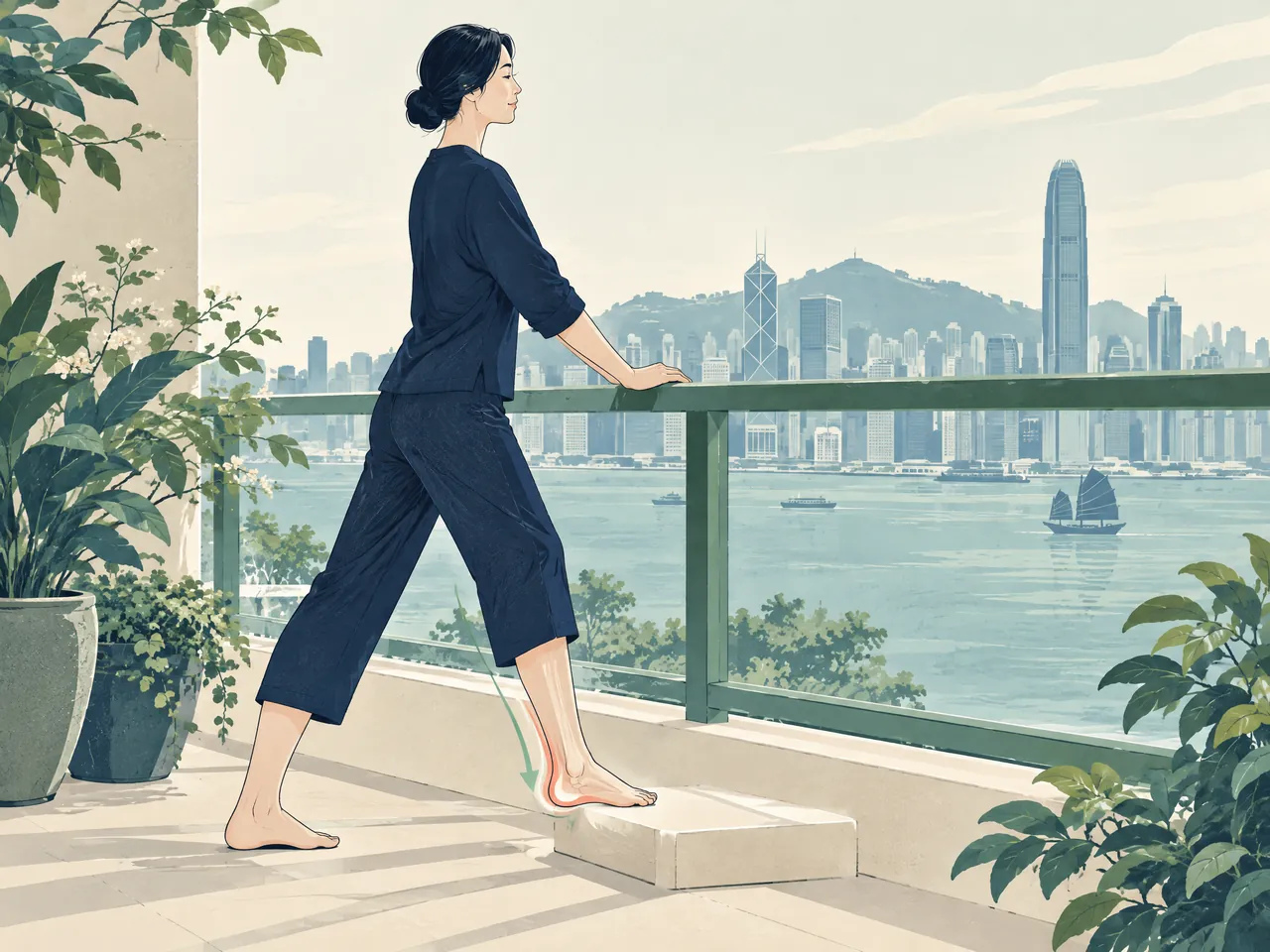
Return to weight-bearing should be gradual and guided by pain, stability and professional advice. Begin with the level you can manage without a sharp increase in pain or a pronounced limp, using a support or mobility aid if recommended. Then build up walking distance and functional tasks before returning to jumps, changes of direction or sport. The orthopaedic guidance describes later rehabilitation that develops strength, stamina and proprioception, with frequency and intensity increased gradually as function returns. [2] This work matters because the ankle needs to regain control as well as become less sore.
Keep an eye on the pattern rather than expecting a perfectly straight improvement. Minor day-to-day fluctuation may happen, but worsening pain, swelling, instability or an inability to progress deserves review. NHS guidance says that most sprains and strains feel better after about two weeks, while severe injuries can take months; it also advises avoiding strenuous exercise such as running for up to eight weeks because of the risk of further damage. [1] Your own timetable may differ. A gradual plan is more protective of a future return to activity than rushing to meet an arbitrary deadline.
Care and health guide
Health service information
This directory brings together services, reading, and visit information related to health services, to help you prepare questions for a consultation.
If you are organising health questions, Chinese medicine clinic Hong Kong is a starting point for learning about related services and preparing for a consultation.
People have different needs; acupuncture Hong Kong provides further reading to help you understand options in your own context.


Your questions, answered
Frequently asked questions
Should I wear an ankle compression bandage overnight?
The NHS describes compression as a daytime support measure in the first two to three days. [1] Individual needs differ, especially if there is swelling or any circulation concern, so do not keep a wrap on if it causes discomfort, numbness or skin-colour change. Ask a clinician which support and timing suit your injury.
Why elevate an ankle after a sprain?
Elevation is used alongside protection, relative rest, cold and compression to help manage early swelling. Rest the lower leg and foot on pillows in a comfortable position; it should not create pressure on the painful spot or make you unsafe when standing up. [1]
When can I start moving my ankle after a sprain?
Do not force movement through pain in the early stage. Once pain no longer stops you from moving the joint, gentle movement can help reduce stiffness, but the type and amount should fit the injury. [1] If walking is very difficult or symptoms are worsening, seek assessment before progressing activity.
Can Chinese medicine replace an X-ray or orthopaedic assessment?
No. Traditional Chinese medicine may be considered as supportive care after an individual assessment, but it cannot rule out a fracture or major ligament injury. Urgent signs such as deformity, a crack, altered colour or temperature, numbness, or inability to bear weight need conventional medical assessment. [1]
Sources and further information
- [1] [1] NHS — Sprains and strains
Referenced for: First two-to-three-day PRICE self-care, cold-pack timing, avoiding heat, alcohol and massage, gradual movement, recovery expectations and urgent warning signs.
- [2] [2] The Hong Kong College of Orthopaedic Surgeons — Ankle Sprain
Referenced for: Ankle-sprain mechanisms and symptoms, diagnostic assessment, RICE first aid, rehabilitation stages and variable recovery time.
- [3] [3] UCLA Health — Use PRICE approach for healing an ankle sprain
Referenced for: Supportive compression, the risk of wrapping too tightly, elevation, and gradual resumption of activity.