
TCM Lab · Health reading
Hong Kong low back pain care: low back pain treatment options explained
Published Updated
A sore lower back after a long desk day, a lifting task or an awkward turn can make it tempting to choose a treatment first and ask questions later. A safer route for Hong Kong low back pain care is to begin with the pattern: when it began, where it is felt, what movement changes it, and whether anything is travelling into a leg. Low back pain can be dull, sharp, local or leg-related, and the same word can describe very different situations. This page sets out how to prepare for assessment, compare low back pain treatment options without assuming a scan tells the whole story, and recognise symptoms that should move medical assessment ahead of self-care. WHO notes that assessment and rehabilitation should be tailored to the person and their functioning, rather than reduced to one label or one treatment choice. [1]
Appointments are confirmed through WhatsApp. If you have language requirements, please mention them in your enquiry.
The short answer
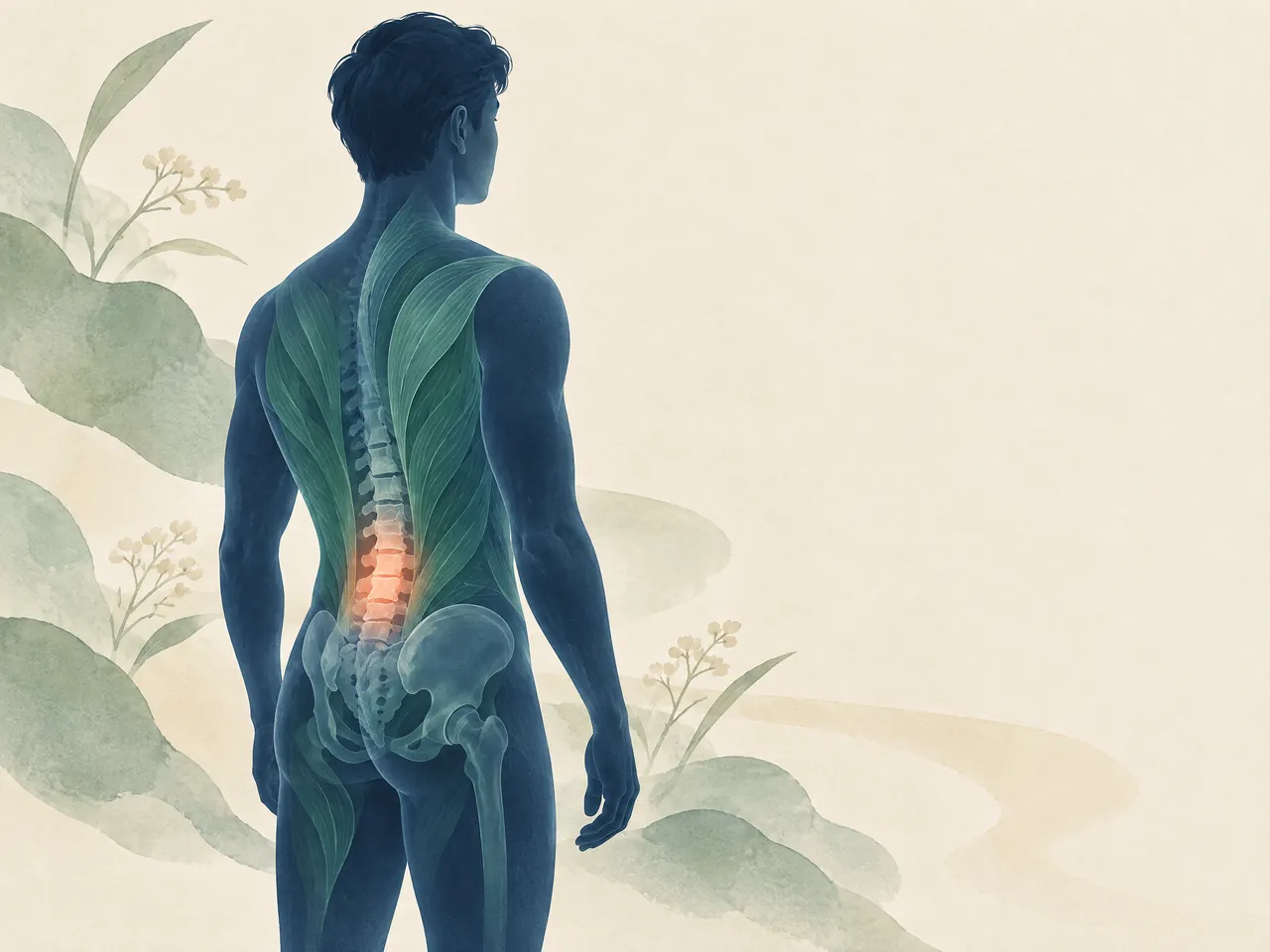
Good Hong Kong low back pain care starts with triage rather than a single treatment. Write down onset, trigger, movement limits, pain location, leg symptoms and medicine use. Assessment helps distinguish a self-management and rehabilitation discussion from a problem requiring urgent medical attention. For low back pain treatment options, keep gentle activity, rehabilitation, heat or cold, and acupuncture discussions in their proper context; new weakness, saddle numbness, bladder or bowel change, fever, chest pain or major trauma needs urgent assessment.
Transparent pricing
See the fees.
Choose your care.
Explore our complete official price list, including first-trial prices, regular prices, packages and branch-specific options.
Opening WhatsApp prepares an enquiry; it does not send a message, take payment or confirm an appointment. Suitability and individual arrangements are confirmed during consultation.
Pain care
All prices in HKDExtracorporeal shockwave treatment
Shockwave treatment for deep-tissue and fascial care. The Kwun Tong clinic offers the multi-area options shown below.
Priced by branch
Branch-specific pricing
Prince Edward: HK$250 per area
Kwun Tong: HK$250 for 1 area / HK$450 for 2 areas / HK$600 for 3 areas
Pain care (manual therapy)
Includes Chinese medicine musculoskeletal assessment, manual joint techniques and tui na.
HK$580 (single session)
Chinese medicine musculoskeletal assessment
Pain care (acupuncture and manual therapy)
Combines acupuncture and manual therapy.
HK$680 (single session)
Combined care
Hair and scalp
All prices in HKDScalp health and hair-loss management
Includes AI scalp analysis, deep scalp and follicle cleansing, and scalp oil-control care.
HK$380 (first trial)
Regular price: HK$680
- 6 sessions: HK$3,480 (HK$580 per session)
- 12 sessions: HK$5,760 (HK$480 per session)
- 20 sessions: HK$8,600 (HK$430 per session)
- 30 sessions: HK$11,400 (HK$380 per session)
Hair acupuncture and Chinese herbal medicine package
Includes scalp acupuncture and 3 days of Chinese herbal medicine that does not require decoction.
HK$580 (single session)
Registered Chinese Medicine Practitioner consultation
- 6 sessions: HK$3,180 (HK$530 per session)
- 12 sessions: HK$5,760 (HK$480 per session)
- 20 sessions: HK$8,600 (HK$430 per session)
- 30 sessions: HK$11,400 (HK$380 per session)
Combined hair and scalp treatment
Combines acupuncture and Chinese herbal medicine with salon-level scalp and follicle care. Packages include complimentary hair-care shampoo and serum.
HK$1,260 (single session)
Combined treatment
- 8 sessions: HK$8,640 (HK$1,080 per session)
- 16 sessions: HK$15,680 (HK$980 per session)
- 20 sessions: HK$18,600 (HK$930 per session)
- 30 sessions: HK$26,400 (HK$880 per session)
Weight management
All prices in HKDFull-body acupoint embedding for weight management
Includes full-body acupoint embedding. Packages include complimentary Chinese herbal medicine for weight management, with the number of included days scaled to the package. Embedding material and the individual treatment arrangement are confirmed during consultation; this is not a cosmetic thread lift.
HK$980 (single session)
No trial session
- 10 sessions: HK$7,800 (HK$780 per session)
- 20 sessions: HK$14,600 (HK$730 per session)
- 30 sessions: HK$20,400 (HK$680 per session)
Facial acupuncture
All prices in HKDFacial acupuncture (basic)
Includes facial acupuncture and meridian-based facial care, including care for facial puffiness.
HK$480 (first trial)
Regular price: HK$680
- 10 sessions: HK$5,200 (HK$520 per session)
- 20 sessions: HK$9,600 (HK$480 per session)
- 30 sessions: HK$13,500 (HK$450 per session)
Facial acupuncture (advanced)
Includes enhanced facial acupuncture with a specially formulated moisturising mask and serum.
HK$780 (first trial)
Regular price: HK$1,180
- 10 sessions: HK$9,000 (HK$900 per session)
- 20 sessions: HK$16,600 (HK$830 per session)
- 30 sessions: HK$23,400 (HK$780 per session)
Chinese medicine
All prices in HKDAcupuncture and Chinese herbal medicine package
Includes a Chinese medicine consultation with pulse assessment, body acupuncture and 3 days of Chinese herbal granules that do not require decoction.
HK$580 (single session)
Chinese medicine consultation with pulse assessment
Hong Kong low back pain care and low back pain treatment options: start with the symptom pattern
The first useful question is not simply “where does it hurt?” but “what is this pain doing?” Note whether it began suddenly during a lift, appeared after a day of sitting, followed a fall, or developed gradually. Describe whether getting out of bed, bending to shoes, turning in a taxi, standing in an MTR queue, walking, coughing or climbing stairs makes it better or worse. Also record what you can no longer do normally: sleep in one position, sit through a meeting, carry groceries, drive or put on socks. These details turn a vague report of soreness into a clear account of load, movement and function. They also help separate a short-lived flare from a pattern that is recurring, spreading or limiting ordinary life. A useful record distinguishes the pain itself from your response to it: write what activity you stopped, what you could still do and whether a position merely feels comfortable or actually restores function. That distinction helps a clinician judge change over time. For broader context on common patterns, see the low back pain topic page, while keeping the current episode’s details separate from general information.
Hong Kong low back pain care and low back pain treatment options: record onset and movement limits
Make a small timeline before seeking care. Include the first day of pain, any recent change in training, housework, travel, caregiving or work duties, and whether the first pain was immediate or later that day. It is useful to say whether symptoms ease after changing position, build through the day, wake you at night, or make a particular task feel unsafe. Name the movement rather than saying that “everything hurts”: for example, bending forward to a low drawer, leaning backwards, twisting while carrying a child, rising from a chair or walking downhill. If the onset was sudden and unclear, What causes sudden low back pain? offers a focused way to organise possible triggers without assuming that one visible activity proves the cause. A record of previous episodes, old injuries, operations and current medicines is equally important, because it changes the context of any treatment conversation.

Hong Kong low back pain care and low back pain treatment options: note leg symptoms and recent strain
Leg symptoms deserve their own description. Say whether pain stays in the low back or travels into the buttock, thigh, calf or foot; whether it feels burning, electric, aching, tingling or numb; and whether one or both sides are involved. Mention a leg that gives way, a foot that catches, reduced walking tolerance, or difficulty lifting the front of the foot. Low back pain can occur with spine-related leg pain, and numbness, tingling or weakness can accompany that pattern, but a web description cannot identify the cause. [1] A useful written list of back pain symptoms can stop important details being forgotten in a short appointment. Recent strain matters too: include lifting, repetitive bending, a new exercise, prolonged driving, a slip, a collision or work involving vibration. Do not let a plausible strain explanation hide a symptom that is progressing or affecting both legs.
Compare your options
| Current pattern | Useful details to record | What a next-step discussion may cover | When not to wait |
|---|---|---|---|
| Pain began after a lift, long journey or repetitive task | Date, task, immediate or delayed onset, and the movement now limited | Activity modification, a return-to-movement plan and rehabilitation assessment | Do not assume a strain is harmless if symptoms are severe, rapidly worsening or follow major trauma |
| Local low-back ache or stiffness without new neurological symptoms | Sitting, standing, walking and sleep tolerance; what eases or aggravates it | Paced activity, exercise or rehabilitation options, and comfort measures | Seek advice sooner if it blocks daily life, worsens at night or is not improving |
| Pain, tingling or numbness into one leg | Exact route, side, duration, walking tolerance, weakness and any foot change | Clinical assessment of the leg pattern; imaging only when a clinician considers it useful | Prompt review if weakness or numbness is new, persistent or progressing |
| Symptoms in both legs, saddle sensory change, bladder or bowel change, chest pain, fever or serious accident | When each symptom started and how it has changed; bring medicines if attending urgent care | Urgent medical assessment rather than routine symptom treatment | Seek urgent or emergency help immediately |
On smaller screens, scroll the table sideways to compare all columns.
Hong Kong low back pain care and low back pain treatment options: understand assessment before choosing care
Low back pain treatment options are not a menu in which every person starts at the same place. The appropriate next step depends on the symptom pattern, examination, health history, daily demands and safety concerns. A clinician may ask about fever, unexplained weight change, cancer history, infection risk, trauma, night pain, urinary symptoms and medication use as well as movement and mood. This does not mean that every question signals a serious cause. It means the assessment is checking for reasons to take a different route. For many non-specific presentations, care may include education, return to tolerable activity, rehabilitation and attention to work or home demands. WHO describes physical therapies, support for returning to activities and reduction of physical-work strain among management approaches for non-specific low back pain. [1] The goal is a plan that fits the person’s current function, not an instant explanation based on location alone.

Hong Kong low back pain care and low back pain treatment options: why an image is not the whole diagnosis
An X-ray, CT or MRI can be valuable when a clinician needs to examine a particular question, but an image is one piece of information. The Hong Kong Hospital Authority explains that history and clinical physical tests are central to diagnosis, while imaging may be used to evaluate structures such as discs, joints, the spinal canal and nerve roots. [3] A report may describe age-related change, a disc finding or joint change, yet the practical question remains whether it matches the current symptoms and examination. Conversely, a normal-looking report does not make persistent pain or reduced function imaginary. Take the report, the actual images if available, and a brief symptom timeline to the professional assessing you. Ask what the finding means in this situation, whether it explains the leg pattern, and what change would require reassessment. The wider lower back pain guide can help you prepare those questions, but should not be used to interpret a report by itself.
Hong Kong low back pain care and low back pain treatment options: discuss activity, acupuncture and rehabilitation
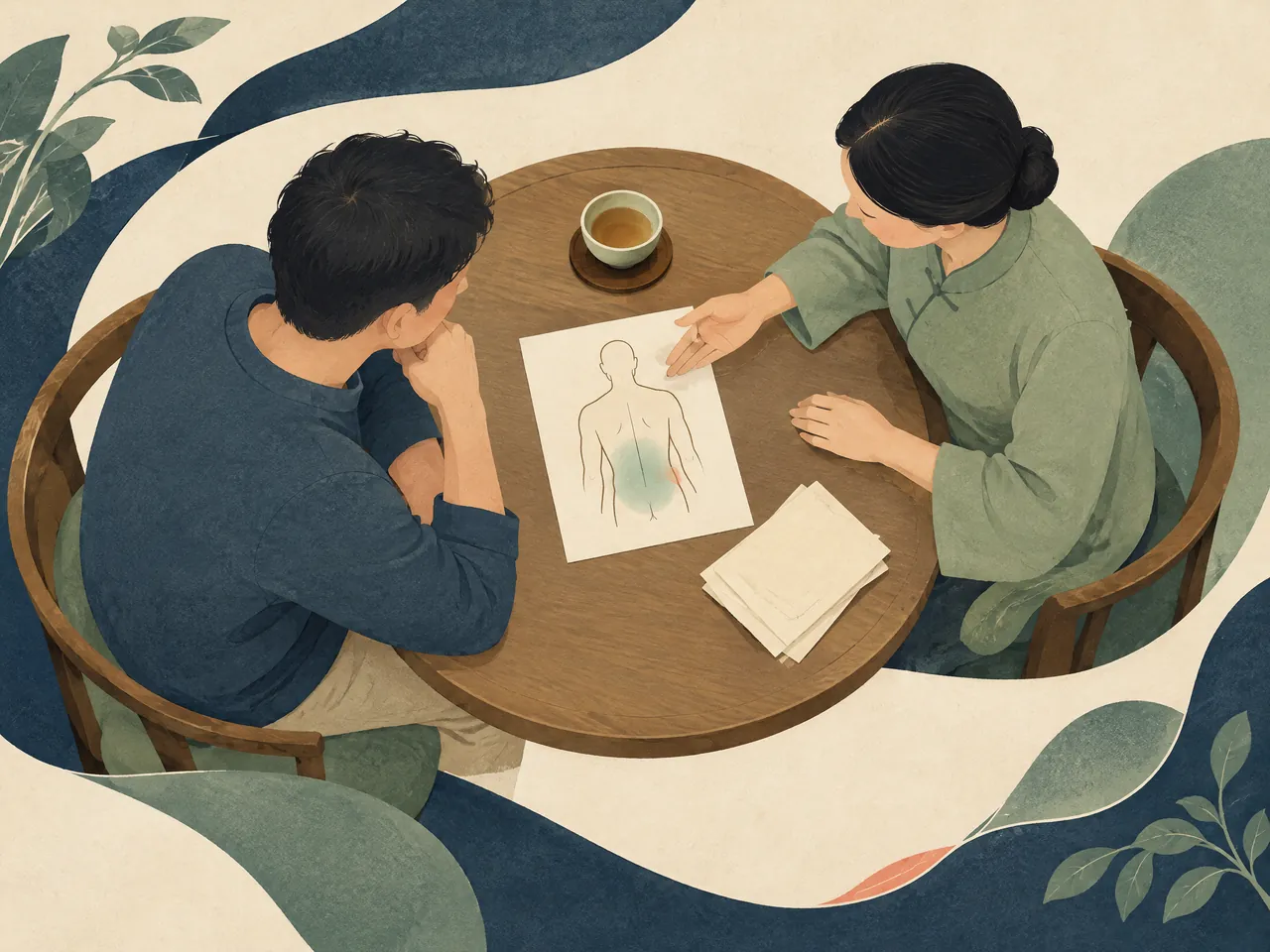
When urgent features have been excluded, a conversation about options can be more useful than searching for a single “best” treatment. Gentle movement within a tolerable range, paced return to ordinary tasks, rehabilitation and exercises chosen for the person’s presentation may all be discussed. The NHS advises staying active and avoiding long periods in bed for ordinary back pain, while stopping an exercise that makes pain worse and seeking advice. [2] Some people also ask about acupuncture or Chinese medicine. That discussion should cover the pain pattern, any neurological symptoms, pregnancy, bleeding risk, medicines and existing medical or rehabilitation care; it should not promise to correct a scan finding or guarantee relief. Heat or cold may be a comfort measure rather than a diagnosis: a wrapped cold pack is commonly considered for pain and swelling, while wrapped heat may help stiffness or muscle spasm if comfortable. [2] For a more detailed comfort-care comparison, read Should I use heat or ice for lower back pain?.

Hong Kong low back pain care and low back pain treatment options: recognise warning signs
Most low back pain is not an emergency, but a safety-first plan has a clear boundary: it does not try to stretch, heat, massage or self-treat through serious warning signs. The threshold for prompt assessment is lower when the pain follows significant trauma, becomes severe very quickly, comes with fever or a person feels broadly unwell, or is accompanied by unexplained weight loss. The pattern of nerve symptoms matters more than the pain score alone. New or rapidly worsening weakness, changing sensation, problems walking or symptoms involving both legs need timely medical attention. If your condition is changing fast, do not wait for a routine appointment or use an online article as a triage tool. The immediate purpose of assessment is to rule out time-sensitive causes and decide the right place for care.

Hong Kong low back pain care and low back pain treatment options: when nerve or bladder symptoms need urgent help
Seek urgent medical help for low back pain with new numbness, tingling or weakness in both legs; loss of feeling around the genitals or anus; or a new change in bladder or bowel function, such as difficulty passing urine or loss of control. Chest pain or pain beginning after a serious accident also requires immediate action. [2] These are not symptoms to test with deeper stretches, a stronger massage, heat or an acupuncture appointment. Tell the receiving clinician exactly when the symptom began and whether it is getting worse. The Hospital Authority also identifies persistent numbness, muscle weakness, urinary retention or loss of bowel control as complications that require attention in the context of nerve compression. [3] If only one leg is affected, symptoms are still worth describing precisely, especially when weakness is new or progressing. In every case, the aim is prompt assessment rather than trying to decide the diagnosis at home.

Hong Kong low back pain care and low back pain treatment options: plan a local enquiry safely
For a non-urgent Hong Kong low back pain care enquiry, lead with the safety-relevant facts: onset, trigger, current functional limit, leg symptoms, existing diagnosis or scan, medicines and whether you are already seeing a doctor or physiotherapist. State plainly if you have no bladder or bowel change, saddle numbness, fever, chest pain or major trauma, but seek medical assessment instead if any are present. If you are considering Chinese medicine or acupuncture, ask what information should be brought and whether your presentation first needs another service. You can make a location-specific enquiry through the Kwun Tong Chinese medicine clinic or the Chinese medicine clinic Prince Edward; availability and the appropriate next step should be confirmed rather than assumed. Bringing a written timeline makes the first conversation clearer and helps ensure that a request for symptom support does not bypass necessary medical or rehabilitation assessment.
Care and health guide
Low back discomfort: care information
This directory brings together services, reading, and visit information related to low back discomfort, to help you prepare questions for a consultation.
When low back discomfort affects your day, noting when it occurs, its relation to activity, and what you have already tried can help prepare a consultation; acupuncture for low back pain is a relevant service or reading entry point.
Individual circumstances differ, and acupuncture Hong Kong offers related information to help you understand options and prepare questions.


Your questions, answered
Frequently asked questions
Is sudden low back pain always a muscle strain?
No. A strain is one possible explanation, but low back pain can relate to several structures or be referred from elsewhere. The onset story and an examination matter. Seek urgent assessment rather than self-treating if there is major trauma, fever, chest pain, symptoms in both legs, saddle numbness, new weakness, or bladder or bowel change.
Should I ask for a scan before discussing low back pain treatment options?
Not automatically. A clinician may use imaging to answer a specific clinical question, but history and physical examination help decide whether it is needed and how to interpret it. Bring any previous report to the appointment and ask how, or whether, it relates to the current symptom pattern.
Is acupuncture suitable for every episode of low back pain?
No. It should be discussed only after warning signs, nerve symptoms, health history, medicines and current care have been considered. It is not a substitute for urgent assessment, a needed medical evaluation or a rehabilitation plan, and it cannot guarantee a particular outcome.
How should I choose heat or ice for lower-back discomfort?
Use comfort and safety rather than a fixed rule. NHS guidance describes a wrapped cold pack for pain and swelling and wrapped heat for stiffness or muscle spasm. Stop if either worsens pain, irritates the skin or aggravates neurological symptoms. Neither approach is appropriate for delaying assessment of red flags.
Sources and further information
- [1] [1] World Health Organization — Low back pain
Referenced for: Definitions, possible leg symptoms, assessment, self-care and rehabilitation context for low back pain.
- [2] [2] NHS — Back pain
Referenced for: Urgent warning signs, staying active, avoiding prolonged bed rest, and cautious heat or ice wording.
- [3] [3] Hong Kong Hospital Authority Smart Patient — Low Back Pain
Referenced for: Hong Kong patient-information context for symptoms, clinical assessment, imaging, treatment terms and serious nerve or bladder/bowel symptoms.