
TCM Lab · Health reading
Neck Pain Symptoms and Neck Pain Self-Care: What Causes Neck Pain?
Published Updated
Neck pain is not one single pattern. It may feel like an ache at the base of the skull, tightness across the upper shoulders, or a sharp limit when you look over one shoulder. This guide explains neck pain symptoms, practical neck pain self-care, and what causes neck pain without reducing every episode to posture. Start by noticing when it began, which movements change it, whether it spreads, and whether numbness, tingling, weakness, fever or a recent injury is part of the picture.
Appointments are confirmed through WhatsApp. If you have language requirements, please mention them in your enquiry.
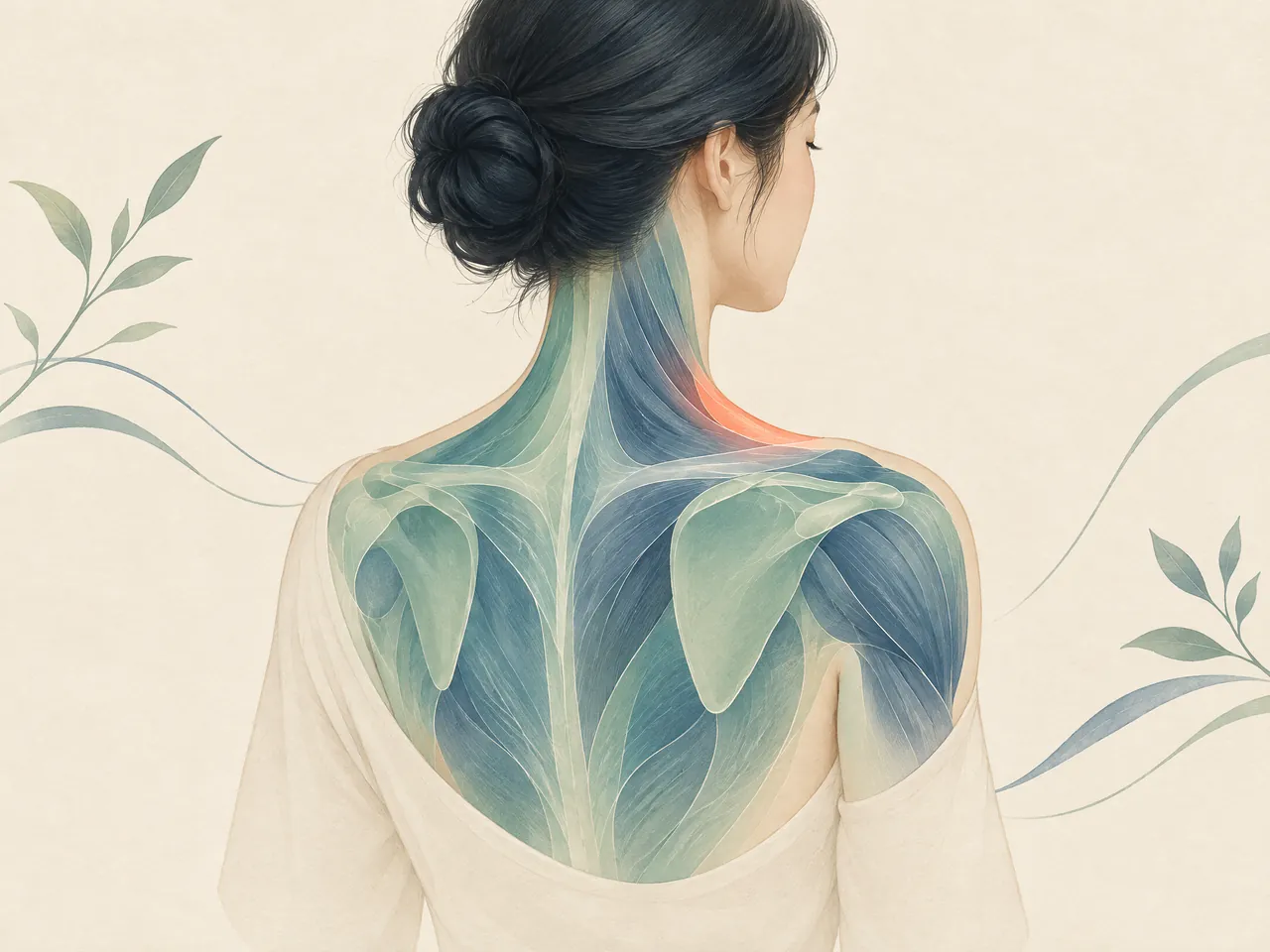
The short answer
Neck pain symptoms can include local pain, tight muscles, stiffness and reduced ability to turn or bend the head; some people also notice pain travelling toward a shoulder or arm. Neck pain self-care may include keeping gently active, changing a prolonged work position, and trying a cloth-wrapped heat or cold pack when appropriate. What causes neck pain can include awkward sleep position, sustained posture, strain, injury or nerve irritation. Worsening neurological symptoms, serious trauma or general illness need medical assessment. [1] [2]
Transparent pricing
See the fees.
Choose your care.
Explore our complete official price list, including first-trial prices, regular prices, packages and branch-specific options.
Opening WhatsApp prepares an enquiry; it does not send a message, take payment or confirm an appointment. Suitability and individual arrangements are confirmed during consultation.
Pain care
All prices in HKDExtracorporeal shockwave treatment
Shockwave treatment for deep-tissue and fascial care. The Kwun Tong clinic offers the multi-area options shown below.
Priced by branch
Branch-specific pricing
Prince Edward: HK$250 per area
Kwun Tong: HK$250 for 1 area / HK$450 for 2 areas / HK$600 for 3 areas
Pain care (manual therapy)
Includes Chinese medicine musculoskeletal assessment, manual joint techniques and tui na.
HK$580 (single session)
Chinese medicine musculoskeletal assessment
Pain care (acupuncture and manual therapy)
Combines acupuncture and manual therapy.
HK$680 (single session)
Combined care
Hair and scalp
All prices in HKDScalp health and hair-loss management
Includes AI scalp analysis, deep scalp and follicle cleansing, and scalp oil-control care.
HK$380 (first trial)
Regular price: HK$680
- 6 sessions: HK$3,480 (HK$580 per session)
- 12 sessions: HK$5,760 (HK$480 per session)
- 20 sessions: HK$8,600 (HK$430 per session)
- 30 sessions: HK$11,400 (HK$380 per session)
Hair acupuncture and Chinese herbal medicine package
Includes scalp acupuncture and 3 days of Chinese herbal medicine that does not require decoction.
HK$580 (single session)
Registered Chinese Medicine Practitioner consultation
- 6 sessions: HK$3,180 (HK$530 per session)
- 12 sessions: HK$5,760 (HK$480 per session)
- 20 sessions: HK$8,600 (HK$430 per session)
- 30 sessions: HK$11,400 (HK$380 per session)
Combined hair and scalp treatment
Combines acupuncture and Chinese herbal medicine with salon-level scalp and follicle care. Packages include complimentary hair-care shampoo and serum.
HK$1,260 (single session)
Combined treatment
- 8 sessions: HK$8,640 (HK$1,080 per session)
- 16 sessions: HK$15,680 (HK$980 per session)
- 20 sessions: HK$18,600 (HK$930 per session)
- 30 sessions: HK$26,400 (HK$880 per session)
Weight management
All prices in HKDFull-body acupoint embedding for weight management
Includes full-body acupoint embedding. Packages include complimentary Chinese herbal medicine for weight management, with the number of included days scaled to the package. Embedding material and the individual treatment arrangement are confirmed during consultation; this is not a cosmetic thread lift.
HK$980 (single session)
No trial session
- 10 sessions: HK$7,800 (HK$780 per session)
- 20 sessions: HK$14,600 (HK$730 per session)
- 30 sessions: HK$20,400 (HK$680 per session)
Facial acupuncture
All prices in HKDFacial acupuncture (basic)
Includes facial acupuncture and meridian-based facial care, including care for facial puffiness.
HK$480 (first trial)
Regular price: HK$680
- 10 sessions: HK$5,200 (HK$520 per session)
- 20 sessions: HK$9,600 (HK$480 per session)
- 30 sessions: HK$13,500 (HK$450 per session)
Facial acupuncture (advanced)
Includes enhanced facial acupuncture with a specially formulated moisturising mask and serum.
HK$780 (first trial)
Regular price: HK$1,180
- 10 sessions: HK$9,000 (HK$900 per session)
- 20 sessions: HK$16,600 (HK$830 per session)
- 30 sessions: HK$23,400 (HK$780 per session)
Chinese medicine
All prices in HKDAcupuncture and Chinese herbal medicine package
Includes a Chinese medicine consultation with pulse assessment, body acupuncture and 3 days of Chinese herbal granules that do not require decoction.
HK$580 (single session)
Chinese medicine consultation with pulse assessment
Neck Pain Symptoms, Neck Pain Self-Care and What Causes Neck Pain
A useful first distinction is between local, movement-related discomfort and symptoms that travel or affect function elsewhere. Local neck pain symptoms often include soreness, tightness, muscle spasm or restricted head turning. They may be most obvious after desk work, when reversing a car, or first thing in the morning. The Hong Kong College of Orthopaedic Surgeons describes muscle tightness and limited movement as common strain-related features, while noting that persistent sensory loss or limb weakness deserves assessment. [2]
Location is only part of the story. Record whether discomfort sits on one side, across the back of the neck, near the shoulder blade, or runs into the shoulder, elbow, forearm or hand. Notice whether it appears while looking down, lifting, reaching, coughing, sleeping, or after a particular task. A person who wakes with a stiff neck may consider sleep position and pillow setup, whereas pain that began after a fall needs a different conversation. The pattern helps frame what causes neck pain; it does not diagnose the cause.

For ordinary, non-traumatic discomfort, neck pain self-care should aim to make daily movement more manageable rather than force the neck to move normally at once. The NHS advises avoiding a neck collar unless a doctor has told you to use one, because keeping the neck moving is generally preferable. It also warns against driving or cycling when movement is too limited for safety. [1]
Track Neck Pain Symptoms, Neck Pain Self-Care Changes and What Causes Neck Pain
A short record can turn a vague complaint into useful information. For several days, note the time symptoms start, the activity just beforehand, the area affected, and a plain-language description such as aching, pulling, burning, pins and needles or heaviness. Add what happens when you turn your head, look up or down, raise an arm, take a break, lie down, or wake up. If you try a change in your setup or a heat or cold pack, record whether it is comfortable, has no clear effect, or makes symptoms worse.
Also track function, not just pain. Can you check blind spots when walking or travelling? Can you sit through a meeting, carry a light bag, type, hold a phone or sleep without repeatedly changing position? New difficulty with hand coordination, grip, balance or walking is more important than simply having a sore neck. Bring the timeline, injury history, current medicines and any previous imaging or treatment information to a clinician if assessment is needed. Clear observations are more useful than trying to label yourself with a particular neck condition.
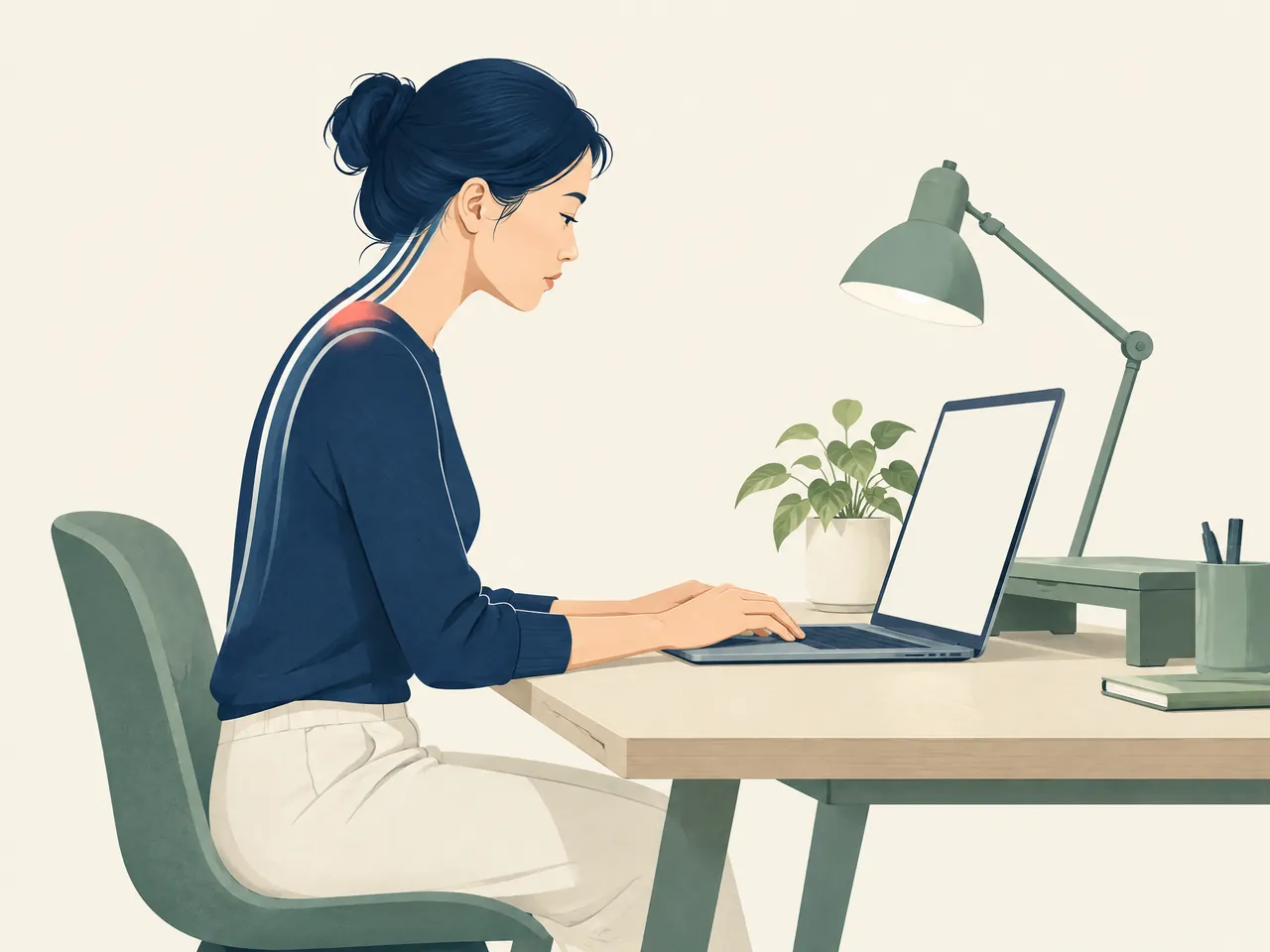
How Neck Pain Symptoms Relate to Neck Pain Self-Care and What Causes Neck Pain
Symptoms can guide the scale of the next step. A mild local ache that eases with a break may justify checking habits that keep the head fixed, such as reading from a low screen or holding a phone between the ear and shoulder. A pattern that returns each morning may prompt a look at sleep posture. Neither observation proves a cause. It simply gives you a specific, low-risk change to test while you watch the response. The practical comparison below is a way to organise this decision rather than a substitute for an examination.
It is reasonable to look at the wider neck pain topic when you want to compare related questions such as sleep, arm symptoms and treatment options. Keep the language precise when describing the problem: ‘pain stays in my neck when I rotate right’ tells a clinician more than ‘bad posture’, and ‘tingling reaches my thumb after working’ identifies a change that should not be ignored. The relation between posture, load, sleep and nerves can be complex, so a single stretch, chair adjustment or internet diagram cannot confirm what causes neck pain.
Compare your options
| What you notice | What to record or adjust | When to move beyond self-care |
|---|---|---|
| Local ache or tightness after one long position | Note the task, duration and direction of neck movement that aggravates it; add short position changes. | Arrange assessment if it does not settle over time, repeatedly limits everyday activity or worries you. |
| Stiffness on waking without an injury | Check whether the head is twisted, pushed forward or unsupported in sleep; change only one comfort factor at a time. | Seek advice if pain is severe, persistent, worsening or joined by arm symptoms. |
| Recent sore area with redness, swelling or heat | Protect the skin if using a wrapped cold pack and avoid testing painful movement repeatedly. | Get medical advice after significant injury or when symptoms are not improving. |
| Pain, tingling, numbness or heaviness into an arm | Record the route, triggers, duration and any change in grip or hand use; reduce clearly provoking tasks. | Arrange clinical assessment, especially if symptoms persist, progress or weakness appears. |
| Balance, walking, hand-clumsiness, bowel or bladder changes | Do not continue to experiment with exercises, stretching or packs. | Seek urgent medical care. |
On smaller screens, scroll the table sideways to compare all columns.
Neck Pain Symptoms and Neck Pain Self-Care When What Causes Neck Pain Is Unclear
When the trigger is unclear, begin with the parts of the day you can observe. Long video calls, laptop work, gaming, hand-held phone use, commuting, carrying a bag on one shoulder, a new gym routine and repetitive overhead tasks can all keep the neck in one position or add load. The NHS lists awkward sleep position, long desk sitting, a pinched nerve and injuries such as whiplash among possible causes. [1] That list is a reminder to look broadly, not a checklist that tells you which one applies.
Make one or two changes at a time. Raise a screen so you are not repeatedly looking downward, bring frequently used items closer, support the arms when practical, and build brief movement breaks into a long seated task. If one side of the neck reacts after carrying a bag, alternate sides or reduce the load where possible. During a flare, move only in ranges that feel comfortable; fast, forceful neck manipulation or repeatedly pushing through sharp pain is not a sensible experiment when the cause is unknown.
Heat and cold are comfort measures, not tests for the diagnosis. For a recent injury with redness, swelling or a hot feeling, the Hong Kong Red Cross discusses cold packs in the context of acute inflammation and pain. For chronic neck pain or muscle spasm without red or fever symptoms, it lists a heating pad as a possible context, while warning that heat is not an ideal choice soon after an injury unless a health professional advises it. [3] Wrap any pack to protect the skin and stop if it aggravates symptoms.
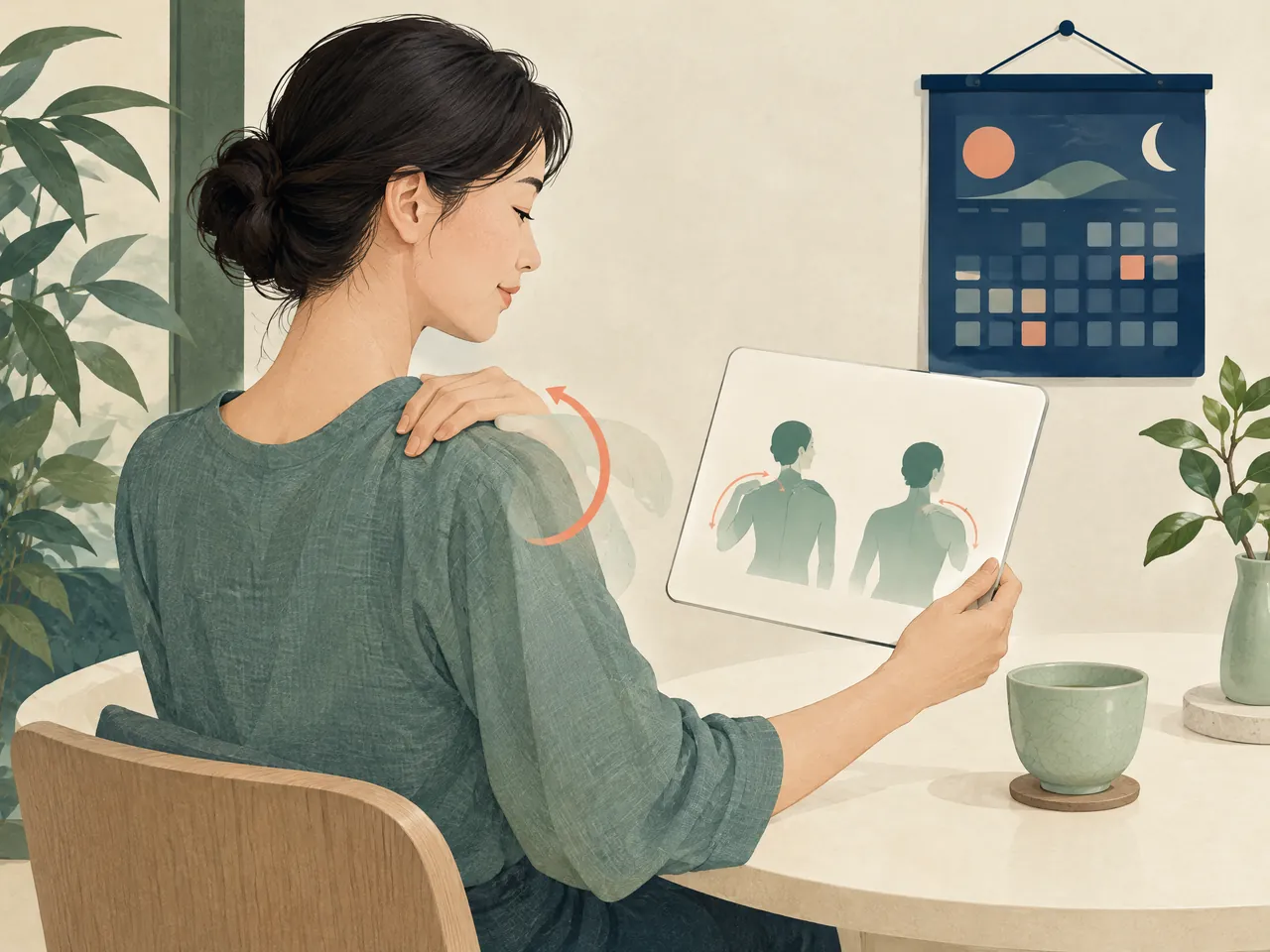
Posture, Sleep and Work Factors in Neck Pain Symptoms, Neck Pain Self-Care and What Causes Neck Pain
Posture is best understood as a changing workload, not a pose to hold rigidly all day. A chair that feels fine for twenty minutes may become uncomfortable after a two-hour deadline. Rather than bracing the shoulders back, vary the task: stand to take a call, look away from the screen, walk briefly, then return with the screen and keyboard positioned to reduce repeated neck bending. The relevant question is not whether your posture looks perfect; it is whether one position is held long enough to repeatedly reproduce the same symptoms.
Sleep can be another exposure, especially if you wake with stiffness that gradually eases after moving around. Check whether the head is pushed forward, twisted, or propped at a markedly different height from the body. NHS advice includes using a low, firm pillow, keeping the head in line with the body and avoiding front sleeping. [1] These are comfort-oriented starting points, not universal rules. If changing a pillow makes symptoms worse, or the pain is intense, persistent or accompanied by arm symptoms, stop treating sleep position as the whole explanation.
Radiating Neck Pain Symptoms, Neck Pain Self-Care Limits and What Causes Neck Pain
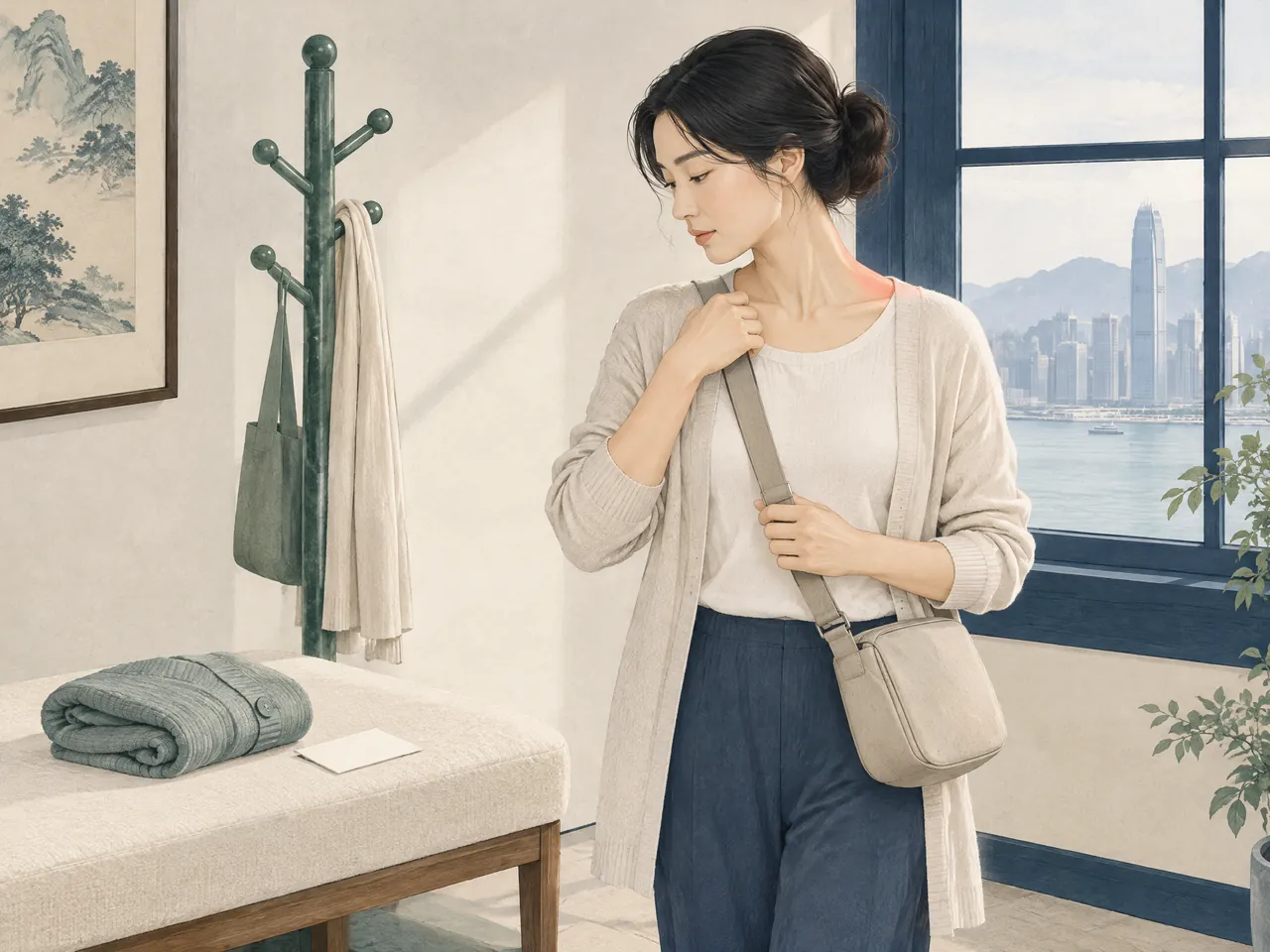
Pain that spreads from the neck toward a shoulder or arm can feel different from local muscle tightness. Some people describe electric pain, tingling, numbness, heaviness or a cold sensation, while others notice that certain neck positions reproduce symptoms down the arm. The Hong Kong College of Orthopaedic Surgeons states that persistent numbness, altered sensation or limb weakness should be assessed to exclude possible neurological complications. [2] Do not assume that a radiating pattern is ‘just tension’, and do not use repeated self-testing to provoke it.
This is where neck pain self-care has clear limits. Reduce activities that reliably trigger the spreading symptom and arrange clinical advice if it persists, progresses or affects function. A clinician may ask about the exact route of symptoms, strength, reflexes, balance and bowel or bladder control, as well as injury and medical history. Those questions help decide whether observation, rehabilitation, imaging or another route is appropriate. The focused guide on when should I see a doctor for neck pain can help you prepare the details that matter.
Neck Pain Symptoms, Neck Pain Self-Care and When to Ask What Causes Neck Pain
Many episodes improve, but time alone is not the only measure of safety. Review the direction of change: is motion gradually returning, is pain staying the same despite sensible adjustments, or are new symptoms appearing? The NHS advises seeking medical advice if neck pain or stiffness has not gone away after a few weeks, if pain relief has not helped, or if there are symptoms such as pins and needles or a cold arm. [1] In Hong Kong, you can use the same practical threshold: persistence, deterioration or concern deserves an assessment rather than another round of trial-and-error self-care.
Medical assessment is particularly important after significant trauma, including a road traffic collision, fall or blow to the head or neck. It is also appropriate when pain is severe at rest or at night, becomes rapidly worse, or is paired with fever, feeling generally unwell or unexplained weight change. These features do not identify one cause, but they are not problems to manage solely with a pillow adjustment, stretching video or home pack. [2]
If you are considering a complementary care discussion after appropriate assessment, describe your symptom pattern and existing care openly. Chinese medicine for neck pain is a separate overview of how a Chinese medicine consultation may be discussed; it should not delay needed neurological, orthopaedic or emergency evaluation. Questions about acupuncture require the same caution. Read does acupuncture help neck pain for a fuller evidence-focused discussion rather than expecting a guaranteed response from any treatment.
Red Flags Beyond Routine Neck Pain Symptoms and Neck Pain Self-Care: What Causes Neck Pain
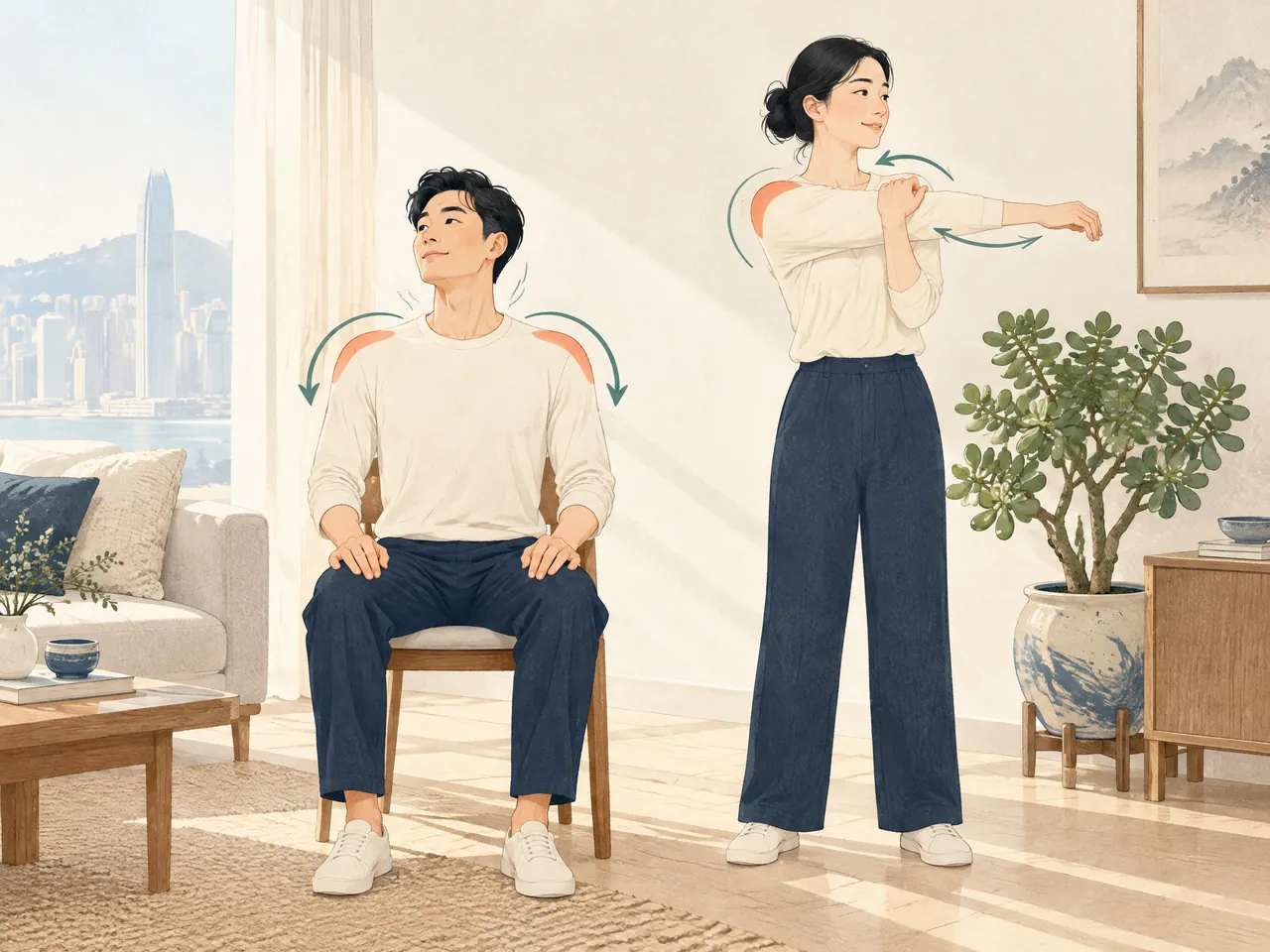
Seek urgent medical care after major trauma or if neck pain is accompanied by progressive weakness or numbness in an arm or leg, increasing clumsiness of the hands, difficulty walking, loss of balance, or new bladder or bowel changes. Fever or marked general illness with neck pain also needs prompt medical attention. The Hong Kong College of Orthopaedic Surgeons lists limb weakness, hand clumsiness, difficulty lifting the legs, worsening walking problems and incontinence among warning signals that require specialist attention. [2] These signs matter because they may point beyond a routine strain and need timely in-person evaluation.
Do not drive, cycle or do work at height if pain or stiffness prevents you from turning your head adequately. [1] If you have a milder but persistent arm symptom, do not wait for a dramatic warning sign before arranging assessment; explain whether it is constant, intermittent, worsening, position-related, or associated with loss of strength. If you are unsure how urgent the situation is, choose medical advice rather than relying on online information. Clear escalation is part of good neck pain self-care, not a failure of it.
Discussing Neck Pain Symptoms, Neck Pain Self-Care and What Causes Neck Pain in Hong Kong
Before an appointment, make a brief list of when the pain began, any accident or sudden load change, where symptoms spread, what movements are limited, and which measures you have already tried. Include relevant conditions, medicine use and past investigations. You may also say what you are hoping to return to—screen work, sleep, driving, sport or caring tasks—so the discussion stays practical. This preparation helps any clinician understand whether the issue sounds local and mechanical, needs neurological assessment, or calls for another medical pathway.
For a non-urgent TCM Lab enquiry after red flags have been considered, you can ask about appointment availability at the Kwun Tong Chinese medicine clinic or Chinese medicine clinic Prince Edward. State that the concern is neck pain, whether you have arm symptoms, and any language needs so arrangements can be confirmed. A consultation conversation should be individual to your history and current findings; no online article can decide the cause or promise a particular treatment outcome.
Care and health guide
Neck discomfort: care information
This directory brings together services, reading, and visit information related to neck discomfort, to help you prepare questions for a consultation.
When neck discomfort affects your day, noting when it occurs, its relation to activity, and what you have already tried can help prepare a consultation; acupuncture for neck pain is a relevant service or reading entry point.
Individual circumstances differ, and acupuncture Hong Kong offers related information to help you understand options and prepare questions.


Your questions, answered
Frequently asked questions
Is neck pain always caused by poor posture?
No. Staying in one position for a long time may contribute, but awkward sleep position, sudden strain, injury and possible nerve irritation can also be relevant. Use posture as one factor to test, not a complete diagnosis. [1]
Should I choose heat or cold for neck discomfort?
The choice depends on the context. The Hong Kong Red Cross describes cold packs for acute inflammation with redness, swelling or heat, and heating pads for chronic pain or spasm without red or fever symptoms. Avoid heat soon after an injury unless a health professional advises it, protect your skin, and stop if symptoms worsen. [3]
Can neck pain cause arm pain, tingling or numbness?
Neck symptoms can spread toward the shoulder or arm, and persistent numbness, altered sensation or weakness needs medical assessment rather than being assumed to be simple muscle tension. [2]
When should I seek urgent help for neck pain?
Seek urgent assessment after major trauma, or for progressive limb weakness or numbness, hand clumsiness, walking or balance difficulty, new bladder or bowel changes, fever or marked illness with neck pain. [2]
Sources and further information
- [1] NHS: Neck pain
Referenced for: Symptoms, possible causes, movement and safety self-care, and when to seek medical advice.
- [2] The Hong Kong College of Orthopaedic Surgeons: Neck Pain
Referenced for: Hong Kong professional guidance on symptoms, neurological warning signs, assessment and rehabilitation context.
- [3] Hong Kong Red Cross: Cold Pack or Heating Pad?
Referenced for: Heat and cold pack context, including recent injury and skin-safety considerations.