
TCM Lab · Health reading
How long should I ice a sore wrist? When can I use heat after a wrist injury? A chronic wrist pain and stiffness self-care guide
Published Updated
A wrist that hurts after a fall or a sudden twist needs a different response from a wrist that feels tight after long hours at a keyboard. For recent swelling and tenderness, cold is usually the sensible first comfort measure; for lingering stiffness after the acute phase has settled, gentle warmth may be more useful. This guide explains how to protect the skin, adjust everyday loading and recognise the signs that make self-care the wrong next step.
Appointments are confirmed through WhatsApp. If you have language requirements, please mention them in your enquiry.
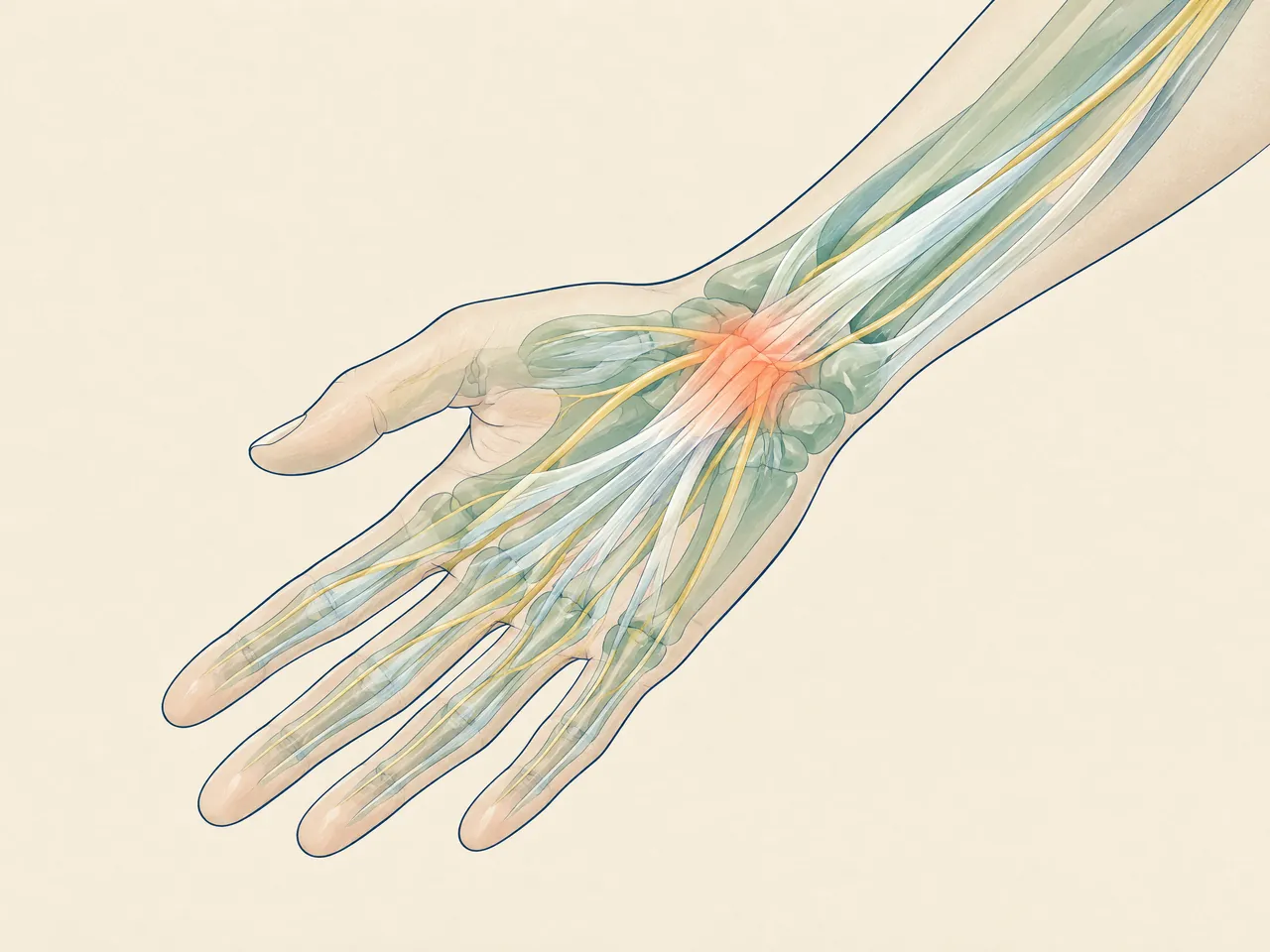
The short answer
For a recent sore wrist with swelling, use a cold pack wrapped in a cloth rather than ice directly on skin. A cautious session is about 15 minutes; NHS guidance allows up to 20 minutes every 2–3 hours during the first 2–3 days. Consider gentle warmth only after early swelling and heat are settling and stiffness is the main problem. Do not use heat on a newly injured, hot, red or swollen wrist, or over damaged skin or reduced sensation.
Transparent pricing
See the fees.
Choose your care.
Explore our complete official price list, including first-trial prices, regular prices, packages and branch-specific options.
Opening WhatsApp prepares an enquiry; it does not send a message, take payment or confirm an appointment. Suitability and individual arrangements are confirmed during consultation.
Pain care
All prices in HKDExtracorporeal shockwave treatment
Shockwave treatment for deep-tissue and fascial care. The Kwun Tong clinic offers the multi-area options shown below.
Priced by branch
Branch-specific pricing
Prince Edward: HK$250 per area
Kwun Tong: HK$250 for 1 area / HK$450 for 2 areas / HK$600 for 3 areas
Pain care (manual therapy)
Includes Chinese medicine musculoskeletal assessment, manual joint techniques and tui na.
HK$580 (single session)
Chinese medicine musculoskeletal assessment
Pain care (acupuncture and manual therapy)
Combines acupuncture and manual therapy.
HK$680 (single session)
Combined care
Hair and scalp
All prices in HKDScalp health and hair-loss management
Includes AI scalp analysis, deep scalp and follicle cleansing, and scalp oil-control care.
HK$380 (first trial)
Regular price: HK$680
- 6 sessions: HK$3,480 (HK$580 per session)
- 12 sessions: HK$5,760 (HK$480 per session)
- 20 sessions: HK$8,600 (HK$430 per session)
- 30 sessions: HK$11,400 (HK$380 per session)
Hair acupuncture and Chinese herbal medicine package
Includes scalp acupuncture and 3 days of Chinese herbal medicine that does not require decoction.
HK$580 (single session)
Registered Chinese Medicine Practitioner consultation
- 6 sessions: HK$3,180 (HK$530 per session)
- 12 sessions: HK$5,760 (HK$480 per session)
- 20 sessions: HK$8,600 (HK$430 per session)
- 30 sessions: HK$11,400 (HK$380 per session)
Combined hair and scalp treatment
Combines acupuncture and Chinese herbal medicine with salon-level scalp and follicle care. Packages include complimentary hair-care shampoo and serum.
HK$1,260 (single session)
Combined treatment
- 8 sessions: HK$8,640 (HK$1,080 per session)
- 16 sessions: HK$15,680 (HK$980 per session)
- 20 sessions: HK$18,600 (HK$930 per session)
- 30 sessions: HK$26,400 (HK$880 per session)
Weight management
All prices in HKDFull-body acupoint embedding for weight management
Includes full-body acupoint embedding. Packages include complimentary Chinese herbal medicine for weight management, with the number of included days scaled to the package. Embedding material and the individual treatment arrangement are confirmed during consultation; this is not a cosmetic thread lift.
HK$980 (single session)
No trial session
- 10 sessions: HK$7,800 (HK$780 per session)
- 20 sessions: HK$14,600 (HK$730 per session)
- 30 sessions: HK$20,400 (HK$680 per session)
Facial acupuncture
All prices in HKDFacial acupuncture (basic)
Includes facial acupuncture and meridian-based facial care, including care for facial puffiness.
HK$480 (first trial)
Regular price: HK$680
- 10 sessions: HK$5,200 (HK$520 per session)
- 20 sessions: HK$9,600 (HK$480 per session)
- 30 sessions: HK$13,500 (HK$450 per session)
Facial acupuncture (advanced)
Includes enhanced facial acupuncture with a specially formulated moisturising mask and serum.
HK$780 (first trial)
Regular price: HK$1,180
- 10 sessions: HK$9,000 (HK$900 per session)
- 20 sessions: HK$16,600 (HK$830 per session)
- 30 sessions: HK$23,400 (HK$780 per session)
Chinese medicine
All prices in HKDAcupuncture and Chinese herbal medicine package
Includes a Chinese medicine consultation with pulse assessment, body acupuncture and 3 days of Chinese herbal granules that do not require decoction.
HK$580 (single session)
Chinese medicine consultation with pulse assessment
How long should I ice a sore wrist? When can I use heat after a wrist injury? Start with the injury timeline for chronic wrist pain and stiffness self-care
Start by asking what changed. A fall onto an outstretched hand, a twist while lifting a suitcase, a direct knock, or a sudden pull can produce an acute injury. Pain that arrives quickly with swelling, bruising, warmth or tenderness belongs in a different category from an ache that has built up across weeks of mouse work, gaming, craft work or training. Neither pattern tells you exactly which structure is involved, but the timeline helps you choose a cautious first response. For a broader comparison of the two approaches, see wrist pain: ice or heat.
A recently injured wrist is often best treated as a protection-and-observation problem, not a problem to push through. For the first 2–3 days after a suspected sprain or strain, NHS guidance includes protecting the area, resting from provoking activity, using wrapped ice, compression where appropriate and elevation. It also advises avoiding heat in the first couple of days because swelling may be active. [3] Cold is not a diagnosis or a repair for a fracture, tendon injury or nerve problem; it is simply a short-term way to make pain and swelling more manageable while you watch the pattern.
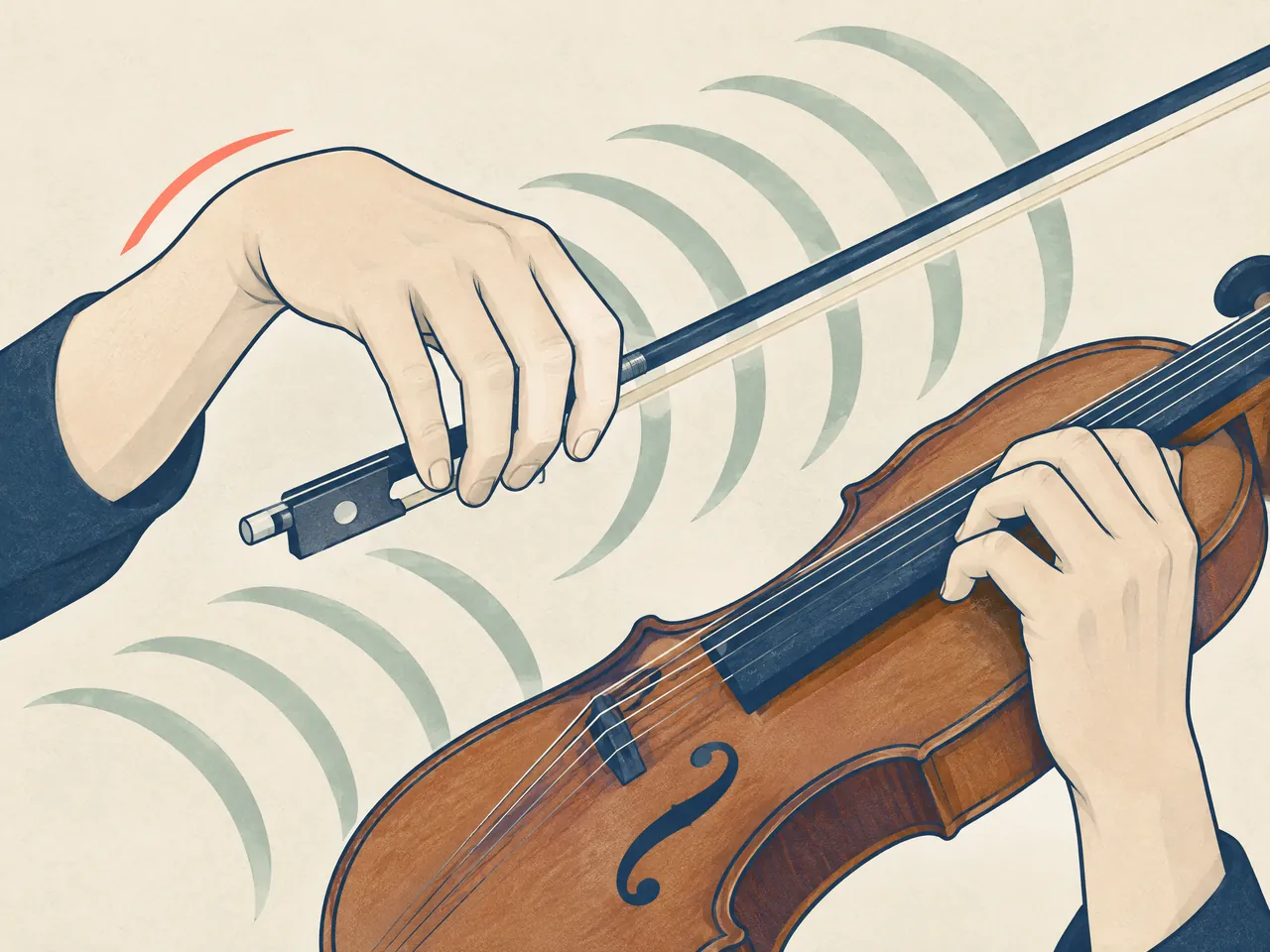
By contrast, chronic wrist pain and stiffness self-care is more often about pacing and comfortable movement. A wrist may feel stiff on waking, tight when turning a key, or sore only after a repeated task. Without a clear injury, several causes can overlap. Note which grip, wrist angle, duration or weight brings symptoms on, then reduce that exposure before trying to make the wrist stronger.

How long should I ice a sore wrist? When can I use heat after a wrist injury? Recognise recent pain before chronic wrist pain and stiffness self-care
Recent pain usually has a clear starting point. You may remember the moment you slipped, caught a falling object, landed during sport or lifted with the wrist bent. Swelling, bruising, a feeling of heat and pain even at rest can follow. In this phase, choose a wrapped cold pack, stop the activity that produced the pain and keep the wrist supported in a comfortable position. If you are deciding whether a pack is appropriate, this page on when to use ice for a wrist injury gives a focused next read. Do not test recovery by repeatedly squeezing, doing push-ups or stretching into sharp pain.
There are limits to home observation. A crack at the time of injury, a wrist that looks deformed, blue or grey skin, a cold hand, numbness, pins and needles, severe or worsening pain, or inability to use the hand normally needs urgent medical assessment. These features can occur with injuries that need examination and sometimes imaging; a cold pack must not delay that step. Feverish illness together with a hot, painful wrist also needs prompt medical advice. [3]
How long should I ice a sore wrist? When can I use heat after a wrist injury? Distinguish recovery stiffness in chronic wrist pain and stiffness self-care
Recovery stiffness is different from active swelling. It may be most noticeable after sleep, after holding a phone, or on returning to an ordinary task after rest. The wrist may move a little more easily once it is gently used, without becoming more swollen or hot afterwards. In that situation, a warm shower, warm compress or a covered heat pack before a light activity may feel soothing. The American Society for Surgery of the Hand notes that warmth can help stiff or sore hands move and suggests no more than 15 minutes at a time as a general guide. [1]
Warmth is a preparation tool, not permission to overload the wrist. After it is warm, try an easy range of movement such as slowly bending and straightening the wrist or turning the palm up and down, staying well short of sharp pain. If the wrist becomes more swollen, throbs later, or feels hotter after activity, reduce the dose next time. This simple response check is more useful than following a fixed exercise number copied from someone else. If stiffness persists or keeps returning, assessment can help separate a manageable load issue from a problem that needs targeted care.
Compare your options
| What you notice | Cautious first option | What to avoid or watch for |
|---|---|---|
| New twist, fall or impact with swelling or bruising | Protect from provoking activity; use a cloth-wrapped cold pack for a short, timed session | Avoid heat in the first couple of days; seek urgent care for deformity, numbness, colour change or severe pain |
| Pain and puffiness after a task or exercise | Reduce the task load and consider wrapped cold for comfort | Do not place ice directly on skin or keep it on through numbness |
| Settled tightness without new swelling, redness or heat | Brief gentle warmth before easy movement may be reasonable | Avoid very hot packs, prolonged heat and forceful stretching |
| Recurring pain, weak grip, night symptoms or worsening function | Arrange assessment and record the trigger, location and symptom pattern | Do not rely on repeated heat/cold cycles to rule out a condition |
On smaller screens, scroll the table sideways to compare all columns.
How long should I ice a sore wrist? Safe cold-pack limits, When can I use heat after a wrist injury?, and chronic wrist pain and stiffness self-care
How long should I ice a sore wrist? Use the clock as a safety tool rather than waiting until the pack feels warm. For a new injury, NHS says a wrapped ice pack may be applied for up to 20 minutes every 2–3 hours over the first 2–3 days. The American Society for Surgery of the Hand uses a more conservative general pattern of 15 minutes of cold and 15 minutes of rest before reapplying. [3] [1] A 15-minute session is a reasonable cautious starting point if you are unsure.
Choose a gel pack, bag of ice or frozen vegetables only when it is enclosed in a towel or other fabric. Do not press a frozen item onto bare skin and do not fall asleep with it in place. Check the skin and stop if it becomes intensely painful, numb or unusually pale. The same care applies to a heat pack: it should be covered, comfortably warm rather than hot, and removed if it causes pain, burning or increased swelling. People with reduced sensation or circulation problems should not rely on ordinary temperature cues; seek individual advice before using either method.
This comparison matches symptoms to cautious comfort measures; it cannot identify the cause. If the story does not fit, symptoms worsen or function is poor, arrange assessment rather than repeatedly alternating heat and cold.

How long should I ice a sore wrist? When can I use heat after a wrist injury? Use a wrapped pack in chronic wrist pain and stiffness self-care
Make cold treatment easy to do safely. Put the pack inside a thin towel, settle the forearm on a pillow and set an alarm before applying it. Keep jewellery off if swelling makes it tight. The goal is a brief reduction in discomfort, not an intensely cold sensation. A cold gel pack can be easier to shape around the wrist than loose ice, but its temperature still needs a cloth barrier. For a step-by-step reminder, read about a cold pack for wrist pain.
Cold is particularly worth considering after an activity has clearly brought on pain, tenderness or puffiness. The hand surgery guidance describes cold treatment as useful for pain, swelling and irritation after activity or surgery, while Johns Hopkins explains that cold can numb the affected area and reduce swelling and inflammation. [1] [2] If cold leaves the wrist stiffer and no swelling is present, do not keep increasing the dose; reassess whether stiffness rather than an acute flare is the main issue.
How long should I ice a sore wrist? When can I use heat after a wrist injury? Know when warmth is unsuitable in chronic wrist pain and stiffness self-care
Do not use heat on a wrist that is freshly injured, visibly swollen, red or already hot. Johns Hopkins specifically advises against heat during the first 48 hours after an injury. [2] Avoid a heating pad or hot compress on an open wound, active skin infection or irritated skin. Heat also needs special caution where feeling is reduced, including nerve damage associated with diabetes, because a person may not notice that the source is too hot. A warm item should never hurt or leave the skin looking burned.
For settled stiffness, use mild warmth briefly and then move gently. A warm shower may be simpler and easier to control than a very hot pack. Do not combine warmth with aggressive stretching, prolonged gripping or a return to heavy weights simply because the wrist temporarily feels looser. If warmth makes throbbing, swelling or redness worse, stop it and switch back to protecting the wrist while you seek advice. Those symptoms signal that this is not a routine stiffness day.
How long should I ice a sore wrist? When can I use heat after a wrist injury? Build sensible chronic wrist pain and stiffness self-care
A useful plan changes the task before it changes the person. Break a long typing session with a short pause, keep frequently used items close enough that you do not lift with the wrist bent, and use two hands for awkward containers or shopping bags. For training, temporarily lower the weight, repetitions, range or frequency that reproduces symptoms. This is not about avoiding all movement. It is about finding a level of use that the wrist can tolerate without a clear next-day flare. The wider wrist pain topic may help you identify related questions to raise at an assessment.
Track function as well as pain. Can you turn a door handle, open a jar, type for a short period, carry a cup or sleep without waking from the wrist? A small written note of what was possible before and after an activity gives a clearer picture than checking the wrist every few minutes. Increase only one challenge at a time, such as duration before weight or resistance, and step back when discomfort becomes sharp, swelling returns or usual tasks become harder the following day.
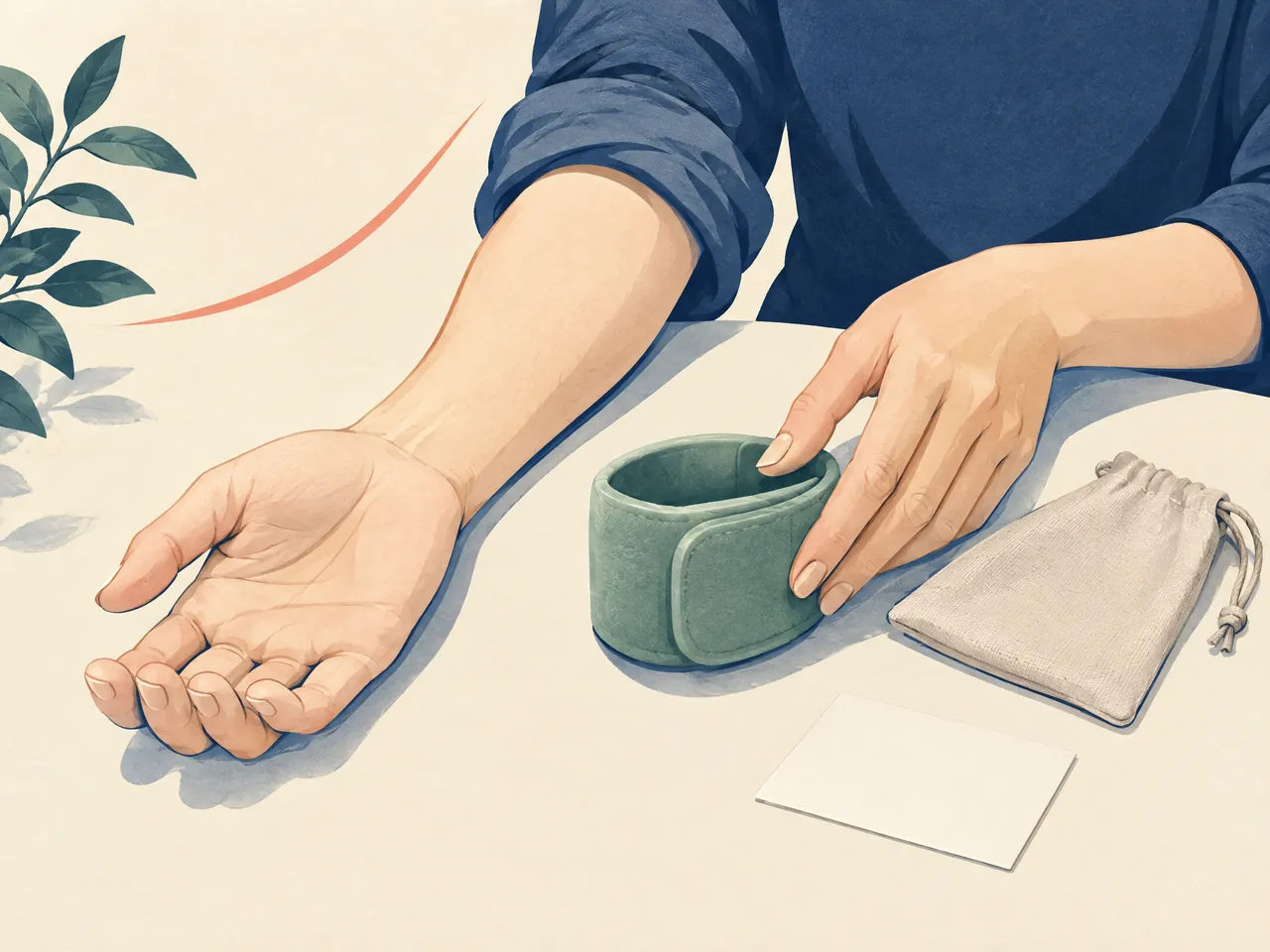
Traditional Chinese medicine may be one supportive option after a Registered Chinese Medicine Practitioner has assessed the individual. Traditional pattern descriptions are not a modern diagnosis and should not replace examination for a suspected fracture, nerve issue or inflammatory condition. Share injuries, test results, symptoms and all medicines or supplements so appropriate next steps can be considered.
How long should I ice a sore wrist? When can I use heat after a wrist injury? Combine load adjustment with chronic wrist pain and stiffness self-care
Think of load as the total of force, repetition, position and recovery time. One episode of heavy gripping may be tolerated, while light clicking for many uninterrupted hours may not be. Change one factor first: use a larger-handled tool, keep the wrist nearer a neutral position, take a short break before pain rises, or share the lifting. A simple support may feel comfortable for a particular task, but do not tighten anything enough to cause tingling, colour change or more pain. A support is not a substitute for checking a wrist that remains weak or difficult to use.
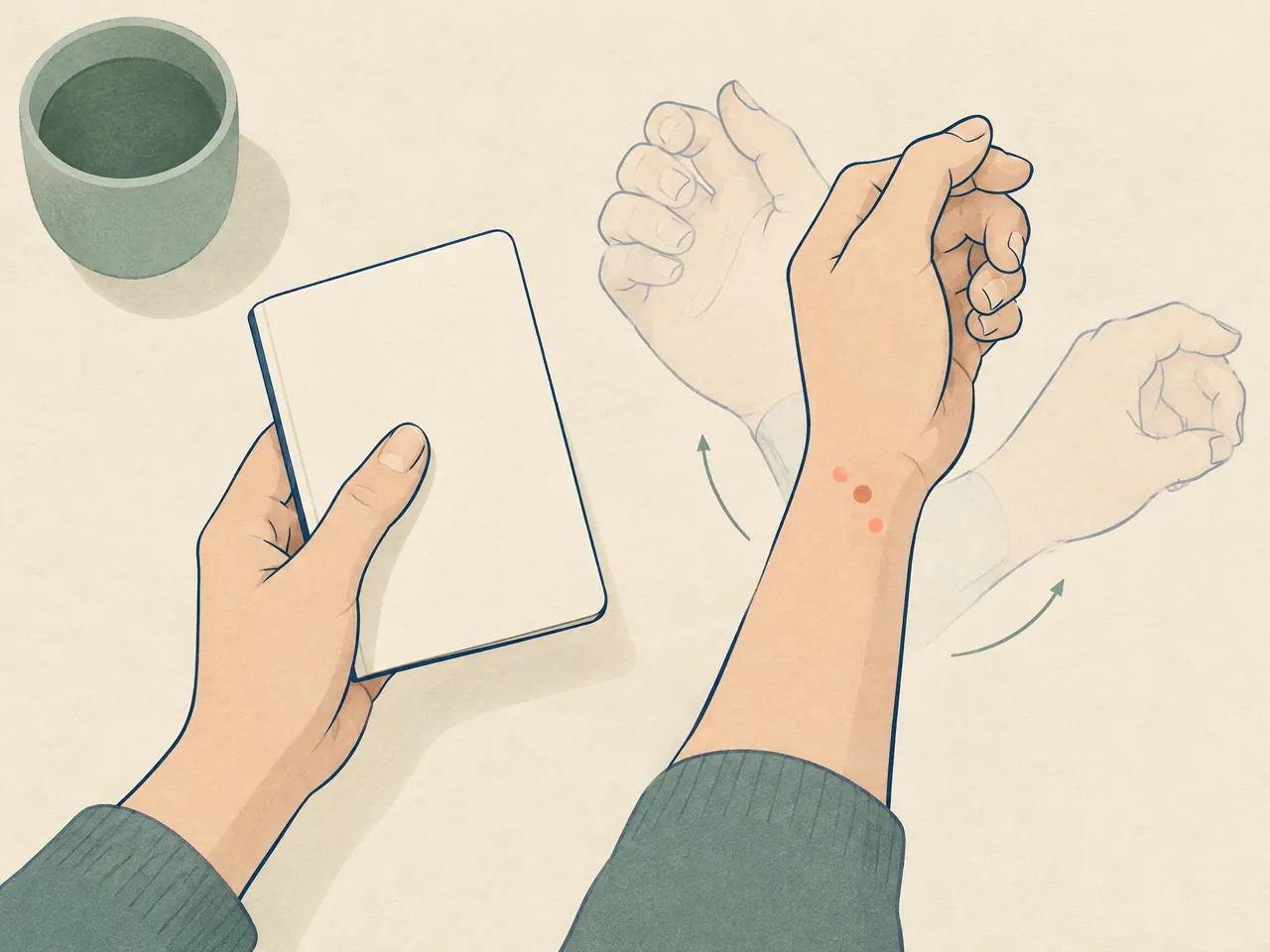
Gentle motion can sit alongside cold or warmth, but it should be quiet and controlled. Rest the forearm on a table, slowly bend the wrist up and down within comfort, then turn the palm up and down without forcing the end range. Stop if pain becomes sharp, travels into the fingers, or is followed by increased swelling. When pain no longer prevents movement, NHS advises keeping the injured area moving so it does not become stiff. [3] For a recent injury, recovery should be judged over days, not by whether one movement feels possible once.

How long should I ice a sore wrist? When can I use heat after a wrist injury? Know when assessment matters in chronic wrist pain and stiffness self-care
Seek urgent care after a significant injury if the wrist changes shape, you heard a crack, the hand is cold or discoloured, or numbness and tingling develop. Also seek prompt assessment for severe pain, rapidly increasing swelling or bruising, inability to grip or use the wrist normally, or pain that is getting worse rather than settling. These signs need more than choosing between a cold pack and a warm compress. [3]
For a problem without an emergency sign, book an assessment when pain keeps recurring, morning stiffness is substantial, symptoms disturb sleep, weakness changes what you can do, or self-care has not led to easier movement and function. Bring a short timeline of the trigger, pain location, tingling or swelling, what you tried and how it changed. If you wish to discuss a Chinese medicine assessment in Hong Kong, enquire at the Kwun Tong Chinese medicine clinic or Chinese medicine clinic Prince Edward; urgent warning signs need urgent medical care instead.
Care and health guide
Pain-care information
This directory brings together services, reading, and visit information related to pain care, to help you prepare questions for a consultation.
When pain care affects your day, noting when it occurs, its relation to activity, and what you have already tried can help prepare a consultation; Chinese medicine pain management Hong Kong is a relevant service or reading entry point.
Individual circumstances differ, and acupuncture Hong Kong offers related information to help you understand options and prepare questions.


Your questions, answered
Frequently asked questions
How long should I ice a sore wrist after a fall?
If the wrist is painful or swollen after a fall, wrap the cold source in cloth and use a timer. The American Society for Surgery of the Hand gives 15 minutes of cold followed by 15 minutes of rest as a general guide; NHS guidance permits up to 20 minutes every 2–3 hours during the first 2–3 days for a sprain or strain. Stop for numbness or severe cold pain, and seek urgent assessment if there is deformity, a crack, colour change or loss of feeling.
When can I use heat after a wrist injury?
Use warmth only after the early acute period, when swelling, redness and local heat are settling and stiffness is the main feature. Johns Hopkins advises not using heat for the first 48 hours after injury. A covered, comfortably warm pack for a brief period may be used before gentle movement; it should never feel hot enough to hurt.
Can I alternate ice and heat on a sore wrist?
Do not alternate them automatically. With a fresh swollen injury, prioritise protection and wrapped cold rather than heat. With settled stiffness and no active swelling, brief warmth may fit better. If the wrist repeatedly flares, becomes hot or puffy, or you cannot tell which pattern applies, assessment is safer than trying to force a response with alternating temperatures.
What does chronic wrist pain and stiffness self-care involve?
Start by reducing the activity, posture or grip that consistently causes symptoms, then keep comfortable movement in the day once pain no longer stops it. Increase load gradually and watch next-day function, not just immediate comfort. Recurring symptoms, reduced grip, night symptoms, tingling or difficulty using the hand need professional assessment because several different conditions can cause wrist pain.
Sources and further information
- [1] American Society for Surgery of the Hand — Heat Treatment and Cold Treatment for Hands
Referenced for: Supports hand and wrist heat/cold uses, 15-minute general guides, fabric barriers, and stopping cold for extreme pain or numbness.
- [2] Johns Hopkins Medicine — Ice Packs vs. Warm Compresses For Pain
Referenced for: Supports avoiding heat in the first 48 hours after injury, not applying ice directly to skin, and the symptom roles of heat and cold.
- [3] NHS — Sprains and strains
Referenced for: Supports initial 2–3-day self-care, wrapped ice up to 20 minutes every 2–3 hours, avoiding heat initially, gentle return to movement, and escalation signs.