
TCM Lab · Health reading
Is acupuncture suitable for primary dysmenorrhea? When should I see a doctor for severe period pain?
Published Updated
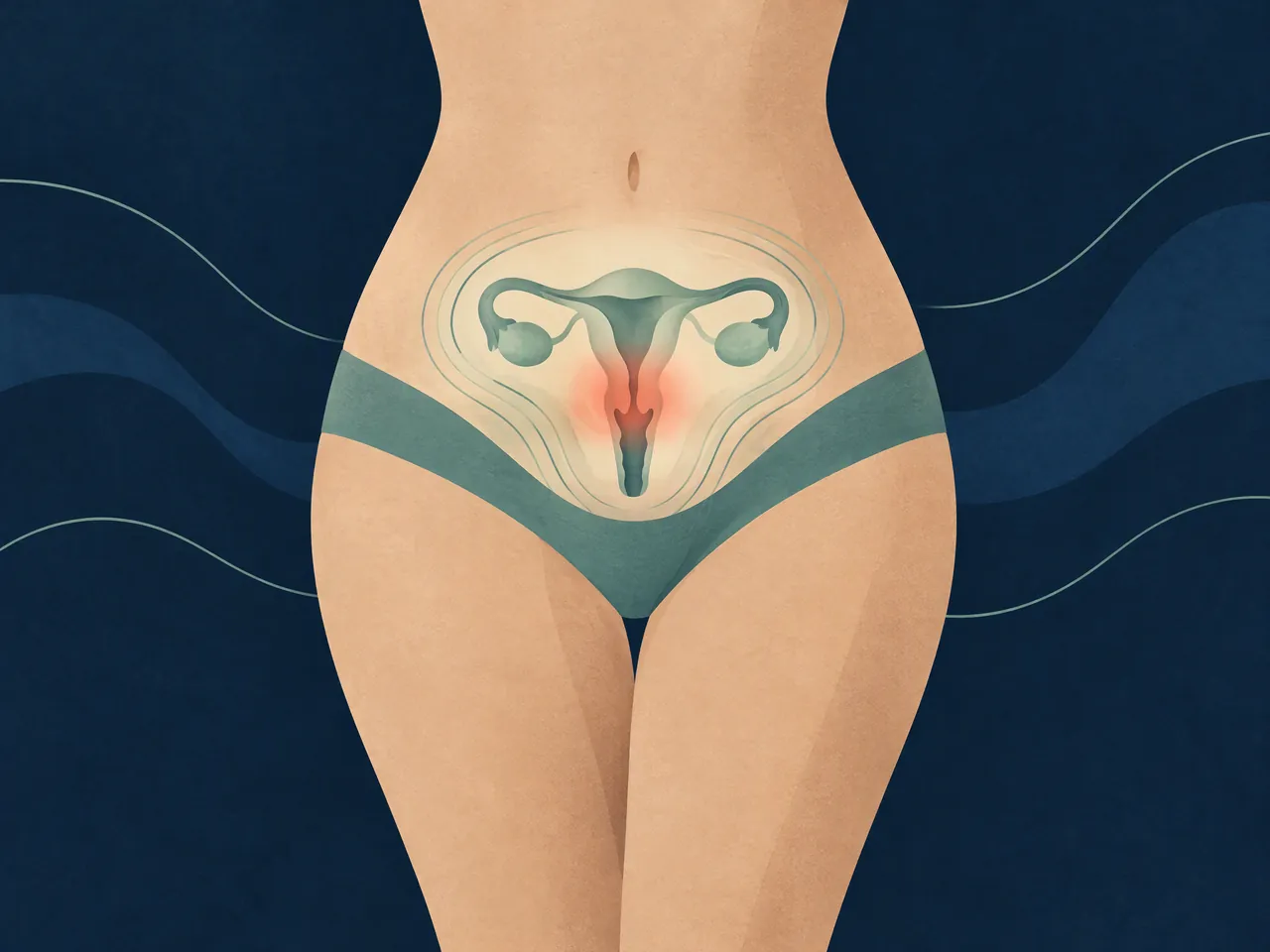
Acupuncture may be worth discussing as supportive care for primary dysmenorrhea: period cramps that occur without an identified pelvic disorder. It is not a substitute for finding the cause of severe, changing, or disabling pain. The practical first question is not simply whether to try acupuncture, but whether the pattern still looks like uncomplicated menstrual cramps. A short, careful symptom record and timely gynaecological assessment when warning signs appear can make that decision safer and more useful.
Appointments are confirmed through WhatsApp. If you have language requirements, please mention them in your enquiry.
The short answer
Acupuncture may be considered as an adjunct for primary dysmenorrhea after an appropriate assessment, alongside medical advice and everyday measures that are suitable for the individual. It should not be used to postpone evaluation of possible secondary causes. See a doctor promptly if pain is severe or getting worse, stops normal activities, does not respond to usual pain relief, or occurs with abnormal bleeding, pain during sex, pain when urinating or passing stool, or a possible pregnancy.
Transparent pricing
See the fees.
Choose your care.
Explore our complete official price list, including first-trial prices, regular prices, packages and branch-specific options.
Opening WhatsApp prepares an enquiry; it does not send a message, take payment or confirm an appointment. Suitability and individual arrangements are confirmed during consultation.
Chinese medicine
All prices in HKDAcupuncture and Chinese herbal medicine package
Includes a Chinese medicine consultation with pulse assessment, body acupuncture and 3 days of Chinese herbal granules that do not require decoction.
HK$580 (single session)
Chinese medicine consultation with pulse assessment
Hair and scalp
All prices in HKDScalp health and hair-loss management
Includes AI scalp analysis, deep scalp and follicle cleansing, and scalp oil-control care.
HK$380 (first trial)
Regular price: HK$680
- 6 sessions: HK$3,480 (HK$580 per session)
- 12 sessions: HK$5,760 (HK$480 per session)
- 20 sessions: HK$8,600 (HK$430 per session)
- 30 sessions: HK$11,400 (HK$380 per session)
Hair acupuncture and Chinese herbal medicine package
Includes scalp acupuncture and 3 days of Chinese herbal medicine that does not require decoction.
HK$580 (single session)
Registered Chinese Medicine Practitioner consultation
- 6 sessions: HK$3,180 (HK$530 per session)
- 12 sessions: HK$5,760 (HK$480 per session)
- 20 sessions: HK$8,600 (HK$430 per session)
- 30 sessions: HK$11,400 (HK$380 per session)
Combined hair and scalp treatment
Combines acupuncture and Chinese herbal medicine with salon-level scalp and follicle care. Packages include complimentary hair-care shampoo and serum.
HK$1,260 (single session)
Combined treatment
- 8 sessions: HK$8,640 (HK$1,080 per session)
- 16 sessions: HK$15,680 (HK$980 per session)
- 20 sessions: HK$18,600 (HK$930 per session)
- 30 sessions: HK$26,400 (HK$880 per session)
Weight management
All prices in HKDFull-body acupoint embedding for weight management
Includes full-body acupoint embedding. Packages include complimentary Chinese herbal medicine for weight management, with the number of included days scaled to the package. Embedding material and the individual treatment arrangement are confirmed during consultation; this is not a cosmetic thread lift.
HK$980 (single session)
No trial session
- 10 sessions: HK$7,800 (HK$780 per session)
- 20 sessions: HK$14,600 (HK$730 per session)
- 30 sessions: HK$20,400 (HK$680 per session)
Facial acupuncture
All prices in HKDFacial acupuncture (basic)
Includes facial acupuncture and meridian-based facial care, including care for facial puffiness.
HK$480 (first trial)
Regular price: HK$680
- 10 sessions: HK$5,200 (HK$520 per session)
- 20 sessions: HK$9,600 (HK$480 per session)
- 30 sessions: HK$13,500 (HK$450 per session)
Facial acupuncture (advanced)
Includes enhanced facial acupuncture with a specially formulated moisturising mask and serum.
HK$780 (first trial)
Regular price: HK$1,180
- 10 sessions: HK$9,000 (HK$900 per session)
- 20 sessions: HK$16,600 (HK$830 per session)
- 30 sessions: HK$23,400 (HK$780 per session)
Pain care
All prices in HKDExtracorporeal shockwave treatment
Shockwave treatment for deep-tissue and fascial care. The Kwun Tong clinic offers the multi-area options shown below.
Priced by branch
Branch-specific pricing
Prince Edward: HK$250 per area
Kwun Tong: HK$250 for 1 area / HK$450 for 2 areas / HK$600 for 3 areas
Pain care (manual therapy)
Includes Chinese medicine musculoskeletal assessment, manual joint techniques and tui na.
HK$580 (single session)
Chinese medicine musculoskeletal assessment
Pain care (acupuncture and manual therapy)
Combines acupuncture and manual therapy.
HK$680 (single session)
Combined care
Is acupuncture suitable for primary dysmenorrhea? When should I see a doctor for severe period pain? Understand the two main types
Dysmenorrhea means pain associated with menstruation. The useful distinction is between primary and secondary dysmenorrhea, because the next step can be very different. Primary dysmenorrhea commonly presents as cramping before or during bleeding and is related to uterine contractions. Secondary dysmenorrhea describes pain caused by, or potentially connected with, a disorder of the reproductive organs. ACOG notes that the latter tends to worsen over time or last longer than usual menstrual cramps. Endometriosis, adenomyosis and fibroids are examples that may be considered during assessment. [1]
This distinction is not a test a person can perform alone. Someone may have familiar lower-abdominal cramps and still need review if the pattern changes. Conversely, a difficult period does not prove a particular diagnosis. The purpose of asking about timing, bleeding, bowel or bladder symptoms, sex, medicines and prior investigations is to decide whether supportive symptom care can be discussed now and whether gynaecological investigation should take priority. That approach is more helpful than treating every painful period as identical.

Is acupuncture suitable for primary dysmenorrhea? When should I see a doctor for severe period pain? Recognise pain patterns
A primary-dysmenorrhea pattern often begins around the start of menstruation, feels cramp-like, and may ease as the first days of bleeding pass. Pain can travel to the back or thighs and may come with nausea, loose stools, headache, tiredness, or dizziness. Those associated symptoms can be burdensome, but their presence alone does not identify the cause. The more useful question is whether the experience is stable and recognisable for you, or whether it is becoming earlier, longer, more intense, or different from previous cycles.
Secondary pain can be less tidy. It may begin days before bleeding, continue after it ends, or feel progressively more disruptive month by month. Heavier or irregular bleeding, bleeding between periods, pain during sex, or pain when urinating or passing stool deserve a medical conversation rather than a self-diagnosis. NHS guidance also lists a swollen abdomen, appetite loss and unintentional weight loss among changes to raise with a doctor. [2] If you are comparing options, our overview of acupuncture for period pain explains why symptom relief and cause-finding are separate decisions.
When should I see a doctor for severe period pain? Is acupuncture suitable for primary dysmenorrhea? Track symptoms
A cycle record turns a vague memory of a bad month into information a clinician can use. Record the dates bleeding starts and stops, whether flow is lighter, usual, or heavier for you, and where the pain sits. Add when it begins, whether it is cramping, sharp, aching, or one-sided, and how it affects sleep, work, study, travel, exercise and meals. Note symptoms such as vomiting, bowel discomfort, urinary discomfort, faintness, fever, and pain during sex without trying to decide what they mean.
Also record what you took or tried and the result, including heat, rest, gentle movement and any prescribed or over-the-counter medicine. Do not use the diary to repeatedly push through severe pain; use it to make an appointment more precise. Bring a list of current medicines, supplements, contraception, diagnoses, operations, and prior scan results if you have them. A clinician may consider examination, ultrasound, or other steps depending on the story. ACOG notes ultrasound may be used when pain is not relieved with medication. [1]
Compare your options
| Pattern or situation | What to record or tell a clinician | Priority next step | Where acupuncture may fit |
|---|---|---|---|
| Familiar cramping around the start of a period, with no new warning symptoms | Timing, impact on activity, associated symptoms, and what has helped | Discuss primary dysmenorrhea and suitable pain-management options | May be discussed as adjunctive support after assessment |
| Pain is worsening, lasting longer, or beginning well before bleeding | How the pattern differs from earlier cycles and any previous diagnoses | Arrange medical or gynaecological assessment | Do not let supportive care postpone investigation |
| Heavier or irregular bleeding, bleeding between periods, or pain during sex, urination, or bowel movements | Bleeding pattern, bowel or bladder symptoms, and their timing | Seek medical review to consider secondary causes | Only consider as complementary care within a coordinated plan |
| Severe or worse-than-usual pain not helped by usual pain relief; possible pregnancy with severe pain or bleeding | Onset, severity, medicines taken, and pregnancy possibility | Seek urgent professional assessment | Not the first step while urgent causes need attention |
On smaller screens, scroll the table sideways to compare all columns.
Is acupuncture suitable for primary dysmenorrhea? When should I see a doctor for severe period pain? Discuss supportive care
For a person whose symptoms have been assessed and are consistent with primary dysmenorrhea, acupuncture can be a supportive option to discuss rather than a promise of a particular outcome. ACOG includes acupuncture and acupressure among alternative treatments that may be useful for painful periods. [1] That wording matters: usefulness varies, the causes of pain still matter, and an individual plan should leave room for medical treatment when it is indicated. Explore the related question, Does acupuncture help menstrual cramps?, without treating a general article as personal medical advice.

A Traditional Chinese Medicine consultation may also use a traditional pattern-differentiation approach. A registered Chinese Medicine practitioner may ask about the timing and character of discomfort, flow, sleep, digestion, stress, temperature preferences and general health, and may observe the tongue or assess the pulse. Those traditional observations are not a modern gynaecological diagnosis. They should sit alongside, not replace, clear discussion of prior diagnoses, investigations, medicines and the reasons a medical review may be needed.

Is acupuncture suitable for primary dysmenorrhea? When should I see a doctor for severe period pain? Consider assessment
An assessment should make space for the details that are easy to leave out when pain is exhausting. Explain whether pain occurs only with bleeding or elsewhere in the cycle, whether it is new, and whether it affects work, school or caring duties. Say if pain relief has not helped, if an IUD was recently fitted, or if you have a history of pelvic conditions. Mention possible pregnancy, past pregnancy complications, bleeding disorders, allergies, and anything that could affect a treatment choice. Straightforward information helps clinicians coordinate care rather than work from assumptions.
If acupuncture is being considered, ask practical questions: What is the aim for this visit? Which symptoms will be tracked? What changes mean I should contact a doctor sooner? How will current treatments be recorded? Expect a conversation, not a fixed number of sessions or a cure claim. The page on acupuncture for dysmenorrhea may help you frame questions, but it cannot determine whether a particular person should delay, replace, or change a medical treatment.

When should I see a doctor for severe period pain? Is acupuncture suitable for primary dysmenorrhea? Coordinate care
Coordination starts with disclosure. Tell both the medical clinician and the Chinese Medicine practitioner about all pain medicines, hormonal treatment, contraception, herbs, supplements and planned procedures. Do not stop prescribed treatment because a complementary appointment has been arranged, and do not assume that a familiar medicine is suitable for every person. The clinician who prescribed a medicine is the right person to advise on changing it. If a gynaecologist is investigating a cause, acupuncture, if used, should fit around that process rather than interrupt it.
At home, low-risk comfort measures may still have a place while you seek advice. A warm bath, a heat pad or hot-water bottle used safely, and gentle movement such as walking, swimming or yoga are listed by NHS as ways to ease period pain. [2] Rest and pacing can also make a difficult day more manageable. These measures are not a reason to ignore escalation. If severe or worse-than-usual pain is not helped by pain relief, NHS advises urgent medical help. [2] For location information only, see the Chinese medicine clinic Prince Edward page.
When should I see a doctor for severe period pain? Is acupuncture suitable for primary dysmenorrhea? Weigh evidence
Evidence needs to match the question. Evidence that acupuncture may be useful for period pain in general does not establish that it treats every cause of pelvic pain, prevents disease, or can replace investigation. For primary dysmenorrhea, it may be reasonable to discuss acupuncture after a suitable assessment and with realistic goals focused on support and symptom management. For suspected secondary dysmenorrhea, the priority is establishing what is driving the pain and following the care recommended for that condition.
Endometriosis is a particularly important example because it can involve painful periods but requires medical evaluation. A Cochrane review of acupuncture for pain in endometriosis included only one eligible study and concluded that the evidence supporting effectiveness was limited; it called for larger, well-designed trials. [3] That is why acupuncture should not be described as a cure for endometriosis or used to defer gynaecological care. Read period pain acupuncture Hong Kong for a local starting point while keeping an investigation plan in view.

Is acupuncture suitable for primary dysmenorrhea? When should I see a doctor for severe period pain? Set expectations
A useful expectation is specific and observable. Instead of expecting all pain to disappear, agree what you will monitor: the day symptoms begin, whether a heat pad or usual medicine is still needed, sleep disruption, time away from routine, and whether the pattern changes. Give the same record to the clinicians involved. This creates a clearer basis for deciding whether to continue supportive care, revise the plan, or request further medical review. It also avoids mistaking a naturally easier cycle for proof that a condition has been resolved.
Be cautious of simple explanations for complicated pain. A treatment plan cannot reliably be chosen from a single online description, a social-media testimonial, or a promise that one method suits everyone. Ask what the intervention is intended to support and what it cannot assess. If a practitioner suggests acupuncture, that conversation should include your diagnosis status and current care. For a broader service-oriented explainer, acupuncture for painful periods is a relevant internal resource, not a substitute for a clinical evaluation.

When should I see a doctor for severe period pain? Is acupuncture suitable for primary dysmenorrhea? Know warning signs
Arrange medical review when periods become more painful, heavier or irregular; when pain interferes with usual activities; or when there is bleeding between periods. Pain during sex, urination or bowel movements should also be assessed. These are not diagnoses by themselves, but they can point away from a straightforward primary-dysmenorrhea pattern. A doctor can decide whether an examination, ultrasound scan, referral, or other investigation is appropriate. NHS advises that persistent pain may lead to gynaecology referral and testing to identify an underlying cause. [2]
Seek urgent medical help for severe or worse-than-usual pelvic or period pain that has not been helped by pain relief. If pregnancy is possible and you have severe pain or bleeding, seek urgent professional advice rather than arranging complementary care first. In Hong Kong, choose the appropriate urgent medical service for the severity of symptoms. Once urgent concerns and possible secondary causes have been addressed, you can return to a fuller discussion of supportive options, preferences and symptom tracking. That order protects the most important decision: not missing a condition that needs timely care.
Care and health guide
Pain-care information
This directory brings together services, reading, and visit information related to pain care, to help you prepare questions for a consultation.
When pain care affects your day, noting when it occurs, its relation to activity, and what you have already tried can help prepare a consultation; Chinese medicine pain management Hong Kong is a relevant service or reading entry point.
Individual circumstances differ, and acupuncture Hong Kong offers related information to help you understand options and prepare questions.


Your questions, answered
Frequently asked questions
Is acupuncture suitable for primary dysmenorrhea?
It may be discussed as supportive care after appropriate assessment, particularly where the pattern is consistent with primary dysmenorrhea and there are no warning signs needing investigation. It is not a guarantee of relief and does not replace medical advice, prescribed treatment, or assessment of changing symptoms.
When should I see a doctor for severe period pain?
Seek medical review when pain is severe, worsening, or disrupts normal activities; when periods become heavier or irregular; or when there is bleeding between periods, pain during sex, or pain when urinating or passing stool. Seek urgent help for severe or worse-than-usual pain not helped by usual pain relief, and for severe pain or bleeding if pregnancy is possible.
Can acupuncture cure endometriosis-related pain?
No. Acupuncture should not be presented as a cure for endometriosis. The Cochrane review cited on this page found limited evidence for acupuncture in endometriosis pain and called for better studies. Suspected or diagnosed endometriosis needs gynaecological care; any acupuncture discussion should be complementary and coordinated.
Can I use pain medicine and acupuncture together?
Tell the practitioner and the prescribing clinician about every medicine, hormonal treatment, supplement and herb you use. Do not stop or change prescribed treatment without the prescriber’s advice. Whether supportive care is appropriate depends on your symptoms, diagnoses, medicines and current investigations.
Sources and further information
- [1] [1] American College of Obstetricians and Gynecologists — Dysmenorrhea: Painful Periods
Referenced for: Definitions of primary and secondary dysmenorrhea; evaluation context; home measures; and ACOG’s statement that acupuncture may be useful for painful periods.
- [2] [2] NHS — Period pain
Referenced for: Period-pain symptoms, self-care measures, warning signs, urgent advice, and referral or investigation context.
- [3] [3] Cochrane — Acupuncture for pain in endometriosis
Referenced for: The limited evidence base for acupuncture for endometriosis-related pain and the need for larger, well-designed studies.