
TCM Lab · Health reading
Neurogenic Claudication, Low Back Pain and Leg Pain, and Degenerative Changes in the Lumbar Spine: Assessment and Care
Published Updated
Walking that brings on aching, tingling, heaviness, or weakness in the legs can feel very different from an ordinary sore back. When the pattern eases on sitting down or leaning forward, neurogenic claudication is one possible explanation to discuss with a clinician. Degenerative changes in the lumbar spine are common on imaging, but an image alone does not explain every person’s low back pain and leg pain. This page sets out how the symptom pattern is assessed, where acupuncture may sit in symptom management, and why progressive nerve symptoms should be medically assessed rather than treated as routine stiffness.
Appointments are confirmed through WhatsApp. If you have language requirements, please mention them in your enquiry.
The short answer
Acupuncture may be considered after an appropriate assessment for symptom management when low back pain and leg pain occur alongside degenerative changes in the lumbar spine. It does not remove bone spurs, restore disc height, or reverse spinal narrowing. A walking-related leg pattern may suggest neurogenic claudication, but it needs a history and examination to clarify the cause. New weakness, bladder or bowel change, difficulty passing urine, fever, or unexplained weight loss calls for prompt medical care first.
Transparent pricing
See the fees.
Choose your care.
Explore our complete official price list, including first-trial prices, regular prices, packages and branch-specific options.
Opening WhatsApp prepares an enquiry; it does not send a message, take payment or confirm an appointment. Suitability and individual arrangements are confirmed during consultation.
Pain care
All prices in HKDExtracorporeal shockwave treatment
Shockwave treatment for deep-tissue and fascial care. The Kwun Tong clinic offers the multi-area options shown below.
Priced by branch
Branch-specific pricing
Prince Edward: HK$250 per area
Kwun Tong: HK$250 for 1 area / HK$450 for 2 areas / HK$600 for 3 areas
Pain care (manual therapy)
Includes Chinese medicine musculoskeletal assessment, manual joint techniques and tui na.
HK$580 (single session)
Chinese medicine musculoskeletal assessment
Pain care (acupuncture and manual therapy)
Combines acupuncture and manual therapy.
HK$680 (single session)
Combined care
Hair and scalp
All prices in HKDScalp health and hair-loss management
Includes AI scalp analysis, deep scalp and follicle cleansing, and scalp oil-control care.
HK$380 (first trial)
Regular price: HK$680
- 6 sessions: HK$3,480 (HK$580 per session)
- 12 sessions: HK$5,760 (HK$480 per session)
- 20 sessions: HK$8,600 (HK$430 per session)
- 30 sessions: HK$11,400 (HK$380 per session)
Hair acupuncture and Chinese herbal medicine package
Includes scalp acupuncture and 3 days of Chinese herbal medicine that does not require decoction.
HK$580 (single session)
Registered Chinese Medicine Practitioner consultation
- 6 sessions: HK$3,180 (HK$530 per session)
- 12 sessions: HK$5,760 (HK$480 per session)
- 20 sessions: HK$8,600 (HK$430 per session)
- 30 sessions: HK$11,400 (HK$380 per session)
Combined hair and scalp treatment
Combines acupuncture and Chinese herbal medicine with salon-level scalp and follicle care. Packages include complimentary hair-care shampoo and serum.
HK$1,260 (single session)
Combined treatment
- 8 sessions: HK$8,640 (HK$1,080 per session)
- 16 sessions: HK$15,680 (HK$980 per session)
- 20 sessions: HK$18,600 (HK$930 per session)
- 30 sessions: HK$26,400 (HK$880 per session)
Weight management
All prices in HKDFull-body acupoint embedding for weight management
Includes full-body acupoint embedding. Packages include complimentary Chinese herbal medicine for weight management, with the number of included days scaled to the package. Embedding material and the individual treatment arrangement are confirmed during consultation; this is not a cosmetic thread lift.
HK$980 (single session)
No trial session
- 10 sessions: HK$7,800 (HK$780 per session)
- 20 sessions: HK$14,600 (HK$730 per session)
- 30 sessions: HK$20,400 (HK$680 per session)
Facial acupuncture
All prices in HKDFacial acupuncture (basic)
Includes facial acupuncture and meridian-based facial care, including care for facial puffiness.
HK$480 (first trial)
Regular price: HK$680
- 10 sessions: HK$5,200 (HK$520 per session)
- 20 sessions: HK$9,600 (HK$480 per session)
- 30 sessions: HK$13,500 (HK$450 per session)
Facial acupuncture (advanced)
Includes enhanced facial acupuncture with a specially formulated moisturising mask and serum.
HK$780 (first trial)
Regular price: HK$1,180
- 10 sessions: HK$9,000 (HK$900 per session)
- 20 sessions: HK$16,600 (HK$830 per session)
- 30 sessions: HK$23,400 (HK$780 per session)
Chinese medicine
All prices in HKDAcupuncture and Chinese herbal medicine package
Includes a Chinese medicine consultation with pulse assessment, body acupuncture and 3 days of Chinese herbal granules that do not require decoction.
HK$580 (single session)
Chinese medicine consultation with pulse assessment
Neurogenic Claudication, Low Back Pain and Leg Pain, and Degenerative Changes in the Lumbar Spine: What They May Mean
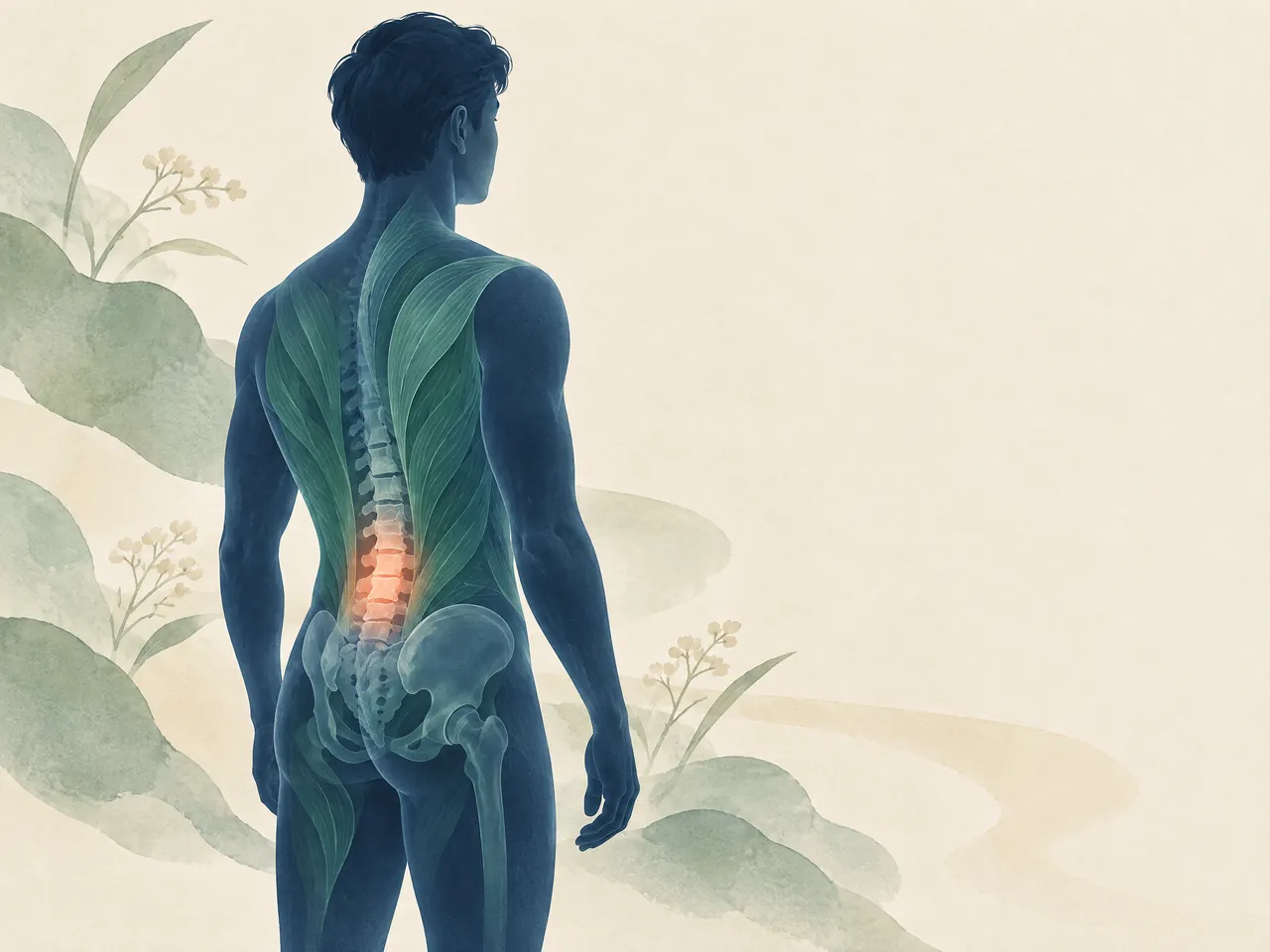
Degenerative changes in the lumbar spine is a broad description, not a single diagnosis. Discs may lose height, facet joints may become arthritic, ligaments may thicken, and bony overgrowth may be visible. Some people have these findings without pain. In others, the changes may be associated with local aching, stiffness, a reduced range of movement, or irritation of a nerve. A report that mentions degeneration should therefore be placed beside the person’s symptoms and examination rather than read as a complete explanation on its own. [2]
Low back pain and leg pain can arise in more than one way. A pain that travels down a leg, pins and needles, altered sensation, or weakness may suggest nerve involvement, while pain limited to the low back may have a different pattern. If narrowing within the spinal canal affects neural structures, standing upright and walking can become the main triggers. This is why the sequence matters: what happens when you stand, how far you walk before symptoms begin, what position settles them, and whether either leg is affected.
Neurogenic Claudication, Low Back Pain and Leg Pain, and Degenerative Changes in the Lumbar Spine: Common Symptoms
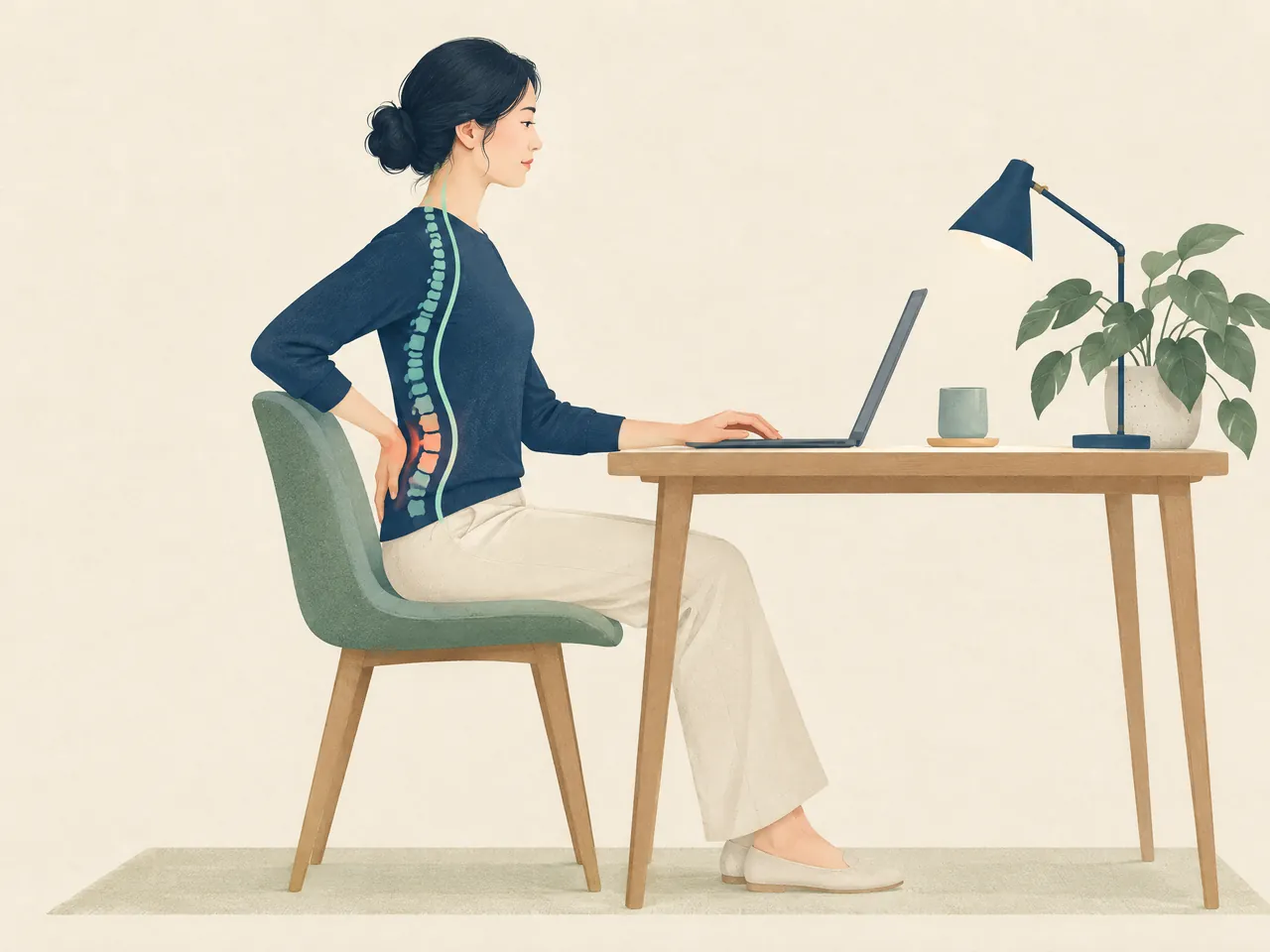
Neurogenic claudication describes a walking or standing-related pattern caused by pressure on nerves in the lower spine. A person may describe calves that feel heavy, buttocks that ache, thighs that burn, or legs that seem unreliable after being upright. Sitting down, or bending forward over a shopping trolley or railing, may ease the symptoms more reliably than simply pausing while standing. This position-related clue helps separate the pattern from some other causes of leg discomfort, but it is still not enough to diagnose it without assessment. [1]
Symptoms need not look the same every day. A crowded commute, waiting in a queue, hills, carrying bags, or a long walk may expose the pattern, while short movements around home may not. Note whether discomfort begins in the back before the leg, whether it passes below the knee, and whether numbness or weakness is present. The related guide to lumbar spondylosis symptoms can help put these terms into context, but it cannot identify the source of an individual’s symptoms.
Neurogenic Claudication, Low Back Pain and Leg Pain, and Degenerative Changes in the Lumbar Spine: Structural Limits of Acupuncture
Acupuncture is not a structural repair. It cannot dissolve a bone spur, restore lost disc height, correct instability, or create more space in a narrowed spinal canal. Those limits are important when low back pain and leg pain are linked to degenerative findings, because a temporary change in soreness does not establish that nerve compression has resolved. The purpose of discussing acupuncture is more modest: whether it is a suitable part of a broader plan for symptoms, movement confidence, and day-to-day function after the relevant assessment.
Research and clinical guidance on acupuncture commonly address low-back-pain symptoms, not a guarantee of benefit for every structural cause of leg pain. The Hong Kong guideline covers diagnosis, traditional pattern differentiation, procedures, rehabilitation, and follow-up; it also notes limits in evidence for some elements of traditional differentiation. [4] For a condition-focused discussion, see acupuncture for lumbar spondylosis. It should be viewed as a symptom-management conversation, not as a substitute for indicated medical, physiotherapy, or surgical assessment.
Compare your options
| Pattern to describe | What it may suggest | Useful details to record | Appropriate next step |
|---|---|---|---|
| Low-back ache or stiffness that changes with posture or activity | Mechanical low-back symptoms may be part of the picture; degenerative findings may or may not be relevant. | Trigger, relieving position, sleep effect, movement limits, and any existing reports. | Arrange a routine assessment if persistent or affecting function. |
| Pain, tingling, or numbness travelling into one leg | Nerve irritation can be considered among several possible causes. | Path below the knee, altered sensation, weakness, cough or sneeze effect, and change over time. | Seek clinical assessment, especially if the symptoms are progressing. |
| Leg heaviness, cramping, pain, or weakness with standing or walking that improves sitting or bending forward | This posture-related pattern may be consistent with neurogenic claudication. [1] | Standing versus sitting relief, both-leg involvement, walking situation, and balance changes. | Discuss medical assessment; acupuncture may only be considered after suitability is clarified. |
| New foot drop, worsening weakness, bladder or bowel change, urinary difficulty, fever, or unexplained weight loss | A potentially serious cause needs prompt evaluation. | When it started, rate of change, trauma, cancer history, and accompanying symptoms. | Seek urgent medical care; do not wait to try acupuncture. |
On smaller screens, scroll the table sideways to compare all columns.
Neurogenic Claudication, Low Back Pain and Leg Pain, and Degenerative Changes in the Lumbar Spine: How Assessment Works
A useful assessment begins with the story rather than the scan. The practitioner may ask when the pain started, whether it followed a fall or new activity, and how it behaves during sitting, standing, walking, bending, coughing, sleeping, and work. It is helpful to bring reports or images you already have, but there is no need to assume that every person needs the same test. Current medicines, prior injections or operations, chronic conditions, blood-thinning medicines, and past responses to treatment also affect the next step.

The examination may include observing how you stand and walk, checking low-back movement, looking for areas of tenderness or muscle guarding, and asking about sensation and strength in the legs. A clinician considers the whole pattern when deciding whether conservative management is reasonable or whether a medical review or imaging is needed. Columbia’s patient guidance notes that a detailed interview, physical examination, and, where appropriate, imaging are used to clarify neurogenic claudication and its cause. [1]

Neurogenic Claudication, Low Back Pain and Leg Pain, and Degenerative Changes in the Lumbar Spine: Medical History and Examination
Before an acupuncture appointment, prepare a concise symptom record. Include the location of low back pain and leg pain, whether symptoms are on one or both sides, the activities that bring them on, and what provides relief. Mention walking tolerance in practical terms, such as whether symptoms begin on the way to the MTR, after standing to cook, or only after a longer outing, rather than trying to force a precise distance. Also report any changes in balance, toe lifting, falls, sleep, or ability to manage stairs.
Leg pain with walking is not always spinal in origin. Vascular claudication, for example, is related to impaired blood flow rather than spinal nerves, and may settle with rest even without a forward bend. [1] Hip, knee, peripheral nerve, and other health problems can also affect walking. This is why a posture-related description is useful but never a reason to self-diagnose spinal stenosis. If the source is uncertain or neurological signs are changing, a medical clinician can decide whether further examination, imaging, or another referral should come before acupuncture.
Neurogenic Claudication, Low Back Pain and Leg Pain, and Degenerative Changes in the Lumbar Spine: Chinese Medicine Pattern Assessment
A Chinese medicine consultation adds a traditional pattern assessment to, rather than instead of, the clinical information above. The practitioner may ask about the quality of pain, sensitivity to cold or damp weather, fatigue, sleep, digestion, previous illnesses, and general health. Observation, questioning, and pulse assessment are traditional methods used to organise that information. Local examination of movement, muscle tension, and tender areas may also inform whether acupuncture is appropriate on that day.
Traditional labels such as cold-damp obstruction, qi stagnation and blood stasis, or liver-kidney deficiency describe a Chinese medicine approach; they do not show the degree of canal narrowing or replace a neurological examination. The Hong Kong practice guideline explicitly places conventional diagnosis alongside syndrome differentiation and recommends excluding unsuitable or serious pathology. [4] A clear consultation should leave room to say that physiotherapy, medical evaluation, or both need to come first. The article on low back stiffness and limited movement offers another practical way to describe function at a visit.
Neurogenic Claudication, Low Back Pain and Leg Pain, and Degenerative Changes in the Lumbar Spine: Management and Safety
Management is usually built around what safely helps the person keep moving and what needs closer medical attention. Depending on the assessment, this can involve medical care, physiotherapy-led exercise, pacing, changes to work or travel routines, medication discussions with the prescribing clinician, and symptom-management options such as acupuncture. There is no responsible fixed number of sessions for degenerative changes in the lumbar spine. Progress should be judged by the person’s symptom pattern and function, and a plan should be reconsidered if symptoms worsen or do not behave as expected.
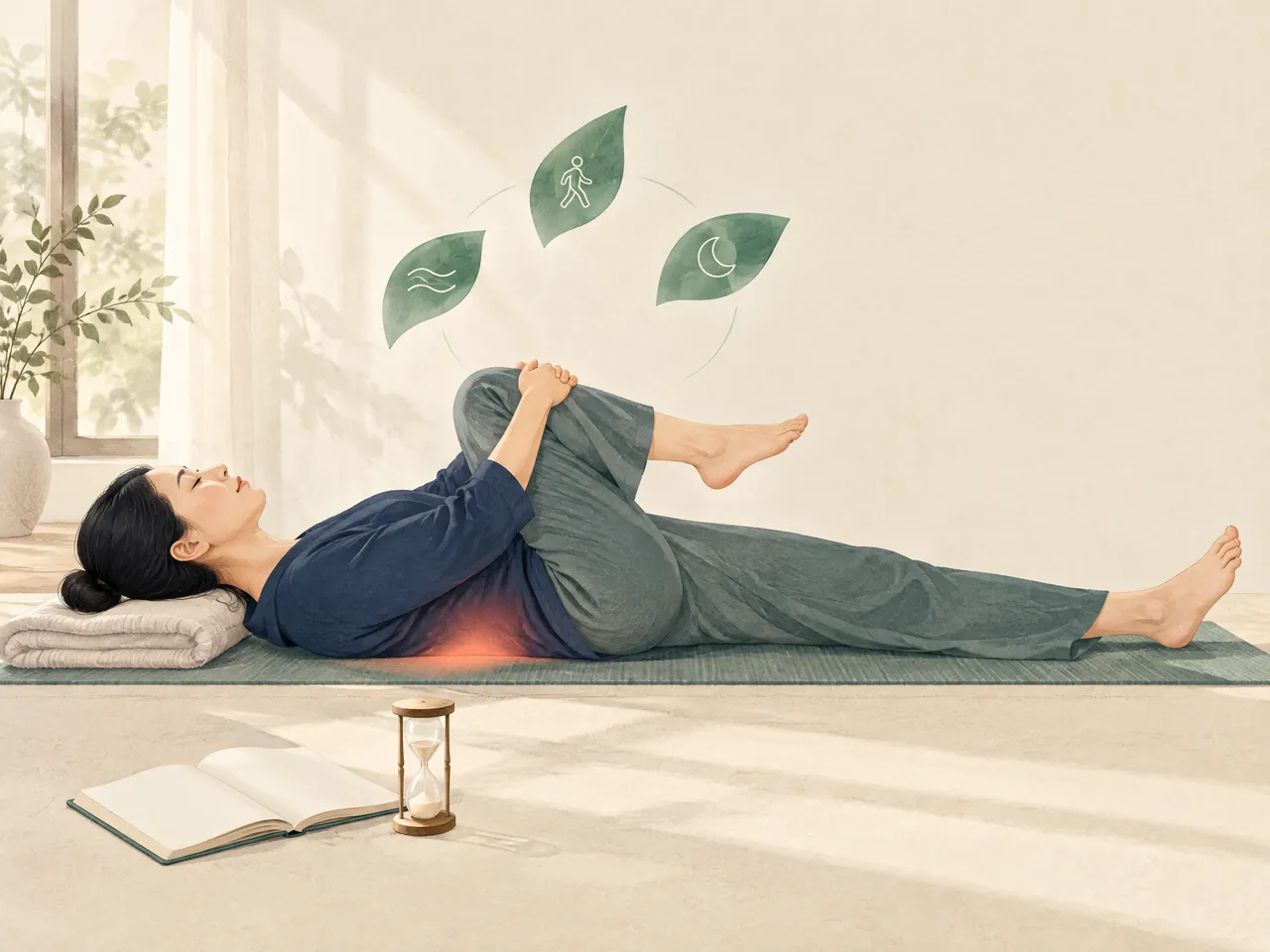
Daily changes are often more useful when they are specific. Break an upright task into shorter periods; alternate standing work with sitting; arrange frequently used items at a comfortable height; and use controlled movement rather than forcing a painful end range. A physiotherapist or clinician can advise on exercises appropriate to the diagnosis and current ability. A day with more discomfort does not always mean damage has occurred, but new neurological change is different and should not be managed by simply pushing through it.

Neurogenic Claudication, Low Back Pain and Leg Pain, and Degenerative Changes in the Lumbar Spine: Acupuncture and Daily Management
If acupuncture is considered suitable, the consultation should cover the symptoms being targeted, relevant medicines and conditions, positioning comfort, and what to do if symptoms change. For low-back pain generally, acupuncture has been included among nondrug options in guidance, while the quality of evidence and the size of benefit vary by the condition and study. [3] That evidence does not mean acupuncture treats every cause of neurogenic claudication. It supports a careful discussion of symptom management alongside, not ahead of, assessment for significant nerve compression.
Use a registered practitioner and tell them about bleeding disorders, anticoagulant or antiplatelet medicines, pregnancy, fainting history, infection, and previous needle reactions. Clean, sterile, single-use needle practice matters: the NIH notes that serious complications can occur with nonsterile needles or improper delivery. [3] For an overview of the treatment question, read acupuncture for low back pain and how does acupuncture help back pain. Bring existing medical reports rather than delaying a referral that has already been advised.

Neurogenic Claudication, Low Back Pain and Leg Pain, and Degenerative Changes in the Lumbar Spine: When to Seek Medical Care
Seek urgent medical care rather than an acupuncture appointment if there is a new or progressive loss of leg strength, foot drop, new numbness that is spreading, loss of bladder or bowel control, difficulty passing urine, or numbness around the saddle area. Severe unrelenting pain, fever, unexplained weight loss, a cancer history, or pain after significant trauma also warrants prompt medical assessment. These features may have causes that need investigation and should not be explained away as routine lumbar degeneration. [2]
For non-urgent but persistent low back pain and leg pain, an enquiry can be a sensible first conversation about whether an in-person assessment is appropriate and what information to bring. TCM Lab has a Kwun Tong Chinese medicine clinic and a Chinese medicine clinic Prince Edward; contact the team on WhatsApp at +852 6940 5663 to describe your symptoms and ask about appointment arrangements. If red flags are present, contact emergency or medical services instead of waiting for a clinic reply.
Care and health guide
Low back discomfort: care information
This directory brings together services, reading, and visit information related to low back discomfort, to help you prepare questions for a consultation.
When low back discomfort affects your day, noting when it occurs, its relation to activity, and what you have already tried can help prepare a consultation; acupuncture for low back pain is a relevant service or reading entry point.
Individual circumstances differ, and acupuncture Hong Kong offers related information to help you understand options and prepare questions.


Your questions, answered
Frequently asked questions
Can acupuncture repair degenerative changes in the lumbar spine?
No. Acupuncture cannot remove bone spurs, restore disc height, reverse arthritis, or widen a narrowed spinal canal. Following assessment, it may be discussed as one option for managing symptoms and daily function, but it does not replace medical, physiotherapy, imaging, or surgical assessment when those are needed.
How is neurogenic claudication different from ordinary leg tiredness?
Neurogenic claudication is a pattern of leg symptoms related to compression of lower-spine nerves. Pain, tingling, cramping, heaviness, or weakness often appear with standing or walking and may ease with sitting or leaning forward. [1] Similar symptoms can have other causes, including circulation problems, so a clinician should assess a persistent or changing pattern.
What should I bring to an assessment for low back pain and leg pain?
Bring a list of current medicines, relevant health conditions, previous treatment, and any X-ray, CT, or MRI reports you already have. It also helps to describe what brings symptoms on, what relieves them, whether they affect one or both legs, and whether you have noticed altered sensation, weakness, balance change, or bladder or bowel symptoms.
Is it safe to try acupuncture when I have numbness in my leg?
Numbness needs individual assessment before treatment is considered. Tell the practitioner when it began, whether it is worsening, and whether it comes with weakness or walking difficulty. Progressive weakness, foot drop, urinary difficulty, loss of bladder or bowel control, or saddle-area numbness needs urgent medical care rather than acupuncture first.
Sources and further information
- [1] Columbia University Irving Medical Center — Neurogenic Claudication
Referenced for: Supports the definition, posture-related symptom pattern, distinction from vascular claudication, and assessment context for neurogenic claudication.
- [2] Hospital for Special Surgery — Lumbar and Cervical Spondylosis: Symptoms and Treatments
Referenced for: Supports terminology for lumbar degenerative changes, possible low-back and leg symptoms, and warning features requiring more immediate care.
- [3] National Center for Complementary and Integrative Health — Acupuncture: Effectiveness and Safety
Referenced for: Supports cautious low-back-pain evidence framing and sterile-needle safety information; it does not establish an individual outcome.
- [4] Hong Kong taskforce guideline — Acupuncture for low back pain
Referenced for: Supports the stated scope of diagnosis, traditional syndrome differentiation, exclusion of unsuitable conditions, and follow-up in low-back-pain acupuncture guidance.