
TCM Lab · Health reading
When should I stop elbow exercises? How do you stretch an elbow with pain?
Published Updated
Elbow pain is a reason to move carefully, not automatically to stretch harder. Stop an elbow exercise when it produces new pain, steadily worsens the original pain, or leaves the elbow worse overall the next morning. If there has been no injury or warning sign, a slow, unloaded bend-and-straighten movement can show what range feels comfortable. Do not force a stiff elbow open. Anyone with a diagnosed elbow condition, recent surgery, or instructions to limit movement should follow their clinician’s plan rather than this general guide. [1]
Appointments are confirmed through WhatsApp. If you have language requirements, please mention them in your enquiry.
The short answer
Stop elbow exercises if they bring on new pain, worsen symptoms during or after the movement, or make the elbow worse overall the following morning. Do not test a painful elbow by forcing a stretch. When there is no injury or warning sign, begin with a slow, unloaded bend and straighten only within a comfortable range. Seek prompt assessment after significant injury, deformity, numbness or tingling, feverish swelling, or severe difficulty moving the arm. [1] [2]
Transparent pricing
See the fees.
Choose your care.
Explore our complete official price list, including first-trial prices, regular prices, packages and branch-specific options.
Opening WhatsApp prepares an enquiry; it does not send a message, take payment or confirm an appointment. Suitability and individual arrangements are confirmed during consultation.
Pain care
All prices in HKDExtracorporeal shockwave treatment
Shockwave treatment for deep-tissue and fascial care. The Kwun Tong clinic offers the multi-area options shown below.
Priced by branch
Branch-specific pricing
Prince Edward: HK$250 per area
Kwun Tong: HK$250 for 1 area / HK$450 for 2 areas / HK$600 for 3 areas
Pain care (manual therapy)
Includes Chinese medicine musculoskeletal assessment, manual joint techniques and tui na.
HK$580 (single session)
Chinese medicine musculoskeletal assessment
Pain care (acupuncture and manual therapy)
Combines acupuncture and manual therapy.
HK$680 (single session)
Combined care
Hair and scalp
All prices in HKDScalp health and hair-loss management
Includes AI scalp analysis, deep scalp and follicle cleansing, and scalp oil-control care.
HK$380 (first trial)
Regular price: HK$680
- 6 sessions: HK$3,480 (HK$580 per session)
- 12 sessions: HK$5,760 (HK$480 per session)
- 20 sessions: HK$8,600 (HK$430 per session)
- 30 sessions: HK$11,400 (HK$380 per session)
Hair acupuncture and Chinese herbal medicine package
Includes scalp acupuncture and 3 days of Chinese herbal medicine that does not require decoction.
HK$580 (single session)
Registered Chinese Medicine Practitioner consultation
- 6 sessions: HK$3,180 (HK$530 per session)
- 12 sessions: HK$5,760 (HK$480 per session)
- 20 sessions: HK$8,600 (HK$430 per session)
- 30 sessions: HK$11,400 (HK$380 per session)
Combined hair and scalp treatment
Combines acupuncture and Chinese herbal medicine with salon-level scalp and follicle care. Packages include complimentary hair-care shampoo and serum.
HK$1,260 (single session)
Combined treatment
- 8 sessions: HK$8,640 (HK$1,080 per session)
- 16 sessions: HK$15,680 (HK$980 per session)
- 20 sessions: HK$18,600 (HK$930 per session)
- 30 sessions: HK$26,400 (HK$880 per session)
Weight management
All prices in HKDFull-body acupoint embedding for weight management
Includes full-body acupoint embedding. Packages include complimentary Chinese herbal medicine for weight management, with the number of included days scaled to the package. Embedding material and the individual treatment arrangement are confirmed during consultation; this is not a cosmetic thread lift.
HK$980 (single session)
No trial session
- 10 sessions: HK$7,800 (HK$780 per session)
- 20 sessions: HK$14,600 (HK$730 per session)
- 30 sessions: HK$20,400 (HK$680 per session)
Facial acupuncture
All prices in HKDFacial acupuncture (basic)
Includes facial acupuncture and meridian-based facial care, including care for facial puffiness.
HK$480 (first trial)
Regular price: HK$680
- 10 sessions: HK$5,200 (HK$520 per session)
- 20 sessions: HK$9,600 (HK$480 per session)
- 30 sessions: HK$13,500 (HK$450 per session)
Facial acupuncture (advanced)
Includes enhanced facial acupuncture with a specially formulated moisturising mask and serum.
HK$780 (first trial)
Regular price: HK$1,180
- 10 sessions: HK$9,000 (HK$900 per session)
- 20 sessions: HK$16,600 (HK$830 per session)
- 30 sessions: HK$23,400 (HK$780 per session)
Chinese medicine
All prices in HKDAcupuncture and Chinese herbal medicine package
Includes a Chinese medicine consultation with pulse assessment, body acupuncture and 3 days of Chinese herbal granules that do not require decoction.
HK$580 (single session)
Chinese medicine consultation with pulse assessment
When should I stop elbow exercises? How do you stretch an elbow with pain? Start with safety
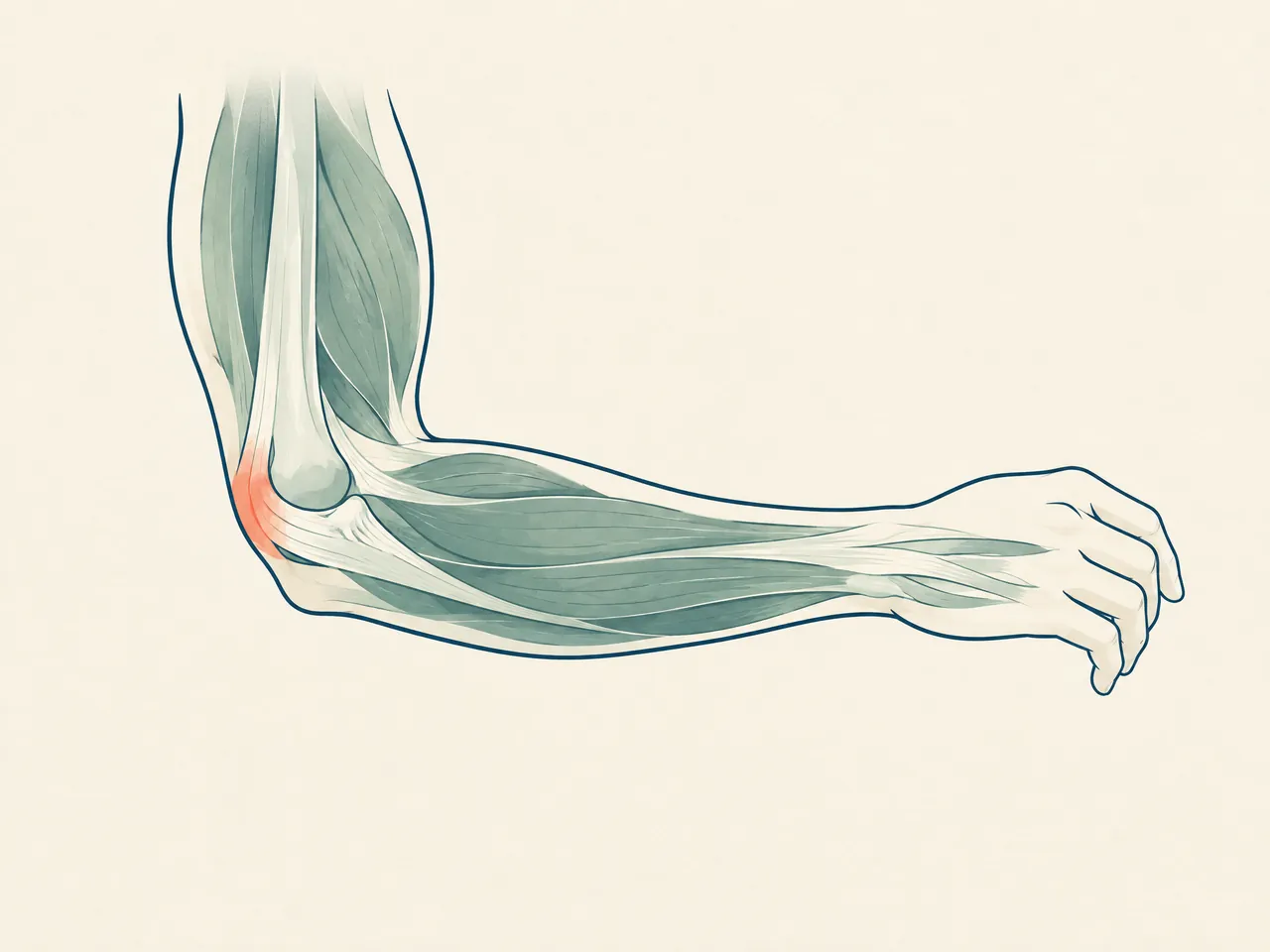
Before deciding how to stretch an elbow with pain, pause over how it began. A gradual ache after repeated gripping, keyboard work, lifting, racquet sport, or gardening is not the same as pain after a fall or sudden pull. Pain may sit on the outer or inner elbow, at the tip, in the forearm, or travel toward the hand. Those details help an appointment but do not identify a cause. Tendon, joint, bursa, nerve, neck, shoulder, and injury-related problems can overlap, so do not label every painful elbow “tennis elbow.” [2]
A movement trial is only for someone who feels otherwise well and has no urgent concern. It should not be used to prove an injured elbow is fine. If you have a diagnosis, recent surgery, a brace, or instructions to protect a repair, that plan takes priority. NHS inform similarly distinguishes general new elbow problems from diagnosed conditions and recent surgery, where professional advice should guide activity. [1]
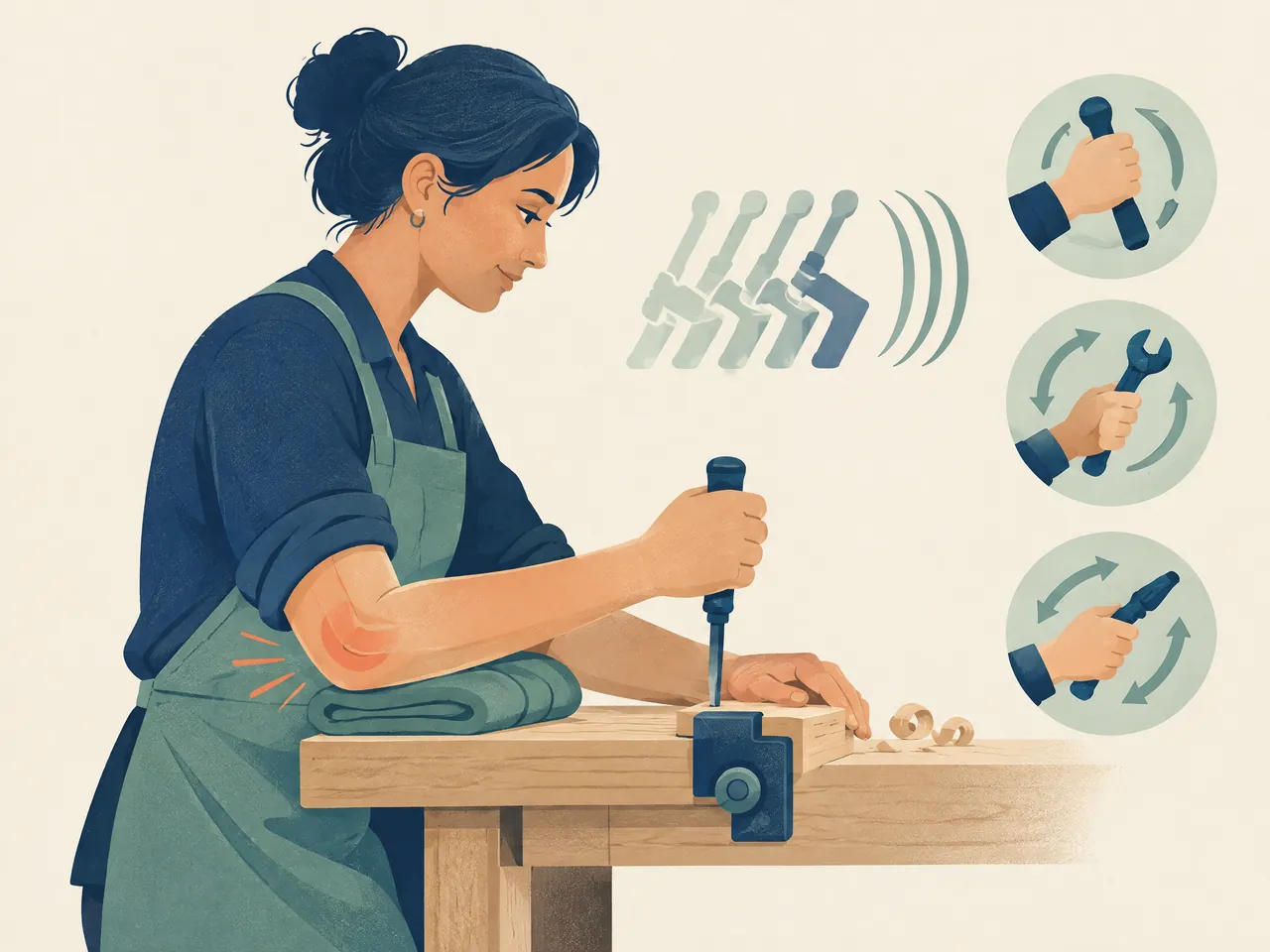
It also helps to remove the everyday task that keeps provoking the elbow. A tight jar lid, heavy pan, luggage handle, prolonged mouse use, screwdriver motion, or lifting with the palm down can make it hard to know whether exercise or daily workload caused the flare. For practical ways to change activity, see elbow pain self care. Ask what happened after this specific task, not simply whether you can tolerate one more repetition.
When should I stop elbow exercises? How do you stretch an elbow with pain? Check warning signs first
Do not begin stretching if the arm is severely painful and difficult to move, if an injury involved a snap or a change of shape, or if you have tingling or numbness. Swelling with a very high temperature or feeling hot, cold, or shivery also needs urgent clinical advice. Sudden arm pain together with chest pressure, heaviness, or squeezing is an emergency symptom rather than an elbow-exercise problem. These are triage signs from the NHS, not a checklist for self-diagnosis. [2]
Less dramatic symptoms can still deserve assessment. Arrange a clinical review if pain continues for weeks, repeatedly interrupts sleep or ordinary tasks, or if you cannot make sense of an increasing loss of function. Note whether the hand feels weak, whether objects are being dropped, and whether the pain changes with the neck or shoulder. Bring a short record rather than trying several aggressive stretches before the visit. The record makes clear what the elbow can and cannot do, which is more helpful than a guessed diagnosis.
How do you stretch an elbow with pain? When should I stop elbow exercises? Know when not to stretch
Do not stretch simply because the elbow feels tight. Tightness may be a protective response after a busy day, and pulling hard on it can turn a manageable ache into a more irritable one. Avoid using the other hand to press the elbow fully straight, bouncing the arm, hanging from a bar, or adding a weight to “open” the joint. A stretch that has to be forced does not meet the purpose of a gentle movement check. Keep the shoulder relaxed and the wrist neutral instead of twisting the forearm to find extra range.
The decision to stop can be made in layers. Stop immediately for a sharp new sensation, spreading symptoms, numbness, a loss of control, or pain that clearly escalates with each attempt. If the movement is merely uncomfortable but stays manageable, reduce the distance travelled, slow down, and rest before deciding whether another small trial is useful. If it becomes worse later that day or the next morning, treat that as feedback to step back rather than as a sign that the tissues need more force. NHS inform advises stopping exercises that cause new pain or worsen symptoms. [1]
Compare your options
| What you notice | What to do with movement | What to record or do next |
|---|---|---|
| No injury or warning signs; small range feels manageable | Try slow, unloaded bending and straightening within a comfortable range | Note the activity that preceded the pain and the response later that day |
| Movement causes new pain or symptoms clearly build with each attempt | Stop that movement; do not push farther or add weight | Record the motion and symptom, then seek individual advice if it persists or worsens |
| Elbow is worse overall the next morning | Do not progress range, speed, or load | Step back from the provoking activity and arrange assessment if the pattern continues |
| Severe pain with difficult movement, changed shape after injury, numbness or tingling, or feverish swelling | Do not test the elbow with stretches | Seek urgent medical assessment; chest pressure with sudden arm pain is an emergency [2] |
On smaller screens, scroll the table sideways to compare all columns.
When should I stop elbow exercises? How do you stretch an elbow with pain? Try gentle movement
When it is reasonable to try motion, think “unloaded movement” rather than a long stretch. Choose a stable chair or stand without bracing on the sore arm. Let the upper arm hang by the side and keep the hand empty. Slowly bend the elbow as though taking the hand toward the same-side shoulder, then slowly lower it. Stop before the hand reaches the shoulder or the elbow is straight if that is more comfortable. This reflects the simple flex-and-extend movement described by NHS inform; it is not a prescription for every diagnosis. [1]
Start with a controllable range, especially after the elbow has been still. Notice whether discomfort stays local, settles after you stop, and changes grip, typing, dressing, or making a drink. There is no prize for reaching the end of the range on day one. A calm, repeatable movement gives better information than a deep stretch that makes you brace your shoulder or hold your breath.
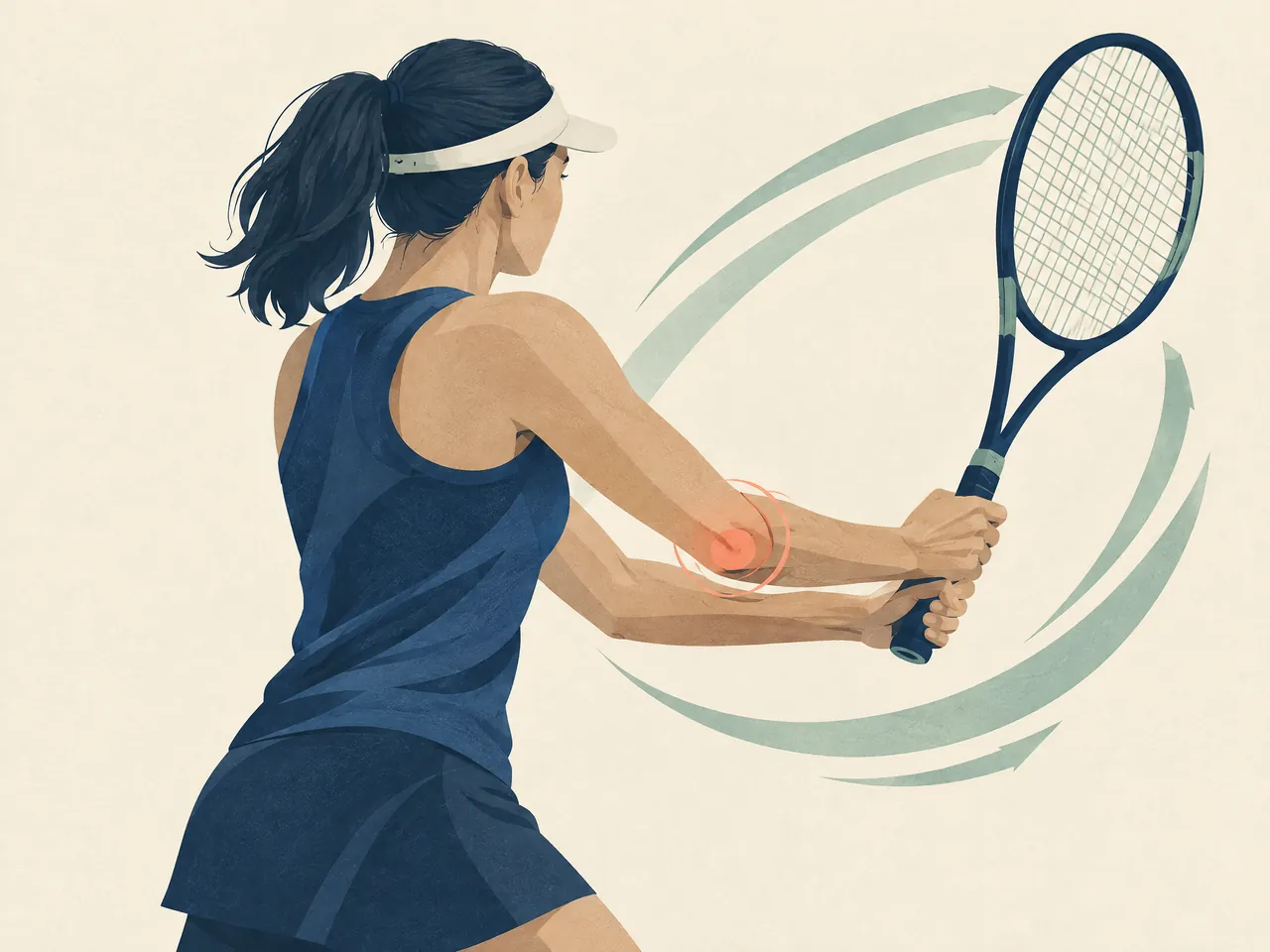
It is useful to separate elbow bending from a wrist or forearm exercise. Bending and straightening changes the elbow angle; turning the palm up or down and bending the wrist load different movements and may be more provocative for some people. If your main question is why pain appears at the ends of the bend or straighten motion, read elbow pain when bending and straightening. That distinction can help you describe the problem clearly instead of adding several exercises at once.
When should I stop elbow exercises? How do you stretch an elbow with pain? Use a comfortable, unloaded range
Comfortable does not mean completely ignoring every sensation, and it does not mean trying to create pain. It means you can move slowly without a sharp catch, a sudden jolt, spreading tingling, or a progressive rise in symptoms. Keep the arm unweighted at first. Carrying a bag, squeezing a ball, using a resistance band, or holding a pan changes the task from range-of-motion work into a load test. Those may be appropriate later for some people, but they are not the safest starting point when the cause of pain is unclear.
Set up the movement so you can stop easily. Sit beside a table if resting the forearm between attempts feels reassuring. Release any tight grip in the hand, lower the shoulder away from the ear, and let the forearm stay in the position that is easiest rather than deliberately rotating it. Small pauses are part of the trial, not a failure. If you notice that you must tense the neck, twist the trunk, or use the other hand to complete the movement, return to a smaller range or leave it for assessment.
How do you stretch an elbow with pain? When should I stop elbow exercises? Bend and straighten slowly
Slow bending and straightening makes the response easier to read. Move toward the limit that feels acceptable, pause only if it remains easy, and lower the arm with the same control. Avoid a fast drop at the end and do not snap the elbow into straightness. One side may naturally move farther than the other, but comparing sides is not a reason to force symmetry. The aim is a steady baseline from which you can judge ordinary use, not to win back range in one session.
Keep the rest of the day in the picture. Someone may tolerate a few unloaded movements in the morning but flare after opening deliveries, carrying a child, playing sport, or spending hours on a trackpad. If that describes you, the practical issue may be total load rather than the bend-and-straighten movement alone. For a focused discussion of activity-linked symptoms, see elbow pain after exercise. Do not respond to a delayed flare by adding more stretches that evening.
When should I stop elbow exercises? How do you stretch an elbow with pain? Adjust and seek help
The most useful adjustment is usually to change one thing at a time. Make the range smaller, slow the pace, take a longer rest, or remove a provoking daily task; then observe the response. Changing range, speed, wrist position, load, and the number of attempts all at once makes it impossible to learn what helped or harmed. NHS inform advises a gradual return to normal activities and notes that overall elbow pain should not be worse the morning after exercise. [1] That next-morning check is especially practical because it captures the combined effect of exercise and normal living.
A simple symptom log can turn a vague complaint into useful information. Record when pain began, where it is felt, the activity just before it, whether there was a fall or sudden pull, and the evening and next-morning response. Add functional observations such as turning a key, lifting a cup, typing, sleeping, or dressing. Do not use the log to diagnose yourself; use it to show a clinician the pattern and what you stopped because it seemed to trigger symptoms.

Assessment is worthwhile when pain persists, recurs on return to normal activity, or leaves you unsure which movements are safe. Ask how the pattern, examination, work or sport, and past injury affect a plan. You can review broader elbow pain exercises information first, but a general article cannot decide whether resistance, wrist work, rest, or another approach suits a particular elbow.

When should I stop elbow exercises? How do you stretch an elbow with pain? Monitor symptoms now and the next morning
Check symptoms at three points: while moving, shortly afterwards, and the next morning. During movement, look for a new sharp sensation, a worsening ache, or tingling. Afterwards, ask whether the arm settles with ordinary rest or feels increasingly reactive during routine tasks. The following morning, compare overall pain and stiffness with the level before the trial. If the elbow is generally worse, do not increase range or load. Return to what was easier, or pause the exercise and obtain individual guidance. [1]
This approach is more useful than chasing a universal repetition count. People arrive with different causes, workloads, and recovery plans. A person whose elbow was recently injured or treated may have limits that are not visible in a web article. Likewise, a person who has had no trauma may find that a short, gentle motion is fine but a gripping task is not. The response pattern tells you when a plan needs adjustment; it does not prove the structure that is causing the pain.

How do you stretch an elbow with pain? When should I stop elbow exercises? Record patterns and arrange assessment
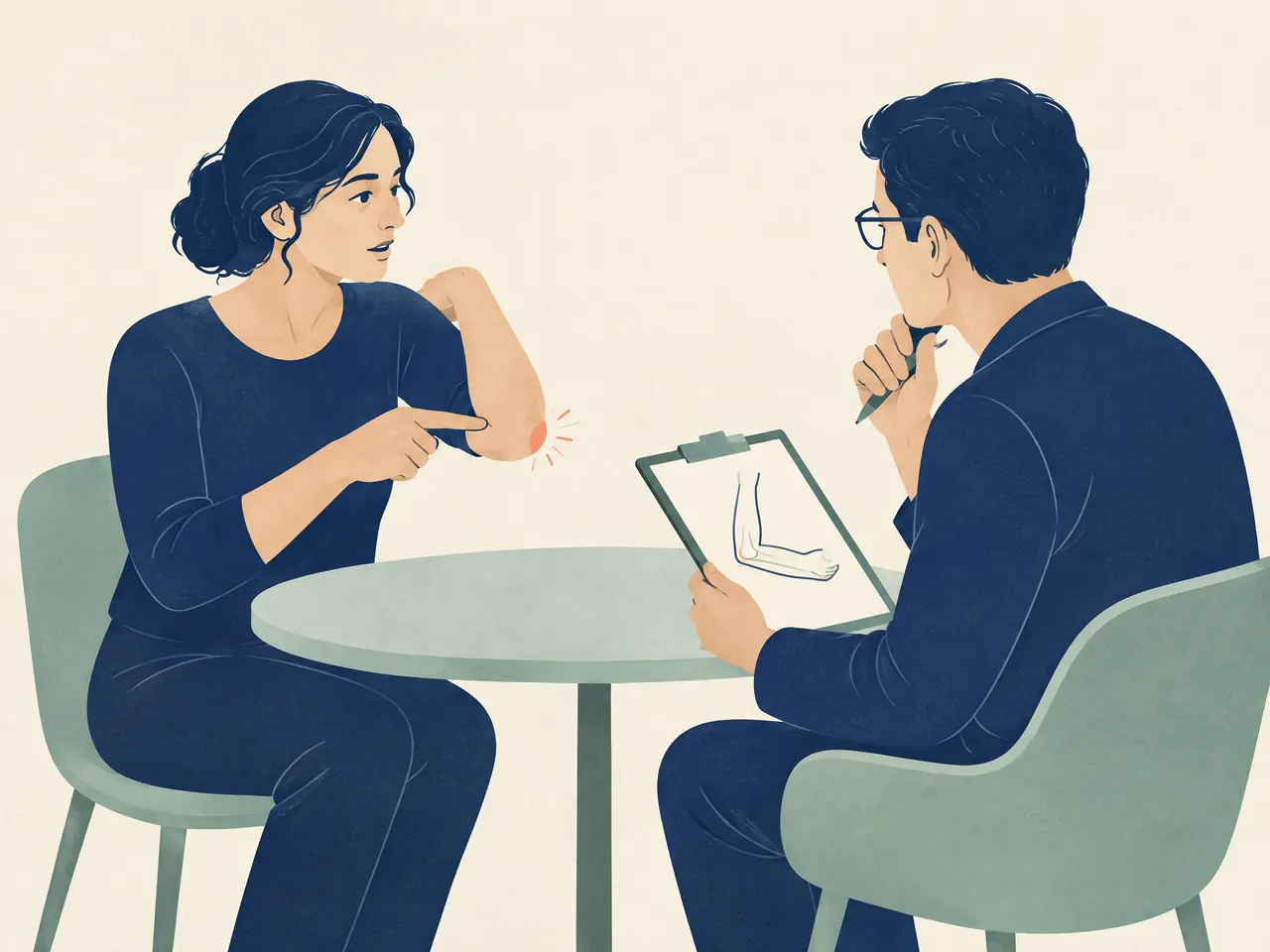
Bring the log when arranging care, and lead with key details: start date, injury, pain location, numbness or weakness, provoking activities, and the next-morning response. Mention locking, swelling, or worsening movement. This gives the practitioner a safer start than saying only that you have been “doing stretches.” It can also prevent a plan designed for sporting overuse from being applied to a traumatic or nerve-related presentation.
If you would like to enquire about an appointment with TCM Lab, explain your elbow pattern and any warning signs by WhatsApp before arranging a visit. You can ask about availability at the Kwun Tong Chinese medicine clinic or a Chinese medicine clinic Prince Edward. For urgent symptoms, use appropriate urgent care rather than waiting for a routine enquiry. A consultation supports individual discussion; it is not a promise that one movement will solve every elbow problem.
Care and health guide
Pain-care information
This directory brings together services, reading, and visit information related to pain care, to help you prepare questions for a consultation.
When pain care affects your day, noting when it occurs, its relation to activity, and what you have already tried can help prepare a consultation; Chinese medicine pain management Hong Kong is a relevant service or reading entry point.
Individual circumstances differ, and acupuncture Hong Kong offers related information to help you understand options and prepare questions.


Your questions, answered
Frequently asked questions
Should I stretch my elbow as soon as it starts hurting?
Not automatically. First consider how it started and whether there is an injury, severe loss of movement, numbness or tingling, feverish swelling, or another warning sign. Without those concerns, a small unloaded bend-and-straighten movement may be a cautious starting point. Do not turn a painful movement into a forceful stretch. [1] [2]
How many elbow stretches should I do?
There is no single number that suits every painful elbow. Begin with a small amount of slow, comfortable movement and judge the response during the activity, afterwards, and the next morning. Do not increase simply because an online routine lists a larger amount; diagnosis, injury history, and everyday workload matter. [1]
Can I straighten my elbow if it hurts at the end of the movement?
Do not force the elbow straight or use the other hand to push through the painful end range. Work only in the range you can control comfortably. Stop for new pain or a worsening pattern, especially if the elbow is worse overall the following morning, and seek assessment when the limitation persists. [1]
When is elbow pain urgent rather than something to stretch?
Seek urgent help for severe pain with difficulty moving the arm, a snap or changed shape after injury, tingling or numbness, or swelling with a very high temperature or feeling hot, cold, or shivery. Sudden arm pain with chest pressure, heaviness, or squeezing needs emergency help. [2]
Sources and further information
- [1] [1] NHS inform — Exercises for elbow problems
Referenced for: General elbow flex-and-extend guidance, gradual activity, symptom monitoring, and stopping exercise for new or worsening pain; not a diagnosis-specific programme.
- [2] [2] NHS — Elbow and arm pain
Referenced for: Official triage signs and broad non-diagnostic information on possible causes of elbow and arm pain.