
TCM Lab · Health reading
Gentle stretches for heel pain: What should I do if heel pain is worse after stretching? How do you do a towel stretch for plantar fasciitis?
Published Updated
Heel pain is not a cue to pull harder on the foot. If a clinician has assessed the problem and considers gentle plantar-fascia or calf stretching suitable, a seated towel stretch can be a low-load place to begin. The useful sensation is a mild, controllable pull rather than sharp pain, burning or a forced bend in the toes. This matters because pain under the heel or along the arch can have more than one cause. Notice what happens after the stretch, during standing and on the next morning’s first steps. If the pain is newly worse, clearly lingers or changes the way you walk, pause that exercise and arrange an assessment instead of adding repetitions.
Appointments are confirmed through WhatsApp. If you have language requirements, please mention them in your enquiry.
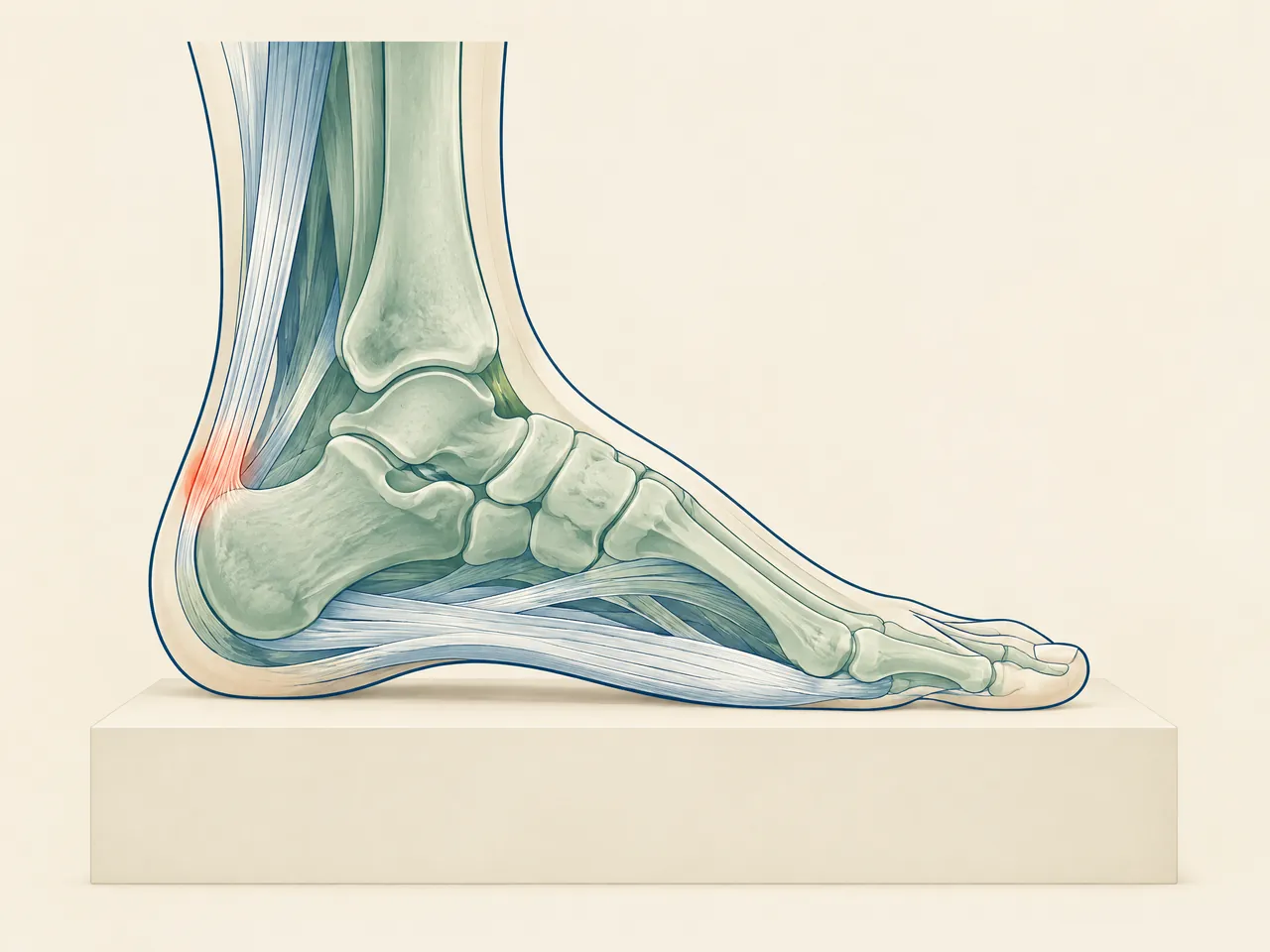
The short answer
For gentle stretches for heel pain, begin only after suitability has been assessed. Sit securely, keep the heel down and knee straight, loop a towel around the ball of the foot, and draw it towards you only until there is a light pull in the sole or calf. Do not bounce or force the toes. If heel pain is worse after stretching, stop that movement, reduce other aggravating load and seek advice if the change persists, recurs or limits normal activity.
Transparent pricing
See the fees.
Choose your care.
Explore our complete official price list, including first-trial prices, regular prices, packages and branch-specific options.
Opening WhatsApp prepares an enquiry; it does not send a message, take payment or confirm an appointment. Suitability and individual arrangements are confirmed during consultation.
Pain care
All prices in HKDExtracorporeal shockwave treatment
Shockwave treatment for deep-tissue and fascial care. The Kwun Tong clinic offers the multi-area options shown below.
Priced by branch
Branch-specific pricing
Prince Edward: HK$250 per area
Kwun Tong: HK$250 for 1 area / HK$450 for 2 areas / HK$600 for 3 areas
Pain care (manual therapy)
Includes Chinese medicine musculoskeletal assessment, manual joint techniques and tui na.
HK$580 (single session)
Chinese medicine musculoskeletal assessment
Pain care (acupuncture and manual therapy)
Combines acupuncture and manual therapy.
HK$680 (single session)
Combined care
Hair and scalp
All prices in HKDScalp health and hair-loss management
Includes AI scalp analysis, deep scalp and follicle cleansing, and scalp oil-control care.
HK$380 (first trial)
Regular price: HK$680
- 6 sessions: HK$3,480 (HK$580 per session)
- 12 sessions: HK$5,760 (HK$480 per session)
- 20 sessions: HK$8,600 (HK$430 per session)
- 30 sessions: HK$11,400 (HK$380 per session)
Hair acupuncture and Chinese herbal medicine package
Includes scalp acupuncture and 3 days of Chinese herbal medicine that does not require decoction.
HK$580 (single session)
Registered Chinese Medicine Practitioner consultation
- 6 sessions: HK$3,180 (HK$530 per session)
- 12 sessions: HK$5,760 (HK$480 per session)
- 20 sessions: HK$8,600 (HK$430 per session)
- 30 sessions: HK$11,400 (HK$380 per session)
Combined hair and scalp treatment
Combines acupuncture and Chinese herbal medicine with salon-level scalp and follicle care. Packages include complimentary hair-care shampoo and serum.
HK$1,260 (single session)
Combined treatment
- 8 sessions: HK$8,640 (HK$1,080 per session)
- 16 sessions: HK$15,680 (HK$980 per session)
- 20 sessions: HK$18,600 (HK$930 per session)
- 30 sessions: HK$26,400 (HK$880 per session)
Weight management
All prices in HKDFull-body acupoint embedding for weight management
Includes full-body acupoint embedding. Packages include complimentary Chinese herbal medicine for weight management, with the number of included days scaled to the package. Embedding material and the individual treatment arrangement are confirmed during consultation; this is not a cosmetic thread lift.
HK$980 (single session)
No trial session
- 10 sessions: HK$7,800 (HK$780 per session)
- 20 sessions: HK$14,600 (HK$730 per session)
- 30 sessions: HK$20,400 (HK$680 per session)
Facial acupuncture
All prices in HKDFacial acupuncture (basic)
Includes facial acupuncture and meridian-based facial care, including care for facial puffiness.
HK$480 (first trial)
Regular price: HK$680
- 10 sessions: HK$5,200 (HK$520 per session)
- 20 sessions: HK$9,600 (HK$480 per session)
- 30 sessions: HK$13,500 (HK$450 per session)
Facial acupuncture (advanced)
Includes enhanced facial acupuncture with a specially formulated moisturising mask and serum.
HK$780 (first trial)
Regular price: HK$1,180
- 10 sessions: HK$9,000 (HK$900 per session)
- 20 sessions: HK$16,600 (HK$830 per session)
- 30 sessions: HK$23,400 (HK$780 per session)
Chinese medicine
All prices in HKDAcupuncture and Chinese herbal medicine package
Includes a Chinese medicine consultation with pulse assessment, body acupuncture and 3 days of Chinese herbal granules that do not require decoction.
HK$580 (single session)
Chinese medicine consultation with pulse assessment
Gentle stretches for heel pain — What should I do if heel pain is worse after stretching? — How do you do a towel stretch for plantar fasciitis? Start with the right safety check
The phrase "plantar fasciitis" is often used when pain sits under the heel or into the arch, especially when the first steps after sleep or rest are uncomfortable. That pattern can be a useful clue, but it is not a home diagnosis. The NHS describes plantar fasciitis as pain around the heel and arch that may ease as a person starts moving, then worsen after prolonged standing, walking or running. It also notes that stretching the bottom of the foot can itself be painful for some people [1]. In other words, a painful first step does not automatically tell you which exercise to choose. Before trying a routine from a video or a friend, identify the exact area, whether there was a recent change in activity, and whether the problem is progressing. The wider guide to foot pain stretches can help frame gentle movement questions, but it should not replace assessment when the cause is uncertain.
Gentle stretches for heel pain — What should I do if heel pain is worse after stretching? — How do you do a towel stretch for plantar fasciitis? Why one exercise does not fit every foot pain
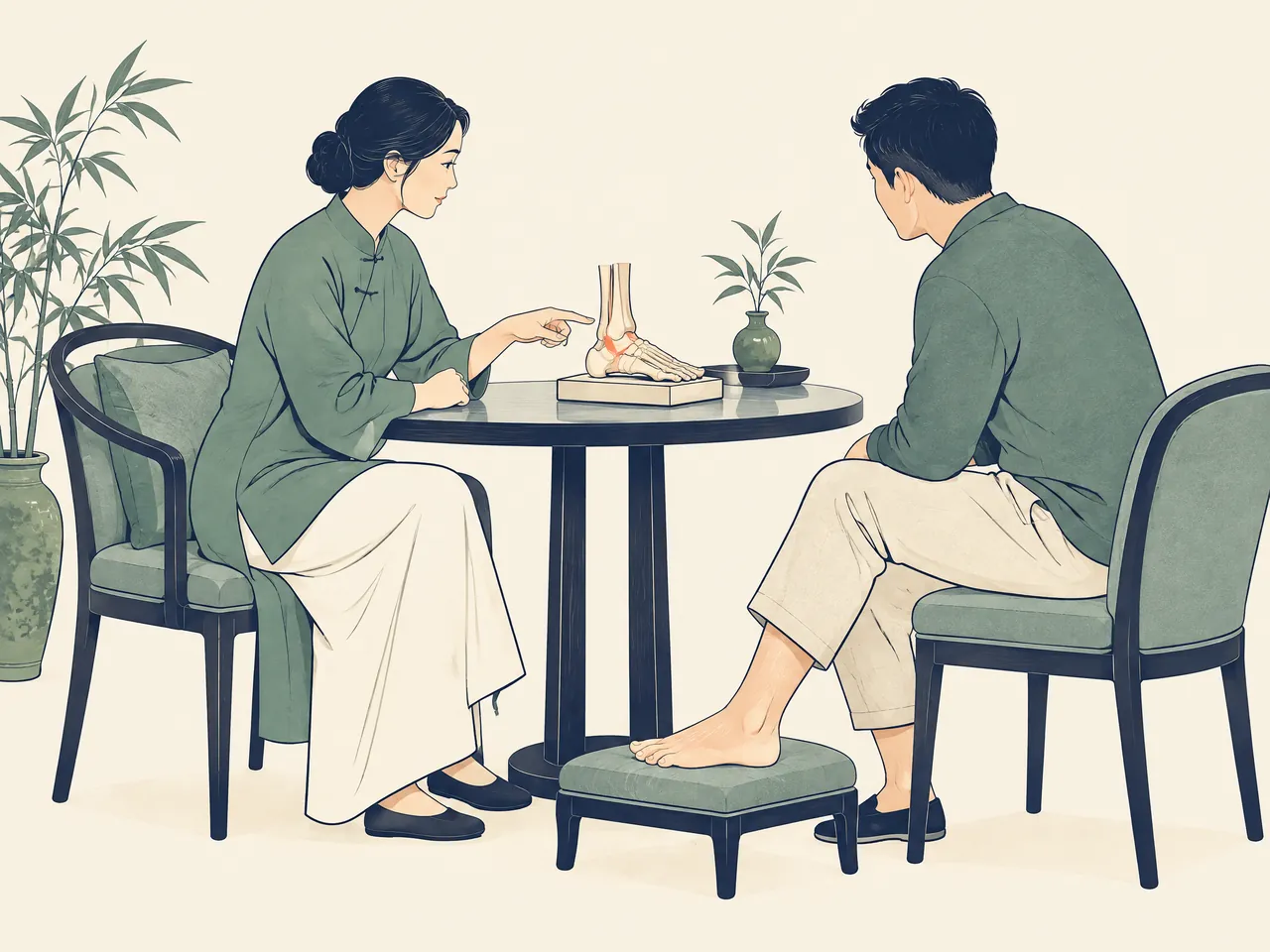
A stretch changes the load on tissue; it does not establish why the tissue hurts. Heel-bottom pain may have the familiar morning or after-rest pattern, while pain higher at the back of the heel, a very local tender spot, altered sensation, or pain after a specific injury may call for a different conversation. Recent increases in running, long shifts on hard floors, unsupportive footwear and tight calves can be relevant context, but none of them confirms a diagnosis. The practical question is therefore not "Which stretch fixes this?" It is "Is this movement appropriate for my presentation, and what response is acceptable?" Someone who can sit comfortably may find a light towel pull easier to control than a standing exercise. Someone whose symptoms build during weight-bearing may need a clinician to help separate daily load from the exercise itself. Avoid copying a high-load drill or increasing range simply because a stretch feels challenging. The pages on plantar fascia stretch and related education are best used as topics to discuss, not as a substitute for an individual diagnosis.

Gentle stretches for heel pain — What should I do if heel pain is worse after stretching? — How do you do a towel stretch for plantar fasciitis? Signs that need assessment first
Do not test a general heel routine first when there has been a new injury, a popping sensation, visible change in foot shape, or difficulty bearing weight safely. Numbness, tingling or reduced feeling also changes the decision, because an exercise response may be harder to judge. The NHS advises clinical review for severe pain that stops normal activities, pain that gets worse or keeps returning, tingling or loss of feeling, and diabetes with foot pain [1]. These are reasons to seek an appropriate healthcare assessment rather than to experiment with a stronger stretch. The same is true when a wound, marked swelling, warmth, fever, or rapidly changing colour is present. If ordinary walking has become guarded, it is sensible to pause the activity that provokes it and obtain advice. For less urgent but persistent symptoms, bring a short record of location, first-step discomfort, standing tolerance, footwear and recent changes in walking, work or sport. That gives a clinician more useful information than the label "heel pain" alone.
Compare your options
| Situation | Cautious next step | What to monitor or discuss |
|---|---|---|
| Mild heel or arch tightness after rest, with stretching already assessed as suitable | Try a controlled seated towel pull with heel down and knee straight | Whether the sensation stays mild and settles after release |
| Standing feels insecure or a wall position sharply increases sole pain | Stop the standing version; do not force weight through the foot | Balance, ability to bear weight and the reason standing is painful |
| Pain is clearly worse after a stretch or next morning | Pause that stretch and avoid adding further new loading that day | Change from usual first steps, walking and daily function |
| Severe, recurrent or unexplained heel pain, or altered sensation | Seek appropriate professional assessment rather than trial-and-error exercise | Injury details, numbness, diabetes, swelling, deformity or limits on walking |
On smaller screens, scroll the table sideways to compare all columns.
Gentle stretches for heel pain — What should I do if heel pain is worse after stretching? — How do you do a towel stretch for plantar fasciitis? Try a mild towel or wall stretch
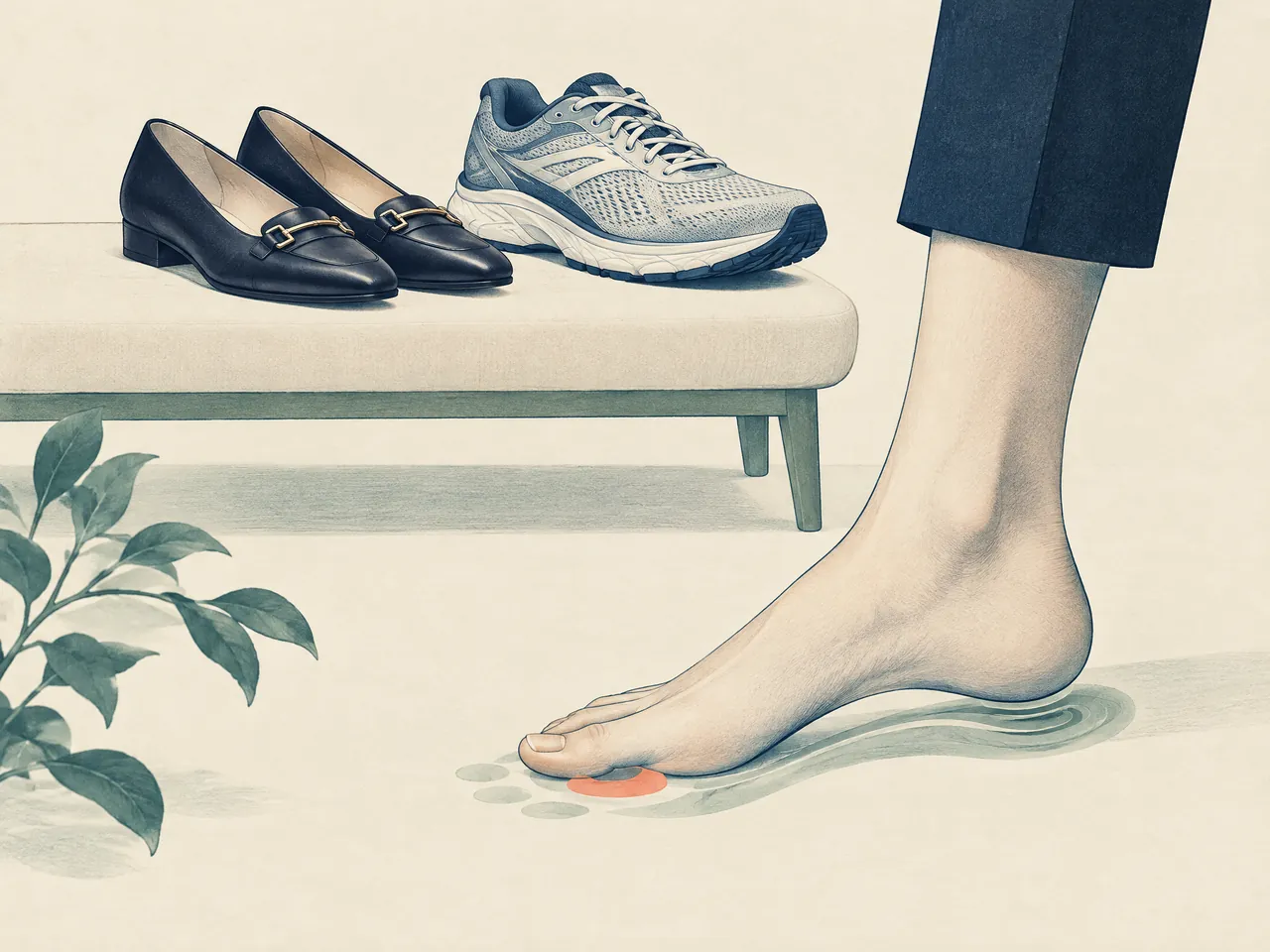
Once a healthcare professional has said that gentle stretching is suitable, make the first attempt deliberately modest. Choose a stable chair for the towel version or a clear wall and supportive footwear for a standing version. The aim is to feel where the pull goes and whether it can be released easily, not to achieve an impressive range. NHS Ayrshire & Arran’s patient guidance describes both towel and wall approaches and advises discussing fitness to exercise with a healthcare professional if there is doubt [2]. It also distinguishes a small, short-lived response from a large increase in pain. That distinction is more useful than chasing an arbitrary intensity. Do one form at a time at first. Changing a stretch, increasing walking and spending a long day on your feet all together makes it hard to know what irritated the heel. The comparison below is a preparation guide, not a prescription for every heel problem.
Gentle stretches for heel pain — What should I do if heel pain is worse after stretching? — How do you do a towel stretch for plantar fasciitis? A seated towel stretch, step by step
For a seated towel stretch, sit on a firm, stable surface with the affected leg forward. Keep the heel in contact with the floor and keep the knee straight rather than letting it bend to escape the pull. Loop a towel around the ball of the foot, hold both ends, and gently draw the towel towards you until there is a mild stretch along the sole of the foot or the back of the calf. Then ease off in a controlled way. This mirrors the setup described in the NHS Ayrshire & Arran exercise guide [2]. Do not jerk the towel, bounce at the end range, curl the toes aggressively or use pain as a marker of success. If the pull is immediately sharp, electrically tingling, or clearly more painful with each attempt, stop instead of trying to loosen it by force. The seated position can make the sensation easier to observe because you are not also managing balance. It does not make the movement universally safe, so keep the individual starting amount agreed with the clinician who assessed you.
Gentle stretches for heel pain — What should I do if heel pain is worse after stretching? — How do you do a towel stretch for plantar fasciitis? How a supported calf stretch differs
A supported calf stretch asks more of the standing foot than the towel version. Place both hands on a wall for support, step the affected foot behind, and point both sets of toes towards the wall. Keep the back heel grounded as you slowly bend the front knee and move your body forward until you notice a light pull in the back of the calf. Do not twist the rear foot outward to create extra range. The NHS guide also describes a wall-based plantar-fascia stretch with the toes against the wall; that position may be unsuitable if it sharply increases sole pain or if weight-bearing feels insecure [2]. A chair-and-towel option may be easier to control for a person who is tentative about standing, whereas a wall stretch can involve the calf more directly. Neither version needs to be forced. For related options, see foot and ankle stretching exercises, while keeping the choice matched to the assessment rather than to a generic routine.
Gentle stretches for heel pain — What should I do if heel pain is worse after stretching? — How do you do a towel stretch for plantar fasciitis? Monitor the next step and daily load
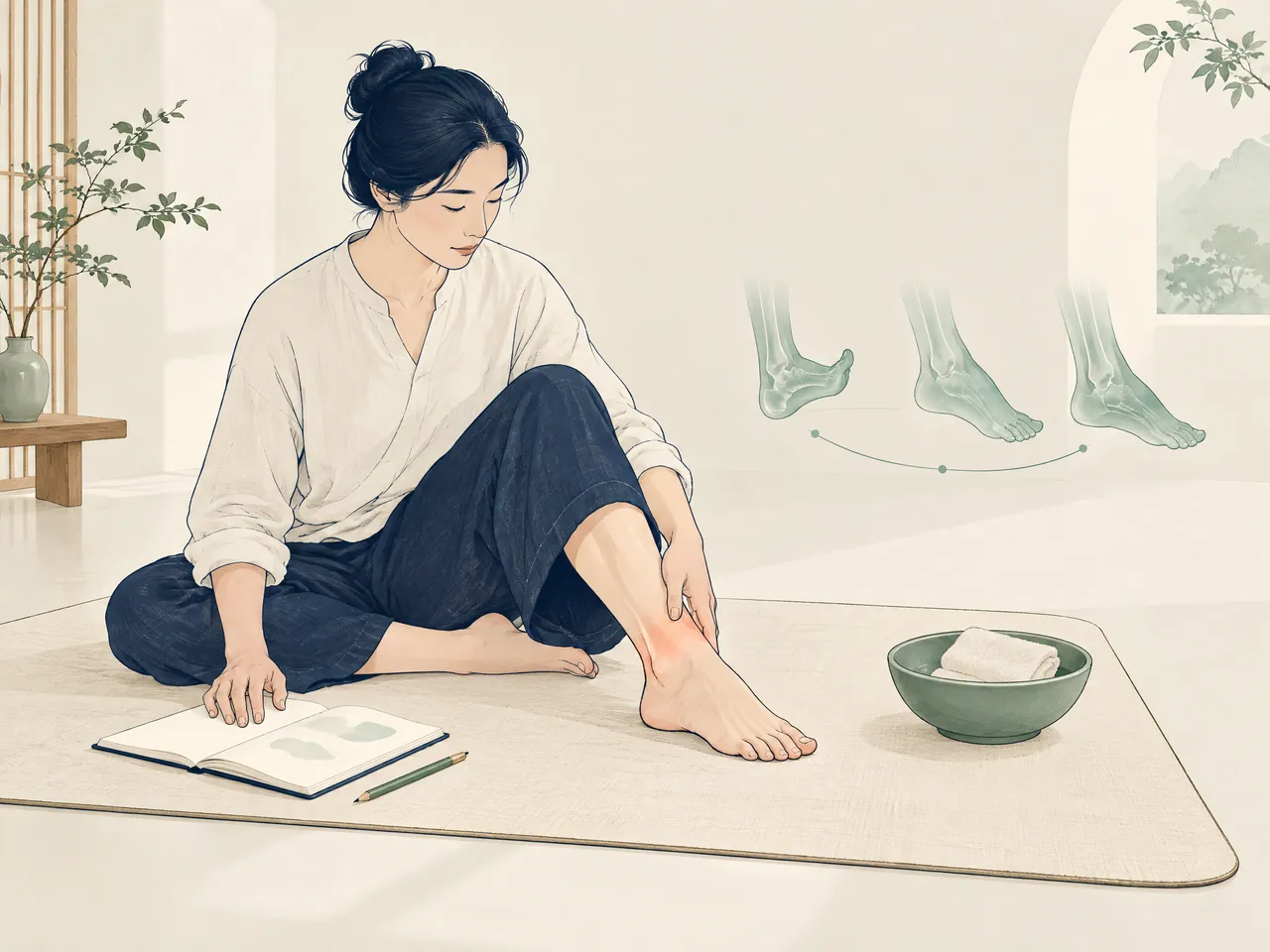
The most important part of a new heel stretch can be the period after it. A single mild pull may be tolerable, yet the combined load of commuting, standing at work, stairs and a long walk can make the next response harder to interpret. NHS Ayrshire & Arran suggests that symptoms should return to their pre-exercise baseline within 30 minutes and should not leave increased pain or stiffness lasting longer than 60 minutes the following morning [2]. Treat those markers as a reason to review the movement rather than as a challenge to push through. The NHS also recommends cushioned heels and good arch support, avoiding long standing or walking when it aggravates pain, and avoiding barefoot walking on hard surfaces [1]. That does not mean staying completely still. It means changing the overall day so a sore heel is not asked to absorb several new stresses at once. Keep notes in plain language: what you stretched, where the pull was felt, how walking changed, and what the first steps felt like the next day.
Gentle stretches for heel pain — What should I do if heel pain is worse after stretching? — How do you do a towel stretch for plantar fasciitis? Use morning pain as useful feedback
Morning first-step discomfort is useful because it offers a repeatable comparison point, not because it proves a particular diagnosis. Before adding more stretching, compare it with your usual pattern: is the first step similar, a little easier, or clearly worse? Also notice whether pain now arrives earlier during walking, whether you start limping, and whether a familiar task such as standing at a kitchen counter feels different. If the response is clearly worse, remove the stretch that triggered concern and return to professional advice instead of substituting a more intense version. If symptoms stay steady and the movement remains comfortable, any progression should still be gradual and individual. A person who spends most of the day seated faces a different cumulative load from someone working a retail floor, caring for children, or training for a race. Use changes in footwear, walking surface, shifts and sport as part of the picture. The resource on plantar fasciitis exercises may help you prepare questions about progression, but it is not a reason to add several drills at once.
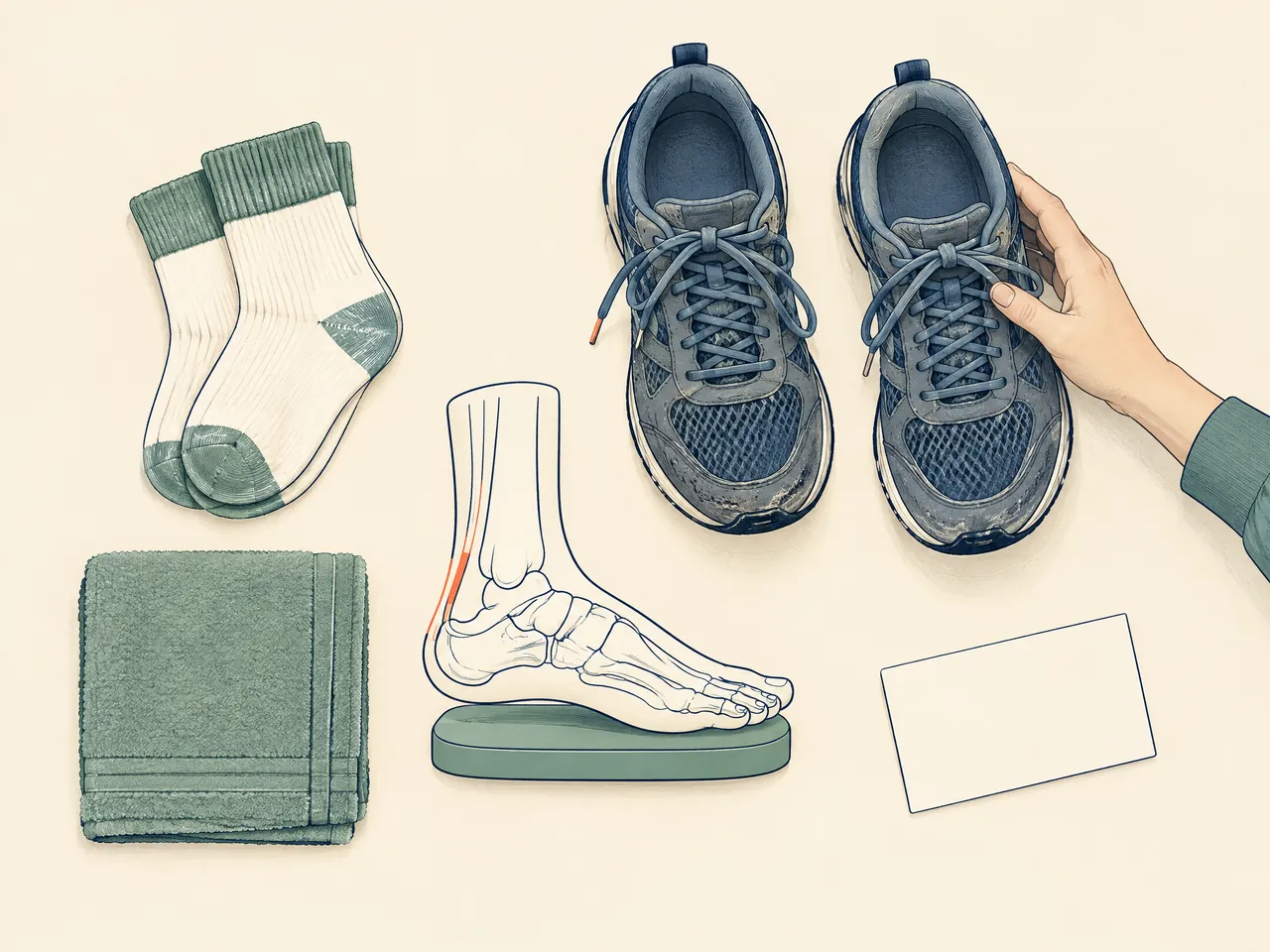
Gentle stretches for heel pain — What should I do if heel pain is worse after stretching? — How do you do a towel stretch for plantar fasciitis? When self-care should give way to care
Arrange care when self-management is not improving the situation, when heel pain repeatedly returns, or when it is interfering with everyday walking, work or sleep. The NHS suggests seeking review if pain has not improved after two weeks of self-care, as well as for worsening or recurrent pain and the other warning signs described above [1]. A clinician can assess the pattern and advise which options are appropriate; do not assume that all heel pain needs the same approach. If you would like to discuss persistent heel or sole discomfort with TCM Lab after appropriate assessment, WhatsApp +852 6940 5663 with the location of the pain, how long it has been present, relevant injury or medical history, and your preferred clinic. You can also review the Kwun Tong Chinese medicine clinic location before enquiring. An enquiry is a chance to discuss an appointment arrangement, not a promise that a particular stretch, treatment or time frame will resolve the problem. Urgent warning signs should be assessed through appropriate urgent medical care rather than waiting for a routine appointment.

Care and health guide
Foot discomfort: care information
This directory brings together services, reading, and visit information related to foot discomfort, to help you prepare questions for a consultation.
When foot discomfort affects your day, noting when it occurs, its relation to activity, and what you have already tried can help prepare a consultation; acupuncture for foot pain is a relevant service or reading entry point.
Individual circumstances differ, and acupuncture Hong Kong offers related information to help you understand options and prepare questions.


Your questions, answered
Frequently asked questions
How do you do a towel stretch for plantar fasciitis?
After a clinician has confirmed that this type of stretch is appropriate, sit on a stable chair with the affected leg forward, the knee straight and the heel on the floor. Loop a towel around the ball of the foot and pull gently towards you until you feel a mild stretch in the sole or calf. Release slowly. Do not bounce, force the toes or pull into sharp pain [2].
What should I do if heel pain is worse after stretching?
Stop the stretch that increased pain and do not try to correct the reaction by stretching harder. Avoid increasing other provocative load at the same time, then compare walking and next-morning first-step symptoms with your usual level. If the worsening persists, recurs or affects normal activity, arrange an assessment. Seek prompt care for serious injury signs, altered sensation or diabetes-related foot pain [1].
Are gentle stretches for heel pain appropriate for every foot problem?
No. Pain under the heel or arch may have different causes, and first-step pain alone does not confirm plantar fasciitis. A general stretch should wait for assessment if there has been injury, inability to bear weight, a foot-shape change, numbness, reduced sensation, marked swelling, or diabetes with foot pain.
Should I add more stretches when the first morning steps still hurt?
Not automatically. Morning symptoms are feedback on the previous day’s total load as well as the exercise. Review whether the stretch, walking, standing, footwear or another recent change coincided with worsening. Keep one change at a time, and ask a clinician about progression rather than adding several exercises at once.
Sources and further information
- [1] NHS — Plantar fasciitis
Referenced for: Supports the heel-and-arch symptom pattern, self-care context, footwear and activity advice, and reasons to seek assessment cited as [1].
- [2] NHS Ayrshire & Arran MSK Patient Portal — Plantar Fasciitis
Referenced for: Supports the towel, wall and calf stretch setup, exercise-response guidance, and next-morning monitoring cited as [2].