
TCM Lab · Health reading
Hip Pain Symptoms: What Causes Hip Pain and Hip Pain and Stiffness
Published Updated
Hip pain symptoms are easier to describe when you separate where the discomfort is felt from what you can no longer do. A deep groin ache when putting on socks, tenderness over the outer hip when lying on one side, or pain around the buttock after a long commute can all be called hip pain, yet they can point to different areas for assessment. Note the onset, any fall or awkward turn, stiffness after rest, sleep disruption and your ability to walk or use stairs. Those details help a clinician judge the next step; they do not confirm a cause from a webpage.
Appointments are confirmed through WhatsApp. If you have language requirements, please mention them in your enquiry.
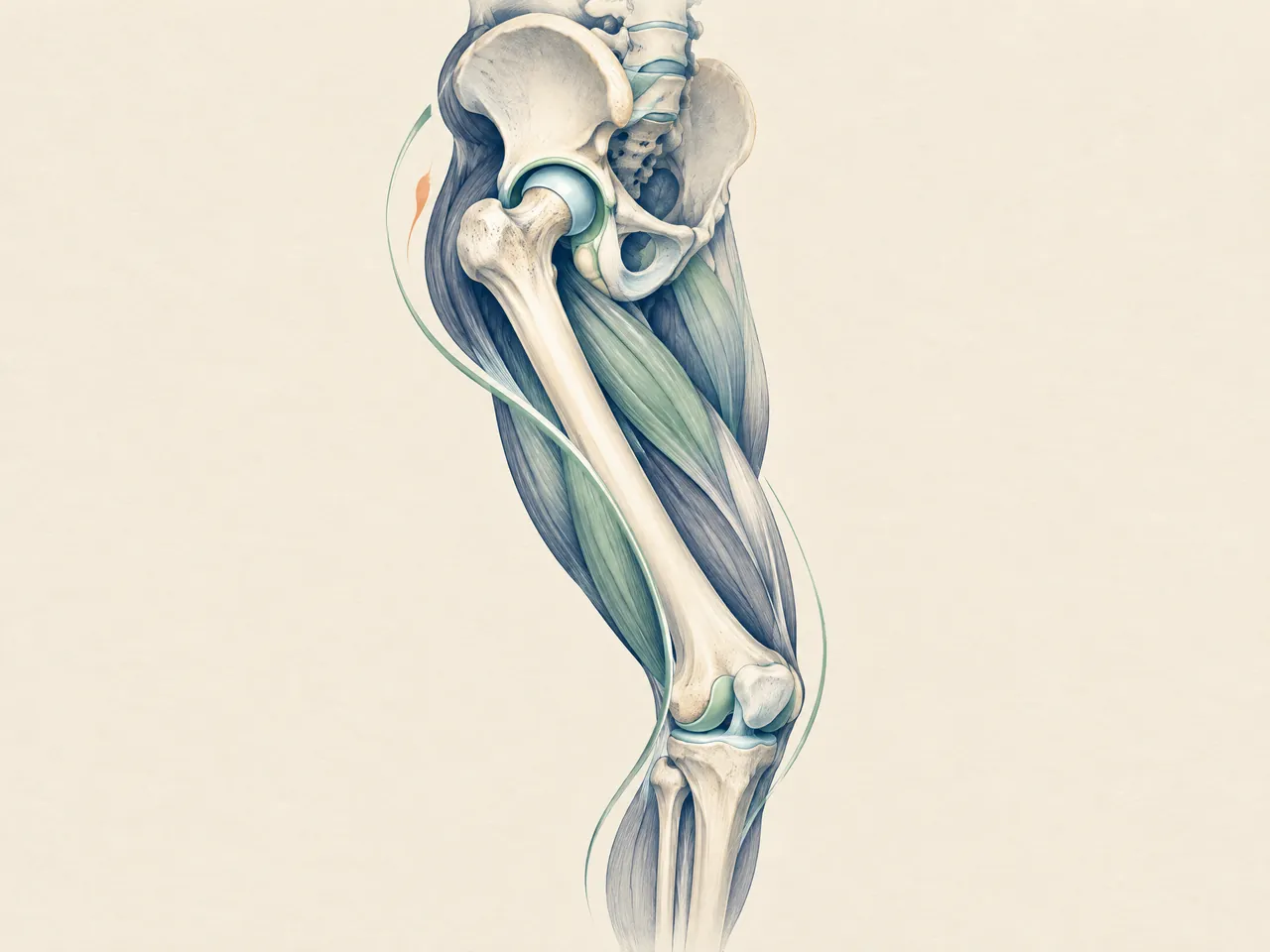
The short answer
Hip pain may arise from the joint, nearby muscles, tendons or bursae, an injury, arthritis, or pain referred from the lower back. Groin, outer-hip and buttock symptoms can offer clues, while stiffness, weight-bearing ability and changes with movement show how much function is affected. They cannot diagnose the cause online. Sudden severe pain, deformity, inability to walk or bear weight, persistent numbness after injury, or a hot swollen hip with fever needs prompt medical assessment.
Transparent pricing
See the fees.
Choose your care.
Explore our complete official price list, including first-trial prices, regular prices, packages and branch-specific options.
Opening WhatsApp prepares an enquiry; it does not send a message, take payment or confirm an appointment. Suitability and individual arrangements are confirmed during consultation.
Pain care
All prices in HKDExtracorporeal shockwave treatment
Shockwave treatment for deep-tissue and fascial care. The Kwun Tong clinic offers the multi-area options shown below.
Priced by branch
Branch-specific pricing
Prince Edward: HK$250 per area
Kwun Tong: HK$250 for 1 area / HK$450 for 2 areas / HK$600 for 3 areas
Pain care (manual therapy)
Includes Chinese medicine musculoskeletal assessment, manual joint techniques and tui na.
HK$580 (single session)
Chinese medicine musculoskeletal assessment
Pain care (acupuncture and manual therapy)
Combines acupuncture and manual therapy.
HK$680 (single session)
Combined care
Hair and scalp
All prices in HKDScalp health and hair-loss management
Includes AI scalp analysis, deep scalp and follicle cleansing, and scalp oil-control care.
HK$380 (first trial)
Regular price: HK$680
- 6 sessions: HK$3,480 (HK$580 per session)
- 12 sessions: HK$5,760 (HK$480 per session)
- 20 sessions: HK$8,600 (HK$430 per session)
- 30 sessions: HK$11,400 (HK$380 per session)
Hair acupuncture and Chinese herbal medicine package
Includes scalp acupuncture and 3 days of Chinese herbal medicine that does not require decoction.
HK$580 (single session)
Registered Chinese Medicine Practitioner consultation
- 6 sessions: HK$3,180 (HK$530 per session)
- 12 sessions: HK$5,760 (HK$480 per session)
- 20 sessions: HK$8,600 (HK$430 per session)
- 30 sessions: HK$11,400 (HK$380 per session)
Combined hair and scalp treatment
Combines acupuncture and Chinese herbal medicine with salon-level scalp and follicle care. Packages include complimentary hair-care shampoo and serum.
HK$1,260 (single session)
Combined treatment
- 8 sessions: HK$8,640 (HK$1,080 per session)
- 16 sessions: HK$15,680 (HK$980 per session)
- 20 sessions: HK$18,600 (HK$930 per session)
- 30 sessions: HK$26,400 (HK$880 per session)
Weight management
All prices in HKDFull-body acupoint embedding for weight management
Includes full-body acupoint embedding. Packages include complimentary Chinese herbal medicine for weight management, with the number of included days scaled to the package. Embedding material and the individual treatment arrangement are confirmed during consultation; this is not a cosmetic thread lift.
HK$980 (single session)
No trial session
- 10 sessions: HK$7,800 (HK$780 per session)
- 20 sessions: HK$14,600 (HK$730 per session)
- 30 sessions: HK$20,400 (HK$680 per session)
Facial acupuncture
All prices in HKDFacial acupuncture (basic)
Includes facial acupuncture and meridian-based facial care, including care for facial puffiness.
HK$480 (first trial)
Regular price: HK$680
- 10 sessions: HK$5,200 (HK$520 per session)
- 20 sessions: HK$9,600 (HK$480 per session)
- 30 sessions: HK$13,500 (HK$450 per session)
Facial acupuncture (advanced)
Includes enhanced facial acupuncture with a specially formulated moisturising mask and serum.
HK$780 (first trial)
Regular price: HK$1,180
- 10 sessions: HK$9,000 (HK$900 per session)
- 20 sessions: HK$16,600 (HK$830 per session)
- 30 sessions: HK$23,400 (HK$780 per session)
Chinese medicine
All prices in HKDAcupuncture and Chinese herbal medicine package
Includes a Chinese medicine consultation with pulse assessment, body acupuncture and 3 days of Chinese herbal granules that do not require decoction.
HK$580 (single session)
Chinese medicine consultation with pulse assessment
Hip Pain Symptoms, What Causes Hip Pain, and Hip Pain and Stiffness by Location
The word “hip” can mean the front crease where the leg meets the pelvis, the bony outer side, the buttock, or even pain that travels into the thigh. That is why “what causes hip pain” has no single answer. The hip is a weight-bearing joint, and discomfort may also come from soft tissues around it or from another area such as the lower back. The Hong Kong College of Orthopaedic Surgeons describes how pain and loss of mobility can affect walking, bending, getting out of a chair and putting on shoes or socks. [3] Use location as a way to organise the story, not as a label for your own condition.
A useful starting note is to point with one finger to the worst spot, then describe whether pain stays there, spreads toward the thigh, or alternates with back symptoms. Include whether it began suddenly, built up after a change in exercise or workload, or followed a slip, fall or twist. The broader hip pain guide can help you collect the pattern before an appointment, but it cannot replace a physical assessment when function is changing.
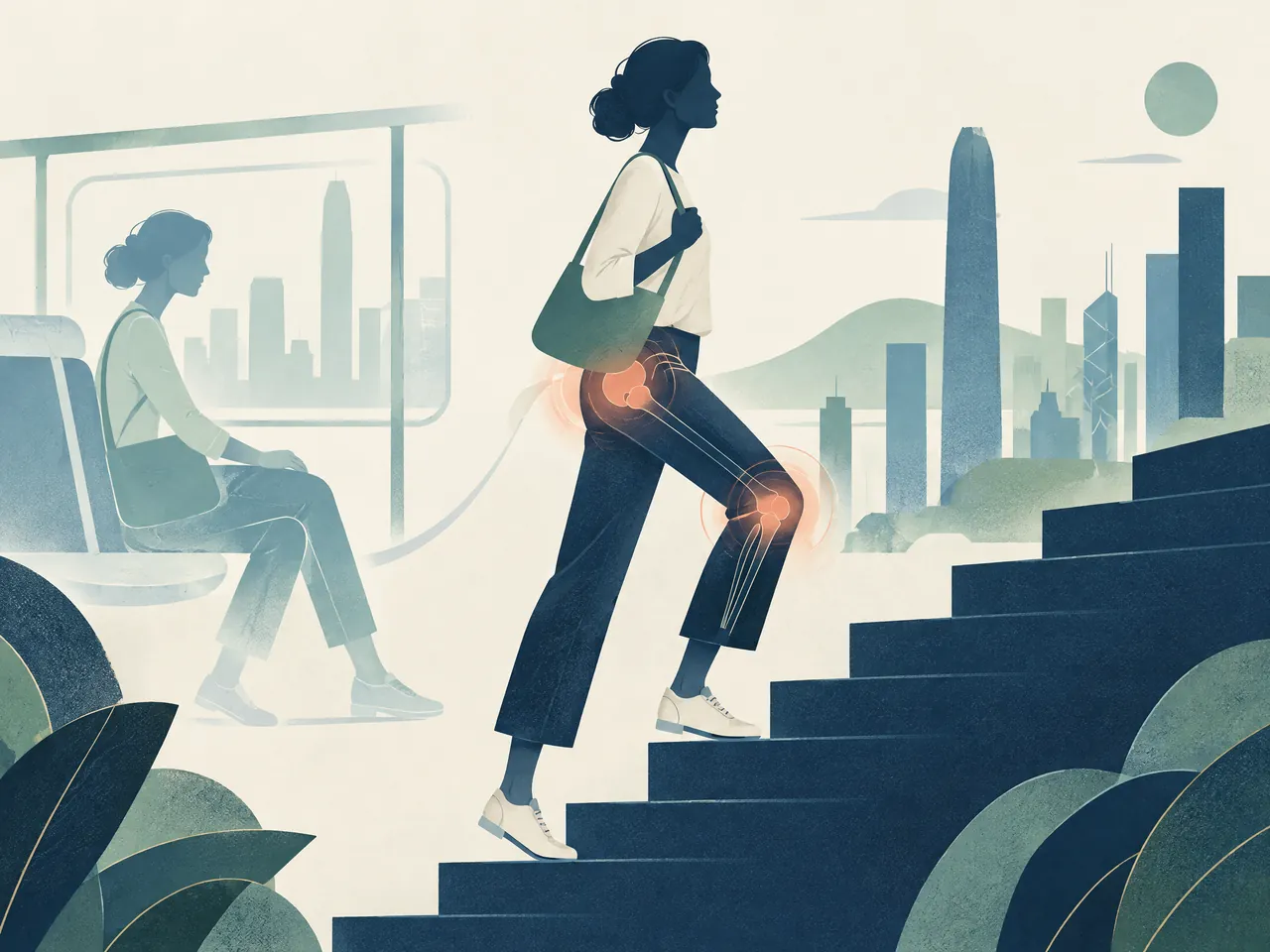
Hip Pain Symptoms, What Causes Hip Pain, and Hip Pain and Stiffness in the Groin
Pain felt deep at the front of the hip or in the groin is often described during tasks that bring the knee and hip closer together: stepping into a car, rising from a low seat, turning in bed, or reaching down to shoes and socks. This location can be associated with the joint itself, but the symptom alone does not identify arthritis, a cartilage problem, a muscle strain, a hernia, or another cause. Mayo Clinic notes that inside-hip and groin pain can offer a clue to an issue within the joint, while also stressing that accurate diagnosis needs professional care. [2]
Describe the quality as well as the place. Is there a sharp catch on a particular turn, a dull ache after standing, or stiffness that eases only after you start moving? Say whether your stride has shortened or you avoid putting the leg forward. If symptoms are persistent, recurrent, worsening, or affecting normal activities and sleep, arrange medical assessment rather than relying on a location chart. The NHS lists these as reasons to seek non-urgent clinical advice. [1] For a focused overview of possible patterns, see hip pain causes.
Hip Pain Symptoms, What Causes Hip Pain, and Hip Pain and Stiffness on the Outer Hip or Buttock
Outer-hip symptoms may be most obvious when pressure is placed on that side, such as lying on it in bed, leaning against a counter, climbing stairs or taking a long walk. Muscles, tendons, ligaments and small cushioning sacs around the joint can all be relevant. It is tempting to call every tender outer hip “bursitis,” but that skips the examination needed to distinguish local soft-tissue pain from other causes. HSS similarly explains that outer-hip pain can be linked to tissues around the hip and that several conditions can have overlapping features. [4]
Buttock discomfort deserves an equally careful description. Pain at the back or outer buttock can be felt with a hip problem, but it may also be referred from the lower back; symptoms travelling down the leg, tingling, or altered sensation are especially important to report. Do not use a massage point or an online stretch as a test to decide the source. Read more about hip pain in the buttock if that is where it is felt, and seek assessment sooner if weakness, numbness or loss of function develops.
Compare your options
| What to observe | Examples to note | Why it is useful at assessment |
|---|---|---|
| Location | Deep groin, outer bony hip, buttock, thigh or more than one area | Shows the distribution of symptoms; location is a clue, not a diagnosis. |
| Onset and trigger | Fall, twist, new running routine, lifting, prolonged sitting, or gradual onset | Helps distinguish an injury-related story from a gradual or recurrent pattern. |
| Weight-bearing and movement | First steps, level walking, stairs, chair transfers, dressing and turning in bed | Shows how much daily function is limited and whether symptoms are worsening under load. |
| Rest and night pattern | Stiff after sitting, waking pain, side-lying discomfort, pain that continues at rest | Helps a clinician understand timing and decide how promptly review is needed. |
| Associated changes | Swelling, warmth, skin-colour change, fever, numbness, weakness or visible deformity | Flags features that may need urgent or emergency medical assessment. |
On smaller screens, scroll the table sideways to compare all columns.
Hip Pain Symptoms, What Causes Hip Pain, and Hip Pain and Stiffness During Movement
Movement patterns often provide more useful information than a pain score alone. Compare the first few steps after sitting with the end of a walk; notice whether stairs, slopes, carrying groceries, sitting in a low chair, getting in or out of a taxi, or turning on one leg changes the symptoms. Hip pain and stiffness may make the range of motion feel smaller, but a tight feeling is not automatically a reason to force a stretch. The key question is whether normal movement is becoming less possible or clearly more painful.
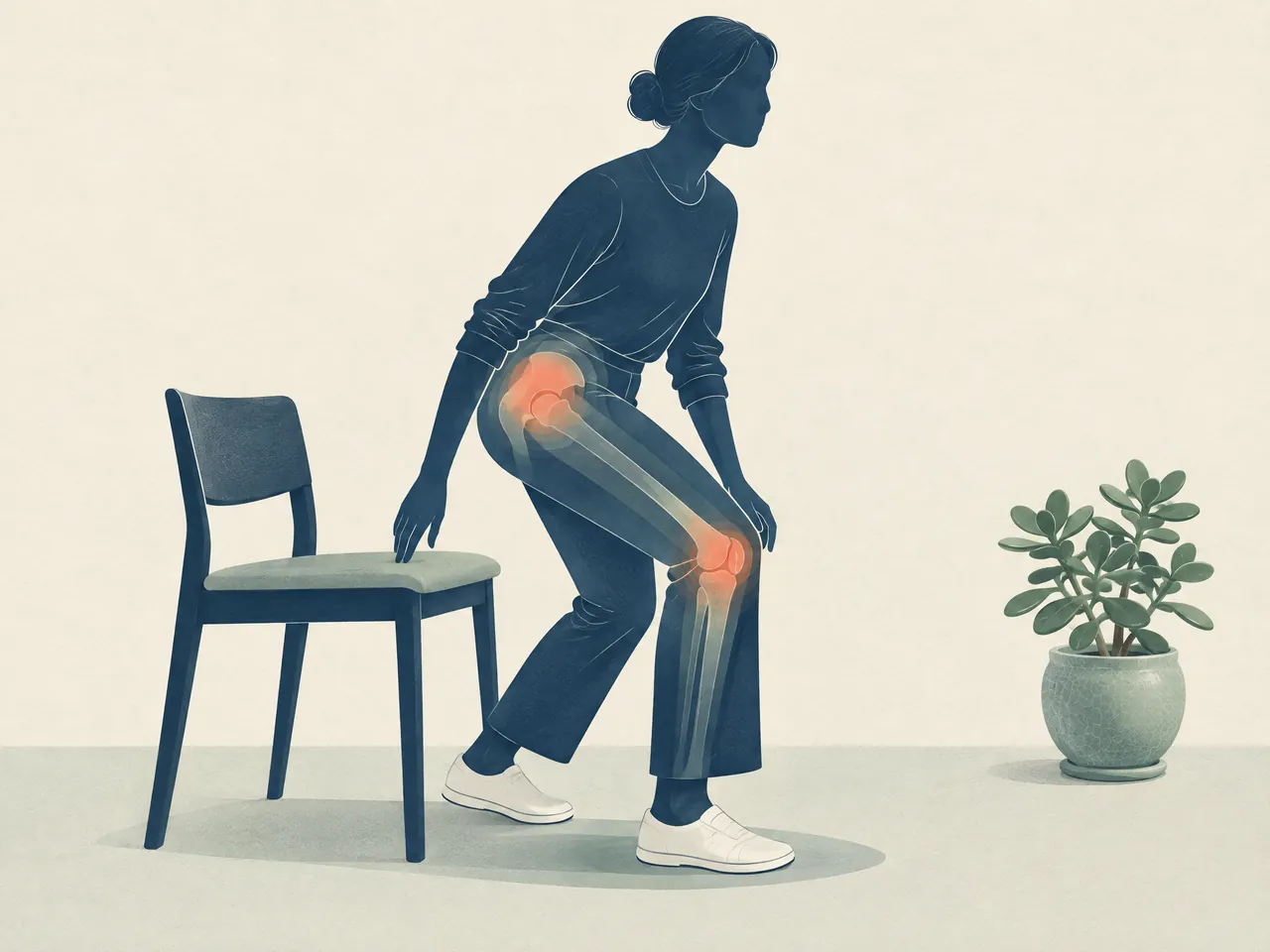
Try to describe the load and the timing without guessing the diagnosis. For example, “I can walk on flat ground but pain builds on stairs,” is more helpful than “my hip is worn out.” The same is true of rest: pain after a busy day, pain after staying still, and pain that wakes you overnight are distinct patterns. Keep the note brief enough to be accurate, including any new footwear, training, lifting or prolonged sitting that occurred before the symptoms changed.
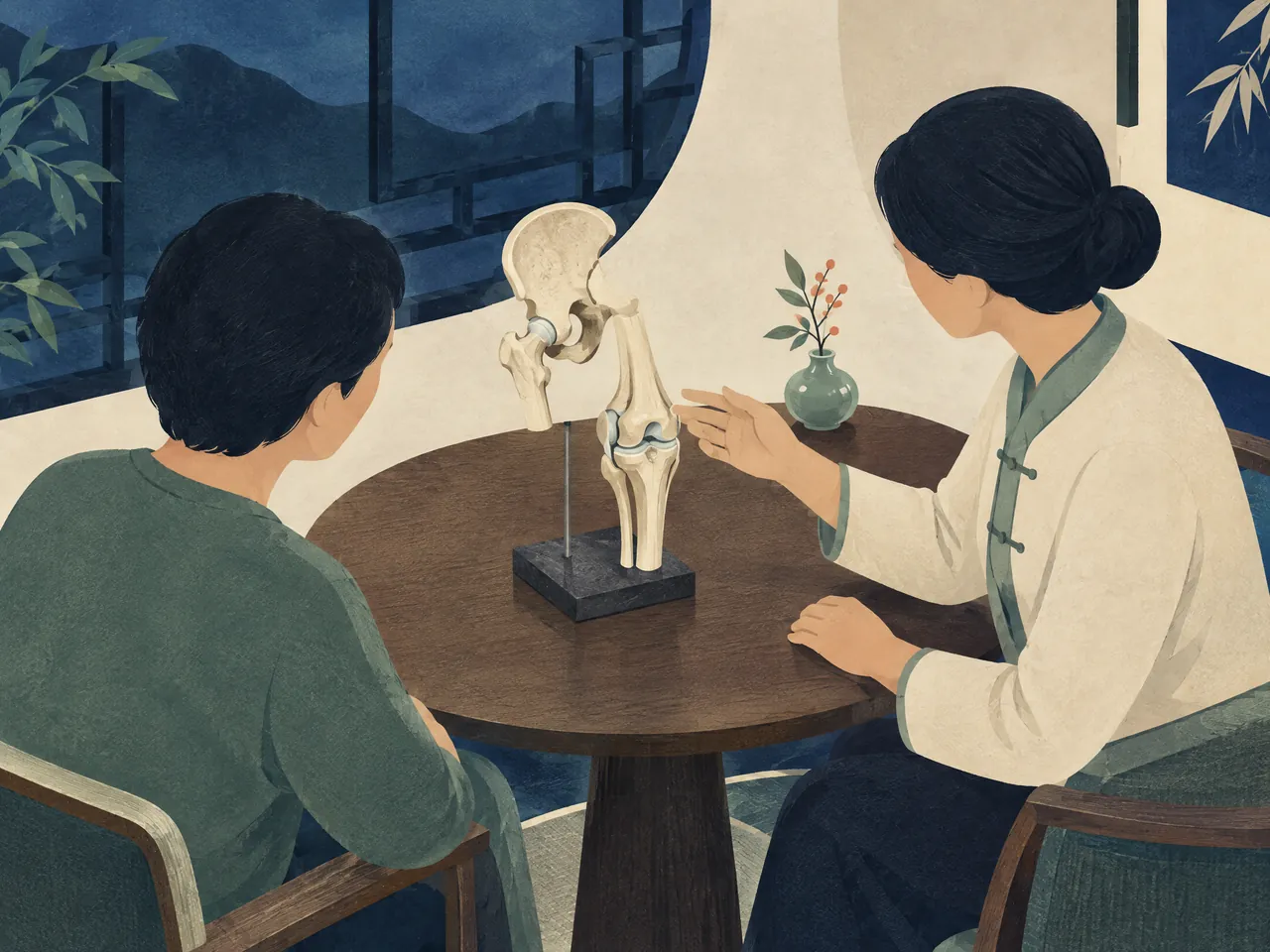
Hip Pain Symptoms, What Causes Hip Pain, and Hip Pain and Stiffness When Walking or Bearing Weight
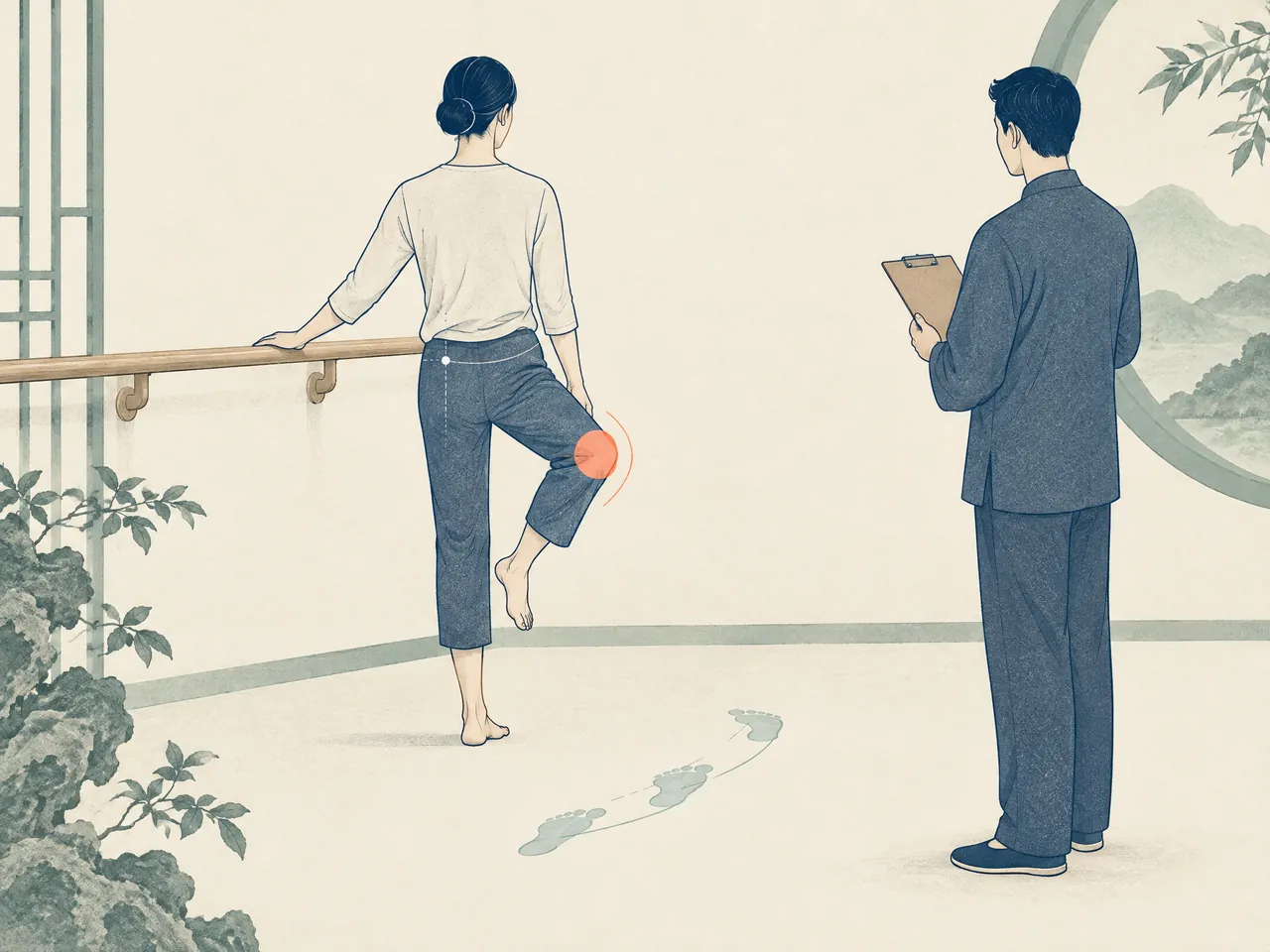
Walking uses the hip repeatedly, so an altered gait can develop even when pain is modest at rest. You may notice that the first step is difficult, that you shorten time on one leg, or that pain increases after a particular distance. These observations help show the practical impact, but they do not tell you whether the cause is a strain, arthritis, a tendon problem, a fracture or referred pain. Progressive pain while bearing weight deserves timely assessment, especially when it follows trauma or makes ordinary walking unsafe. HSS advises evaluation for pain that increases or occurs with weight-bearing or walking. [4]
Until you have been assessed, avoid treating a painful limp as something to train through. Choose a tolerable amount of movement, reduce the activity that reliably provokes symptoms, and use stable, comfortable footwear. The NHS advises keeping moving if possible without overdoing strain on the hip. [1] A separate page on hip pain when walking can help you formulate a clearer account of route, pace, stairs and weight-bearing for a consultation. If you cannot walk or put weight through the leg after an injury, seek emergency care rather than trying to continue activity.
Hip Pain Symptoms, What Causes Hip Pain, and Hip Pain and Stiffness After Rest or at Night
Stiffness after a period of sitting or first thing in the morning can matter because it changes how you start the day. Note roughly when it occurs, whether it loosens with gentle movement, and whether it returns after work or a long journey. Record how it affects a simple task such as standing from a chair, putting on footwear or taking the first flight of stairs. The information is more useful when paired with location, duration, swelling, fatigue or other symptoms than when it is reduced to a single word such as “stiff.”
Night symptoms also need context. Outer-hip tenderness may make side-lying uncomfortable, while pain that persists at rest or interrupts sleep should be discussed with a clinician, particularly if it is worsening. A pillow position or a change of sleeping side may make a person more comfortable, but it does not establish the cause. For short-term comfort questions, should I use heat or ice for hip pain explains the decision points; do not use heat, ice or stretching as a substitute for assessment of a hot, swollen or suddenly severe hip.
Hip Pain Symptoms, What Causes Hip Pain, and Hip Pain and Stiffness: Safe Next Steps
The safest next step depends on the pattern and the loss of function, not on how long you have tolerated the problem. A recent fall with severe pain is different from a gradual ache after unfamiliar exercise; a hot swollen area with fever is different from soreness that settles when load is reduced. Write down medicines, previous injuries and any recent change in activity so they can be considered alongside the examination. Imaging, blood tests or a referral may be appropriate in some situations, but they are selected by the clinician after the history and physical findings rather than by an online checklist. [3]
If symptoms are mild and there are no warning signs, protect the hip from obvious overload while remaining gently active within a comfortable range. A wrapped cool pack may be used briefly for comfort; the NHS includes a towel-wrapped ice pack among its self-care suggestions. [1] Stop a measure if it clearly aggravates pain or irritates the skin. Reassess rather than extending home care indefinitely when symptoms recur, worsen or restrict daily life.
Hip Pain Symptoms, What Causes Hip Pain, and Hip Pain and Stiffness: When to Seek Urgent Care
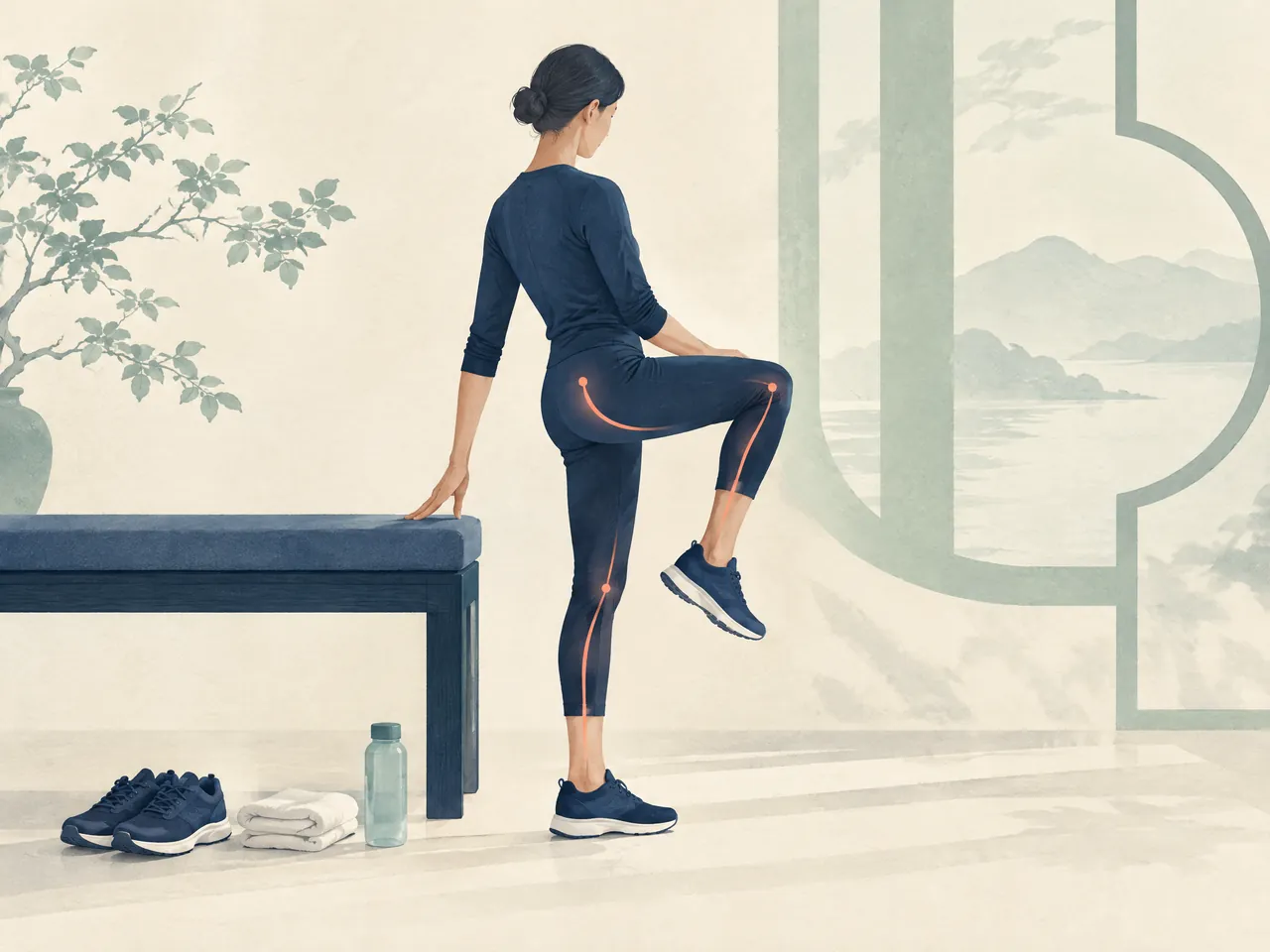
Seek urgent medical assessment for severe hip pain that begins suddenly without an injury, or for a hip that is swollen, hot, red or discoloured, particularly with fever, chills or feeling generally unwell. These symptoms can require prompt assessment and should not be managed first with massage, heat or an online exercise video. The NHS identifies sudden severe pain, a hot swollen hip and systemic illness as urgent warning signs. [1]
After a fall, collision or other injury, seek emergency care if there is severe pain, an obvious deformity or shortened-looking leg, inability to move the hip or leg, inability to walk or bear weight, or tingling or loss of feeling. [1] [2] Persistent numbness or new weakness is also important to report promptly. If you are unsure whether you can safely travel, use the appropriate local emergency service rather than driving yourself. The aim is not to self-diagnose a fracture or infection; it is to avoid delaying assessment when the pattern could be serious.
For less urgent but still important symptoms, book a medical review when pain keeps returning, is getting worse, affects sleep or normal activity, or is paired with a meaningful loss of movement. Bring your location-and-activity notes and say what you have already tried. This makes it easier to decide whether rehabilitation, medication advice, investigation or a specialist opinion is appropriate.

Hip Pain Symptoms, What Causes Hip Pain, and Hip Pain and Stiffness: Discussing Supportive Care
Once urgent problems have been ruled out and a suitable assessment has taken place, supportive care can be discussed as part of a broader plan. The practical goal is not to promise a fixed result from one method, but to understand the pain pattern, preserve tolerable movement and coordinate with medical or rehabilitation advice. Tell the practitioner about scans or diagnoses you already have, whether you are in physiotherapy, your medicines, anticoagulants, recent surgery, pregnancy, skin problems and any new red-flag symptoms. These details affect whether a supportive approach is appropriate and when referral should come first.
Some people ask about Chinese medicine or acupuncture for hip pain and stiffness. An in-person discussion can cover the pattern of symptoms and whether supportive treatment is sensible alongside activity planning and rehabilitation. It should not be used to rule out a fracture, infection, serious nerve problem or another medical cause, and it cannot guarantee improvement. If a pain pattern changes after assessment, update the clinician who is managing the underlying condition rather than simply adding more sessions.
To ask about a supportive-care consultation at TCM Lab, contact the clinic by WhatsApp at +852 6940 5663 and describe the affected side, duration, walking ability, recent injury and any existing diagnosis. You may enquire about a Kwun Tong Chinese medicine clinic or a Chinese medicine clinic Prince Edward appointment. If you report urgent warning signs, seek medical care first rather than waiting for a complementary-care appointment.
Care and health guide
Pain-care information
This directory brings together services, reading, and visit information related to pain care, to help you prepare questions for a consultation.
When pain care affects your day, noting when it occurs, its relation to activity, and what you have already tried can help prepare a consultation; Chinese medicine pain management Hong Kong is a relevant service or reading entry point.
Individual circumstances differ, and acupuncture Hong Kong offers related information to help you understand options and prepare questions.


Your questions, answered
Frequently asked questions
Can groin, outer-hip or buttock pain tell me exactly what is wrong?
No. The location can help organise the history, but joint conditions, soft-tissue problems and pain referred from the lower back can overlap. A clinician needs to consider the location together with onset, movement, weight-bearing ability, examination findings and, when appropriate, tests.
What hip pain and stiffness symptoms should make me seek urgent help?
Seek prompt medical assessment for sudden severe pain, a hot or swollen hip with fever or feeling unwell, or a rapidly worsening problem. After an injury, severe pain, deformity, inability to move the leg, inability to walk or bear weight, and tingling or loss of sensation are emergency warning signs.
Should I keep walking when I have hip pain?
If there are no red flags and you can bear weight safely, avoid prolonged complete bed rest and keep movement within a tolerable range while reducing activities that clearly worsen symptoms. Do not push through a limp, sudden escalation of pain, or inability to bear weight. Arrange an assessment if walking remains limited or painful.
Can acupuncture replace medical assessment or rehabilitation for hip pain?
No. Supportive care may be discussed after appropriate assessment, but it cannot diagnose the source of pain, rule out urgent conditions, guarantee improvement or replace rehabilitation and medical treatment when those are needed. Tell every practitioner about your diagnosis, medicines, recent injury and changes in symptoms.
Sources and further information
- [1] [1] NHS: Hip pain in adults
Referenced for: Causes and triage vocabulary, self-care wording, and urgent or emergency warning signs.
- [2] [2] Mayo Clinic: Hip pain
Referenced for: Symptom-location context, referred pain, and signs for immediate medical care.
- [3] [3] The Hong Kong College of Orthopaedic Surgeons: Hip Pain and Loss of Hip Mobility
Referenced for: Hong Kong orthopaedic descriptions of hip mobility, function and clinical assessment.
- [4] [4] Hospital for Special Surgery: Hip Pain Causes, Conditions and Treatments
Referenced for: Location-pattern context, soft-tissue and spine-referred pain discussion, and assessment for pain with walking or weight-bearing.