
Prince Edward & Kwun Tong clinics · Home-visit enquiries elsewhere

TCM Lab

TCM Lab · Beauty & lifestyle / Men’s appearance choices

Full wig or toupee: describe a men’s coverage need without guesswork

Content updated

Start with what you want covered and what you want left visible. A clear description of your own hair, preferred outline and wearing routine is more useful than asking for the most convincing product name.

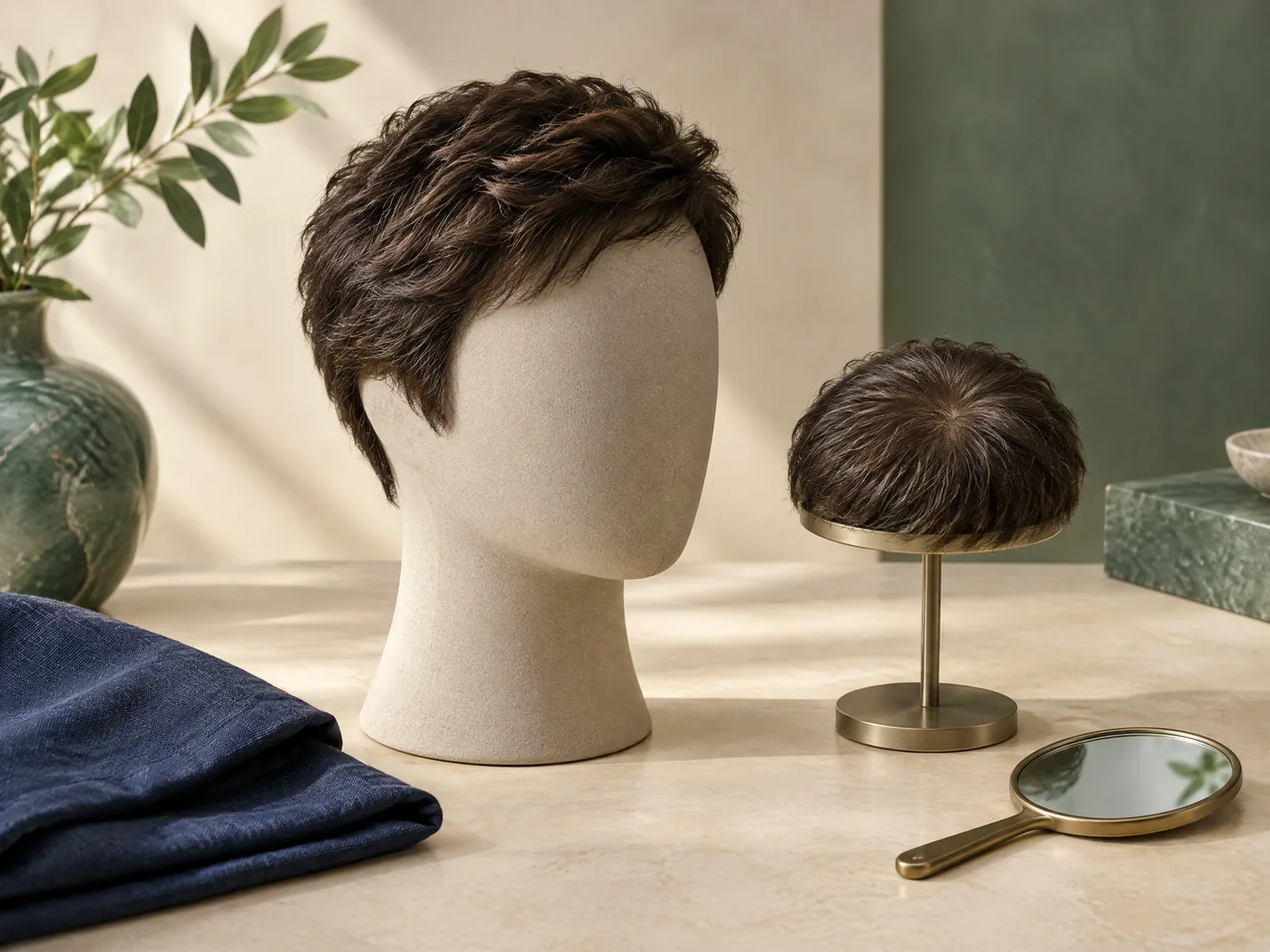
Illustrative men’s wig and partial hairpiece
Illustrative wig-lifestyle concept; not an OWNSTRAND product photograph or a client record.

The short answer

Compare a full wig if you want the whole hairstyle covered. Compare a partial men’s hairpiece if you want coverage in a defined area while keeping other hair visible. Neither category guarantees a better appearance: check the actual coverage, the relationship to your own hair, fit and attachment. Bring current photographs and a short appearance brief before deciding.

OWNSTRAND is an external wig and hairpiece website under the same ownership as TCM Lab. These appearance and everyday wearing guides are separate from Chinese medicine care, not diagnosis, treatment or a promise of hair growth.

Describe the area before naming a product

Begin with a mirror and a few current photographs: front, each side, back and the top if you can photograph it comfortably. Describe what you see without trying to diagnose it. ‘I want less scalp showing at the crown’ is a coverage request. ‘I want a different outline across the whole head’ is a different request, even if both lead you to similar short hairstyles online.

Separate the area where you want extra hair from the area you are happy to leave visible. A full wig covers the head, while a top piece adds coverage around the top; the American Cancer Society distinguishes these from other attachments.[1] For men’s partial pieces, ask which area the actual item is designed to cover. A category name is not a drawing of its base.

Write your request in one sentence before browsing: ‘I want to cover the top but keep my sides and back visible,’ or ‘I want a complete hairstyle that covers my existing hair.’ These are starting points, not recommendations. If you cannot decide, ask to compare both coverage approaches against the same appearance goal rather than choosing from separate, unrelated photographs.

Decide what your existing hair should contribute

For a partial piece, make the surrounding hair part of the discussion. Show its current length and the way you usually comb it. Point out whether your sides are closely clipped, your back is longer, or grey is concentrated at the temples. Ask to see where the piece would end and how its hair would meet yours. Do not judge that join from a straight-on photograph alone.

OWNSTRAND’s toupee guide is a relevant browsing route for defined-area coverage, not a promise that every listed design will fit your top or hairline.[4] Use it to prepare a specific question: ‘Can you show the base outline for an option that leaves my sides visible?’ Confirm whether a sample can be viewed and which fitting arrangements apply before making the trip.

If you want to keep your own short haircut, ask what length is needed around the selected piece and what happens at your next haircut. Do not cut or shave an area simply because a product photograph appears smooth underneath. First establish the exact attachment method and any preparation it requires. Treat labels such as hair system or topper as prompts for questions, not automatic substitutes for a particular partial piece.

Consider full coverage when you want a whole-head look

A full wig is worth comparing when you want to change the complete outline rather than add hair in one place. You might want a different fringe, fuller sides or a consistent colour throughout. Its full coverage does not mean your existing hair becomes irrelevant: ask how that hair should be arranged underneath for the fitting and where the cap edges should sit on you.

For that comparison, OWNSTRAND’s men's wigs page focuses on full-wig options.[3] Bring your coverage sentence alongside a style reference, then ask for a specific item’s sizing and wearing instructions. The American Cancer Society advises checking a brand’s size chart because sizing can vary.[1] Do not assume an ‘average’ label or a familiar hairstyle confirms a comfortable fit.

TCM Lab and OWNSTRAND share the same owner; these links provide product context rather than an independent recommendation. Use the full-wig route to investigate your complete-look request, not to conclude that more coverage is always better. If your main goal is to retain your own visible sides, ask how each option would achieve that before committing to either category.

Turn ‘natural’ into an appearance brief

‘Natural’ can mean looking like your current self, returning to an earlier haircut, or trying a style you have never worn. Choose which matters most. Cancer Research UK suggests bringing hair photographs and notes that you can choose a familiar style or something different.[2] Label each reference with what you actually want: the fringe in one image, perhaps, rather than its colour or overall volume.

Make the hairline request equally concrete. Say whether you normally wear hair forward, part it to one side or brush it away from the forehead. Ask to see the proposed front edge in that hairstyle. For partial coverage, also request a side and rear view of the join. For a full wig, check the sideburn outline and nape alongside the front; your appearance brief should include more than the forehead.

If matching your own hair matters, compare samples near a window or in outdoor light when possible; the American Cancer Society recommends natural-light colour comparison.[1] Discuss the grey at your temples separately from the top. Ask whether the sample represents the exact colour being quoted. A screen image can help explain your preference, but it cannot confirm that the supplied hair will match what remains visible.

Use the fitting to test your actual routine

Before an appointment, ask what the session includes: viewing loose samples, trying on a full wig, or discussing a partial piece is not necessarily the same service. Request privacy if it would help, and consider taking someone whose opinion you trust. Cancer Research UK identifies both a companion and a private fitting room as useful options to ask about.[2] Neither should be assumed available without checking.

When an appropriate trial is possible, put on your glasses after the item is positioned, look down as you would at a phone and turn your head as you would in conversation. Notice pressure, edge contact and whether the outline still suits you in motion. Tell the fitter exactly where something feels wrong. Do not accept discomfort as proof of security or use extra adhesive to solve a problem without item-specific guidance.

Describe the routine you need: removing the piece each evening, wearing it for occasional dinners, or managing it around exercise. Ask how the exact item is attached, removed and cleaned, and which tasks need professional help. Follow the supplier’s wearing and care instructions.[2] A successful indoor trial does not itself confirm suitability for swimming, sleeping or prolonged exercise; those are separate questions to resolve before purchase.

Leave with a description you can compare

Ask for the proposed coverage, base outline, hair material, colour and attachment method in writing. For a full wig, record the size being discussed; for a partial piece, record its dimensions and where the edges are intended to sit. Include any cutting or other changes proposed to your own hair. This lets you compare two quotes without mistaking a similar-looking photograph for the same product or service.

Clarify what the quote includes: the piece itself, fitting, cutting and any later maintenance appointments. Ask which consumables are needed and what you would do at home between visits. Keep unanswered details visible rather than filling them in from another model’s description. Before paying, check the return or exchange conditions; the American Cancer Society notes that retailers’ policies differ.[1] Ask specifically how alteration or custom work affects those terms.

OWNSTRAND’s only confirmed shop is Unit 2103, 利寶時中心, 50 Hoi Yuen Road, Kwun Tong; confirm the relevant sample and appointment arrangements directly.[3] You can leave a decision open if coverage, comfort or upkeep remains unclear. A wig or hairpiece changes appearance, not hair growth. Questions about new hair loss, scalp pain or treatment-related sensitivity belong with a qualified healthcare professional rather than a product comparison.

Take it into everyday life

A practical checklist

  • Write one sentence naming the area to cover and the hair you want to leave visible.
  • Bring current front, side, back and top photographs, plus a style reference marked with the features you like.
  • Keep your existing haircut unchanged until the selected item’s attachment and preparation requirements are explained.
  • Ask whether the appointment includes a relevant try-on, sample viewing and privacy arrangements.
  • Check the proposed front edge, sides and nape or partial-piece join; try your glasses and ordinary head movements where a trial is available.
  • Get the specific coverage, size or base dimensions, fibre, colour and attachment method in writing.
  • Confirm home removal and care, quote inclusions, ongoing costs, alteration terms and availability before paying.

Questions & answers

My crown is sparse but my sides are full. Should I start with a partial piece?

A defined crown-area piece is a relevant option to compare if you want your sides and back to remain visible. That is not enough to establish suitability. Ask where the base would end, how its hair would meet yours and which attachment is proposed. Compare full coverage too if you want to change the whole hairstyle.

Do I need to shave my head before asking about a wig or toupee?

Do not shave as a preliminary shopping step. Bring photographs of your hair as it is and ask what preparation the exact option requires. Full-wig fitting and partial-piece attachment raise different questions. If a proposed arrangement requires cutting or shaving, establish the area, reason and maintenance implications before agreeing.

Will a full wig automatically look more convincing than a partial hairpiece?

No category name can settle that comparison. A partial piece needs to be assessed alongside your visible hair, while a full wig needs its complete outline and fit checked. Decide what ‘convincing’ means for you, such as preserving your familiar fringe or matching temple grey, then assess that detail on the actual option.

Can I choose the colour online if I want to keep my grey sides?

Use online images to narrow the discussion, not to confirm a match. Share photographs that show where your grey is concentrated and ask to compare the relevant sample with your own hair in natural light.[1] Confirm whether the sample represents the exact option being supplied and how the grey blend is described.

What should I ask if I want to remove the piece every night?

State that preference before a piece or attachment is selected. Ask who removes it, what products or tools are required, how much time the routine takes in practice and how it is stored afterwards. Get instructions for that exact item rather than borrowing a routine from another hairpiece. If the arrangement does not suit your preferred routine, keep comparing.

Sources & further context

Numbered references follow the source order below. Product and service websites provide appearance-related context, not medical evidence.

  1. [1] American Cancer Society — Wigs for Hair Loss
  2. [2] Cancer Research UK — Wigs, hats and scarves
  3. [3] OWNSTRAND — Men’s full-wig guide
  4. [4] OWNSTRAND — Toupee and men’s hairpiece guide

Compare the underside as well as the hairstyle

Ask to see the proposed full wig and partial piece from underneath, if relevant samples are available. Use your coverage photograph to sketch where each option would end, then have the fitter check the sketch against the actual base. Mark which hair would remain visible and which would sit underneath. A top-piece illustration can explain the question, but it cannot supply the dimensions of the toupee being considered.[1] Keep the footprint separate from the haircut shown above it.

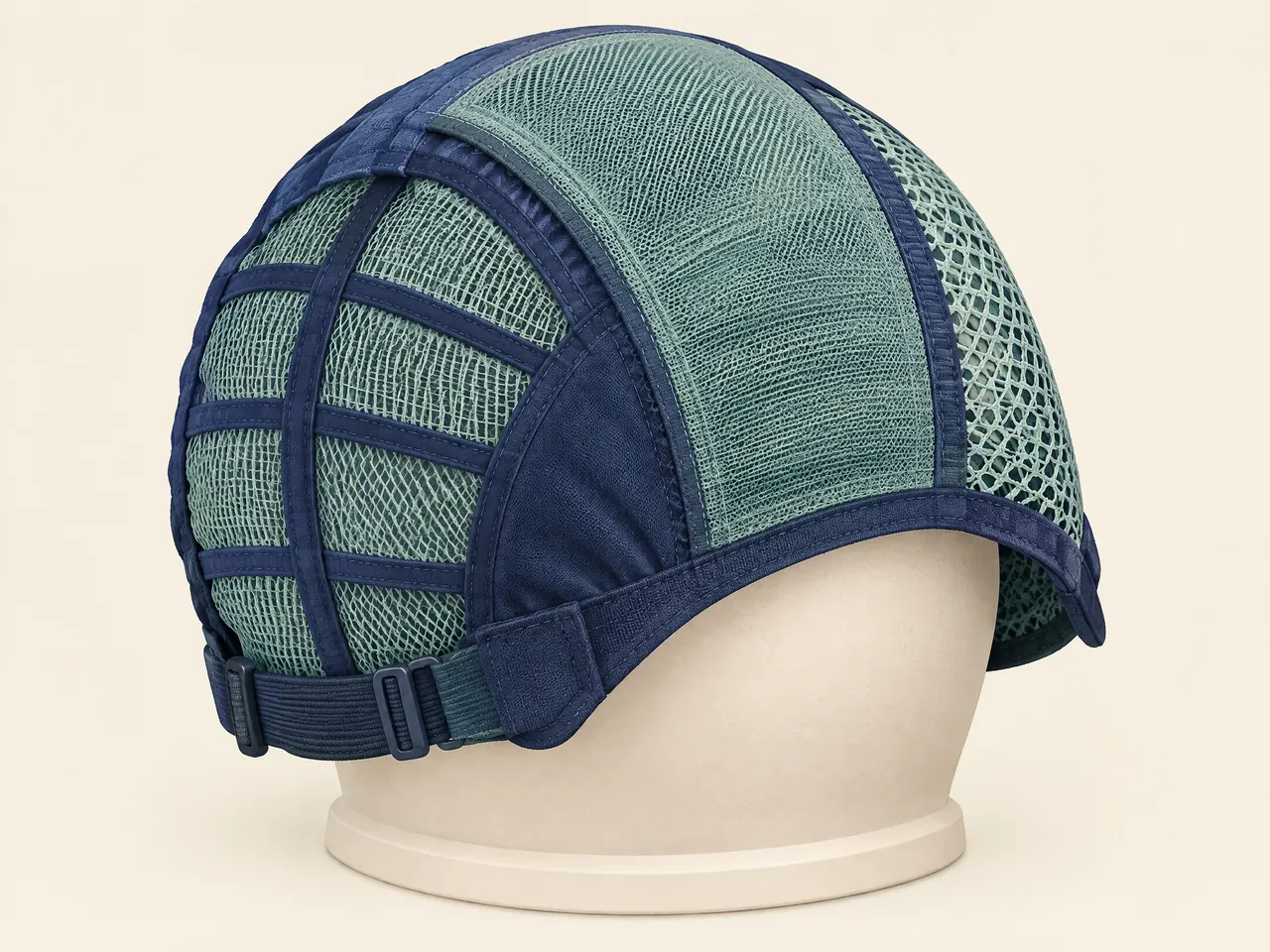
For the full wig, ask the fitter to point out the inside seams, cap edges and any adjustment components on that item. Record which parts you may adjust yourself and which should be left alone. For the partial piece, ask which parts of its underside would contact your scalp or existing hair. This makes a later comment such as 'the back edge bothers me' more useful than judging comfort from the style photograph. Mesh or an adjustable band in a generic illustration is not a specification for your purchase.
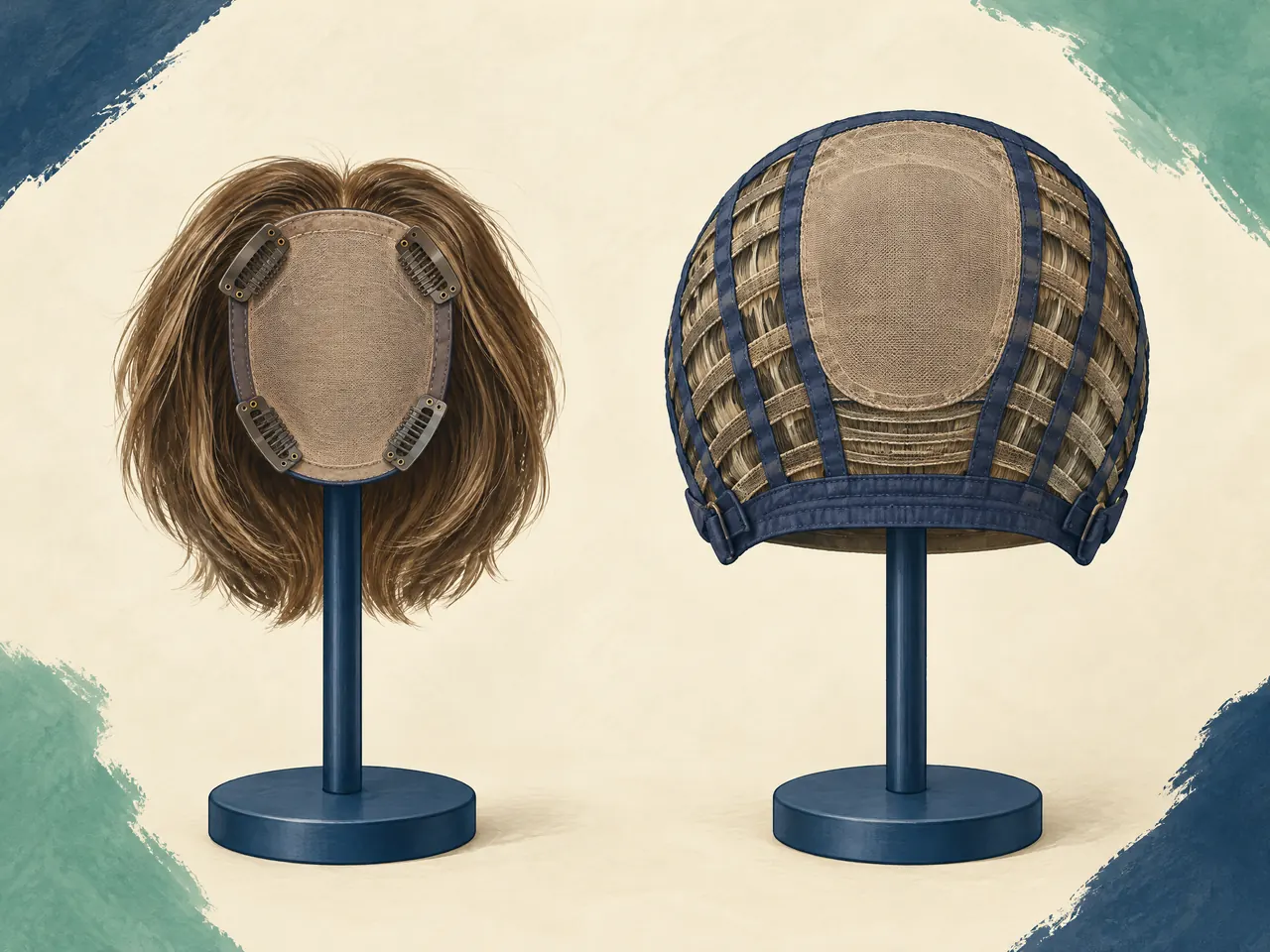
Generic removable topper and empty full wig cap on separate stands, with their undersides visible
Two generic coverage objects for discussing the underside and footprint; not the dimensions or construction of an OWNSTRAND item.Generated illustrative image
Inside-out empty wig cap on a plain dome stand, showing illustrative mesh panels and an adjustable band
Illustrative cap interior for identifying questions about contact points and adjustment; not a product specification or a comfort guarantee.Generated illustrative image

Keep separate records for fit and colour

Put the measurements for each option on its own note. For a full wig, record the measurements requested by that maker and the size discussed; the American Cancer Society identifies circumference, front-to-back and side-to-side measurements and warns that brand charts can vary.[1] For a partial piece, record the proposed base dimensions separately. A cap-size label and a partial-piece footprint answer different questions. Note how your existing hair was arranged during the trial so a later comparison does not silently change the fitting conditions.

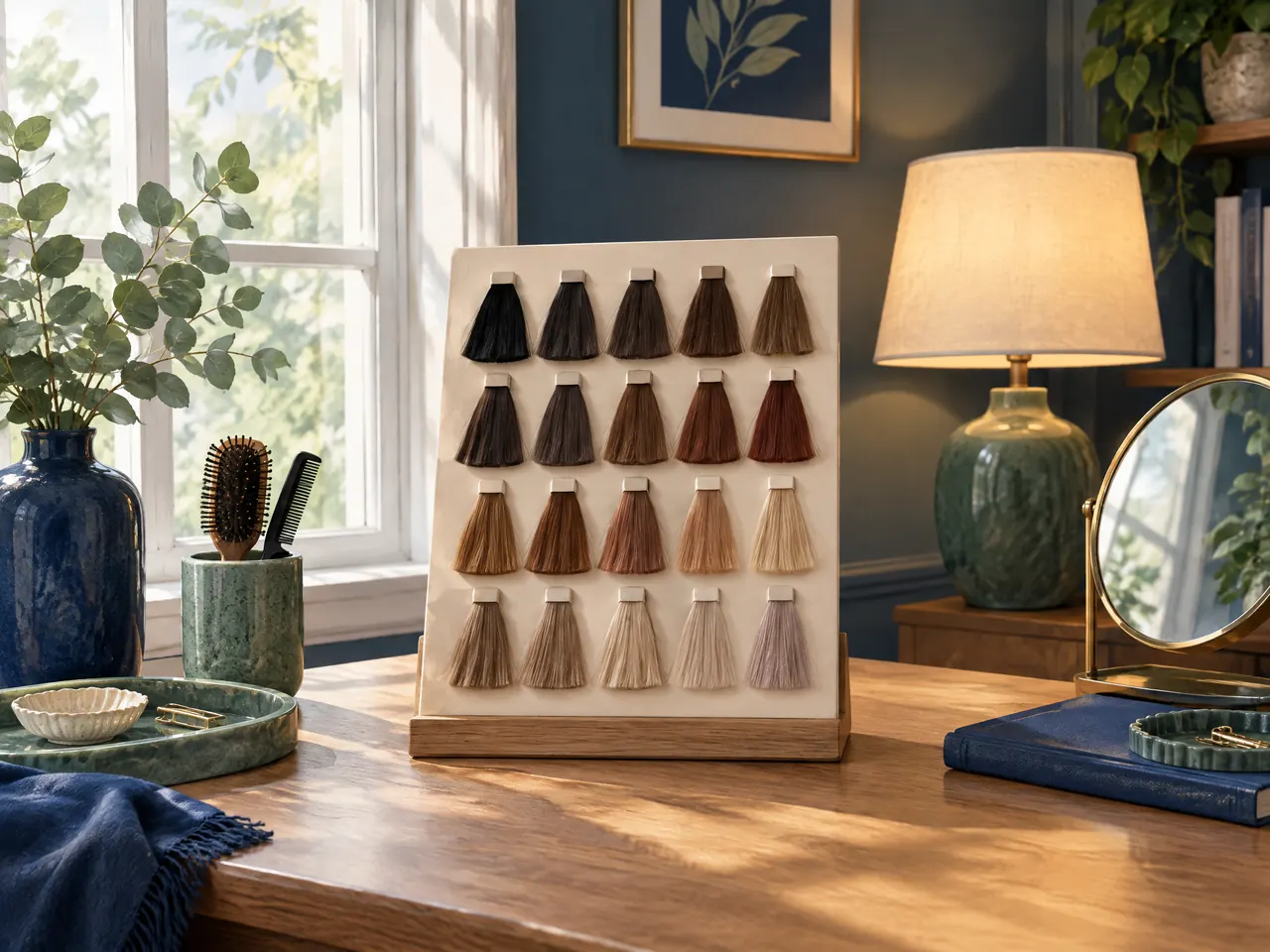
Keep a colour note beside, rather than inside, the fit decision. With permission, compare the same sample beside your visible temple hair near a window, then look at it under the indoor lighting where you usually get ready. Natural-light comparison is recommended by the American Cancer Society.[1] Record the sample's supplied colour code and the feature you are assessing, such as temple grey rather than overall darkness. If two samples differ in colour and cut, do not treat a preference for one complete look as proof that its coverage or fit is better.
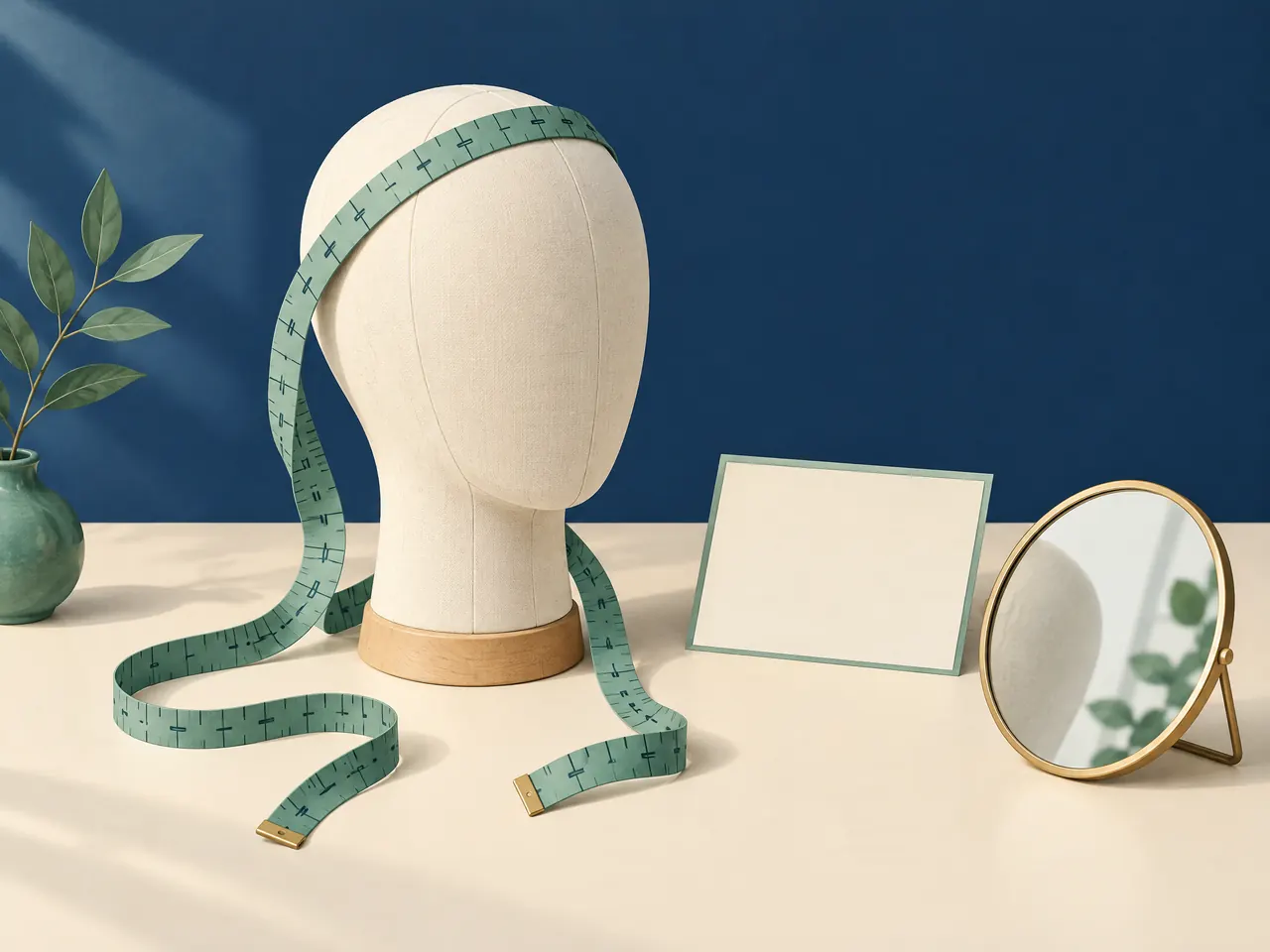
Fabric measuring tape around a blank mannequin dome beside a blank fit-note card and mirror
A generic measuring scene; use the selected maker's instructions, not the mannequin illustration, to establish fit.Generated illustrative image
Neutral hair sample board between soft window daylight and a shaded indoor lamp, with a mirror
Illustrative lighting comparison for discussing colour and grey blending; not confirmation of a supplied shade or a match.Generated illustrative image

Rehearse removal and the space it needs at home

If you want nightly removal, ask for a demonstration using the attachment proposed for your item. Have the supplier identify where removal begins, what must be released first and which steps you may safely practise under guidance. If the sample uses a different attachment from the quoted piece, record that difference instead of treating the demonstration as your final routine. Clips and bands in an illustration are discussion aids, not instructions to add them to a toupee. Follow the exact supplier's wearing and care guidance.[2]

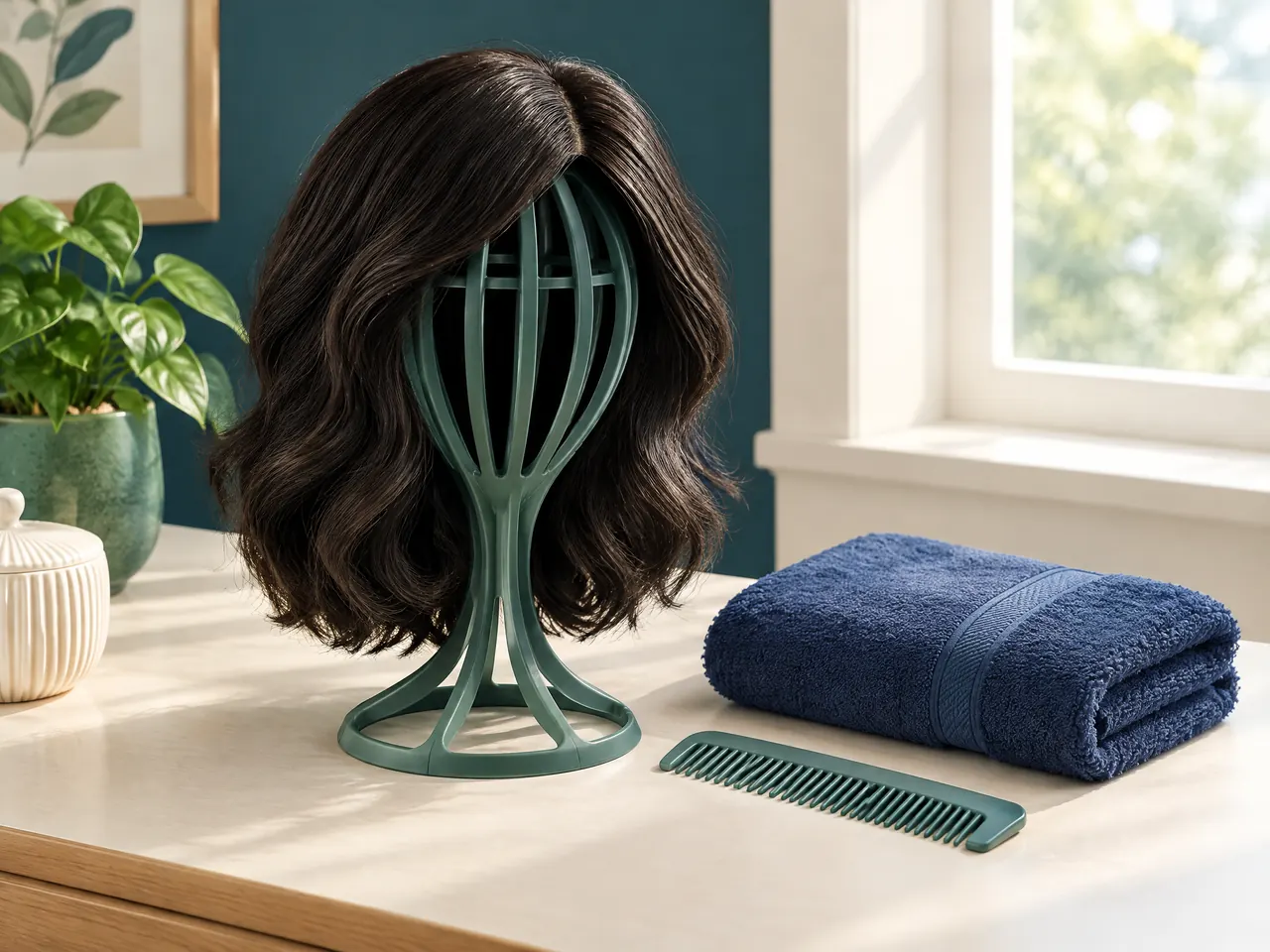
Then walk through what happens after removal: where the piece rests, whether it needs drying before storage and which stand or support is appropriate. The American Cancer Society recommends a wig stand for short-term storage when a wig is not being worn.[1] Ask for the selected item's drying and storage instructions rather than assuming every partial base should be handled like a full cap. Identify a suitable space at home before buying care equipment. If the proposed piece is not intended for daily home removal, ask which maintenance tasks replace that routine rather than detaching it yourself.[2]
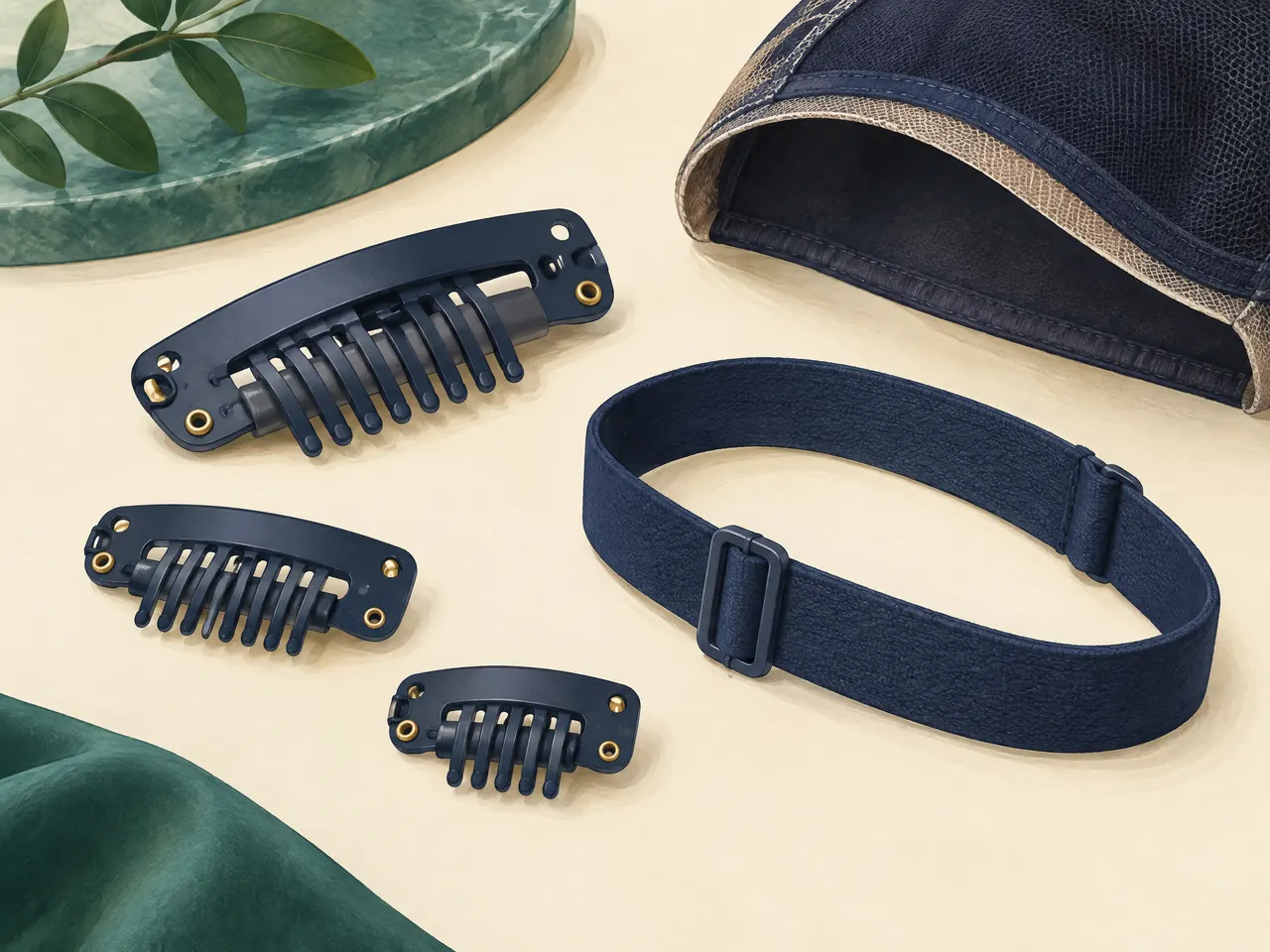
Generic hairpiece clips, a soft adjustable band and an empty sample cap edge arranged on a tabletop
Generic attachment components for asking about removal; they do not prescribe a method or establish compatibility with a particular piece.Generated illustrative image
Anonymous wig on an open ventilated stand beside a folded towel and unbranded comb in indirect daylight
Illustrative stand and care equipment; confirm the selected item's drying and storage instructions before choosing a routine.Generated illustrative image

Clinic enquiries

Contact and appointment arrangements

Clinics
Prince Edward and Kwun Tong
Opening hours
11:00–21:00
WhatsApp and telephone
+852 6940 5663

Appointments, practitioner availability and service arrangements are confirmed via WhatsApp.

Please mention any consultation language needs in your WhatsApp enquiry so that arrangements can be confirmed.

Enquire via WhatsApp
Food, gifts and floral lifeWhatsApp enquiry